‘Lips That Touch Liquor Shall Not Touch Ours’: The Story Behind the Photo

Anti-Saloon League slogan

December 10th, 1913, was not just another day in the annals of American history. It marked a significant moment when over 4,000 Temperance movement and Prohibition supporters painted the streets of Washington with their earnest plea for a constitutional amendment banning alcohol. Women, armed with a powerful message and a poignant sign that read “Lips That Touch Liquor Shall Not Touch Ours,” stood prominently among the throngs. This was not merely a slogan but a stark reflection of the era’s societal plights.

These women stood united in their fight against the “Demon of Rum,” a battlecry echoed in an anonymous poem from the Women’s Christian Temperance Union (WCTU), emphasizing the sorrow and pain alcohol brought into their lives. “The lips that touch liquor shall never touch mine,” they vowed, as they took a stand against the violence, financial ruin, and societal decay that often followed inebriation.

The Origins of a Mantra

The origins of this iconic slogan date back to as early as the 1869 Woman’s Crusade Against Liquor. It was a mantra that resonated deeply, featured in newspaper articles, books, and even songs like the “Temperance” ditty by Sam Booth and George T. Evans, which was dedicated to the global movement against liquor. Their lyrics, “The lips that touch liquor shall never touch mine,” became a rallying cry, a watchword for the women who sought to protect themselves and their families from the ravages of alcohol.

A Cultural Phenomenon

This mantra gained such traction that it permeated various aspects of culture, from placards at marches to riverboat signs meant in jest by the Mississippi Riverboat Owners Association. Despite the parodies and the pushback from industries that thrived on vice, the message stood clear and strong. Even the riverboats that served alcohol, offered gambling and other less-than-savory entertainments, could not drown out the voices of those who marched to the Capitol that December day.

Echoes in Poetry and Legacy

As the protesters reached the Capitol, Congressman Richard Hobson and Senator Morris Sheppard greeted them and introduced legislation aligned with the Temperance movement’s goals. Their efforts, underscored by poems like George W. Young’s “Lips That Touch Liquor,” wove a narrative of personal integrity and societal reform. Young’s words, “Your lips, on my own, when they printed ‘Farewell,’ had never been soiled by the ‘beverage of hell,'” captured the movement’s essence.

While the initial march did not immediately sway legislation, it ignited a fire that would eventually lead to the ratification of the Eighteenth Amendment. It was a testament to the resilience of a movement that, despite being the subject of jest, held firm to the belief that the sanctity of home and family was paramount, a sentiment encapsulated by their undying motto.
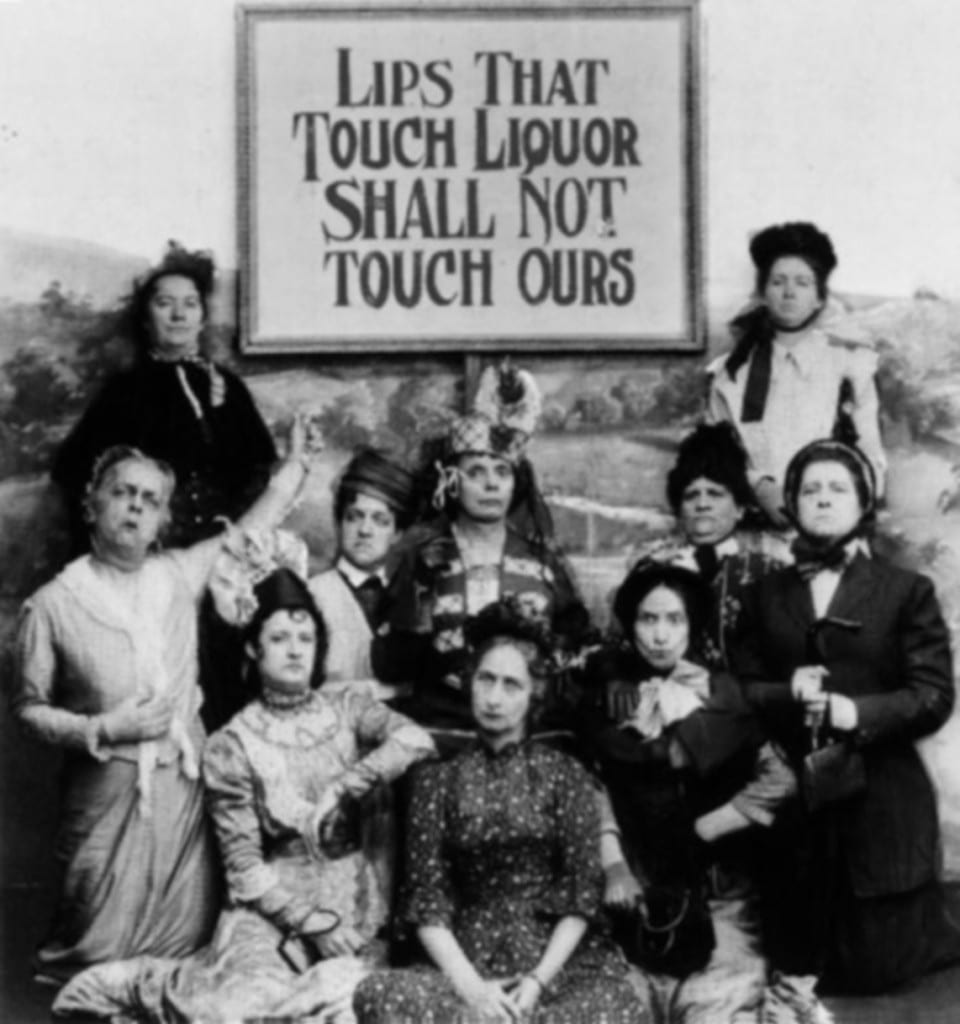
Black and white historical photograph of a group of nine women from the Temperance movement. They are posed in two rows, some seated and some standing, with solemn expressions. Behind them, a large sign reads 'Lips That Touch Liquor Shall Not Touch Ours,' indicating their commitment to the cause against alcohol consumption.
Members of the Temperance movement pose with a declaration of their stance on alcohol, a sentiment that fueled the drive towards Prohibition in the early 20th century.

The Unseen Battles

This piece of history reminds us that behind every slogan and sign are the untold struggles of those who carried them. The women who boldly declared that “lips that touch liquor shall not touch ours” were not just temperance activists; they were mothers, daughters, and wives who bore the brunt of alcohol’s destructive path. Their demonstration on December 10th, 1913, was a pivotal moment in the larger narrative of the Temperance movement, one that would see the dawn of Prohibition seven years later.

As we reflect on the legacies of movements past, the tale of these women and their unyielding spirit against the “Demon of Rum” stands as a poignant reminder of the power of collective action in shaping the moral compass of a nation.
Ron Paul Crushes Double During Congressional Baseball Game

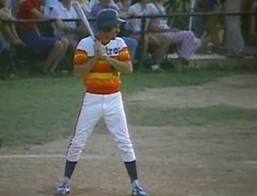
Ron Paul in Astros uniform (1983)
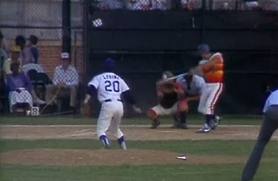
Ron Paul crushes double

This is awesome and appears to be the latest minor D.C. Internet meme. Well, I love baseball and I love D.C., so I want to share this with those of you who haven’t seen it yet (if you haven’t seen this, you don’t surf the Interwebs enough).

Ron Paul is the only player in the history of the Congressional baseball game to hit a home run over the fence. He also killed it in this game, going 2 for 3. Below you can watch him stroke a double. Not bad for a 47-year-old doctor from Texas.

According to Wikipedia, the game ended after nine innings in a tie at 17 runs. Sounds like some seriously crappy pitching. So far, this has been the only tie. The Republicans hold a 41-35 game advantage over the Democrats. Another interesting bit of trivia is that the game dates back to 1909, although it hasn’t been continuously played since then.

It was banned in 1914 by Speaker Champ Clark when he felt it interfered with the legislative business of Congress. In 1962, the game came back after being played intermittently and has been played annually ever since.

Nice old school Astros uniform. Reminds me of Nolan Ryan, Glenn Davis and Mike Scott.

Do you want to watch the whole game? I warn you, it is well over three hours. C-SPAN has it for you.

Watching Former Senator and President Eisenhower Mess Up on Camera from the Mid-1950s

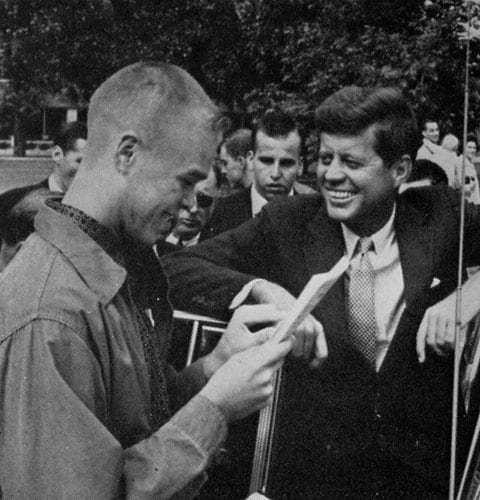
JFK at Bowling Green State University

Here’s an interesting video I came across on YouTube. I’m not quite sure what year this is from, but I’m guessing it’s somewhere in the mid-1950s. It’s fascinating to watch the former Senator and President messing up on camera.

If you enjoy watching Eisenhower on camera, check out the oldest surviving color videotape recording in the world — made in 1958, when he dedicated NBC’s brand-new $4 million Washington studio.

Reliving the Washington Redskins’ Super Bowl XXVI Victory

Super Bowl XXVI

Super Bowl XXVI
Super Bowl XXVI

Well, football is coming to a close this weekend and you’re probably thrilled to watch the commercials. Oh, and I’m sure everyone has their plans set to watch the Super Bowl too. One thing you will not be watching this Sunday is the Washington Redskins … again … #FAIL.

A generation ago, the Redskins were a good team. Yep, good enough to win the Big One, Super Bowl XXVI. By the end of the day on January 26th, 1992, the Washington Redskins, led by quarterback Mark Rypien, were world champions, defeating the Buffalo Bills 37-24.

If you want to remember what it’s like to root for a hometown team that wins the Super Bowl, watch the video below. About 20 seconds in, the Redskins close it out and beat the Bills for the championship.

http://www.youtube.com/watch?v=-hs6-yxpQAs

The Capitol in 1814: What It Looked Like Before the British Burned It

If you’re a serious D.C. history nerd, you’ll find this just as fascinating as I do. It was produced by UMBC’s Imaging Research Center (IRC) about a year ago. The voiceover is a little dry, but follow along and watch the whole thing. It’s very interesting.

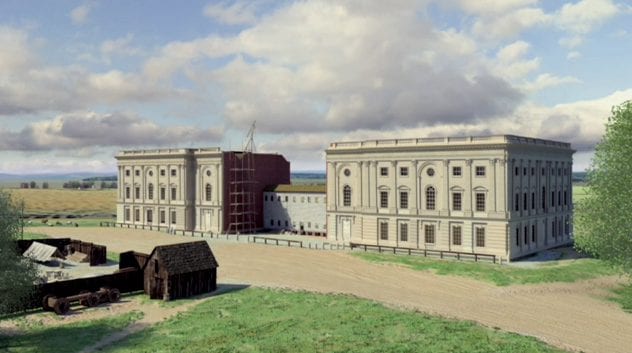
Here’s a cool screenshot of the final scene, imagining what the Capitol looked like in 1814.

U.S. Capitol 1814
U.S. Capitol 1814

Unpacking the Four Essential Human Freedoms: Franklin D. Roosevelt’s 1941 State of the Union Speech

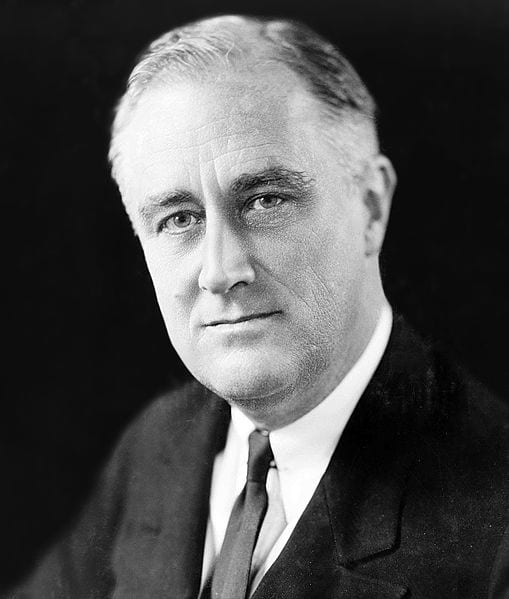
Franklin D. Roosevelt (1933)

This is one of the greatest State of the Union speeches of all time … the one given, twelve presidents ago, by Franklin D. Roosevelt on January 6th, 1941. If you want the full text of the speech, go here.

This speech is known as the “Four Freedoms Speech.” It was his first State of the Union after winning an unprecedented third term and it is considered one of his most memorable and influential speeches.

Europe is embroiled in World War II and the President makes the case that America is under the greatest threat it has ever been under, and it is incumbent upon the nation to supply needed arms to our allies in Europe. The Lend-Lease Act was signed into law just two months later.

The closing statements of the speech are the most memorable, as he outlines the “four essential human freedoms,” which are critical for a secure and prosperous world.

The first is freedom of speech and expression — everywhere in the world.

The second is freedom of every person to worship God in his own way — everywhere in the world.

The third is freedom from want, which, translated into world terms, means economic understandings which will secure to every nation a healthy peacetime life for its inhabitants — everywhere in the world.

The fourth is freedom from fear, which, translated into world terms, means a world-wide reduction of armaments to such a point and in such a thorough fashion that no nation will be in a position to commit an act of physical aggression against any neighbor — anywhere in the world.

The first two freedoms are codified the Constitution, while the latter two go beyond the scope of America’s founding document but became the basis of the modern liberal vision both domestically and internationally.

Franklin D. Roosevelt (1933)
The 32nd President of the United States, Franklin Delano Roosevelt (1933)

Follow us on Facebook or Twitter if you’d like to get more updates.

A Glimpse into D.C. During World War II: A Video from the 1944 Cherry Blossom Festival

Cherry blossoms featured

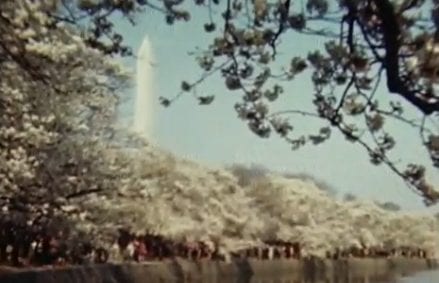
It seems like this the Cherry Blossom Festival is a really long way away … especially after this weekends crappy weather. So, in the hopes of bringing a little faux spring to your week, here is a video from the 1944 Cherry Blossom Festival. It’s an interesting window into D.C. during World War II.

Pardon the music, but I can’t seem to find good old movies on YouTube without horrible soundtracks. I would recommend muting it.

Witnessing History: A Silent Film of President William McKinley Shot by Thomas Edison in 1901

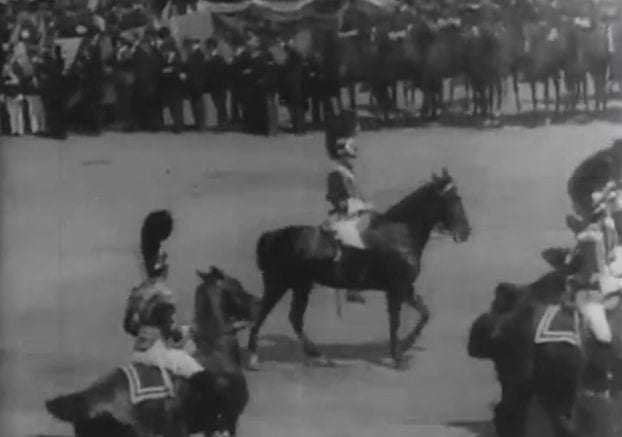
Witness history in this incredible silent film of President William McKinley, shot by Thomas Edison in 1901 at the Capitol. Thanks to the Library of Congress, we can see what life was like over a hundred years ago!

Home Movie Footage from Lady Bird Johnson During the 1960s

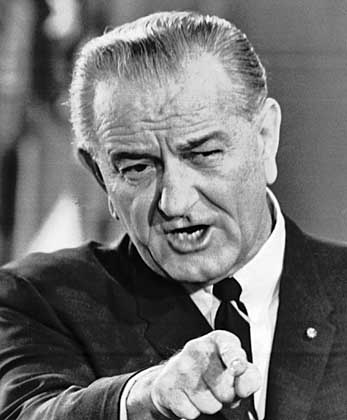
Lyndon Baines Johnson

The description below is cut straight from YouTube. This is a home movie from Lady Bird Johnson during the 1960s. The LBJ Library has an entire YouTube channel dedicated to these, so check them out. They’re also on Twitter and Facebook.

The footage is outside and the film is silent. The film starts with Lady Bird Johnson and others posing in front of a house somewhere in Virginia? There are views of the house and unidentified women and a man posing and then unidentified people sitting/eating at tables.

The film cuts to Lady Bird Johnson posing by a wood fence, near a lake, giving what looks like a press conference. A school bus arrives. More unidentified people sitting on a wood fence, walking, and eating a tables. Shots of mountains and flowers.

The next segment of the film features President Johnson and Mrs. Johnson at the White House, 1960s. White House flowers are showcased, and a beagle dog joins Lady Bird for a stroll.

Cut to what might be a White House reception for astronauts. There are people and a marching band playing on the White House lawn. Lady Bird Johnson, President Johnson and Vice President Hubert H. Humphrey talk to astronauts on the lawn. In the background photographers use their 1960s equipment to document the event.

Cut to the presidential yacht trip in Washington, D.C.. Lady Bird Johnson and other unidentified people are present. There are views of the Lincoln Memorial and Washington Monument and a large ship. A woman seems to be taking notes with a typewriter.

Cut to Lady Bird Johnson and other women in an unidentified place.

Cut to Presidential military reception at the White House. There is a military band playing on the White House lawn. An Honor Guard is at the ready. LBJ, Lady Bird, Hubert Humphrey and Muriel descend steps to the reception and form a receiving line.