
Prohibition
Washington went dry before the rest of the country, with DC adopting prohibition in 1917, two years before the national ban took effect. The capital’s proximity to wet Maryland and Virginia made enforcement a constant battle, and the city’s speakeasies, bootleggers, and blind pigs became a defining feature of 1920s Washington. These posts explore prohibition’s particular impact on DC’s bars, restaurants, and social life.
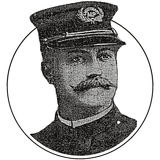
Rep. Thomas L. Blanton said DC’s police chief drank at a delicatessen on East Capitol Street. Then he defended a policeman at trial, coatless and shouting for “justice.”

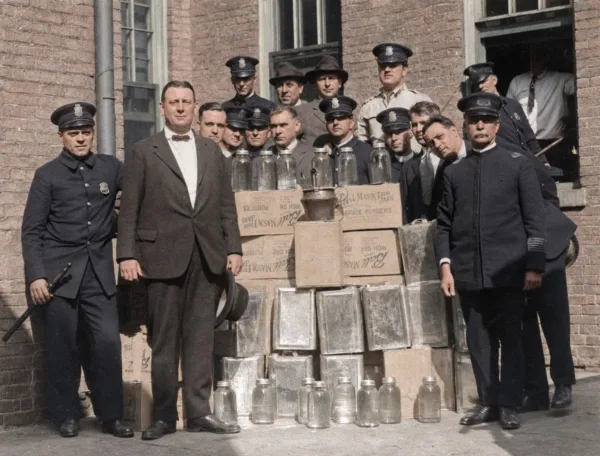
One of Washington’s policewomen went to a Saturday night dance in March 1919 “all dolled up.” Her tip had a raider whispering “Riley” at an apartment door by morning.
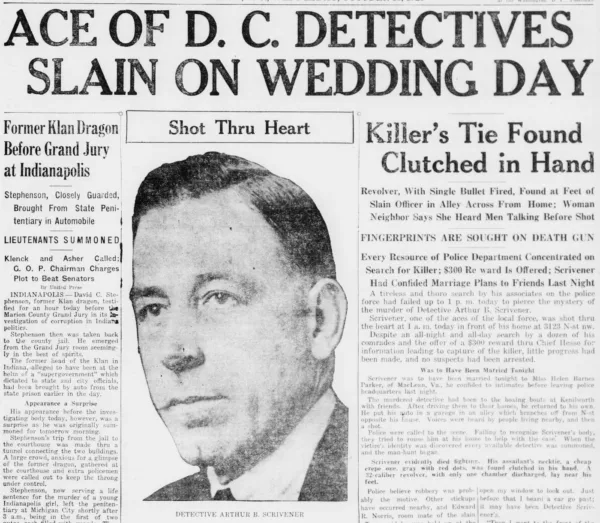
Detective Arthur Scrivener was found shot in a Georgetown alley on his wedding day in 1926. One jury said murder. Another said suicide. Here’s the evidence.
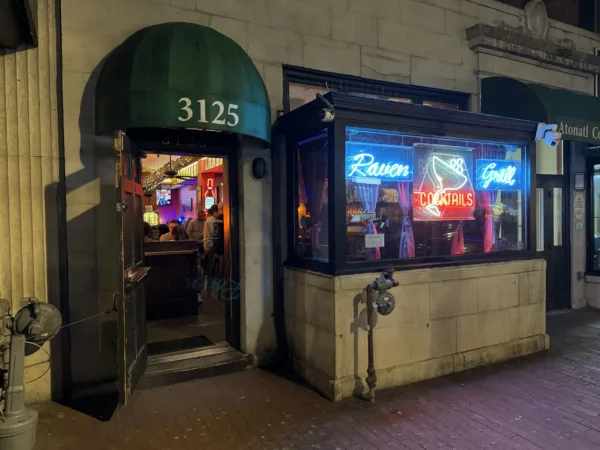
At 3125 Mount Pleasant Street NW, the Raven Grill has been a Washington DC dive bar since 1935. The booths are still the originals.

Before Stetson’s opened at 1610 U Street NW, federal agents and District police repeatedly raided a Prohibition speakeasy at the address.
There’s more where these came from.
Lost Washington stories in your inbox most mornings: the newest, plus a few from the archive.
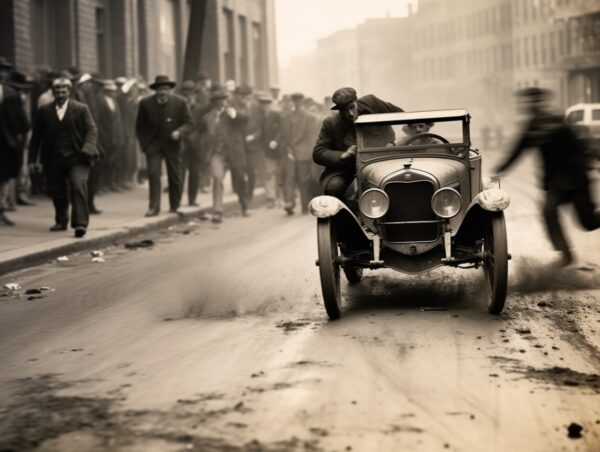
Before dawn on March 11, 1926, 19-year-old Francis Aebersold blazed out of Anacostia in a Peerless touring car carrying 180 quarts of corn whiskey, four DC officers chasing him north at 60 miles an hour, guns drawn.

Three blocks from the Capitol dome sits a dive bar the Nardelli family has run since 1955, deer butt over the men’s room door and all.

The man whose name is over the door at 1264 Wisconsin Avenue was a Boston Braves shortstop in the 1914 World Series before he opened a Georgetown tavern the year Prohibition ended. Four generations later, as of 2026, it is still open, still owned by the same family, and still has a brass plaque on the booth where John F. Kennedy proposed to Jacqueline Bouvier.
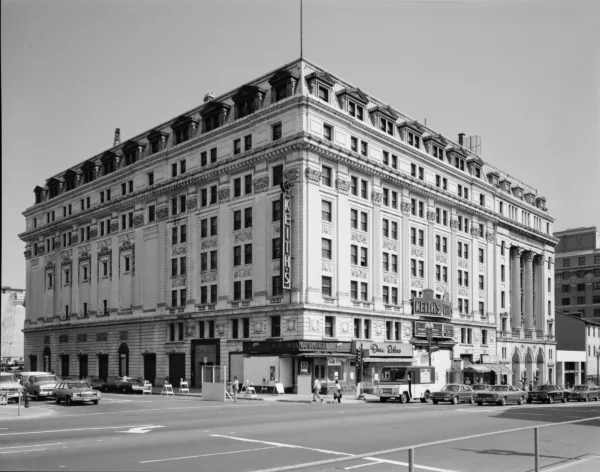
He was forty-one, the king of bookmaking in DC, and out on bail. Two days later he was on the floor in his maroon robe.

The most practical remedy is to establish government dispensaries for limited sales to good citizens who are not drunkards. This will eventually be done.

A December 31, 1919, Washington Times cartoon looked ahead to the start of national Prohibition in January 1920.

In 1928, Prohibition agents raided an oyster house on 18th Street in Adams Morgan. The raid led to legal complications, a trial, and the bizarre disappearance of a jury member.

O’Keefe’s boasted a long bar, the Indian displayed taxidermy, and Oedekoven’s faced a dispute with Heurich over the beer it served.
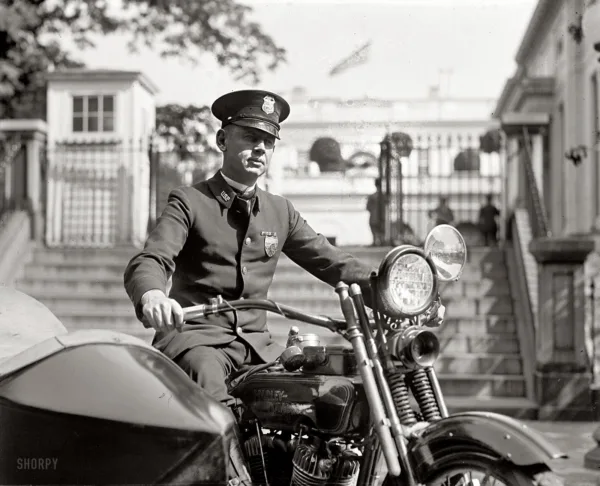
Three of D.C.’s wildest vintage police chases, from 1921 to 1944: rum runners crashing at the Library of Congress, an 80 mph chase from Chevy Chase Circle, and a Park policeman who ran them down on his Harley.

A newspaper account records criticism of an alleged Roosevelt White House beer party and the administration’s response.

A September 5, 1925 portrait shows the official identified as Washington’s chief Prohibition inspector.
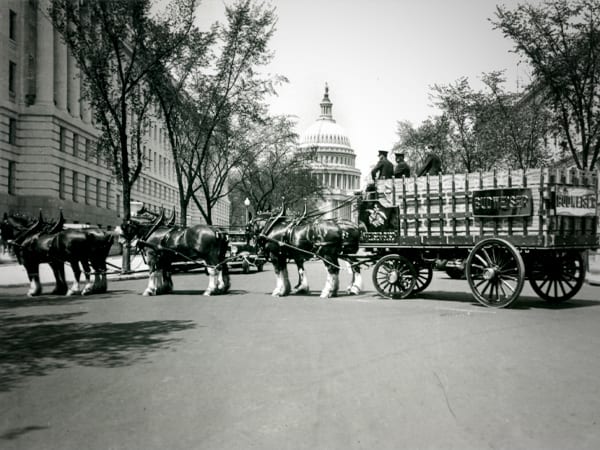
The National Press Club received Washington’s first liquor license after Prohibition, on February 28, 1934.
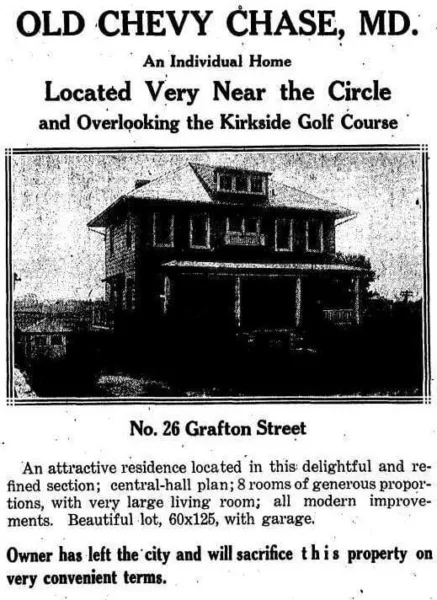
Police took 29 young people to a station after a 1929 party at the Morris family home became too loud for the neighbors.

In 1905, District authorities were fighting to ban growlers in the city, claiming access to cheap beer was damaging to society. Read about the irony of the argument and how it still rings true today.
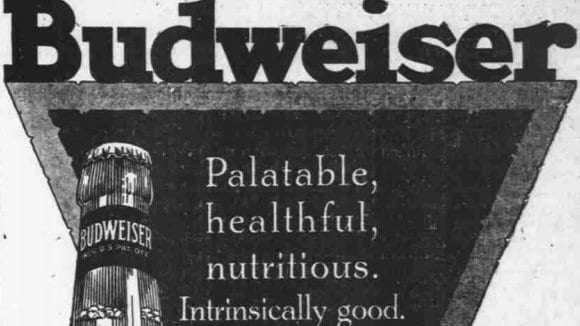
The Washington Times printed this beer advertisement on June 19, 1917, before local Prohibition took effect.