
Columbia Heights
Columbia Heights sits at the center of one of Washington’s most dramatic stories of rise, fall, and revival. Once a thriving streetcar neighborhood, it was devastated by the riots that followed Dr. King’s assassination in 1968 and spent decades in decline before a remarkable turnaround in the early 2000s. These posts trace the full arc of Columbia Heights history.

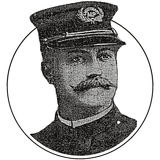
The club told women not to wink or accept rides. A contemporary report called it a movie promotion.
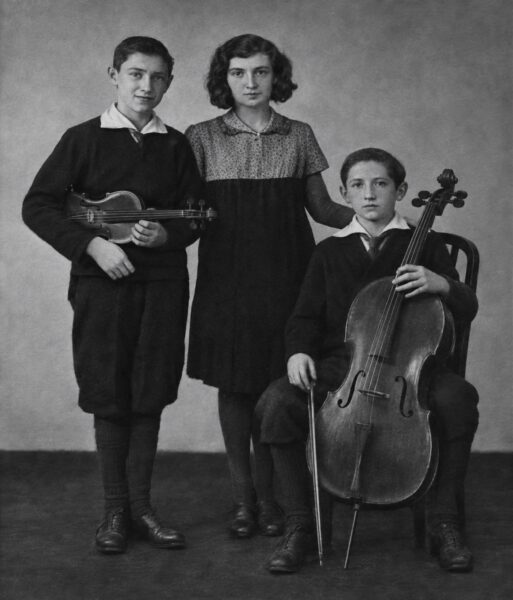
Sylvia Altman entered Central High School at 10 and performed with her brothers. Decades later, Julian’s violin proved to be the missing Huberman Stradivarius.

In 1927, the Arcade Market at 14th and Kenyon proposed rooftop parking for shoppers. A newspaper report explains the plan and the approvals it needed.

In 1906, the Washington Post linked nine deaths to Columbia Heights. Its account reveals both local grief and a muddled tally.

How did Columbia Heights get its street names? This history goes back to the early 1900s when street names came into alignment with the rest of the District.
There’s more where these came from.
Lost Washington stories in your inbox most mornings: the newest, plus a few from the archive.

The Warder Mansion is the only H.H. Richardson building left in Washington. In 1923 an architect bought the doomed downtown house, numbered every stone, and moved it a mile and a half up 16th Street.
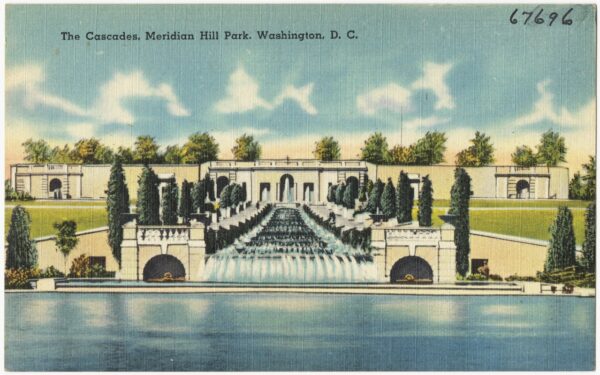
Meridian Hill Park’s story reaches beyond its terraces, from a proposed presidential home to the Malcolm X name and Sunday drums.

A series of photos shows Columbia Heights in the immediate aftermath of the 1968 riots. The Tivoli Theater and the commercial blocks on 14th Street had burned.
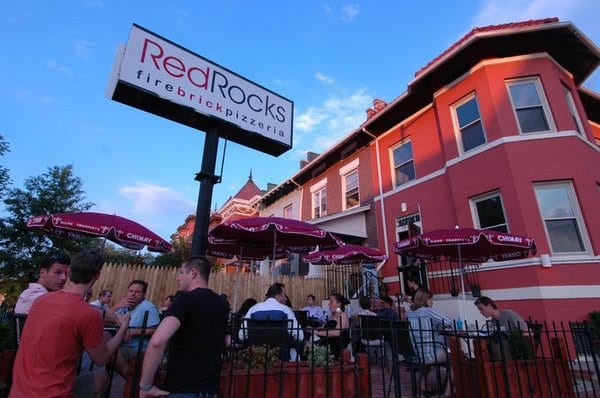
I am obsessed with Red Rocks at 11th and Park NW. I have been since day one. In the hopes that I can convince my wife to go there tonight (or at least this…
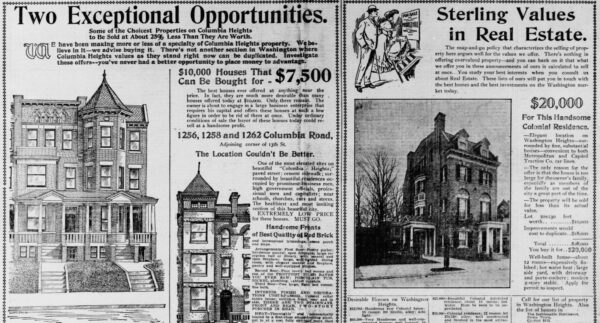
A May 1904 Evening Star advertisement offered properties in Columbia Heights as development filled the neighborhood.

An 1869 property map of John Sherman’s subdivision of Columbia Heights. Kennesaw Ave. is now Irving St., and the road from Pierce’s Mill is today’s Park Rd.
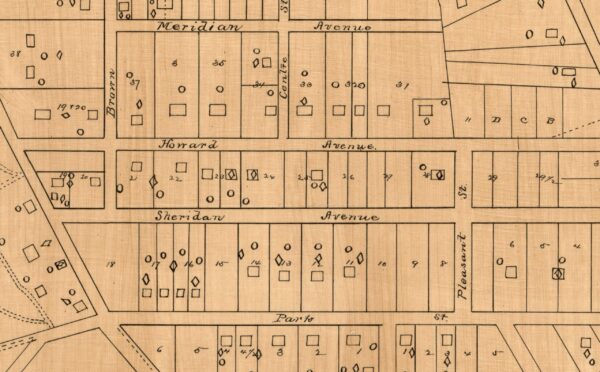
An 1885 map labels the area as part of Mount Pleasant and shows Howard and Sheridan streets, later renamed Newton and Monroe.
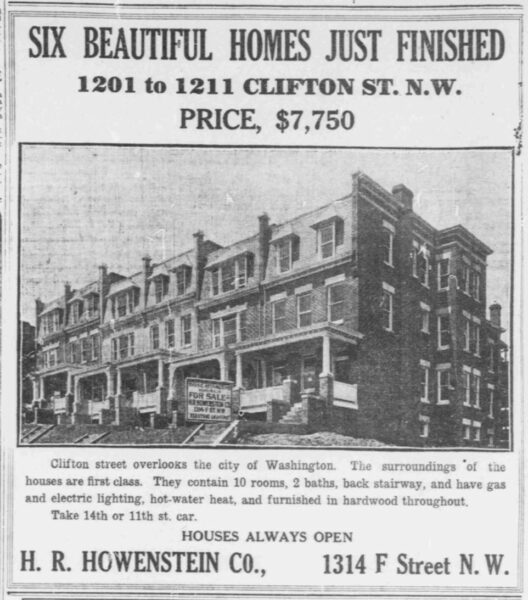
A June 1910 advertisement offered newly finished Clifton Street houses in Columbia Heights for $7,750.

An Evening Star ad offered homes on New Hampshire Avenue between Georgia Avenue and 11th Street in September 1912.

A November 1921 Washington Times advertisement offered Columbia Heights homes for $6,300.
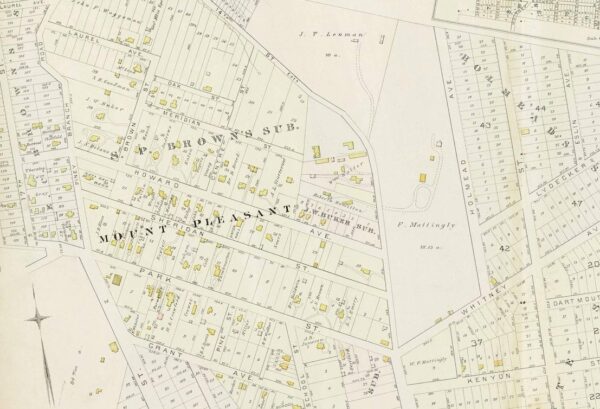
Whitney, Howard, Sheridan and Kenesaw appear where later maps show Park, Newton, Monroe and Irving.

In 1996, the District canceled a Herbert Haft partnership’s development rights after years of litigation over Columbia Heights land.
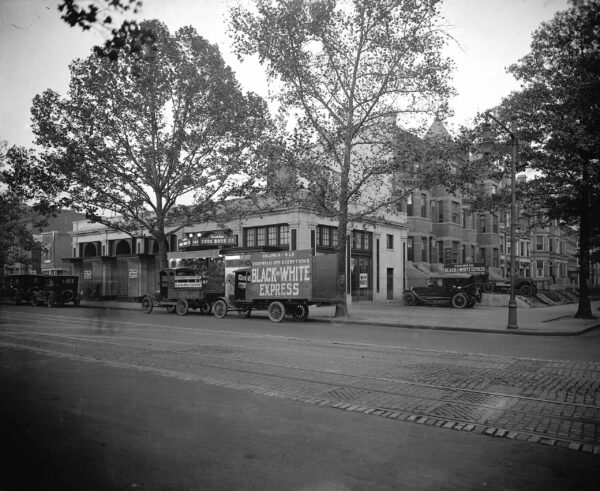
The northeast corner of 14th and Irving St NW in Columbia Heights, around 1918 to 1922. Gude Bros. Co. stood at 3103 14th St NW. None of it survives.

A 1919 map records Columbia Heights and the buildings along 16th Street NW.

Washington Post advertisements from July 1932 offered apartments at the Parkside, Highlands and Westmoreland.