
Capitol Hill
Capitol Hill is one of the oldest and most historically layered neighborhoods in Washington, stretching from the Capitol itself east through the rowhouse blocks that housed members of Congress, their staffs, and generations of working families. These posts dig into the neighborhood’s history, from its earliest houses to the urban renewal battles that defined it in the 20th century.
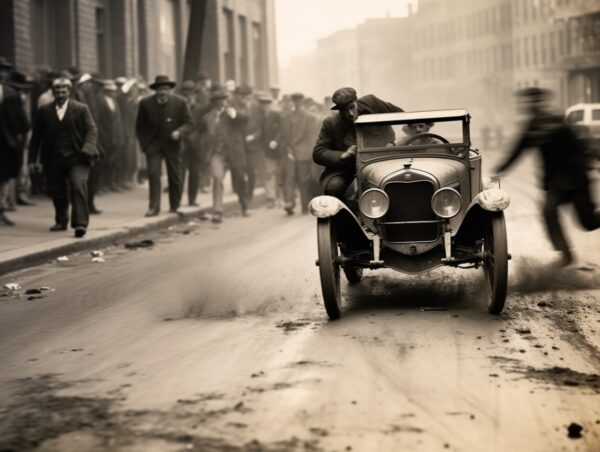
Before dawn on March 11, 1926, 19-year-old Francis Aebersold blazed out of Anacostia in a Peerless touring car carrying 180 quarts of corn whiskey, four DC officers chasing him north at 60 miles an hour, guns drawn.
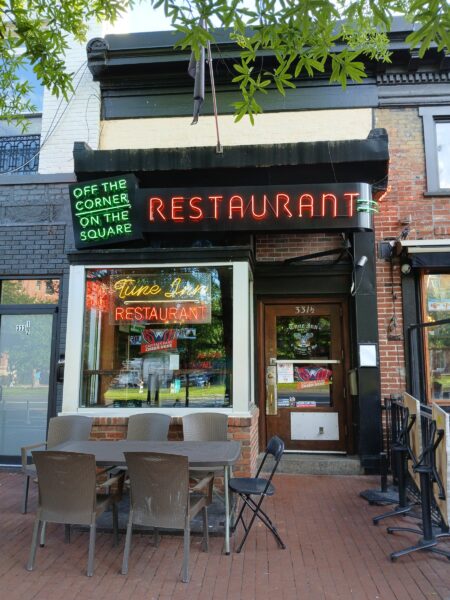
Three blocks from the Capitol dome sits a 1947 dive bar with deer butts on the wall and a Nardelli behind the counter.

A rare 1876 photo shows Frederick Douglass at his first DC home, 320 A Street NE on Capitol Hill, years before Cedar Hill. The house still stands today.

Before he told the Germans “Nuts!” at Bastogne, Anthony McAuliffe was an Eastern High School kid, class of 1916.

A waterspout rose from the Potomac below Alexandria, came ashore, and tore a 15-mile path across Washington in under half an hour.
Lost Washington stories, in your inbox.
The newest story, plus a few from the archive.

Lincoln signed off on a naval hospital in 1864. By the time it opened on Capitol Hill in 1866, the war it was built for was already over.

In 1796 an Englishman named William Tunnicliff opened the first hotel in Washington, D.C., a brick house on Pennsylvania Avenue SE that survived for 135 years. The place we call Tunnicliff’s Tavern today on 7th Street SE borrows the name. The original is something else entirely.

On February 28, 1890, former Kentucky Congressman William Taulbee was shot on the Capitol’s marble staircase by a journalist.

In 1877 a 23-year-old draftsman named Richard Siebert filed a sweeping redesign of the U.S. Capitol with the Copyright Office. Then he vanished.
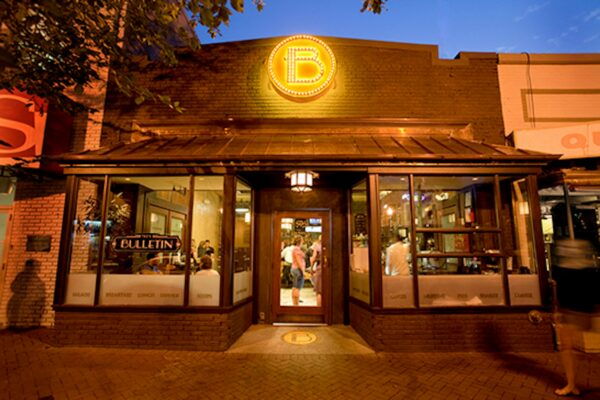
The one-story brick at 505 8th Street SE on Barracks Row was built in July 1928 for a real-estate man named Joseph Shapiro. Nearly a century later, the same shop is Ted’s Bulletin.
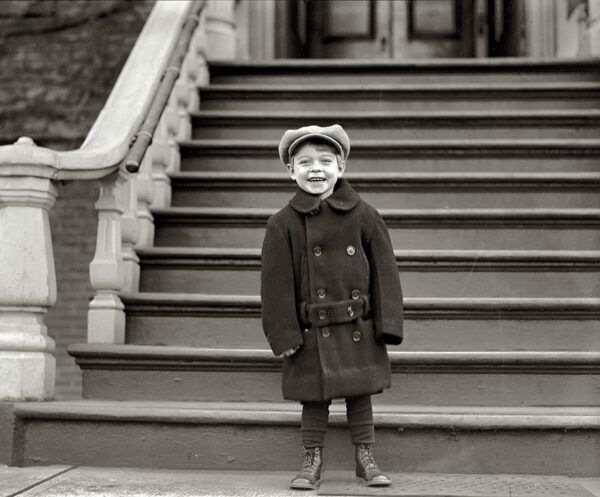
In 1925, five-year-old Melvin Jones punctured his heart with scissors. Washington doctors saved his life in a surgery that made national headlines.
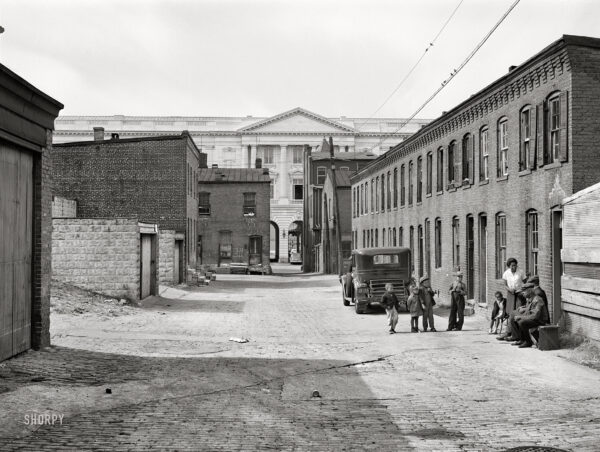
What was alley living like near Capitol Hill? This photo shows Schott’s Alley, razed in the 1940s to make way for the Dirksen Senate Office Building.

An Evening Star advertisement offered houses at 11th and D Streets NE for $5,200 each in May 1904.

A 1960s photograph shows work on the Capitol dome and rows of cars parked in front of the building.

What is the smokestack behind St. Peter’s Church at 2nd and C St. SE on Capitol Hill? A reader’s photo, a satellite view and a 1921 Baist map.

In October 1905, Navy Yard worker Rudolph Scheitlin came home to 750 Ninth Street SE and found his wife and another man dead. The papers and the census fill in the rest.

The Sherman house in the 300 block of Third Street NW, photographed around 1923 for the National Photo Company. How different does 3rd Street look now?

A photograph shows Whitman’s Market under the United Food Stores name at 6th and A Streets SE around 1932.

Pages from both sides of the aisle met outside for a snowball fight.

An 1888 map uses pink for brick buildings and yellow for wood-frame structures along East Capitol Street.