
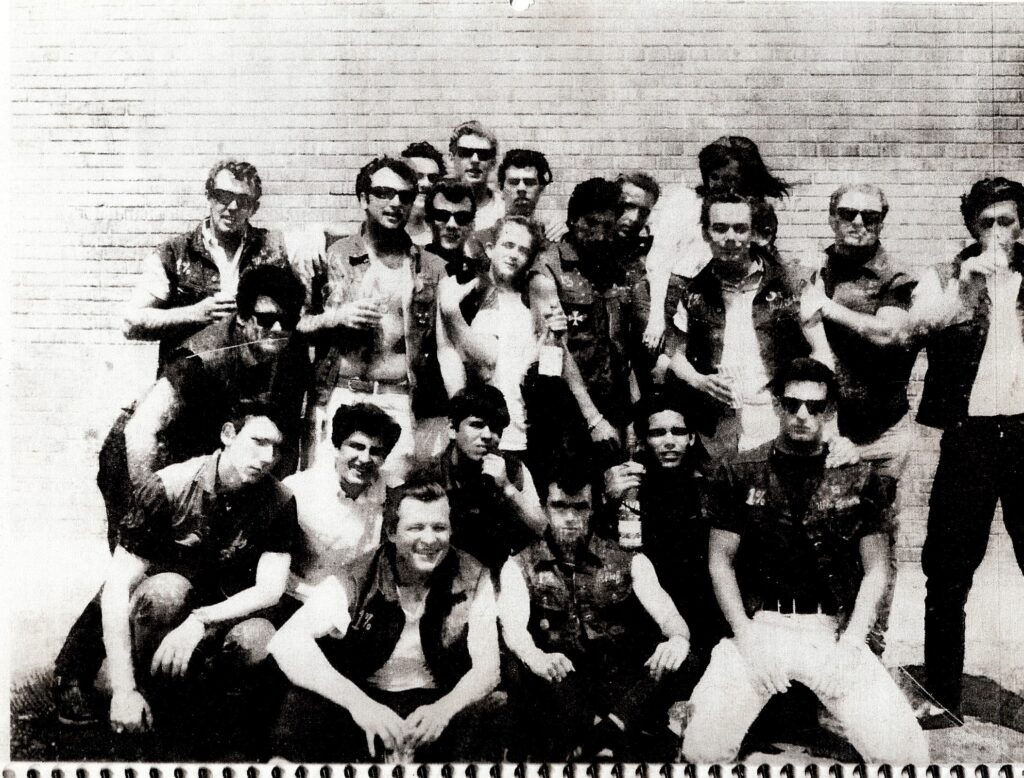
On the night of June 14, 1966, the Pagans and the Avengers turned the Safeway lot at Arlington’s Lee-Harrison Shopping Center into a gunfight. Police had been tipped off hours earlier and were watching when the first shots rang out.
Listen to the episodeThe Best Of
A good place to start. These are the stories readers keep coming back to, and the ones they share with family and friends.
TomWhy Is It Named...?
The origin stories behind Washington, DC street names, neighborhood names, and landmark names.
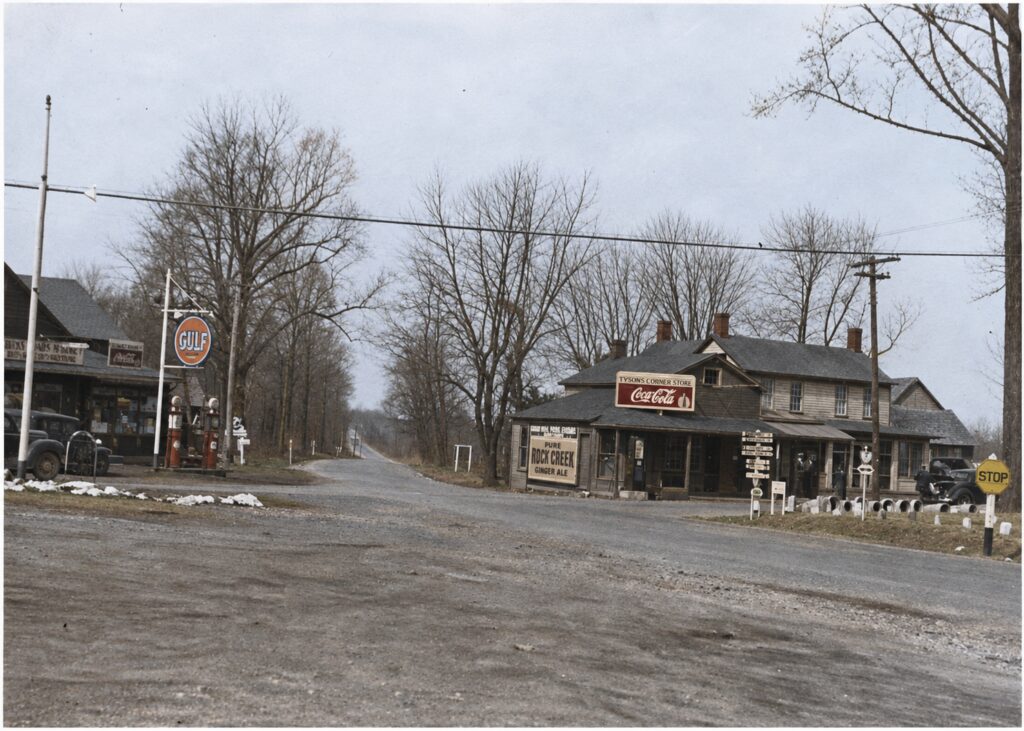
An 1862 Union Army map put “Tyson” beside the Peach Grove post office. Here is who he was, and how his country crossroads became plain Tysons in 2016.
A rough, all-Irish neighborhood called Swampoodle once stood where Union Station is now. The railroad cleared it, and DC forgot.
Washington’s streets run H, I, K. The John Jay grudge story is a modern myth. The first engraved map already skipped J in 1792, and nobody wrote down why.
Three rocky islands in the Potomac come with a drowning legend that has been retold, and reinvented, since at least the 1890s. Here’s where it came from, who owned the rocks, and the bridge that nearly buried them.
The name Langley predates the CIA by centuries. Its story leads from Thomas Lee’s Virginia estate to his family’s connections in England.
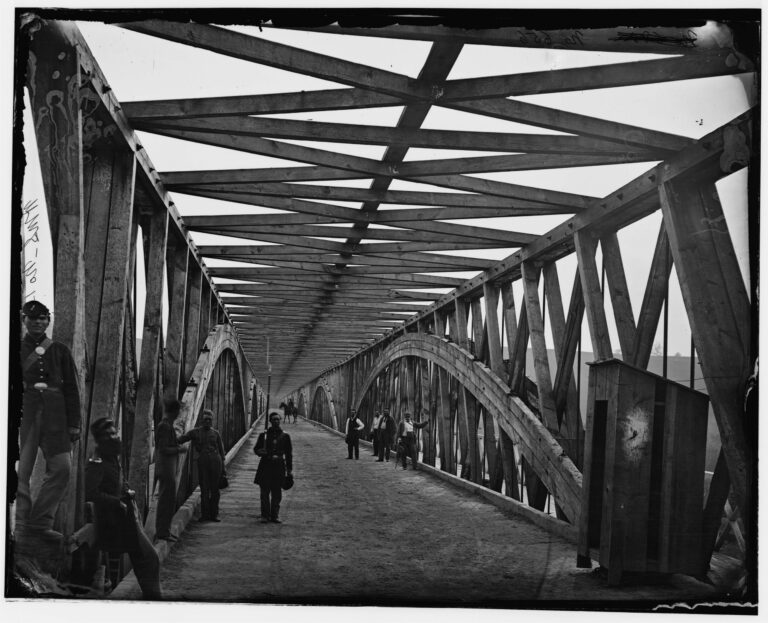
Chain Bridge no longer hangs from chains, but an earlier crossing did. A 1909 newspaper account explains how the name outlasted the design.
Letters run east-west, numbers north-south, and state avenues cut across on the diagonal. Here’s where that rule came from, and the 1897 plan to rename it all.
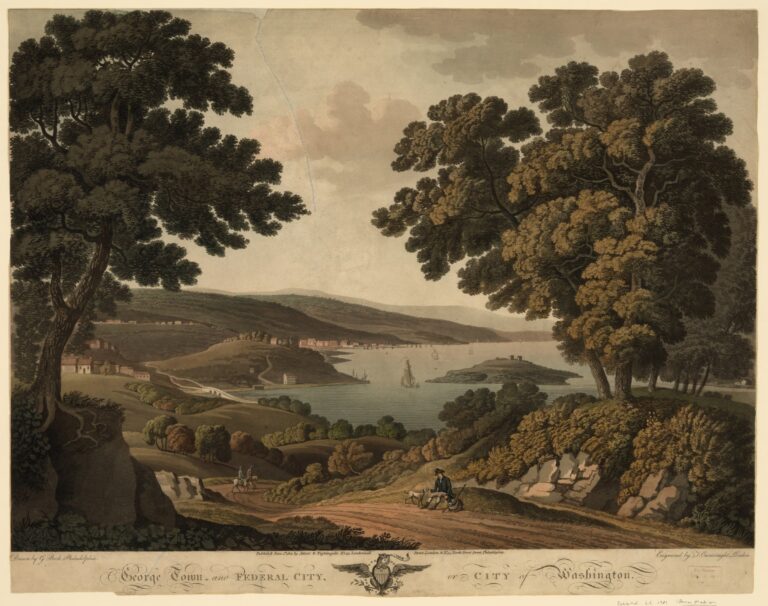
On September 9, 1791, three commissioners named the federal district the Territory of Columbia, for Columbus, and the federal city the City of Washington.
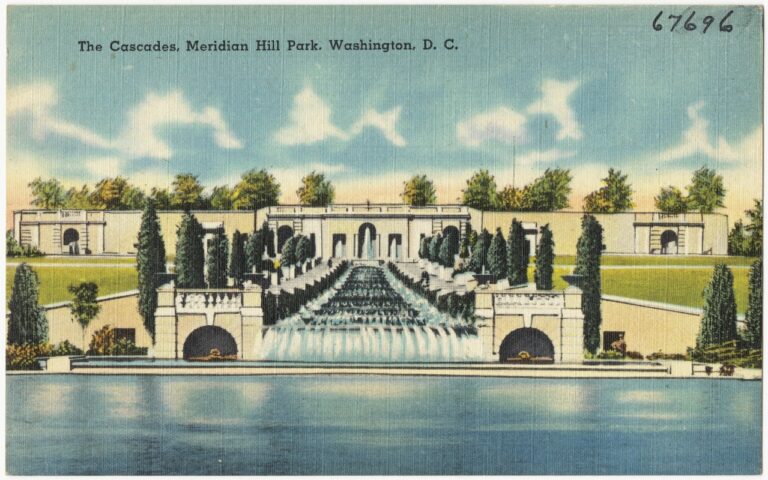
Meridian Hill Park’s story reaches beyond its terraces, from a proposed presidential home to the Malcolm X name and Sunday drums.
Trinidad’s name connects a Caribbean island to a Washington farm. The land later passed through a university and a brick company.
Arlington’s Glebe Road isn’t named for some colonial aristocrat. It’s named for a farm that supported the parish minister.
Notable People & Places
Famous and infamous Washingtonians and the buildings tied to their names.
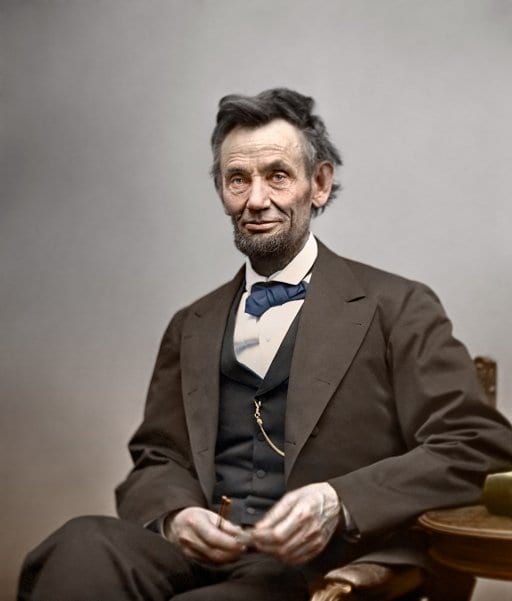
This 1865 portrait of Lincoln was taken weeks before his assassination. Colorized, it brings the 16th president into startling focus.
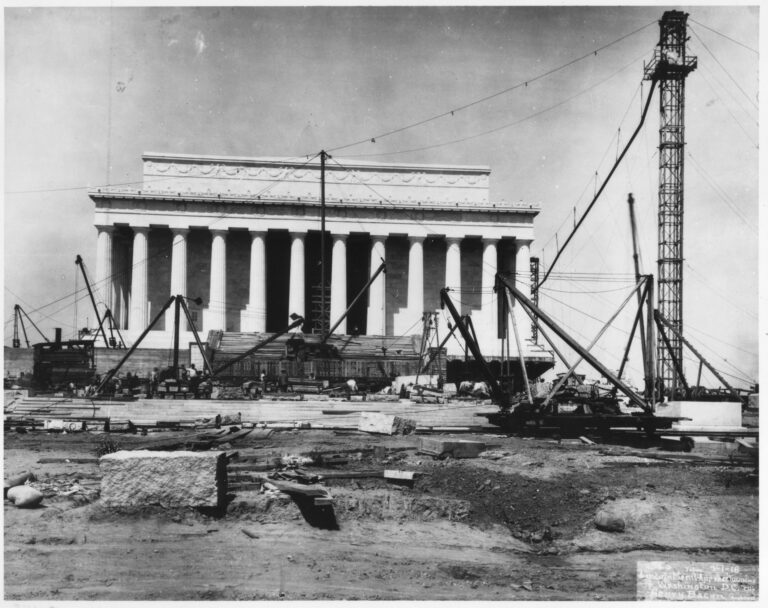
The Lincoln Memorial rose from dredged Potomac mud on 122 piers sunk to bedrock. At its 1922 dedication, Robert Moton had to cut the ending that called it a “hollow mockery.”
In May 1975, Susan Ford hosted her Holton-Arms senior prom at the White House, the only one ever held there. President Gerald Ford’s daughter let the Class of ’75 take over the East Room.
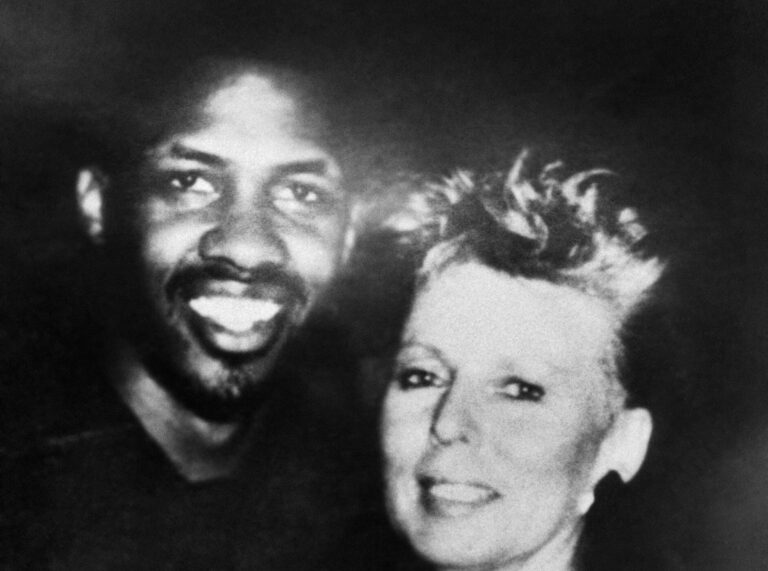
Rayful Edmond III ran a DC crack cocaine empire bringing in $2 million a week before his 1989 arrest. Released in July 2024, he died in December 2024 at 60.
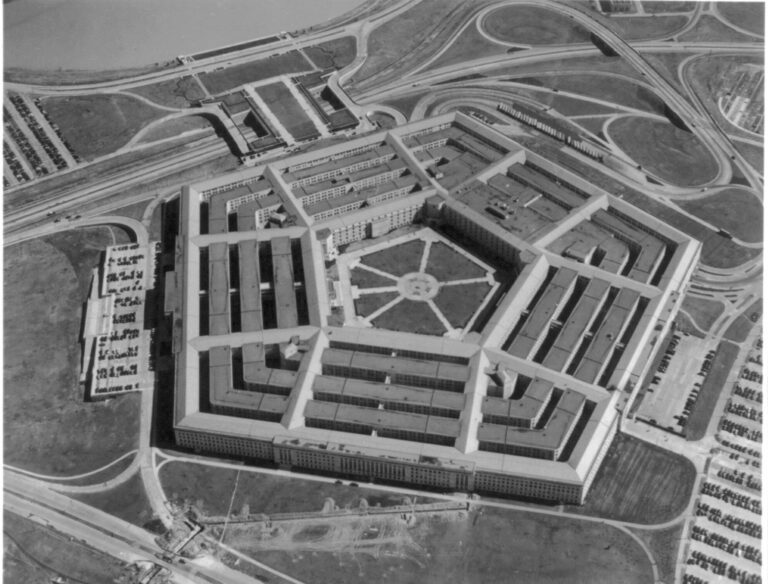
The Pentagon’s five sides were drawn over one weekend in July 1941 to fit an Arlington farm tract bounded by roads. Then Roosevelt moved the site, and the shape stayed.
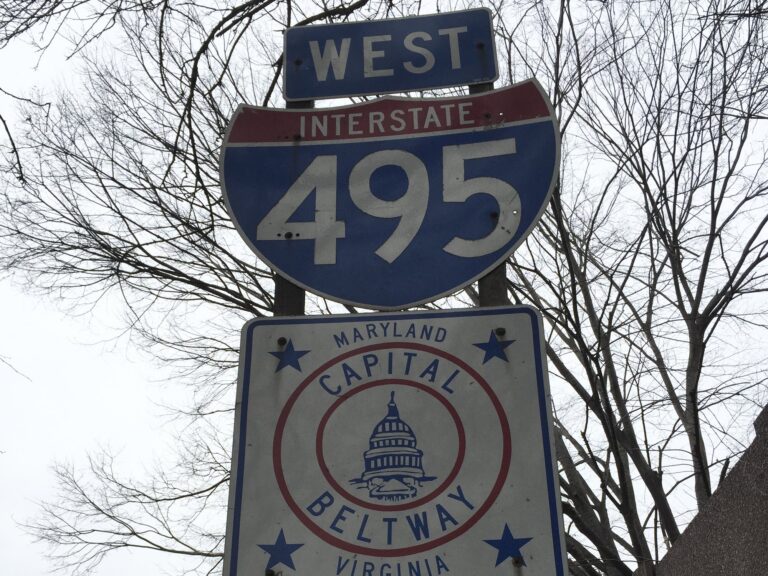
Before consultants were called Beltway bandits, burglars used the highway to escape across the suburbs. Newspaper accounts trace two meanings of the nickname, without proving a connection.
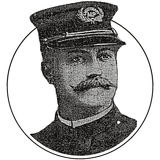
In 1908, retired policeman William West told the Sunday Star he had arrested President Ulysses S. Grant for fast driving at 13th and M Streets in 1872. We found no report of it in the 1872 Evening Star, but the papers did catch General Grant speeding twice in 1866.
Frank Morris grew up in Washington foster homes with a 133 IQ. In 1962, he and two accomplices vanished from Alcatraz. They were never seen again.
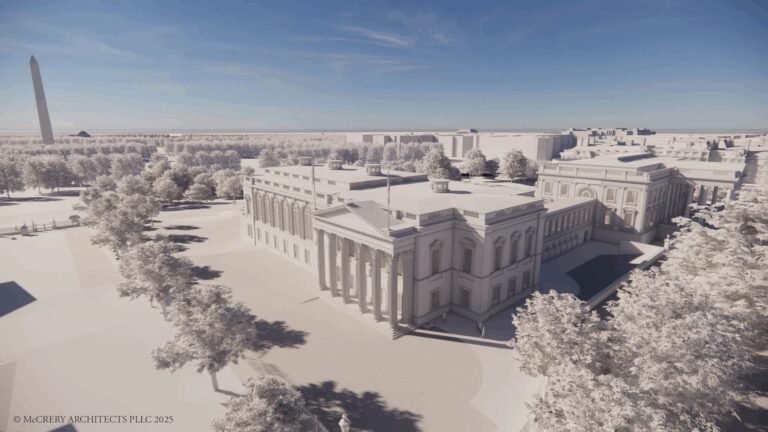
The East Wing began as a 1902 cloakroom. In 1942 a second story went up to hide a bunker. In October 2025 it came down for Trump’s ballroom.
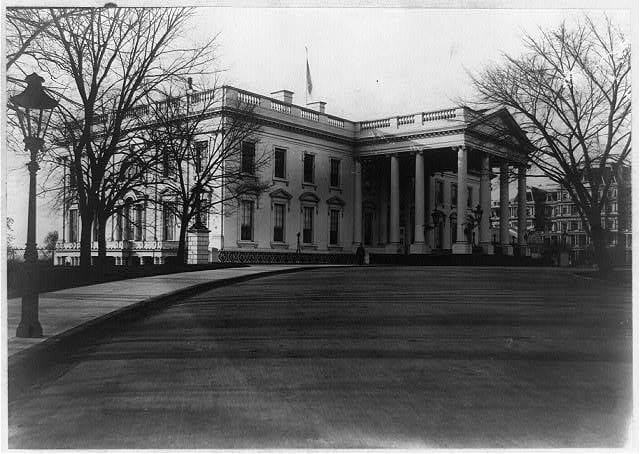
The White House hadn’t had a serious renovation in 85 years when TR hired McKim, Mead & White in 1902 and got hammered for it.
The Washington Redskins were the last NFL team to integrate. Owner George Preston Marshall held out until 1962, under pressure over the new DC Stadium on federal land.
Lost Washington stories, in your inbox.
The newest story, plus a few from the archive.
If Walls Could Talk
What happened inside Washington, DC’s buildings.
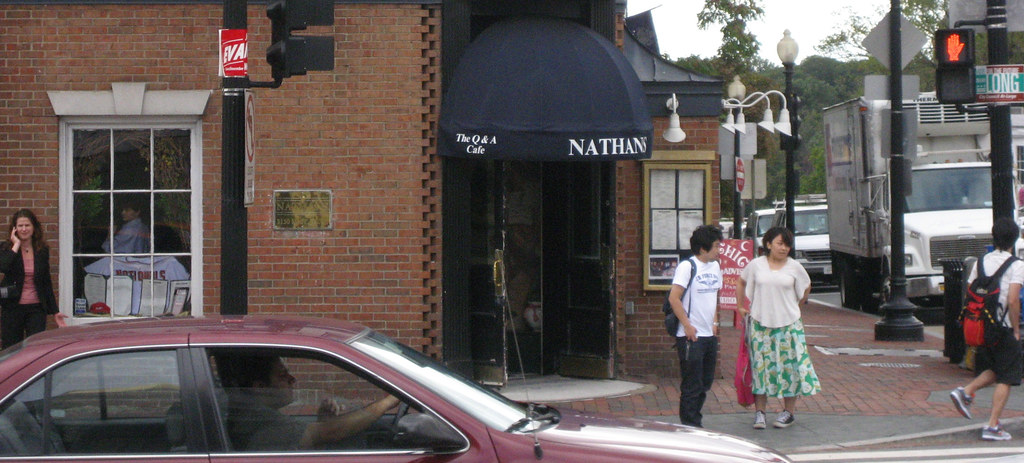
Carol Joynt inherited Nathans and a nearly $3 million tax crisis in 1997. She kept the Georgetown bar open for another twelve years.
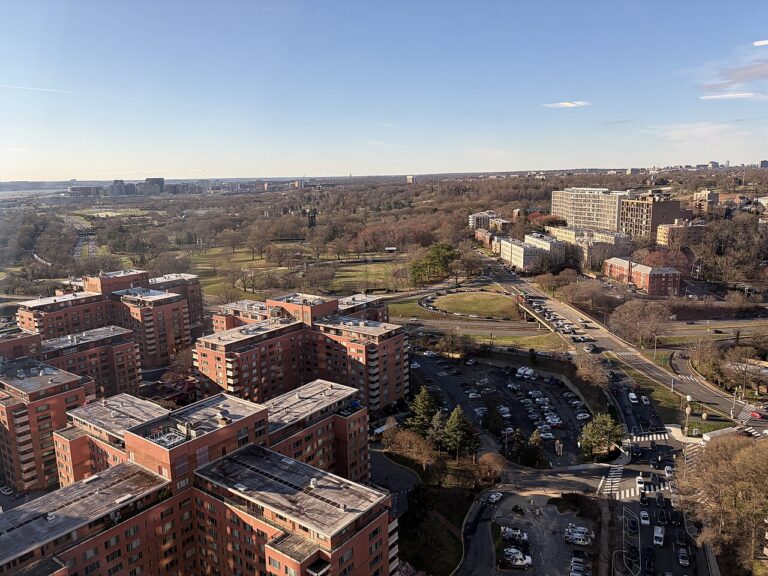
Own a home at River Place in Rosslyn and you don’t own the land beneath it. In 2052, the 99-year lease on the old Arlington Towers runs out. Inside the history of Rosslyn’s brick towers, from a diplomats’ training garage to the 2003 ballpark that almost replaced them.
The Willard Hotel closed without warning in 1968 and sat empty for 18 years. How a $73 million renovation saved one of Washington’s most historic buildings.
It is a little after 2:15 p.m. on Friday, March 2, 1973. The top floors of a 26-story apartment tower under construction at Bailey’s Crossroads are about to fall floor by floor. Fourteen men on the site will not go home.
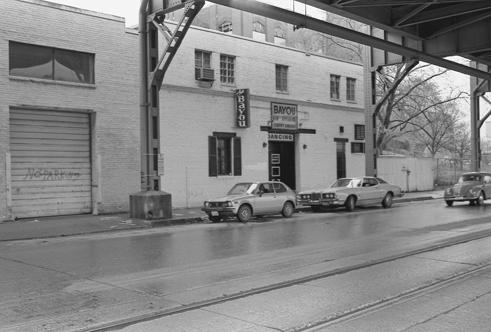
Forty-five years of Georgetown’s loudest room. The Bayou opened in 1953, closed in 1998, and put U2, Dave Matthews, and a whole DC scene through its doors.
Au Pied de Cochon served Georgetown late into the night until 2004. Its story includes a KGB defector who walked away from the CIA.
Three blocks from the Capitol dome sits a 1947 dive bar with deer butts on the wall and a Nardelli behind the counter.
Mary Surratt’s boarding house at 604 H Street NW, where John Wilkes Booth plotted Lincoln’s assassination, is now the Wok and Roll.
Oleg Deripaska’s mansion at 2501 30th Street NW replaced a 30-room Tudor that Herbert Haft razed in 1985 to build his ‘mini-Versailles.’
In 1910, Taft, Hannis Taylor, and Washington’s Board of Trade tried to undo the 1846 Alexandria retrocession. Virginia and a lame-duck clock stopped them.
Historical Events
The big days in Washington, DC history.
In March 1791, George Washington talked the Maryland farmers and planters who owned the future capital into signing their land over in trust.
Until September 1986, any 18-year-old could legally buy beer and wine in Washington, DC, and Georgetown drew young drinkers from Maryland and Virginia. Then came a fatal Beltway crash and a 10 to 3 council vote.
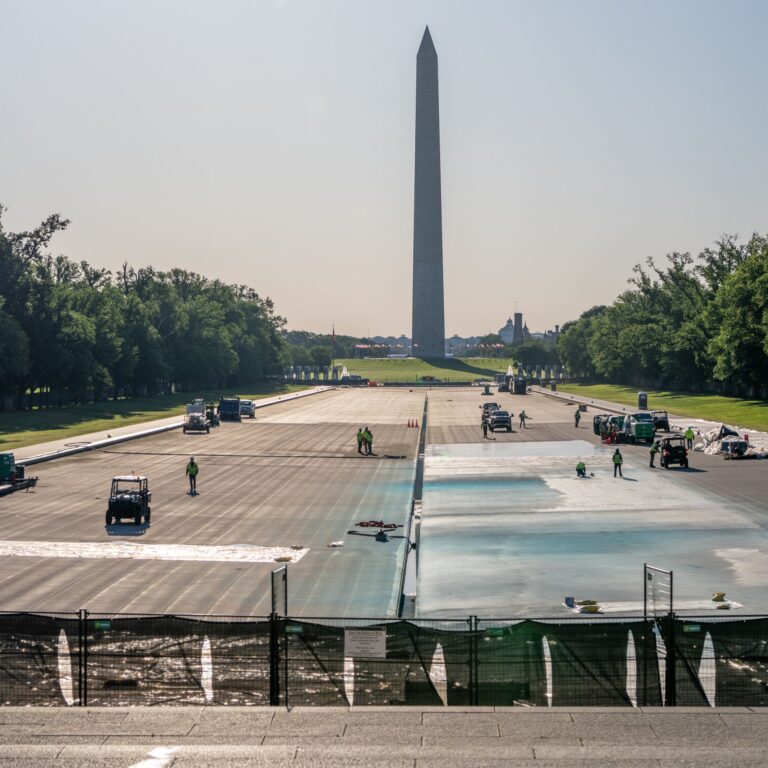
Henry Bacon designed the Reflecting Pool as a mirror. Its history includes leaking foundations, a 2012 reconstruction and blue resurfacing in 2026.
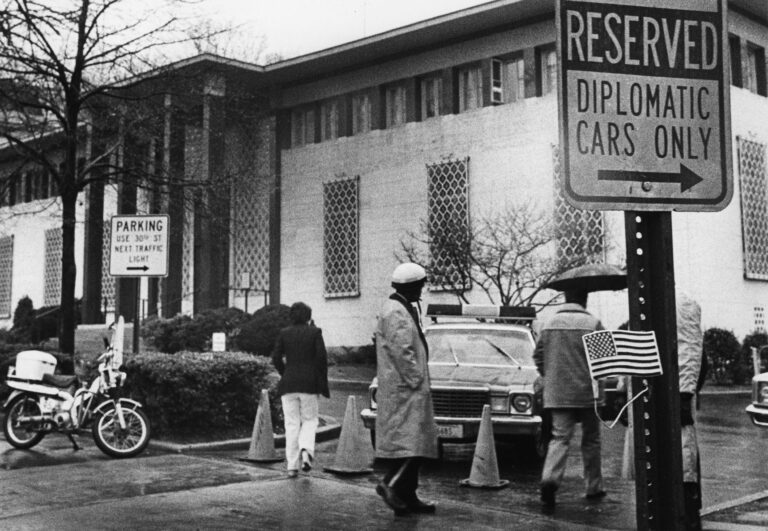
Before Iran’s diplomats left in 1980, the Massachusetts Avenue embassy hosted parties, protests and the destruction of thousands of bottles of alcohol.
“Lips That Touch Liquor Shall Not Touch Ours” was a temperance slogan. In December 1913, more than 4,000 Prohibition supporters marched in DC.
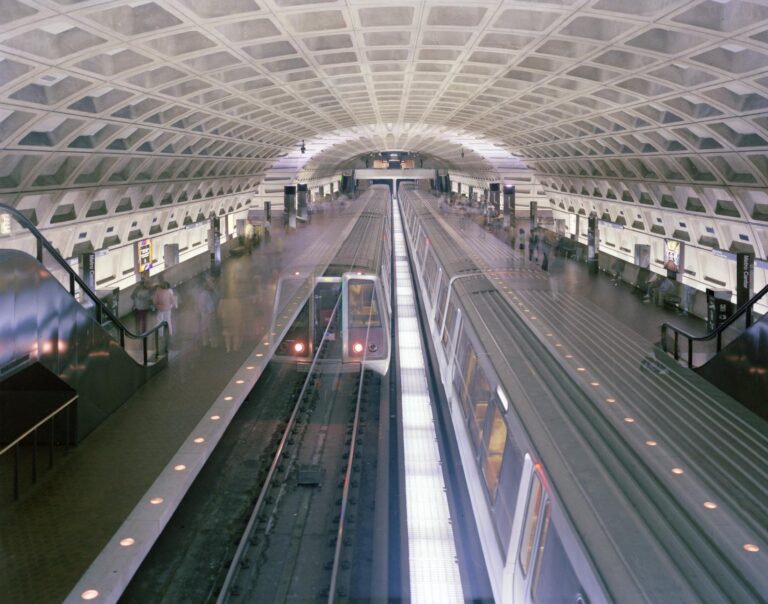
Washington’s Metro opened on March 27, 1976, with 4.6 miles of track between Rhode Island Avenue and Farragut North. All rides were free.
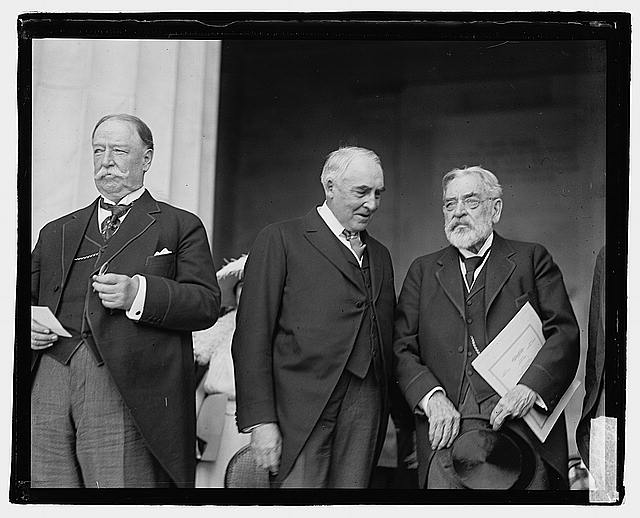
On May 30, 1922, Robert Todd Lincoln, 78 and the last surviving Lincoln son, attended the dedication of his father’s memorial on the Mall.
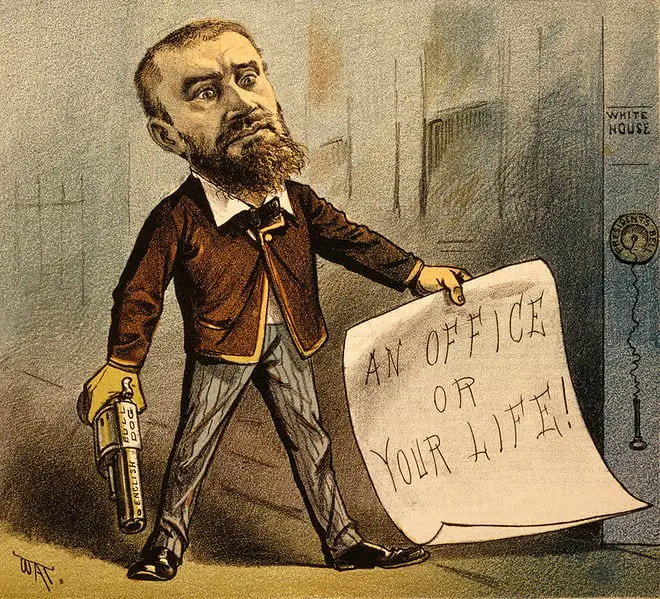
Before shooting President Garfield in 1881, Charles Guiteau spent years in Washington as a failed lawyer demanding a consulship he believed he was owed.
Faces & Places of Yesterday
Vintage photos of Washington, DC.
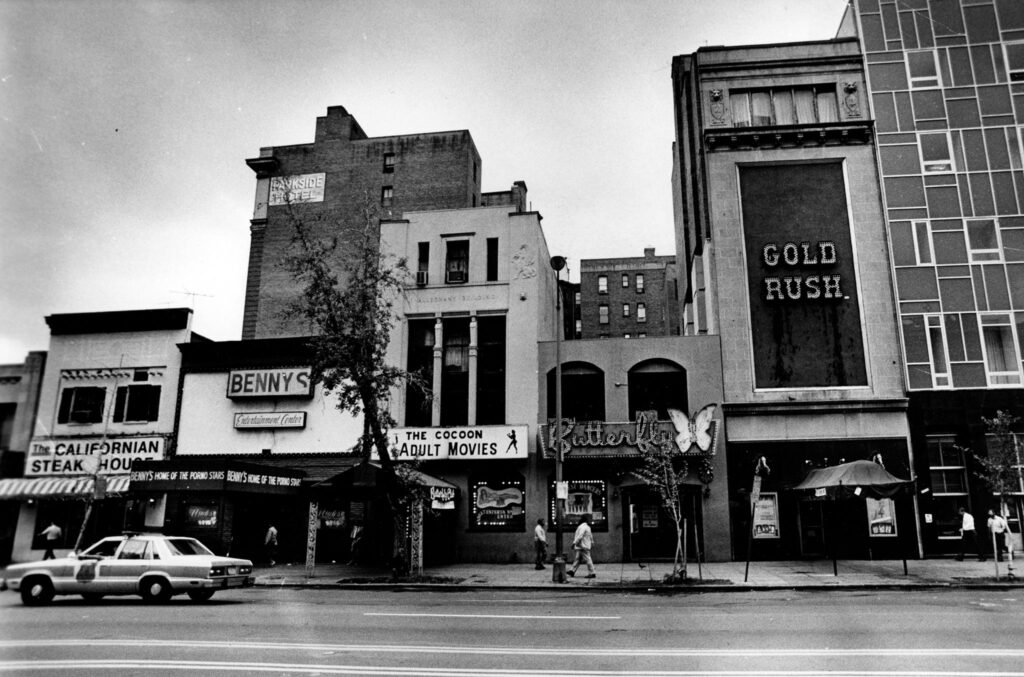
A few minutes before 3 a.m. on November 10, 1984, the dancers at Benny’s Home of the Porno Stars took the stage for the last time. By daybreak, the landlord was pulling down the awning.
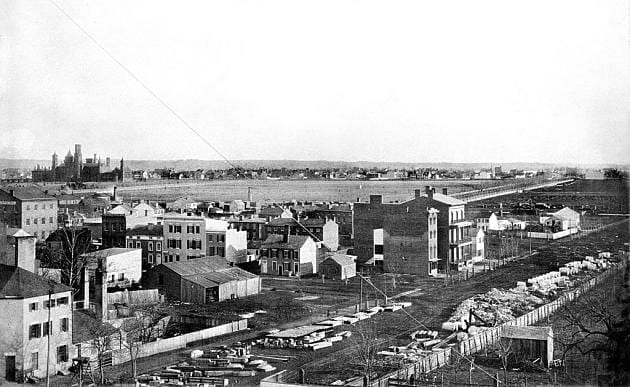
Murder Bay was the violent, vice-ridden neighborhood just east of the White House, now buried under the Federal Triangle. Here is what it looked like.
The Big Hunt opened in 1992 inside a 1928 storefront at 1345 Connecticut Avenue NW and closed for good in 2020. Inside Dupont Circle’s three-story dive bar with the safari kitsch, the hidden patio, and the Hell’s Kitchen basement.
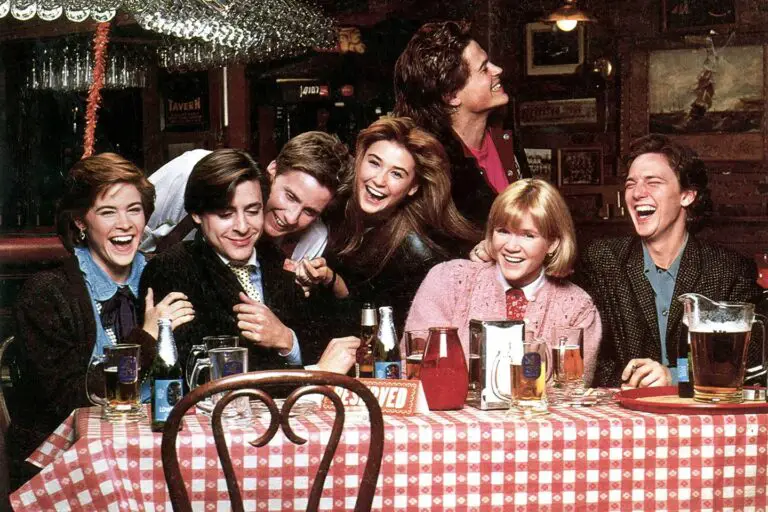
The Tombs, a basement bar at 1226 36th Street NW in Georgetown, was the real inspiration for St. Elmo’s Bar in the 1985 Brat Pack film St. Elmo’s Fire.
The Brickskeller served beer from a Dupont Circle basement at 1523 22nd Street NW, with a list thicker than a phone book, until it closed in 2010.
Before Blockbuster, the DC area had Erol’s Video Club. Turkish immigrant Erol Onaran arrived in 1960 with $16, opened a Georgetown TV shop in 1963, started renting tapes in 1980, and built the largest privately owned video chain in America before selling to Blockbuster for $40 million in 1990.
In October 1916, a convention of formerly enslaved people met in Washington. A photo from Cosmopolitan Baptist Church shows attendees as old as 104.
In 1973, a Washington investor group agreed to buy the San Diego Padres and move them to DC for the 1974 season. The deal collapsed at the last minute.
Lost History
Washington, DC neighborhoods and buildings that aren’t there anymore.
In 1863 a camp for freedpeople on 12th Street was torn down. Families who stayed settled in shanties nearby, the start of Hell’s Bottom.
On March 1, 1976, a Foreign Service officer killed his family in their Carderock Springs home and vanished. As of 2026, the manhunt is still open.
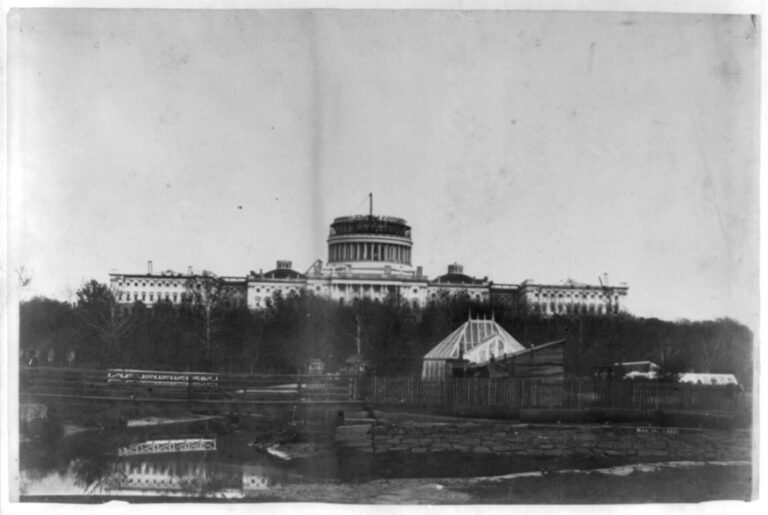
The hill under the U.S. Capitol was once part of a Maryland tract called Rome, owned by a man named Francis Pope, beside a creek he called the Tiber.
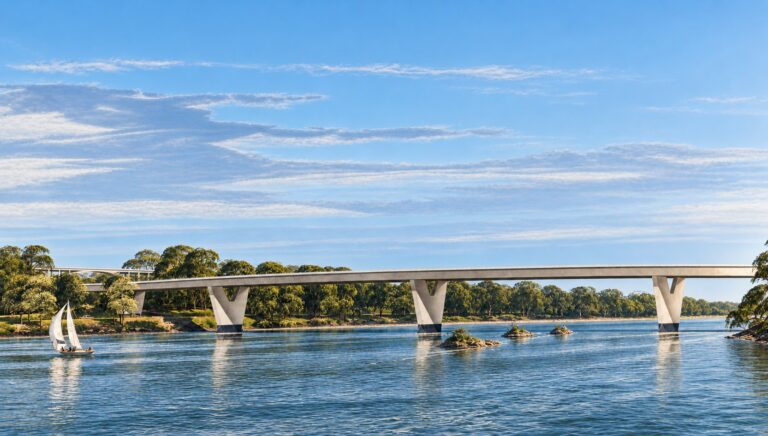
Planners proposed a bridge over the Potomac’s Three Sisters islands again and again. The 1960s version came closest, until a court fight killed it.
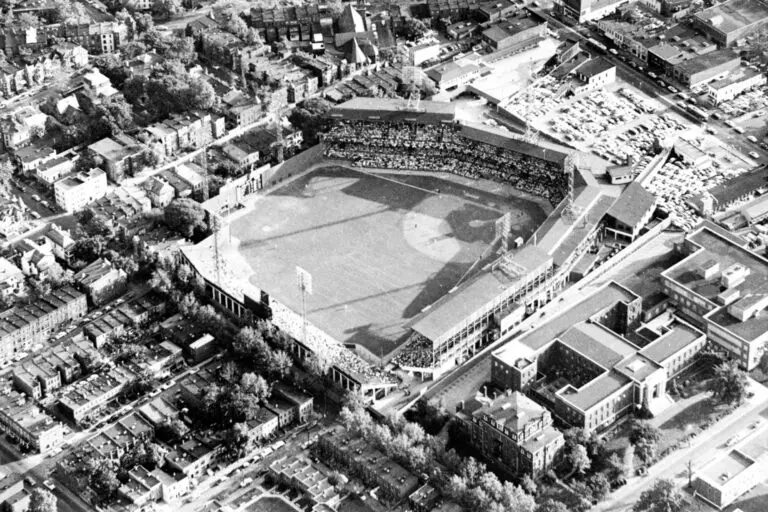
Griffith Stadium stood where Howard University Hospital is today. Full history: from the 1911 fire to Walter Johnson to the 1965 wrecking ball.
Braddock’s Rock was where General Edward Braddock reportedly camped on the Potomac in 1755, with a young George Washington along.
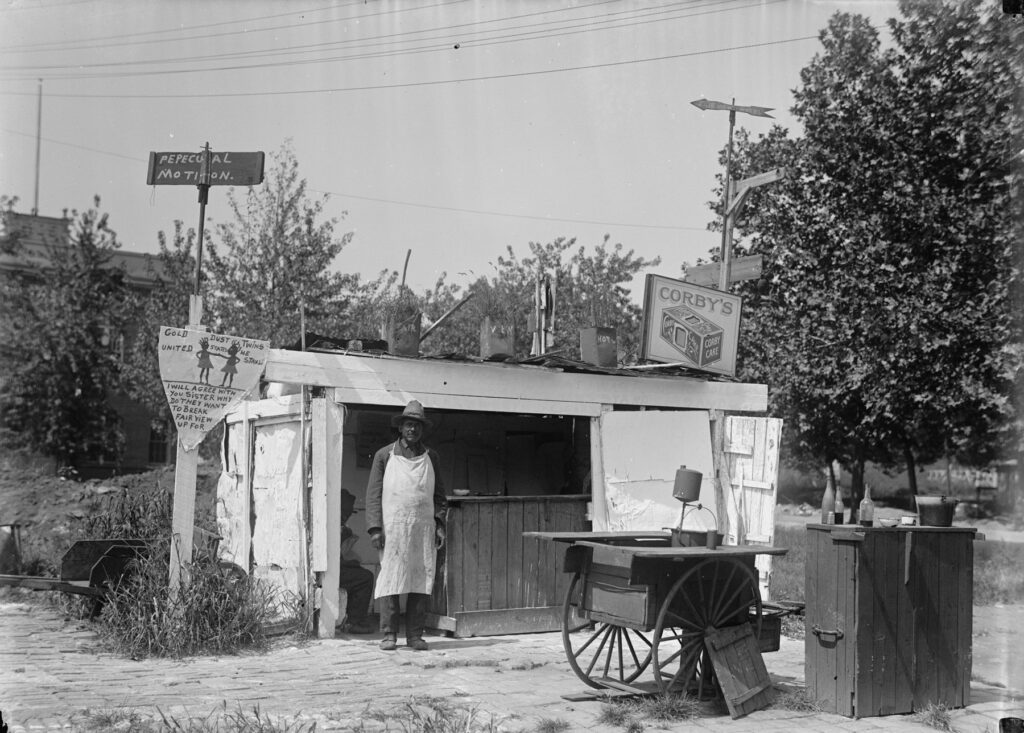
The squalid alley neighborhoods of late 19th-century Washington had names like Buzzard’s Roost, Ryder’s Castle, and Zig-Zag Alley.
From the Crazy Vault
The strangest stories from Washington, DC history.
In 1971, a dog named Ginger was found decapitated near Fletchertown Road in Bowie. Neighbors blamed the Maryland Goatman.
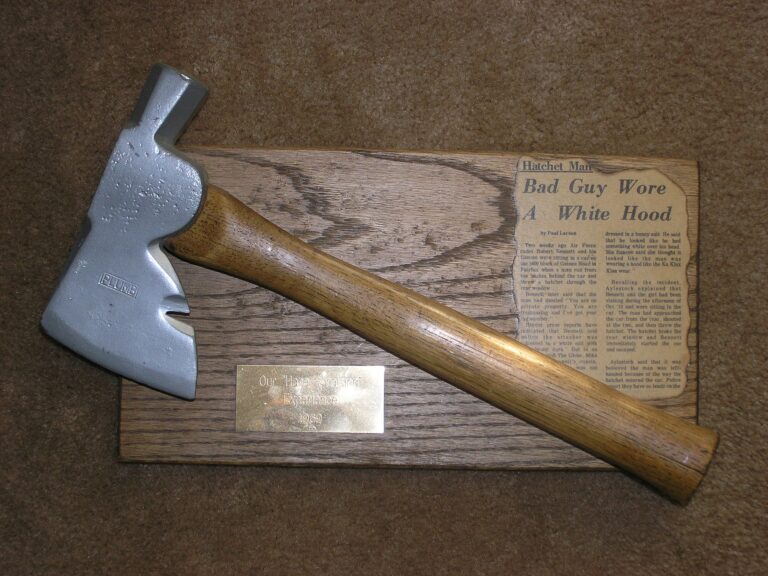
Just after midnight on October 18, 1970, a man in a white bunny suit threw a hatchet through a parked car’s window on Guinea Road in Fairfax County.
In 1911, Alexandria’s rivermen swore a 20-foot shark was climbing into their boats. The real Potomac shark is smaller, and it is a bull.
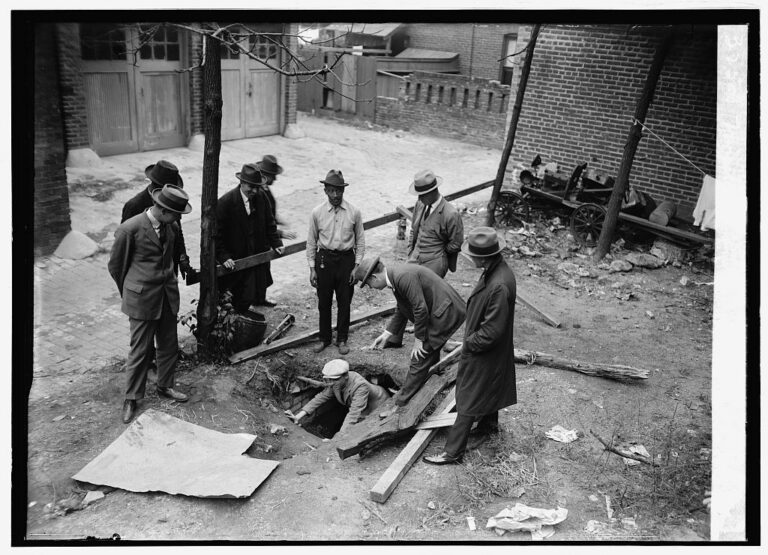
In 1924, a truck broke through the ground near Dupont Circle and exposed hand-dug tunnels. Smithsonian entomologist Harrison Dyar had dug them years before.
More favorites
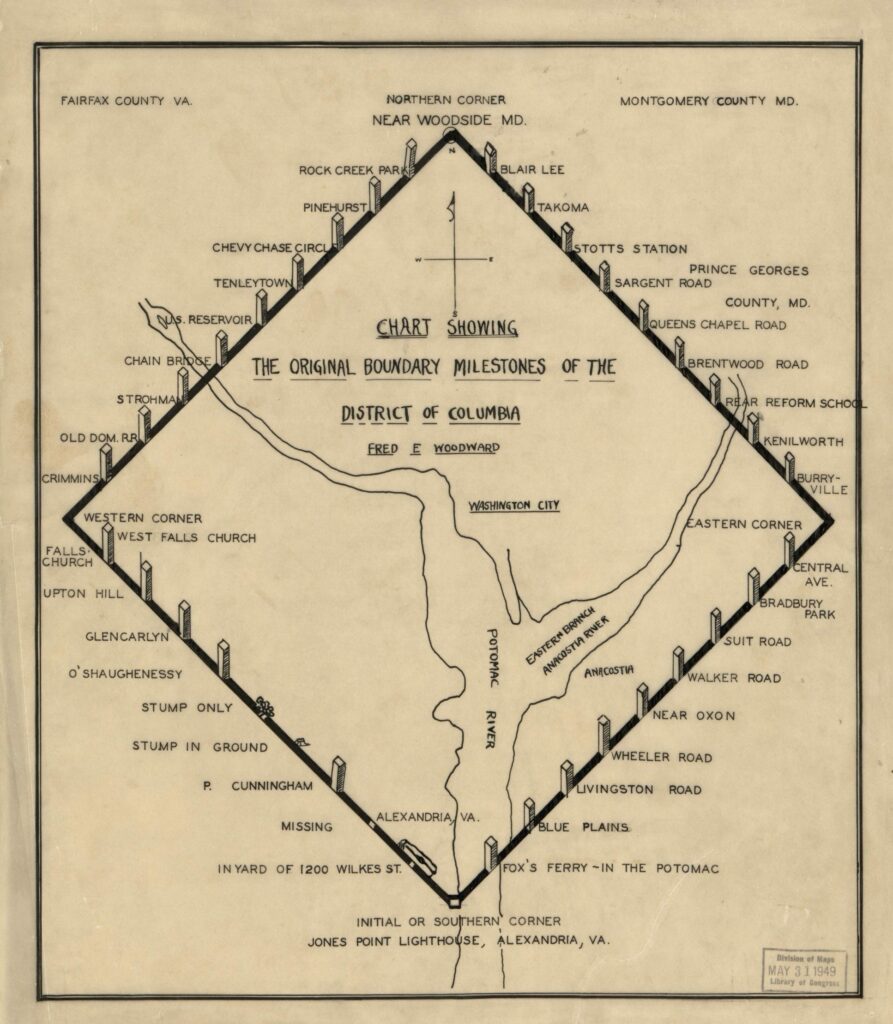
The 40 sandstone markers Ellicott and Banneker planted in 1791 and 1792 still stand at the original corners of Washington, D.C. Here is where to find them.
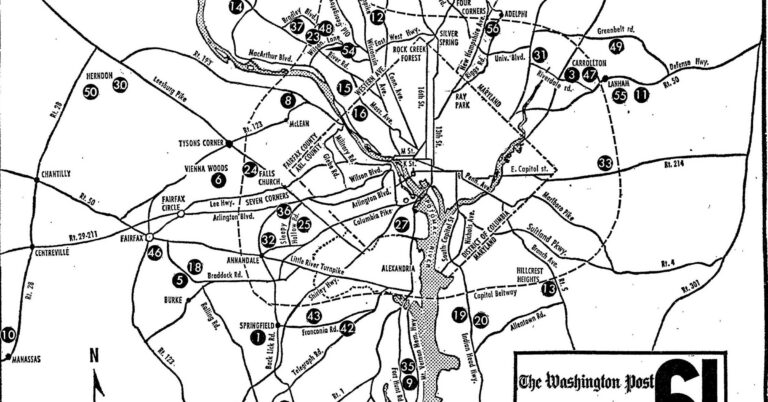
A September 9, 1961 Washington Post map of 57 new subdivisions in Maryland and Virginia, transcribed with builders, prices and 1961 driving directions.
Six spires of Alabama marble, 288 feet tall. The Washington DC Mormon Temple was finished in 1974 near Kensington, Maryland, for $15 million.
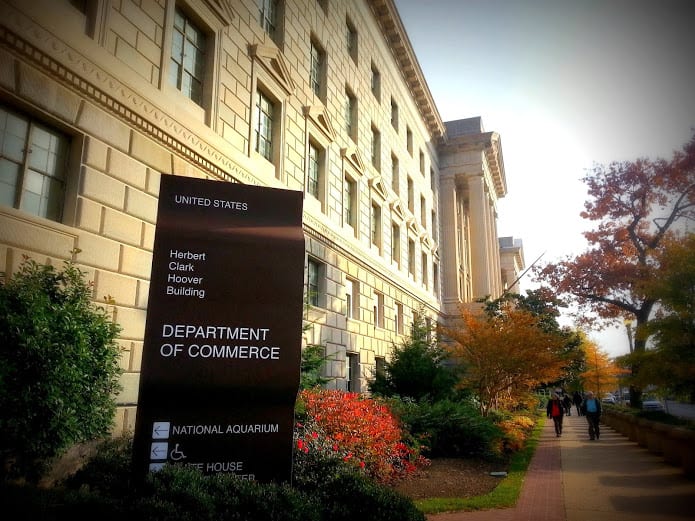
3,300 rooms, 3,701 radiators weighing 420 tons, and the largest federal office building in the country when it opened in 1932. That’s Commerce.
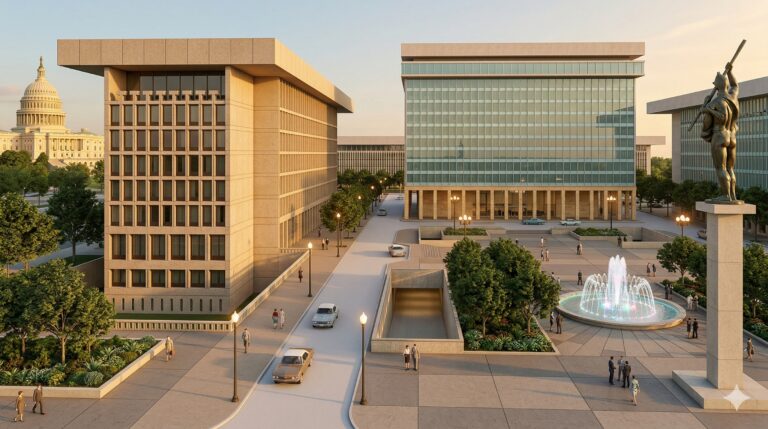
Before L’Enfant Plaza’s Brutalist towers, Southwest DC was a thriving neighborhood. We dug into the Evening Star archives to trace the full story, from the 1954 demolition to the Fedlandia proposals reshaping the area today.
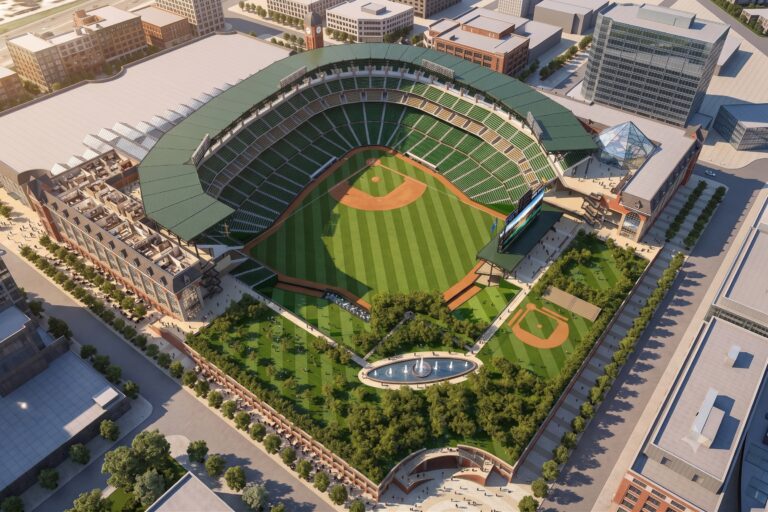
Before the Expos became the Nationals, investors proposed a Pentagon City ballpark. Here’s why Arlington withdrew its stadium sites.
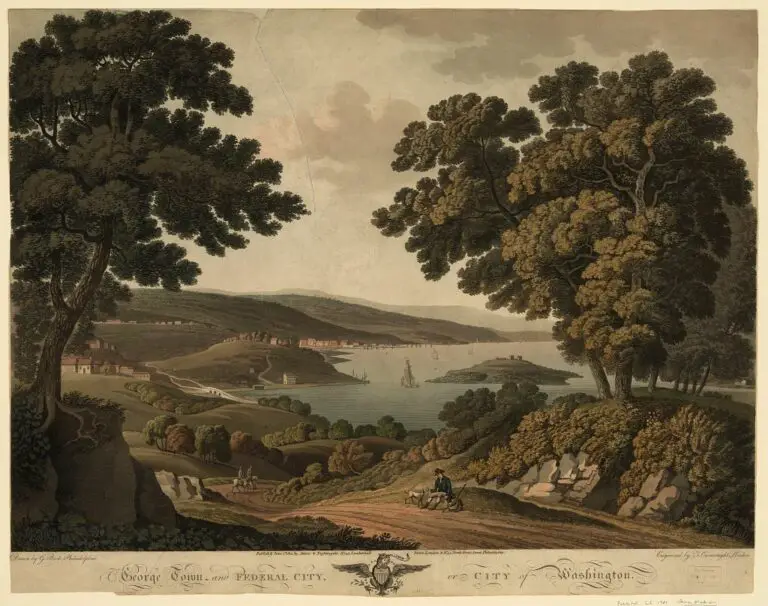
Cows in the streets and woods all around. Traveler John Davis saw Washington in March 1801, when Thomas Jefferson was sworn in at the half-built Capitol.