
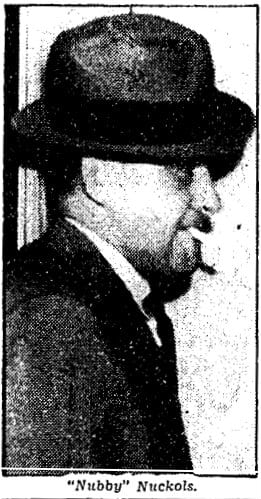
Mary Nuckols comes home around seven on a Saturday night in January 1938, lets herself into the apartment at 1636 Connecticut Avenue NW, and finds her husband on the floor. He’s in a maroon lounging robe, lying in a pool of blood, with a single .32 wound to the head. On the table is a note in his handwriting:
Darling, it was the best way … Thank you for your kindness.
He was forty-one. He was short, which is how he had picked up the nickname Nubby. And two days earlier, on the strength of arrests that would have been thrown out of any decent court, he had still been the king of bookmaking in Washington, DC.
His name was Carroll Peyton Nuckols. The DC papers had been chasing him for a decade by then, and they would chase him for one more news cycle before they let him go.
A Richmond Boy on Rhode Island Avenue
He was born August 2, 1896, in Centerville, Goochland County, Virginia, and grew up in Richmond. He came to Washington the way a lot of Virginia boys came to Washington in the 1920s: with a fast car and a load of liquor.
His DC police record went back to December 1921, but for years he stayed mostly quiet on the official rolls. Then, on Friday April 20, 1928, at seven in the morning, he was driving up Rhode Island Avenue NE at high speed with a forty-year-old divorced woman named Mamie Cooper in the passenger seat. She lived at 1208 Rhode Island Avenue NE. He hit another car and skidded a hundred yards. The car then slammed into a steel support of the railroad viaduct at Rhode Island Avenue and Fifth Street NE.
Mrs. Cooper went through the windshield and died on impact.
Nubby fractured his skull and woke up in Sibley Hospital with, per the Washington Post crime blotter for Tuesday April 24, 1928, a piece of wood from the chassis lodged in his mouth. He was charged with manslaughter, but the grand jury declined to indict, and he walked.
The Post never explained, and the existing record never explains, what Nubby and Mamie Cooper were doing in a car together at seven in the morning on Rhode Island Avenue. Beyond that, the file is silent.
Bootleg Liquor Up Route 1
By the early 1930s he was already a rum runner, bringing loads of “cawn” and “Maryland rye” up Route 1 from Richmond to the dry capital. The liquor was a way in, but the gambling was the future.
He married a woman named Mary, listed in the record as Mrs. Mary V. Nuckols. Friends told the Star they had been married about nine years at the time of his death, putting the wedding around 1929.
Bookmaker on Ninth and Fourteenth
When Prohibition ended, the rum trade dried up. The bookmaking did not. By the mid-1930s Nubby was running horse-betting operations at 1007 and 1009 Ninth Street NW and at 1230 Fourteenth Street NW, a few blocks from the Treasury Department.
He was arrested twenty-nine times.
He was convicted zero times.
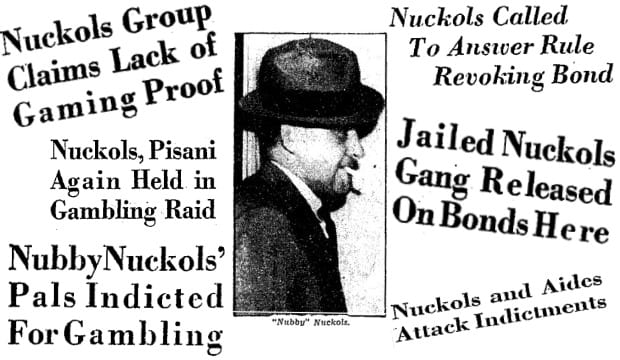
That is not the kind of record a small-time bookmaker has. It is the kind of record a man has when his bondsmen are quick, his lawyers are good, and his protection is paid up.
By the mid-1930s the DC press treated him as one of Washington’s foremost professional gamblers, ranking him alongside another DC operator named Nicholas Floratos, alias Nick the Greek, who was running a horse book of his own at 924 Ninth Street NW. Floratos was distinct from the more famous Nick Dandolos who ran nationally; he was a DC fixture, also convicted in November 1937, whose biographical thread is now almost impossible to pick up.
The man Nubby succeeded as DC’s bookmaking kingpin was Sam Beard, called the Pickle King. According to the columnists Jack Lait and Lee Mortimer in their 1951 book Washington Confidential, the cover was as on-the-nose as it sounds:
The boss was identified in court as Sam Beard. Beard claims he is in the pickle business, but he once served 53 months in jail for gambling and 13 months for tax evasion.
He literally claimed pickle business as his cover. That is not a nickname a press agent invents. That is a nickname a man earns at his arraignment.
When Beard went to prison around 1935, his racing-wire infrastructure, the quiet pipe of phone lines that fed real-time race results to bookies across DC, did not vanish. It got bigger after another man took it over and made it the spine of a citywide operation.
That man was Abe Plisco.
The Monstrous Web in the Albee Building
Plisco ran something called the National Telecast Service out of a suite of offices in the Albee Building at 15th and G NW, one block from the White House and across the street from the Treasury. The building, also called the Keith-Albee, housed a vaudeville theater on the ground floor. Plisco was on a higher floor with a battery of telephones running in and out, real-time track information from across the country, redistributed to bookies all over Washington, including Nubby.

By early 1937 the federal government had figured out exactly what Plisco’s operation was. Federal agents rented a vacant office in the Albee Building, in the same building as their target, and spent four months sitting at a desk listening to him.
In February 1937 they raided him.
The Washington Evening Star, reflecting on the wave of raids that followed, described Plisco’s operation in a sentence that still does the work eighty-eight years later:
Touched off by the hastily executed raid last February on the elaborate Albee Building headquarters of Abe Plisco, alias Jewboy Dietz, from which telephone wires stretched like a monstrous web over the city, the other raids followed in rapid fire order.
A monstrous web over the city. That is the whole story in eight words.
By tracing the numbers Plisco had been calling, federal and DC police identified sixty-five gambling houses and rounded up about 450 suspects. They indicted five DC Metropolitan Police officers for taking protection money. At Plisco’s home, agents seized fifteen slot machines and a stack of cash. When his wife was hauled in on a customs charge over an undeclared imported fur, officers searched her purse at her arraignment and found $23,000, in 1937 dollars, or about half a million today.
Plisco himself, beyond running the wire, was running a scam on his own clients. The race results he sold to DC bookies passed through his switchboard before they reached the books. By holding them back a few minutes he could place his own bets on races that had already finished. The trade calls this past-posting, and it meant he was robbing his customers in real time.
By spring 1937 every bookie in DC, including Nubby Nuckols, was on a federal map.
Nardone Saves the Cops, but Not Nubby
Then the law moved.
On December 20, 1937, the United States Supreme Court decided Nardone v. United States, holding that Section 605 of the Federal Communications Act of 1934 barred federal officers from introducing wiretap evidence in a federal trial. Inside of a few weeks, a DC judge applied that ruling to the Plisco case. The phone calls had never crossed a state line, the judge held; even if they had, the wiretap evidence could not be used. The arrest warrants were quashed, the indictments were withdrawn and the five indicted cops walked.
Plisco eventually got his slot machines back from the federal warehouse and reopened.
But the raid wave had already mapped every bookmaker in town. And the DC police, after Nardone, needed a way to make cases that did not depend on a tape recording. So Police Lieutenant Floyd Truscott went looking for cops nobody in DC could recognize.
He picked rookies fresh out of the academy, faces no bookmaker had seen across a counter, and sent them out across the city to lay bets.
On Thursday, January 6, 1938, Truscott’s rookies arrested Nubby Nuckols at a gambling den near 14th and I NW. He was already out on $3,000 bail from a fall 1937 case. The Nardone ruling could not save him from a cop he had taken a bet from in person.
He had two days.
Saturday Night
Mary Nuckols spent Saturday afternoon, January 8, 1938, downtown. She walked back into the apartment at 1636 Connecticut Avenue around seven that evening and saw the maroon robe before she saw anything else.
The police investigation found that the .32-caliber pistol had fired twice. The first shot was a misfire.
He had to pull the trigger again.
The note: “Darling, it was the best way … Thank you for your kindness.” The rest of it was an apology to Mary about the criminal life he had given her. The official ruling was suicide. Period rumor in DC held that another man had been the triggerman, but the rumor never moved beyond rumor, and the ruling stayed suicide.
Hollywood Cemetery
The body went home to Richmond.
He was buried at Hollywood Cemetery, the most prestigious burying ground in the South, the cemetery that holds Presidents James Monroe and John Tyler, Jefferson Davis, J.E.B. Stuart, and more than 11,000 Confederate war dead. A short, twice-arrested-this-month bookmaker from Washington, DC, in the company of generals.
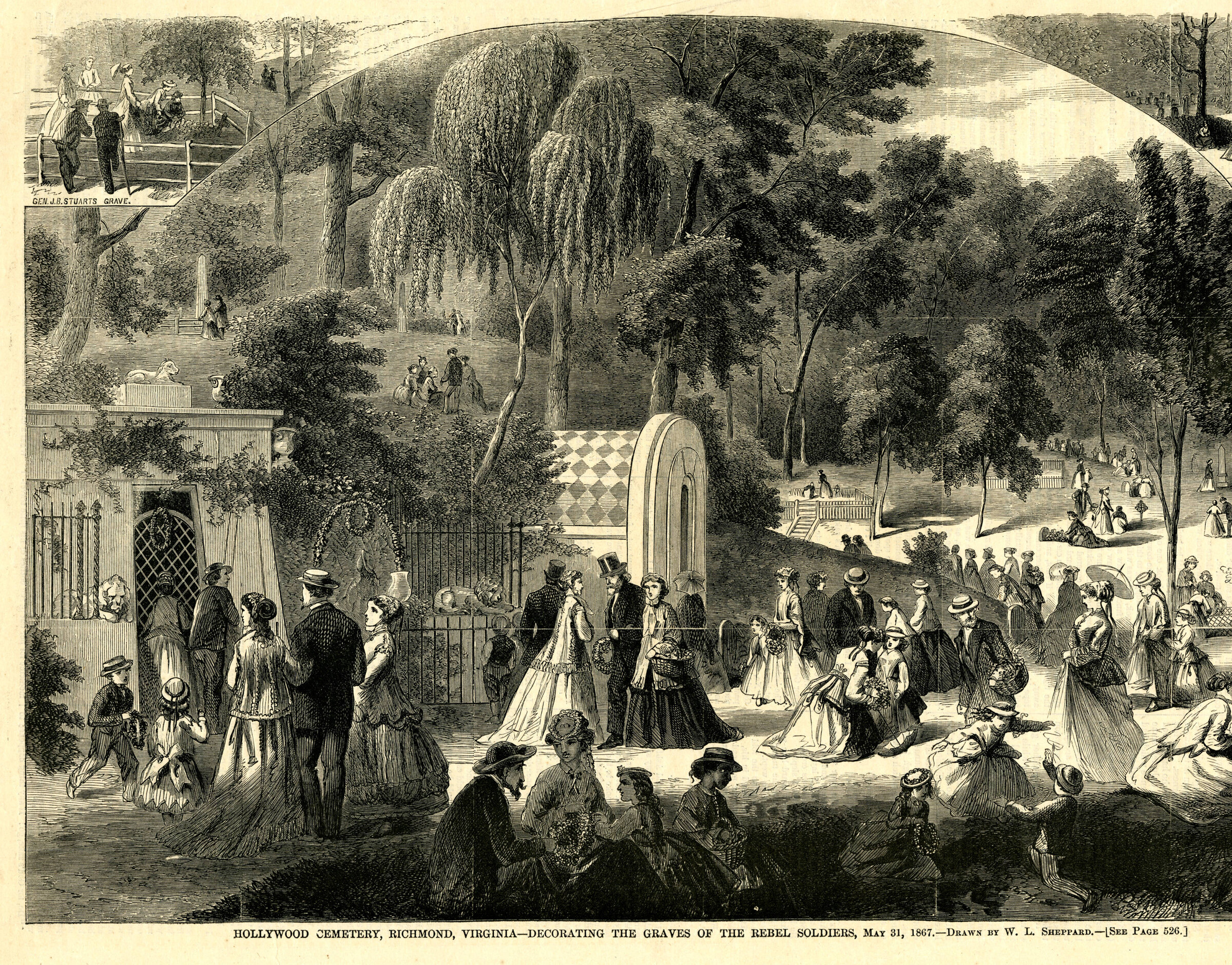
Reporters were watching, and they identified the out-of-town mobsters who showed up to pay their respects. The one name that survives in the secondary literature is Plisco.
For Plisco the trip was a homecoming. By one published account he had been born in Ukraine in 1901, his Russian Jewish parents had emigrated when he was young, and the family had ultimately settled in Richmond, where his father Berman ran Plisco’s Shoe Store at the corner of Adams and Broad. If that account is right, the man whose wiretapped offices had triggered the raid wave that ended Nubby’s career stood at Nubby’s grave on the same trip he could have walked a few blocks and stood at his father’s old store.
The other names at the graveside, the rest of the gangsters the reporters spotted, are not in the surviving record I can find. They will have to wait for someone with a Newspapers.com subscription and a free Saturday.
After
The Plisco case fell apart in court. Most of the 1937 indictments evaporated under Nardone. Plisco kept operating until World War II reorganized DC’s underworld around new players. Sam Beard came back. By 1944 he was running bookmaking operations at 307 9th Street NW and at racing setups in Colmar Manor, Maryland, with a battery of telephones and a Western Union ticker. In 1955 the Fourth Circuit affirmed his federal conviction for failing to pay tax on $542,216.27 in net income for one year alone. The opinion put him away for five years and fined him $10,000.
That is what the Pickle King was actually worth.
Floratos disappears from the surviving public record. The man who outranked Nubby in the early 1930s and outlived him by we do not know how many years has no Find a Grave entry I could surface, no FBI file I could find online, no obituary I could pull. If you are reading this and you have a lead on him, send it. He is the last loose thread.
What’s There Now
Nubby’s building at 1636 Connecticut Avenue NW, where he had lived for six years before his death and where Mary found him on the floor, still stands just north of Dupont Circle, with a shoe store on the ground floor. The 1200 block of Fourteenth Street NW, where his bookmaking joint at 1230 14th Street stood, has been swept into the gentrification of the 14th Street corridor the neighborhood became after the boundary line of bookmaking and bootlegging moved on.
The Keith-Albee theater closed in 1978 and was demolished, along with the rear of the building, in 1979; the facade survived. The site is now part of Metropolitan Square, the office complex across from the Treasury, completed in 1986.
Nardone v. United States held for thirty years. In 1968 Congress passed Title III of the Omnibus Crime Control and Safe Streets Act, which authorized the federal wiretaps that Nardone had limited. By the time DC’s next bookmaker-class story arrived, in the form of Rayful Edmond III, the federal government no longer needed to rent a vacant office and listen.
Carroll Peyton Nuckols still lies at Hollywood Cemetery in Richmond, and nobody is putting flowers on it. The grave is on Google Maps. The misfire on the first shot is not.
Some of our stories are researched and written with help from AI, and checked by a person before they run. Here’s how we use AI.