
Three small rocky islands sit in the Potomac just north of Key Bridge, barely big enough to notice from shore. If you’re on the river at night and you hear a low, bell-like tone drifting from their direction, an old story says someone nearby is about to drown.
That’s the legend. The islands have another story too, one involving congressmen, firebombed construction trailers, and 85 percent of DC voters saying no to a six-lane bridge that nearly buried all of this under concrete. That story is here: Why the Three Sisters Bridge Was Never Built. This post is about where the name came from.
Three Rocks and a Curse
The name goes back centuries. The Washington Post ran a piece in December 1900 collecting the Potomac’s old ghost stories, and this is what they had on the Three Sisters:
By far the most picturesque river legend is the story of the Three Sisters. Just before a drowning occurs on the river they are believed to emit a sound like the slow chiming of a bell, which is supposed to be a warning call. Its origin is quite as prehistoric as that of the Gray Swan, and rather similar. There were three women of the Anacostian tribe who conspired to desert their people for the Powhatans.
The three dusky maidens, all of them daughters of a chief, as in stories they always are, met together one dark night and stole out in their canoes. The medicine man of their tribe followed them along shore, creeping under brush and woods. They paddled slowly up current. They were decked out in shells and feathers, and their hair streamed long in the wind. They kept the center of the stream, and just as they were about to veer and cross the medicine man called in a hollow voice that their hour of death had come. Curious lights played about them; they were caught in the whirlpool which swirled round their canoes in a dizzy whirl. In fright and despair they flung themselves into the water, and were drowned. In the morning three rocks, gray and barren, had arisen from the water, and were supposed to be the spirits of the Indian sisters barred out from the Happy Hunting Grounds.
There is an old ballad, which gives their story. Part of it runs:
Swiftly they came and swifter,
With dark eyes glancing round,
With soft words glad and eager
For the braves of the Powhatan.When out of the darkness around them,
Out from the black of the trees,
The voice of the Great Spirit called them,
Like the cry of choking seas.They leaped with a moan of terror
Into the heart of the mere.
The waters hissed around them,
The stars were white with fear.Three rocks, spired and gloomy,
Gray as a stormy sky,
Sprang from the depth of the whirlpool,
Where the Indian sisters lie.Ever at night they ring,
Like a sad cathedral bell,
Echoing far on the waters,
They sound the warning knell.
The ballad is a nice touch. A later version of the legend swaps out the Anacostian maidens for three sisters trying to save kidnapped brothers from a rival tribe. Same fate either way: they drown, three rocks rise where they go under.
What the Papers Found
Seven years after that story ran, the Three Sisters turned up in the Post again, this time for a more practical reason.
Turns out the islands were private property. The October 1st, 1907 edition of the Washington Post reported:
The Three Sisters will soon be sold under the auctioneer’s hammer. These islands, which lay about a quarter of a mile above the Aqueduct Bridge, it now develops, form a part of the estate of the late John Moore, to whom they were granted by a land patent in the reign of King George.
According to a legend, the Three Sisters received their appellation because three sisters, riding in a frail craft, drowned off the rocks of the little islands twenty-five years ago. the District obtained jurisdiction over the islands, as well as Analoston Island, by a decision of the United States Supreme Court in the Potomac Flats case, by which the District line extends to the high water on the Virginia side.
That “twenty-five years ago” framing is a little suspicious given the 1900 article calls the legend prehistoric. Someone took creative license with the timeline. The important detail is there: the District had already claimed jurisdiction through the Supreme Court’s Potomac Flats ruling, and the islands weren’t going to any private buyer.
The Islands Today
The Three Sisters sit about a quarter of a mile north of Key Bridge, within the George Washington Memorial Parkway’s protected corridor. They’re accessible by kayak or paddleboard on a calm day, and they’re worth the paddle. Three small, scrubby outcroppings, rocky shores, and a surprising amount of bird life given how close they are to the city.
On a quiet evening on the water, with the current moving around the rocks, you can see how the legend got started.
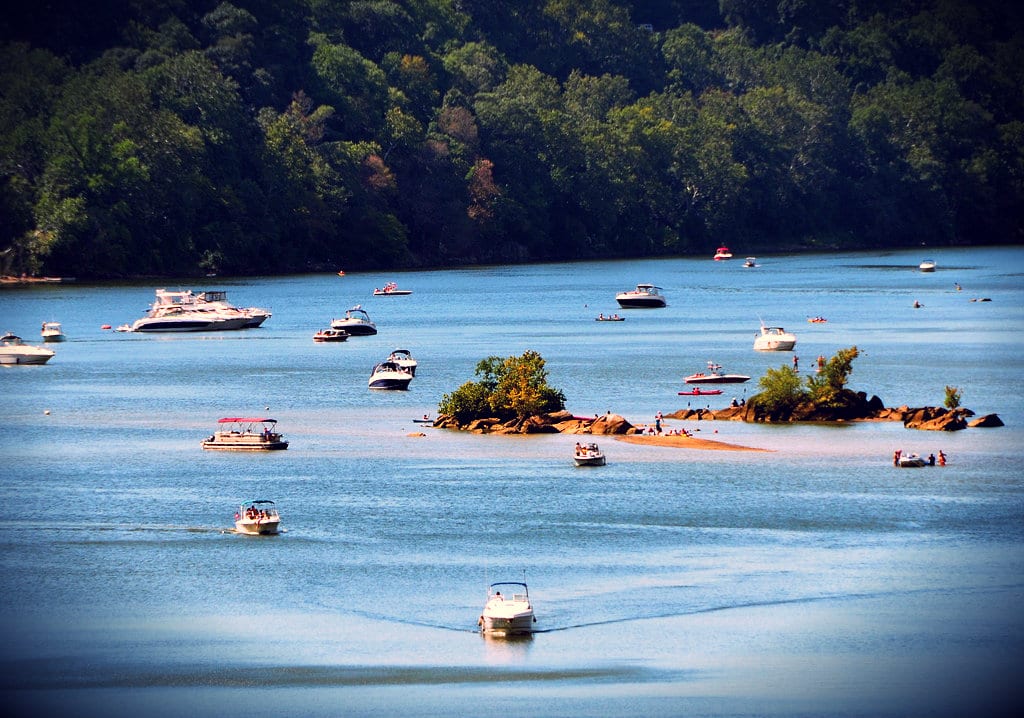
The islands almost didn’t survive the twentieth century. Pierre L’Enfant first proposed a bridge at this spot in 1789, and the idea kept coming back. The attempt in the 1960s and ’70s came closest, and turned into one of DC’s bitterest civic fights: Metro funding held hostage, students camping on the islands in protest, construction trailers firebombed the night before an election. Eighty-five percent of voters said no. It took a federal court to stop it.
The full story of that fight is here: Why the Three Sisters Bridge Was Never Built.