
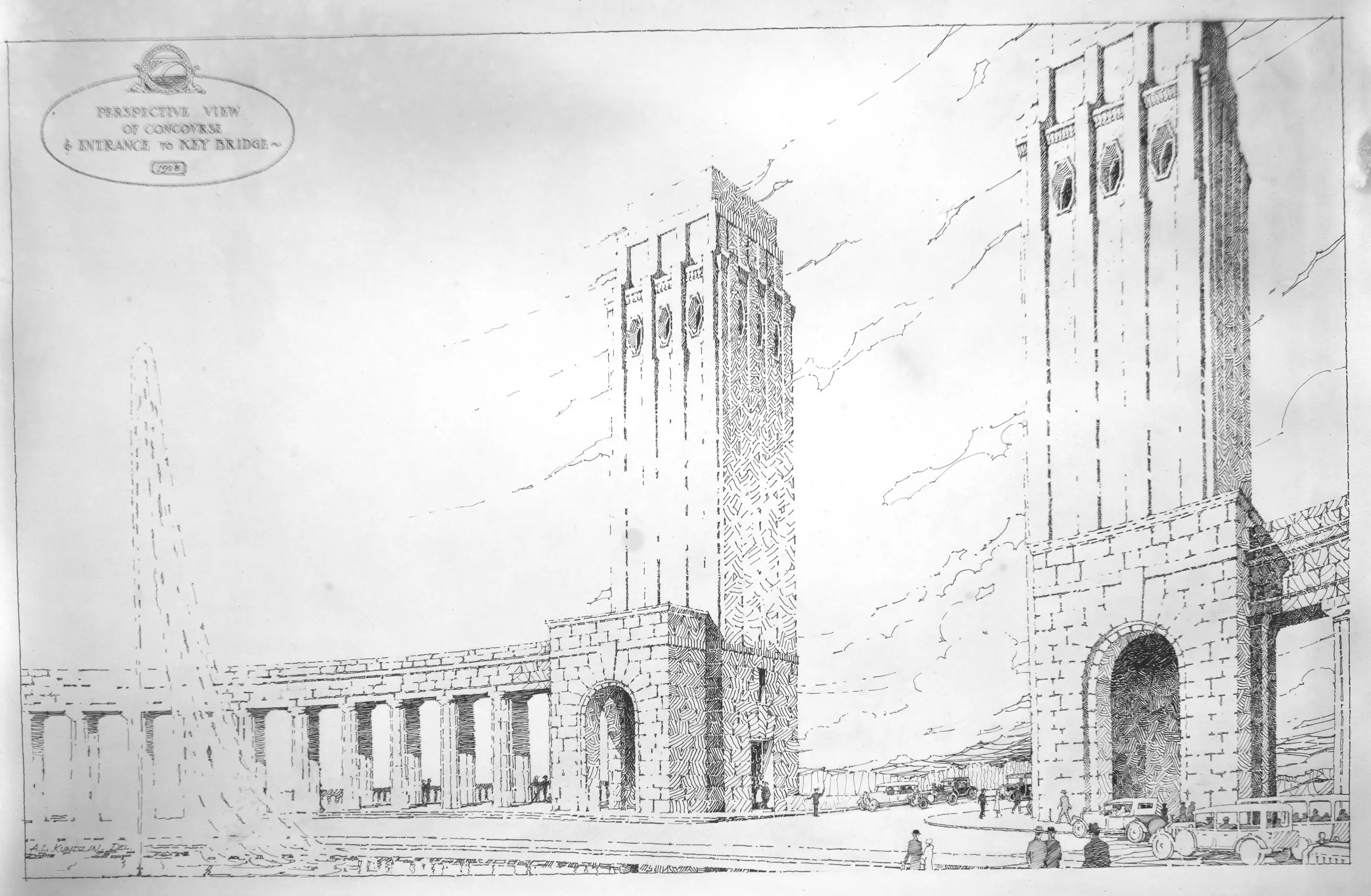
Look at that. A grand colonnaded concourse, a sweeping ceremonial plaza, a monumental front door to Washington rising on the banks of the Potomac. This was a plan for Key Bridge, drawn up in 1928. It was never built.
The rendering above is one of a set of proposed Washington building projects preserved in the Library of Congress. The official caption is about as dry as it gets: “Plans for proposed building projects in Washington, D.C. Perspective view of concourse and entrance to Key Bridge, 1928.” What it shows is anything but dry.
It was imagined as a great architectural approach to the bridge, almost certainly on the Virginia side at Rosslyn, carrying travelers across the river and into Georgetown. A formal gateway to the capital. Today there is a gas station, a hotel, and a tangle of highway ramps roughly where this vision was supposed to stand.
Above: “Perspective view of concourse and entrance to Key Bridge,” 1928. Source: Library of Congress, Theodor Horydczak Collection.
Washington was building itself a monument in 1928
To understand why anyone sketched a Roman colonnade for a river crossing, you have to remember what Washington was like in the late 1920s. The city was remaking itself in marble.
The 1901 McMillan Plan had set the template, reviving Pierre L’Enfant’s vision of a grand ceremonial capital. By 1928 the Federal Triangle was rising along Pennsylvania Avenue, and the Arlington Memorial Bridge was under construction across the Potomac. Big, formal, classical gestures were the order of the day.
A monumental entrance at the foot of a bridge fit that fever perfectly. If the new Arlington Memorial Bridge was going to sweep grandly toward the Lincoln Memorial, why shouldn’t Key Bridge get a ceremonial gateway of its own?
The crossing that came before
There had been a bridge on this stretch of the Potomac long before Key Bridge. It was the Aqueduct Bridge, and it was a marvel.
Built between 1833 and 1843, it carried loaded boats from the Chesapeake and Ohio Canal in Georgetown clear across the river and into the Alexandria Canal on the Virginia side. Picture canal barges floating in a wooden trough suspended over the open Potomac. That actually happened here.
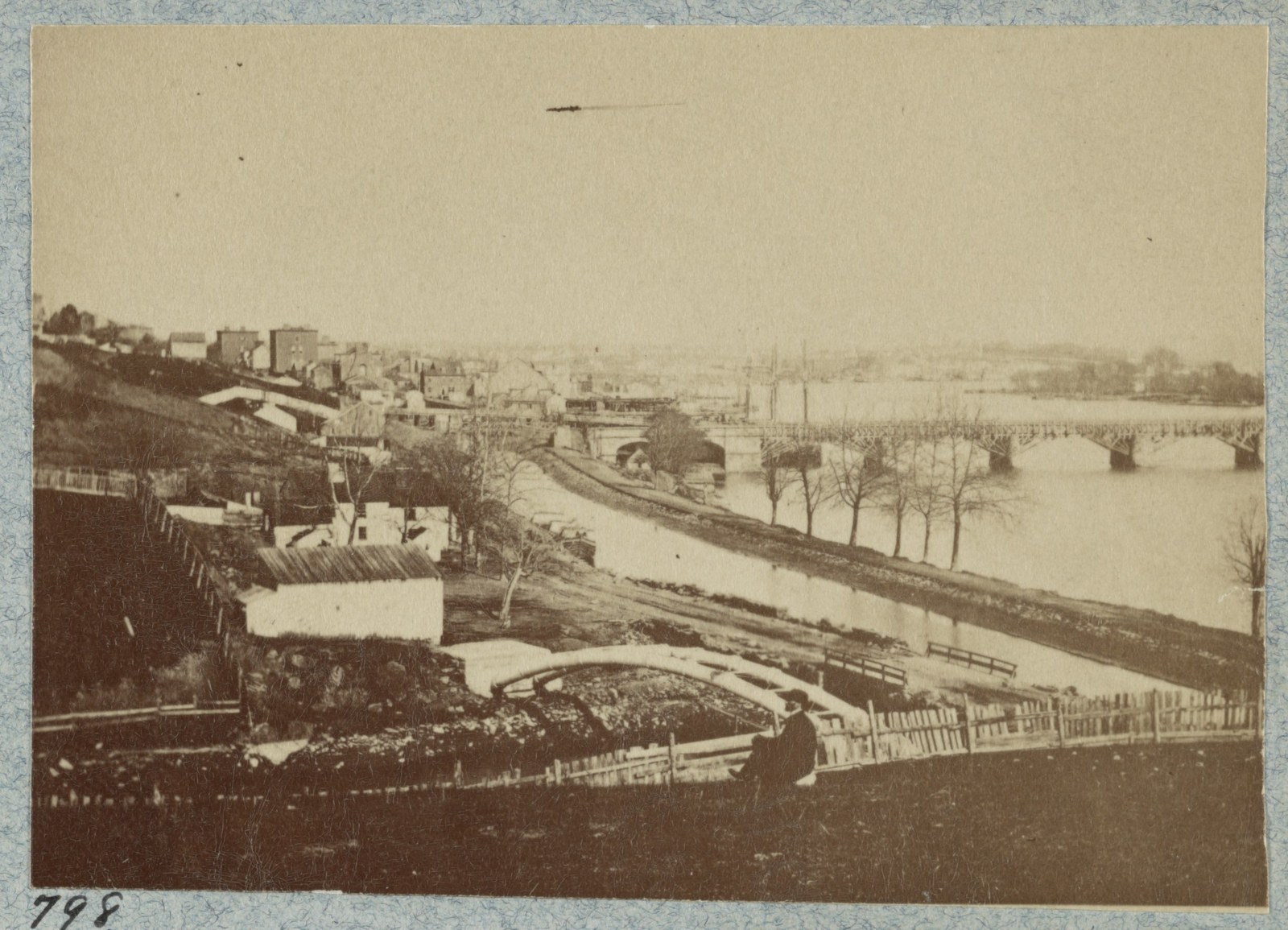
When the canal era faded, the structure was rebuilt as a plain roadway bridge for wagons, streetcars, and eventually automobiles. By the 1900s it was old, narrow, and worn out. Washington needed something better.
The bridge that actually got built
The replacement was the Francis Scott Key Bridge, named for the author of “The Star-Spangled Banner,” who had lived nearby in Georgetown. Nathan C. Wyeth designed it back in 1916, and the U.S. Army Corps of Engineers built it between 1917 and 1923.
It opened on January 17, 1923, a long reinforced-concrete arch that cost roughly $2.5 million. We have a separate post showing Key Bridge under construction, looking from Georgetown toward the Washington Monument.

What got built was handsome but workmanlike. A clean row of arches and a flat deck. No colonnade, no plaza, no triumphal entrance. By 1928, with the bridge already five years old and carrying traffic, someone was still dreaming of dressing up its approach in marble.
A grand gateway… to Rosslyn?
Here is where the 1928 plan starts to feel like a fantasy. A ceremonial gateway has to lead somewhere worthy. In the 1920s, the Virginia end of Key Bridge led into Rosslyn, and Rosslyn was no marble district.
It was Washington’s gritty back door. Saloons, pawnshops, gambling halls, and brothels clustered along the low ground by the river. This was the rough Virginia shore travelers crossed into, not a monumental approach to the capital.
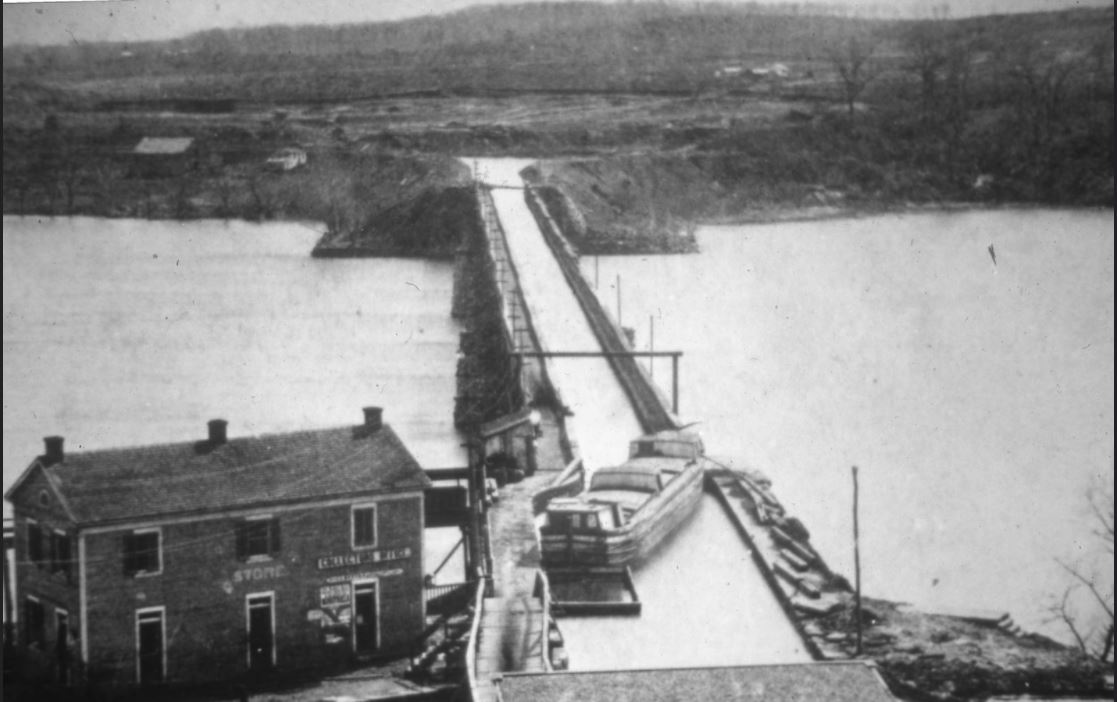
Just up the road sat a stretch so dangerous it was called Dead Man’s Hollow, roughly where the Key Bridge Marriott’s parking garage stands today. The Washington Post did not mince words about it on July 25, 1906.
Dead Man’s Hollow, where the crime was committed, has in the last fifteen years been the scene of more bloody affairs than any other spot in Alexandria County.
That was the neighborhood a grand colonnaded plaza was supposed to announce. It is a little like proposing the Arc de Triomphe at the entrance to a truck stop.
Why the grand entrance died
No single villain killed the plan. A few hard realities did.
The grand concourse would have landed in Virginia, outside the District and outside the federal monumental core that Washington’s planners actually controlled. The marble money and the grand ambitions were flowing to the District side: the Federal Triangle, the Mall, and the new Arlington Memorial Bridge aimed at Arlington National Cemetery.
Then came the timing. The stock market crashed in 1929, and the Depression that followed wiped out exactly this kind of ceremonial spending. A nice-to-have plaza at a working bridge in Rosslyn never had a chance.
So Rosslyn stayed Rosslyn. For decades it remained a low-rent stretch of pawnshops, parking lots, and light industry, the kind of place you passed through rather than arrived at.
What rose instead
Rosslyn did eventually become a gateway. Just not the one anyone drew in 1928.
Starting in the 1960s, the old vice district was bulldozed and rebuilt as a wall of glass office towers, the first skyline you see when you cross from Georgetown into Virginia. The grand entrance to Washington turned out to be steel and mirrored glass, not Roman stone.
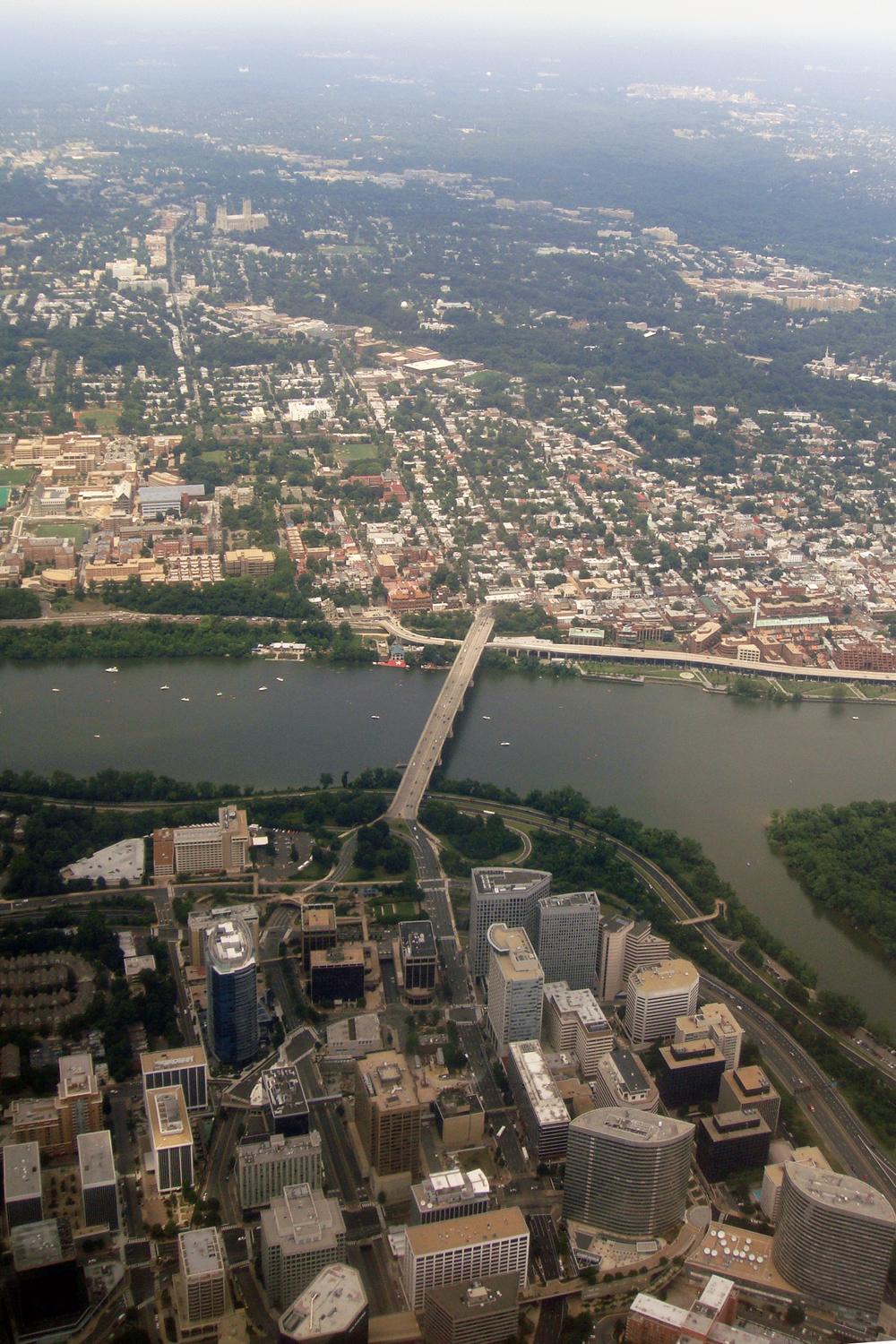
The 1928 rendering is a window into a Washington that almost was, a city so confident in its monumental future that it wanted to wrap even a Rosslyn off-ramp in colonnades. The plan failed. As one reader put it: saved a lot of taxpayer money there.
Saved a lot of taxpayer $$$ there!