
1810s
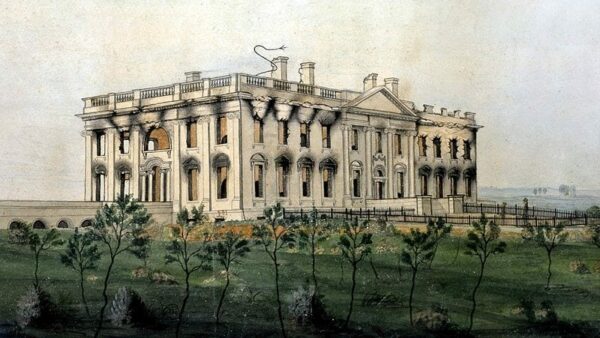
The 1810s gave Washington its most dramatic moment: in August 1814, British troops marched into the capital and set fire to the White House, the Capitol, and most of the public buildings. The city rebuilt quickly, but the experience left Washington permanently anxious about its place in the nation. These posts cover the War of 1812 and its aftermath.
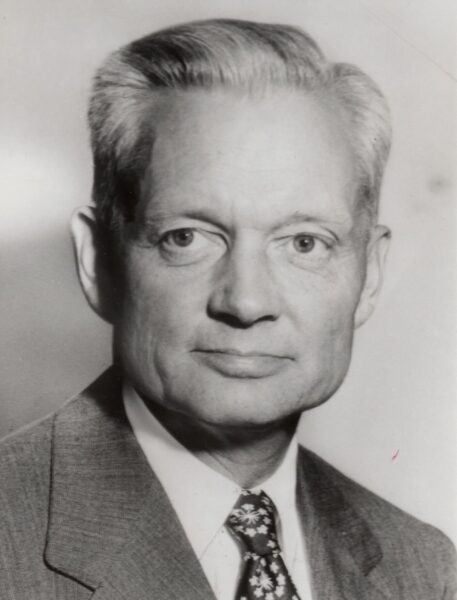
Halfway down the Rock Creek slope at 2400 Tilden Street NW stands Isaac Peirce’s 1811 whiskey still. In 1954 Sherman Adams moved in and ran the Eisenhower White House from a converted distillery three miles from Lafayette Square.
In October 1814, the U.S. House came within nine votes of moving the capital out of Washington. The bill failed 83 to 74. The Washington we live in exists because nine House members didn’t want to put the government on wheels.
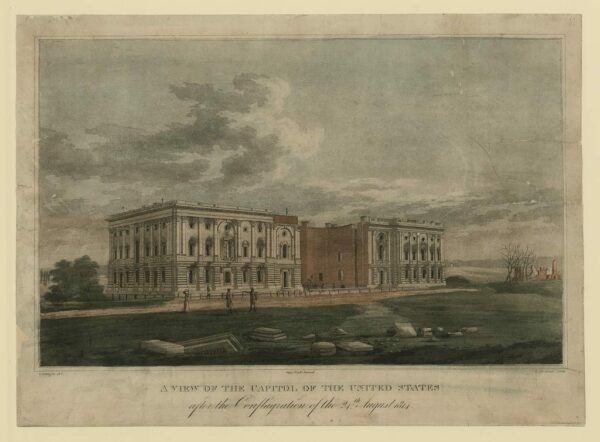
William Strickland’s engravings record the damaged Capitol and President’s House after British forces burned Washington in August 1814.

The Federal Republican and The Columbian reported the capital’s destruction and called citizens to arms in August 1814.

The proclamation eased brick, stone and height requirements while keeping limits on small wooden houses.
There’s more where these came from.
Lost Washington stories in your inbox most mornings: the newest, plus a few from the archive.

The history of Blodgett’s Hotel in Washington, D.C., from its construction in 1793 through its destruction by fire in 1836.

Pennsylvania Avenue leads toward the Capitol in this painted view of Washington in the early 1800s.

A French caption describes this F Street corner as opposite “our house” and dates the drawing to the summer of 1817.

Two historical maps of Georgetown, including a street map and a detailed plat of the neighborhood.

UMBC’s Imaging Research Center produced a visualization of what the Capitol looked like in 1814, just before the British burned it.