High-Resolution View of Washington, D.C. in 1865, Taken from 14th and B Street NW
A high-resolution photograph of Washington, D.C. taken from 14th and B Street NW (now Constitution Avenue) in 1865. From the Library of Congress collection.
Washington sat at the center of the Civil War, serving as the Union capital with Confederate territory just across the river. These posts cover the forts, hospitals, battles, figures, and everyday life that defined the city during the war years.
A high-resolution photograph of Washington, D.C. taken from 14th and B Street NW (now Constitution Avenue) in 1865. From the Library of Congress collection.
Explore Fort Totten through a rare photograph taken just after the Civil War in 1865. See the 3rd Massachusetts Heavy Artillery at the gate of the fort in this remarkable image.
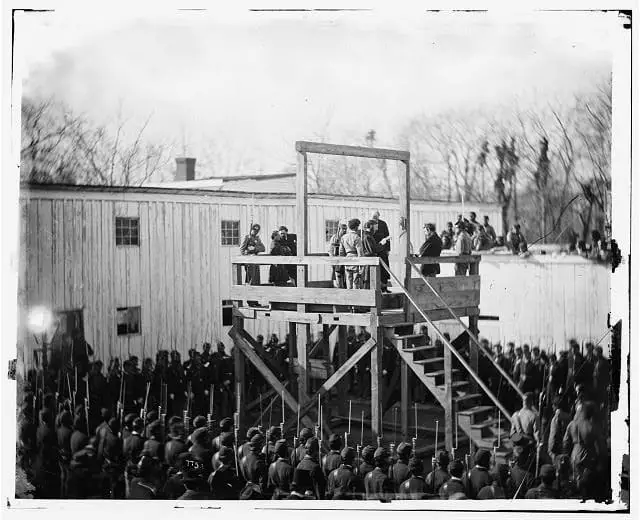
A macabre photo share from 1865 of Henry Wirz being executed for war crimes in the Civil War. Wirz was captain of the prisoner of war Camp Sumter near Andersonville, Georgia and one of only two men tried, convicted, and executed for war crimes in the Civil War.
Discover Historic Christ Church in Alexandria, Virginia. Take a virtual tour and learn about the church’s history with a Ghost of DC photograph. Visit GoDC for more.
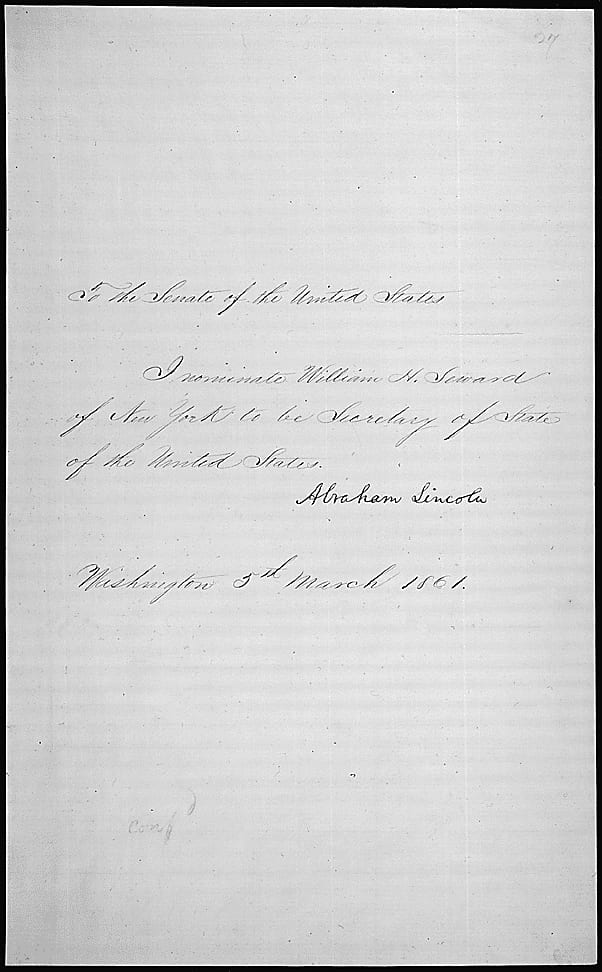
Discovering the National Archives is a fascinating journey through history. Here’s a look at Abraham Lincoln’s nomination of William Seward to be Secretary of State in 1861, as well as a photo of Seward taken by Matthew Brady.
GWU started as a Baptist college on Meridian Hill in 1821. Here’s the story of how it got its name — a $500,000 deal, a broken promise, and a dead president’s bequest that Congress ignored.
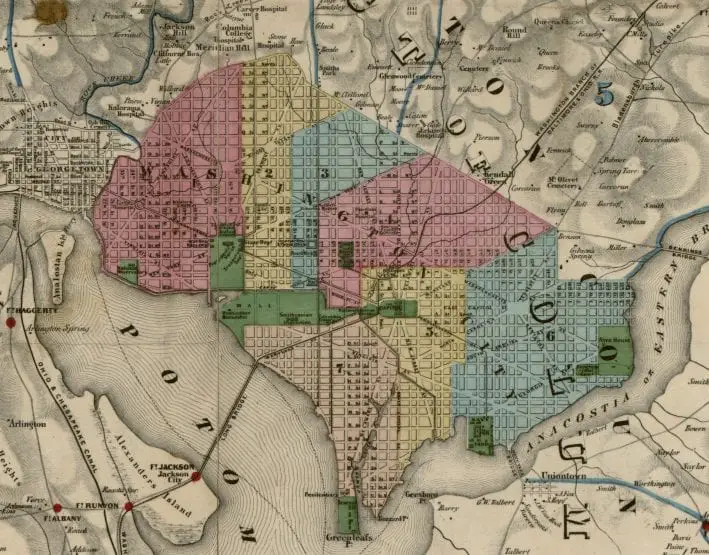
Take a look at this Civil War map of D.C. and its surroundings. Click on it for greater detail and you’ll be able to see all the fortifications around the city, including Fort Totten and Fort Lincoln.
Digging through Google Books, I found “The Black Code of the District of Columbia in Force September 1st, 1848” – a 122-page book of laws governing all aspects of life and behavior for African-Americans in Washington, D.C. in the 1800’s. Read on to learn about the shocking provisions in this book.
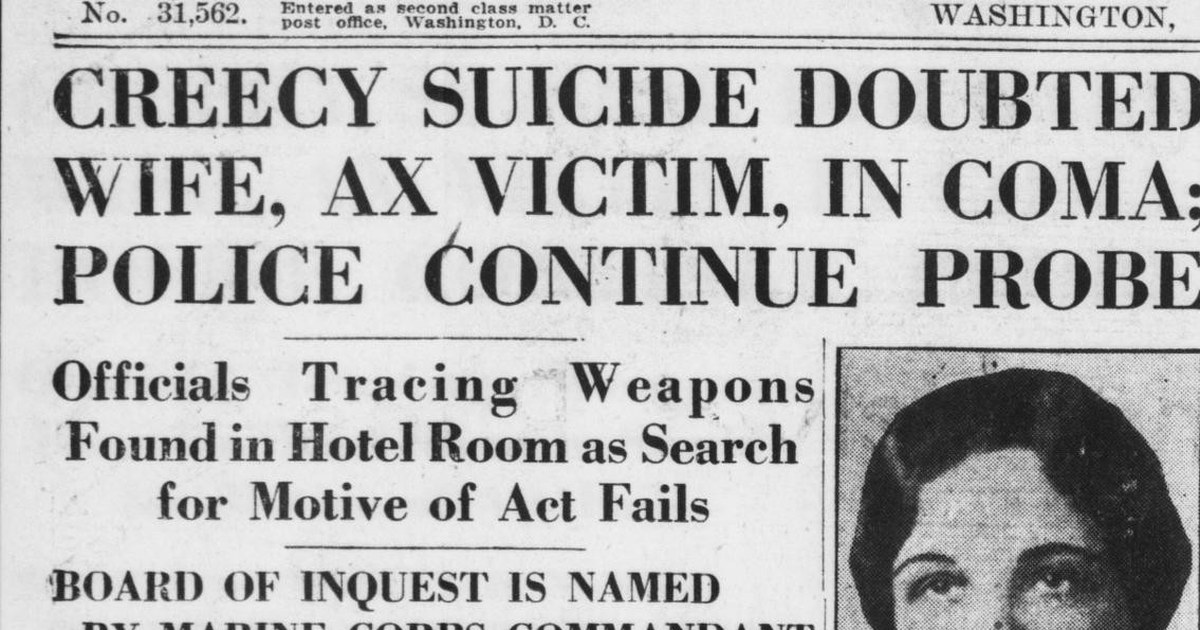
In September 1930, staff at the Mayflower Hotel found Lt. Col. Richard Creecy dead from a pistol shot and his wife dying from hatchet wounds inside a double-locked fifth-floor room. The coroner called it a suicide. Homicide detectives, the Marine Corps, and the Creecy family weren’t so sure.