
1840s
The 1840s brought the beginning of some of Washington’s most iconic institutions. The Smithsonian opened its first building on the Mall, work began on the Washington Monument, and the city grew steadily as the nation expanded westward and the slavery debate intensified. These posts explore mid-19th century Washington in all its ambition and conflict.
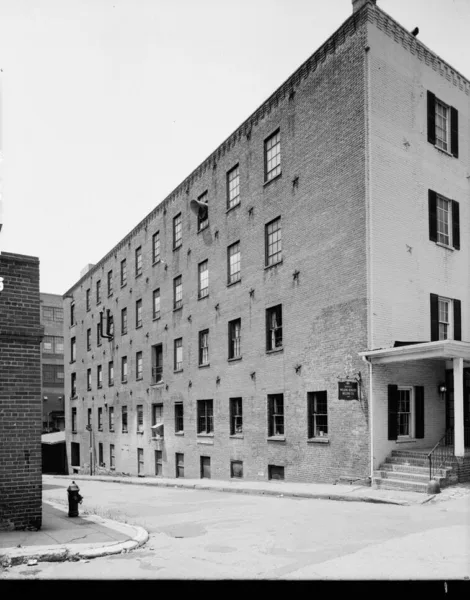
A reader asked about Georgetown’s Flour Mill at 1000 Potomac Street. The building was the neighborhood’s last working mill, and it began as a cannon expert’s cotton factory. Now its offices are headed for a 135-home conversion.
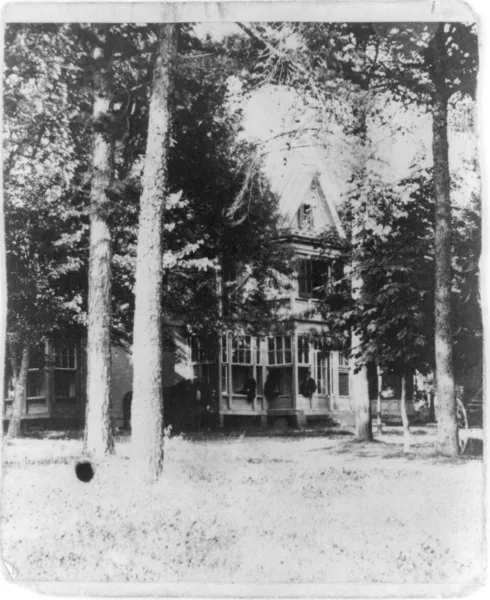
A spring flecked with mica gave Francis Preston Blair’s country estate its name. Silver Spring eventually became the name of the community.
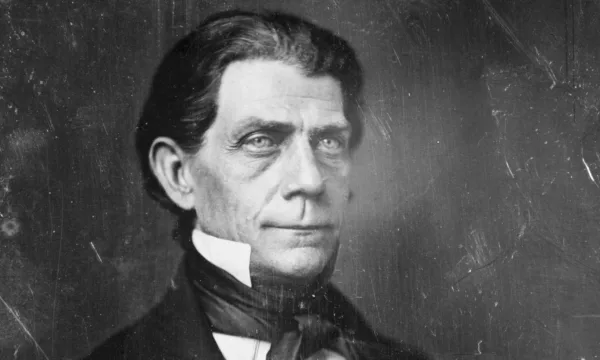
Before Texas was a state it was a country. Eight of its ambassadors worked Washington between 1836 and 1845 to negotiate annexation.
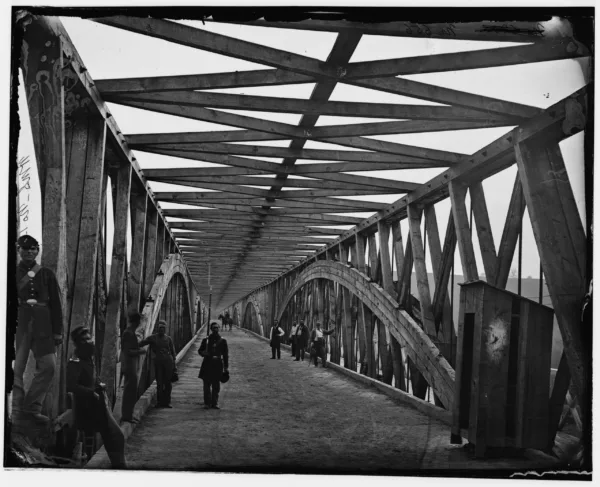
Chain Bridge no longer hangs from chains, but an earlier crossing did. A 1909 newspaper account explains how the name outlasted the design.
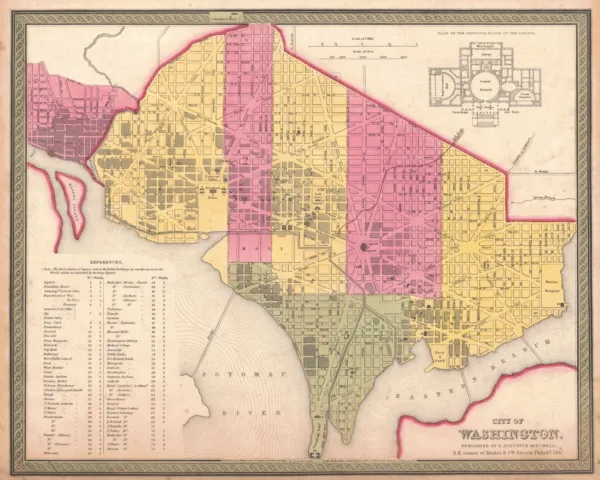
This 1847 map shows Washington before the Civil War, with a legend along its left edge.
There’s more where these came from.
Lost Washington stories in your inbox most mornings: the newest, plus a few from the archive.
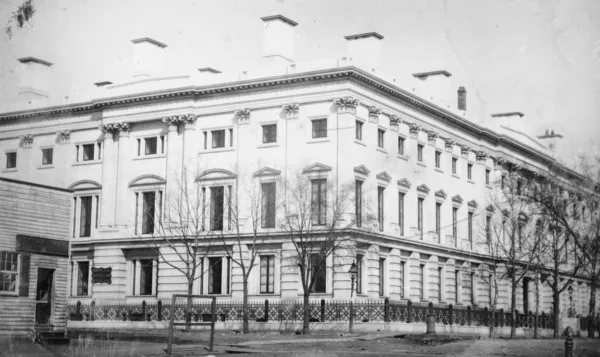
This photograph of the General Post Office in Washington, D.C. dates to 1846, making it one of the earliest known images of the building. The structure still stands today at 8th and F Streets NW — now operating as the Hotel Monaco.
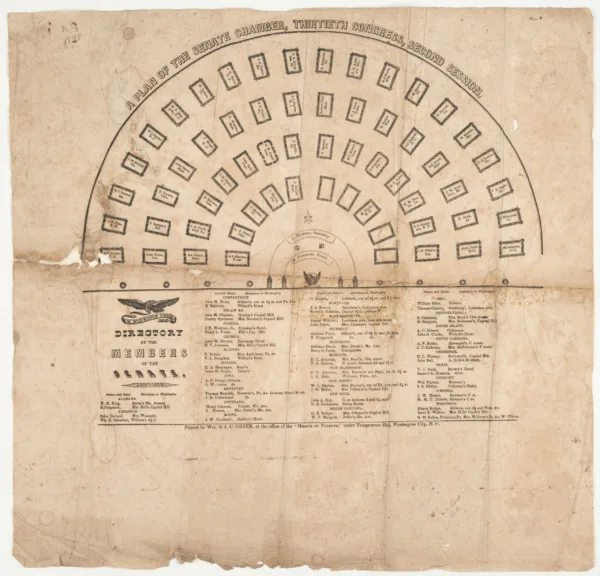
This drawing lays out the U.S. Senate chamber for the Thirtieth Congress.

In 1846, an open design competition could have given Washington a very different Smithsonian Castle. One rejected design became a church. The church became a parking lot.
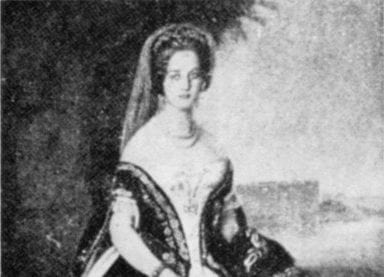
Russia’s ambassador Baron de Bodisco was nearly 60 when he married 16-year-old Georgetown schoolgirl Harriet Williams.

A video slideshow showing a collection of old photographs of Washington, D.C. across many decades.

A newspaper story claimed the cocktail began at this Bladensburg tavern. The post treats the tale with skepticism.

View from the White House in 1848, looking at the Capitol Building.

A letter sent to Washington records Sam Houston’s election as one of Texas’s first two U.S. senators.

Augustus Köllner’s watercolor shows Washington from southeast of the Capitol, with stables in the foreground and landmarks beyond.

Excerpts from an 1848 compilation show laws restricting the lives of free and enslaved Black people in Washington and Georgetown.

John Plumbe’s daguerreotype shows the General Post Office at 8th and E Streets NW in 1846, with a merchant tailor’s shop on the left.
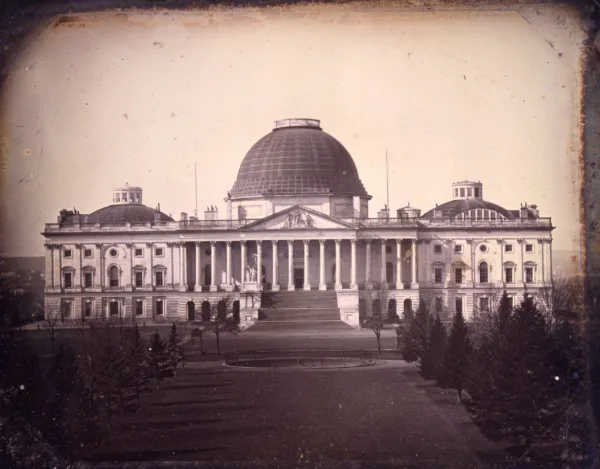
John Plumbe photographed the Capitol’s east front in 1846, before the building took its later form.
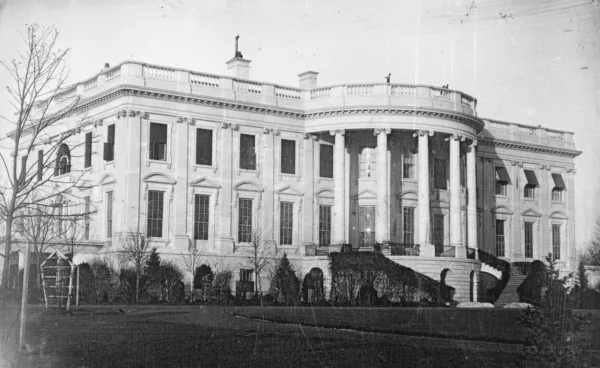
John Plumbe, Jr. photographed the White House in 1846 during the administration of President James K. Polk, making this one of the earliest known photographs of the building. The image was taken in winter.

Construction of the Washington Monument began July 4, 1848 and took 36 years — interrupted by the Civil War and a funding crisis. Here’s the full story of its design, its capstone, and why the bottom third is a different color.