
Notable People
Washington has drawn fascinating characters throughout its history, from city planners and inventors to entertainers and scoundrels. These posts spotlight the people who shaped the capital in ways that didn’t always make it into the textbooks.
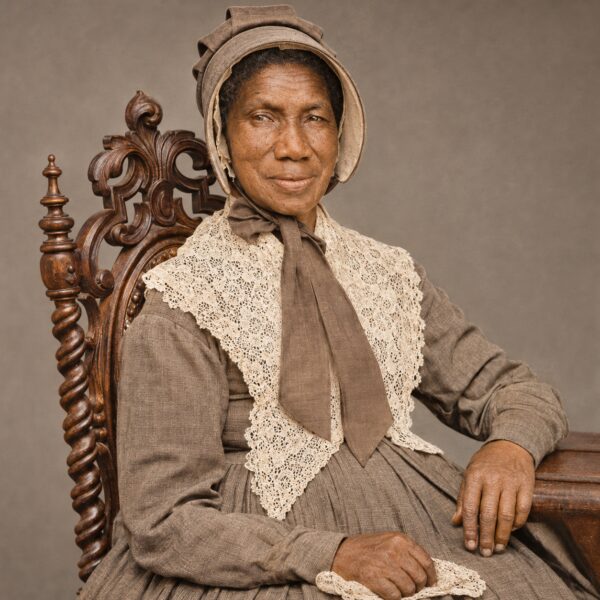
By her own account, Mary Dines escaped slavery hidden in a hay wagon, then led her Washington camp in song for Abraham Lincoln and saw him wipe away tears.
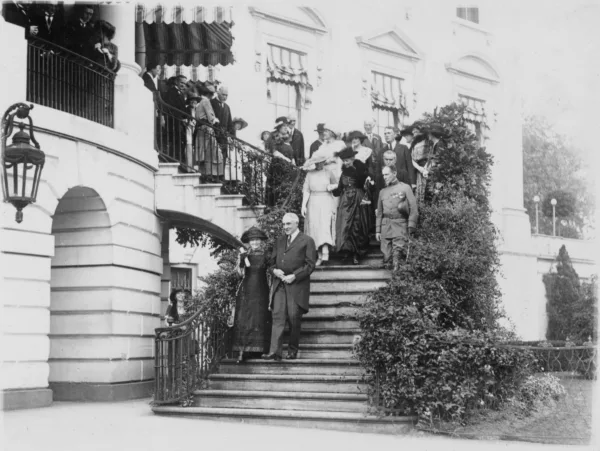
In the East Room, President Harding placed a mahogany case in Marie Curie’s hand and gave her a small gold key to unlock it.
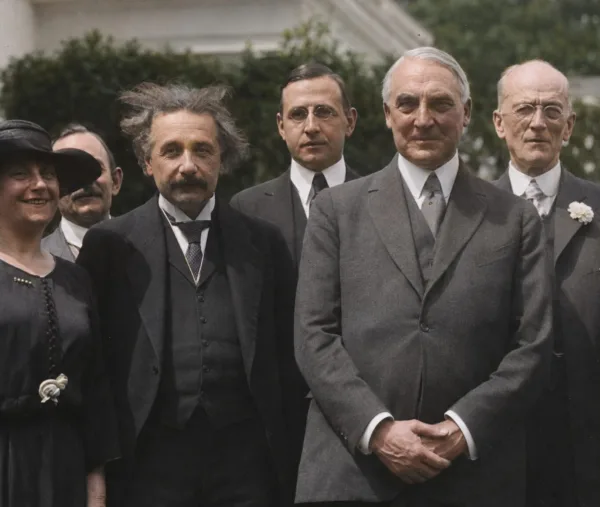
As Albert Einstein posed for a camera at the White House in 1921, President Harding smilingly confessed that relativity was beyond him.

Houdini hung head down in a straitjacket over 15th and G Streets NW, clawed his way free and hurled the jacket to the street while the crowd roared.
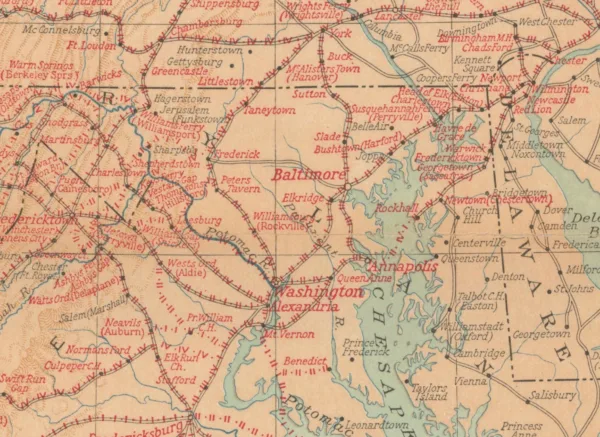
A 1932 National Geographic map letters every town George Washington visited in red, from Savannah, Georgia, to Kittery, Maine. Here is how to read it.
There’s more where these came from.
Lost Washington stories in your inbox most mornings: the newest, plus a few from the archive.

One of Washington’s policewomen went to a Saturday night dance in March 1919 “all dolled up.” Her tip had a raider whispering “Riley” at an apartment door by morning.
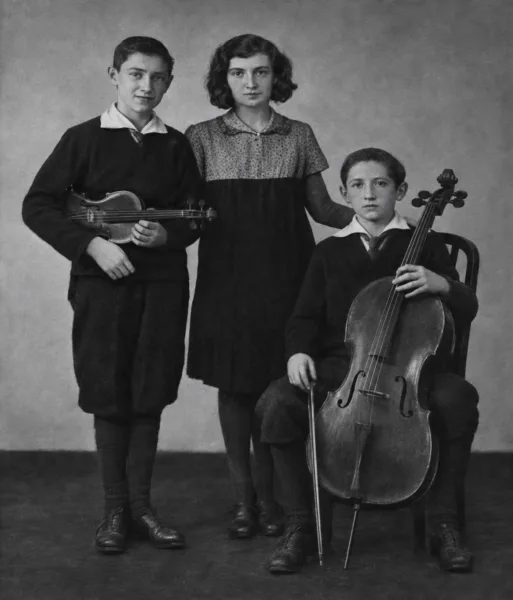
Sylvia Altman entered Central High School at 10 and performed with her brothers. Decades later, Julian’s violin proved to be the missing Huberman Stradivarius.

Washington’s streets run H, I, K. The John Jay grudge story is a modern myth. The first engraved map already skipped J in 1792, and nobody wrote down why.
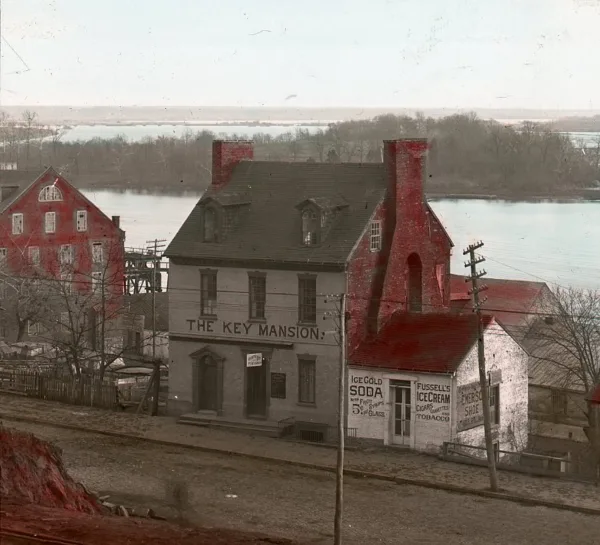
Workers took the house apart and numbered its bricks for a reconstruction that never happened. The stored pieces gradually disappeared.
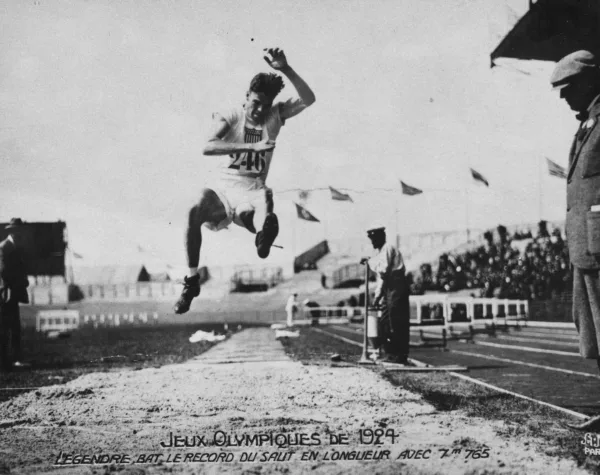
Robert LeGendre set a world record at the 1924 Olympics, then built a quiet life as a Washington dentist. When his granddaughter asked about the 1930 divorce that ended his marriage, we traced what the records could honestly tell her.
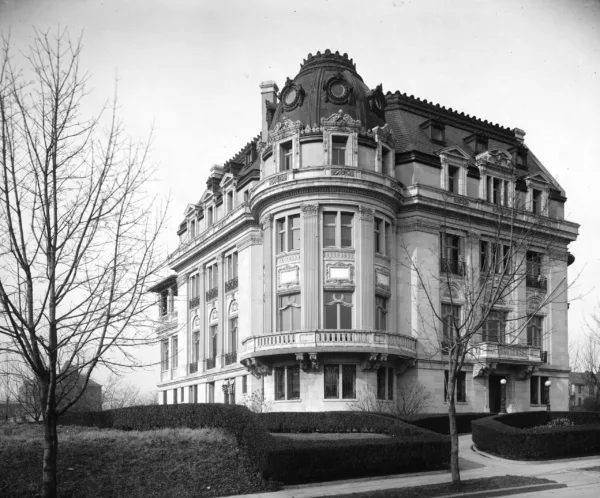
Jean Jules Jusserand made his Washington home at 16th and Kalorama, in a mansion built as part of Mary Foote Henderson’s diplomatic ambitions.

In the 1830s, the Baltimore Sun was a prominent paper covering the daily happenings of life in Washington City. We came across an interesting piece from the Baltimore Sun correspondent in Washington, both a colorful description of life in the city, as well as a rather amusing observation.

March 4, 1905. Theodore Roosevelt took the oath wearing a ring containing a strand of Lincoln’s hair. Then Geronimo rode the avenue.

Ross Elementary honors a former District commissioner and postmaster. The school first stood in Columbia Heights before moving to Dupont.
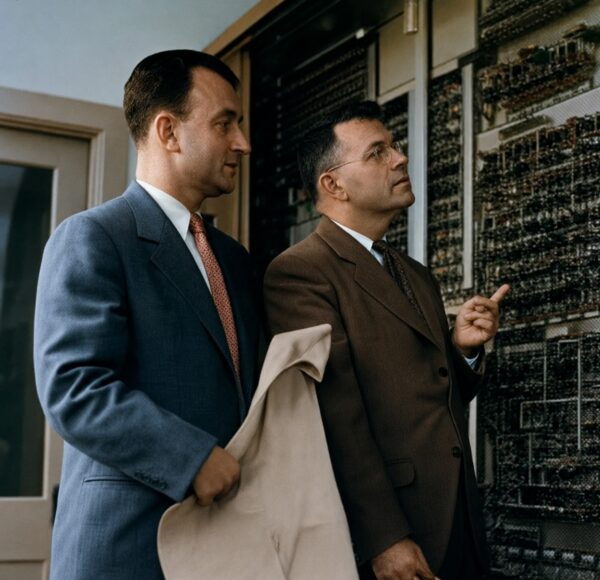
In June 1950, the National Bureau of Standards unveiled a computer for the Air Force on Connecticut Avenue, on the hilltop now shared by UDC and a cluster of embassies. Its builders called it the fastest computer in operation. The New York Times called it an electronic cerebrum, and Washington joined an argument we’re still having.
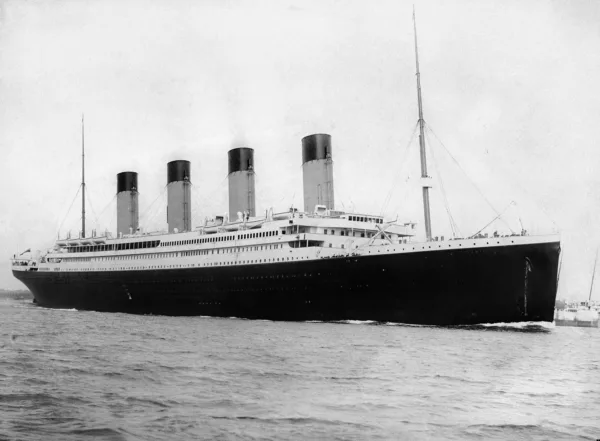
“Never did I know how much he was to me until he was dead.” The story of Archibald Butt, the aide President Taft sent away to rest — who booked his return trip on the Titanic.
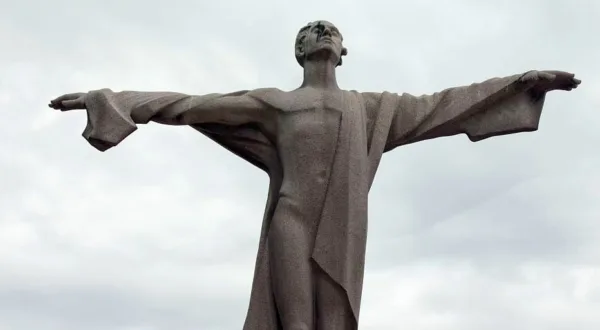
Washington commemorated Titanic victims with the Butt-Millet fountain and a separate memorial funded by women across the country.

In March ’36, comedy “royalty” Jack Benny & wife Mary Livingstone arrived in DC, bringing laughs galore to delight politicos & fans. Dubbed “royal couple” by press, the duo charmed the capital for a week with wisecracks ‘a plenty before departing in style, leaving smiles for miles.
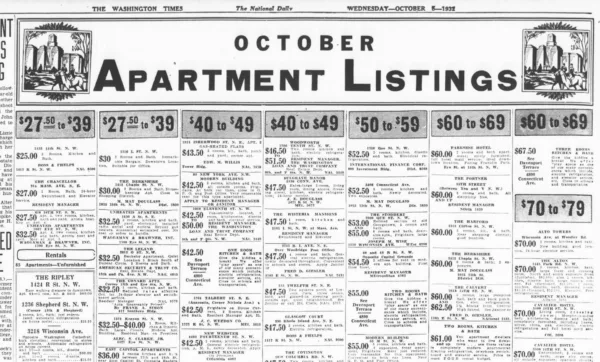
October 1932 Washington Times classifieds offered DC apartments at $35 a month, while two rooms at the Knickerbocker on Mintwood Place went for $75.
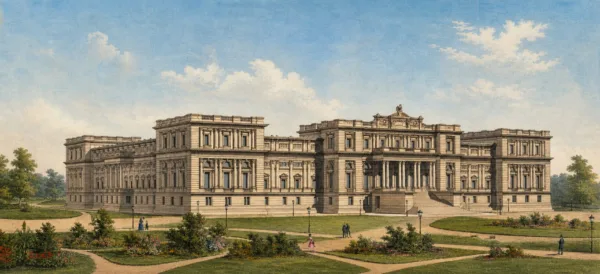
John Smithmeyer and Paul Pelz won the design competition in 1873. They spent 13 years redesigning it. Then Congress fired them. Here’s what happened next.