
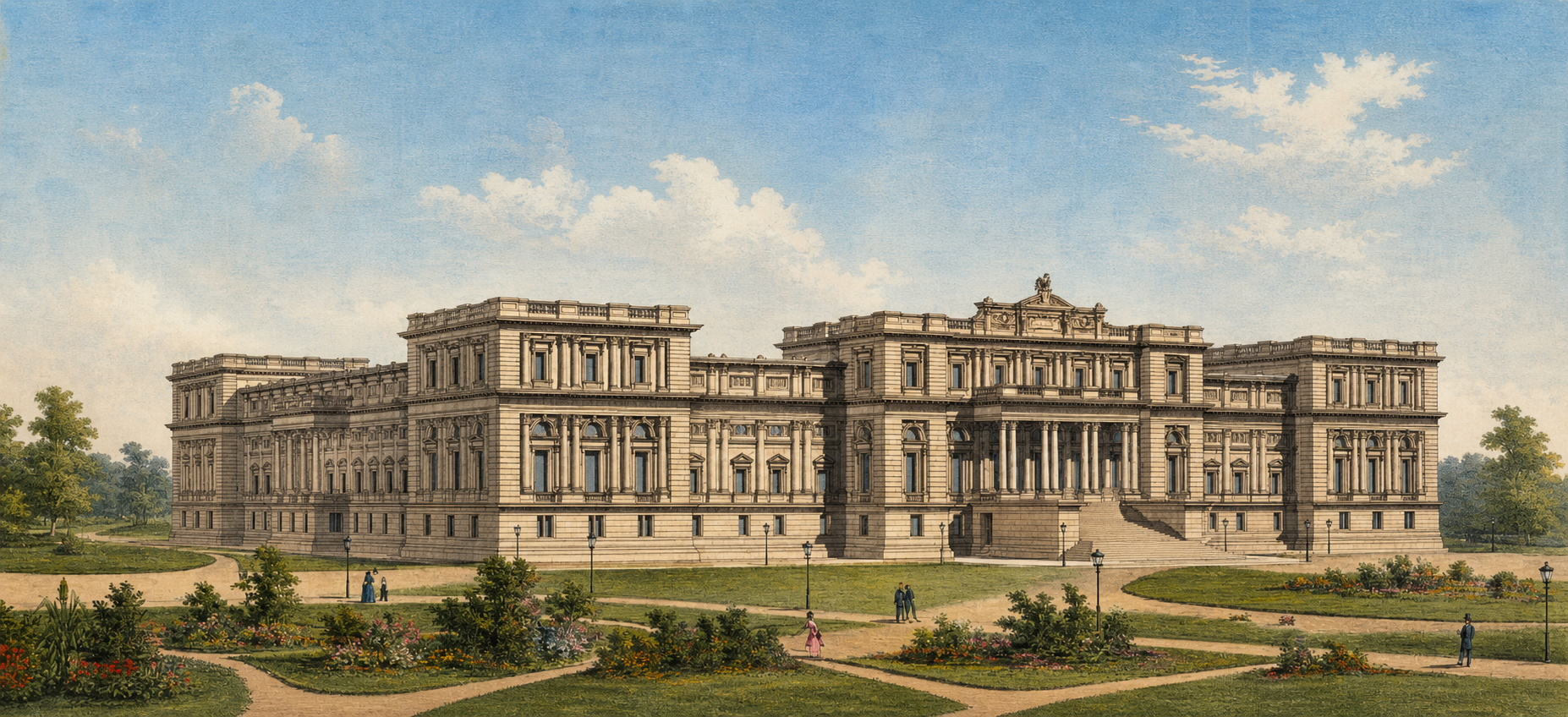
The Library of Congress took thirteen years to design. The two men who designed it were fired before it opened.
That’s not a rumor. It’s just what happened. John L. Smithmeyer and Paul J. Pelz won a federal design competition in 1873, spent the next thirteen years redrawing their plans every time Congress changed its mind, and were dismissed in 1888 with the building barely out of the ground. When the Jefferson Building opened in 1897 as one of the most celebrated public structures in America, Smithmeyer and Pelz were not invited.
Then it got worse.
Two Men, One Competition, No Justice Coming
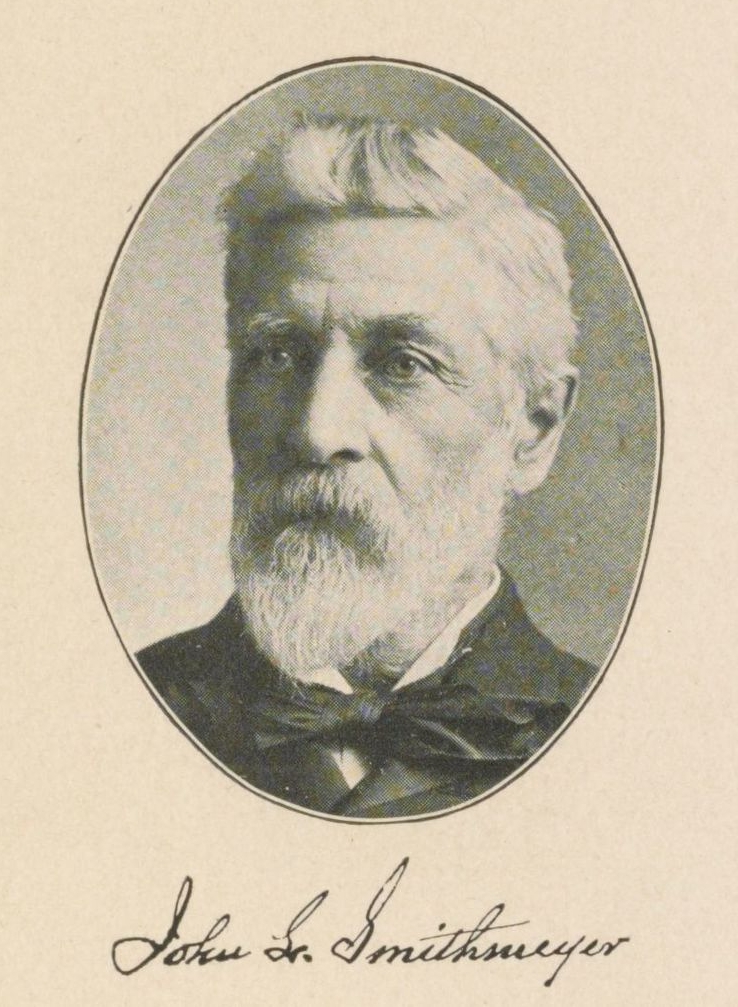
John L. Smithmeyer was a Washington-based architect, Austrian-born, with a solid reputation around the city.
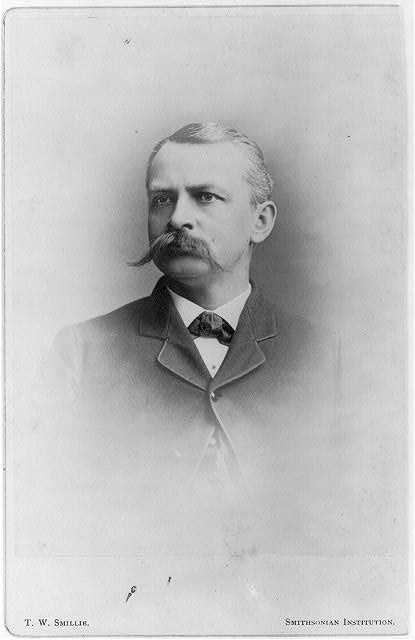
Paul J. Pelz was his partner, a skilled draftsman whose talent for elaborate and beautifully rendered drawings made him particularly good at impressing congressional committees.
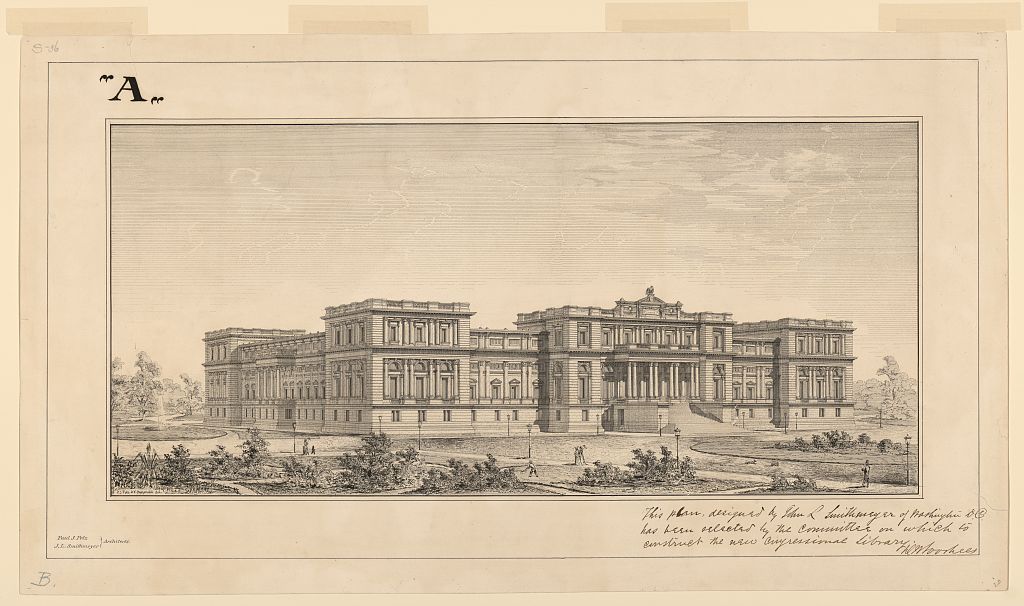
Together they were well suited for a competition of this scale. In 1873, Congress authorized a public design competition for a new building to house the Library of Congress, which had been crammed into the Capitol for decades. Smithmeyer and Pelz entered. So did twenty-seven other firms. Their design won first premium among twenty-eight competitors.
That should have been the beginning of a great story.
It was not.
Forty-One Competitors and Thirteen Years of Revisions
Winning the competition didn’t mean the building got built. It meant Congress started second-guessing everything.
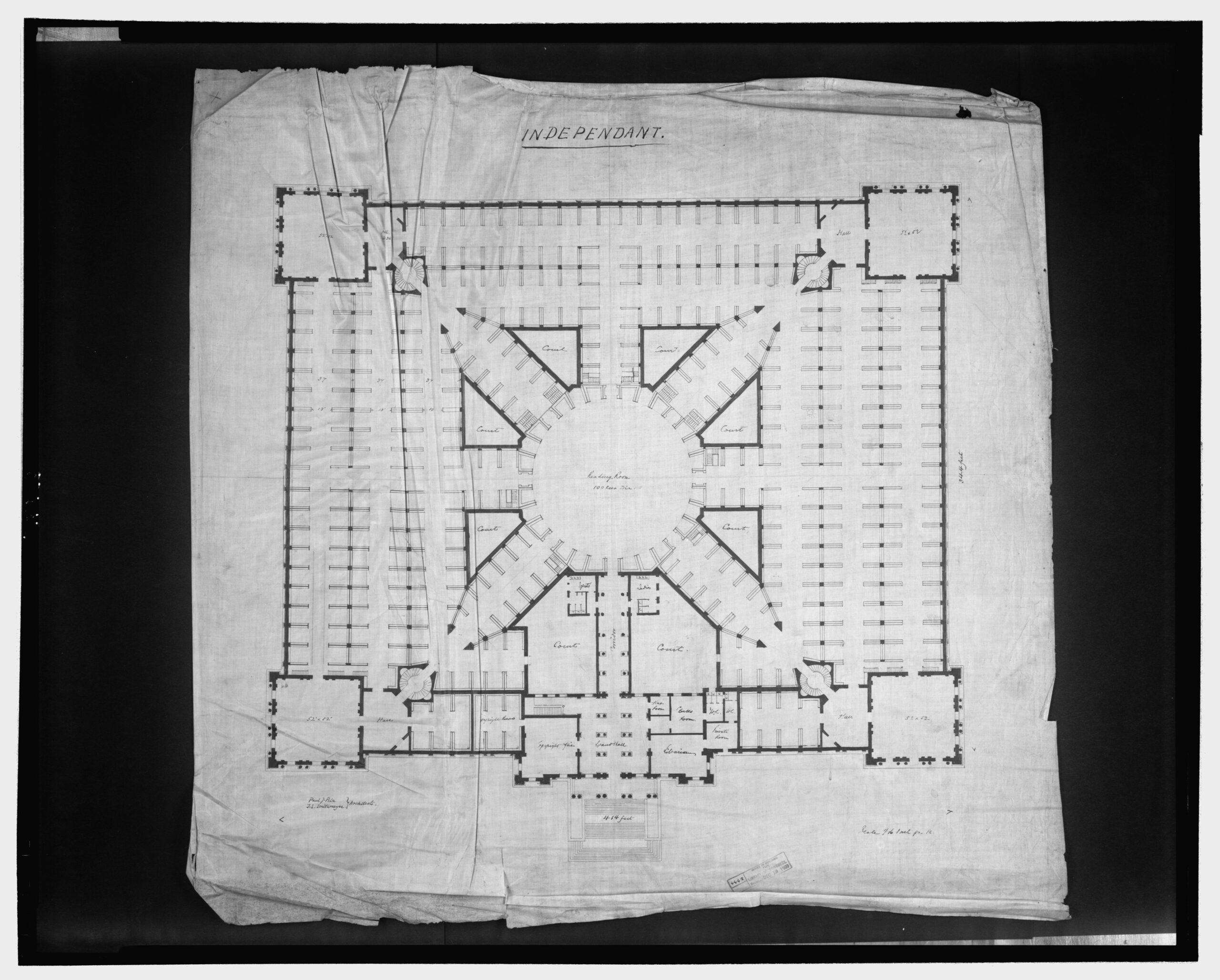
For the next thirteen years, Smithmeyer and Pelz revised, reworked, and re-rendered their design in response to shifting preferences, budget fights, and the whims of whoever happened to be chairing the relevant committee that session. We dug up a statement they published in the Washington Post on May 12th, 1902, where they laid out exactly what those years looked like:
“From that time until 1886 these plans were subjected to a continuous open tilt with thirteen other competitors, making it forty-one altogether.”
Forty-one competitors. Keep in mind they had already won.
Over those thirteen years, the architects submitted ten distinct designs and, by their own count, upward of 100 studies, scale drawings, and working drawings. There was no money to pay them for any of it. “In fact,” they wrote, “there was no money available to pay for these plans until they were adopted by Congress and an appropriation made in 1886 for the construction of the Library building in accordance with those plans.”

They worked for thirteen years on speculation. In April 1886, Congress finally committed. The plans were adopted in open session and turned over to a building commission composed of the Secretary of the Interior, the Librarian of Congress, and the Architect of the Capitol.
Six months later, Smithmeyer was appointed to supervise construction at $5,000 per year, with Pelz as his assistant at $3,000.
It felt, at last, like real progress.
It was not real progress.
One Cement Contract, One Very Bad Outcome
Two years into construction, Smithmeyer got into a dispute with government officials over a contract for cement. The particulars of who was right got buried in what followed. The outcome was not ambiguous.
On September 26th, 1888, the Washington Post ran this headline: “Mr. Smithmeyer’s Plan Rejected and a New One Ordered.” The subhead: “A Fair Price to be Paid the Discarded Architect for What He Has Done – Gen. Casey to Have Entire Charge of the Work.”
The building would be capped at $4,000,000. General Thomas Lincoln Casey of the Army Corps of Engineers was in. Smithmeyer was out. Casey “may continue on the old plan or procure an entirely new one.”
He would procure something close to a new one. And then claim credit for everything.
Pelz stayed on briefly before he too was let go.
By January 1889, Congress had launched a formal investigation. Mr. Holman from the Select House committee found that already $100,000 had been spent with nothing to show but the excavation. He recommended all work be suspended until the ultimate cost could be settled.
The building went up anyway.
The Building Opens. Nobody Mentions Them.
The structure that went up between 1888 and 1897 looked different from what Smithmeyer and Pelz had originally proposed. After thirteen years of congressional-mandated revisions, the design had already shifted considerably, from earlier Romanesque tendencies toward the Italian Renaissance vocabulary that now defines what we call the Jefferson Building. Casey’s engineers took what remained and finished it.
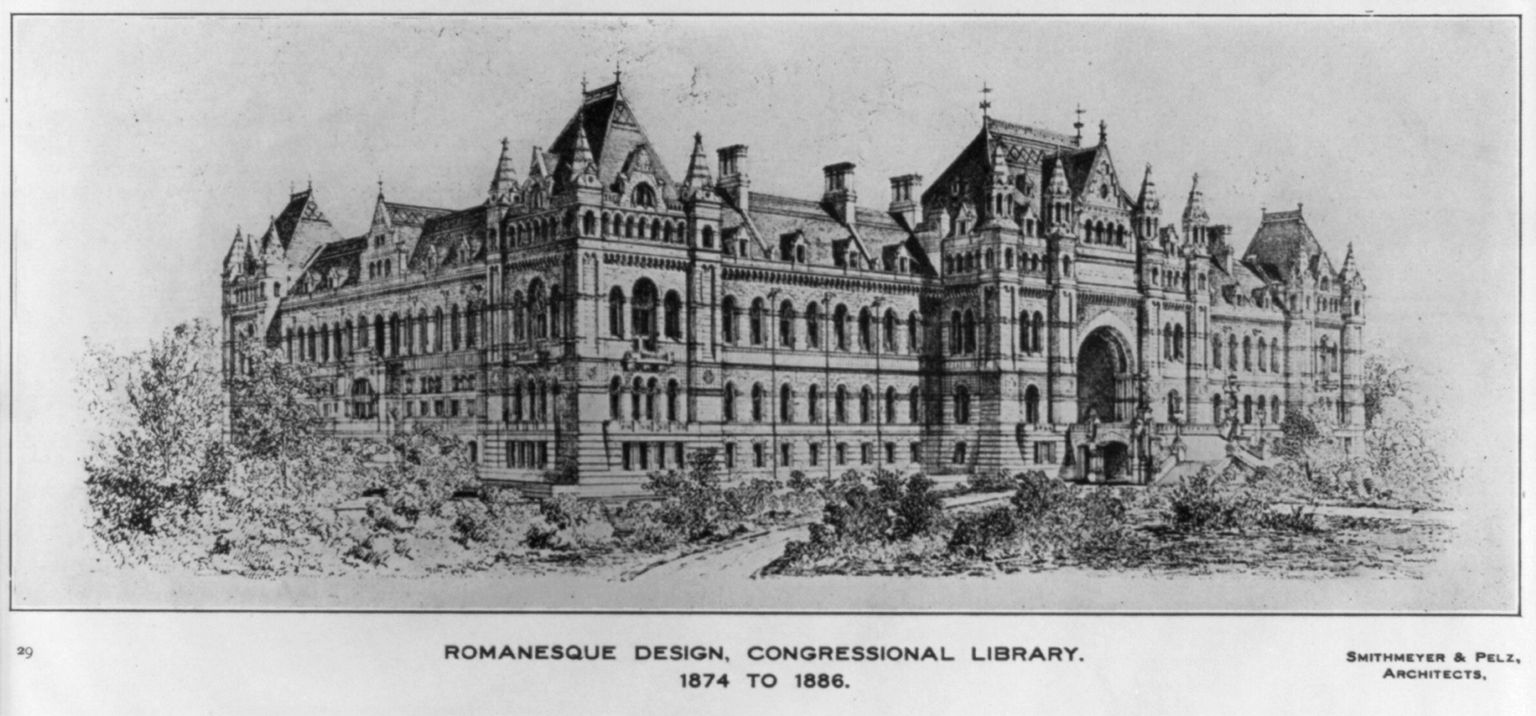
When the building opened in November 1897, it was celebrated as one of the finest public buildings in the country. Harper’s Weekly had already, in December 1895, described Gen. Casey as the “architect of the Congressional Library” – the article written by Casey’s own chief engineer, Bernard L. Green.
Smithmeyer and Pelz were not mentioned.
They could not take that quietly.
The Name on the Tablet
Inside the new building, a commemorative tablet was being installed on the arch near the entrance. It would record the names of those responsible for the building.
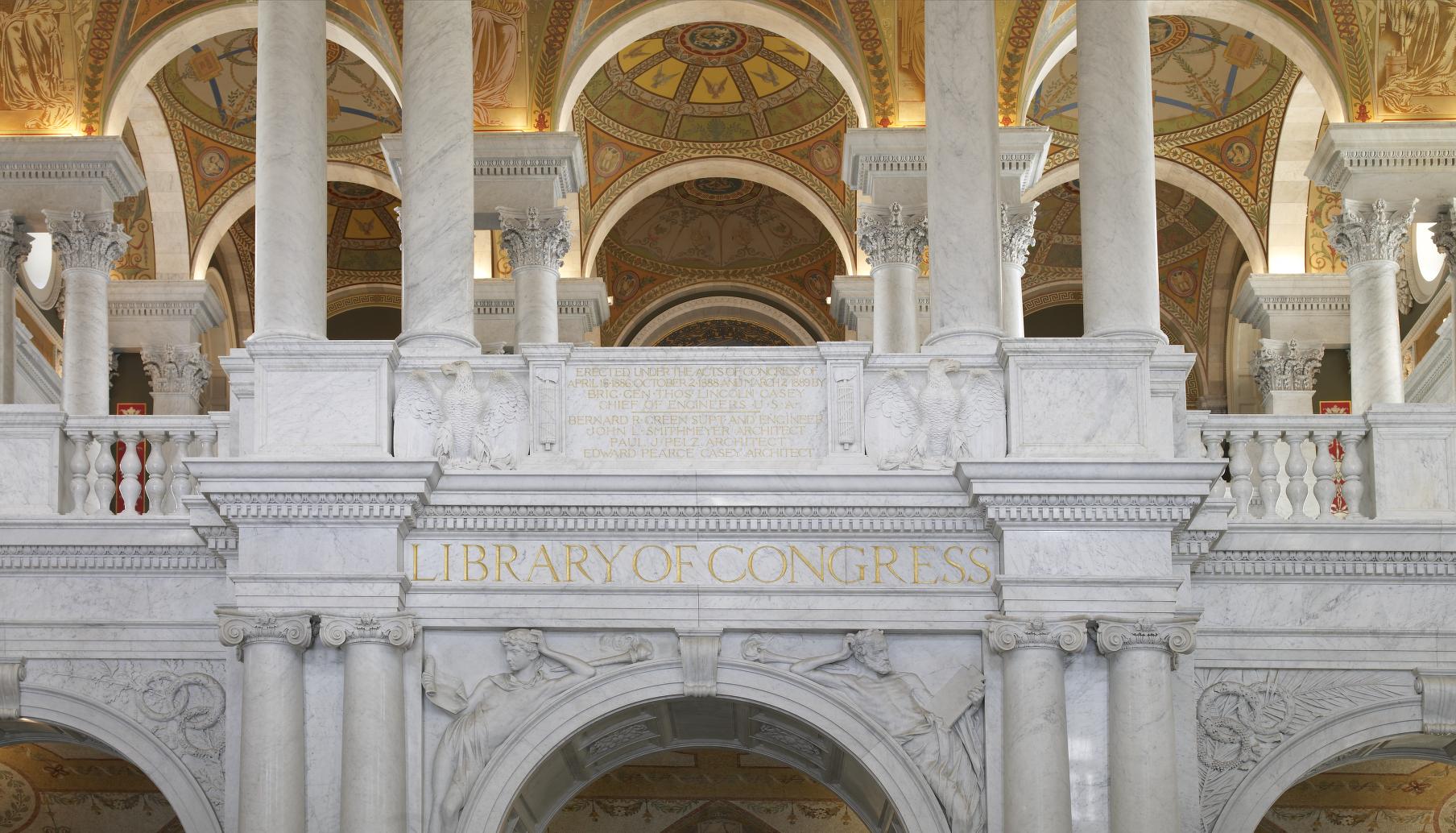
On January 26th, 1897, the Washington Post reported that Smithmeyer and Pelz had filed a vigorous complaint with the Senate, not just about how construction had been managed, but specifically about the tablet. Their names were on it, but positioned below Engineer Green’s, making them look like his subordinates.
They also had a problem with Green’s annual report, which stated that “None of the plans, drawings, or designs, made prior to Gen. Casey’s charge of the work, have been used.”
The architects called this “arrogance and audacity.”
Hard to argue with them on that one.
The tablet was installed the way the engineers wanted it.
The Money They Were Never Going to Get
Credit was one thing. Money was a different fight.
When the Library Commission first accepted their plans, Smithmeyer and Pelz had presented a compensation claim for $159,000. They were advised to hold it in abeyance. Congress, they were told, was “in no mood at that time to consider such a demand.”
So they waited. They supervised construction on a salary. They got fired. They took the case to the Court of Claims.
The building cost $6,500,000 to construct. Under the standard rule of the American Institute of Architects, the architects’ fee was 2.5 percent of construction cost, which works out to $162,500. Subtract what they had already received, and they argued that somewhere around $110,000 to $111,300 was still owed.
The Court of Claims awarded them $48,000.
The Baltimore Sun reported on April 18th, 1902 that “Smithmeyer and Pelz are both now old men and made a final appeal today before the House Committee on Claims for the money they say is due them.” The committee’s view was that because the architects had accepted salaries as superintendents of construction, they had forfeited their right to the standard architectural percentage.
A technicality. One that had followed them for twenty years.
The Senate Votes. The House Does Nothing.
For years, the architects kept pressing. They wrote letters to newspapers. They appeared before committees. They presented the same facts to different bodies, all of which were capable of helping them and none of which did.
On June 5th, 1900, a bill directing the Court of Claims to render a judgment for the architects passed the Senate 36 to 25. Senator Teller of Colorado spoke in favor and, according to the Washington Post, “eulogized Mr. Smithmeyer in the highest terms, and depreciated the effort to deprive him of the honor which, he said, he justly deserved.” Teller called the Library Building “the finest structure of its kind in the world” and noted that Smithmeyer “had spent twelve years of his life in developing the plans.”
Senator Lodge of Massachusetts argued Smithmeyer had already been overpaid.
The bill passed the Senate and died in the House.
During all of this, something else happened.
In 1899, Smithmeyer was found inside the Jefferson Building loading a revolver. According to architect Arthur Cotton Moore, writing in the Library of Congress Information Bulletin in 1997, the incident was handled quietly. He was removed. It was not publicized.
Washington had seen congressional disputes turn dark before – the shooting of Rep. William Taulbee in the Capitol had happened just nine years earlier. Smithmeyer’s situation never reached that point. But you can see how a man gets there.
Paul Pelz Designs a New White House Nobody Asked For
Paul Pelz handled all of this differently: he kept drawing.
In December 1898, the New York Times reported that Pelz had submitted plans for a proposed new White House. The existing Executive Mansion, he argued, was architecturally inadequate for its purposes. Nothing came of it – the White House renovation that actually happened came in 1902 under Theodore Roosevelt, with McKim, Mead and White doing the work – but the fact that Pelz was producing serious new work while simultaneously fighting Congress for back pay tells you something about the man.
Both architects kept pressing their case into the early 1900s. By the time of the Baltimore Sun’s April 1902 report, their names were spelled out in letters of gold on the commemorative arch of the Congressional Library.
The money they believed was owed to them was not.
What Happened to Them
John L. Smithmeyer died in 1908. Paul J. Pelz died in 1918.
The building they designed, which Congress named the Thomas Jefferson Building in 1980, is one of the great public spaces in Washington. The Main Reading Room, with its 160-foot dome and ring of marble columns, stops visitors cold. The Great Hall is all gilded ornament and mosaic and soaring arched ceilings. By any measure, it’s magnificent.
Smithmeyer and Pelz didn’t design every inch of it. The building passed through too many hands for any single claim of authorship to be perfectly clean. But they won the competition. They carried the design through thirteen years of congressional chaos. They submitted ten distinct designs and more than 100 drawings. They were supervising construction when they were dismissed.
Their names are on the arch inside. They’ve been there since 1897, positioned a little lower than they should be.
Most people walk right past them.
Some of our stories are researched and written with help from AI, and checked by a person before they run. Here’s how we use AI.