

On the afternoon of May 20, 1921, Polish-born scientist Marie Curie stood in the East Room of the White House while President Warren Harding placed a mahogany case in her hand. Inside was one gram of radium, valued at $100,000, and the President gave her a small gold key to unlock it. Can you picture it?
Just one gram, and it wasn’t a gift from the government. It was the gift of American women, who had chipped in to buy it for her.
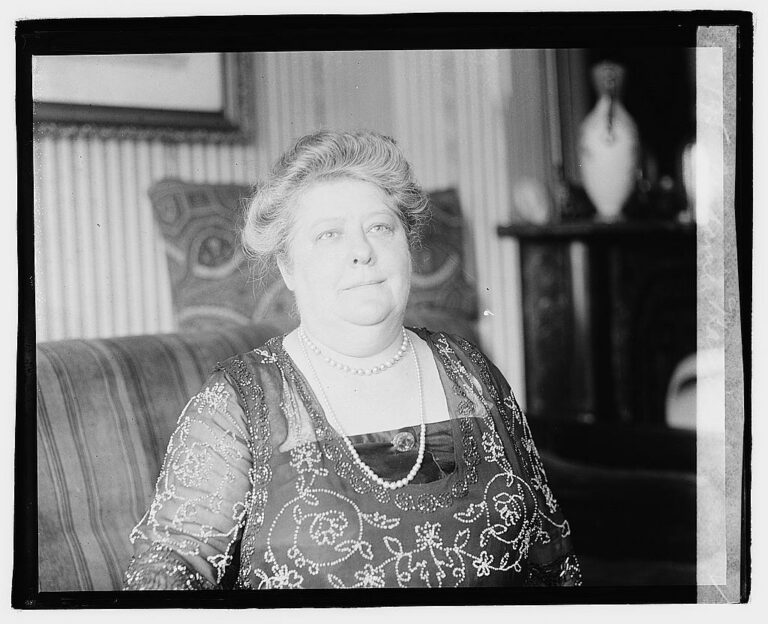
The woman behind the idea was Mrs. William Brown Meloney of New York, editor of The Delineator, who headed the Marie Curie Radium Fund. The Evening Star counted several hundred guests in the East Room that afternoon, and the Washington Post put the crowd at about 500.
So how does a famous scientist end up needing American women to pass the hat for her? Here’s the story.
Why Marie Curie Needed a Gram of Radium
Believe it or not, Curie didn’t own any radium herself. The New York Herald asked in an editorial on March 5, 1921, “Can anything in life be more strange than that Marie Curie, the discoverer of radium, owns none?”
The tiny speck the French government had assigned to her had to be saved for hospital use, the Herald explained, so she had no radium for her experiments.
The Washington Post’s health columnist called Curie “a poor, underpaid research worker.” And he spelled out what the women’s gift meant to her:
she will be no longer the poor research worker, but will receive her heart’s desire, namely, fifteen grains, or one gram, of radium as her very own to do with as she pleases.
Her heart’s desire was a pretty expensive one. The fund needed $100,000 to buy the gram. Curie said she would use it to carry on her study of radium as a treatment for cancer.
Women in Washington pitched in too. In April 1921 the Women’s City Club’s Curie radium fund committee reported collecting $129.50 at a board meeting, according to the Evening Star. A D.A.R. chapter and the Anthony League also gave (every little bit counts, right?).
The Star’s editorial page summed it up as a gram bought with a popular subscription among the women of the nation.
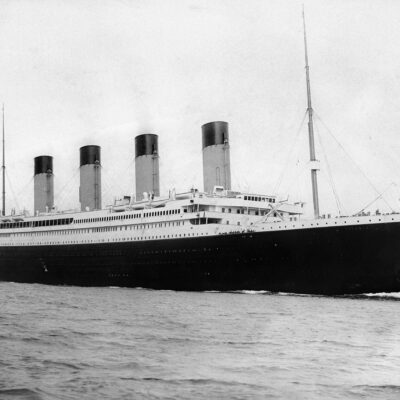
According to the Washington Herald, Meloney had gone to Europe herself to bring Curie over. Curie landed in New York on the liner Olympic on May 11, 1921, with her daughters Irene and Eve, according to the New-York Tribune. The Star described Irene, then 23, as “a scientist in her own right,” and said Eve was 16 and devoted to music.
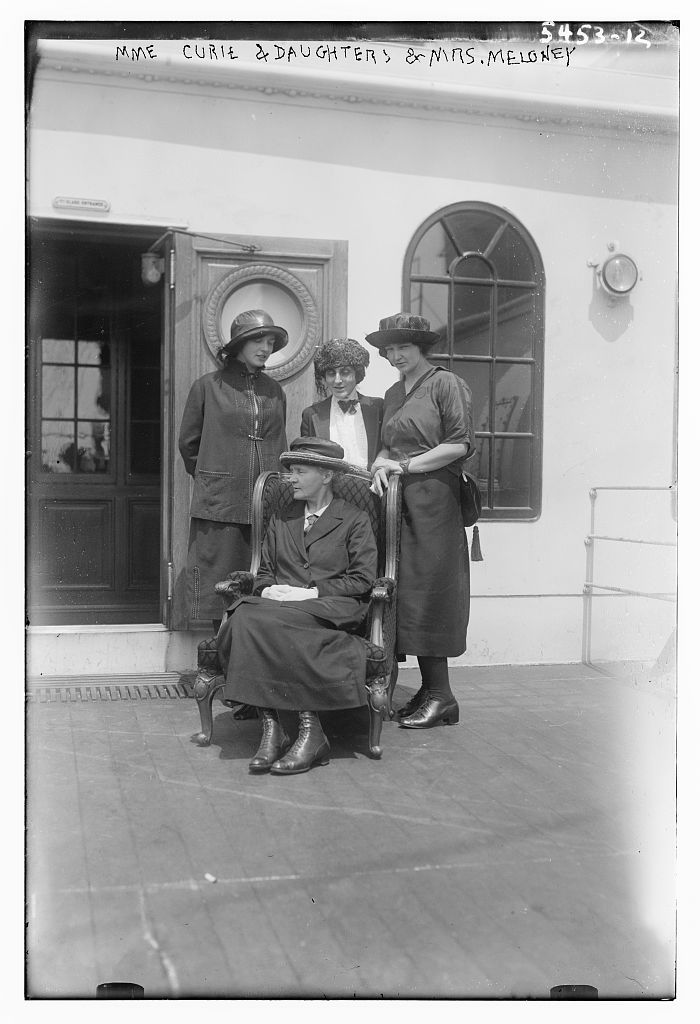
Right after she landed, the fund’s headquarters announced that the $100,000 had been oversubscribed. The extra money, the committee said, would go to Curie to equip a new laboratory on the outskirts of Paris.
“What a Beautiful City!”
Curie arrived at Union Station from New York on Friday, May 20, 1921. Mrs. Vernon Kellogg, acting chairman of the local committee, was there to meet her. So were Smithsonian Secretary Charles D. Walcott and Mrs. Walcott, and Mrs. Calvin Coolidge, wife of the Vice President. Dr. Richard B. Moore and Dr. Charles L. Parsons of the Bureau of Mines came too.
Shortly before 9 o’clock that morning, she rode off in a car named the Adventurer, which belonged to Mrs. Nicholas F. Brady. Passing the Capitol, Curie said, “What a beautiful city!”
Then she turned to Meloney and added, “Such broad streets and beautiful parks! It’s the way people ought to live.” How great is that? Washington doesn’t always get reviews like that.
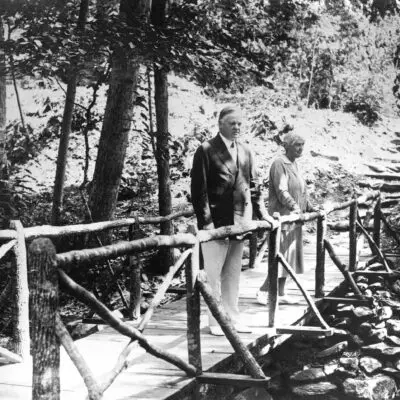
Curie stayed at the home of Third Assistant Secretary of State and Mrs. Robert Woods Bliss, 1785 Massachusetts Avenue NW. She took a short ride through Rock Creek Park at 11 o’clock that morning and then lunched alone in her room.
The radium was coming too, and the Star said it was “in a polished case.” A Pittsburgh dispatch in the Star said it was traveling in the care of the chemists who extracted it.

The Pittsburgh connection makes sense. According to the New-York Tribune, the fund committee had given the contract for Curie’s radium to the Standard Chemical Company of Pittsburgh.
A Mahogany Case and a Little Gold Key
The presentation was set for 4 o’clock, but the Post reported it took place at 4:30 p.m. on May 20, 1921. Mrs. Harding received the guests in the East Room, with help from Mrs. Charles Evans Hughes, Madame Jusserand and Princess Lubomirska, wife of the Polish minister.
Then the presidential party walked to a little platform in the room. The Star’s list of who was in it started with Mrs. Harding.
Next came Col. C. O. Sherrill, the President’s chief aide, French Ambassador Jules Jusserand and Madame Jusserand, Meloney, and Curie with her two daughters. Mrs. Kellogg of the District committee, Mrs. Robert Mead of the national committee and Miss Marion Harlan, Mrs. Harding’s social secretary, rounded out the group.
Ambassador Jusserand opened with a few words and introduced Meloney. She asked the President to present the gift on behalf of the radium committee, saying it “represents the best of American womanhood in every state in our Union.”
Then it was Harding’s turn. He greeted her as “foremost among scientists in the age of science.”
He welcomed her as “an adopted daughter of France,” and as “a native-born daughter of Poland.”
He also got a little philosophical, according to the Star’s text of the speech. He mused about a soul that gathers power from its surroundings and radiates it to others, and even admitted he might be wading into territory better left to the scientists.
Finally, he got to the gift itself:
I have been commissioned to present to you this little phial of radium. To you we owe our knowledge and possession of it, and so to you we give it, confident that in your possession it will be the means further to unveil the fascinating secrets of nature …
Here’s how the Evening Star described the big moment on May 21, 1921:
President Harding presented to the noted Polish-Franco scientist one gram of radium, valued at $100,000, the gift of hundreds of women in America. The gram of this precious, mysterious metal force was contained in a mahogany case, and as he placed it in her hand, the President gave to her a small key of gold metal to unlock the container.
A “precious, mysterious metal force”! You can tell the Star was pretty impressed.

“I Love You All, My American Friends”
Curie was visibly moved, and she kept her reply short. The Star printed it:
Mr. President and Mrs. Harding … I cannot express to you the emotion which fills my heart in this moment. You, the chief of this great republic of the United States, honor me as no woman has ever been honored in America before.
She thanked America’s women “in the name of France,” and then in the name of her native Poland, of science and of humanity.
And she closed with this: “I love you all, my American friends, very much.”
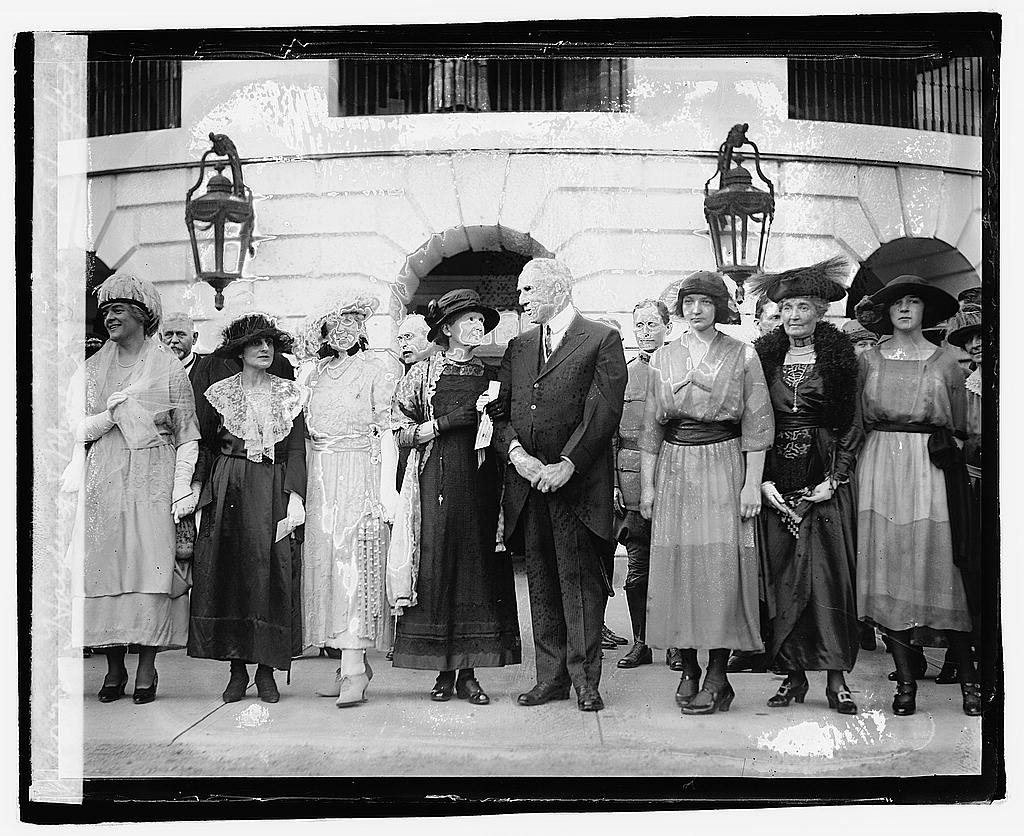
After that, the President’s party took their places in the Blue Room and shook hands with the guests as they filed by. Photographers caught the party outside the South Portico too, and the National Photo Company’s negative sleeves are marked May 20, 1921.
Thousands of Blossoms
You’d think that would be enough for one day, but it wasn’t.
That evening, a meeting held in her honor by the woman’s committee of Washington filled the auditorium of the New National Museum. That’s the building we know today as the National Museum of Natural History, at Tenth Street and Constitution Avenue NW.
Bouquets came first from the White House and the Smithsonian, and then they just kept coming:
bouquet followed bouquet until thousands of blossoms were arranged in front of the chair in which sat the famous woman scientist.
Walcott presided, and Julia Lathrop, chief of the Labor Department’s Children’s Bureau, greeted Curie for the scientists and women of Washington. Worn out by the day, Curie didn’t give a speech. She rose, said only, “These flowers are very sweet, and I thank you again,” and sat down to even louder applause.
Robert A. Millikan of the University of Chicago spoke about radium. Simple experiments showing the gamma rays of radium were thrown on a screen, with “Mme. Curie’s gram of the metal being used.”
So the brand-new gift went straight to work, just hours after the President put it in her hand.
A Lump of Ore the Next Day
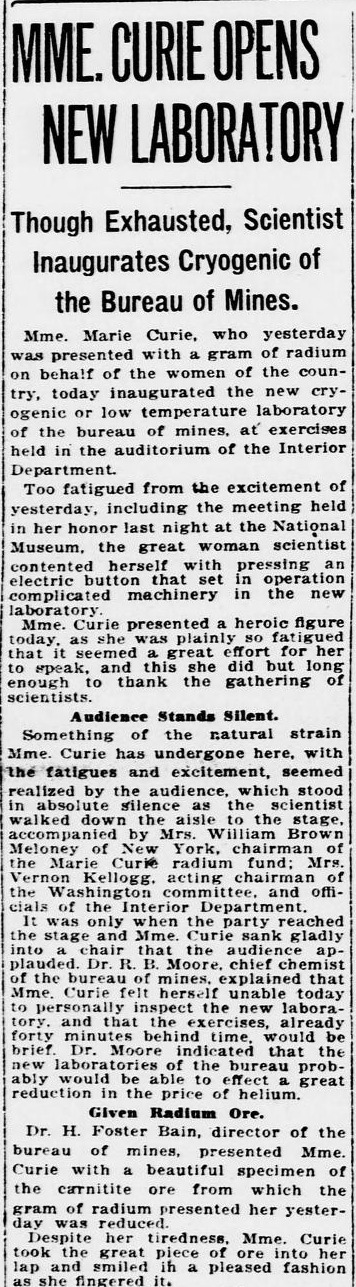
The next day, May 21, 1921, an exhausted Curie went to the Interior Department auditorium to inaugurate the Bureau of Mines’ new low-temperature laboratory. She did it by pressing an electric button, without inspecting the lab.
Bureau of Mines director H. Foster Bain gave her a specimen of carnotite, the radium-bearing ore her gram had been reduced from. Tired as she was, the Star said she took the ore into her lap and “smiled in a pleased fashion as she fingered it.”
I love that detail. You hand her a lump of rock, and she lights up!
She also got a jar of the first ore shipped in 1898. According to the Associated Press, it came from the first shipment of carnotite ever made in this country, mined before anyone knew it held radium.
The two reports don’t agree on who it came from, though. The Star said Bain gave the jar on behalf of the Bureau of Mines, while the AP said Gordon Kimball of Ouray, Colorado, sent both the jar and the ore specimen.
Her Washington program, as the Star announced it, had a Sunday dinner at the Polish legation, a French embassy dinner and a departure for Philadelphia on Monday morning, May 23.
Was the Radium Really in the Box?
By May 21, 1921, a rumor was going around that Curie hadn’t actually been handed the radium in the East Room. Meloney shut it down, and the Star ran her answer on its front page:
Mrs. Meloney set at rest today the rumor that the gram of radium really was not presented to Mme. Curie yesterday, but a dummy in its place, the real radium to be given her later. The actual gram of radium was presented yesterday, and a small dummy was given Mrs. Harding as a memento of the historic occasion.
So there was a dummy after all … it just went to the First Lady. And the real gram had already lit up a screen at the museum the night before.
If you’re wondering how Harding got along with another famous scientist, we’ve written about President Harding and Albert Einstein’s theory of relativity.
Lost Washington stories, in your inbox.
The newest story, plus a few from the archive.
Free. Unsubscribe anytime.
AI helped research and write this story. Here’s how we use AI.Suggest a correction