Mary Harris Shot the Man Who Jilted Her in the Treasury Building, Then Married Her Lawyer
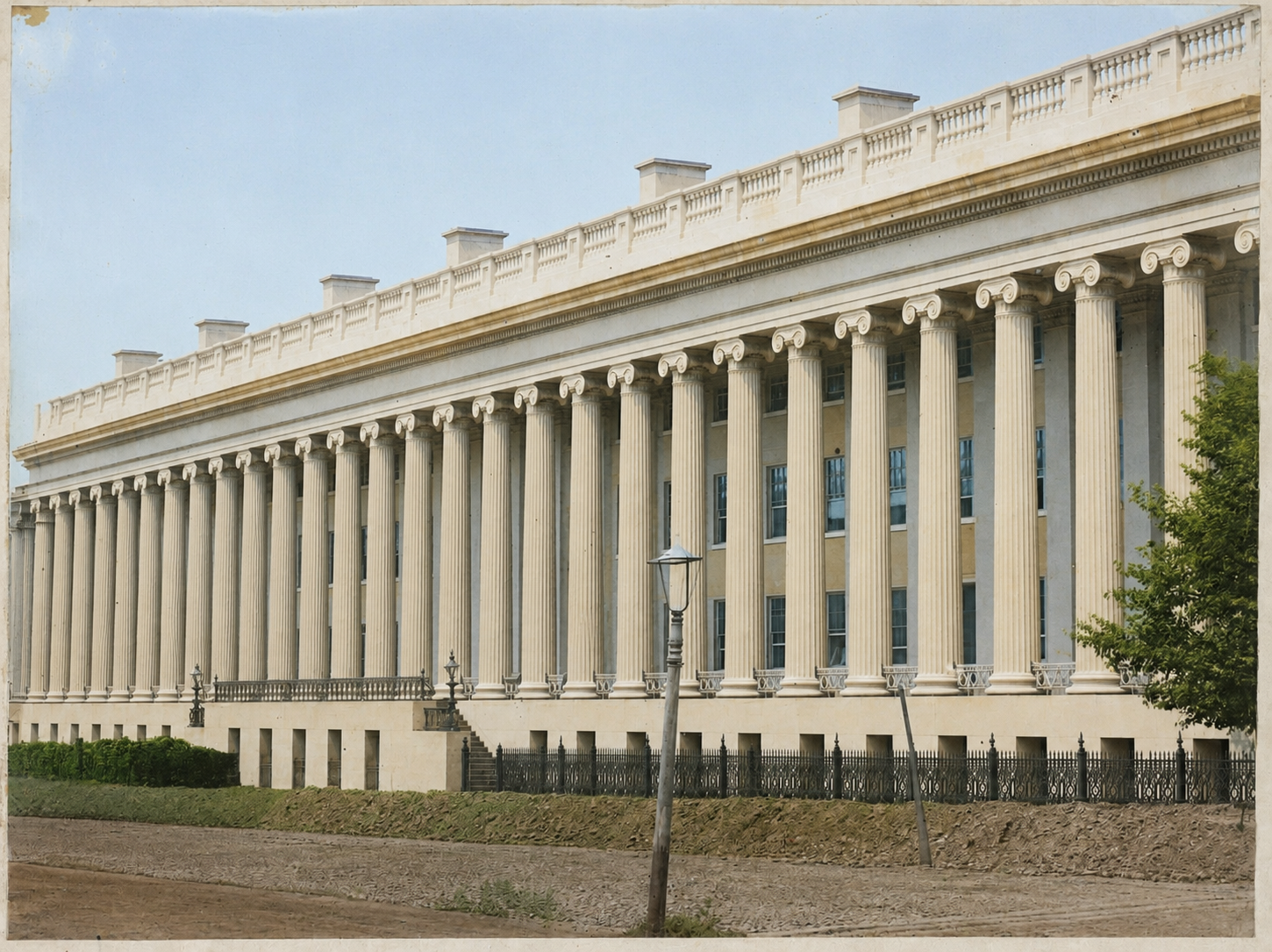
She walked into the Treasury Building on a Monday afternoon in 1865, shot the clerk who had courted her since she was twelve, and walked free in five minutes.
Washington sat at the center of the Civil War, serving as the Union capital with Confederate territory just across the river. These posts cover the forts, hospitals, battles, figures, and everyday life that defined the city during the war years.
She walked into the Treasury Building on a Monday afternoon in 1865, shot the clerk who had courted her since she was twelve, and walked free in five minutes.
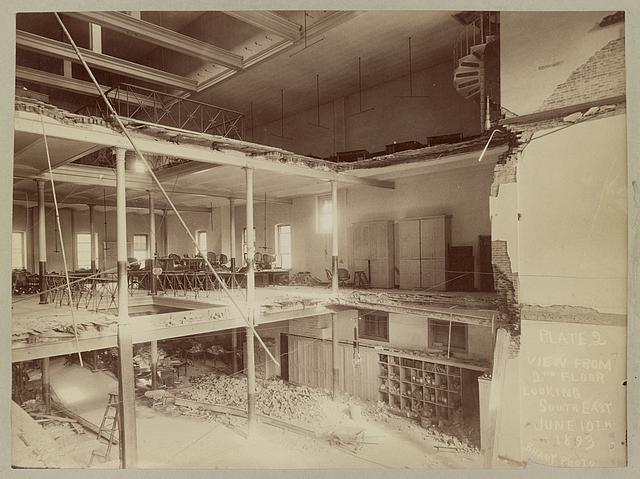
On June 9, 1893, the floors of Ford’s Theatre pancaked into the basement, killing 22 federal clerks 28 years after Lincoln was shot in the same building.
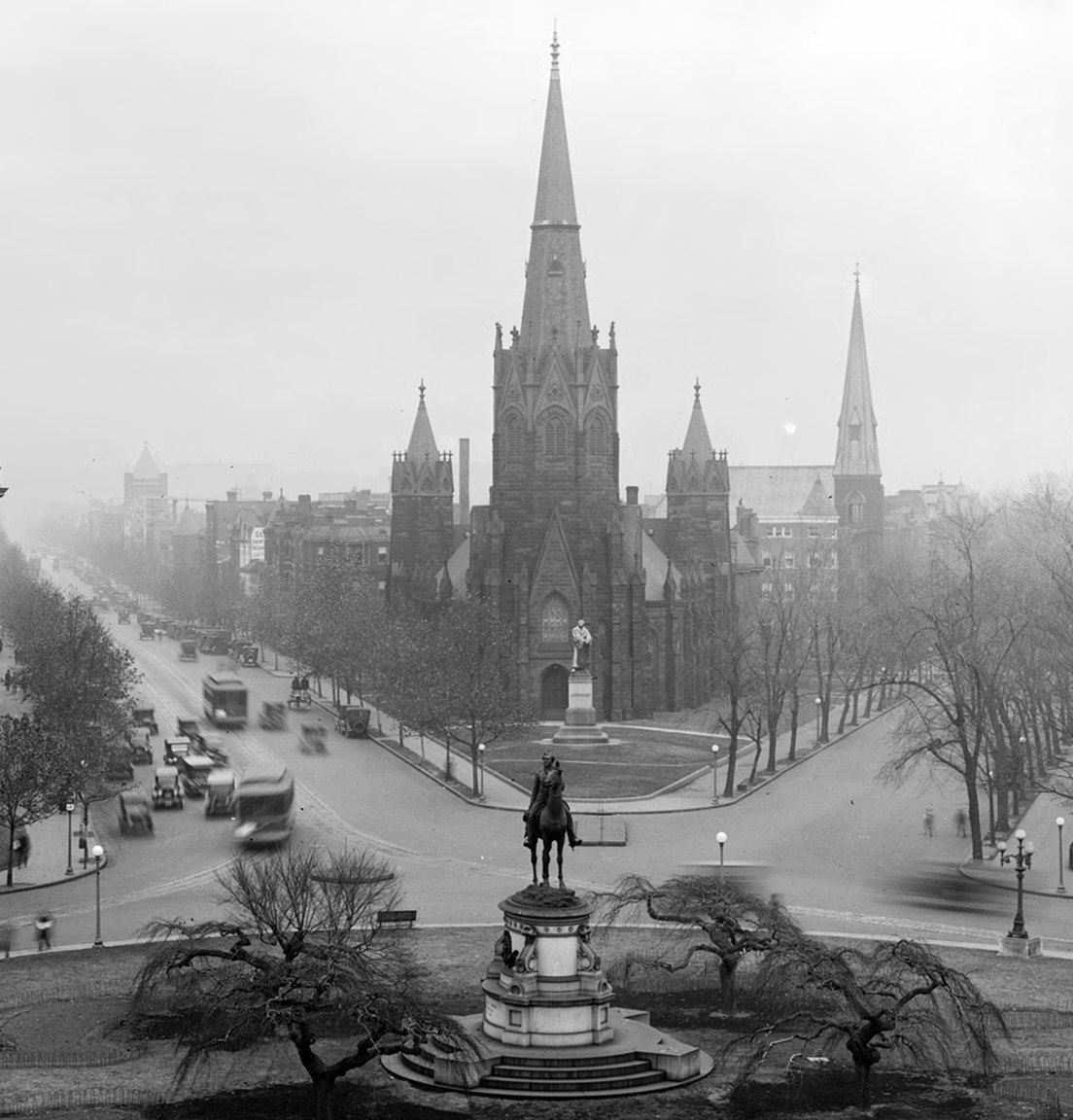
The congregation built pews dedicated to Generals Grant and Lee, in the same sanctuary, five years after the war ended.
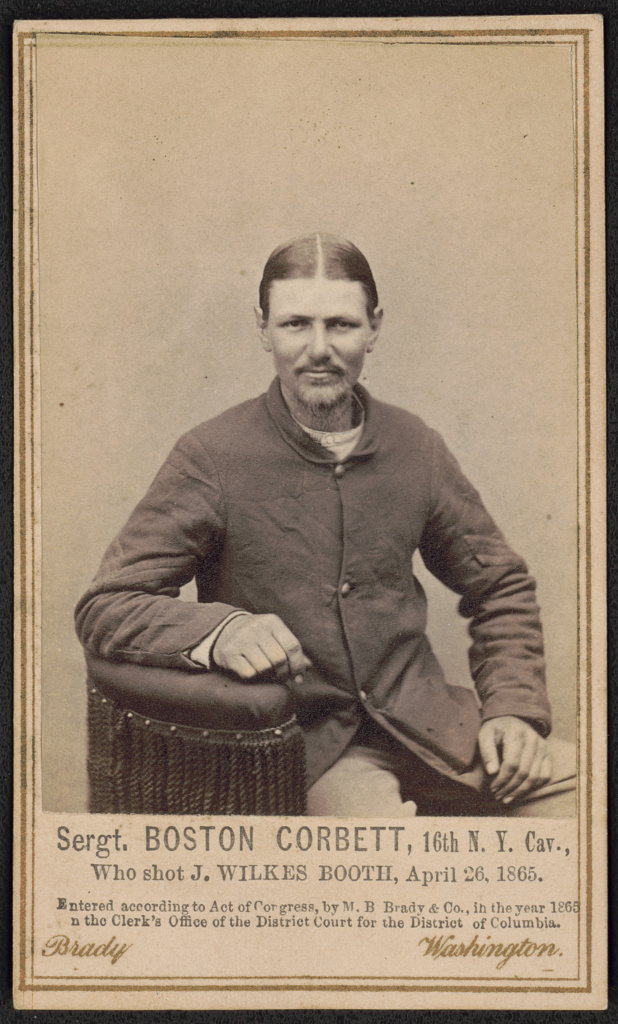
On May 17, 1865, Sergeant Boston Corbett took the stand at the Washington Arsenal and walked the military commission through the night he shot John Wilkes Booth in a Virginia barn. This is the DC chapter of his strange life.
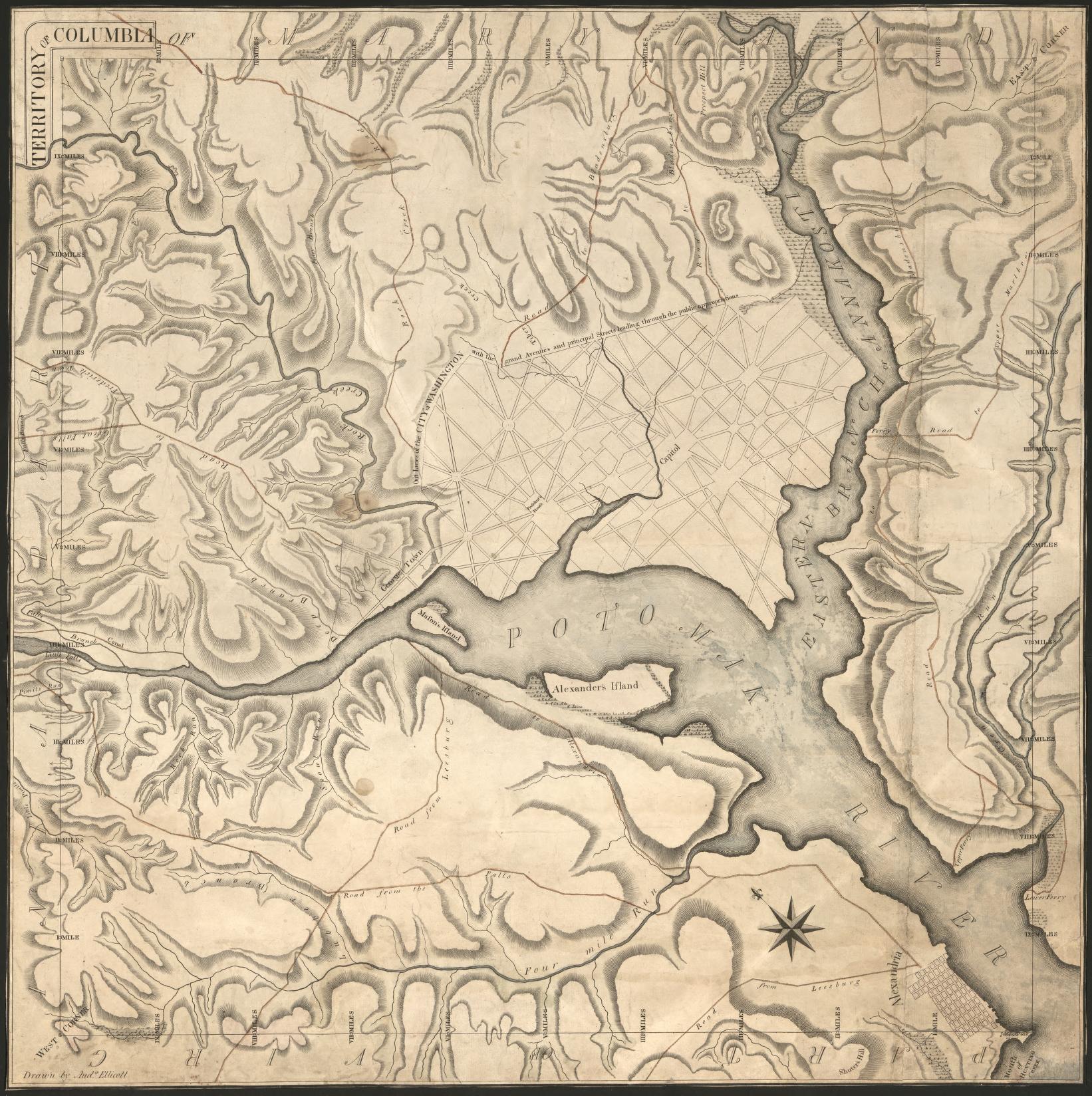
In 1792, landowners founded Centreville to be the geographic center point between Alexandria, Georgetown, and Leesburg.
In 1910, Taft, Hannis Taylor, and Washington’s Board of Trade tried to undo the 1846 Alexandria retrocession. Virginia and a lame-duck clock stopped them
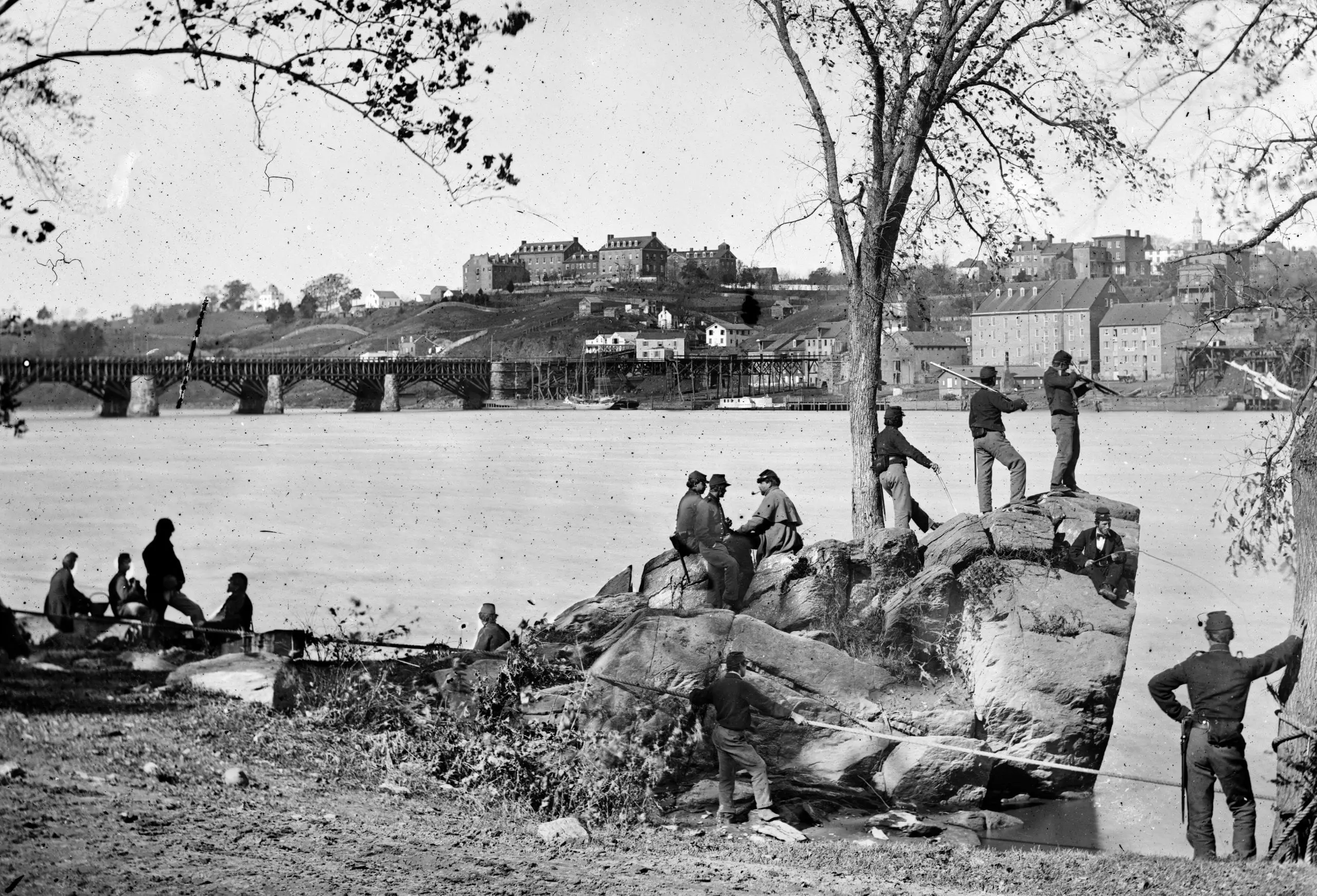
Take a rare look at Union soldiers guarding the Potomac River in Washington, DC in 1861. Georgetown University is visible in the background. Photo by George Barnard.
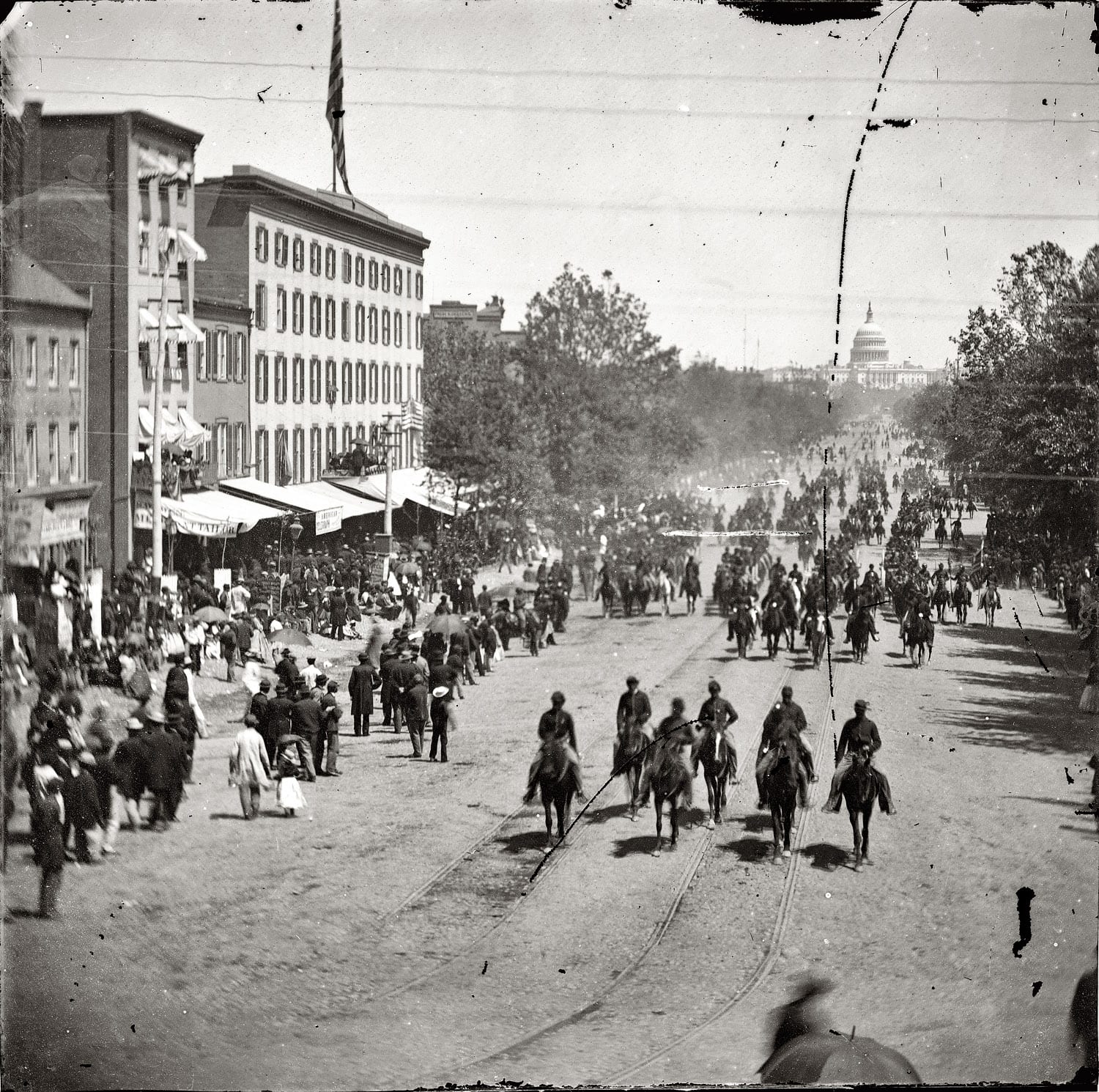
Discover a pivotal moment in history with Mathew Brady’s stunning photo of Washington, D.C. in 1865, capturing the end of the Civil War era.
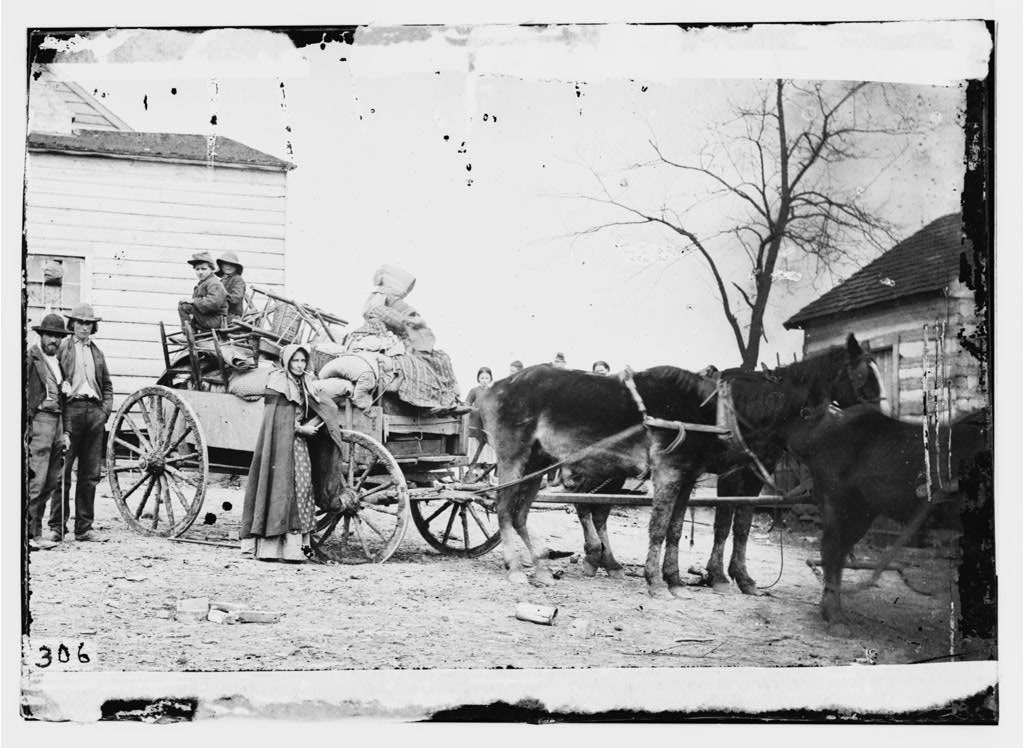
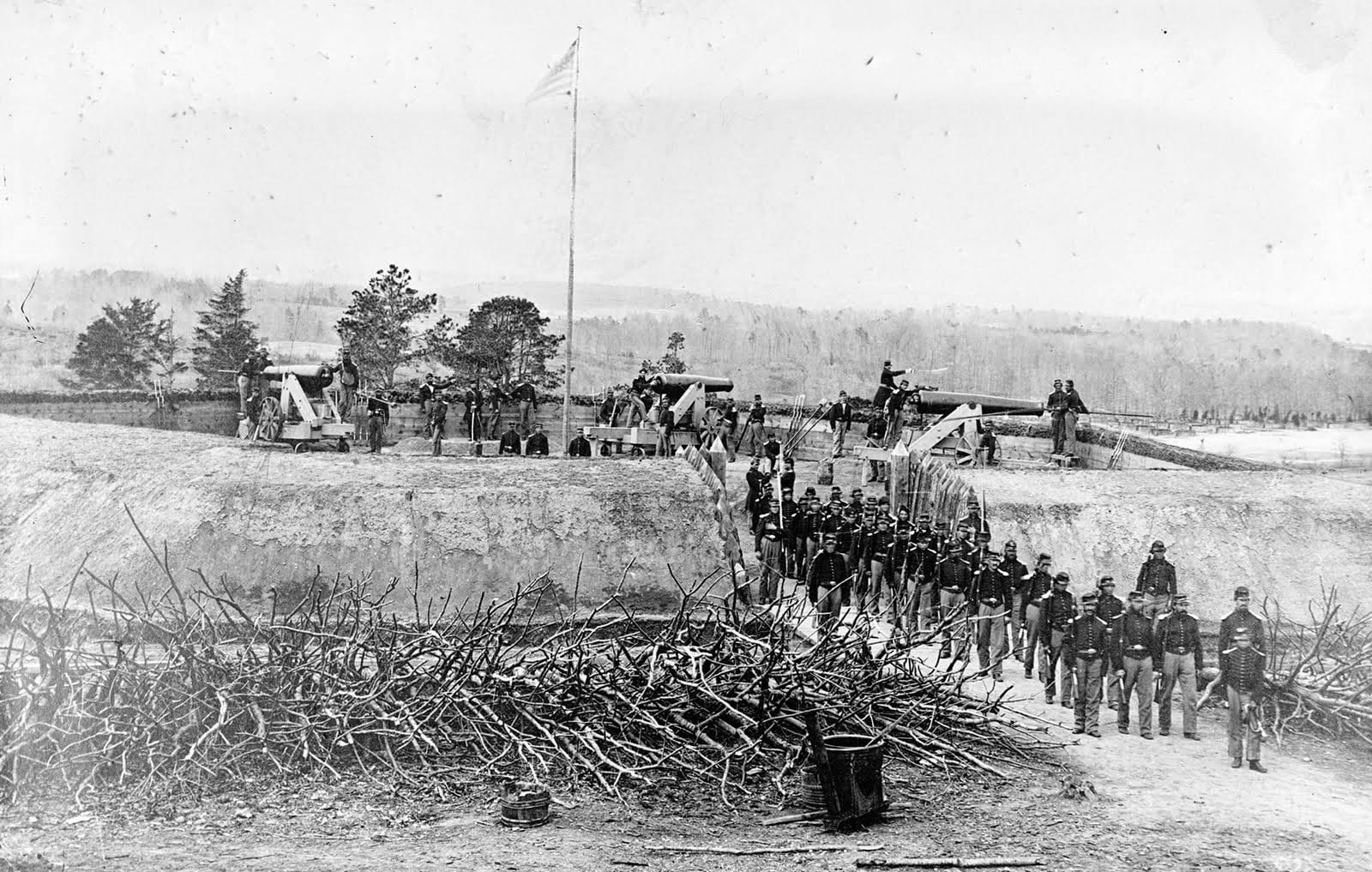
The Civil War reached the outer edges of Washington in 1864. It was so close that President Lincoln rode near the front lines of Fort Stevens and came under fire.