The Homestead Grays: A Nostalgic Look at the Negro League Baseball Team

Homestead Grays in 1944 (Smithsonian)

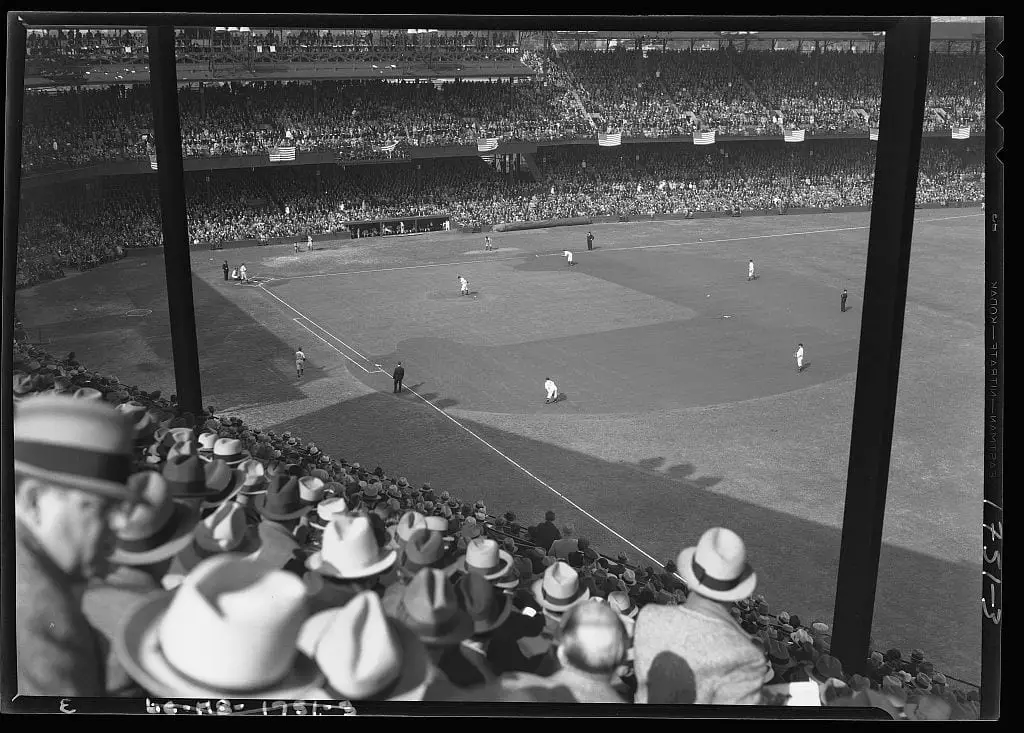
This is awesome, with a few appearances from former Mayor Anthony Williams (nice bow tie dude!).  If you’re a baseball fan and a history fan, watch the whole thing. It’s an excellent history on the Homestead Grays, the Negro League baseball team that was founded in Pittsburgh and eventually closing out their existence occupying Griffith Stadium.

Check out this great photo, dug up from the Smithsonian’s website.

Homestead Grays in 1944 (Smithsonian)

A Look at the History of DC’s Police Call Boxes – Sgt. Nicholas Breul of DCPD Gives a Brief Talk

Police call box at 13 1/2 and D St. NW in 1912 (Wikipedia)

Most of you probably walk right by those old police boxes scattered throughout the city. Some of them have been turned into miniature art exhibits — like the ones in Mt. Pleasant. Check out the video above of Sgt. Nicholas Breul of DCPD gives a brief talk on the history of these police call boxes.

Surely Officer Sprinkle was intimately familiar with these call boxes.

Police call box at 13 1/2 and D St. NW in 1912 (Wikipedia)
Historic police call box. Sheridan Kalorama Call Box Restoration Project. Located on Massachusetts Ave. near intersection with 22nd St., NW

President Johnson Signs the 1968 Civil Rights Act: A Look Back at the Speech

President Johnson signs the 1968 Civil Rights Act - April 11th, 1968

This is a clip from President Johnson’s speech before signing the bill into law. This was only a week after the assassination of Martin Luther King, Jr. in Memphis.

We all know that the roots of injustice run deep. But violence cannot redress a solitary wrong, or remedy a single unfairness.

Of course, all America is outraged at the assassination of an outstanding Negro leader who was at that meeting that afternoon in the White House in 1966. And America is also outraged at the looting and the burning that defiles our democracy.

We just must put our shoulders together and put a stop to both. The time is here. Action must be now.

President Johnson signs the 1968 Civil Rights Act - April 11th, 1968
President Johnson signs the 1968 Civil Rights Act – April 11th, 1968