
Riots
Washington has been the site of some of the most significant civil unrest in American history. The 1919 race riot erupted in the streets between the Capitol and the White House. The 1968 uprisings that followed Dr. King’s assassination devastated corridors along 14th Street, H Street NE, and 7th Street NW for decades. These posts examine the riots that shaped modern Washington.

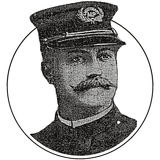
In 1857 the commandant of the Marine Corps faced down a rioters’ cannon at a DC polling place, armed only with a cotton umbrella.
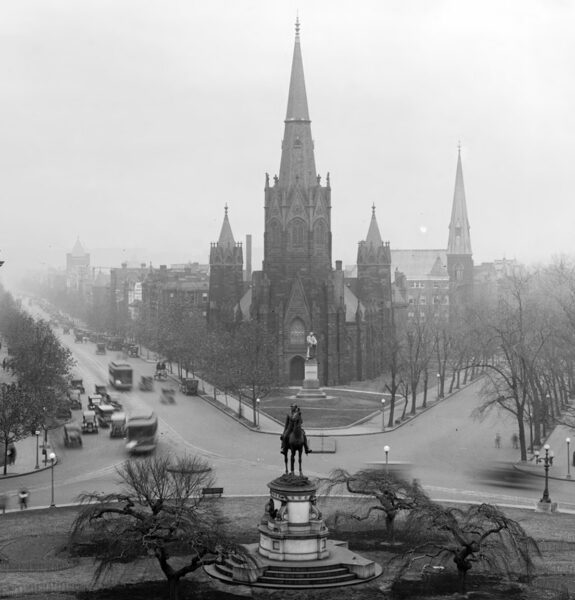
Two of Luther Place’s original pews were dedicated to Grant and Lee, both in the same sanctuary on Thomas Circle.

A series of photos shows Columbia Heights in the immediate aftermath of the 1968 riots. The Tivoli Theater and the commercial blocks on 14th Street had burned.

Here is some really sad and devastating film footage that we dug up showing the city after the riots of 1968.

Remembering the 1968 riots in Washington, D.C. that left the city in ruins and resulted in the deaths of several people. No commentary needed on this one.
There’s more where these came from.
Lost Washington stories in your inbox most mornings: the newest, plus a few from the archive.

A video clip records Johnson’s remarks before signing the Civil Rights Act on April 11, 1968, one week after King’s assassination.

A photograph of soldiers in an Army jeep at 9th and U during the 1968 riots is paired with a later street view of the same corner.

At 1019 U Street NW, now home to Corte Salon, 72-year-old Crawley Smith fought off a 1969 robber whose plastic toy gun snapped in half during the struggle.
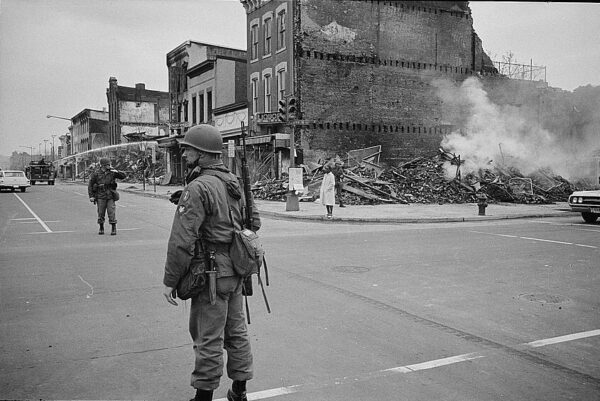
Revisit the devastation of the city of Washington DC in 1968 following the assassination of Martin Luther King Jr. with video, photos, and related articles from the time.