
Hotels
Washington’s grand hotels have always been more than just places to sleep. They’ve been political backrooms, celebrity haunts, and landmarks in their own right. These posts explore the history of DC’s most storied hotels and the people who passed through their lobbies.
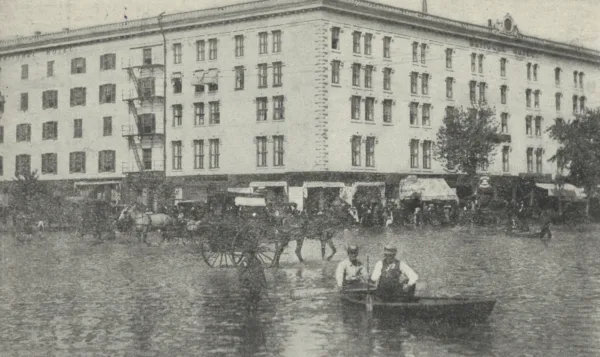
A man rowed a skiff through the door of the railroad depot at 6th Street while a crowd in the St. James Hotel windows cheered him on.

Before it welcomed jazz musicians and visiting professionals, the Dunbar Hotel was a brewer’s luxury apartment house at 15th and U.
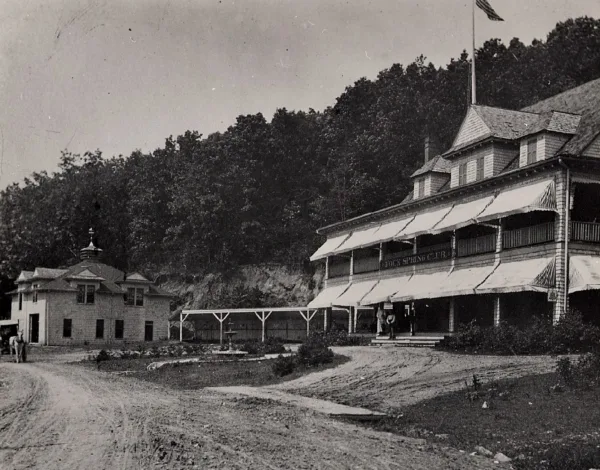
Gambling houses, speakeasies and Sunday crowds lined Conduit Road just past the District line, and Montgomery County spent three decades trying to shut them down.
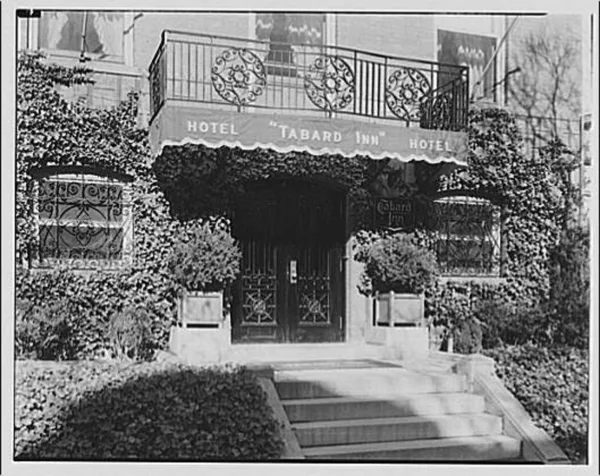
The Tabard Inn’s founder sold it in 1927, then bought it back at a 1930 foreclosure auction for $2,000. Deeds, plats and census records tell the story.
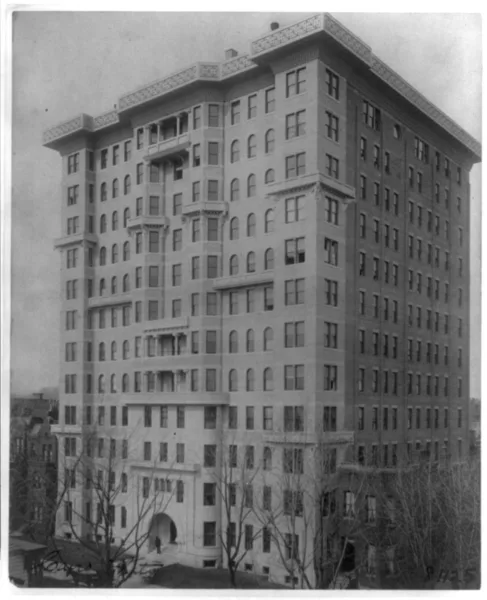
A 35-year-old architect built 164 feet of Moorish-fantasy hotel into a Dupont rowhouse block. Congress hated it so much it made a law.
There’s more where these came from.
Lost Washington stories in your inbox most mornings: the newest, plus a few from the archive.
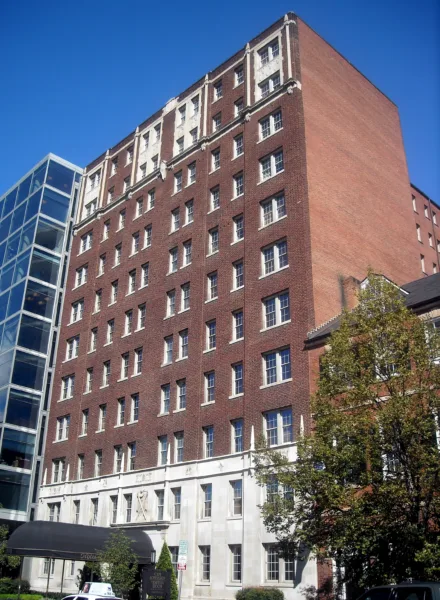
Hotel Lombardy opened as apartments in 1929. Its attendant-operated elevator lasted until 2011.
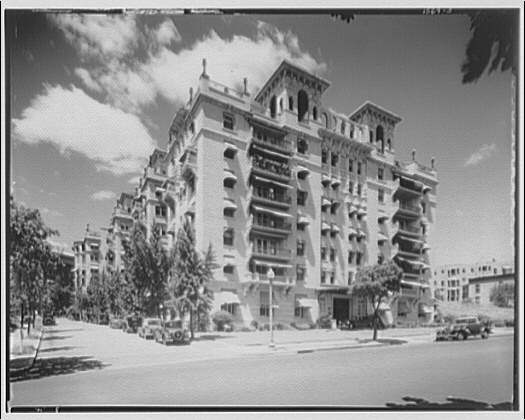
The 1918 apartment hotel at 2400 16th Street NW housed ten senators, hosted embassies, and unfurled the first Czechoslovak flag. Today it is The Envoy.

A fire just after midnight on April 24, 1922 wrecked the Forest Glen Trading Company. The rebuild gave 10 Post Office Road the granite turrets and battlements still standing today.

Suite 870’s ghost stories center on the Doherty family’s apartment, housekeeper Juliette Brown’s death and staff reports of unexplained disturbances.

If you’ve lived in D.C. for a while, you’ll remember the good old days when the W Hotel was actually Hotel Washington, the historic and storied hotel near the White House. I remember having quite a few pleasant lunches on the roof, with a spectacular view of the Washington Monument and the President’s house.
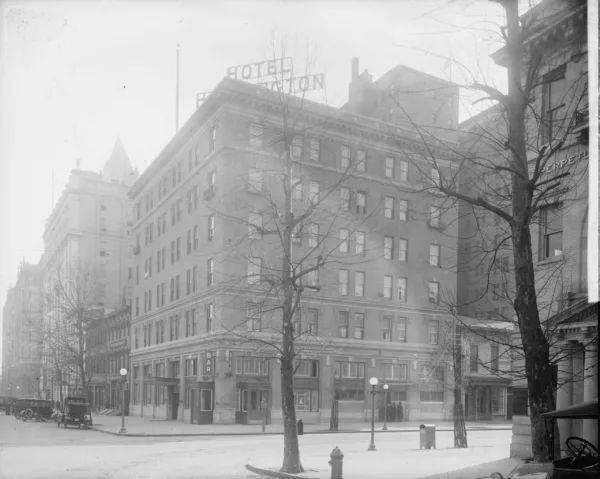
From its 1914 opening to its 2023 closure, Hotel Harrington was DC’s longest-running hotel. Now KHP Capital plans to bring 436 11th St NW back to life.
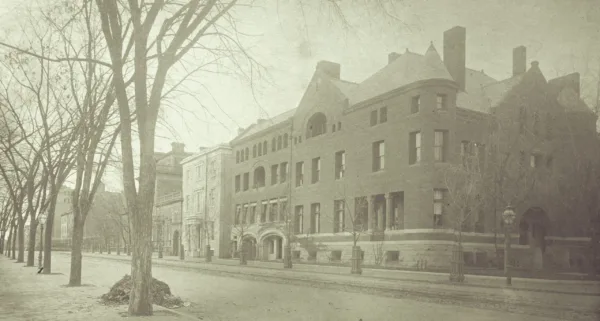
Before the Hay-Adams Hotel went up in 1928, the lot held the homes of John Hay, Lincoln’s secretary, and the writer Henry Adams.

Three Willard brothers ran the Willard Hotel on Pennsylvania Avenue. The fourth, Caleb, ran a hotel just as big a block away. He just had the misfortune of calling it the Ebbitt House.

In 1796 an Englishman named William Tunnicliff opened the first hotel in Washington, D.C., a brick house on Pennsylvania Avenue SE that survived for 135 years. The place we call Tunnicliff’s Tavern today on 7th Street SE borrows the name. The original is something else entirely.
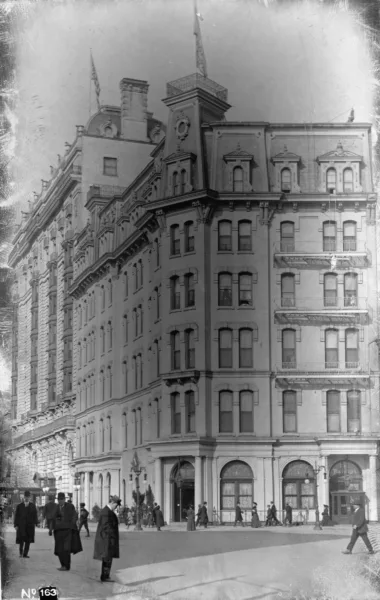
The gold-and-white top-floor ballroom where Buddy Holly danced for Washington teens on live TV. Then a wrecking crew in 1964.

The Whitelaw Hotel opened on 13th Street NW in 1919 as Washington’s first luxury hotel for Black patrons. Duke Ellington stayed there.

An undated photograph shows Peacock Alley, the Willard Hotel’s long hallway leading toward the F Street entrance.

The Gordon Hotel at 16th and I St. NW was a favorite haunt of Congressmen. Admiral Dewey held receptions there. In 1959, its 200 residents were told to go.

The history of Blodgett’s Hotel in Washington, D.C., from its construction in 1793 through its destruction by fire in 1836.
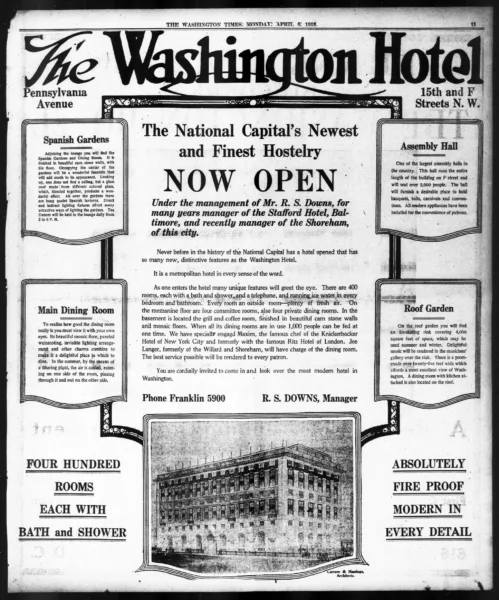
The advertisement promoted Hotel Washington near the White House.