
Ghosts of DCThe lost and untold stories of Washington

Try an address, a neighborhood, a name or a year, like “14th and U” or “1968.”

Not sure where to start?
Topic

Pennsylvania Avenue

64 stories
Harry Houdini in a suit and bow tie, cropped to show his head and shoulders.
Houdini’s Straitjacket Escape Above 15th and G Streets, 19225 min read

Houdini hung head down in a straitjacket over 15th and G Streets NW, clawed his way free and hurled the jacket to the street while the crowd roared.
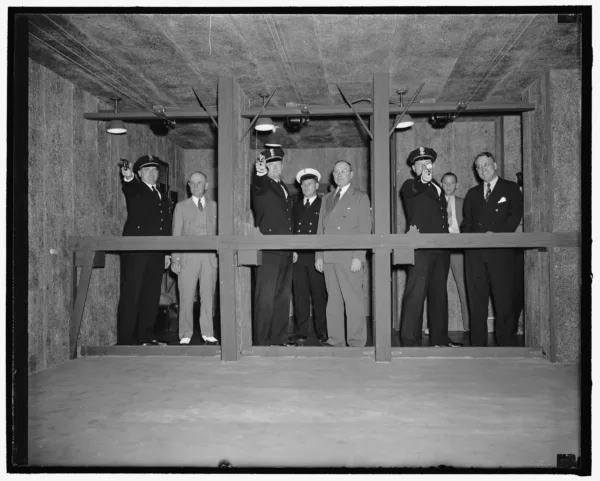
Eight officials and officers at three firing booths in the Treasury basement range.
The Shooting Range Beneath the Treasury Building3 min read

The Treasury’s basement range had electric targets and an air lock. Two men in its 1940 photograph had corresponded about the investigation of Al Capone.
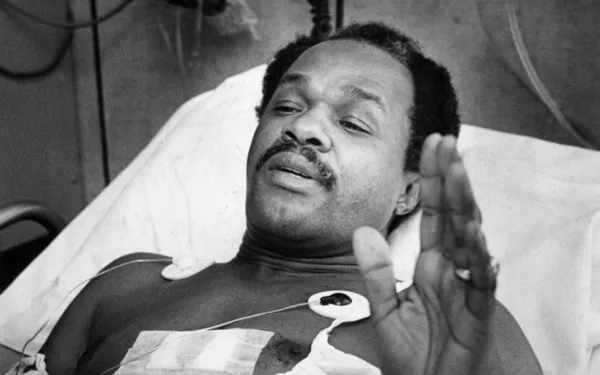
Councilman Marion Barry lying in a hospital bed with a bandage and monitor leads on his chest, gesturing as he speaks.
The 1977 Hanafi Siege: 39 Hours That Held Washington Hostage13 min read

A radio reporter stepped off an elevator on the fifth floor of the District Building and into a shotgun blast. The councilman down the hall was hit too.

Evening Star Building and its 1918 annex on 11th Street NW, January 1987, before the annex was demolished
Evening Star Building: Home of the Washington Star6 min read

On a June night in 1900, crowds on Pennsylvania Avenue stared up at a white marble tower lit in every window. The Star had a new home.
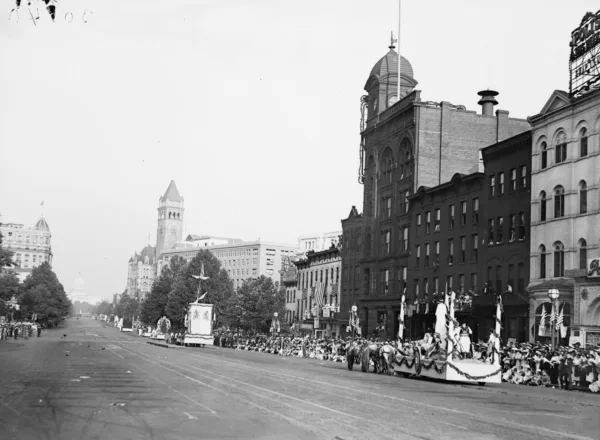
July 4th parade in Washington, DC
July 4, 1919: Washington’s First Fourth of July After World War I2 min read

An international peace parade on Pennsylvania Avenue, huge crowds on the Ellipse, and the biggest Fourth Washington had ever seen. Photos from July 4, 1919.

The Email

There’s more where these came from.

Lost Washington stories in your inbox most mornings: the newest, plus a few from the archive.
Free. Unsubscribe anytime.

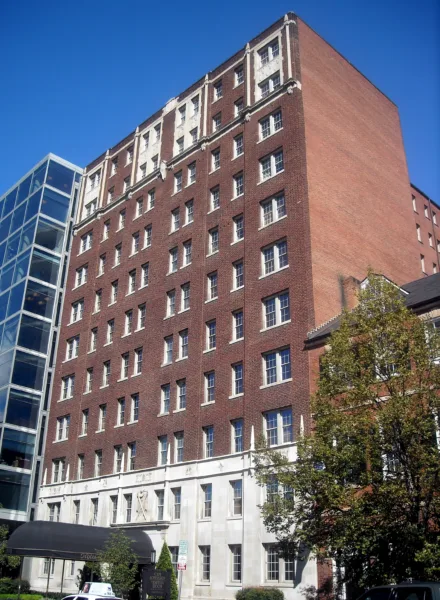
Hotel Lombardy exterior at 2019 Pennsylvania Avenue NW in Foggy Bottom, Washington DC
Hotel Lombardy: From Foggy Bottom Apartments to a Hotel15 min read

Hotel Lombardy opened as apartments in 1929. Its attendant-operated elevator lasted until 2011.
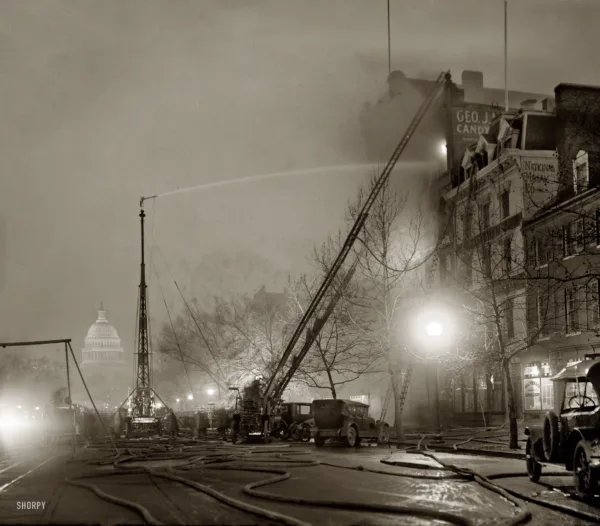
December 28, 1925. "G.J. Mueller Fire." A five-alarm fire at George J. Mueller Candy Co. in Chinatown at 336 Pennsylvania Avenue N.W., in view of the Capitol. National Photo Company Collection glass negative.
The 1925 Five-Alarm Fire at Mueller’s Candy Plant on Pennsylvania Avenue5 min read

On December 28, 1925, a five-alarm fire tore through George J. Mueller’s wholesale candy plant on Pennsylvania Avenue NW, in the heart of Washington’s first Chinatown. Smoke clouded the Capitol, streetcars stalled for fifteen blocks, and a crowd packed the sidewalks to watch it burn.

Center Market in Washington D.C. around 1909, with the 7th Street wing and corner tower.
Center Market: Before the National Archives10 min read

Farmers, butchers, and shoppers once crowded the block where the National Archives stands. Center Market had 666 stalls under its roof.
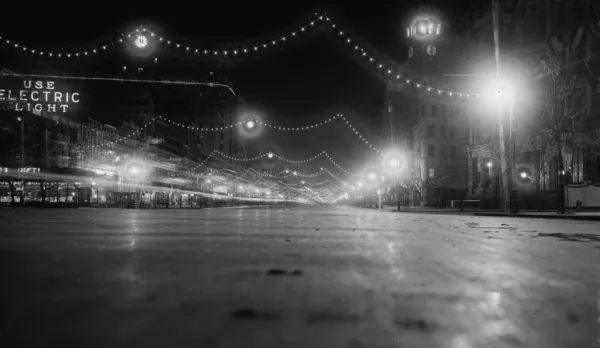
Pennsylvania Avenue in Washington, D.C., illuminated at night by thousands of electric bulbs strung in festoons for Woodrow Wilson's first inauguration, March 1913.
Wilson Cancelled the 1913 Inaugural Ball. The Avenue Lit Up4 min read

Nine or ten thousand electric bulbs over Pennsylvania Avenue, Peace Monument to 17th Street. There would be no ball this inauguration.
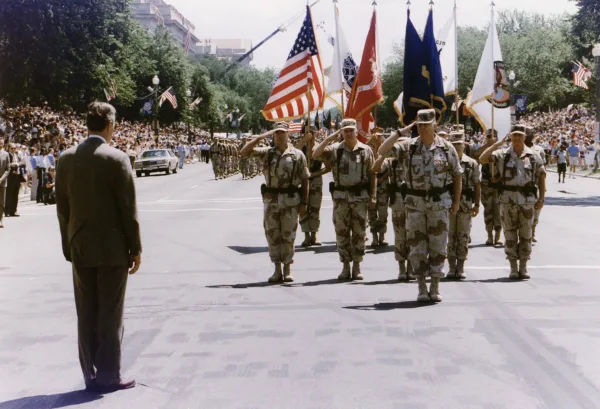
Washington’s 1991 Victory Parade: Welcoming Home Desert Storm Troops2 min read

Washington welcomed Desert Storm troops home on June 8, 1991, with a parade, military flyovers and a day of public events.

Oil portrait of David Crockett in 1834, painted by Chester Harding in Boston. Crockett is in formal dark suit and white cravat, hair brushed back, looking at the viewer.
David Crockett’s Vote Against Indian Removal: The 1830 Stand That Cost Him Congress14 min read

On May 26, 1830, the House passed the Indian Removal Bill 102-97. Tennessee’s David Crockett was the only member of his delegation to vote no.
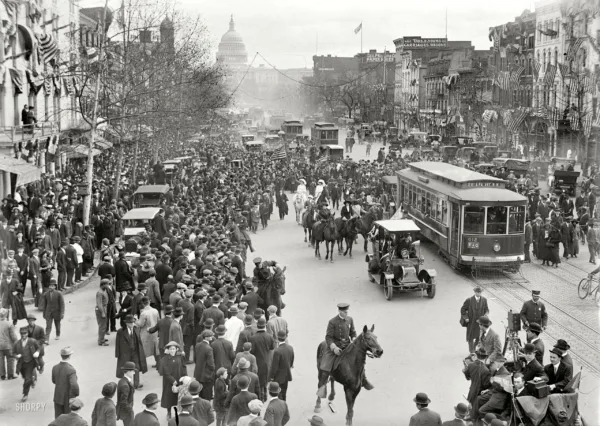
Suffrage hikers arriving in Washington from New York on Pennsylvania Avenue, February 1913, with the U.S. Capitol behind them. Harris & Ewing.
The 1913 Woman Suffrage Parade in Washington, DC7 min read

On March 3, 1913, the day before Woodrow Wilson’s inauguration, thousands of suffragists marched down Pennsylvania Avenue and straight into a hostile mob. Alice Paul planned it to force the vote into the national conversation. It worked.

Photolithograph composite showing eight Washington DC hotels including the National Hotel, Metropolitan Hotel, Willard's, Ebbitt House, Riggs House, St. James, The Arlington, and the B&P Railroad Depot
Lost Hotels of Pennsylvania Avenue, 1810 to 194217 min read

The National Hotel, Brown’s Indian Queen, and the Southern Hotel once anchored Pennsylvania Avenue. By 1942 all three were gone. Here’s their story.
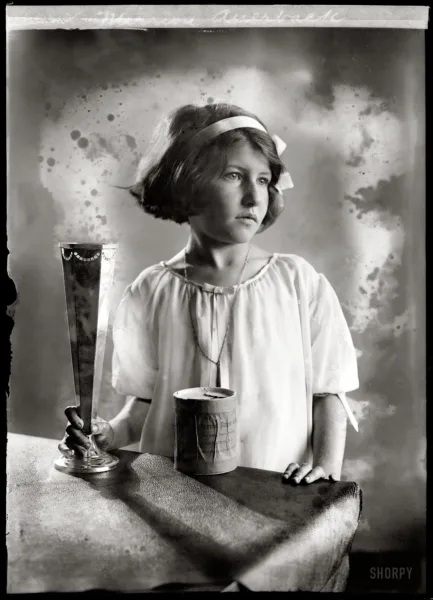
Miriam Auerbach in 1924
Miriam Auerbach Wolf: From 1924 Photo to DC Real Estate Pioneer8 min read

Miriam Auerbach Wolf was 12 in this 1924 photo. She grew up to be the first woman life member of the Washington Board of Realtors’ Million-Dollar Sales Club.

Boss Shepherd: The Man Who Paved Washington and Cost It Home Rule10 min read

Alexander Robey “Boss” Shepherd paved Washington, lit its gas lamps, and planted 64,000 trees, then bankrupted the territorial government in 1874 and cost the city home rule for 99 years.
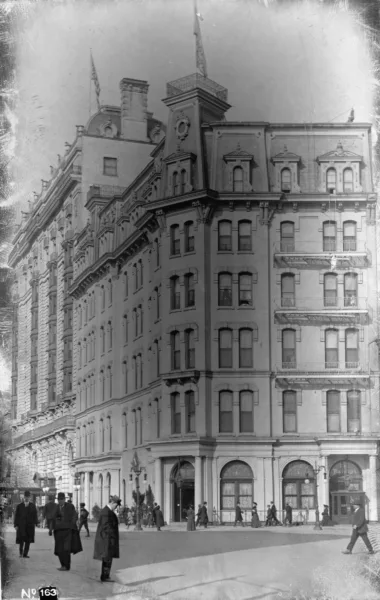
The Raleigh Hotel with ornate roofline, awnings and pedestrians on the sidewalk and street.
Raleigh Hotel: 71 Years on Pennsylvania Avenue11 min read

The gold-and-white top-floor ballroom where Buddy Holly danced for Washington teens on live TV. Then a wrecking crew in 1964.
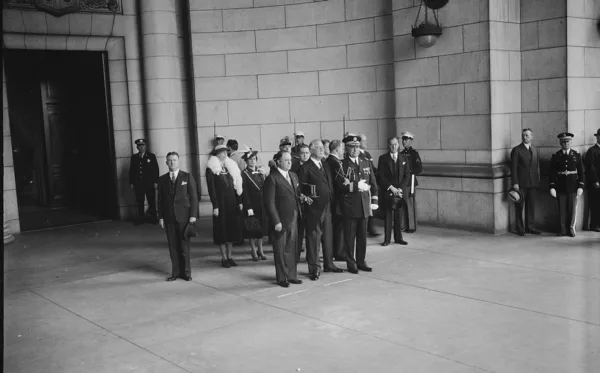
President Roosevelt and Nicaraguan President Somoza standing at attention during a 21-gun salute, May 5, 1939
FDR’s 1939 Pennsylvania Avenue Parade for Nicaragua’s Anastasio Somoza4 min read

In May 1939, FDR threw the most lavish state welcome Washington had ever seen for a Nicaraguan strongman. Parades, a White House sleepover, and a white tie dinner in the East Room.

The Southern Railway Building at 13th Street and Pennsylvania Avenue NW, circa 1899-1916. The Library of Congress identifies the flags as probably for an inaugural event. This is the original Second Empire building, expanded in 1893 and 1899, that burned in April 1916. Library of Congress, National Photo Company Collection.
Southern Railway Building: Fire, Then Federal Triangle5 min read

The Southern Railway Building stood at 13th and Pennsylvania for 50 years. Then it burned. Then the federal government paid $2.68 million to clear it for Federal Triangle.
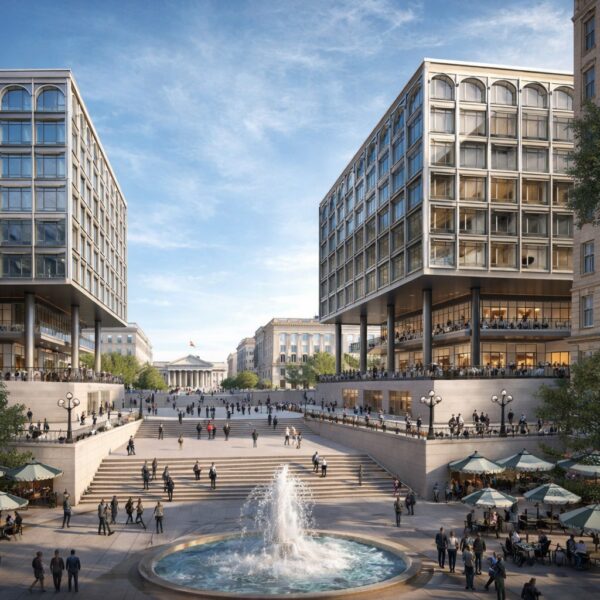
AI illustration imagining the proposed 1964 Pennsylvania Avenue plaza near the National Archives
Kennedy’s Lost 1964 Plan to Remake Pennsylvania Avenue10 min read

In 1964, Nathaniel Owings and a council appointed by JFK unveiled a radical plan to tunnel E Street, brick Pennsylvania Avenue, and build a National Square.

The 1974 Plan to Revive Pennsylvania Avenue3 min read

In February 1974, as DC got Home Rule, the city released a plan to revive Pennsylvania Avenue, with a focus on historic buildings and Black-owned businesses.

More storiesShowing 20 of 64