The day before Nicaraguan President Gen. Anastasio Somoza arrived in Washington, someone had dressed every lamppost along the parade route.
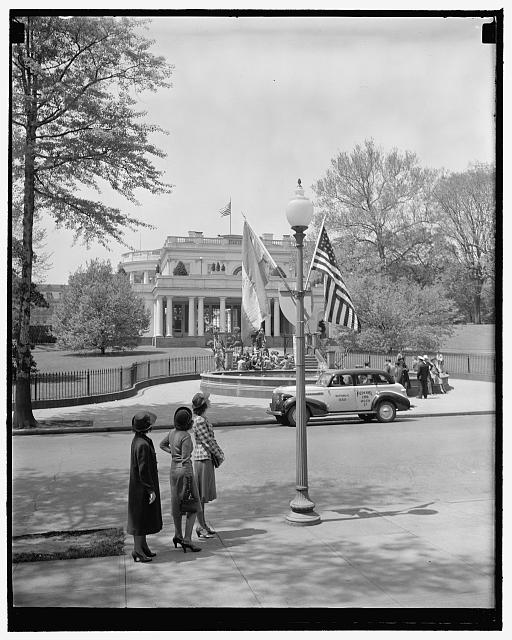
American and Nicaraguan flags on every post. Between them, the national seals of both countries. By the time the sun came up on May 5th, 1939, Pennsylvania Avenue was ready for something.
From Union Station to the White House
President and Mrs. Roosevelt met President Somoza and his wife, Salvadora Debayle, at Union Station when they arrived the morning of May 5th. Then it was straight down to business.
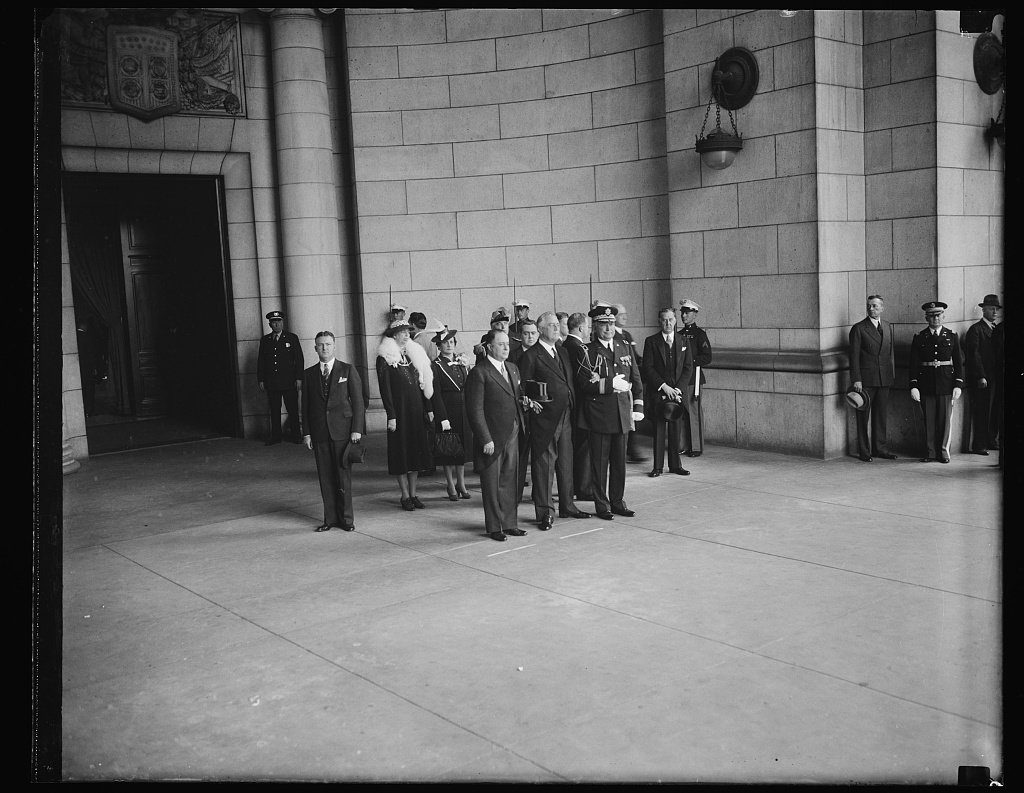
A 21-gun salute fired. Then FDR put Somoza in an open car and led a parade up Pennsylvania Avenue. We’ve documented America’s last great military parade on Pennsylvania Avenue and even a procession for President McKinley in 1901. This was something different.
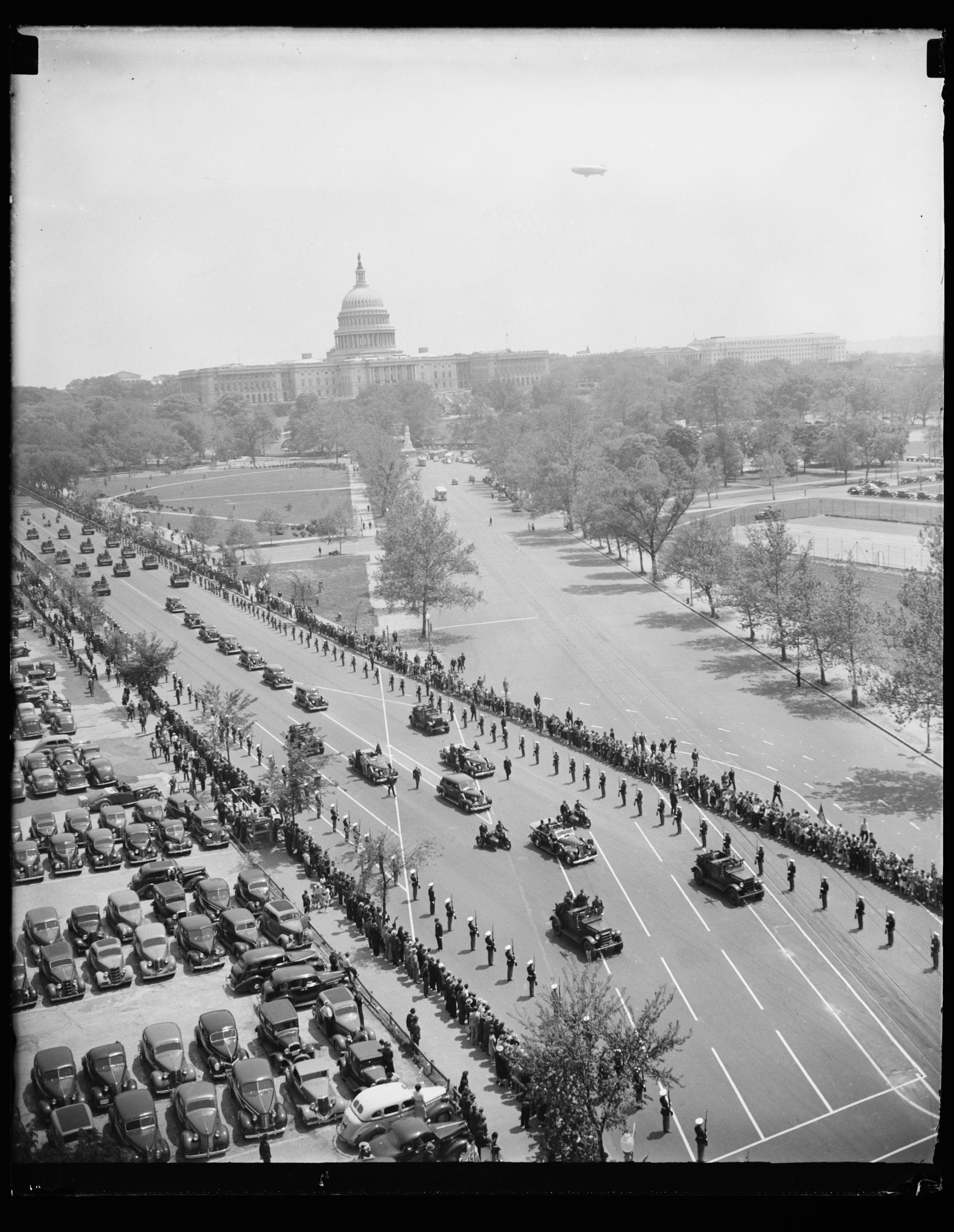
The wire service caption on the parade photo:
POMP AND MILITARY MIGHT AS NEVER BEFORE WITNESSED IN THE CAPITAL WAS ON DISPLAY FOR NICARAGUAN PRESIDENT, GEN. ANASTASIO SOMOZA, TODAY AS HE RODE UP HISTORIC PENNSYLVANIA AVENUE WITH PRESIDENT ROOSEVELT AT HIS SIDE. THE AVENUE WAS SOLIDLY FLANKED BY SOLDIERS, SAILORS AND MARINES.
The newspapers reporting on the visit noted that Somoza received a more lavish welcome than those previously accorded to kings and prime ministers. He and his wife were overnight guests at the White House. FDR and Eleanor hosted a white tie state dinner and then a musicale in the East Room, with 150 additional guests invited for the musical portion alone.
The day also included a trip out to Mount Vernon to lay a wreath at George Washington’s tomb, followed by Arlington National Cemetery.
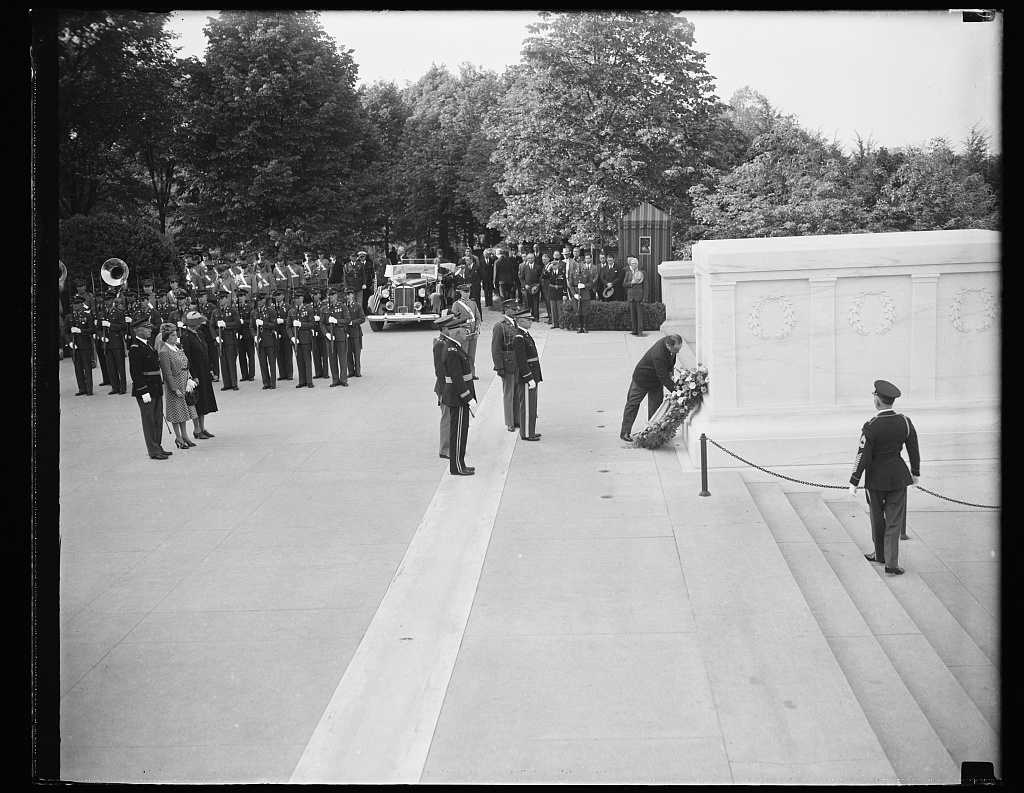
Three Days in Washington
The visit ran through May 8th. Somoza toured the Capitol building. Speaker of the House William B. Bankhead welcomed him to the House floor, where Somoza delivered a brief speech to the chamber.
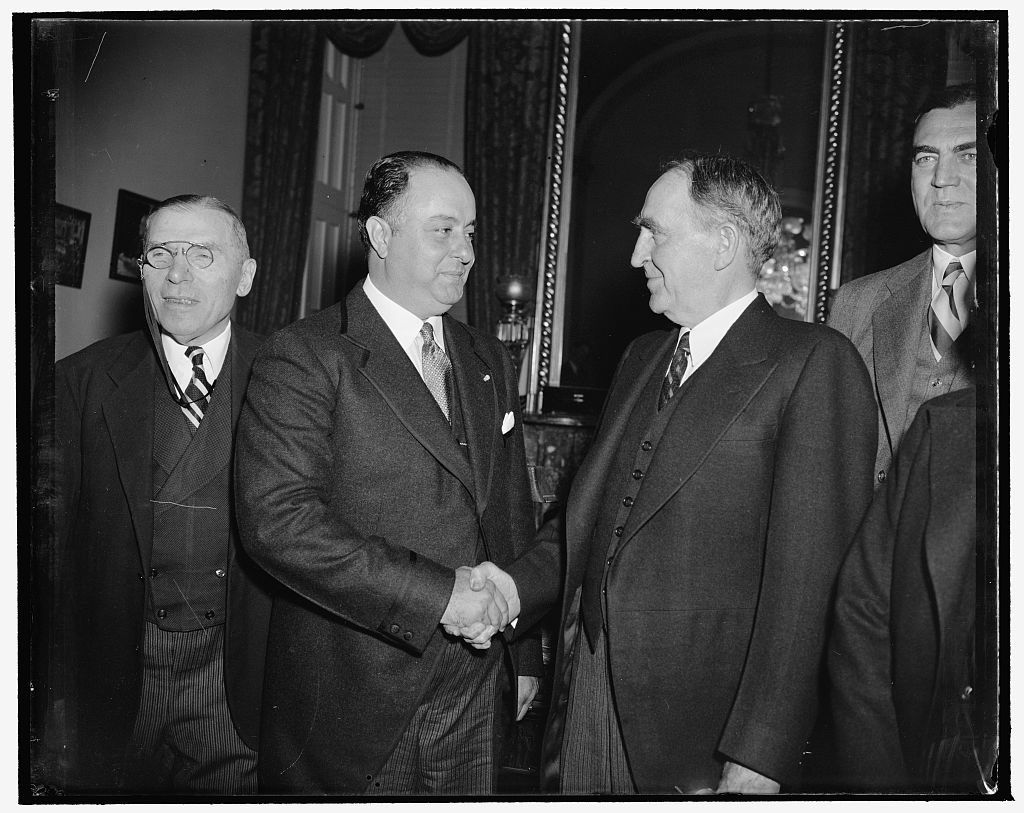
On his way out, he came down the House steps accompanied by Rep. Hamilton Fish and Sol Bloom, chairman of the House Foreign Affairs Committee.
All the honors. Every ceremony. For a man who had come to power in a country the US Marines had occupied for the better part of two decades.
Why the Red Carpet
The US had ended its most recent military intervention in Nicaragua in 1933. When the Marines left, they left behind a trained National Guard. Somoza, who had cultivated relationships with American officials throughout the occupation, leveraged control of that Guard into the presidency.
By 1939 the State Department prepared a background briefing on their guest for President Roosevelt. The FDR Library later described the document’s assessment of Somoza as “genteel,” and noted it was “quite at odds with the known reality even in 1939.”
Both sides knew what they wanted out of the visit. Somoza was pushing for US investment and, most of all, American support for a trans-isthmus canal through Nicaragua. FDR wanted allies. War was clearly coming in Europe, and Latin American solidarity was worth something. Roosevelt’s Good Neighbor Policy renounced direct military intervention in the region. It didn’t say anything about asking hard questions about the neighbors.
A quote has followed this moment for decades, widely attributed to FDR, though historians have never been able to nail it down with certainty: “He may be a son of a bitch, but he’s our son of a bitch.” Whether Roosevelt actually said it, at the state dinner or anywhere else, is doubtful. But as a summary of the logic behind that parade, it’s hard to beat.
Forty Years
No canal was ever built through Nicaragua. But Somoza did declare war on Germany and Japan after Pearl Harbor and worked alongside the US throughout the Second World War.
He held power until 1947, then returned from 1950 until 1956, when he was assassinated in León. His son continued the dynasty. The family’s grip on Nicaragua finally ended in 1979, when the Sandinista revolution swept them out after a lengthy and brutal conflict.
Forty years of a family dynasty, and it all traced back to that open-car ride up Pennsylvania Avenue.
Twenty years later, another controversial Latin American leader came to Washington. We wrote about Fidel Castro’s 1959 visit to the city. That one went a bit differently.
So they had the Goodyear blimp in 1939? It’s flying near the Capitol dome.
The blimp was probably military — US Army Air Corps. An interesting question is when did the US stop doing big parades for visiting heads of state? The films of the arrival of King George V and Queen Elizabeth (the late Queen Mother) later in 1939 are great, and some are in color. I remember from my boyhood that when Ethiopian Emperor Haile Selassie made a state visit, there was a big parade from Union Station up Pennsylvania Avenue to the White House. I believe it was customary for government employees to be give leave to help “flesh out” the crowds watching the arriving head of state. It’s certainly not done today.