
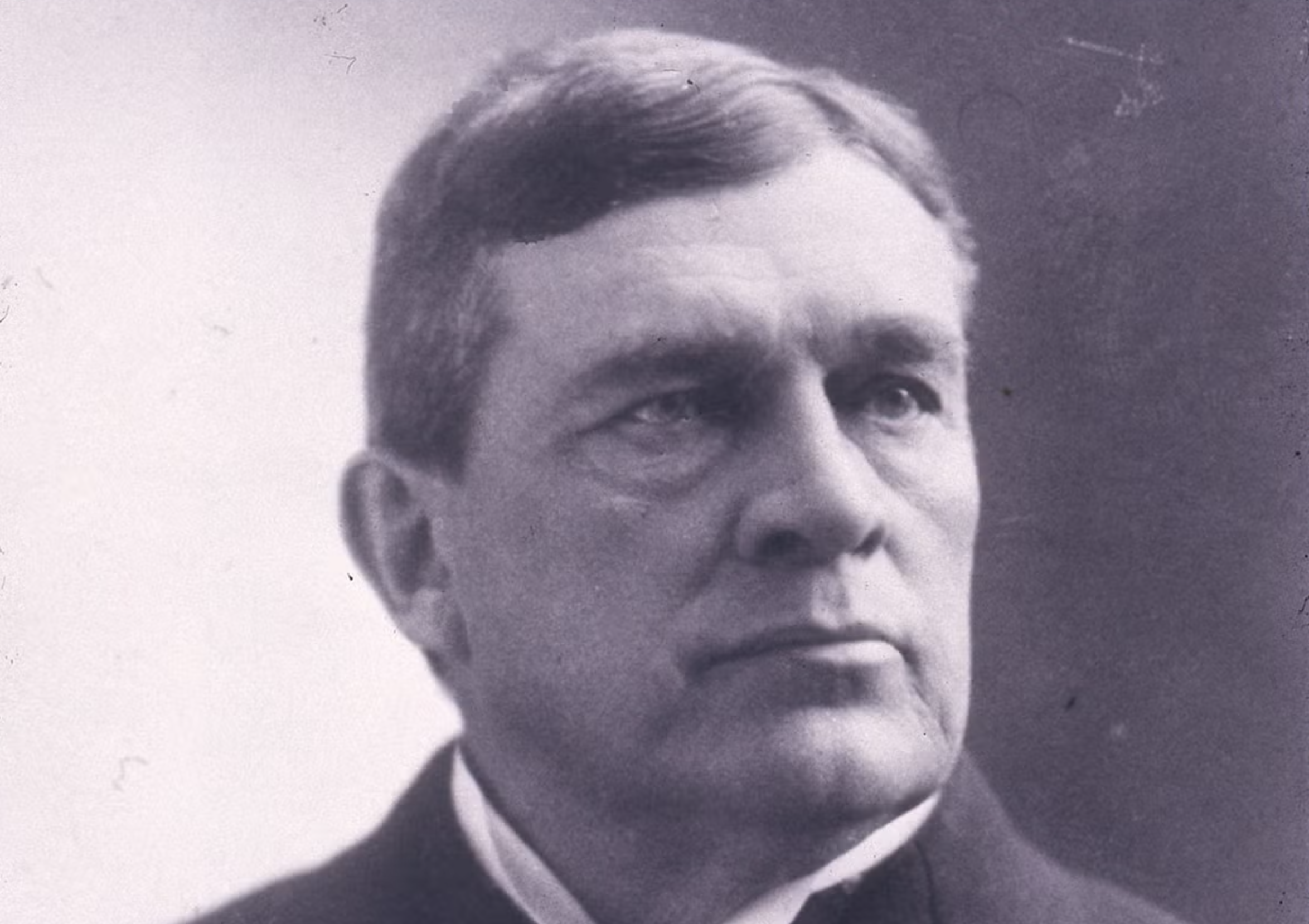
Walk past Pennsylvania Avenue and 14th Street NW and you pass a bronze figure most Washingtonians stride right by. Boss Shepherd. He paved the street under your feet, dropped the sewer below it, lit the gas lamps that once lined it, and planted the trees that still shade the blocks running away from it. He also ran up a bill so large that Congress yanked self-government out of the city’s hands for the next 99 years.
That is the paradox of Alexander Robey “Boss” Shepherd, the District’s second territorial governor and, by the verdict of the people who hated him as much as the people who loved him, the Father of Modern Washington.
A century and a half later, with home rule once again a live political question in DC, his story still lands on the same uncomfortable ledger: how much city is one bankruptcy worth?
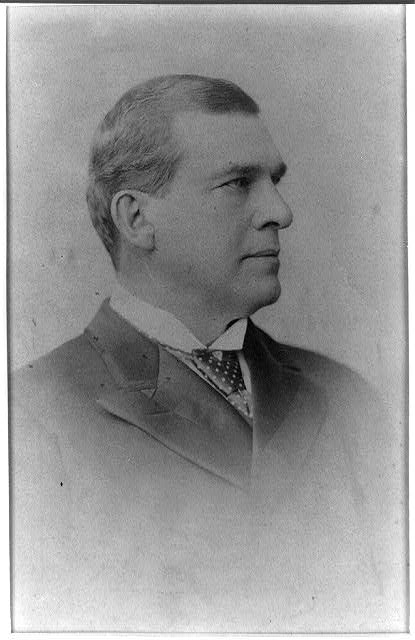
The Washington Boss Shepherd grew up in
To understand what Shepherd did to Washington, look at what Washington was before he got hold of it.
The capital city of the 1850s and 1860s was a sprawling, swampy embarrassment. Pierre L’Enfant’s grand 1791 plan was on paper. On the ground there was mud, dust, free-roaming livestock, and a long, festering open sewer running east from the foot of the Washington Monument grounds, along the line of present-day Constitution Avenue, all the way to the Anacostia. That was the Washington City Canal, originally built between 1810 and 1815 to carry small barges from the Potomac to the Capitol. By the 1850s it carried mostly raw sewage.
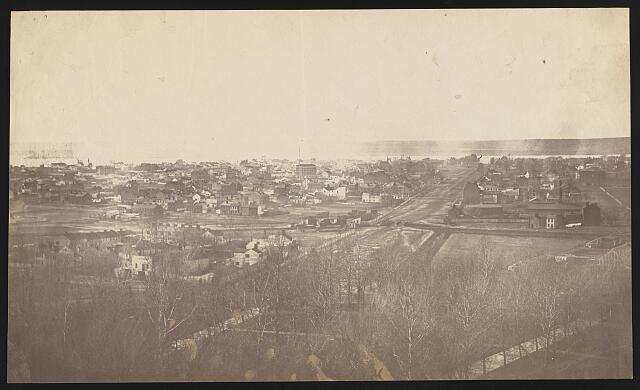
The view above was made in December 1856 from the dome of the U.S. Capitol, looking southwest. The dark line in the middle distance, with a Maryland Avenue bridge crossing it, is the canal. The land south of it is the future site of the National Mall as we know it. None of it had been graded.
Pennsylvania Avenue, the country’s most important ceremonial street, was not much better.
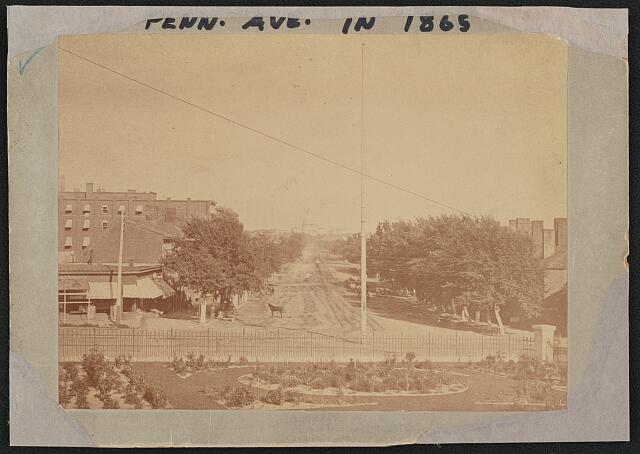
That photograph was made in 1865, looking from the area near the Treasury east toward the Capitol. The avenue is a wide, rough lane, partly cobbled, partly dirt. As John Richardson, who in 2016 published the first book-length biography of Shepherd, put it on the Boundary Stones blog at WETA:
“in the wintertime it was muddy and horrible and in the summertime it was dusty and horrible. Just sort of take your pick based on the seasons.”
J.D. Dickey’s Empire of Mud is the long-form treatment of just how bad the before picture really was.
The District’s politics matched the streets. Three separate jurisdictions answered to Congress: the City of Washington below Florida Avenue, Georgetown across Rock Creek, and rural Washington County wrapping around them. None had the money or the authority to build at scale. The man holding down the City of Washington half of that arrangement was Matthew Gault Emery, the city’s last elected mayor.
Shepherd, by then in his early thirties and already the fourth-wealthiest man in Washington, thought the whole thing needed to be torn up.
Who was Alexander Robey Shepherd?
Shepherd was born in Washington on January 31, 1835, the descendant of Charles County, Maryland slave-holding tobacco planters. His father died early. Shepherd left school to support the family, took an apprenticeship at the J.W. Thompson plumbing and gas-fitting house, became a partner, and ended up owning what the Association of the Oldest Inhabitants of D.C. calls “Washington’s largest” plumbing establishment. By the late 1860s, in Richardson’s reckoning, Shepherd was the fourth-wealthiest Washingtonian.
He served briefly in a Washington militia unit at the start of the Civil War. He won a seat on the Washington Common Council and in 1862, at the age of 27, was elected its president.
What he wanted, more than anything, was a real city.
The Organic Act of 1871 and the Cooke setup
On February 21, 1871, while a citywide carnival celebrating a freshly wood-paved Pennsylvania Avenue was running its second day on the same street, President Ulysses S. Grant signed the District of Columbia Organic Act. It abolished the old jurisdictions and stood up a new territorial government with an appointed governor, an elected House of Delegates, a legislative council, and a Board of Public Works with sweeping powers to grade, pave, sewer, light, and tax.
The first territorial governor was Henry D. Cooke, the younger brother of Philadelphia financier Jay Cooke and the Washington partner of his brother’s bank, Jay Cooke & Co.
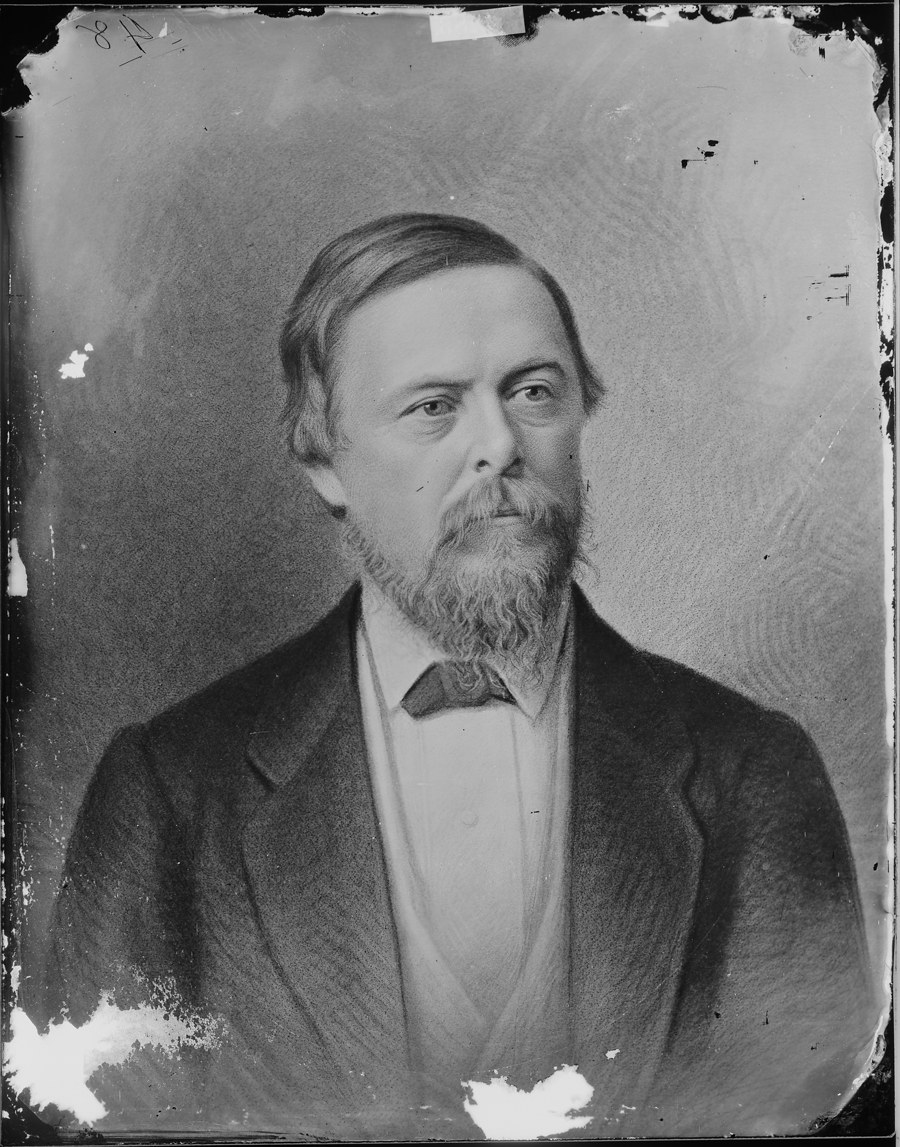
The Brady portrait above, now in the National Archives, captures the man who got the title. Cooke had been the Republican machine’s quiet financier in Reconstruction-era Washington, helping bankroll the election of Mayor Sayles J. Bowen and serving as president of the Washington and Georgetown Street Railroad and the First Washington National Bank. According to his own Wikipedia entry, drawn from Mary Mitchell’s Chronicles of Georgetown Life, Cooke “did not bother to attend the meetings” of the Board of Public Works. As governor, he was, in plain terms, an agent of his brother’s interests and of Shepherd’s agenda.
The vice president of the Board of Public Works got the shovels.
That was Shepherd, by design.
A blitz of paving, sewers, gas lamps, and 64,000 trees
In about two years, Shepherd’s Board executed what was, in scale and speed, the largest single program of physical improvements the city had ever seen.
They graded streets. They paved them, mostly with wood blocks at first, then with stone and concrete, recorded faithfully on this 1872-73 paving map now in the Library of Congress. They laid sewer lines and water mains. They installed gas lighting. They covered the fetid Washington City Canal that drained Tiber Creek and ran east along what is now Constitution Avenue. The Association of the Oldest Inhabitants of D.C. credits Shepherd’s crews with planting 64,000 trees in the District during this period.
The Evening Star, then a Shepherd ally, captured the mood the morning the Pennsylvania Avenue carnival opened on February 20, 1871. The pavement, the paper reported, was “as clean as a parlor floor.” A team of 200 laborers had swept it overnight.
The Daily National Republican was even more breathless. After the carnival closed on February 21, 1871, the paper editorialized on page 3:
“It is a complete transformation of the city into a thing of happy life, a gigantic embodiment of merriment, breathing, shrieking and dancing in an ecstasy that is too overpowering for utterance!”
If you want to feel the speed of it, line up any photograph of central Washington from 1865 next to any photograph from 1875. They look like different cities.
Speed had human costs, too. On the evening of September 3, 1872, an order signed by Shepherd sent about 200 laborers to tear down the Northern Liberty Market on Mount Vernon Square before the dealers’ lawyers could ask a court to stop it. The next afternoon a wall left standing fell and killed a butcher and a 14-year-old boy.
The Board’s projects rolled out along the L’Enfant grid like a campaign plan. The Association of the Oldest Inhabitants of D.C. summarizes the result this way: Shepherd “put the ‘flesh’ on the ‘bones’ of the Pierre L’Enfant plan for the District by level-grading and paving the streets, covering the fetid Washington Canal (now Constitution Avenue), planting 64,000 trees, and providing street lighting.” Hundreds of miles of sewers, water mains, gas lines, sidewalks, and paved roads were completed in the program’s full run.
Shepherd built his own house out of it, too. The K Street mansion he completed in 1873 became the headquarters for the gilded receptions of his governorship.
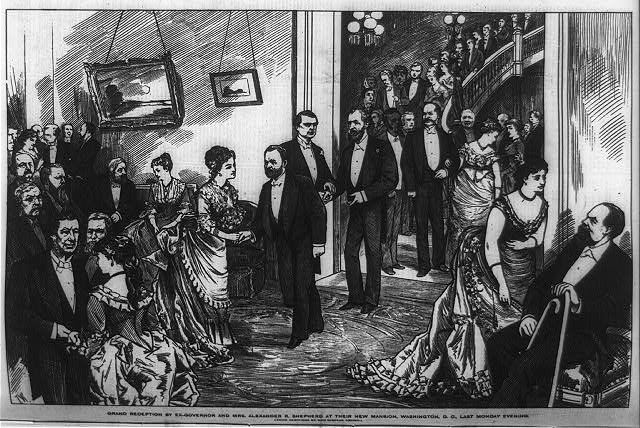
The engraving above ran in Frank Leslie’s Illustrated Newspaper and shows one such reception at the new mansion. It is also a useful visual of who exactly was getting invited to dinner during a public works program funded with bonds, special assessments, and short-term notes.
The price tag
That speed had a price.
In September 1873, Grant elevated Shepherd from the Board to the territorial governorship. Cooke had resigned on September 10, 1873, days ahead of the failure of his brother’s bank, Jay Cooke & Co., on September 18, 1873. The collapse of Jay Cooke & Co. detonated the Panic of 1873 and tipped the country into a long depression.
The Board kept building.
The original projection of roughly $6.25 million for the public works program had passed $9 million by 1874, and the actual debt the District was carrying was much larger. Property owners faced steep special assessments on the streets, sewers, and lights running past their lots. They were furious.
District residents gathered roughly 1,200 signatures on a petition demanding that Congress audit the books. Congress did. The audit found the city more than $13 million in arrears.
There were two Congressional investigations into Shepherd, the first in 1872 and a much longer one in 1874. As Richardson summarized the opposition on Boundary Stones, opponents:
“were not opposed to seeing a beautiful city developed, but they were totally opposed to seeing it done on credit, with bonds, with loans, borrowed money.”
After endless testimony in both inquiries, Richardson noted, “no documentable evidence… was ever provided that showed that Alexander Shepherd was personally corrupt.”
The verdict was not corruption. The verdict was speed and scale, and the bill that came with them.
The end of the territorial government, June 20, 1874
On June 20, 1874, the House of Delegates was in session on the second floor of Metzerott Hall, on the block now occupied by the FBI’s J. Edgar Hoover Building. Word came in from the Capitol that Congress had killed the territorial government outright. The House of Delegates, the Board of Public Works, and the governor’s office were gone, replaced by a three-member commission appointed by the President.
What happened next is one of the great small moments in DC history. Suddenly unemployed, the delegates, in William Tindall’s account in the Records of the Columbia Historical Society in 1900, “began to seize upon all the portable articles of furniture on the premises and carry them off for their own private use.”
Chairs went out the door. Desks went out the door. One delegate stuffed a feather duster down the leg of his pants and was caught at the door. Tindall noted, with the detachment of a clerk who had seen it all, that the duster thief “became the butt of the newspaper jesters of the time.”
Grant immediately turned around and nominated Shepherd to one of the three new commissioner seats. The Senate rejected the nomination the same day.
The District would not have an elected mayor again until Walter Washington’s swearing-in on January 2, 1975. A full century of direct federal rule started in that emptied second-floor hall on F Street.
After Washington: bankruptcy, Mexican silver, and a statue in exile
Shepherd declared personal bankruptcy in 1876. In 1880, he moved his family to Batopilas, in the Chihuahua highlands of northern Mexico, to operate silver mines and try to rebuild the fortune he had spent on Washington. He never came back to live. He died in Batopilas on September 12, 1902.
Seven years after his death, on May 3, 1909, the city dedicated a bronze statue of Shepherd by sculptor Ulric Stonewall Jackson Dunbar in front of the new District Building, now the John A. Wilson Building, at 1350 Pennsylvania Avenue NW.
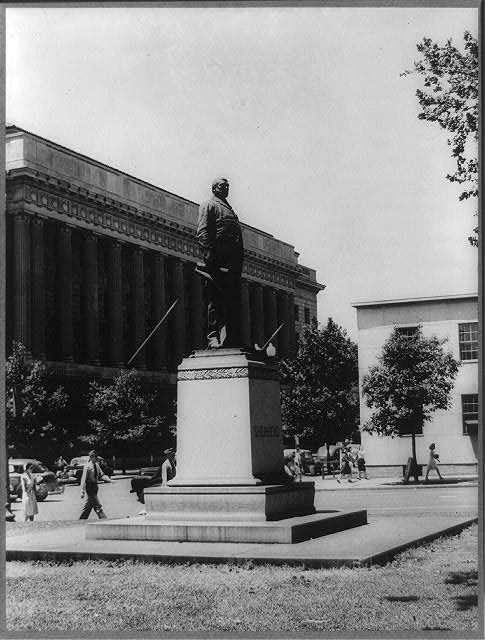
The statue’s own history is its own paradox. Federal Triangle construction shoved it down the avenue in 1931. Freedom Plaza construction shoved it into storage in 1979. For most of the next quarter century, Boss Shepherd, the most consequential builder in the city’s 19th-century history, stared out over a municipal impound lot from the DDOT facility on Shepherd Parkway SW.
The Association of the Oldest Inhabitants of D.C. fought for years to bring him back. On January 29, 2005, three days before the 140th anniversary of his birth, the Dunbar statue was loaded onto a truck and returned to a place of prominence on Pennsylvania Avenue near 14th, very close to where it had originally been unveiled. Lighting was added in time for President Obama’s January 20, 2009 inauguration. A biographical plaque went up on November 16, 2010.
A city he built, a self-government he broke
If you want to argue that Washington, D.C. is the city it is today, with its grid filled in, its streets paved, its sewers underneath, its trees overhead, you start with Boss Shepherd.
If you want to argue that DC residents spent a century without an elected local government, you start with Boss Shepherd too.
He built the city. He cost it the right to build itself.
The bronze still stares east.
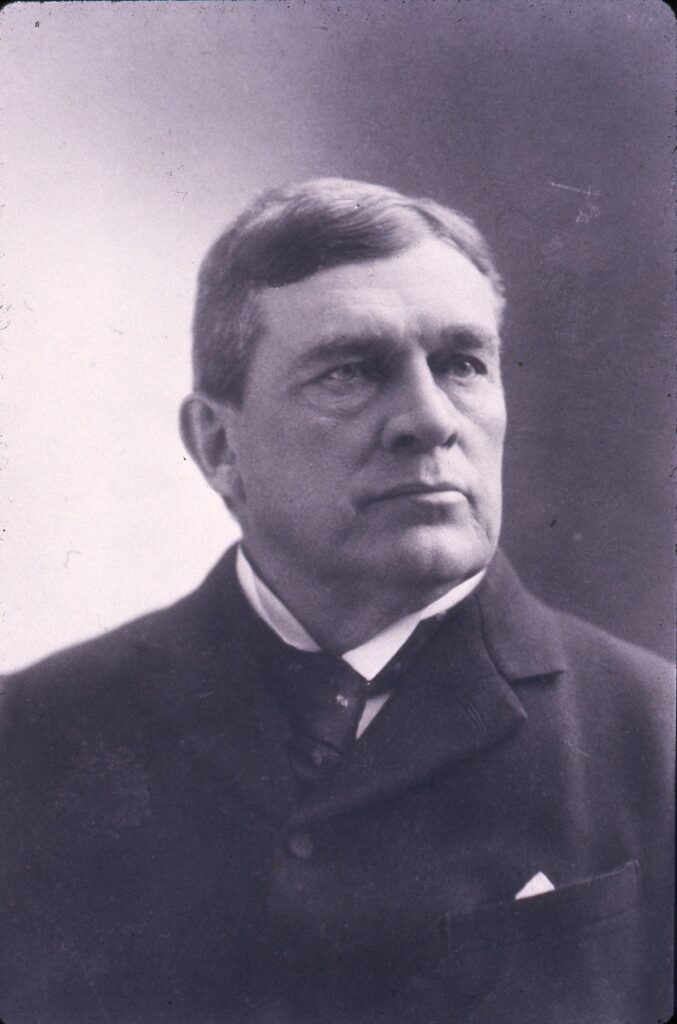
We dug this one up with help from AI and checked it against the original records below. Here’s how we use AI.