On July 4th, 1848, a stonemason from New Hampshire cut and laid the cornerstone of the Washington Monument. Thirty-six years later, that same man was invited back to watch the capstone placed on top. His name was Matthew Gault Emery, and by then he’d also served as the last elected mayor of Washington City.
Before the District of Columbia Organic Act of 1871, the District had three separate municipalities: Georgetown, the City of Washington (everything below what is now Florida Ave.), and the more rural Washington County. Emery was the last of a line of popularly elected mayors that stretched back to 1820.
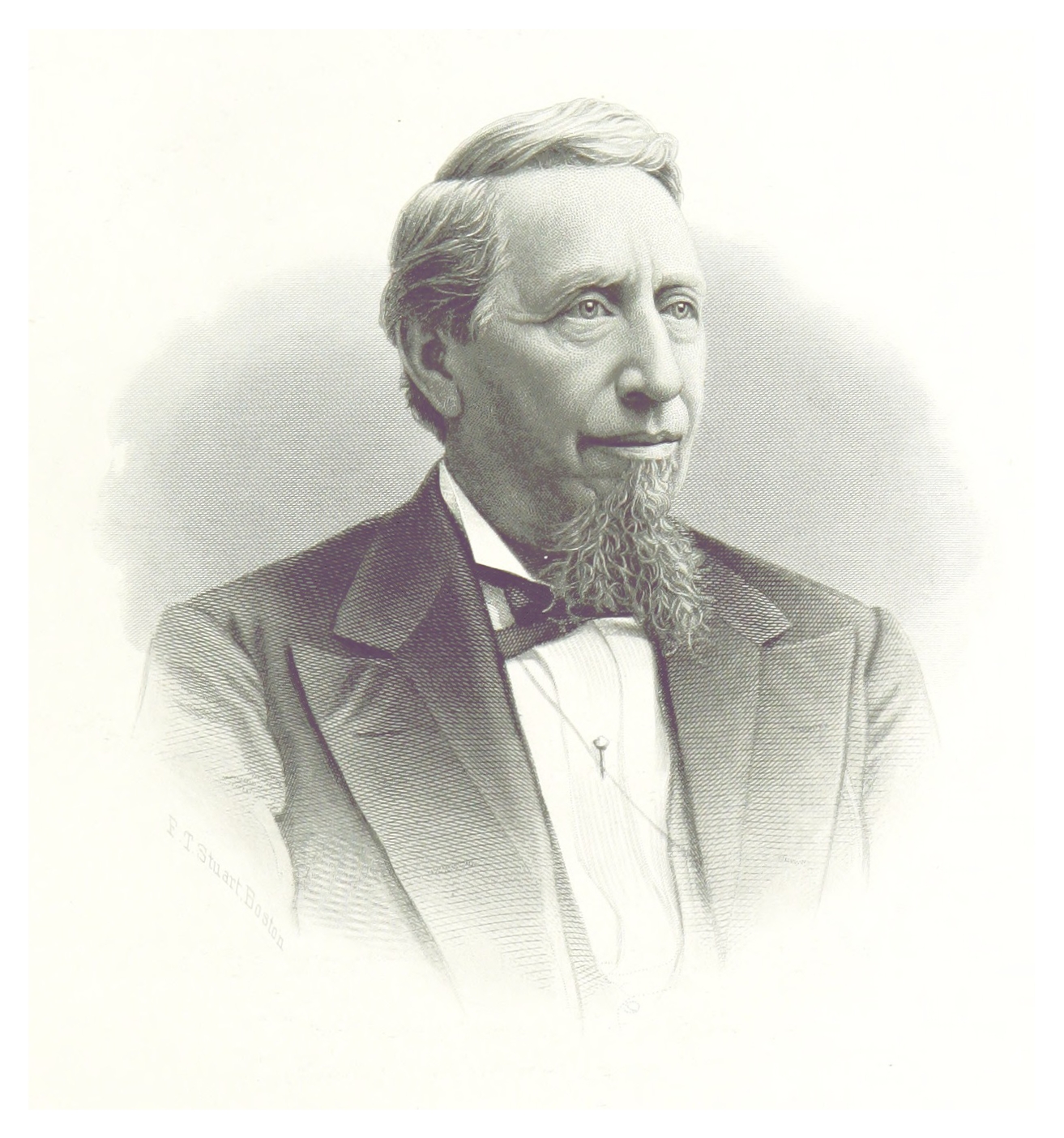
Born in Pembroke, New Hampshire on September 28, 1818, Emery moved to Baltimore at 19 to apprentice as an architect and builder. By 1840 he had relocated to Washington, chasing government contracts.
He found them. Over the next decade, Emery cut and laid stones for the U.S. Treasury, the Navy Department, the U.S. Patent Office, and the White House. His most prestigious achievement came on July 4th, 1848, when he laid the Washington Monument cornerstone. The project stalled for decades after that over funding disputes and political chaos. When it was finally completed in 1884, Emery was invited back to the base of the obelisk he had started. He was 65 years old.
He also served as a marshal at Abraham Lincoln’s inauguration on March 4th, 1861.
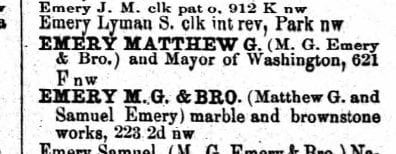
By 1870, Washington City was a wreck. Mayor Sayles Bowen had drained the city treasury while pursuing ambitious public programs for newly freed Black residents, with such fiscal recklessness that a legal judgment resulted in the seizure of furniture from the mayor’s own offices. That February, the National Republican reported that citizens had packed Union League Hall to organize against him, describing themselves as people “favoring reform in the affairs of the Republican party of the city, and who are opposed to the present municipal administration.” Emery, who had served as City Alderman from 1855 to 1857 and again in 1869, was their candidate.
Although both Bowen and Emery were Republicans, the city’s party chapter had disowned Bowen entirely. Emery ran on a “Reform” ticket that Democrats endorsed rather than risk Bowen’s reelection by splitting the vote with their own candidate. On June 7, 1870, Emery won by more than 3,000 votes.
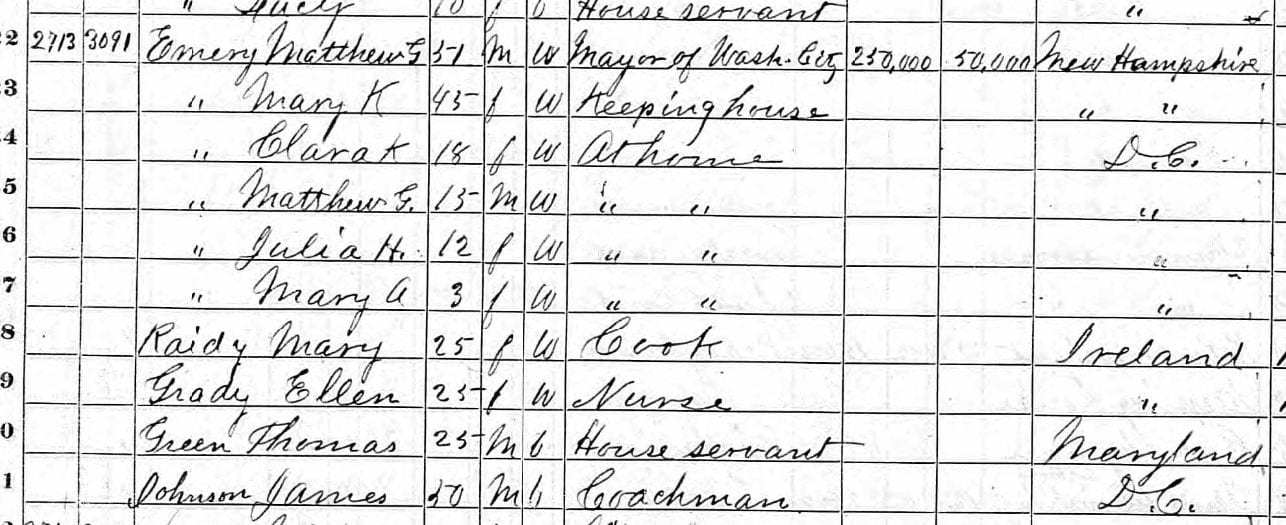
He lived at 621 F St. NW with a very full house. The 1870 U.S. Census lists his wife Mary, five children (including two daughters both apparently named Mary), plus a cook, nurse, servant, and coachman. Draw your own conclusions about the naming situation.
His mayoral term lasted exactly 11 months. He moved fast. Emery oversaw the grading and paving of 132 streets and authorized construction of a seawall along the Anacostia River. It was the largest public works push Washington City had seen up to that point.
On February 21, 1871, Congress passed the Organic Act, dissolving the charters of Washington City and Georgetown and replacing them with a single territorial government headed by an appointed governor. That same day, some 10,000 spectators packed Pennsylvania Avenue to celebrate the laying of new wooden pavement, a carnival of floats, fireworks, masked balls, and sack races. The Daily National Republican captured the mood the following morning:
“It is a complete transformation of the city into a thing of happy life, a gigantic embodiment of merriment, breathing, shrieking and dancing in an ecstasy that is too overpowering for utterance!”
Daily National Republican, February 21, 1871
Nobody in the crowd seemed to note that the right to elect a local mayor had been abolished on the same day. Emery had publicly opposed stripping the District of its franchise, but to no avail.
The man who took over was Alexander “Boss” Shepherd, the vice president of the new Board of Public Works. He paved hundreds of miles of streets, planted 64,000 trees, and buried the old city canal in three years. He also ran the city $13 million into debt, and Congress eliminated the territorial government in 1874.
DC residents wouldn’t choose their own mayor again until Walter Washington’s swearing-in on January 2, 1975. Over a century of direct federal rule started the moment that Organic Act was signed.
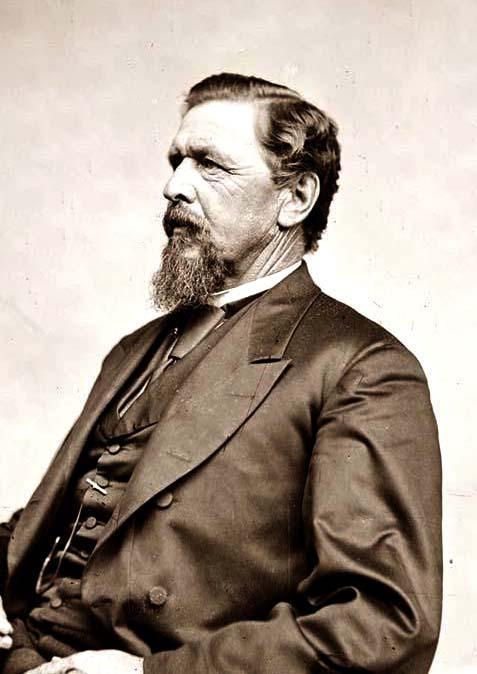
After the city government was dissolved, Emery remained an outspoken advocate for home rule and Congressional representation for DC residents. He purchased the Washington home of Civil War general William Tecumseh Sherman when Sherman relocated to St. Louis, and died there on October 12, 1901, at 83. He was buried at Rock Creek Cemetery.
The Matthew G. Emery Elementary School, now known as Emery Education Campus, still bears his name.