
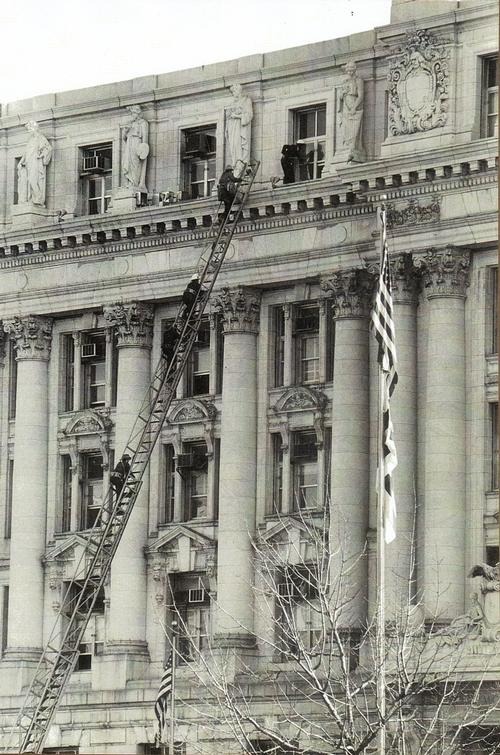
It was about 2:30 on the afternoon of March 9, 1977. Two men walked into the District Building and went straight to the fifth floor, where DC’s mayor and council kept their offices. One had a 12-gauge shotgun under his coat. The other carried a machete.
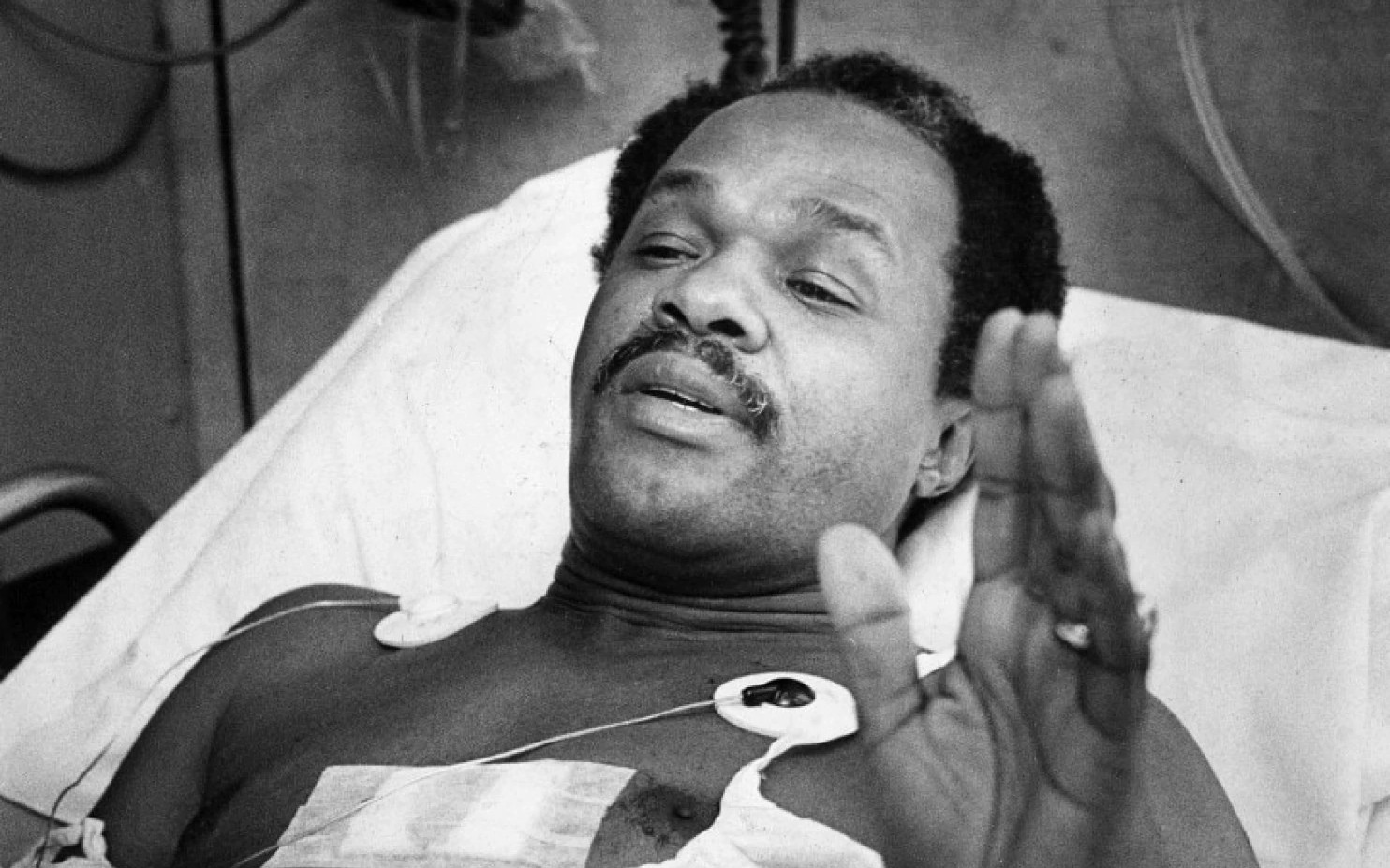
Within 20 minutes, a 24-year-old radio reporter named Maurice Williams was dead. A building guard was down with buckshot in his face. A law student was paralyzed from the waist down. And a councilman named Marion Barry had dived behind a column, his chest burning.
That was the third building taken that day.
By nightfall, a dozen men loyal to a former jazz drummer named Hamaas Abdul Khaalis held more than 130 hostages. They were spread across B’nai B’rith headquarters, the Islamic Center and the seat of DC’s government. They promised to cut off heads and throw them down the stairwell.
It went on for nearly 39 hours. It ended in an office lobby, where three Muslim ambassadors talked the Koran with Khaalis, the man who planned it all.
Then the government let Khaalis go home.
To understand how any of this happened, you have to go back four years, to a house on 16th Street.
The house at 7700 16th Street
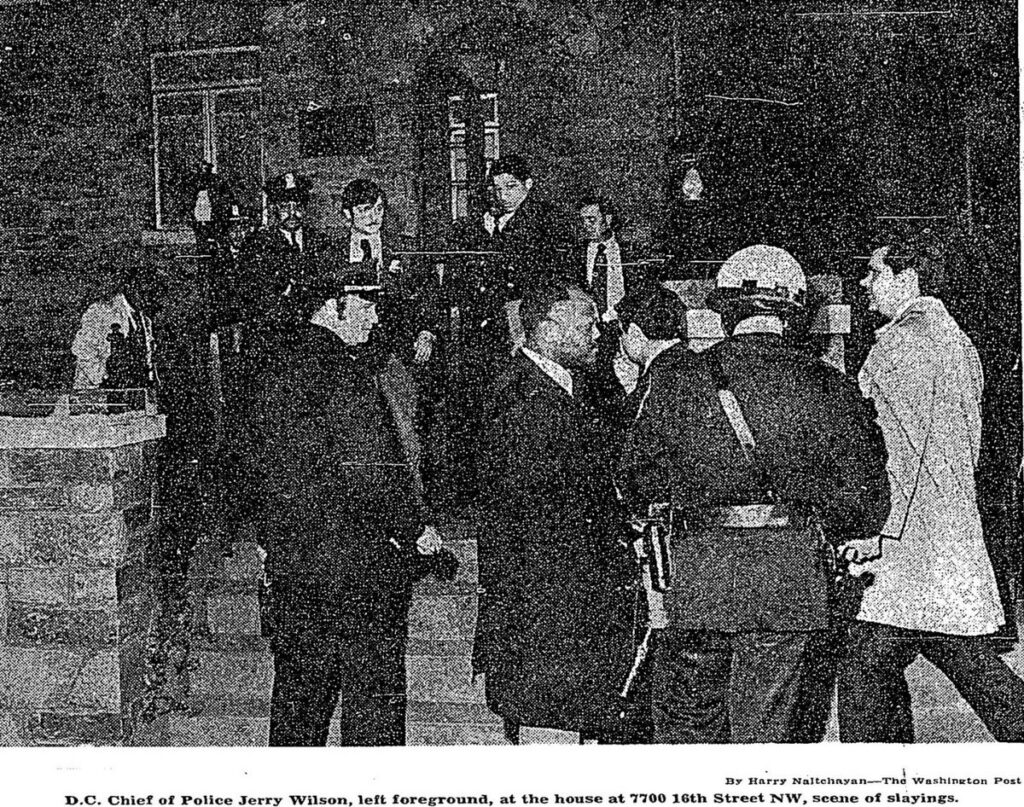
The house sits at the northwest corner of 16th and Juniper Streets NW, about six miles north of the White House. In 1973 the Washington Post described a big, four-story stone house behind a wrought iron fence.
It was the home of Khaalis and the headquarters of the Orthodox Hanafi Muslims, the small Sunni group he led. A basketball star paid for it. Kareem Abdul-Jabbar, the most famous Hanafi convert, bought it in the spring of 1971.
Khaalis had taken a long road there. Time reported he was born in Indiana as Ernest McGee and played jazz drums in New York. He rose high in the Nation of Islam, then broke away in 1958.
In 1972 he wrote letters to Nation of Islam mosques across the country denouncing its leader, Elijah Muhammad.
January 18, 1973
On January 18, 1973, Khaalis and his wife Khadyja were out. Two men came to the door saying they wanted to buy one of his religious pamphlets. Once inside, they let in five or six more. They took everyone to the basement, bound them and covered their heads.
Seven people were murdered, five of them children. Four of the children were drowned. The youngest victim was nine days old.
Khaalis’s daughter Amina was shot several times in the head and lived. She stayed conscious through all of it. Before she was taken to the hospital, she told police who had done it: some of “Elijah’s people.”
Justice, as Khaalis saw it
Seven men were indicted in August 1973. Five went on trial together the next year before Superior Court Judge Braman.
Khaalis didn’t make it through his own testimony. Someone at the defense table, apparently one of the lawyers, smiled at him. Khaalis stepped down from the witness stand and shouted across the courtroom:
“You killed my babies. And shot my women.”
With the jury out, the judge lectured him, as the Post reported:
“Your conduct has threatened to despoil the proceedings in this court. In your anxiety to see these proceedings end in convictions, you may have aborted them.”
It cost him $750 in lawyer’s fees over a contempt-of-court hearing. He never let that go.
The killers came from Philadelphia. Five were eventually convicted and sentenced to life. To Khaalis, it wasn’t justice. He blamed the Jewish judge who presided at the trial.
During the siege he kept repeating one line, according to Time: “The Jews control the courts and the press.”
That explains why B’nai B’rith was the first target.
For the next four years, the Post reported, the house on 16th Street was “an armed camp.” A sentry with what looked like a rifle paced in front of half a dozen tall flagpoles. Neighbors at the corner bus stop watched machete practice on the lawn.
The movie
In February 1977, Khaalis was in New York and saw a theater advertising a new film, Mohammad, Messenger of God. He considered it sacrilege.
He later testified that his “own vindictiveness” over his family “took second place to the picture.”
About a month later, he made his move.
11:15 a.m., Rhode Island Avenue
At around 11:15 on Wednesday morning, March 9, seven Hanafis converged on 1640 Rhode Island Avenue NW. It was the international headquarters of B’nai B’rith, the Jewish service organization, near Scott Circle. They brought a U-Haul packed with guns. Khaalis came by taxi.
They swept the building floor by floor. One employee’s fingers were split open with a machete, and he was shot in the shoulder when he ran. Another was stabbed in the thigh and back. A rabbi was pistol-whipped above the eye.
The hostages ended up face-down on the bare cement of an eighth-floor room under renovation, each holding the ankles of the person in front. The gunmen counted them off by twenties. The total was 103.
Khaalis was very pleased. He told them he had asked Allah for a hundred hostages, and Allah had given him 103.
This was a holy war, he said. “Be prepared to die because many of you will die and heads will be blown, brains will be blown out and heads will roll!”
Henry Siegel, who had recently had a heart attack, asked to have his hands tied in front so he could breathe. Khaalis had another idea.
“Heart attack is a dirty way to die. Let me cut your head off. It’s quick and clean.” Then he picked up a sword.
Siegel told him he was feeling much better.
12:30 p.m., Massachusetts Avenue
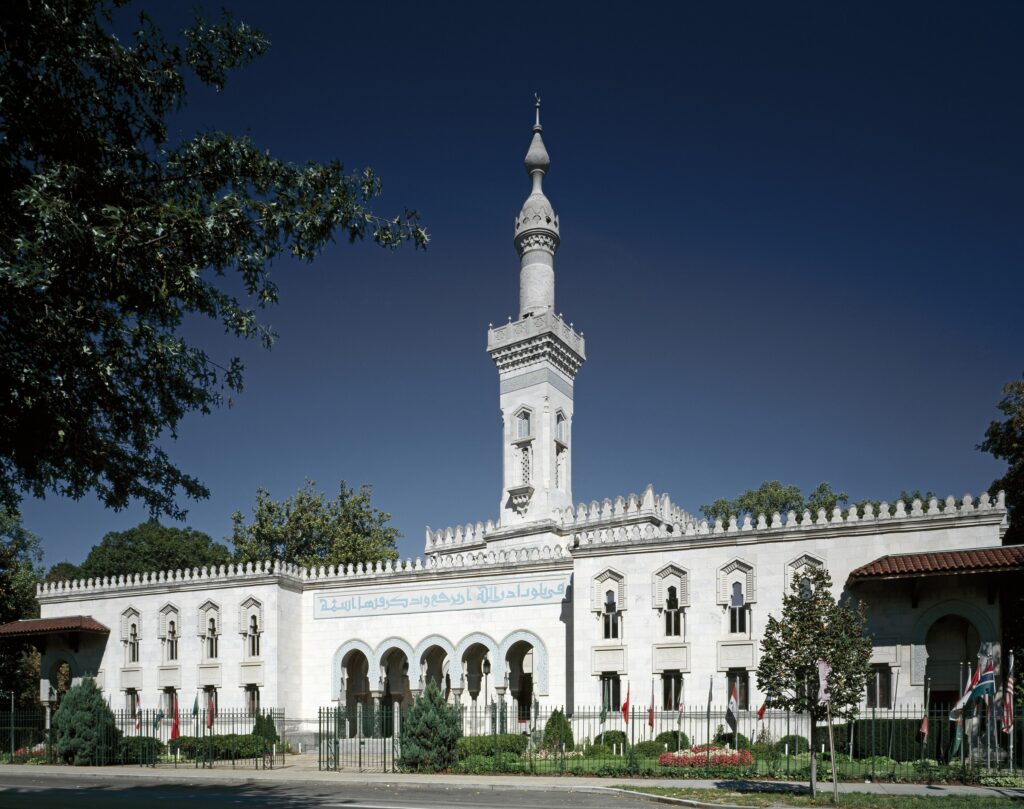
About an hour and 15 minutes later, three more Hanafis walked into the Islamic Center at 2551 Massachusetts Avenue, the mosque on Embassy Row.
Dr. Mohammad Rauf, the director, was walking back from midday prayers when someone grabbed his collar and put a rifle to his back. He asked who they were. One of the gunmen answered:
“You know Hamaas? You know the children who were unfortunately killed?”
They took eleven hostages, Rauf and his wife among them. Rauf was told he’d be lucky to leave with his head on his shoulders. No shots were fired there, and nobody was hurt.
Here’s the irony. In 1973, Rauf had told the Post that Khaalis “seemed docile, a peaceful man.”
2:30 p.m., the fifth floor
This is where it turned bloody.
The two men from the start of this story were Abdul Muzikir and Abdul Nuh. They put a shotgun in a guard’s face and a machete to his neck. Then they herded people into room 507, the outer office of Council Chairman Sterling Tucker. The hostages were tied up with Venetian blind cord, telephone wire and masking tape.
Two building officers, Mack Cantrell and a colleague named Yancy, walked toward the council doors. Barry had ridden up in the elevator with them and stopped to talk with a friend.
At that moment, two reporters stepped off the elevator: Maurice Williams of WHUR radio and Stephen Colter of the Afro-American.
Cantrell pushed open one of the doors. Muzikir turned and fired.
Colter testified that Williams cried out, “I’m shot!” and fell. Five pellets of double-0 buckshot had hit him in the chest. He died where he lay.
Cantrell went down bleeding from the face. Down the hall, Barry testified, he “felt a sharp stinging sensation in my chest, and … I just instinctively knew I had been shot.”
Police came up the stairs, slid heavy oak tables into the hallway for cover and traded fire with the gunmen through the doors. Inside, Muzikir turned his shotgun on the hostages and shot a law student intern, Robert Pierce, in the back. Pierce was paralyzed for life.
The gunmen were disgusted they hadn’t caught the mayor. When the radio reported Barry had been shot, Muzikir was pleased.
For the rest of the siege, hostages took turns in a chair inside the door as a human shield. One woman testified: “The gunman stood by that door with the gun aimed at my head for the entire time I sat in that chair.”
A city under siege
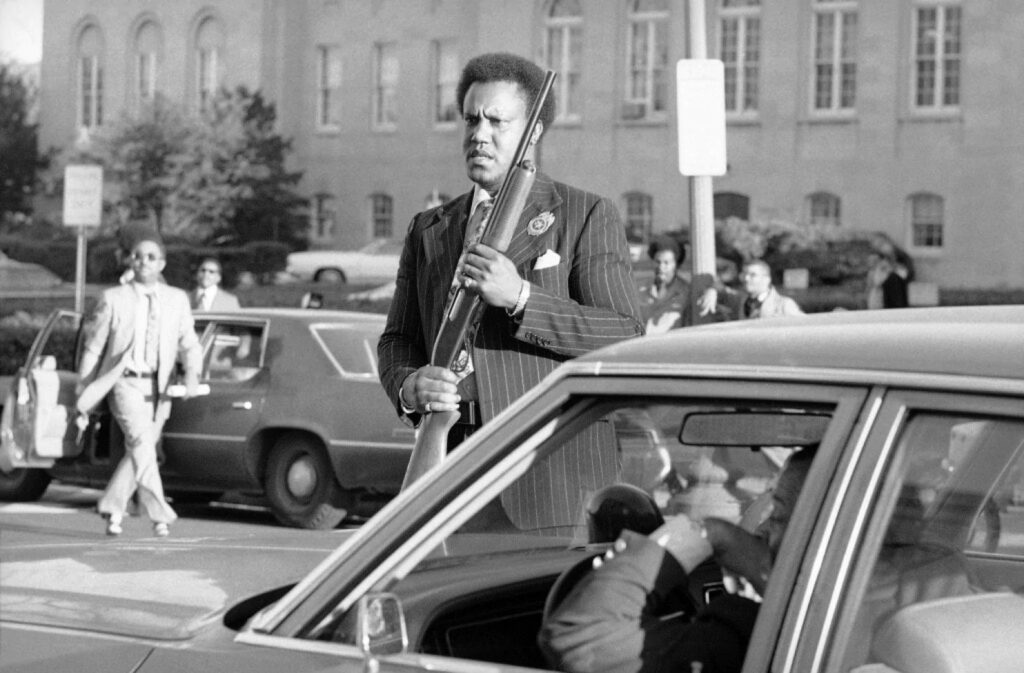
By evening, downtown Washington had police marksmen on the rooftops. The Washington Monument was closed because it was within sniper range. Every member of Congress was offered an armed escort.
Britain’s prime minister, James Callaghan, was in town. He went without the traditional 19-gun salute, for fear the guns might set off a slaughter.
Khaalis ran all three sites by phone from the eighth floor. Reporters raced each other to get him on the line.
It cut both ways. WTOP’s Jim Bohannon had read a wire story in which the FBI called the gunmen “Black Muslims.” That was the very group Khaalis blamed for his children’s deaths.
Khaalis called the station. If Bohannon didn’t apologize on television, he said, “I’m going to kill someone and throw him out the window.”
Bohannon apologized.
By now Khaalis had laid out his demands. He wanted the movie stopped. He wanted his $750 back. And he wanted the men convicted of killing his family turned over to him.
He got the first two. His $750 came back. Theaters stopped showing the movie, at least for a while.
That night a WTOP interviewer asked if he was pleased. The Post printed his answer the next morning:
“No, I’m not pleased to say anything. The people whose heads are still on their shoulders are pleased, not me.”
The killers of his children stayed in prison. Near the end of the call, he added one more thing. “We’ve got plenty of time.”
The vigil
Irv Nash ran a newsstand in the lobby of the Bender Building on Connecticut Avenue. His wife of 36 years, Yetta, had worked at B’nai B’rith for 18 of them. That Wednesday, customers told him there was a fire alarm at her building. Then someone told him it was hostages.
He spent the night at the Gramercy Inn next door. “I was standing there, staring, hoping I would see her face,” he told the Post. “Nothing . . .”
Other families waited through the night at Foundry Methodist Church at 16th and P Streets.
Three ambassadors and the Koran
The break came from an unlikely trio.
Ashraf Ghorbal of Egypt volunteered after hearing Egyptians were among the hostages at the mosque. He brought in Sahabzada Yaqub-Khan of Pakistan, a retired general.
The third was Iran’s Ardeshir Zahedi, whom Time called probably Washington’s best-known diplomat and party giver. He was on a Concorde back from Paris when the call came. (Zahedi’s old embassy on Massachusetts Avenue still stands empty. We told its story here.)
Their plan was to talk to Khaalis about his own faith. They would use the Koran to remind him that Allah commands mercy.
Khaalis wasn’t having it at first. He told them he knew the Koran better than they did.
They kept at it by phone, verse after verse, through the night. At sunrise on Thursday, Yaqub-Khan called again to greet him on the new day.
At 8:10 that night, Khaalis stepped off an elevator into the B’nai B’rith lobby carrying a knife. He shook hands and accepted the traditional embrace from each ambassador.
Then he sat down with them and three police officials. One was Capt. Joseph O’Brien, who had investigated the murder of Khaalis’s children.
When Zahedi brought up the children, Khaalis broke into tears.
Two hours into the meeting, he said what he really wanted. He didn’t want to go to jail. He wanted to go home.
He went home
Khaalis got that too.
At about 1:45 a.m. on Friday, March 11, Mayor Walter Washington made a frantic announcement to the press. “The Lord was on our side,” he said. He credited the ambassadors, who had talked with the gunmen, read them poems and read them the Koran.
Ten minutes later, hostages started filing out onto empty streets, many with cuts, bruises, broken glasses and swollen eyes. On the fifth floor, police told the two gunmen to lay their weapons in the doorway. Muzikir answered: “There’s only one gun.”
A little after 2 a.m., the bells of Foundry Methodist began to ring.
Police later hauled an arsenal out of B’nai B’rith and the U-Haul. They counted 20 guns, 8,700 rounds of ammunition, eight machetes, a crossbow, throwing stars and garrotes.
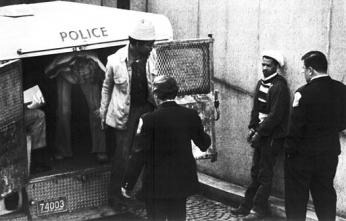
As part of the deal, Khaalis was charged with a single count of kidnapping and released without bail. Judge Harold Greene went along, uneasily. It wasn’t the court’s place, he said, to second-guess the government.
Khaalis headed home with a cigar in his mouth and told reporters he felt good. Senator Lloyd Bentsen noted that Khaalis was free before his hostages were even home.
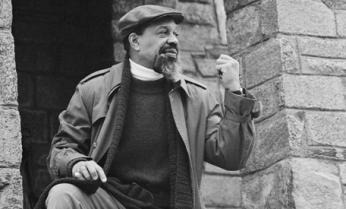
His freedom lasted 20 days. On March 31, prosecutors told Greene that a police wiretap had caught Khaalis threatening to kill people. The Post quoted an FBI affidavit:
“They are going to pay in blood for it. I’m going to kill somebody. And they’re gonna die for what they did.”
He went to jail without bond.
The trial
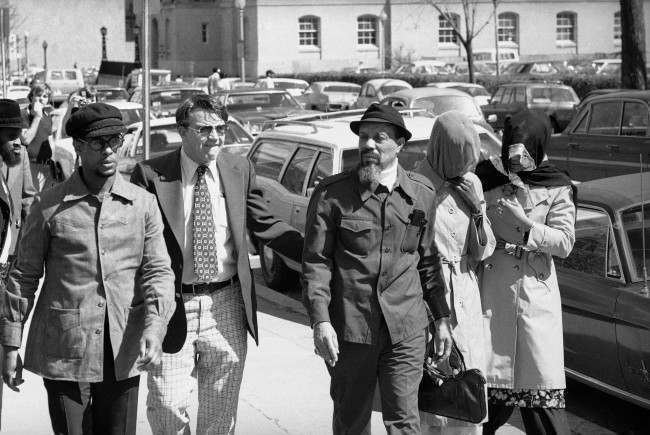
All twelve men were indicted in May 1977. At trial, Khaalis took the stand and said there had been no plan.
“There was no need to make any plans,” he testified. “There was no need. Allah was the plan.”
Asked why he went after the District Building, he went back to 1973:
“We never heard … one remark from no city official, when the most heinous, most brutalizing crime was committed here in this city. … It was as if you had sprayed Black Flag on roaches in the kitchen. Nobody said nothing.”
On July 23, 1977, the jury convicted all twelve. On September 6, Khaalis got 41 to 123 years. Muzikir, who fired the shots on the fifth floor, got 77 years to life.
Khaalis died in prison in 2003. Muzikir was granted compassionate release in 2022, after 44 years.
Did it make Marion Barry mayor?
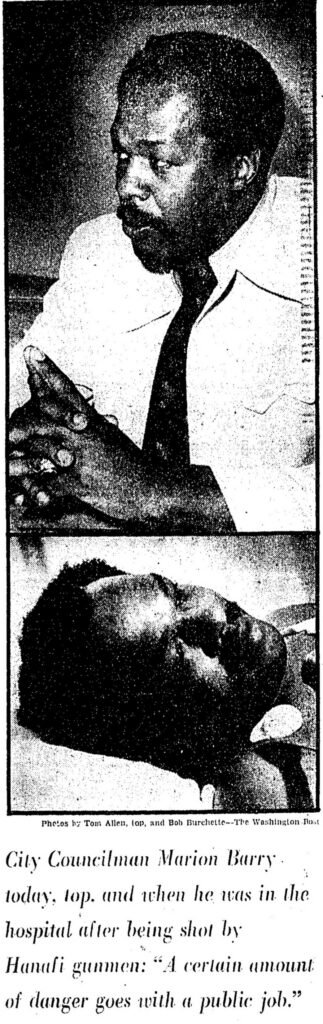
Not on its own. Barry was 41 and already well known, from SNCC and Pride, Inc. to the school board and an at-large council seat.
Three weeks after the siege, the Post described him as a man who “has his eye on the mayor’s office.”
But the shooting stayed with him. He told the Post he had dreamed about shootings almost every night since.
“Being shot was a scary experience. But part of the problem now is that I dream about bullets. Shootings. The dreams are so real that they wake me up.”
Years later, Barry wrote in his memoir, Mayor for Life, that the sympathy he got from residents after the shooting helped convince him to run.
He ran in 1978 against the sitting mayor, Walter Washington. He also ran against Sterling Tucker, the council chairman whose office the gunmen had used as a holding pen. Barry beat Tucker by about 1,400 votes, with Washington a close third.
So the siege didn’t make Marion Barry. He already wanted the job. In a race that close, it may have helped him get it. (What came later is another story, including the photo a Post photographer got of Barry’s cocaine bust.)
The ones who didn’t come home
Maurice Williams was 24, with about 18 months as a full-time newsman. His father, Otto, waited at the District Building for hours that Wednesday for word of his son. He learned Maurice was dead when a television reporter, not knowing he was the father, blurted it out.
“It’s too harsh,” he told reporters. His mother, Lillie, told the Post: “I still don’t know why. I can’t find any answers.”
Colter, who stepped off the elevator beside Maurice, put it simply. “Usually we get there after the action, instead of being involved in the violence.”
Mack Cantrell, the guard shot in the face, never got to testify. He had a heart condition and was stricken at work in June. He died on July 4, 1977, of a massive coronary thrombosis, with the trial under way across town. He was 46.
Later retellings often say he died days after the siege. His obituary shows it was nearly four months.
What’s there now
The B’nai B’rith building at 1640 Rhode Island Avenue is now the headquarters of the Human Rights Campaign.
The Islamic Center still stands on Massachusetts Avenue.
The District Building is now the John A. Wilson Building. In 2007, the fifth-floor press room, steps from where Maurice Williams fell, was renamed for him.
And the house at 7700 16th Street is still there. As of 2022, the Hanafis still lived in it.
It’s a quiet corner. Most people driving past have no idea what happened there.
We dug this one up with help from AI and checked it against the original records below. Here’s how we use AI.