Federal Triangle History: The Story Behind A Name
The name “Federal Triangle” replaced “Pennsylvania Avenue Triangle” as federal buildings rose in the 1920s. The shape of the land gave it both names.
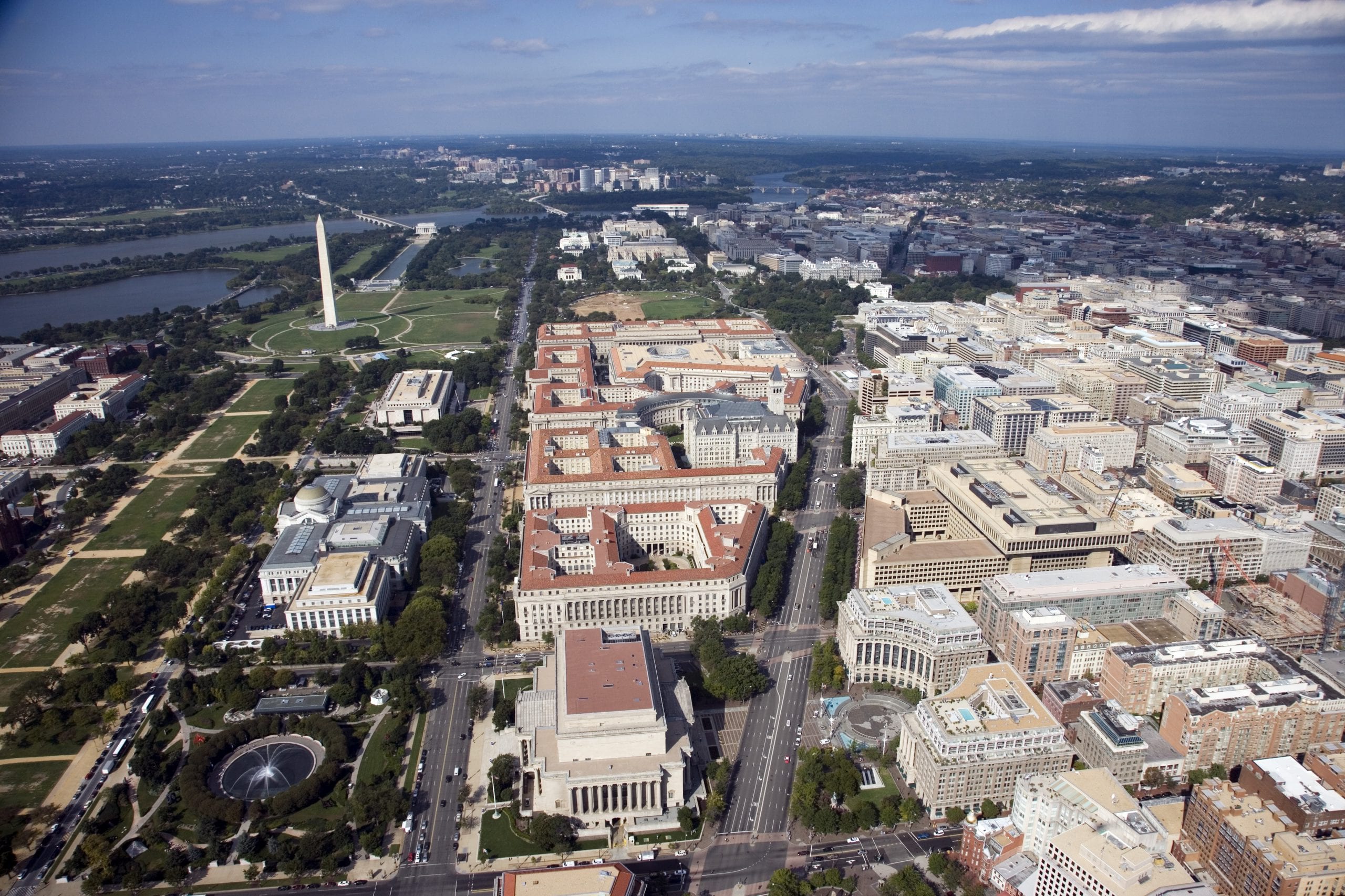
Federal Triangle is the sweeping block of neoclassical government buildings running along Pennsylvania Avenue between the Capitol and the White House. Built in the late 1920s and 1930s as part of a unified federal precinct, it required clearing a dense neighborhood that had occupied the site since the Civil War. These posts explore the buildings and the community they replaced.
The name “Federal Triangle” replaced “Pennsylvania Avenue Triangle” as federal buildings rose in the 1920s. The shape of the land gave it both names.
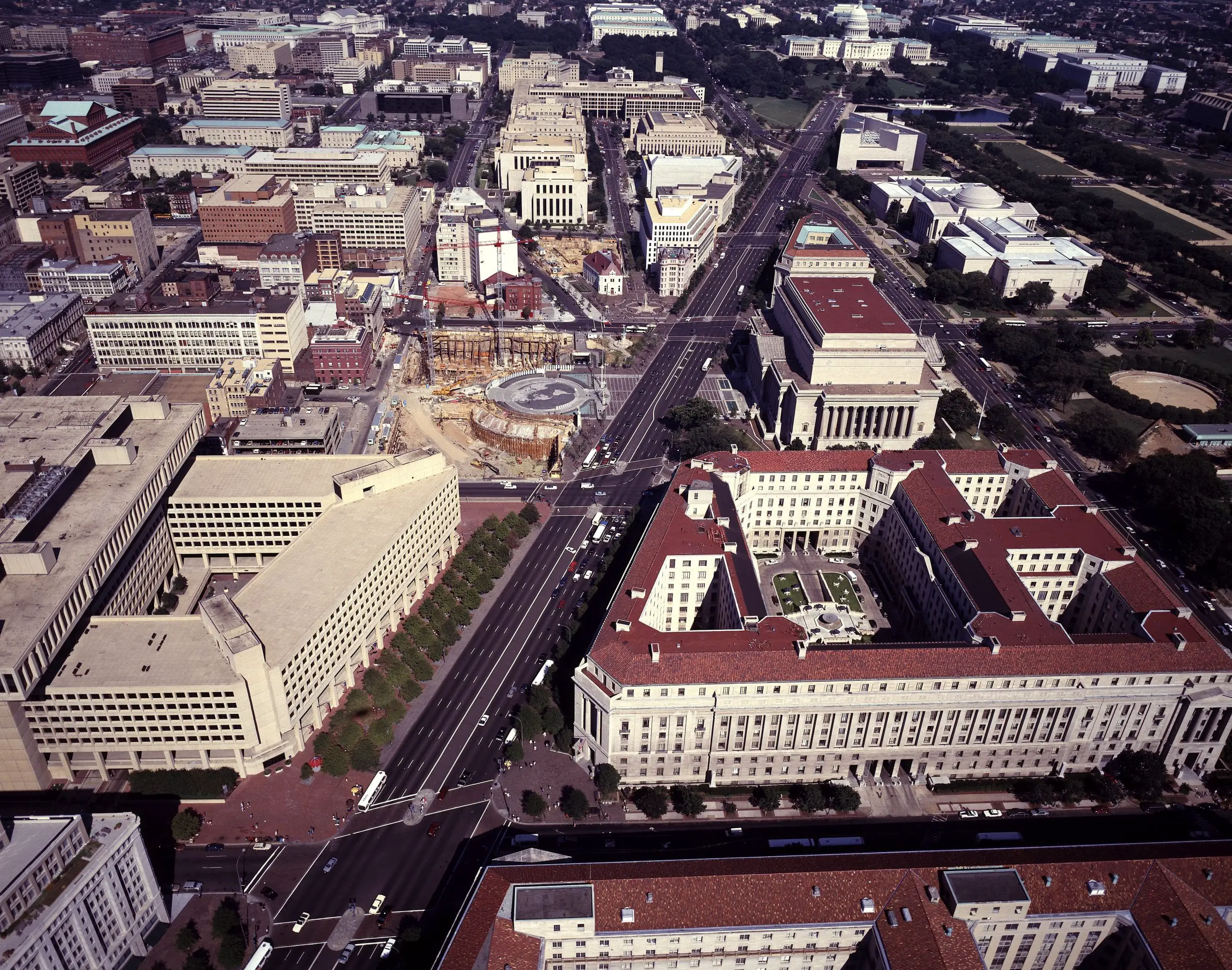
Get a bird’s eye view of Washington, D.C. with this aerial shot of Federal Triangle and the Navy Memorial under construction. Image taken during the 1980s.
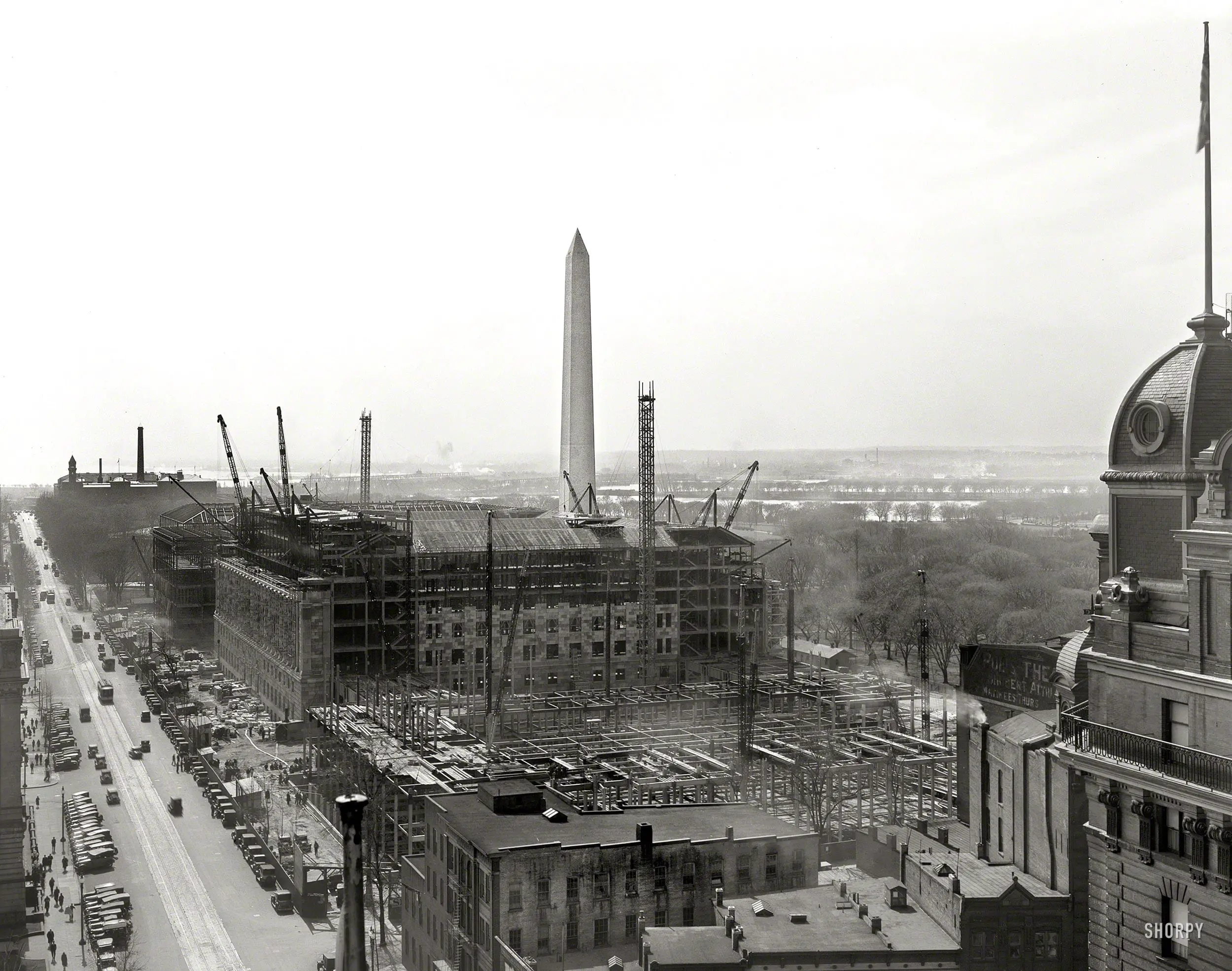
A Shorpy photograph taken from the top of the National Press Building looking down 14th Street, showing the Department of Commerce under construction with the Willard Hotel at right.
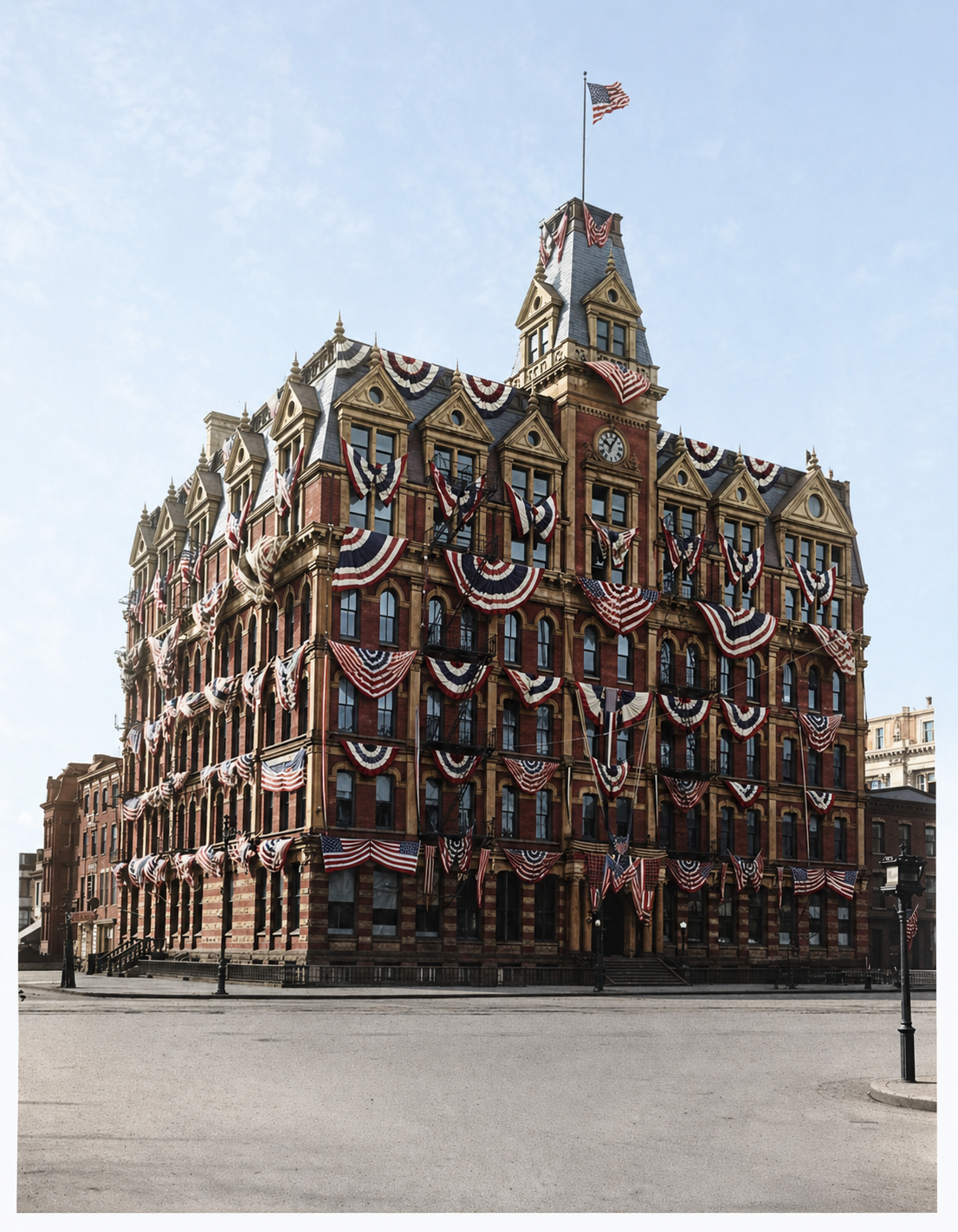
The Southern Railway Building stood at 13th and Pennsylvania for 50 years. Then it burned. Then the federal government paid $2.68 million to clear it for Federal Triangle.
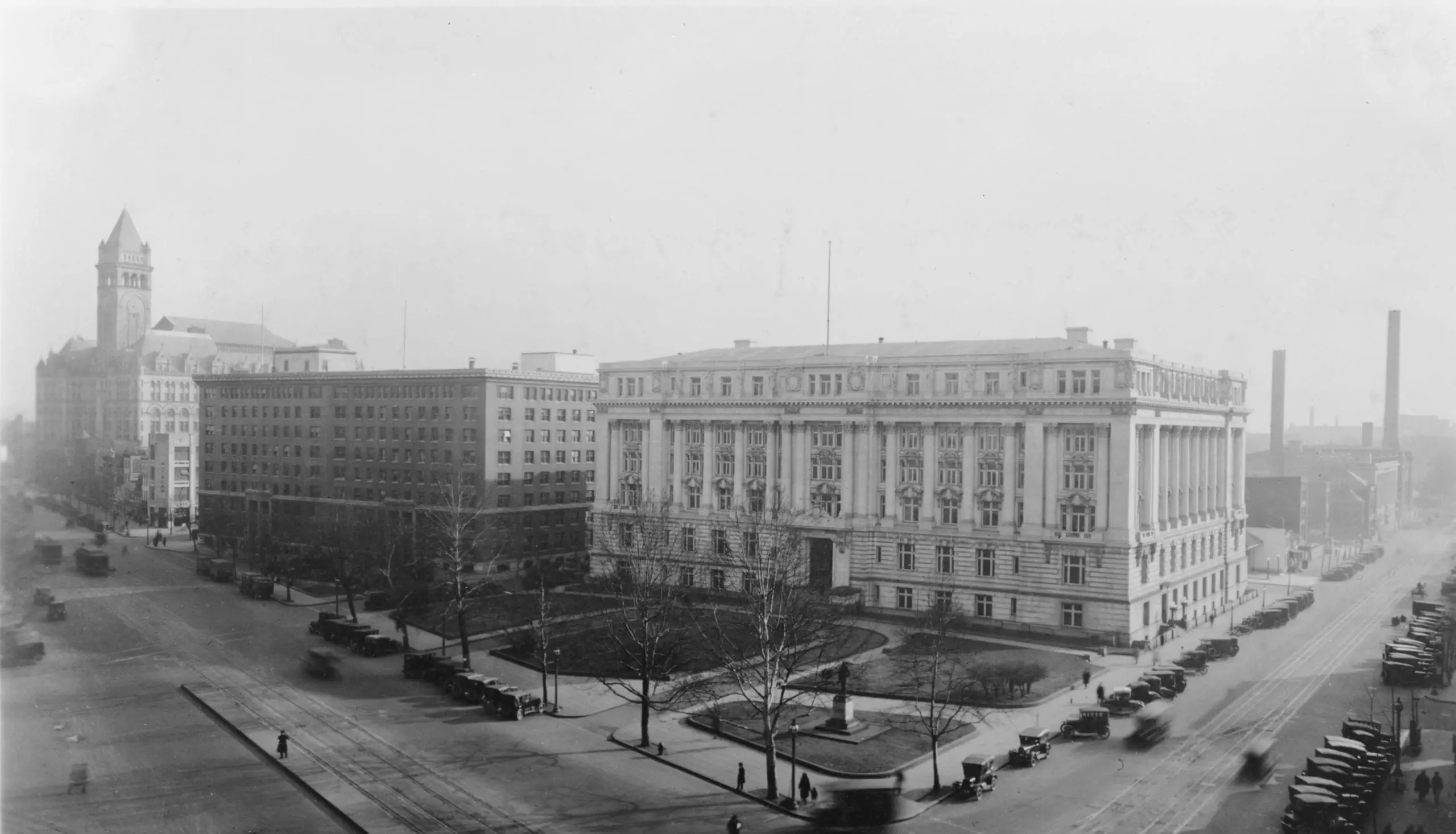
This 1932 photograph from the roof of the Willard Hotel shows Pennsylvania Avenue and the Federal Triangle construction underway. The Old Post Office Pavilion, the Southern Railway Building, and the District Building are all visible.
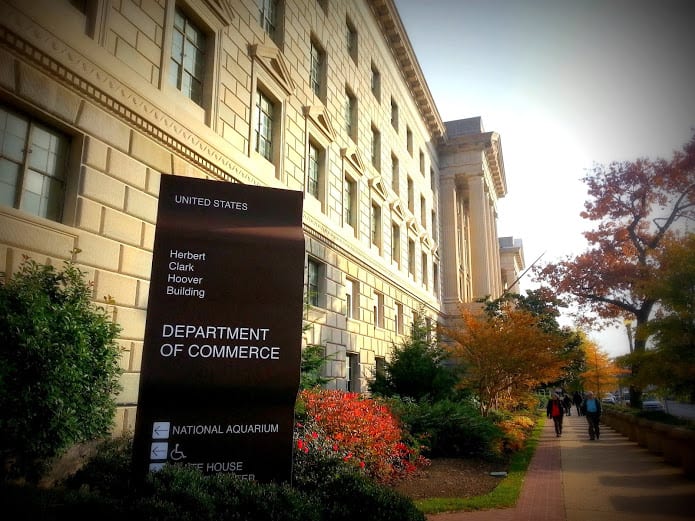
A mile of hallways, 3,700 radiators weighing 420 tons, and a basement aquarium running since 1932. That’s the Commerce Department.
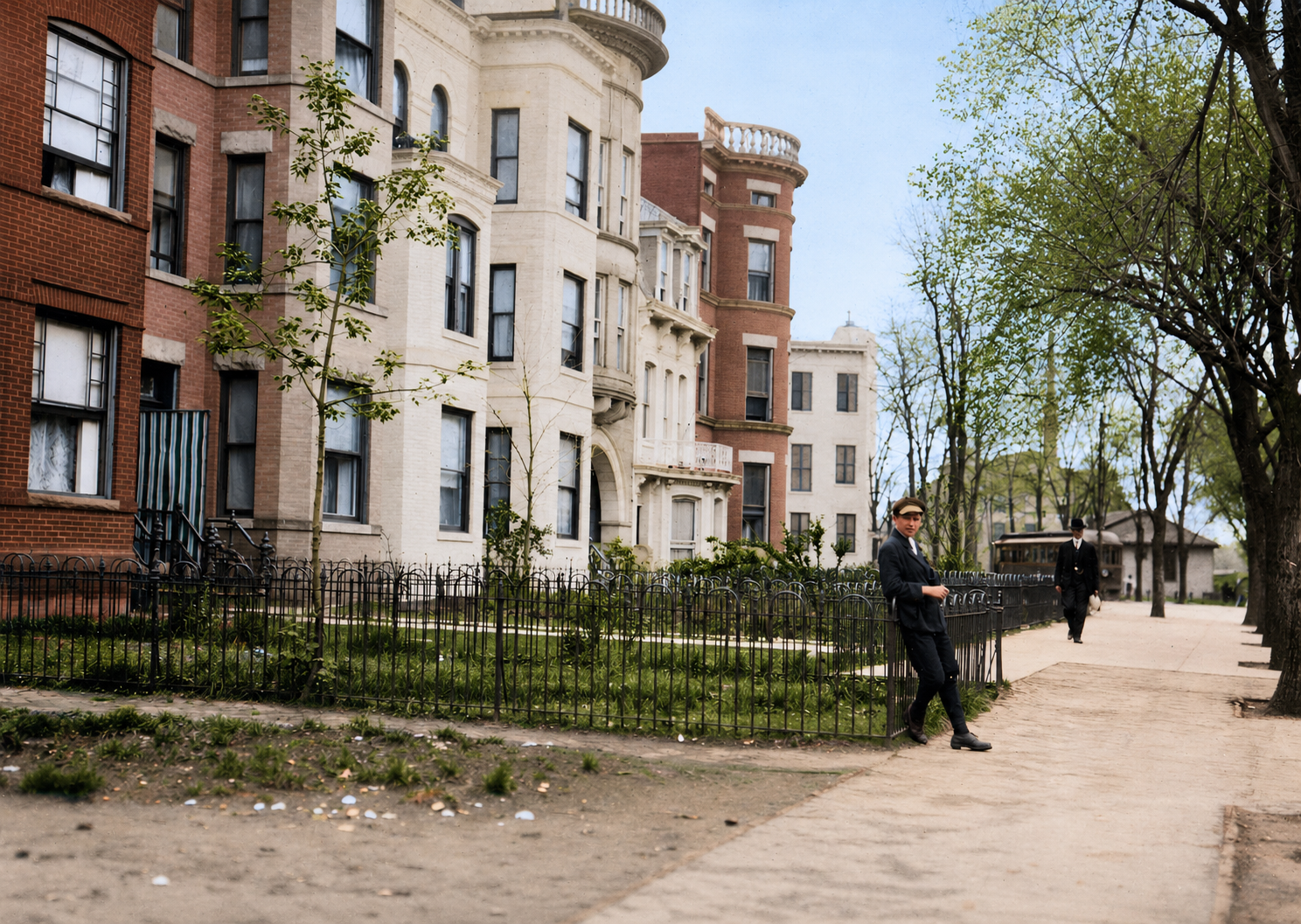
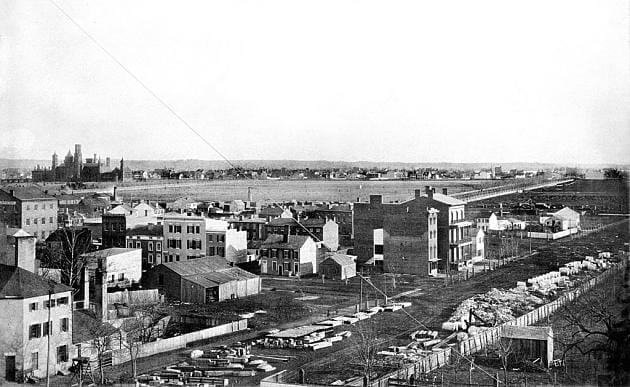
Murder Bay was the violent, vice-ridden neighborhood just east of the White House, now buried under the Federal Triangle. Here is what it looked like.
Constitution Avenue was not always called Constitution Avenue. There’s a Wisconsin connection to the story that most DC residents don’t know.