
On Sunday, January 14, 1973, just after 2 a.m., the Washington Metropolitan Area Transit Authority condemned a private bus company out of existence. The Justice Department filed papers in U.S. District Court. Judge Gerhard Gesell signed the order. WMATA seized the buses, the garages, and the routes of the D.C. Transit System and its suburban sister, the Washington, Virginia and Maryland Coach Company.
The owner was a New York lawyer named Oscar Roy Chalk, then sixty-five, who had run Washington’s bus system for sixteen and a half years.
He went home and never bought a bus again.
A Bronx kid in the boardroom
Chalk was born in London on June 7, 1907, the son of a Russian father and a Polish mother, brought to the Bronx at age three. The Wikipedia entry on Chalk notes the neighbors he grew up among, the Gershwin brothers and Lou Gehrig. He worked his way through New York University and NYU Law, joined the New York bar in 1932, and built a real estate portfolio in Manhattan before the war.
In 1945 he founded Trans Caribbean Airways with $60,000 and two surplus Douglas DC-4s. By the mid-1950s he owned an airline, a stake in El Diario de Nueva York, and real estate across the Northeast. He would soon merge El Diario with La Prensa into New York City’s flagship Spanish-language daily. Then a transit deal fell apart in Washington, and Chalk had the cash to take it.
How Washington’s bus system ended up for sale
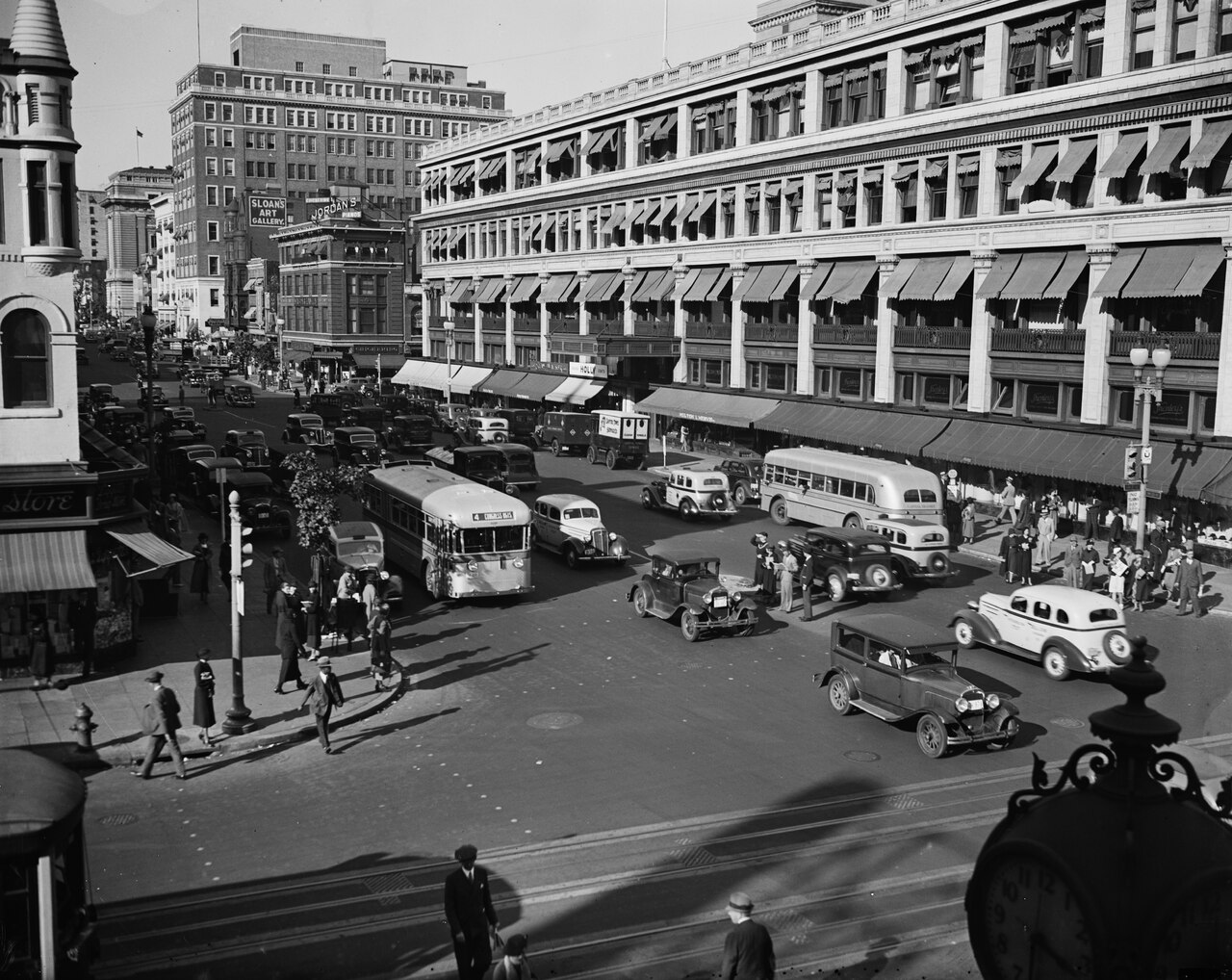
For decades the streetcars and buses of D.C. belonged to Capital Transit. The owner in the mid-1950s was a Jacksonville financier named Louis Wolfson, who had bought the company in 1949 from the North American Company for about $2 million, mostly for its dividends. He stripped out millions in payouts and let the rolling stock get old. In the summer of 1955 the operators struck for seven weeks, the city ground to a halt, and Congress decided it had seen enough. Legislation revoked the franchise.
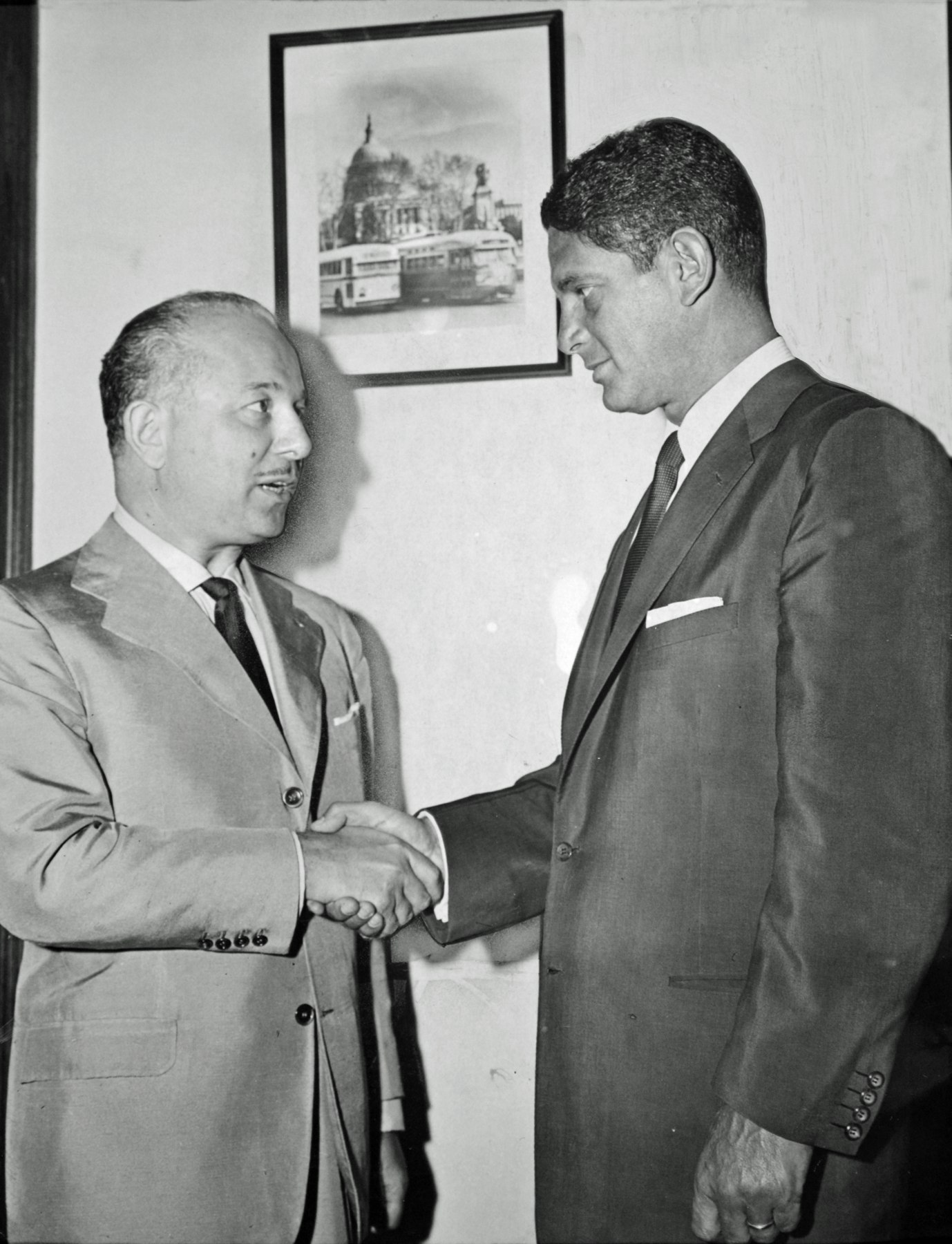
Wolfson sold the operating company to Chalk for $13.5 million. The two men shook on the deal in Wolfson’s New York office on August 3, 1956. Chalk took the keys twelve days later, renamed the company D.C. Transit System, Incorporated, and accepted a twenty-year franchise on one condition: under Public Law 389, the streetcars had to be replaced with buses by 1963.
The streetcar system came off the wires in stages. As a farewell, children rode free on Saturday, January 27, 1962, when adults paid; Capital Transit ran twenty-seven extra cars to handle the crowds of parents bringing their kids out to see a vanishing piece of the city. Shortly after 2 a.m. the next morning, car 766 pulled into the Navy Yard Car Barn behind cars 1101 and 1053, and Washington’s streetcars became history. Chalk had run the network to the contract.
The Arcticoolers arrive
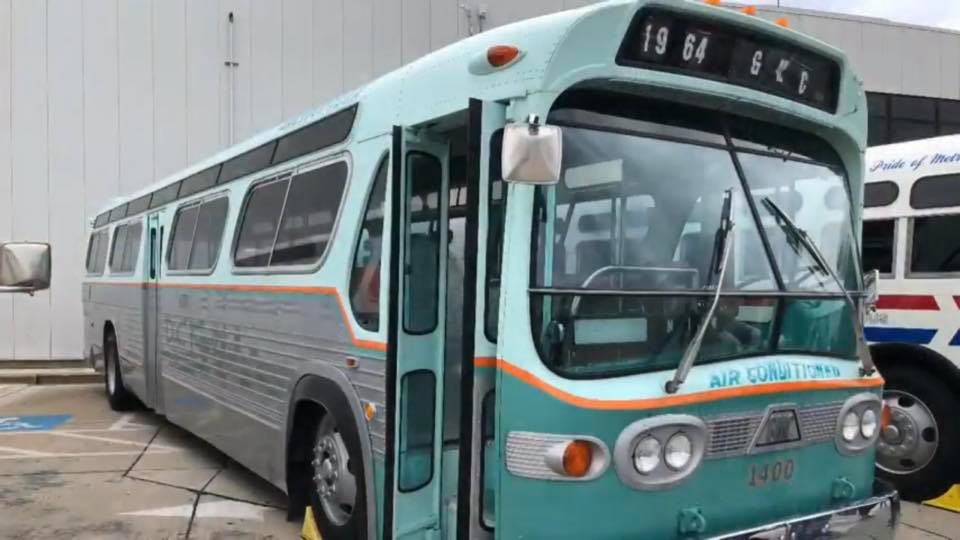
In July 1958, sixty-seven brand new GM TDH-5105 transit buses rolled into Washington. They were the first air-conditioned buses on D.C. streets. Above the windows, in chrome script, the buses said Arcticooler. The colors were green on the body, a flamingo-orange stripe at the belt, a white roof. The livery came from a sample bus GM had painted in 1956 and brought to Washington as a demonstrator. Chalk’s wife, Claire, liked it, and the company adopted it as its standard.
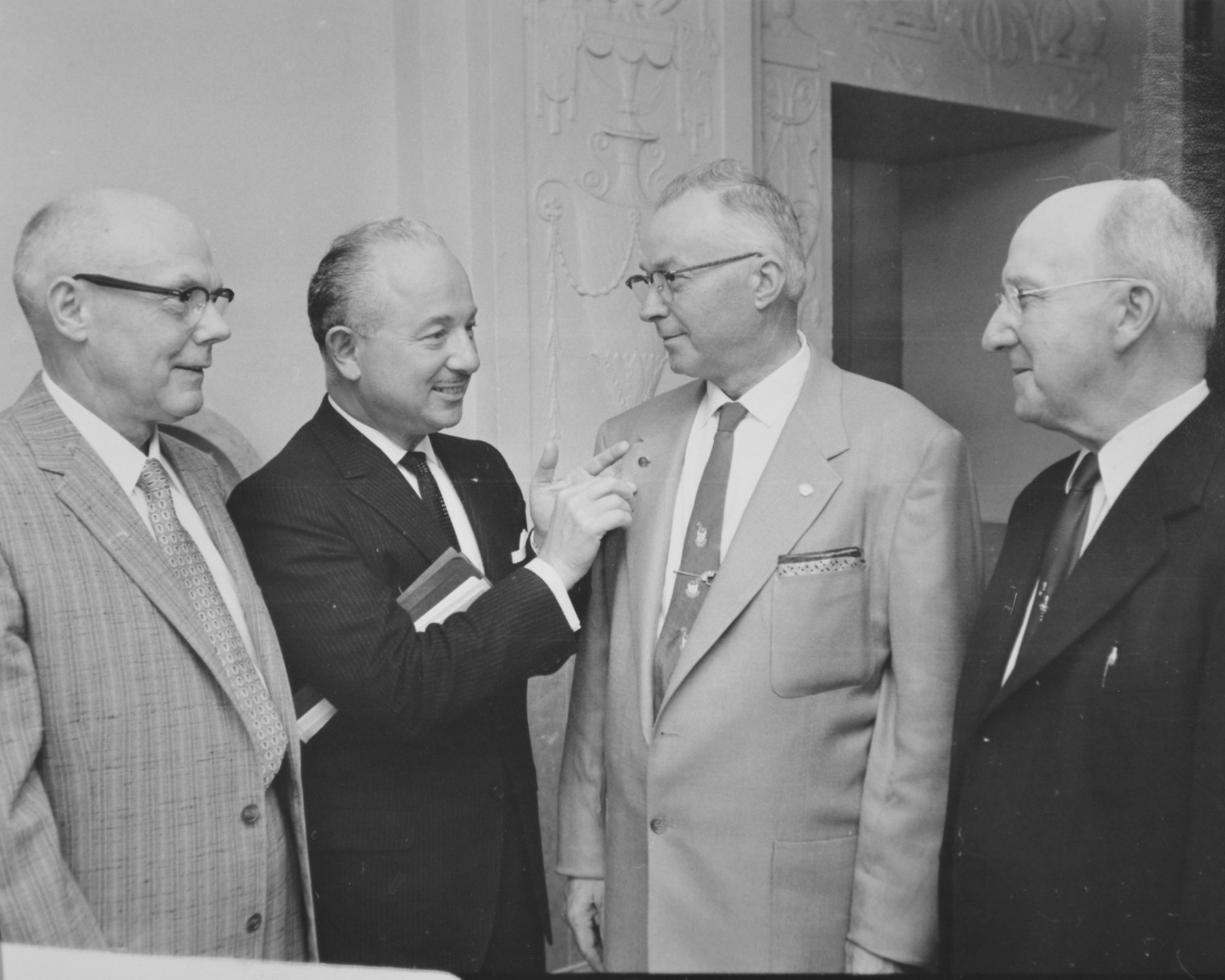
Riders noticed. So did TIME, which ran a long admiring profile on June 8, 1962 titled “Capitalists: The World of Roy Chalk,” cataloguing the Arcticoolers along with everything else Chalk was doing in those years.
That magazine piece is where you see the personality. The repainted fleet picked out in pastels. A New York to Washington limousine service he was running on the side. A failed 1959 bid for the New York City subway. Plans for a publishing chain. Chalk did not run D.C. Transit as a fiduciary keeping a sleepy utility on the rails. He ran it like a stage.
A year earlier, in the summer of 1957, his company had launched the Silver Sightseer, an air-conditioned PCC streetcar in chrome and silver paint, with an onboard hostess lecturing tourists through a loudspeaker as it rolled past the monuments. The Arcticoolers were the production version of the same idea. Cool air, soft seats, theater.
The monorail that never moved
The most famous of Chalk’s stages was a monorail.
In late 1959, D.C. Transit and Lockheed unveiled a plan for a 116-mile elevated network that would stitch together the entire region: downtown, the suburbs, National Airport, and a branch out to the new airport then being graded into the cornfields of Chantilly. Chalk pitched it as a cheaper, faster alternative to the heavy-rail subway the National Capital Transportation Agency was studying. He called rail rapid transit “19th Century planning,” and described his monorails to reporters as “beautiful, silent-operating … suspended on graceful pylons for the most part.” Three years later he came back with a sharper version, a dedicated high-speed line connecting downtown Washington to Dulles International Airport. He called it the Superail.
The renderings ran in newspaper supplements. The line never moved a passenger. Congress was already locked in on what would become Metro, and a private transit operator pitching airport monorails was the wrong man holding the wrong idea at the wrong moment.
Chalk kept pitching anyway. The George Mason University Center for History and New Media has preserved the 1959 schematic, and it is worth a minute of your time. The map is gorgeous. It also explains, more cleanly than any obituary, why WMATA was eventually going to take the company away from him.
Why the city turned
Running D.C. Transit in the 1960s meant fighting two wars at once. The fare wars came in front of the Washington Metropolitan Area Transit Commission, the regulator that set ticket prices. Chalk asked for raises. Riders and politicians fought him on every nickel. The papers piled on.
The second war was about race. By the late 1960s much of D.C. Transit’s ridership was Black, the drivers and the management were not, and the rolling stock on the heaviest Black-neighborhood routes was visibly worse than what ran into the white suburbs.
On November 8, 1965, D.C. Transit asked the regulator to raise the fare from 20 cents to 25 cents. A young SNCC chairman named Marion Barry, six months into his first DC posting, walked into the hearing with about a hundred organizers and warned that a fare hike would bring a boycott. The boycott was actually organized on the ground by Lowell D. Pratt, the local SNCC coordinator, out of an office where he briefed volunteers on a Saturday night with a map of the Benning Road corridor in front of him. On Monday, January 24, 1966, they made good on it. SNCC ran “freedom buses” and a 200-car volunteer carpool. The Evening Star reported the boycott was 90 percent effective east of the river, 40 to 45 percent across the city, and cost D.C. Transit about $30,000 in a single day. The regulator backed off. The fare stayed at 20 cents.
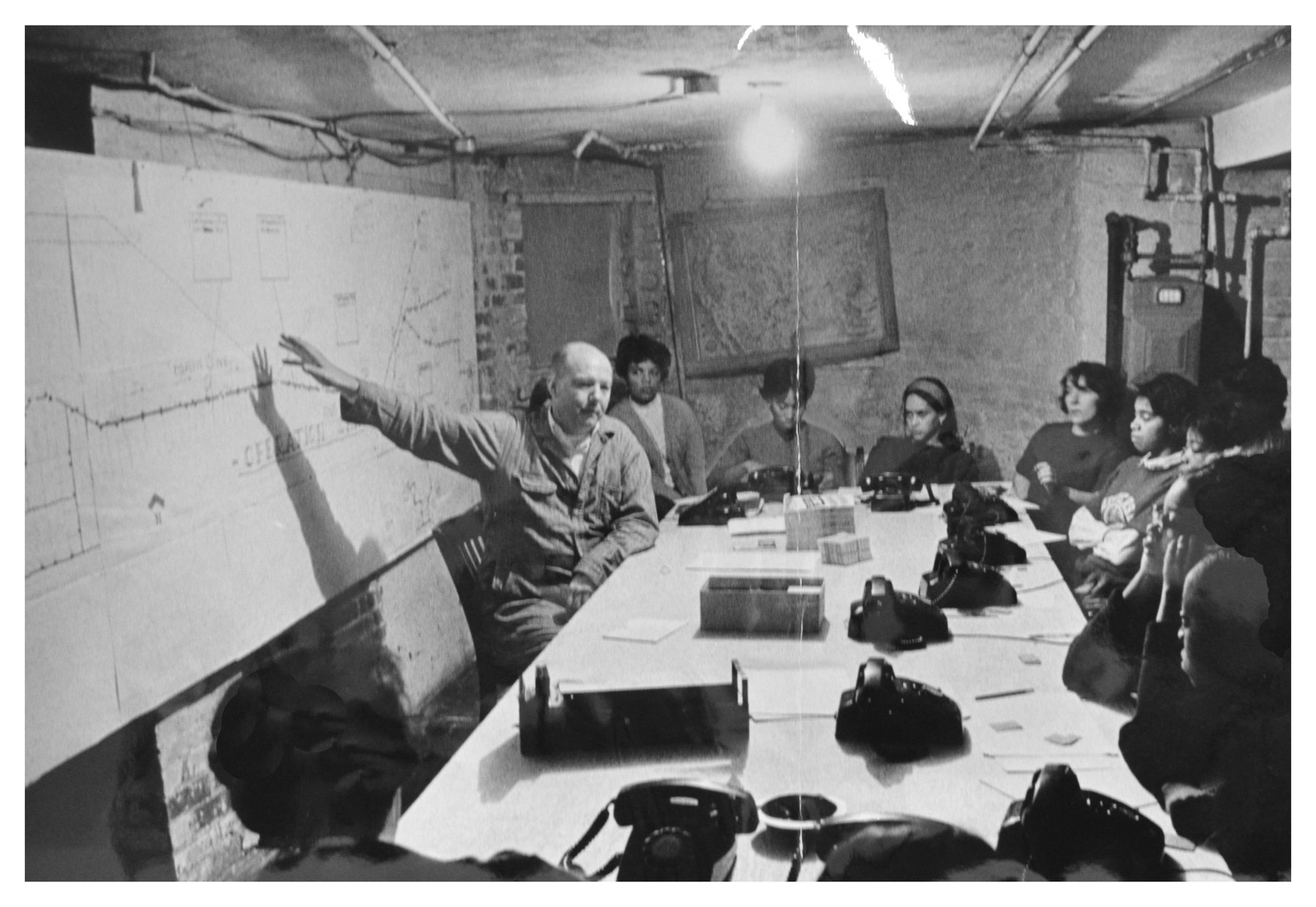
Two years later, with cash fares finally up to 30 cents after three increases in a single year, the Emergency Committee on the Transportation Crisis ran a bigger boycott on December 2, 1968. Reginald Booker chaired the committee. Rev. Joseph I. Gipson of Nash Memorial Methodist Church on Lincoln Road NE turned his basement into a dispatch room. Volunteers like Clorice C. Turner mapped alternative routes around the boycotted bus lines. The “Erase Chalk” posters went up. The fist of Black Power got redrawn into a hitchhiking thumb, on signs taped to the windows of carpool vans rolling through the H Street NE corridor.
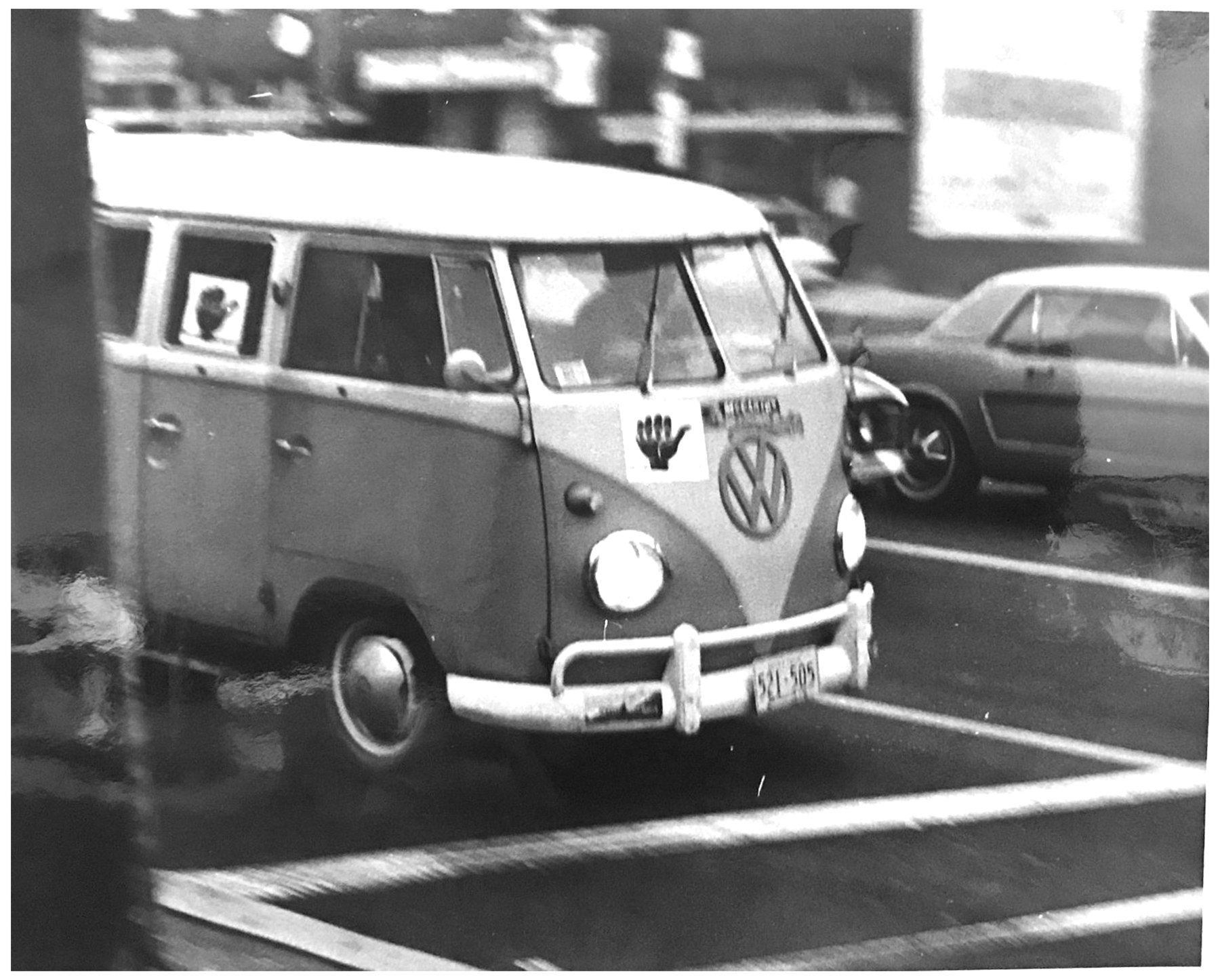
The fares went up anyway. The 1968 boycott did not save the fare. It did mark the moment when the political ground under D.C. Transit gave way.
By the early 1970s, with Metro under construction and a union contract that had expired the previous October, WMATA decided it could not wait for Chalk’s franchise to run out in 1976. Congress had granted the agency condemnation authority in October 1972. Negotiations broke down over price. On January 14, 1973, the agency exercised the authority. WMATA’s filing valued the seized D.C. Transit and WV&M assets at $38.2 million. Chalk had been asking $75 million for the two companies. A federal court would spend years sorting the difference; by the time the books closed, WMATA had paid out roughly $44.9 million for the system. The buses kept rolling. The signs got repainted. Chalk was out.
What was left
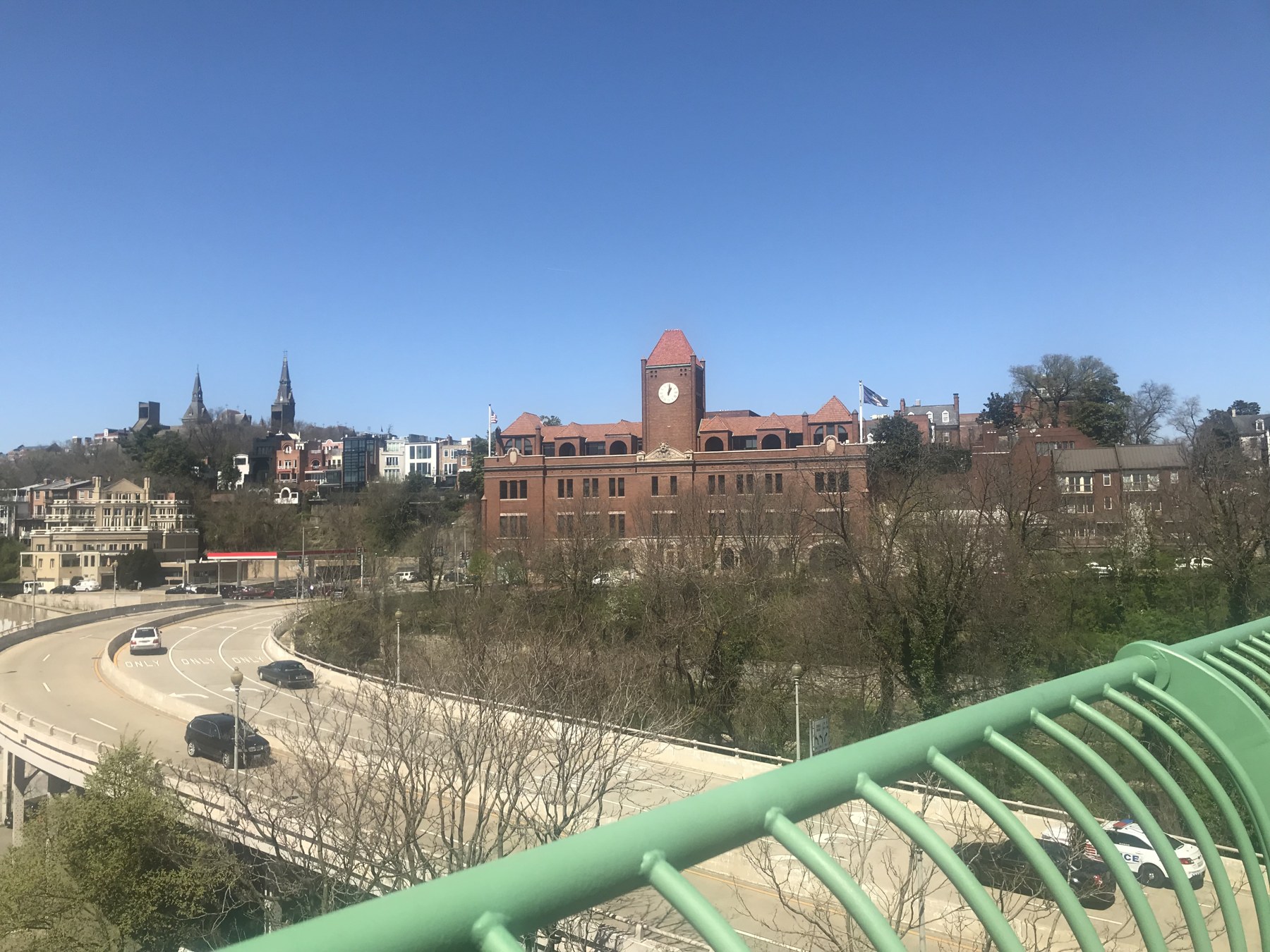
WMATA had paid Chalk for the buses, not for the buildings. He kept the Georgetown Car Barn, the 1895 red-brick streetcar shop at the District side of the Key Bridge, and converted it into offices. Five years later, in 1978, Washington Post reporter Jack Eisen rode the elevator up to a Louis XIV-style desk on an upper floor and got the post-transit Chalk in one paragraph. The piece ran on February 8, 1978 under a headline he half wrote himself: “His Empire Is Smaller, But He’s Not Unhappy.” He had already sold Trans Caribbean Airways to American Airlines on March 3, 1971, in exchange for stock that briefly made him the airline’s single largest shareholder. He would let El Diario-La Prensa go to Gannett in 1981.
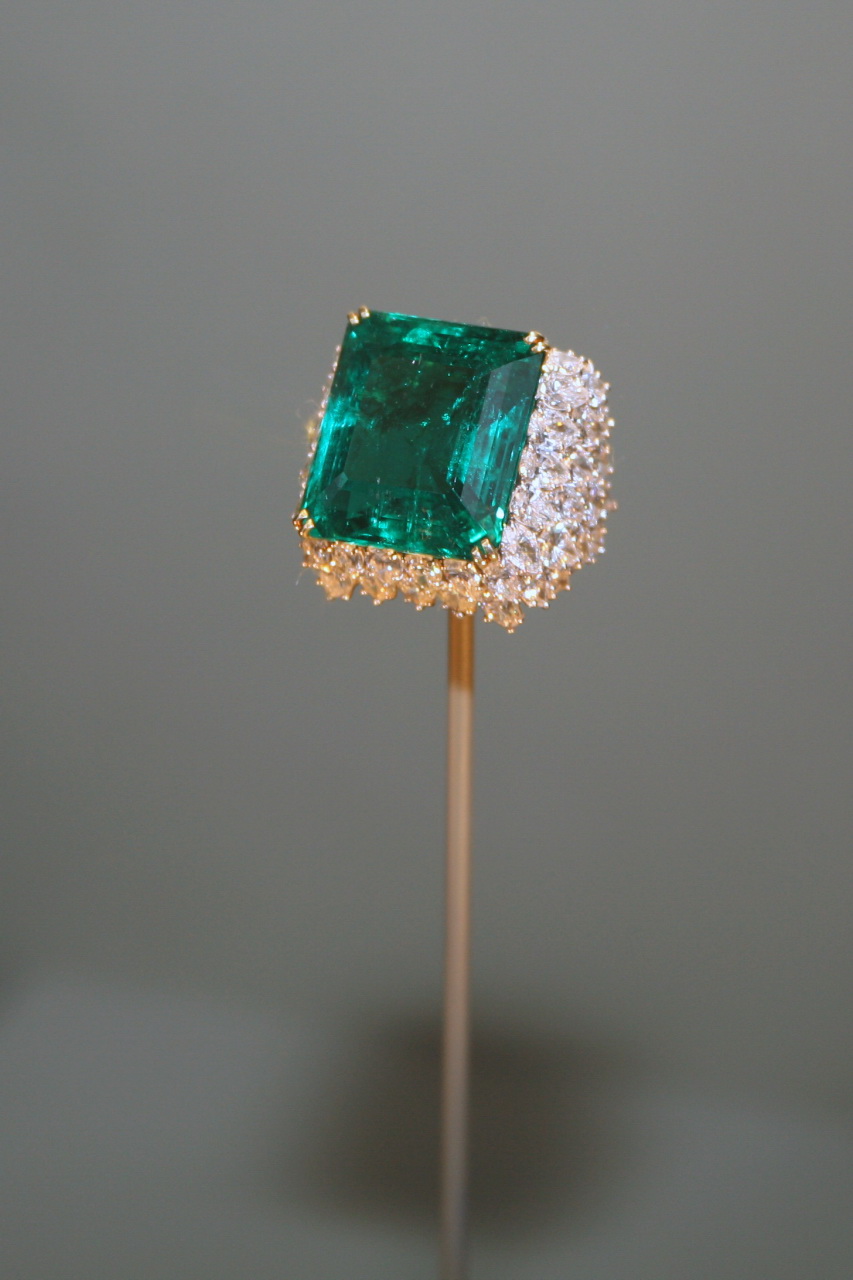
The Chalks’ donation column was already long. The Chalk Emerald, a 37.82-carat Colombian stone (originally 38.4 carats, recut down for the setting) wrapped in sixty pear-cut diamonds by Harry Winston, was given to the Smithsonian National Museum of Natural History in 1972. It sits today next to the Hope Diamond. Two years earlier Chalk had given a small fleet of his retired D.C. Transit PCC streetcars to the National Capital Trolley Museum in Colesville, Maryland, where some of them still run on a short loop for visitors. A 1789 Houdon plaster bust of Thomas Jefferson he had kept for decades went to auction at Christie’s in New York on May 29, 1987, and brought $2.86 million, a world record at the time for any pre-twentieth-century sculpture; it is on display today at Monticello.
By the early 1990s Chalk was in Moscow, advising the new Russian government on its first post-Soviet constitution by walking the drafting committee through how the American framers had revised their own.
He died at New York Hospital on December 1, 1995, of cancer, at eighty-eight. The next day’s Washington Post obituary opened the way most of his press did, calling him “the jaunty and flamboyant entrepreneur who became a center of controversy as the owner of Washington’s public transit system in the years before Metro.”
Local 689 walked again fifteen months after the seizure. The May 1974 Metrobus strike paralyzed downtown for three workdays, the new public agency’s first taste of a labor crisis it had inherited along with the buses. The drivers were the same, the union was the same, the routes were the same. Only the owner had changed.
The buses he bought from Wolfson and lost to WMATA are mostly gone. A few of the green, orange, and white Fishbowls survive in the hands of restorers, rolling out for the occasional bus roadeo or parade. They still say Arcticooler above the windows. The system they ran on still moves the city, just under different ownership and a different name.
The streetcars never came back.