Washington has been arguing about crowds and curfews again this spring. It is an old argument.
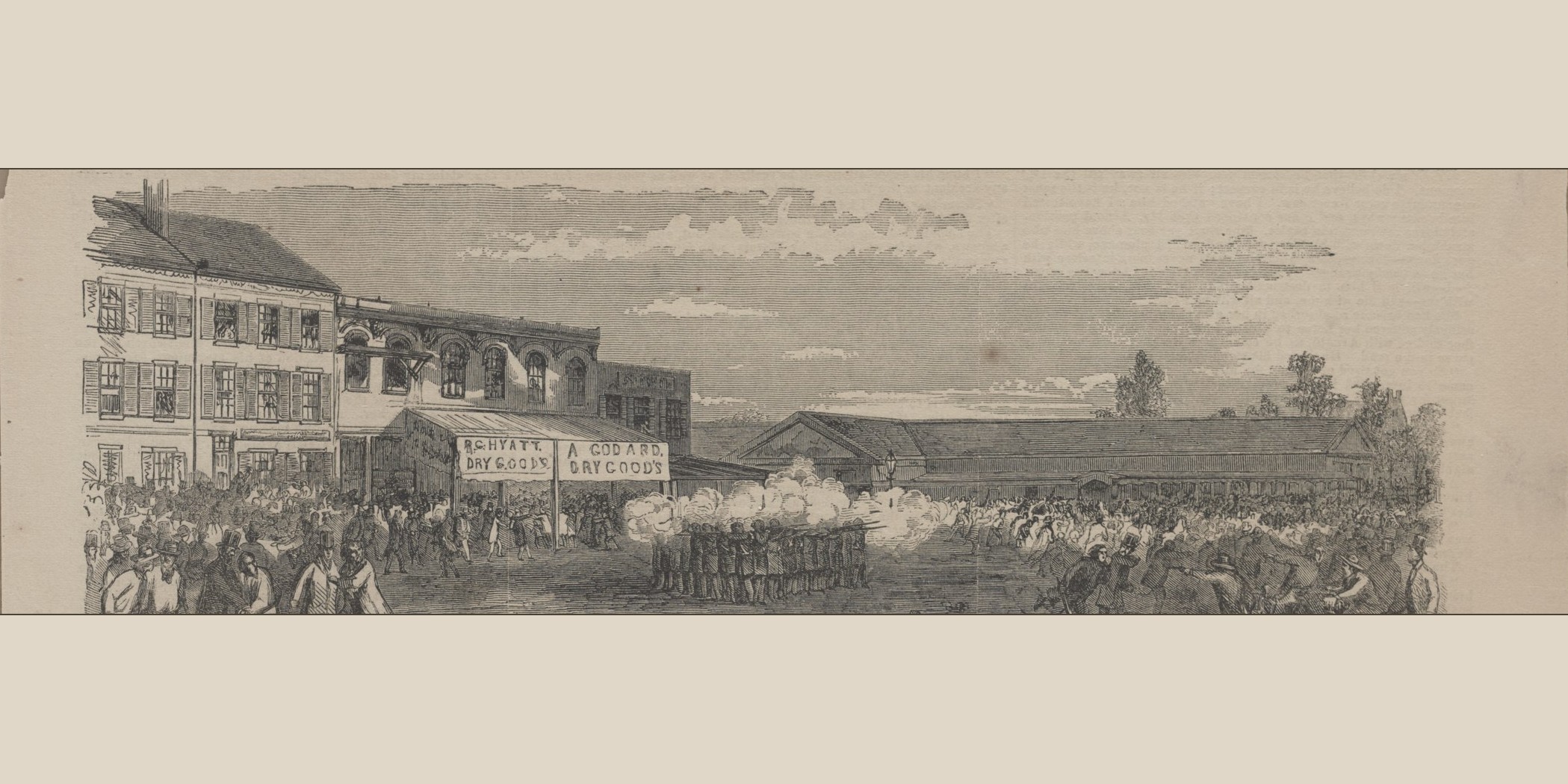
On Monday, June 1, 1857, a city election ended with a line of United States Marines firing a volley of ball into a crowd at a downtown market, while the white-haired commandant of the Marine Corps stood in front of a loaded cannon holding nothing but a cotton umbrella. By the time the smoke cleared, at least six men were dead.
Here is how a vote turned into one of the few days in American history when the Marines opened fire on civilians on home soil.
The election to-day
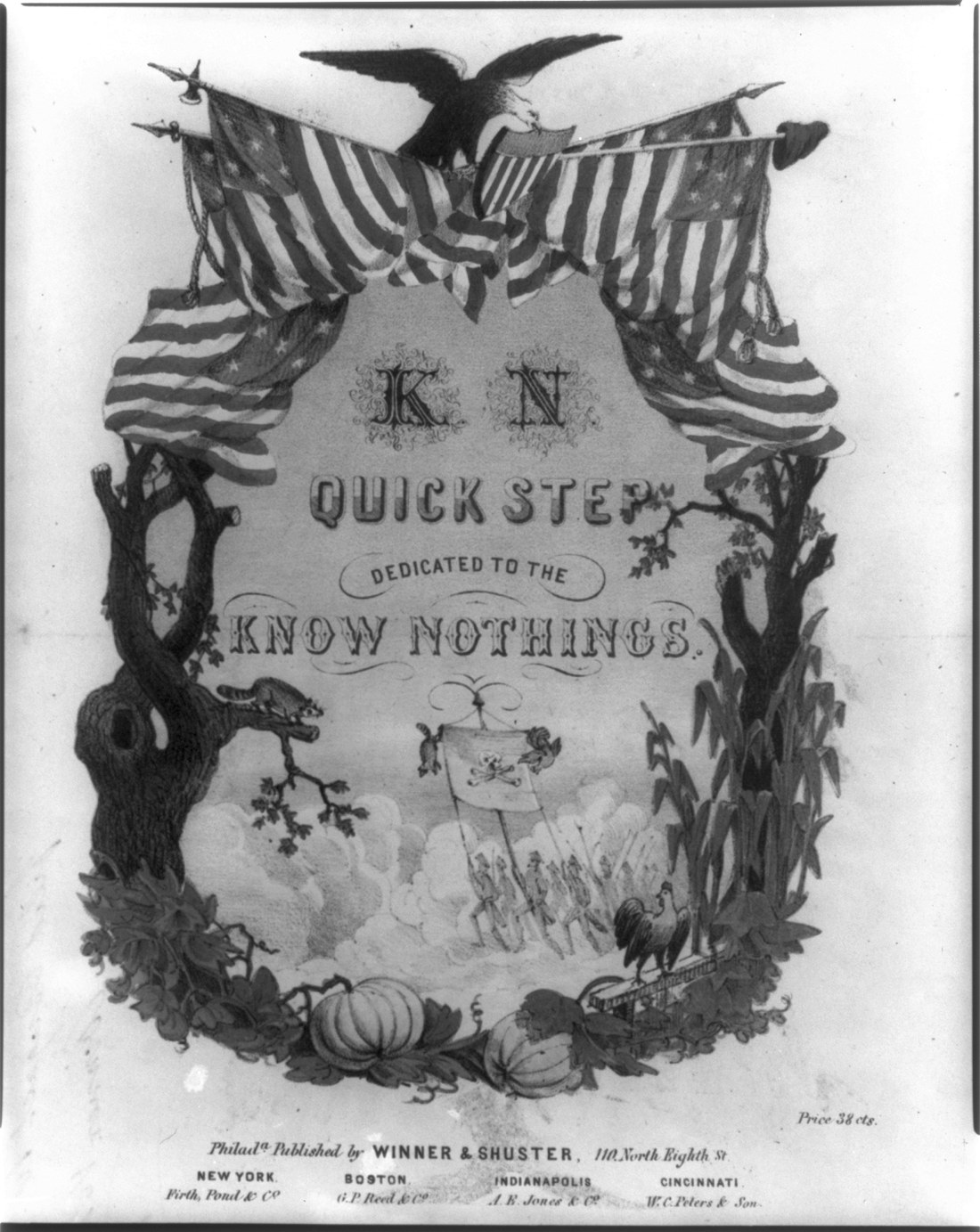
Washington in the 1850s had a nativist problem. The American Party, better known as the Know-Nothings because members claimed to “know nothing” when asked about their secret order, had built a following on contempt for Catholics and immigrants. The Irish and Germans pouring into the country were, to the Know-Nothings, foreign transgressors, and the party meant to keep them away from the polls.
They had muscle to back it up. In 1854 a band of Know-Nothings had crept up to the unfinished Washington Monument one night, pried loose a marble block donated by Pope Pius IX, and dumped it in the Potomac.
By 1857 the party was slipping. Mayor William B. Magruder, elected the year before by a thin coalition of Democrats, Republicans, and old Whigs, was no friend of theirs. So the Know-Nothings looked to Baltimore, where allied gangs had already proven what organized violence could do on an election day.
Wade in, natives
On the morning of the election, gangs of Baltimore toughs stepped off an early train. The most notorious of them were the Plug Uglies, a West Baltimore crew named for the stuffed “plug” hats they pulled over their ears like helmets in a brawl. The Rip Raps came too, and they linked up with local rowdies on the ground.
By nine o’clock they were working the line of voters at the poll opposite the Northern Liberty Market on Mount Vernon Square. The Evening Star, writing as the fighting was still going on, did not mince words about what the gangs had brought with them.
One man was armed with a large blacksmith’s sledge; another with a horse pistol of large dimensions; a third carried a miscellaneous assortment of revolvers, bowie knives, billies, an iron bar; while a fourth carried, besides a side pocket filled with convenient stones, brickbats, &c., a large billet of oak wood of sufficient weight to fell an ox.
They charged with the nativist battle cry the Baltimore gangs had made notorious, “Wade in, natives,” and the Star described stones and pistols going off at once, men trampled and beaten, the polls torn down. Around twenty people were hurt before the morning was out. Then the gangs moved on to a second polling place at 11th Street and Pennsylvania Avenue and started shooting there too.
The same paper put the question that was on every Washingtonian’s mind that day.
In the name of all that is dear to us as Americans how long is this state of things to be tolerated?
The mayor sends for the President
Magruder’s police were overwhelmed. So the mayor did something a Washington mayor could do that almost no other American mayor could: he wrote directly to the President of the United States, whose troops were sitting in barracks a few miles away. The Evening Star printed his appeal that evening.
Sir: Upon the representation of creditable citizens that a band of lawless persons, most of them not residents of this city, have attacked one of the polls at which the annual election is now in progress, and after maiming some twenty good and peaceable citizens, have driven the remainder from the polls, have dispersed the commissioners of election, and threaten further violence on any attempt to carry on the election, I respectfully request you to order out the company of United States marines now in this city.
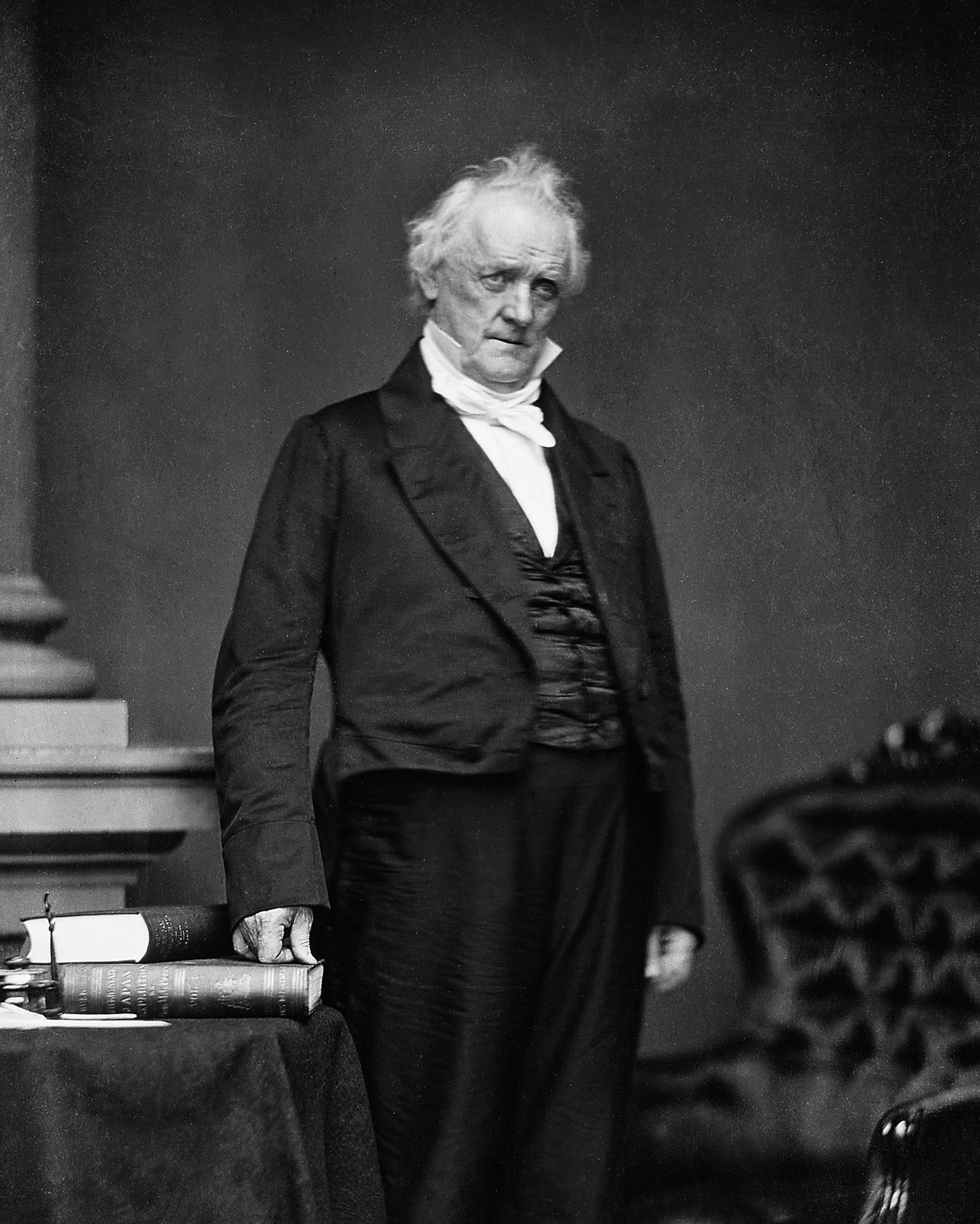
James Buchanan, three months into his presidency and famous for dithering over slavery, did not dither over this. He ordered out the Marines.
Two companies, 110 men under Captain Tyler, marched up from the Marine Barracks at 8th and I Streets SE to City Hall, took their orders from the mayor, and headed for Mount Vernon Square. All along the route the rioters jeered and threatened them.
The cannon and the umbrella
The gangs had a surprise waiting. They had gotten hold of a small brass cannon, a swivel gun they had grabbed from a fire-engine house near the Navy Yard, dragged it down Capitol Hill and back up 7th Street, and planted it at the market house, which they had made their headquarters.
When the police drew the charge that afternoon at City Hall, the Star reported the gun had been packed with eight pavement stones and a haul of rifle balls and shot, ten or twelve pounds of metal in all. Pointed down a street full of Marines, it would have been a massacre.
A delegation walked over to Captain Tyler with a message: pull the Marines back, or the cannon goes off into their ranks.
What happened next is the part nobody forgets, and it is in the next day’s Star, not just in legend. Brigadier General Archibald Henderson, the seventy-four-year-old commandant of the entire Marine Corps, was on the scene in plain clothes. He was not even formally in command. He walked straight up to the gun.
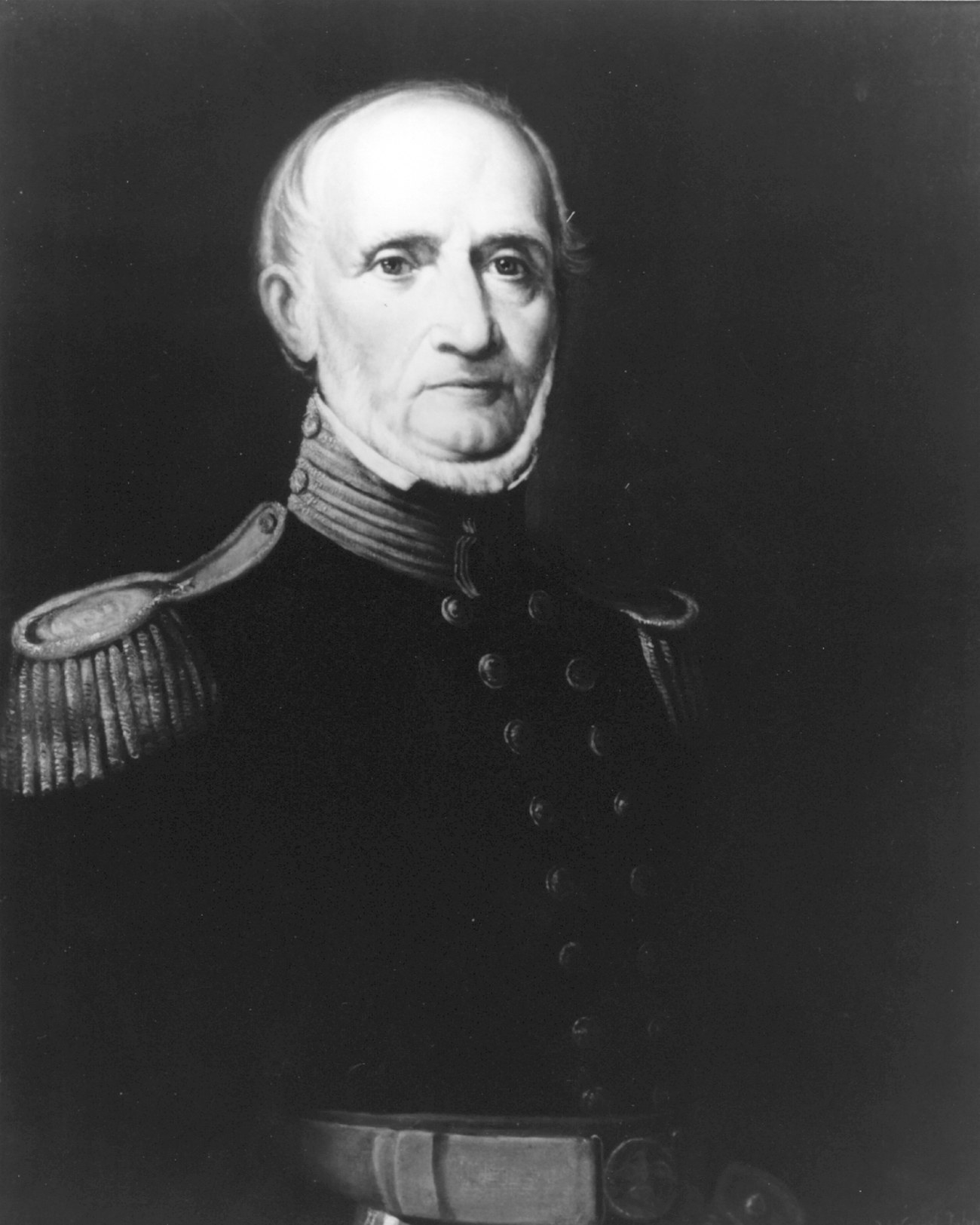
General Henderson deliberately went up to the piece and placed his body against the muzzle, thereby preventing it from being aimed at the Marines, just at the moment when it was about to be discharged. The General was dressed in citizen’s dress and armed with nothing more deadly than a cotton umbrella. He addressed the rioters, saying, “Men, you had best think twice before you fire this piece at the Marines.”
Think twice before you fire the cannon. Said by an old man leaning on an umbrella, with the muzzle against his ribs.
A volley of ball
Henderson’s nerve bought a few minutes, not peace. The mayor told the crowd the soldiers were there only to keep order, and the Marines advanced on the gun.
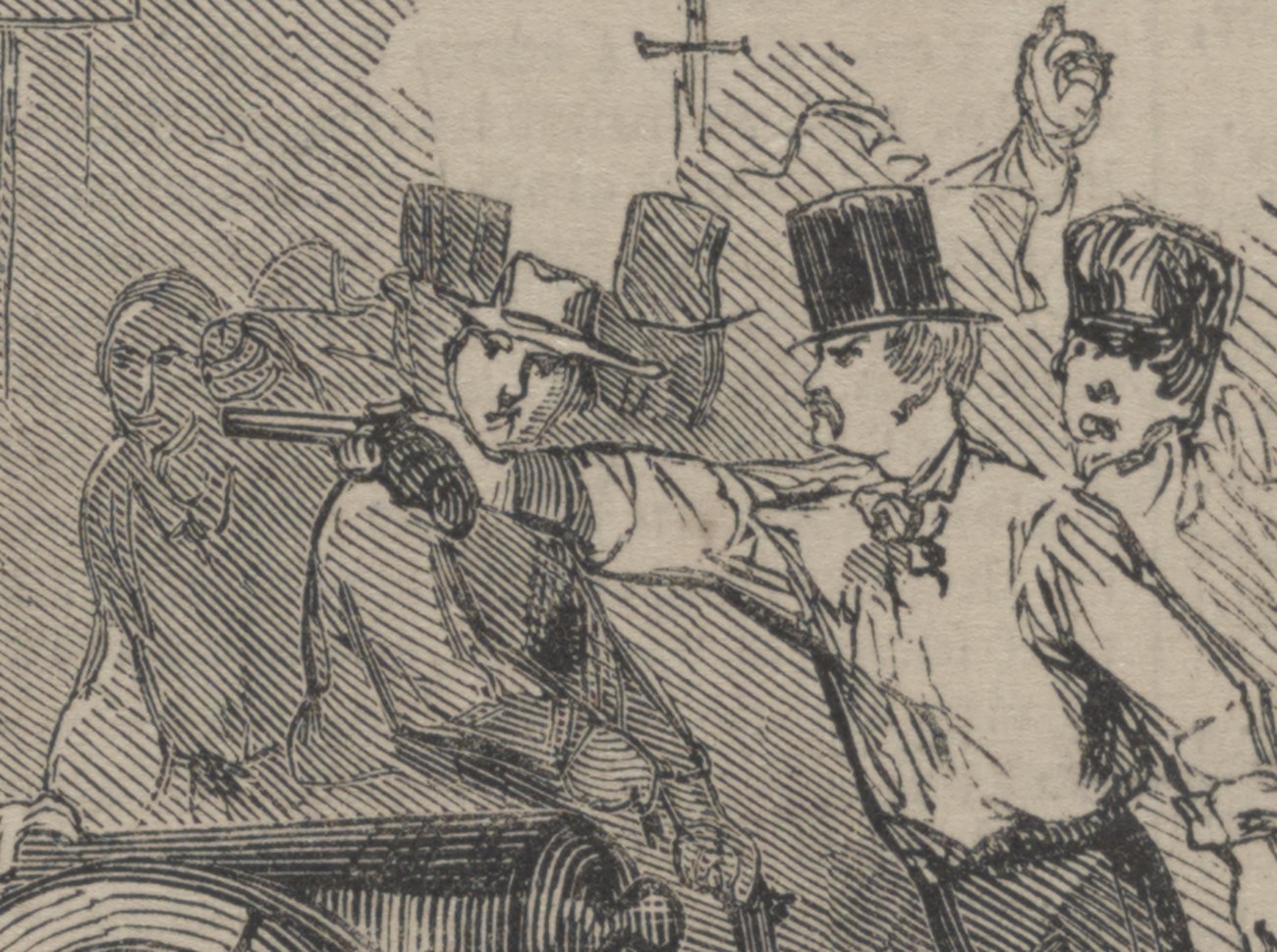
The rioters answered with pistols. One shot caught a young Marine, many of them raw recruits that day, in the cheek.
That was the breaking point. The Star recorded what came next in two flat sentences.
The latter, however, moved steadily on, seized the cannon, and then, due warning having been given, replied to the pistol shots upon them by a volley of ball. The Plug Uglies then scattered, firing shots as they did so from behind corners.
Then the worst line of the day.
After the smoke cleared away the terrible sight was presented of four or five persons in the agonies of death, and several others fearfully wounded.
The dead and dying were not all gang members. Francis M. Deems, a clerk in the General Land Office, was watching from a second-story window when he was shot and killed. His colleague, Colonel William F. Wilson, stood at the same window, took a ball in the arm, and lived.
Christian Lindig, a young German immigrant, died of his wound during the night. A grocery keeper named Alston was shot through the head. A Black waiter the paper could only list as “a colored man shot dead, name not known” was among the dead, later identified as Ramy Neal.
By every count at least six were killed. Some accounts run as high as ten. Dozens more were wounded.
A coroner’s inquest later found that neither General Henderson nor any officer had given the order to fire. The men had fired on their own.
After the smoke
The volley ended it. The Marines marched to the railroad depot to head off any reinforcements coming down from Baltimore, and the reinforcements, hearing that federal troops were in the streets, turned around and went home.
The reckoning came in print. The New York Times called it “one of the most daring insurrectionary riots of bloodshed and murder that ever disgraced a city.” A Senate committee, looking at Washington the next year, found a capital that had lost control of itself, where “riot and bloodshed are of daily occurrence” and “not infrequently the offender is not even arrested.”
The Know-Nothings did not survive the decade. Slavery swallowed every other argument, the party fell apart, and its antislavery wing drifted into the new Republican Party.
The historian David Grimsted, looking back, saw something darker in what the Marines had done. The hardest blow, he wrote, fell where no fighting was going on: “a slaughter of Americans peaceably voting by marines ordered out by a proslavery president.”
Washington would keep reaching for troops and curfews to settle its disorders, right up through the 1968 riots more than a century later.
An old fireman remembers
The Post was not around to cover any of this. It would not print its first edition until 1877, twenty years too late. But in March 1901 it caught up with a man who had been in the city that day.
Ben Beveridge was an old volunteer fireman, from the days when the District’s hose companies were as eager to fight each other as to fight fires. What set him talking, the paper said, was the recent death of George W. McElfresh, an old comrade who had been shot in the riot. Beveridge had spent the election at a poll over by City Hall and only heard about the row at the market after it was over, the way most of Washington did.
By 1901 the story had hardened into something close to legend. Here is the cannon, as he told it.
Maj. Henderson, who was in command, marched up to this cannon, and with an umbrella, drove the Northern Liberties fellows away from it.
Forty-four years on, Beveridge had shrunk the commandant of the Marine Corps down to a major. The umbrella he remembered exactly right.
Then the volley, and the man it was supposed to have killed.
First they fired a volley over the market-house, and several people over on the other side got shot in that way. I believe George McElfresh was one of them.
McElfresh’s name had run in the next morning’s lists of the dead. He was not dead. He lived another forty-four years, long enough that it was his death in 1901, not the bullet in 1857, that finally got the old fireman talking.
What’s there now
The market that gave the square its rough reputation did not last either. In 1872 the city ordered it razed, and Alexander “Boss” Shepherd sent a crew to tear it down in the dead of night, a demolition that killed two people when a wall came down. A new Northern Liberty Market later rose at 5th and K, while the old site became a park.
There is a quieter coda. Witnesses to 1857 grew so weary of election-day terror that some were willing to give up the vote entirely. When Congress stripped Washington of its elected government in 1874, an arrangement Boss Shepherd is bound up with, the memory of mobs at the polls made the loss easier to swallow.
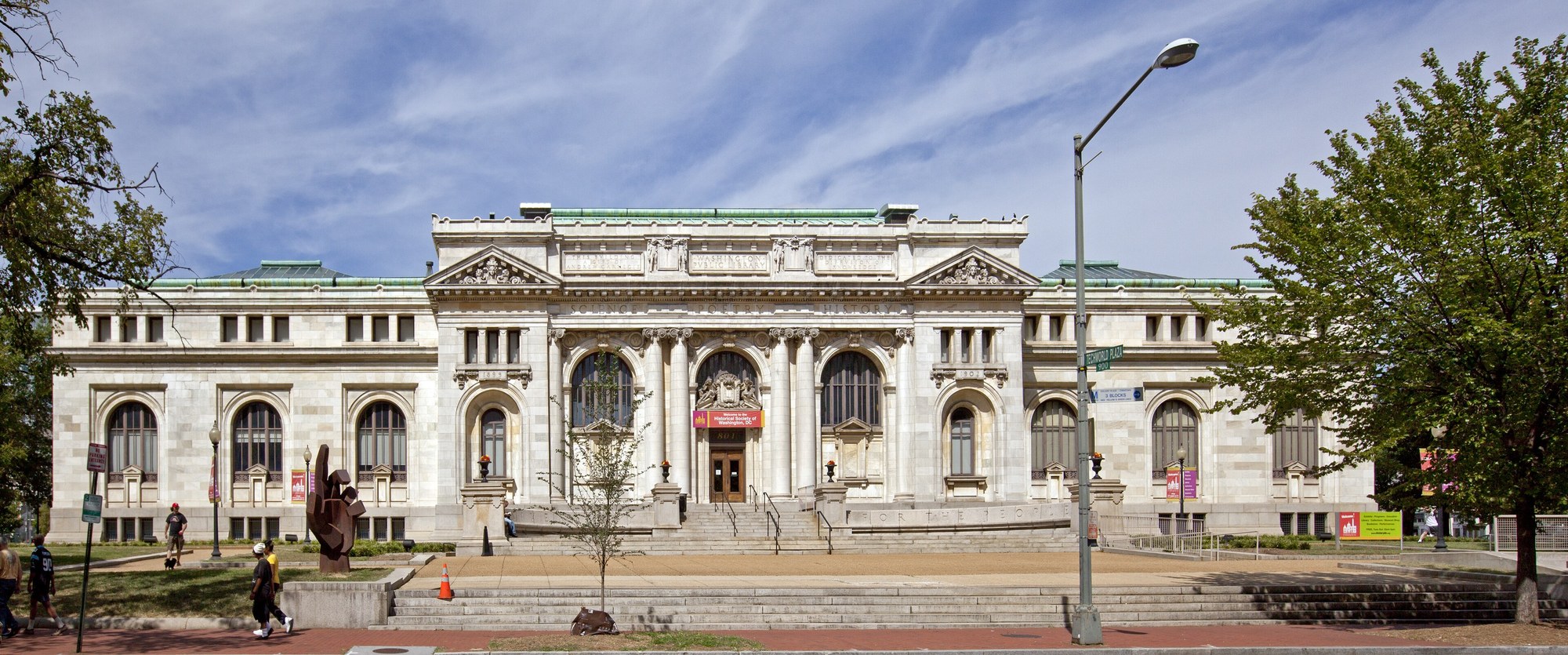
Today Mount Vernon Square is the genteel home of the 1903 Carnegie Library and the DC History Center. You can stand on the spot where the cannon sat and never know a Marine once fired into a crowd there over a vote.