
The Washington skyline you can see right now, the low and unbroken one, the one that lets the dome of the Capitol read against the sky and the Washington Monument stand alone in a flat field, was not handed down from the Founders. It was written into law in 1899 because of a single building on Q Street.
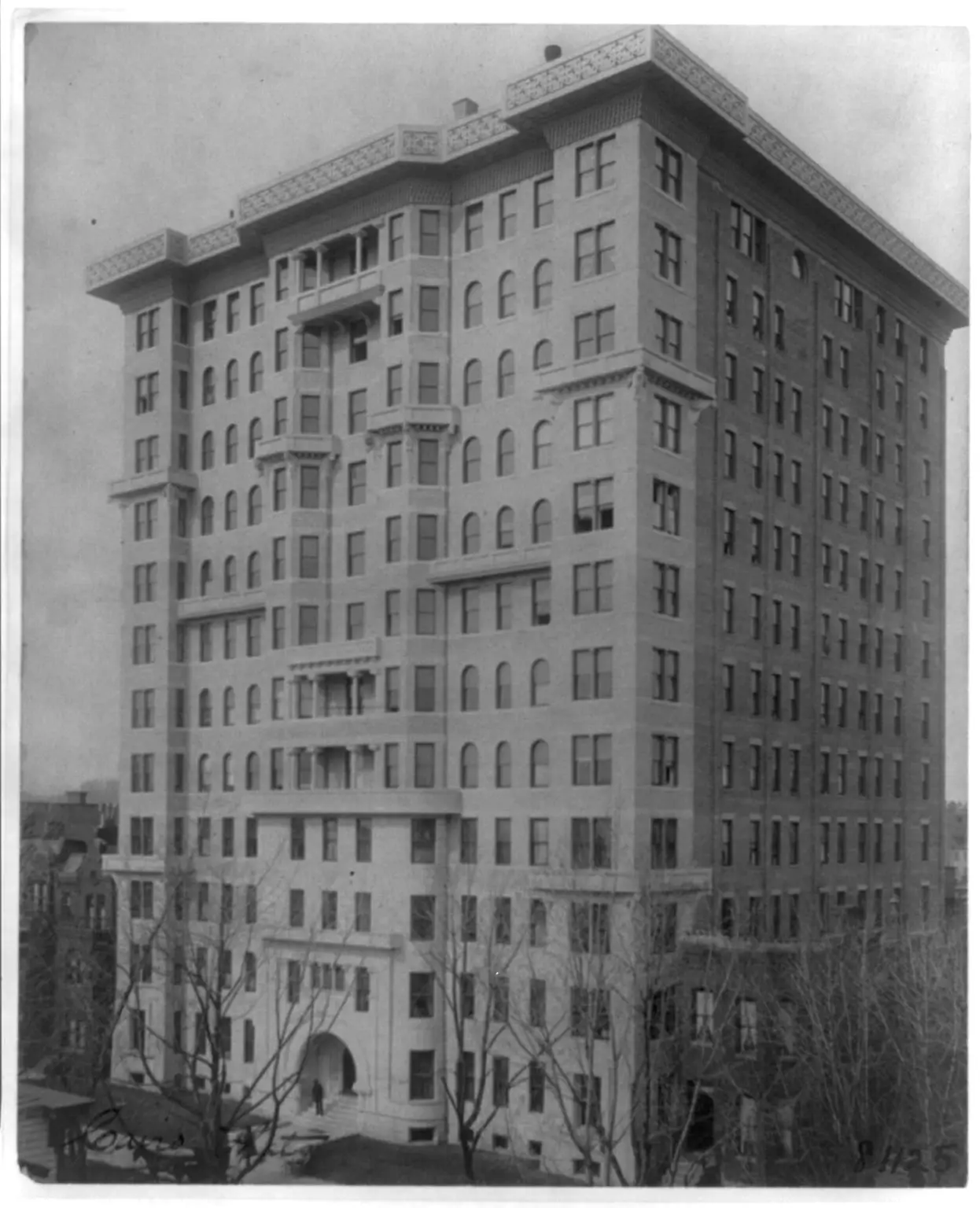
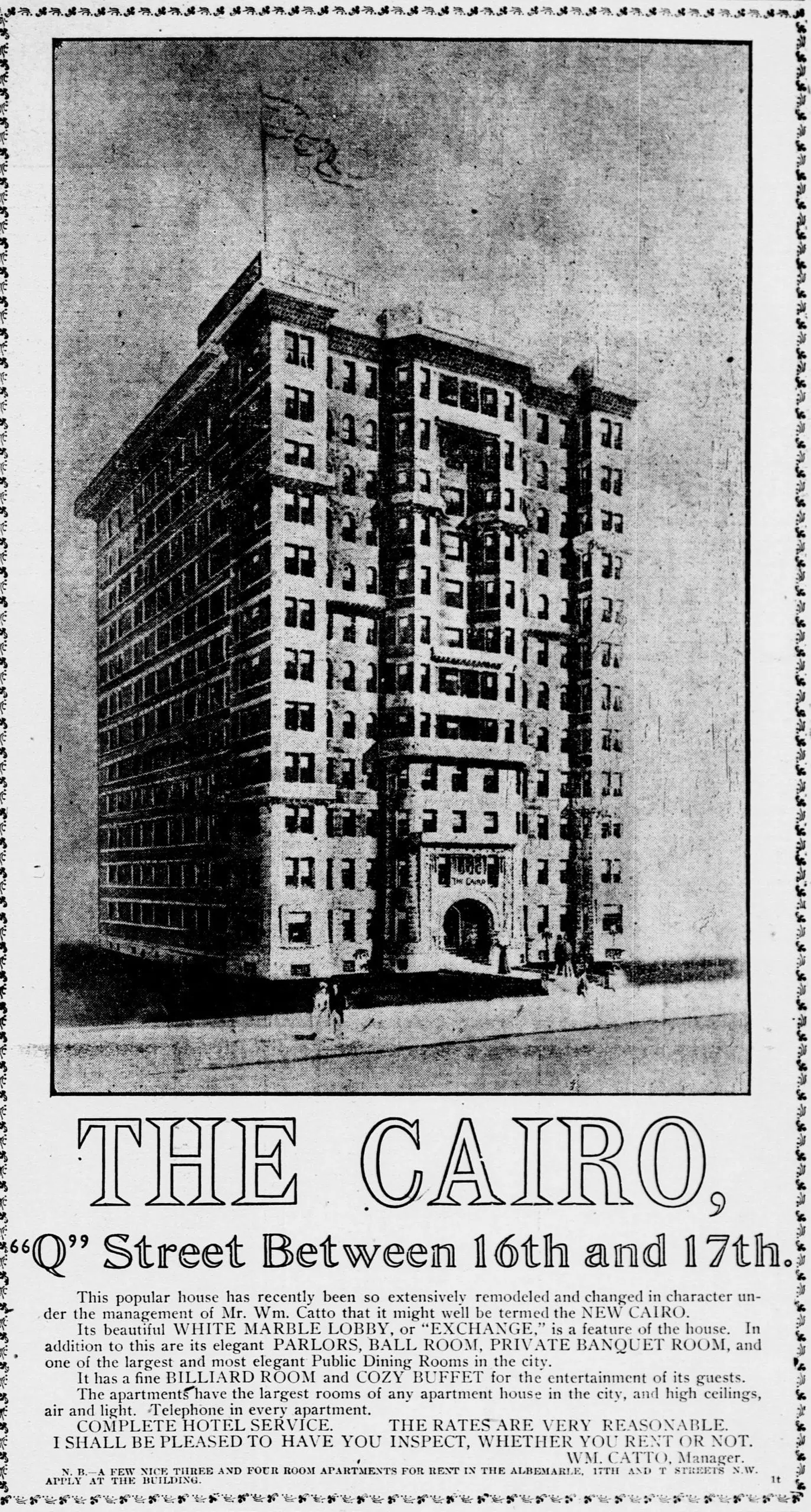
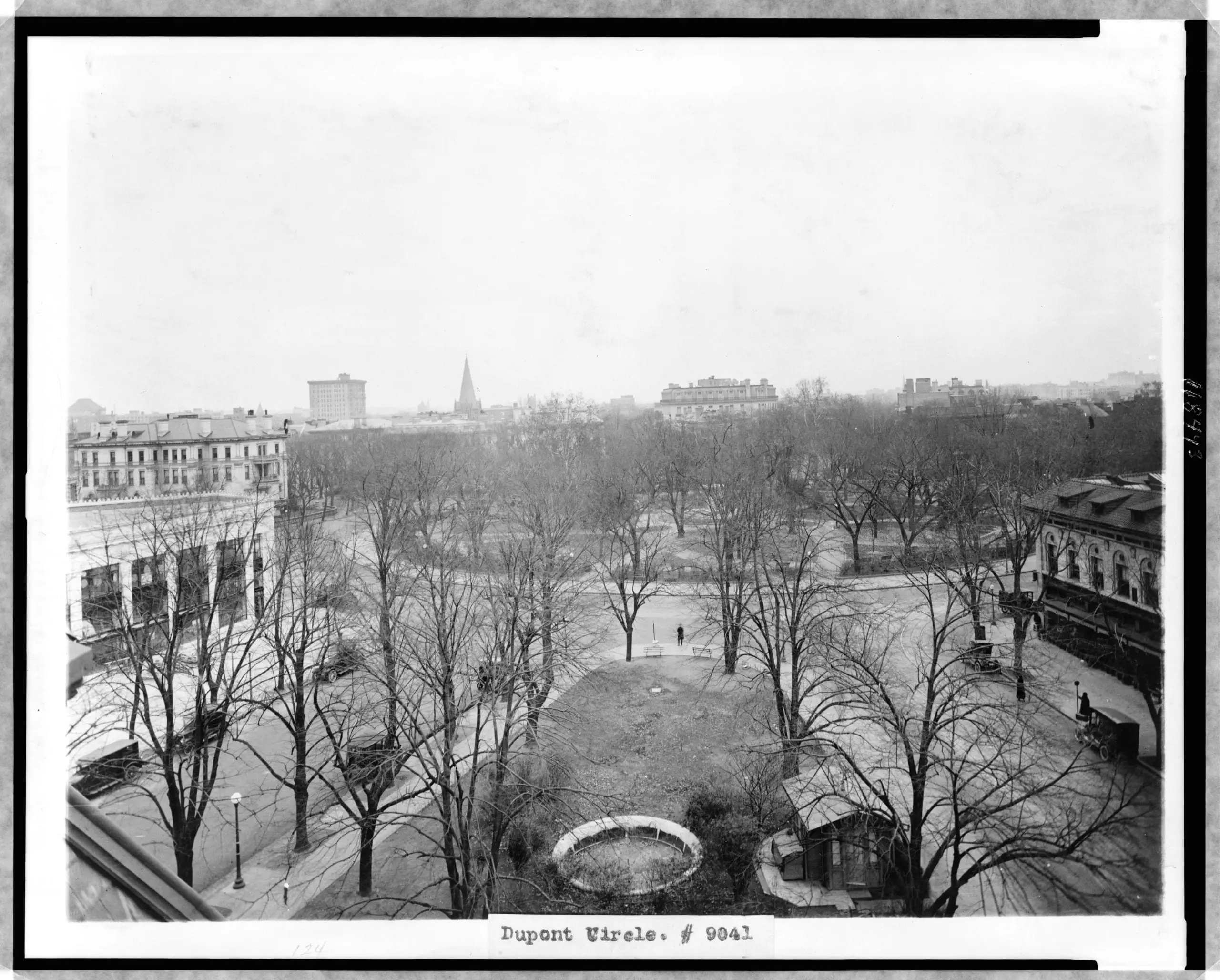
That building is still there. Twelve stories of brick and Moorish detailing at 1615 Q Street NW, two blocks above Dupont Circle. Today it is condominiums. In 1894 it was a scandal.
The neighbors called it Schneider’s Folly. Five years later, Congress made certain no one could build another one.
A Twelve-Story Tower in a Three-Story City
The Cairo opened in 1894 and stood 164 feet tall. To understand why that mattered, look at what surrounded it: rowhouses, mostly three stories, a few four. The Cairo was twelve. It was, by a wide margin, the tallest private building in Washington.
The Library of Congress documentation in the Historic American Buildings Survey describes the structure with bureaucratic understatement. Twelve floors, 164 feet, “Eastern” decorative motifs, “the tallest private building in the city.” That last clause is doing a lot of work. The Cairo wasn’t a little taller than its neighbors. It was four times taller.
When you stand on Q Street today the building still hits you that way. It rises out of the rowhouse line as if it simply did not get the memo that the rest of the block was sticking to a treaty.
In 1894 there was no treaty yet. That’s the point of the story.
The Young Napoleon of F Street
The man who built it was named Thomas Franklin Schneider. He was thirty-five years old. He had been born in Washington in 1859 to German immigrant printers. After high school he had gone to work for the architectural firm of Adolf Cluss, which was as good a foundation as the city offered (Cluss designed the Smithsonian Arts and Industries Building). By the time he was twenty-four Schneider had opened his own firm.
Within a decade he was being called “the young Napoleon of F Street,” a nickname that mocked his ambition and acknowledged his speed. Between 1888 and 1906, Schneider built nineteen apartment houses in DC. He also built his own fifty-room mansion at 18th and Q. He built rowhouses by the dozen up and down the 1700 block of Q. He was the architect, the developer, the financier, the contractor, and frequently the marketer all at once.
In 1893 he traveled to Chicago for the World’s Columbian Exposition. There, on the shore of Lake Michigan, he saw the White City: Daniel Burnham’s plaster fantasia of classical buildings illuminated at night by Edison’s bulbs. Washington had spent the previous years lobbying to host that fair itself and lost. Schneider came home from Chicago and decided he was going to build something just as audacious right here.
The Cairo was the result.
Schneider’s Folly
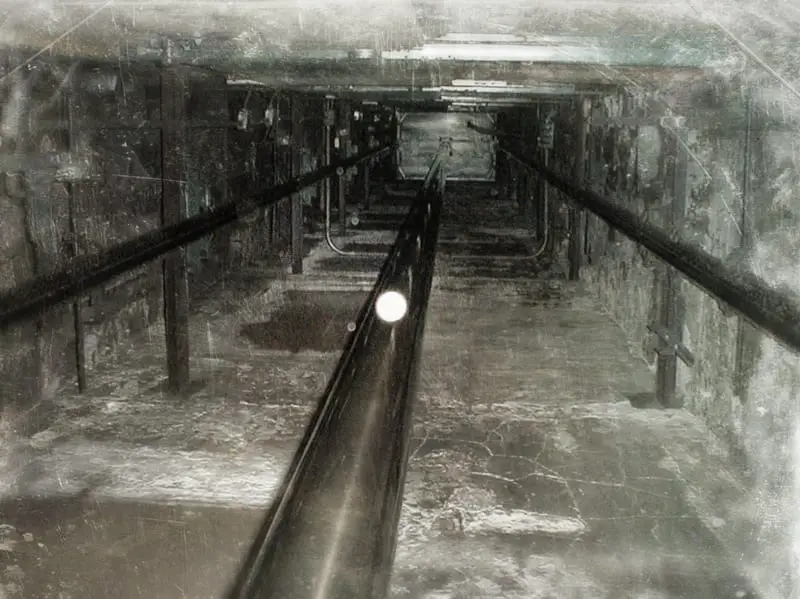
He took out the building permit on February 19, 1894. He picked a quiet block of Q Street, two blocks north of Dupont Circle, and went up. Fast. The building was finished by December of the same year. By October the elevators were already running, which we know because on October 7, 1894, a Pennsylvania steamfitter named Albert Deal fell 120 feet down one of the elevator shafts and somehow survived. The Washington Times reported it the next day, including the detail that he was “precipitated from the top to the bottom” of the shaft.
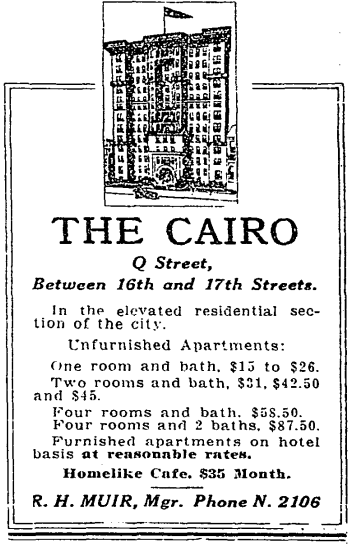
The total cost was $425,000. In late nineteenth-century dollars that was a fortune. The building was steel-framed, one of the first steel-framed structures in Washington. It was lit entirely by electricity, which still struck most builders as a stunt. Every apartment had a telephone. The lobby had marble floors and pillars and a fountain. The corners of the front entrance had elephants with interlocking trunks carved into the stone, and griffins watched the cornices, and the fourth floor was decorated with what the National Register, in a phrase that does not appear in many federal documents, calls “dragon and dwarf crosses.”
Schneider called it the Cairo. The neighbors called it Schneider’s Folly.
A twelve-story apartment house in Washington is gratuitous and inexcusible, and denotes a deeper dye of depravity than it would in a more crowded city, where land is not to be had.
That is Architectural Record, the leading professional journal of the field, reviewing the building. The same review called it a “revolting notion” and complained that it was both ugly and badly built. Other architects piled on.
But the architects were not what mattered. The neighbors were what mattered.
The Five-Year Backlash
The complaints from Dupont Circle were a stack of overlapping fears. The Cairo blocked the light. It blocked the views. It was out of scale with everything around it. It was going to fall over in a strong wind. It was going to catch fire and take the entire block with it, because no fire department in 1894 had ladders that could reach the eleventh floor.
That last fear was real. The 1893 Columbian Exposition that had inspired Schneider in the first place burned to the ground in pieces over the year and a half after it closed. The image of plaster towers going up in flame was fresh in the public mind. The Cairo was not plaster, but it was tall, and the firefighters of the District openly admitted they could not protect it.
In 1895, according to the DC Preservation League’s record on the building, an adjoining neighbor named Mr. Nolan filed a $10,000 lawsuit against the Cairo’s owners “for loss of sleep and comfort,” citing around-the-clock blasting from machinery in the basement. He lost the suit. The blasting continued. So did the petitions.
The DC Commissioners moved first. Later in 1894 they passed local regulations capping building height at ninety feet on residential streets and one hundred and ten feet on commercial avenues. That was a start, but commissioners’ rules were vulnerable. What the neighbors wanted was an act of Congress.
They got it. On March 1, 1899, the United States Congress approved “An Act to Regulate the Height of Buildings in the District of Columbia,” better known as the Height of Buildings Act of 1899. The bill capped residential streets at ninety feet, business streets at one hundred and ten feet, and the widest business avenues at one hundred and thirty feet. It required full fireproof construction above seventy-five feet. It made every existing rooftop in Washington a kind of legal ceiling.
The Senate report that accompanied the bill, S. Rep. 1532, was mostly about fire. It quoted the country’s fire chiefs:
It would seem that the fire chiefs in the large cities who have had experience with high buildings are agreed that it is absolutely impossible for them to successfully fight flames over 85 feet above the ground with the fire apparatus now manufactured, as the pressure is so great that no hose now made can stand the strain and the men are unable to handle the hose.
Eighty-five feet. The Cairo, at 164, was nearly twice that.
There is a persistent local myth that DC’s height limit exists to keep buildings from rising above the Capitol dome. That is not what the law says, and it is not what the Senate and House reports talk about. The 289-foot Capitol dome is not mentioned anywhere in the legislative record. The cap is about water pressure and ladders. It is about a fire chief in 1898 saying: we cannot save you above eighty-five feet, so do not build above eighty-five feet.
The law was amended in 1910 and refined again across the twentieth century. It still controls the city’s silhouette. It is the reason the K Street tower line is flat. It is the reason the Capitol dome reads against the sky. It is the reason Washington still looks like Washington.
The Cairo is the reason the law exists.
A Hotel for Queens, Senators, and Painters Who Fell from Ropes
Around 1900 the building was rebranded as the Cairo Hotel and the architectural enemy turned into the social center of the neighborhood. The grand ballroom was where high-society Washington met. According to a 2003 Metro Weekly feature, the residents and guests over the decades included F. Scott Fitzgerald and Thomas Edison. Foggy Bottom’s Lombardy Apartments at 20th and Pennsylvania would trace a similar apartment-to-hotel arc a generation later.
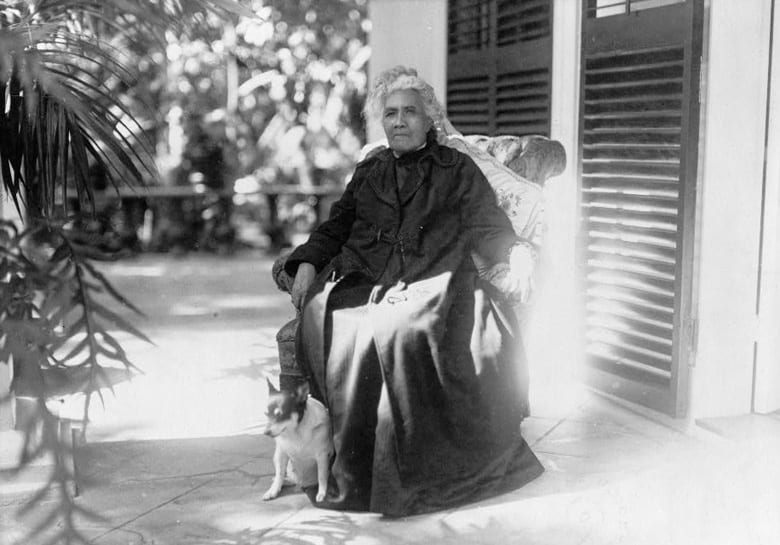
The most famous resident may have been Queen Liliuokalani of Hawaii, who arrived in early 1897 in a final attempt to recover her throne from the Americans who had toppled her kingdom in 1893. She moved into a tenth-floor suite at the Cairo and lived there for about five months while she lobbied President Cleveland and wrote her memoir, Hawaii’s Story by Hawaii’s Queen. She did not get the throne back.
She wrote about the move in her memoir:
On or about the 14th of February, I moved with my party to the large thirteen-story building on Q Street, N. W., known as “The Cairo.” Its newness and immaculate cleanliness impressed me favorably at once. My rooms were in the southwest corner, from which I had a glorious view over the country and down the Potomac.
Queen Liliuokalani, Hawaii’s Story by Hawaii’s Queen (1898)
She had counted twelve floors as thirteen, possibly because the basement was occupied. The view she described still exists.
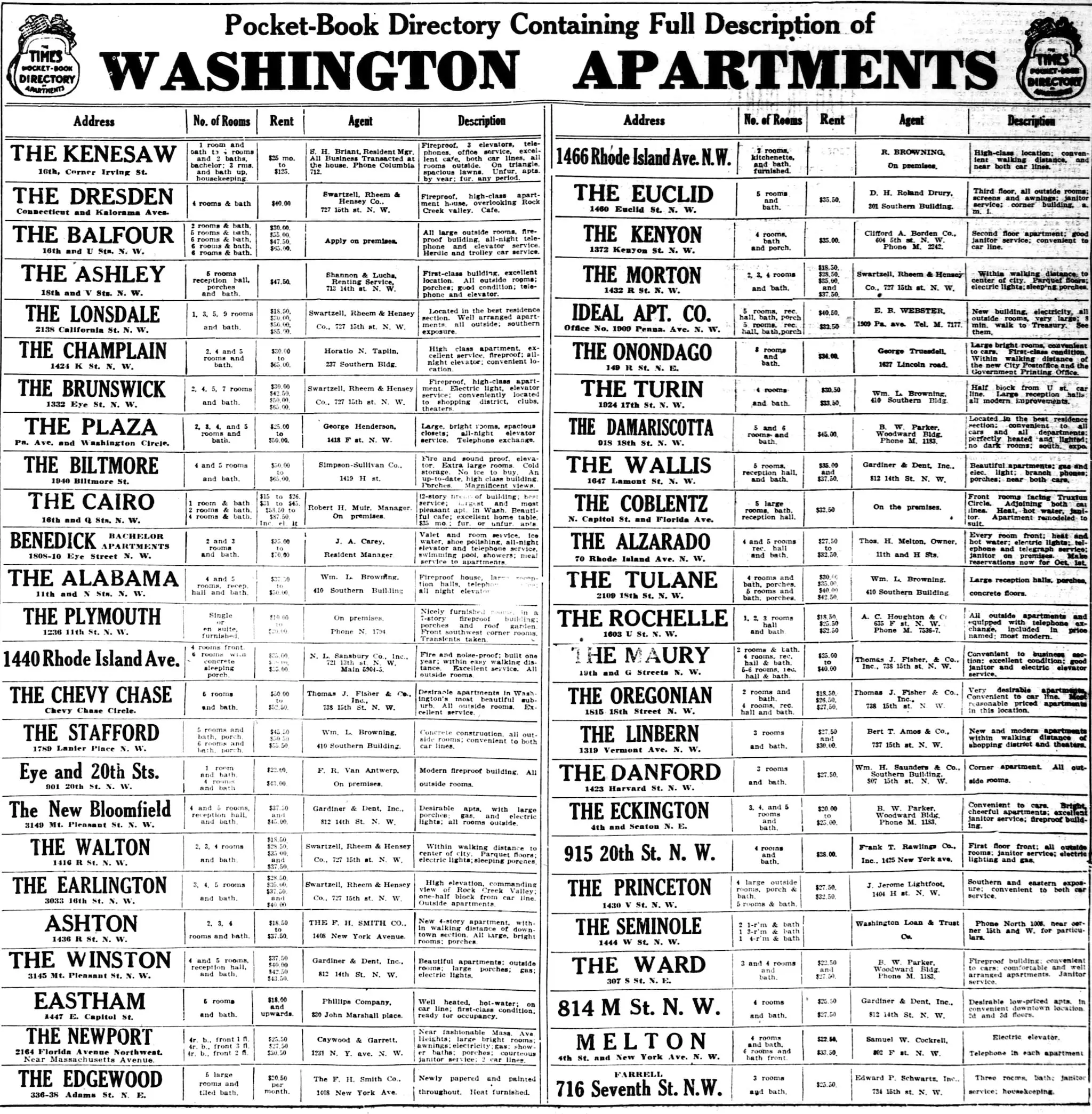
The Cairo also got a reputation, which it would not entirely shake, for absurd and occasionally fatal news. In February 1905 a painter named J. Frank Hamby fell to his death when the ropes supporting his work platform broke during a labor dispute, and the Washington Post spent weeks running articles about whether the ropes had been cut with acid. They had not. It was a grand jury matter for a while regardless.
In June 1906 Congressman Rufus E. Lester of Georgia, a sixty-six-year-old Democrat who lived at the Cairo, went up to the roof to look for his two grandchildren. He missed his footing, fell about thirty feet through a skylight, and landed on the eleventh floor with both legs broken. He died of his injuries.
In November 1940 a private party at the building released five hundred canaries to sing under the chandeliers in the ballroom. There was also a bowling alley. There were stables on the block. In January 1897 a panicked horse from a French embassy carriage impaled itself on the iron fence at the White House and was lifted off, calmed, and led to the Cairo stables to recover. The manager who ran the place in the 1910s kept a much quieter desk than the one that came after him.
It was that kind of place.
The Slide Into the 1960s
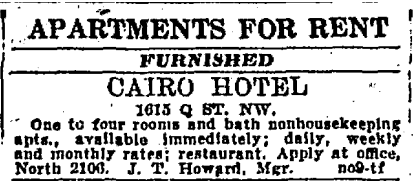
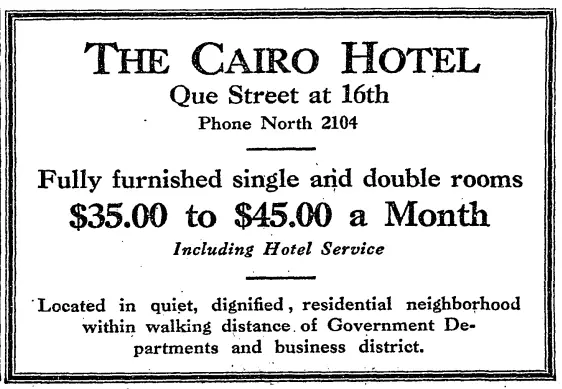
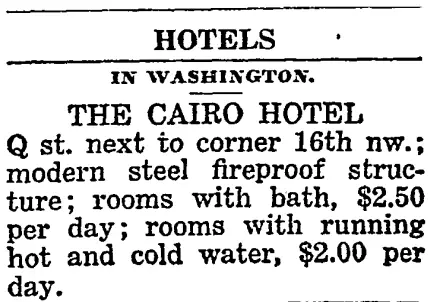
The Cairo went through its golden era and out the other side. The jazz-era advertisements kept selling the place as the elegant address it had once been, with rooms going for two dollars a day, but the elegance was thinning. It was sold in 1957 as a 267-room hotel and the new owners announced a $100,000 renovation. By the 1960s the renovation had not happened. The building filled with squatters, drug users, and, by some reports, feral dogs. In June 1964 the FBI tracked a twenty-four-year-old escapee from the DC workhouse to the Cairo. In 1966 the District Department of Health considered leasing the place as a rehabilitation center for alcoholics.
The grand ballroom was at one point a venue for clandestine drag shows. Schneider’s Moorish fantasia had become the kind of building you walked past quickly.
It was rescued by an architect named Arthur Cotton Moore in 1974, who led a renovation that pulled the Cairo back from collapse. In 1979 it was converted into condominiums. In 1994 it was added to the National Register of Historic Places. A 2007 fire emptied the building of about four hundred residents but did not destroy it. A $2.1 million repointing project, paid for by the condo owners, ran from 2007 to 2009.
Still There
Today, if you look up from Q Street between 16th and 17th, you can see them: the elephant heads on the first floor with their trunks knotted at the entrance arch, the griffins on the cornices, the dragons on the fourth floor, the twelve floors of brick climbing into the only piece of Washington skyline that was ever supposed to look that way. None of the buildings around the Cairo go anywhere near as high. None of them ever will.
Schneider died in 1938. His mansion at 18th and Q was demolished in 1958. His row of Q Street houses still stands. So does the Cairo, which he had moved into himself, abandoning the mansion.
The neighbors won.
The tower remains.
Every apartment house built in Washington since 1899 has lived inside the height limit the Cairo caused, including the low-rise, wide-footprint General Scott Apartments on Scott Circle.
We dug this one up with help from AI and checked it against the original records below. Here’s how we use AI.