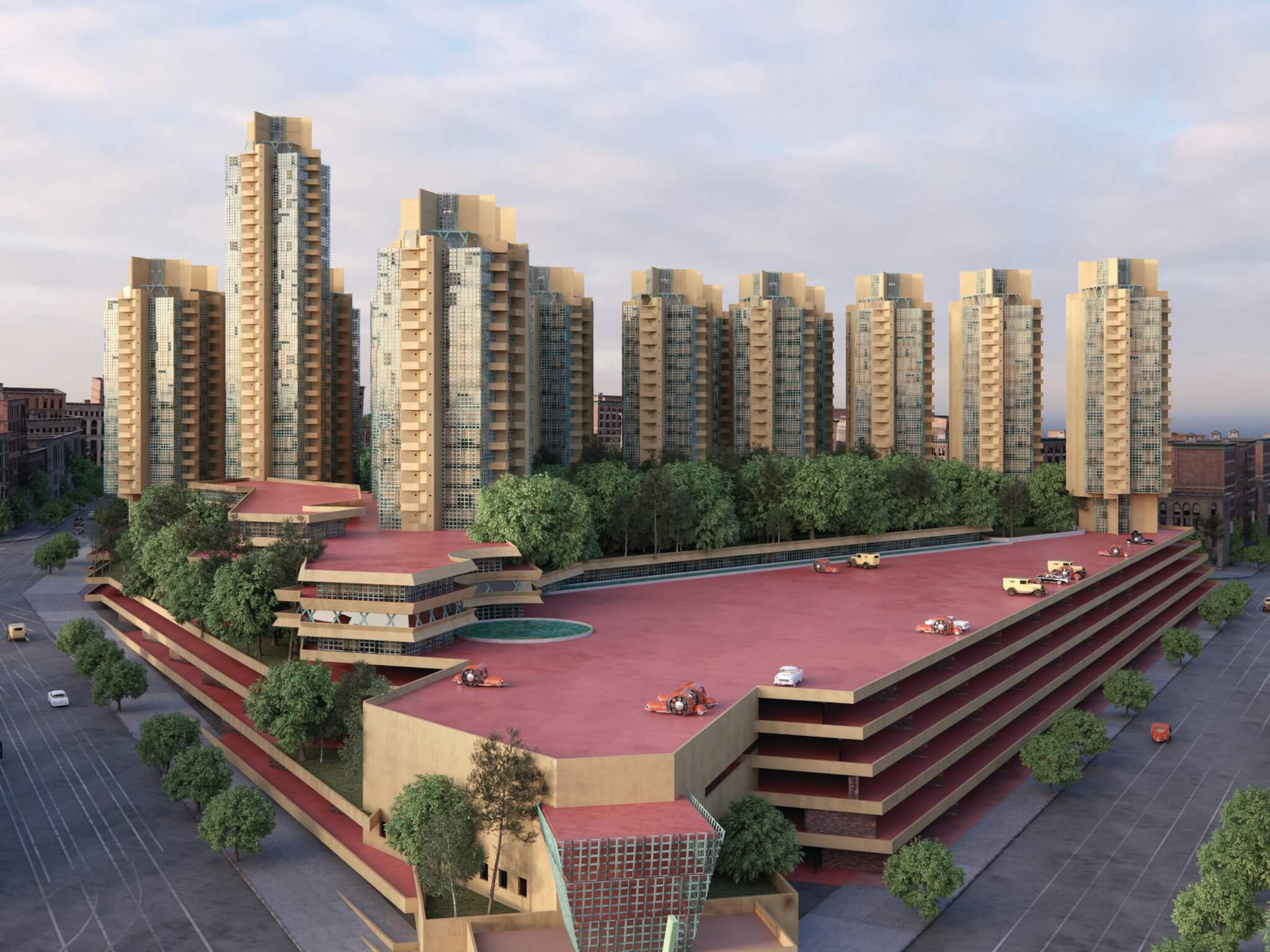
Frank Lloyd Wright’s Crystal Heights: DC’s Lost Glass City
Frank Lloyd Wright drew Washington a glass city of twenty-one towers on a Connecticut Avenue hill. The height limit refused to let it rise.
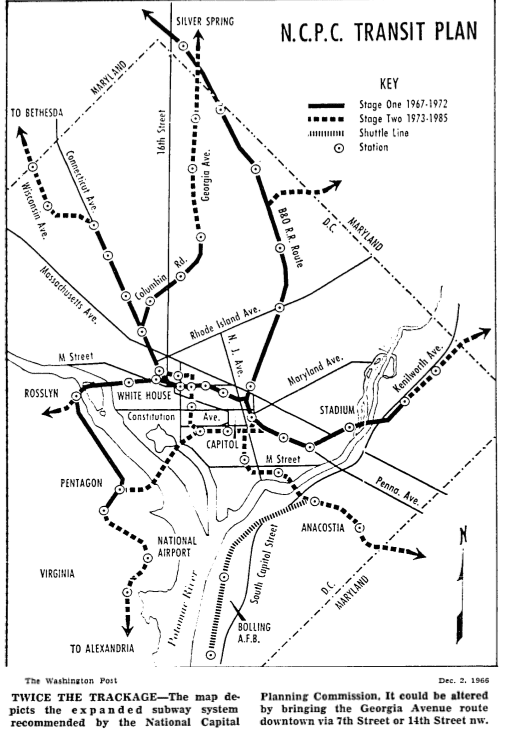
The proposals were published to convince transit officials that the 19-mile system authorized by Congress within the city – part of a 25-mile network extending into the suburbs -would be inadequate by 1985.
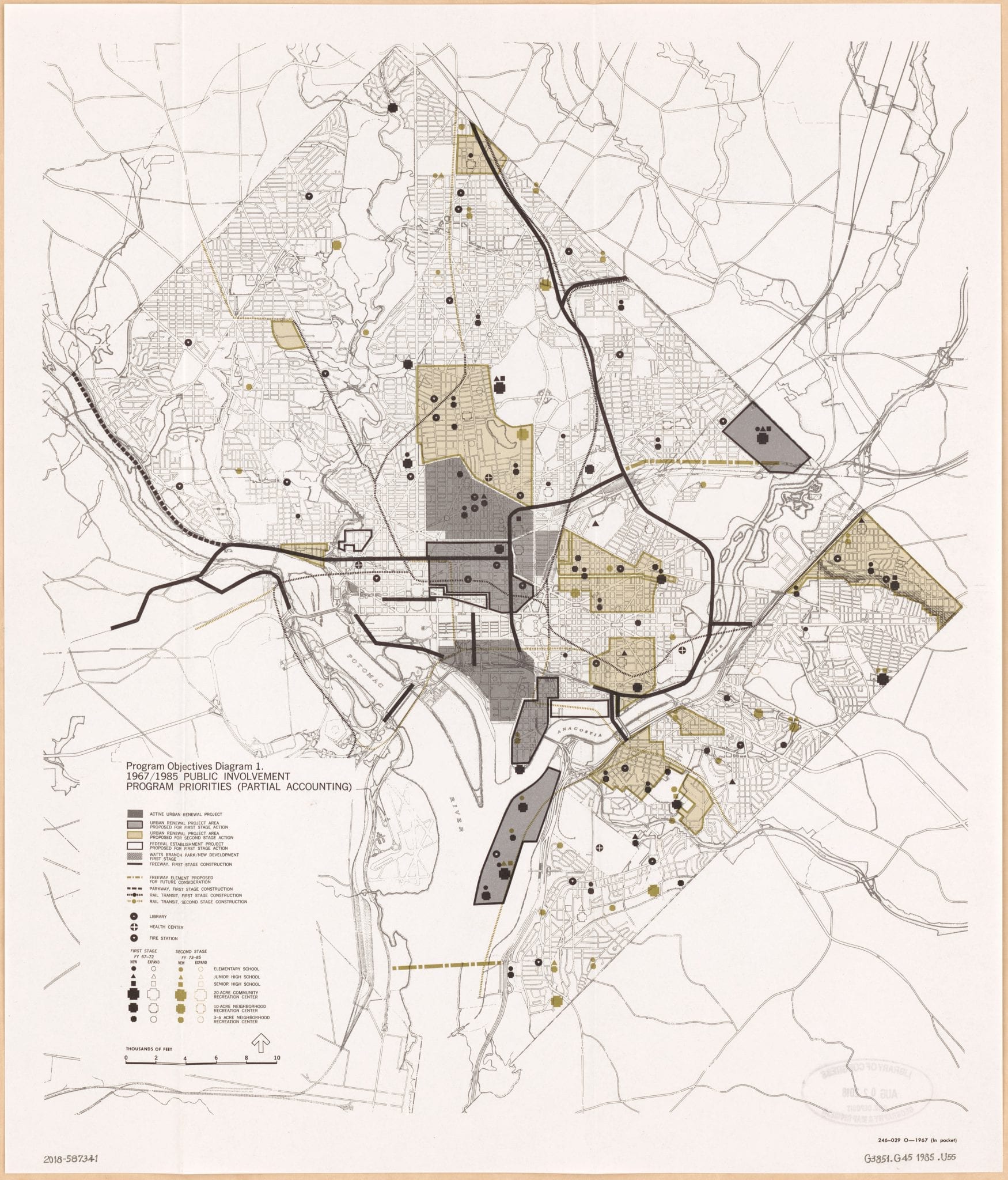
In 1967 the National Capital Planning Commission mapped out the freeway grid Washington was supposed to get: a K Street expressway, a Three Sisters Bridge, an I-95 extension up through northeast. Almost none of it got built.
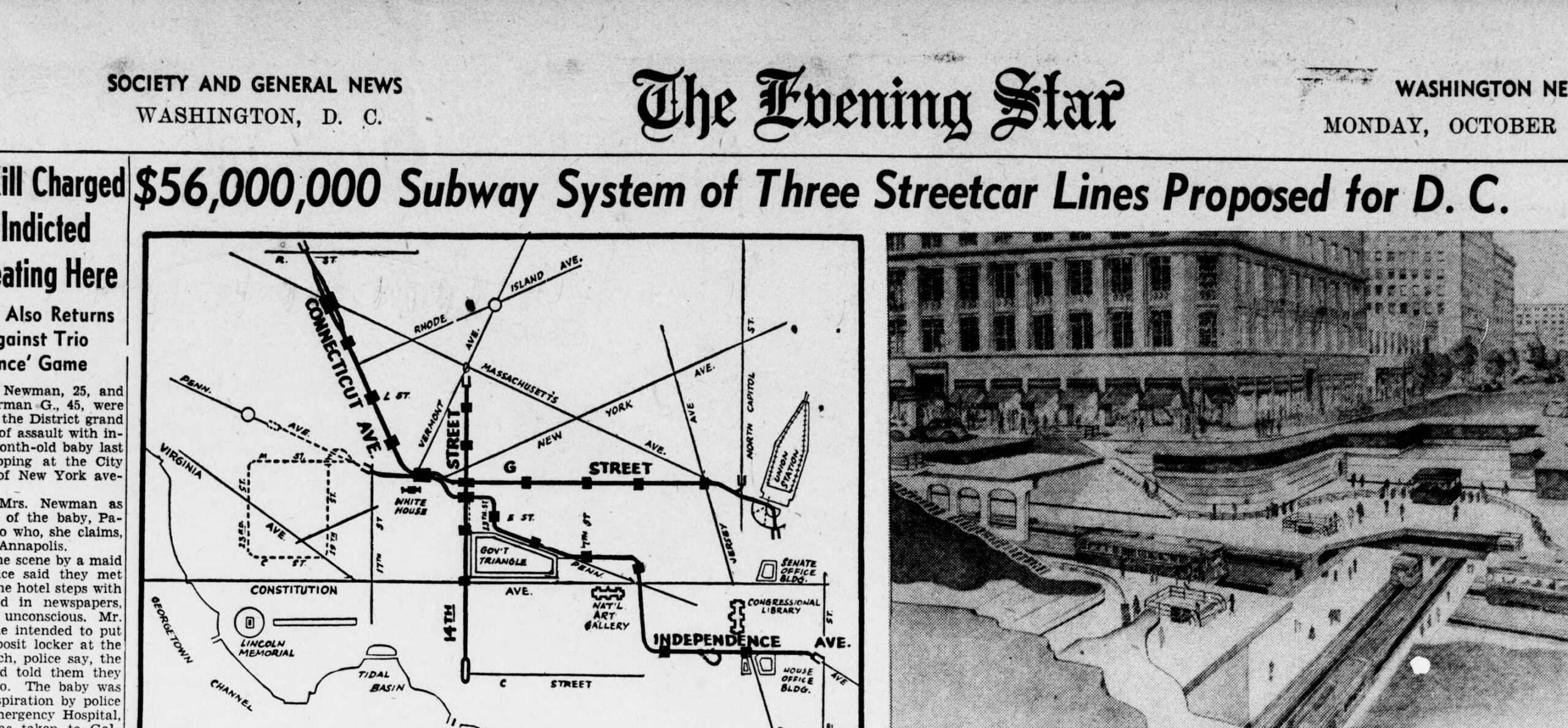
At the end of World War II, Washington came within a study of building a $56 million, 7.1-mile streetcar subway, which would have been the longest in the country. Here is the 1944 plan, the map, the artist renderings, and why it never got built.
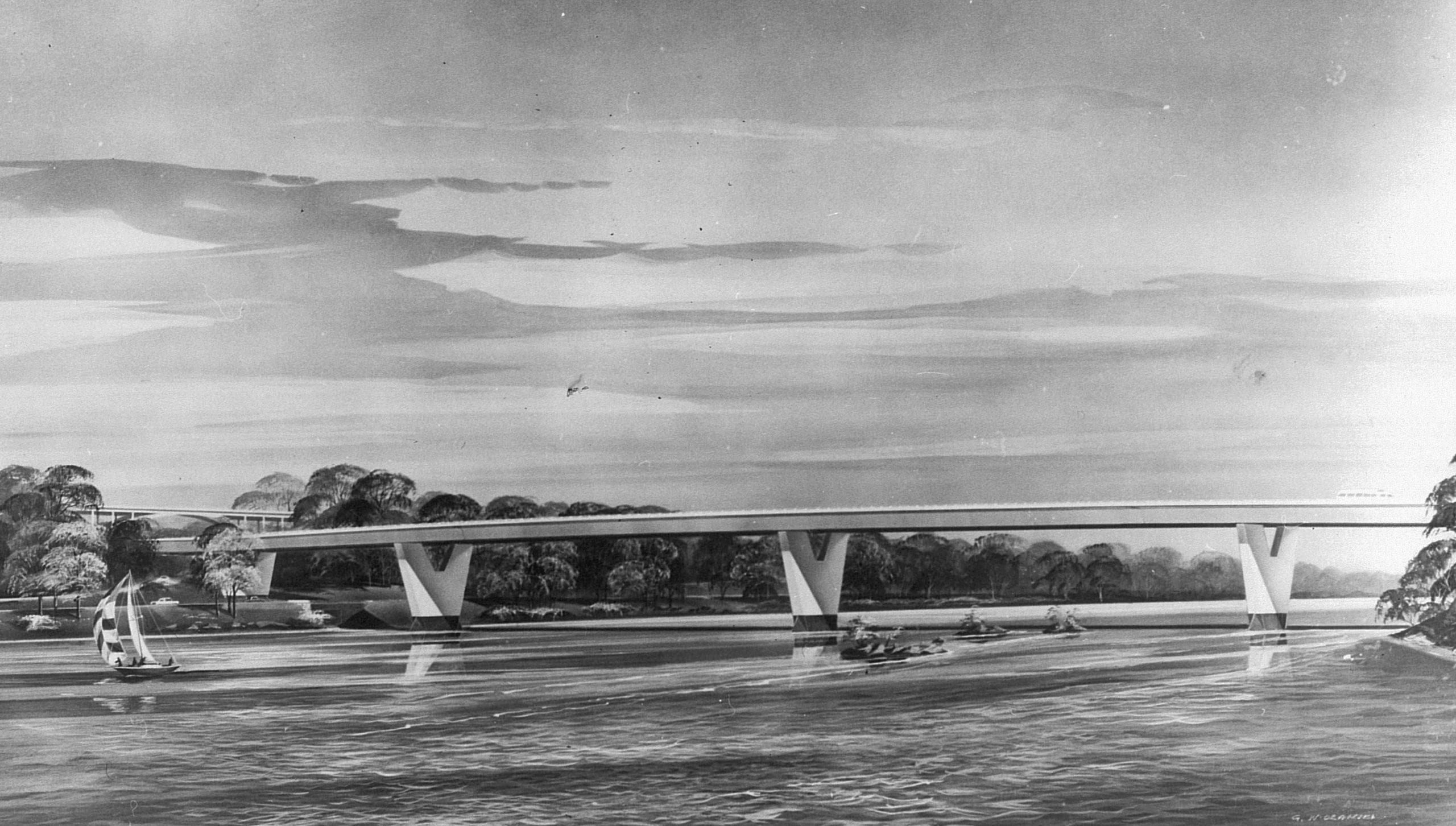
The Three Sisters Bridge was first proposed by L’Enfant in 1789 and seven more times after that. The 1967 version nearly got built.
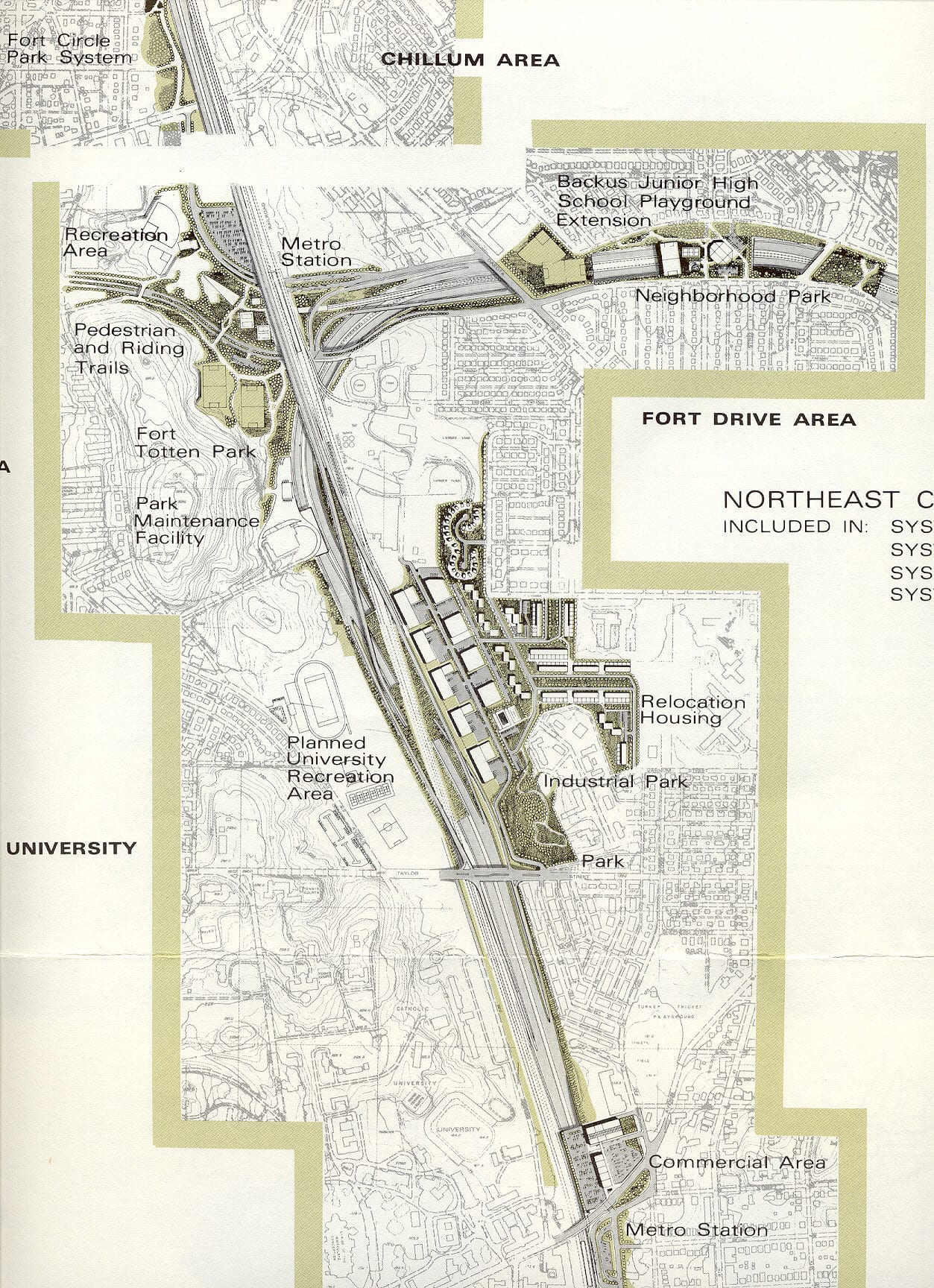
Take a look back at 1971 maps of what could have been I-95 cutting through D.C. Today, what is now 395, ends at New York Ave. NW. Get a glimpse into what could have been with these fascinating maps from 1971.
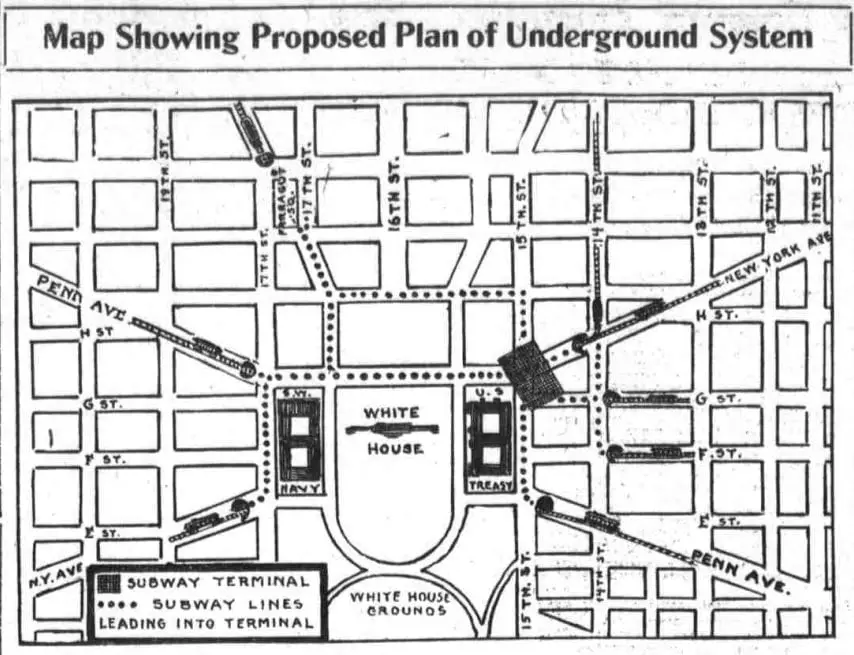
Washington DC almost has a subway started in 1912, well before WMATA and Metro opened in 1976. Learn about what almost was built in the District.
Caroline Harrison set her own deadline. October 13, 1892, the cornerstone centennial. Fred D. Owen drew the plans. She missed dedication day by twelve.
Did you know the CIA’s headquarters was almost built in Alexandria, Virginia? This Washington Post article from 1955 explains what happened.