On a January morning in 1962, three 17-story apartment towers stopped existing on paper for the last time. They were drawn for the 46-acre Auchincloss bluff in McLean, Virginia, just above Chain Bridge and the Potomac. A syndicate of Washington developers had just optioned the land, and the plans called for around 1,200 families where an ivy-covered mansion and a stand of black walnut had been sitting since 1934.
The bluff belonged to Jacqueline Kennedy’s stepfamily. It sat above the C&O towpath the First Lady used to walk, and it fell inside the Potomac corridor the National Park Service had been protecting on paper for a generation. The towers never got built. Here is how that fight actually worked.
The estate on the bluff
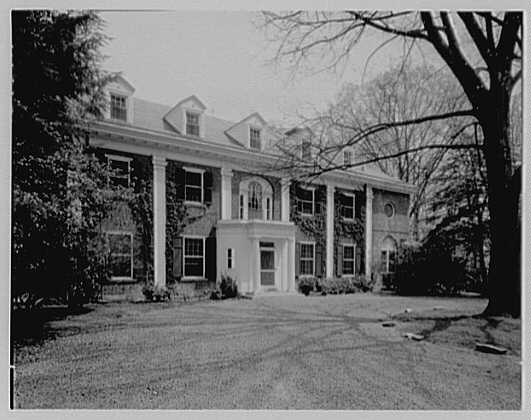
Merrywood was a working country place before it was a piece of national mythology. Hugh D. Auchincloss, whom everyone called Hughdee, bought the estate in 1934 for $135,000 and raised his blended family there. That family later included his stepdaughter Jacqueline Bouvier, who moved in at 12 when her mother married Auchincloss in 1942 and returned to it as First Lady when she wanted a walk that was not on the White House lawn.
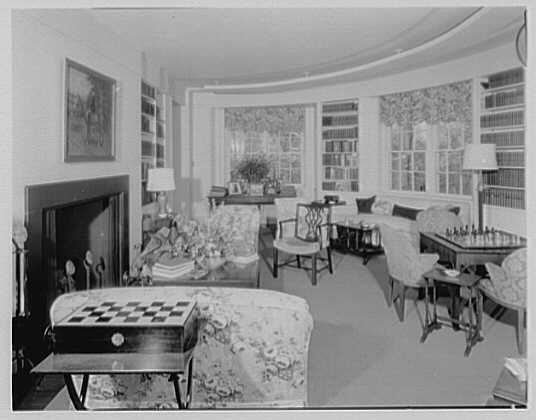
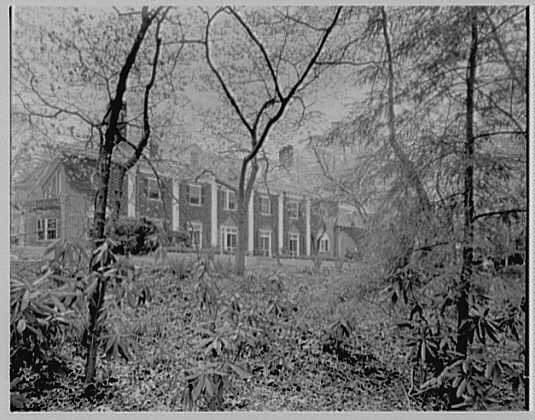
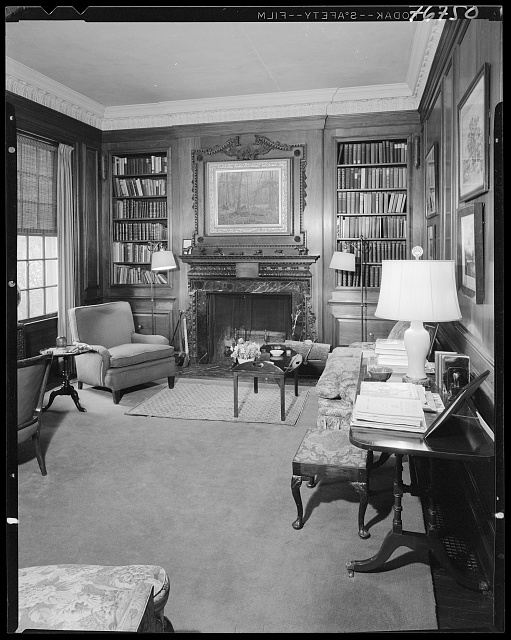
The mansion sat on about 46 acres running to the edge of the Potomac Palisades. Everything south of the house dropped away toward the C&O Canal towpath and the river. The library wore black walnut paneling. The porch looked past a lawn and out over the bluff.
From that porch you could see across the Potomac into the wooded ground that framed Chain Bridge. In 1962, that view was what a developer was buying, and what the federal government was about to argue nobody was allowed to sell.
January 14, 1962
The New York Times and the Washington Post both broke the deal on January 14, 1962. The Post ran the story on page one under “Girlhood Home of President’s Wife Optioned for High-Rise Apartments,” and the Times ran the version by Marjorie Hunter, “Girlhood Home of Mrs. Kennedy Optioned for Luxury Apartments.” Hughdee had signed an option with a syndicate led by developer Sheldon Magazine of Magazine Brothers, a Washington firm.
The developers declined to disclose what they were paying. What they did disclose was the project. Three 17-story luxury apartment buildings on the bluff and two rows of luxury town houses arcing around their base facing the river, roughly 1,200 families in all. The Post put the total development cost at $15 million.
The site was zoned single-family residential. To make the towers legal, the buyers needed Fairfax County to rezone the tract for high-density apartments under Fairfax’s new RM2H category. On April 18, 1962, the Fairfax Board of Supervisors did it, 5 to 2, on a motion from Supervisor A. Claiborne Leigh, who had built his political career on protecting McLean from apartments and shocked his own base by moving for approval.
TIME magazine ran a small piece three weeks later under the title “Less Than Merry at Merrywood.” It quoted Interior Secretary Stewart Udall calling the Potomac Palisades “a great scenic resource,” and it quoted the syndicate’s zoning lawyer, Lytton H. Gibson, snarling that “nothing but a bunch of longhairs and eggheads are causing all the trouble.” Both of those quotes were about to matter.
The rezoning triggered a rash of political and legal retaliations. Citizens’ groups sued to overturn the vote, arguing it was capricious and that the Supervisors had cut a deal in advance. A Fairfax grand jury heard 16 witnesses that May and found no corruption. Both moves failed, and the zoning stuck. Sheldon Magazine exercised his option, and the sale to the syndicate closed in June 1962.
The Interior Secretary next door
Stewart Udall did not have to travel far to fight the Merrywood rezoning. He lived on Chain Bridge Road, a short drive from the estate. Robert F. Kennedy’s Hickory Hill sat further up Chain Bridge Road on an upper stretch several miles by car from Merrywood, well past the George Washington Parkway interchange, so it was not a neighbor property. Still, the Kennedy name shadowed the road, and Udall could have watched the towers going up from his own yard.
The story from that period is a little unusual. Robert Kennedy stayed publicly quiet on Merrywood, even though the administration was pushing river preservation elsewhere. Around the same time, JFK was personally blocking a plan to widen Chain Bridge Road through his brother’s Hickory Hill neighborhood, so the family was already awake on Fairfax County land-use questions. The public voice on Merrywood was Udall’s, and the mechanism was going to be his agency.
Jacqueline Kennedy’s role in the fight is thinner than folklore suggests. Contemporary reporting says she was asked to intervene and declined, and there is no confirmed public statement from her about Merrywood. The safest read is behind the scenes, at most. Which is fine. She grew up on the bluff, and her husband’s Interior Secretary and her brother-in-law’s neighbor happened to already be organized. She had already helped choose Wexford in Middleburg as the Kennedys’ own Virginia retreat, and she was not going home to Merrywood at that point in her life anyway.
Scenic easement, not a new law
Here is the piece the folklore gets wrong. There is no dedicated Merrywood Public Law. What Congress did to protect the Potomac Palisades in 1930 did most of the work three decades later.
The Capper-Cramton Act of 1930 (Public Law 71-284, 46 Stat. 482) authorized federal acquisition of land and interests in land along both banks of the Potomac for the George Washington Memorial Parkway. The National Park Service could invoke that authority, along with the general parkway acquisition power at 16 U.S.C. § 1b(7), to condemn a scenic easement over the Merrywood tract.
On November 15, 1963, the Interior Department did exactly that. Udall went straight to court in Alexandria, plunked down a $500,000 deposit, and claimed an immediate scenic easement over the 46 acres. U.S. Park Police posted the property the next day, barring further work.
The timing was not incidental. That same day, President Kennedy signed a memorandum ordering federal agencies to preserve strategic open space and scenic resources in the National Capital region. It was a directive Udall’s lawyers had helped draft, and it was the operational lever for the Merrywood filing. Seven days later, the President was dead in Dallas.
The restriction was blunt. The buyer could still own the ground, but the ground could only be used for single-family houses. Commercial, multifamily, and industrial development were out. No tree with a trunk larger than eight inches could be cut without Udall’s written permission. Three 17-story towers, with parking decks and driveways, were no longer legal on 46 acres of Palisades bluff. The scenic easement was the whole game.
The bill
Killing the deal cost money. The United States had to pay for what it had condemned, because the Fifth Amendment says it does. The syndicate’s owners sued for full compensation, and the case went to a jury in the Eastern District of Virginia, in Alexandria, under Judge Oren R. Lewis.
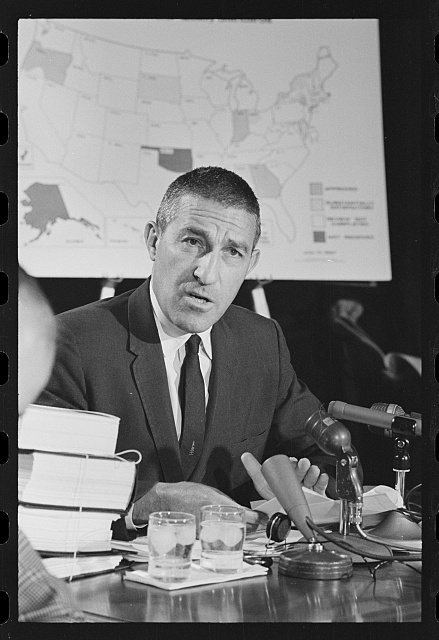
On September 25, 1964, after deliberating two and a half hours, the jury awarded the eight-member syndicate $744,500 in just compensation. The government’s $500,000 deposit went to the owners, and Justice added the extra $244,500 out of a settlement fund. Walter Pozen, Udall’s assistant, said the award was “not far out of line” with what the department had expected to pay. It was also enough to end the project.
What Merrywood became
The syndicate sold the land in November 1964 to Wyatt and Nancy Dickerson, the second family to occupy the Merrywood mansion for real. The tract was later subdivided into an enclave of individual houses, all sitting under the same NPS scenic easement. The mansion at 700 Chain Bridge Road today sits on about seven acres of that original 46.
The house has stayed. Alan Kay bought it in 1984 and kept it about fifteen years. William Conway of Carlyle owned it briefly around the turn of the century. Steve Case, the AOL cofounder, bought it in 2005 for $24.5 million and held it until 2018, when he sold Merrywood to the Embassy of the Kingdom of Saudi Arabia for $43 million.
That is who owns Merrywood right now. A foreign government, using it as an official residence. The house Jackie grew up in is a diplomatic property with a very old walnut library and a very restricted set of things you are allowed to do outside.
The scenic easement is why the view from the George Washington Memorial Parkway looking up at the Virginia bluff still reads as trees and rooflines instead of tower massing. If you have ever driven the parkway past the Chain Bridge exit and wondered why this hillside stayed green while everything else around Tysons went vertical, this is one of the answers.
Compare it, if you like, to the Potomac’s other lost battles. The Three Sisters Bridge was supposed to cross the river in the same era and never got built either. The original 1810 Chain Bridge, the one that gave the road its name, is long gone. Merrywood is one of the wins.
Where the plans should be
The one artifact this story is missing is the developer’s rendering. The syndicate’s architect, Milton Fischer, submitted site plans, elevations, and unit counts to Fairfax County to get the 1962 rezoning through. The Washington Post ran ongoing coverage of the fight, including columns by architecture critic Wolf Von Eckardt, and it is very likely a staff artist rendering of the towers ran alongside that coverage. None of it is online in any collection I could verify.
If you know where the site plan and elevation drawings are filed, they should be in one of four places. The Fairfax County Public Library’s Virginia Room holds McLean development files and indexes rezoning-era ephemera. The Fairfax County Planning Commission and Department of Planning and Development records room would have the rezoning application itself, with the site plan as an exhibit, available through a Virginia FOIA request.
The Circuit Court Clerk’s Historic Records Center holds the underlying land purchase deed, which often carries a survey. And the National Archives at College Park, in Record Group 79 (NPS) and Record Group 48 (Interior), holds the scenic easement litigation file. The developer’s plans may be attached as exhibits.
If you have ever seen the actual rendering, or if you know a McLean resident whose father saved the sales prospectus in a filing cabinet, please write in. Merrywood almost had three 17-story towers on it. Someone drew the picture. We would love to run it.
We dug this one up with help from AI and checked it against the original records below. Here’s how we use AI.