
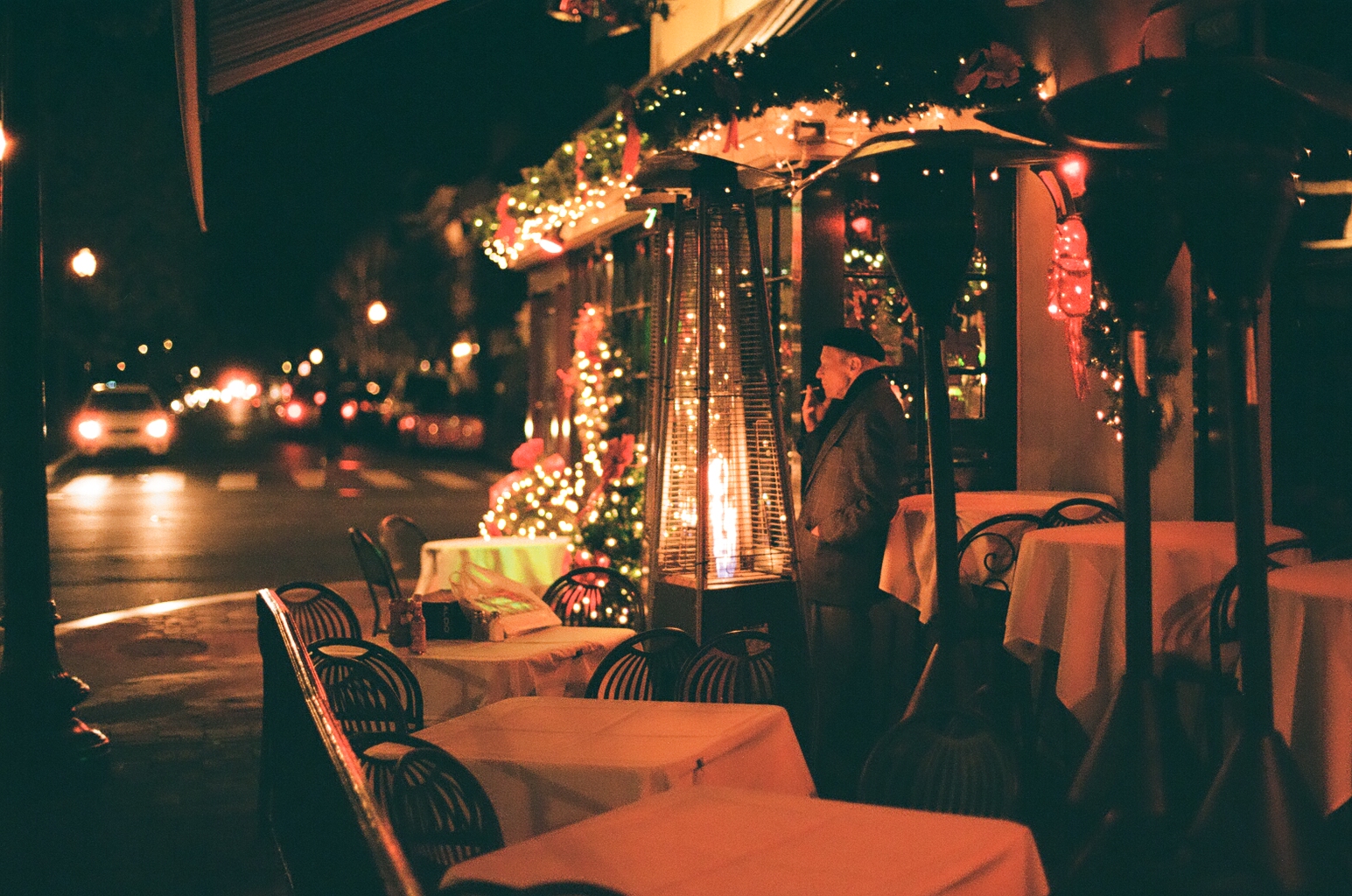
I had no idea the man whose name is on the door at 1264 Wisconsin Avenue played in the major leagues before he opened the bar.
William Gloyd “Billy” Martin played shortstop for the 1914 Boston Braves, the “Miracle Braves” who swept the Philadelphia Athletics in the World Series that October. He was a three-sport star at Georgetown, an inductee in the school’s Athletic Hall of Fame, and later coached the Georgetown Knickerbockers football team to the district championship of 1924. The same era produced other Georgetown stars, among them Olympian Robert LeGendre, who set a world record on his way to the 1924 Paris Games.
When Prohibition ended in 1933, he and his father opened a tavern in Georgetown. The same family still runs it, in the same brick building, on the corner of Wisconsin and N.
A ballplayer opens a bar the day beer comes back
Bob Joel’s SABR BioProject piece is the canonical record of Billy Martin’s playing career.
Martin was born in Washington on February 13, 1894, the only son of William S. Martin and Mary E.S. Martin. William S. came over from Galway, Ireland in the late 1890s and drove a Schweppes soda-water truck. Per Joel, citing the family, “maybe there was something other than soda in that Schweppes truck.”
Billy went to Georgetown Prep, then Georgetown University, where he made varsity in baseball, basketball, and football as a freshman. Five-foot-eight, 170 pounds, right-handed, built like a fireplug. By 1914 he was being scouted by Cleveland, Cincinnati, and the Boston Red Sox.
He broke his ankle that June in Princeton, in borrowed shoes, rounding second base. The National Commission awarded his rights to the Boston Braves while he was still in the hospital.
Martin made his major-league debut on October 6, 1914, in the second game of a doubleheader against the Brooklyn Robins. He went hitless in three at-bats and made an error at shortstop.
The Braves won the pennant that month, swept the Athletics in the World Series, and went into the books as the “Miracle Braves.” A committee of veterans decided Martin had not played enough to merit a full World Series share of $2,708.86 and cut him to $500. Manager George Stallings, who had told the Washington Post he viewed Martin as “another Johnny Evers,” wrote him a personal check for $500 anyway.
That October afternoon in Brooklyn was Bill Martin’s entire major-league career.
He bounced through the minors after that, broke his ankle a second time in spring training the following year, got an invite from John McGraw to the Giants in 1916, and finished out in the New York State, Eastern, and Virginia leagues. Then he went back to football coaching.
When the 21st Amendment was ratified in December 1933, the Martins opened the corner of Wisconsin Avenue and N Street the same week.
1264 Wisconsin Avenue NW, in the year beer came back
FDR signed the Beer and Wine Revenue Act on March 22, 1933, legalizing 3.2 percent beer. The 21st Amendment was ratified December 5. Somewhere between those two dates, Billy and his father took a brick building two blocks from where John F. Kennedy would later live.
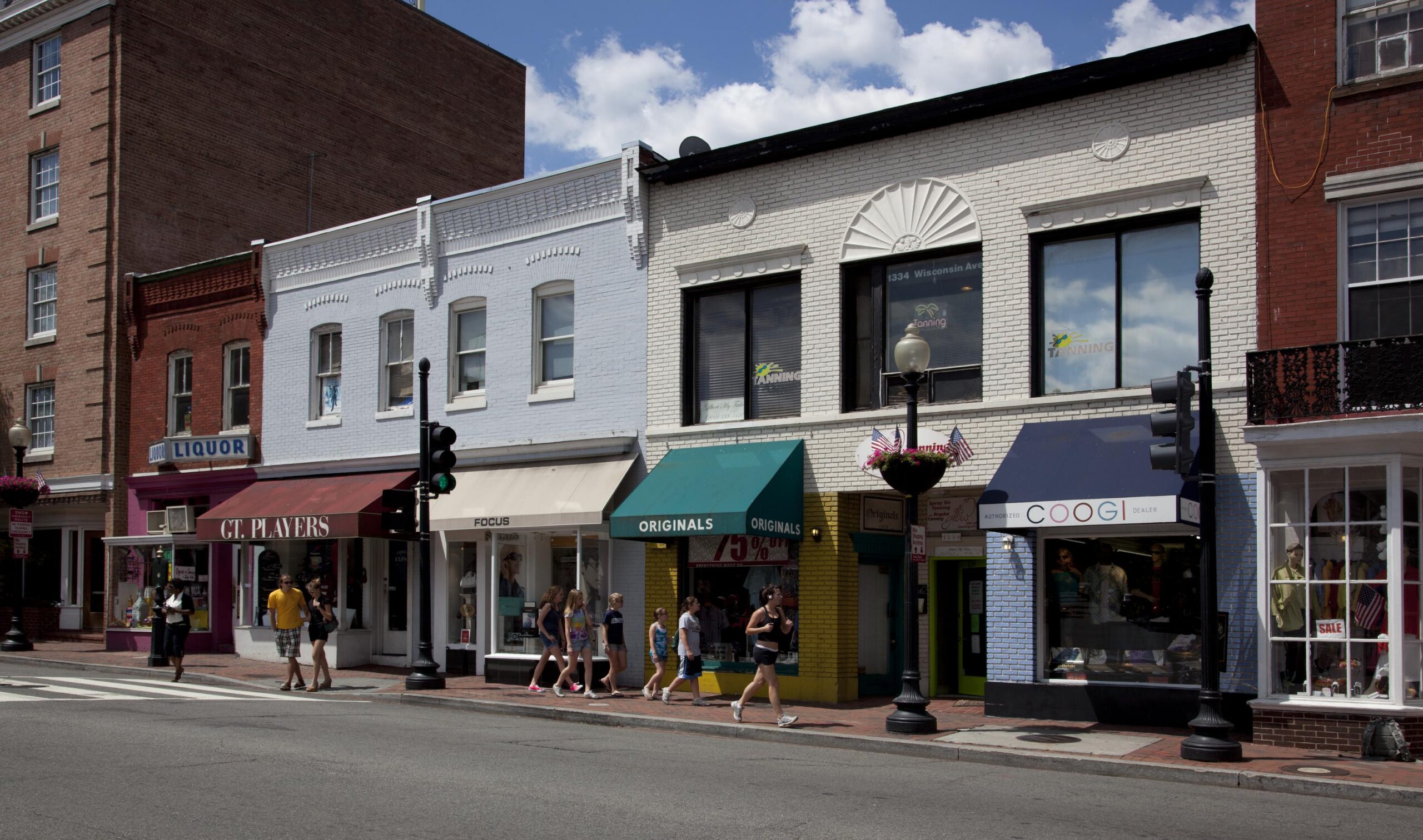
The Great Depression was deepening. Unemployment was near 25 percent. Opening a restaurant was reckless. The Martins opened a restaurant anyway.
The original mahogany-top bar is still there. So are the Tiffany-style lights and the booths. According to family lore, William S. Martin emigrated from Galway in the late 1890s. He died with his name and his son’s name on the awning of a place that has fed senators and presidents continuously for nine decades.
“The Dugout” and the Speaker’s booth
Billy Martin held court in a back room he called the Dugout. Cards, politics, gin. Ballplayers stopped in to swap old stories with him.
So did Tom Corcoran and Ben Cohen, the two New Deal lawyers FDR called “the Gold Dust Twins.” The Martin family says Corcoran and Cohen worked through nights at Martin’s drafting what became the Securities Act of 1933, the Securities Exchange Act of 1934, and the Fair Labor Standards Act of 1938.
In the 1940s, Speaker of the House Sam Rayburn took a young Texas congressman named Lyndon Baines Johnson to Booth #24 and taught him how Washington actually worked. According to a story Billy Martin Jr. tells about his grandfather, LBJ once kept holding forth on D.C. politics in front of Billy Sr. until Rayburn snapped, “Shut up and listen to Billy Martin if you actually want to learn something about this town.”
Senator Harry Truman sat in Booth #6 with Bess and his daughter Margaret. After Margaret enrolled at George Washington University in 1942, she was a near-regular. She later wrote a series of D.C.-set murder mysteries, including Murder in Foggy Bottom and Murder in Georgetown, that mention Martin’s by name.
By the late forties, four-star generals were reportedly sitting on milk crates at Martin’s because every table was full. William A. Martin, Billy’s son, came back from the Navy off Okinawa and started behind the bar in 1949. He had been a Golden Gloves boxer at Georgetown and would later play Pro-Am golf in the 1950s. That September, Bill Martin Sr. died of a stroke at 55.
Booth three, June 24, 1953
John F. Kennedy lived two blocks from Martin’s on N Street. He went to Mass at Holy Trinity on Sunday mornings and read the Sunday paper over breakfast in Booth #1.
In the spring of 1953 he was a 35-year-old freshman senator from Massachusetts. Jacqueline Bouvier was 23, an inquiring photographer for the Washington Times-Herald, just back from London where she had covered the coronation of Queen Elizabeth II.
The night he proposed, the room knew before she said yes.
Ambassador Marion “Joe” Smoak, then 98, who had been at Martin’s that night, gave the Washington Post his account in 2015. Smoak was a former chief of protocol. He had recognized the young senator and his girlfriend in the booth and was drinking a martini.
After the senator proposed, and she accepted, the news ran through the restaurant. That night we didn’t know his future and what it would bring. In hindsight it was great fun to witness a part of history.
Sources differ on the exact date by twenty-four hours. Martin’s Tavern, Smoak’s testimony, and Kennedy biographer Kitty Kelley all fix the proposal at the night of June 24, 1953. The engagement was publicly announced June 25. A 2018 D.C. Council ceremonial resolution naming Martin’s Tavern Day uses June 25 as the proposal date, which appears to conflate the announcement with the proposal itself. Either way: Booth #3, in this particular brick building, in the summer Eisenhower was president.
The ring he gave her was a Van Cleef & Arpels toi et moi: two stones side by side, a 2.88-carat emerald-cut diamond and a 2.84-carat emerald, with smaller diamonds and emeralds set in the band. Joseph P. Kennedy picked it out at the Fifth Avenue Van Cleef store with help from Hélène Arpels, the wife of jeweler Louis Arpels. Jackie sent the ring back in 1962 to be reset with marquise-cut diamonds. The two center stones stayed.
JFK and Jackie were married in Newport, Rhode Island on September 12, 1953.
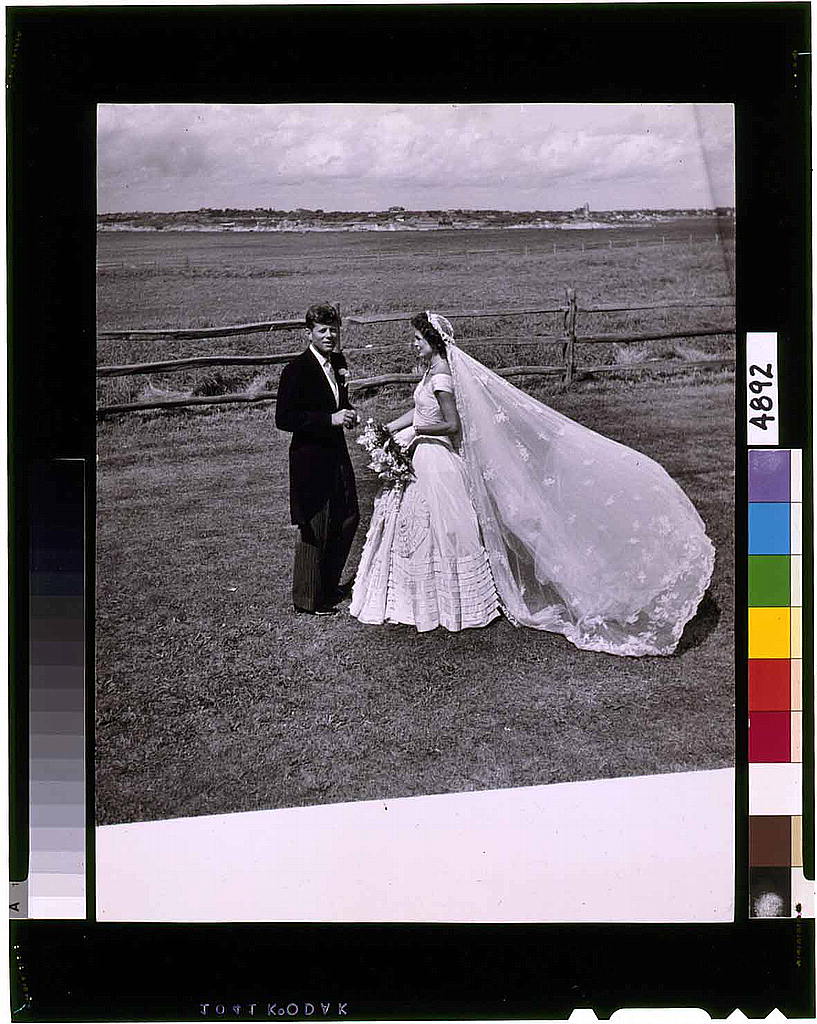
Today Booth #3 is The Proposal Booth. There is a brass plaque. You can reserve it.
Every president from Truman to George W. Bush
The Martin family says every president from Truman to George W. Bush walked through the door. The visits the family can document by booth are the better story.
Truman in #6 with Bess and Margaret. JFK in #1 on Sundays and #3 the night of the proposal. LBJ in #24 with Rayburn. Nixon in #2, where he liked the meatloaf.
The Martin family says five Supreme Court justices sat in Booth #3 in 1954 hashing out Brown v. Board of Education before Earl Warren read the unanimous opinion in May of that year. The booth claim is family history, repeated across the restaurant’s own tellings, and we have not found contemporaneous press to corroborate it.
George W. Bush came in with Laura and their twins while visiting his parents in town. Billy Martin remembers the girls “were about 8 or 9 years old with beautiful manners and ever more beautiful dresses.” Bill Clinton wrote about Martin’s in his 2004 memoir My Life, remembering the tavern as among his “favorite haunts in Georgetown… with good food and atmosphere within my budget.”
Four generations and the Hot Brown
The menu trades on the building. Steak, crab cakes, eggs Benedict, Guinness mussels, shepherd’s pie, Welsh rarebit.
The Welsh rarebit shows up in two places, including in Martin’s Delight, the tavern’s version of the Hot Brown. The Hot Brown is technically a Louisville import. Fred K. Schmidt invented it at the Brown Hotel in 1926 for guests who needed something to eat at 1 a.m. after the dance floor cleared out.
Martin’s runs its own variation: roasted turkey on toast under a rarebit sauce of cheddar, Yuengling lager, and heavy cream, topped with tomato, applewood bacon, and Parmesan, baked in a cast-iron skillet. A cousin from Louisville brought the idea east.
The Martin family bills the building as the District’s oldest family-owned restaurant. Old Ebbitt Grill is older as an institution, but its ownership has turned over multiple times. The qualifier is doing real work: four generations, one family, since 1933.
Billy Martin Jr. and his wife Gina bought the business from Billy’s father in 2001. Revenues grew every year of his ownership except for 2009. His two children, Lauren and William, are the fifth generation. He wants them to work elsewhere first.
The Wisconsin Avenue strip Martin’s anchors is one of the most-redeveloped commercial corridors in the District. Au Pied de Cochon, the 24-hour French bistro a few blocks south where KGB defector Vitaly Yurchenko walked out on his CIA handler in 1985, is gone. Clyde’s of Georgetown, the saloon Stewart Davidson opened on M Street in 1963, has shrunk into a smaller footprint. Nathans, the bar-and-grill that anchored the corner of Wisconsin and M for four decades, is gone altogether.
Martin’s is still on the corner. Same building, same family, same booths.
Martin’s Tavern Day
In June 2018, the D.C. Council passed Resolution 22-364 declaring June 26 “Martin’s Tavern Day” and recognizing the tavern’s 85th anniversary. Mayor Vincent Gray had given a similar honor for the 80th in 2013.
Saturday Night Live, May 2026
Most recently, Saturday Night Live put Martin’s in a cold open. On May 9, 2026, Matt Damon walked in wearing a Supreme Court robe, banged a gavel on the bar, and ordered a “6-3 Decision.” The Georgetowner covered the viral aftermath. The bar was open Monday.