
Washington, D.C. had thirty-six holes of public golf at East Potomac Park in 1939, and Black golfers couldn’t play any of them.
Their course, when it finally arrived, was a nine-hole layout cut into a former trash dump on the west bank of Kingman Lake. Langston Golf Course opened on June 11, 1939. They named it for John Mercer Langston, the abolitionist, the diplomat, the first dean of Howard Law School, the first Black Virginian elected to Congress.
That was the deal Harold Ickes, Secretary of the Interior, gave the men and women who had spent years asking the federal government for the right to play.
Marshes, mud, and a federal dump
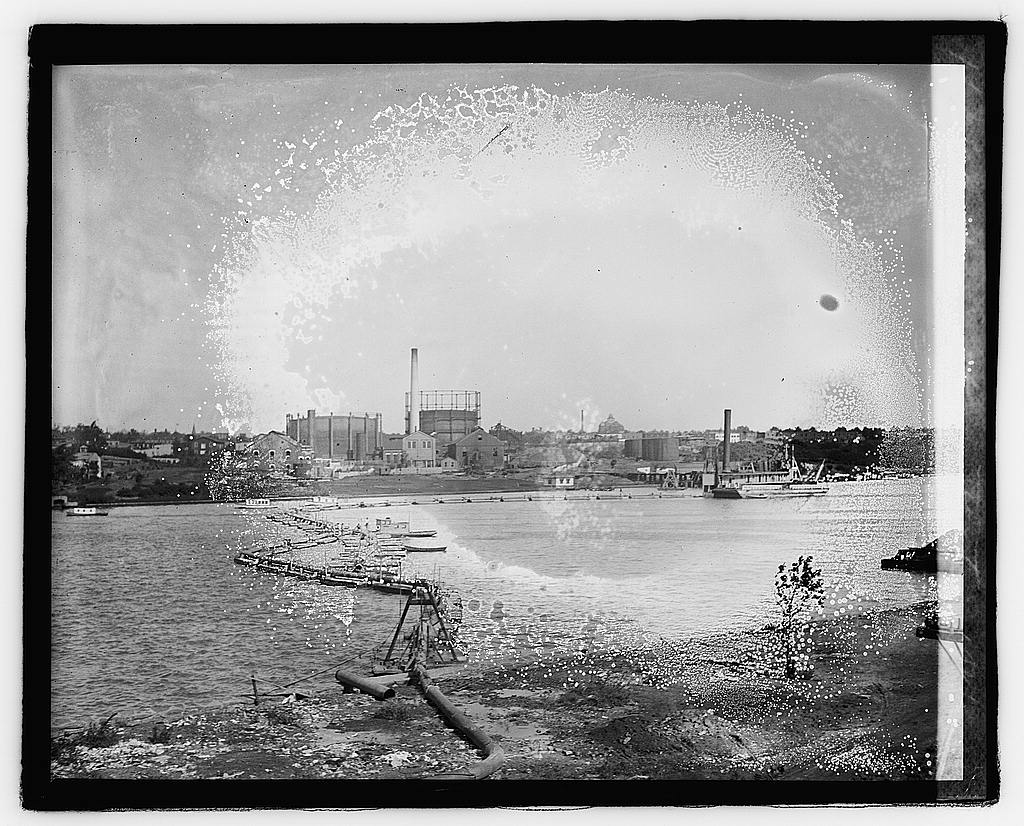
The land Langston sits on was, for most of Washington’s history, not really land. The Anacostia flats were a tidal marsh that flooded with the river, bred mosquitoes, and embarrassed the city.
The Army Corps of Engineers spent the first three decades of the twentieth century dredging the river and dumping fill on the flats to convert them into parkland. Anacostia Park, like East Potomac Park downstream, was made by men with shovels and barges. By the late 1920s a stretch of the new ground on the west bank of Kingman Lake had become an unofficial municipal dump.
That was the site Interior offered Black golfers in 1938.
The course that wasn’t there
In the 1920s and 1930s, the National Capital Parks system ran the public golf courses in Washington. East Potomac Park had thirty-six holes, the showcase municipal links of the District, sitting at the southern tip of Hains Point. Rock Creek had nine. Anacostia had nine. None of them were open to Black play under the concessioner who ran the courses for the Interior Department.
Black golfers had one option. The Lincoln Memorial grounds, inside what is today West Potomac Park, had a small, separate course where they were tolerated. The National Park Service later put it bluntly. Langston, the agency wrote, “was built 1935-1939 to replace a segregated course on the Lincoln Memorial grounds.”
So Black Washington built golf clubs of its own.
The Capital City Golf Club organized in 1927, renamed itself the Royal Golf Club in 1933, and pulled in a generation of professional men who wanted to play eighteen holes the way their white counterparts played them. The Wake Robin Golf Club, the first Black women’s golf club in the United States, organized in 1937. From the start, the two clubs lobbied together. The same Black professional class that filled the Whitelaw Hotel ballrooms wanted public links to match.
Who was John Mercer Langston
The course was named for one of the most significant Black Americans of the nineteenth century, a Virginian whose political career sat directly inside the long fight for federal recognition of Black citizenship.
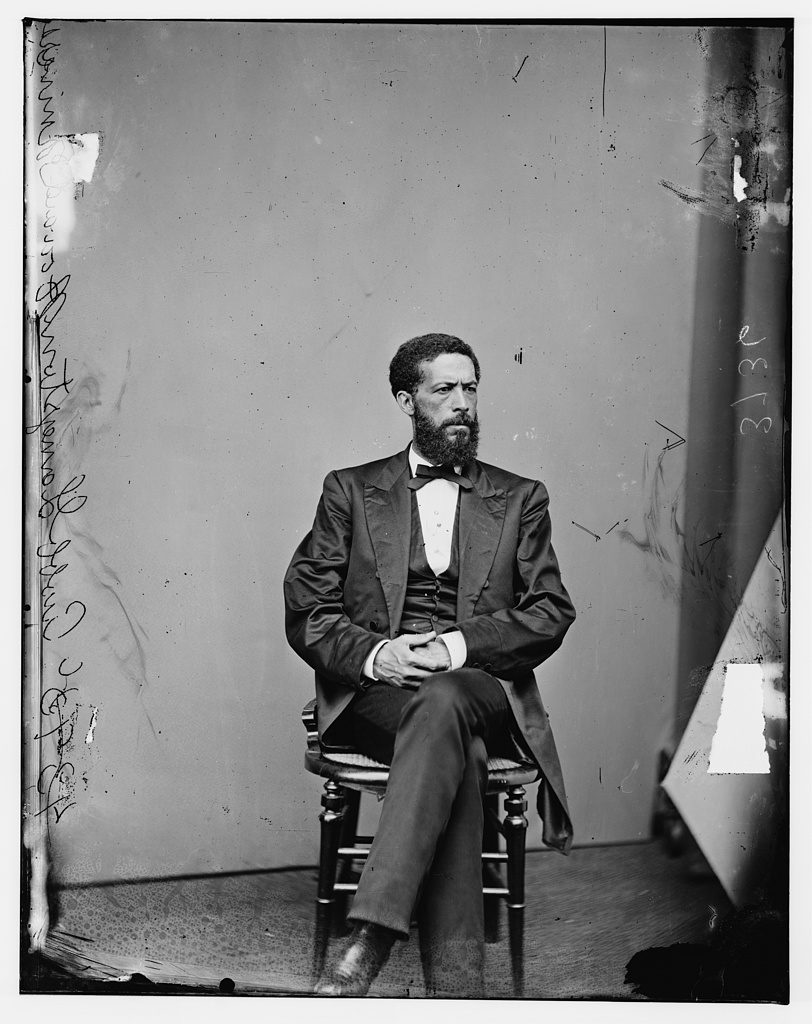
John Mercer Langston was born free in 1829 in Louisa County, Virginia, the son of Lucy Langston, an emancipated woman of African and Native American ancestry, and Ralph Quarles, the white planter who had freed her in 1806 and named the brothers as his heirs. He was orphaned by the time he was four. He earned a bachelor’s degree from Oberlin in 1849 and a master’s in theology in 1852, then read law and was admitted to the Ohio bar in 1854, one of the first Black lawyers in the United States.
He recruited Black soldiers for the Union Army during the Civil War. He helped found Howard University Law School in 1869 and served as its first dean, then as the university’s vice president and acting president. He was United States minister to Haiti and chargé d’affaires to the Dominican Republic. In 1888 he won a contested election to the U.S. House of Representatives from Virginia’s 4th congressional district, the first Black Virginian elected to Congress and the only one for the next century.
He died in 1897. The Royal and Wake Robin clubs, in choosing his name in 1939, were placing the course inside a longer history than the front-page fight over a 3,066-yard layout.
Petitioning the federal government for a course
The lobbying began earlier than the public record sometimes suggests. The 1991 National Register nomination cites a 1927 letter from John Langford, a prominent Black architect and civic leader, to the Department of the Navy. Langford asked for access to a public course on terms that did not exist yet for Black golfers in Washington.
In 1934 a delegation of Black golfers escalated. They met with Capt. Guy Finnan, the Superintendent of Public Buildings and Grounds, with the same ask in person. It took four more years and a 1938 petition to Secretary Ickes himself before the answer came back.
Ickes did not desegregate East Potomac. He did not desegregate Rock Creek or Anacostia. He approved a separate course, in Anacostia Park, on land the District had used as a dump.
The Royal and Wake Robin clubs took the deal. They had no other.
The Civilian Conservation Corps and the Works Progress Administration did the construction. By February 4, 1939, Walter McCallum’s column in the Evening Star was previewing the new layout:
East Potomac Park now has 36 holes; the new nine-hole course for colored in Deanwood, D. C., will open in the spring; another new course is being built at Fort Dupont.
Three months and seven days later, it opened.
June 11, 1939, in the voice of the Evening Star
The Evening Star covered the dedication on the morning of opening day. The full dispatch is worth reading because the names matter.
The newest of the National Capital parks recreational facilities, Langston golf course, a nine-hole, 3,066-yard links on the west bank of Kingman Lake in Anacostia Park, will be dedicated and opened at 2 p.m. today, it was announced last night by Frank T. Gartside, acting superintendent of the N.C.P. Officials of the Department of the Interior and the National Parks Service are to present the course formally to the District. Citizens’ representatives who will respond include Dr. Harold A. Fisher, president of the Royal Golf Club; Mrs. Helen W. Harris, president of the Wake Robin Golf Club, and J. Finley Wilson, grand exalted ruler of the I.B.P.O.E.W. Edgar G. Brown, president of the United Government Employes, is to preside. Eddie McCoy of New York and Charlie Gaynes of Philadelphia will join Bertram Barker and Harry Jackson, two local golf players, in an exhibition match.
Three thousand sixty-six yards. Nine holes. The leadership of the two clubs that had pushed for years standing on a podium that was finally theirs.
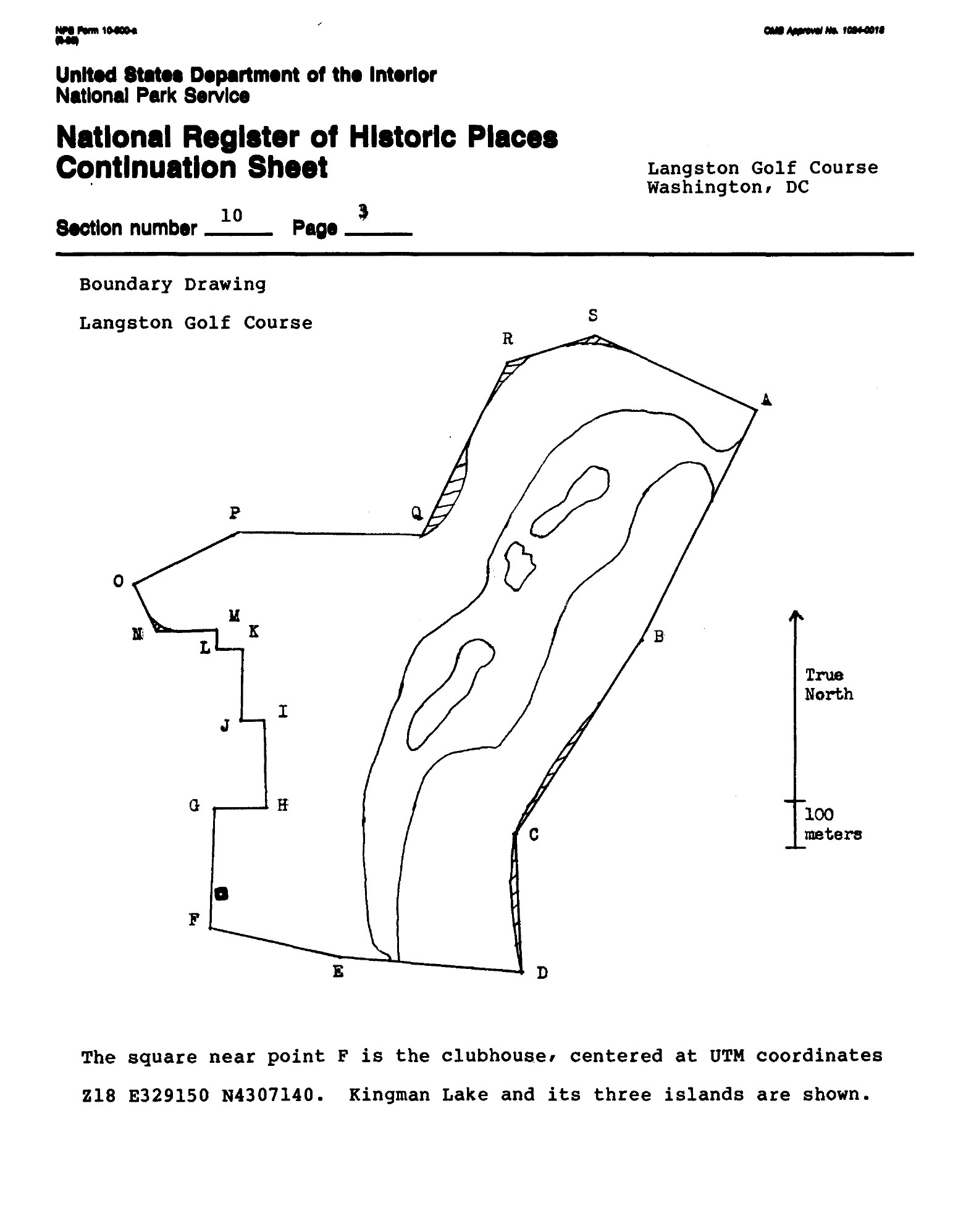
The course was modest. Tight fairways, a small frame field house, a layout running between Benning Road on the south, Kingman Lake on the east, and 26th Street NE on the west. The 1991 boundary drawing filed with the National Register nomination still shows the rough geometry of that original ground.
The PGA’s Caucasian-only clause
Five years before Langston opened, at the PGA of America’s annual meeting in November 1934, the association had quietly amended its constitution. Article III, Section 1 restricted membership to “Professional golfers of the Caucasian race.”
That clause was not a regional outlier. It was the rulebook of the sport.
It meant that Black golfers playing Black-built courses, in Black tournaments, were excluded from the PGA tour as a matter of national policy. Their professional circuit ran on parallel tracks. The United Golfers Association, founded in 1926 by a group of Black golfers and physicians, operated as the Black PGA. Its national tournament rotated between Black-friendly courses across the country. Langston, after 1939, became one of the most important. Black professional golf in the 1940s and 1950s was a circuit, not a niche. It just was not the circuit Americans saw on television.
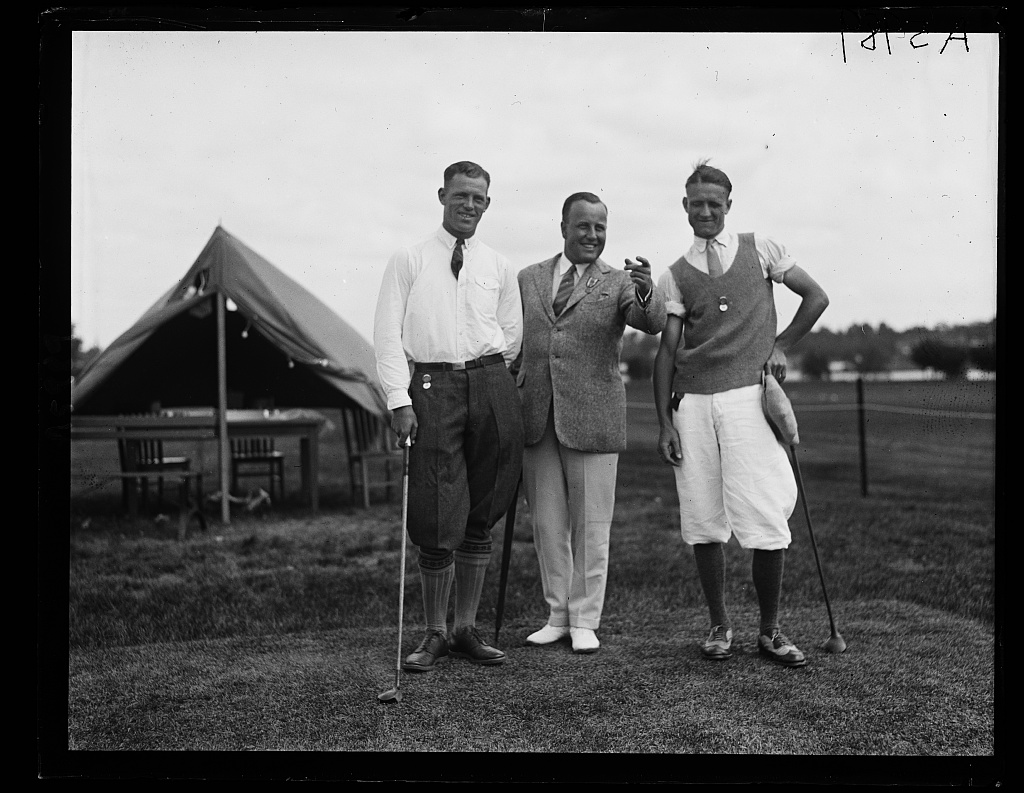
The PGA’s clause stayed in the constitution until November 1961, when the Board of Directors brought a repeal vote to the floor and it passed 87 to nothing. That gap, twenty-seven years long, runs straight through the period when Langston was the only place in Washington Black golfers could legally tee off in 1939, then the only place they could play without harassment after the white courses opened in 1941.
Ickes yields at East Potomac
The 1941 confrontation came at East Potomac.
On June 29, 1941, three Royal Golf Club members, Asa Williams, George Williams, and Cecil R. Shamwell, walked onto the East Potomac course and insisted on playing eighteen holes. White golfers harassed them. The confrontation moved up to the Secretary’s office.
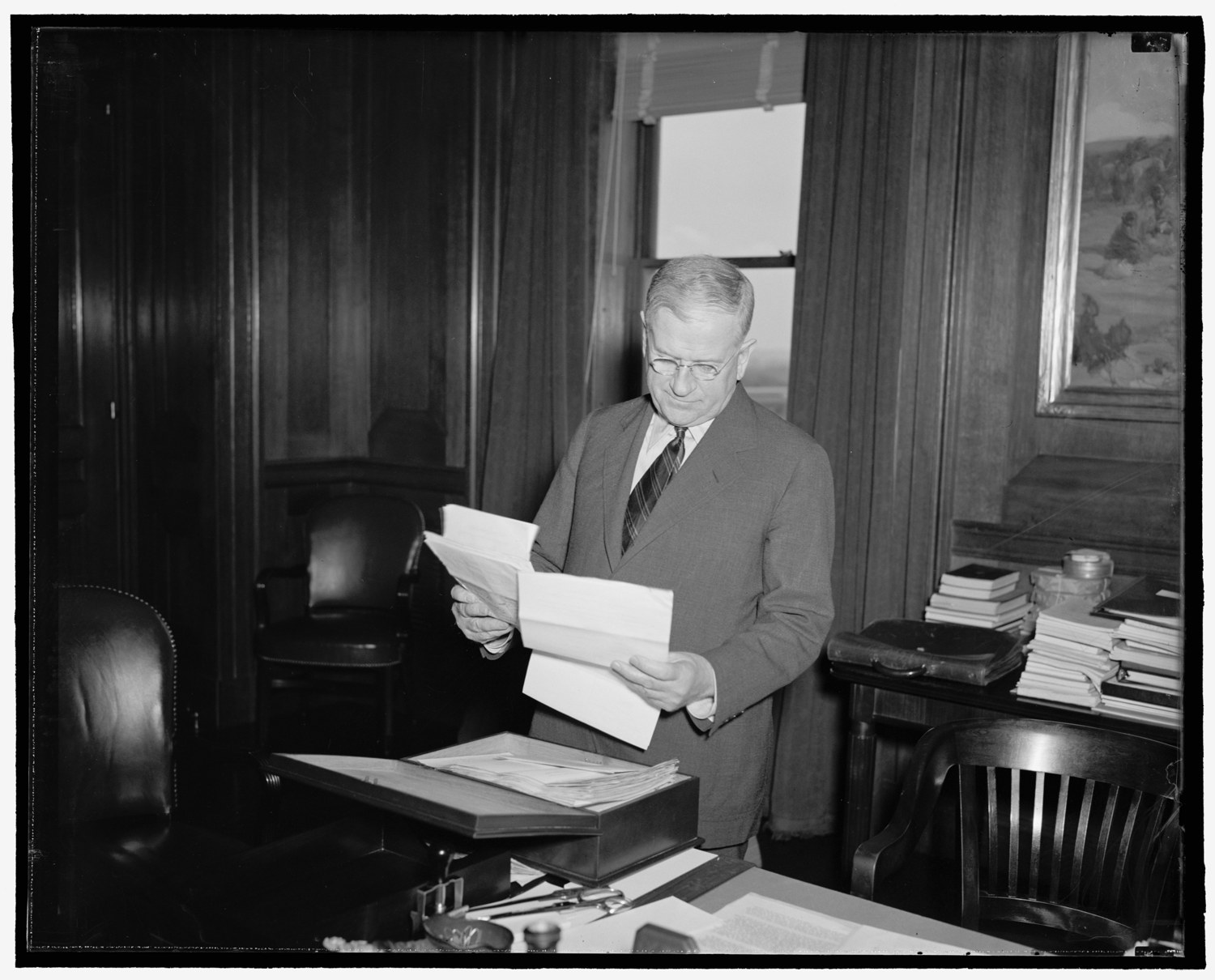
Harold Ickes was the only person who could decide what happened next. He was the longest-serving Secretary of the Interior in U.S. history, a Pinchot-school Republican turned New Dealer, the cabinet member who had two years earlier authorized Marian Anderson’s concert at the Lincoln Memorial when the Daughters of the American Revolution refused to let her sing in Constitution Hall.
Ickes did not equivocate. As historian Lane Demas documents in Game of Privilege: An African American History of Golf, the Secretary said:
I can see no reason why Negroes should not be permitted to play on the golf course. They are taxpayers, they are citizens and they have a right to play golf on public courses on the same basis as whites.
The next day Ickes ordered every National Park Service course in the District desegregated. Three Black golfers played a follow-up round at East Potomac under U.S. Marshal escort.
That was 1941. Thirteen years before Brown v. Board, twenty-one years before the Washington Redskins finally integrated their roster, and a full decade and a half before most of the schools on the 1915 segregated D.C. schools map admitted their first Black students.
The man who built the legal architecture against Jim Crow knew the course and the city well. Charles Hamilton Houston, the NAACP’s first special counsel, who had transformed Howard Law as its vice-dean from 1929 to 1935, was photographed at his desk in Washington in November 1939, five months after Langston’s opening. Houston lived and worked in DC. The case strategy that would eventually take down “separate but equal” was being drafted within walking distance of the new course.

The sport inside the sport: The UGA at Langston
Through the 1940s and 1950s, Langston was the Washington capital of Black golf.
Joe Louis, the heavyweight boxing champion who in 1937 had become the most famous athlete in the country, was a serious amateur. He played at Langston. He sponsored UGA tournaments and put up money for the prize purses. The 1945 press photos of Louis on a course are not from Washington but they show the player who was building Black golf into a national circuit on the side of his fight career.
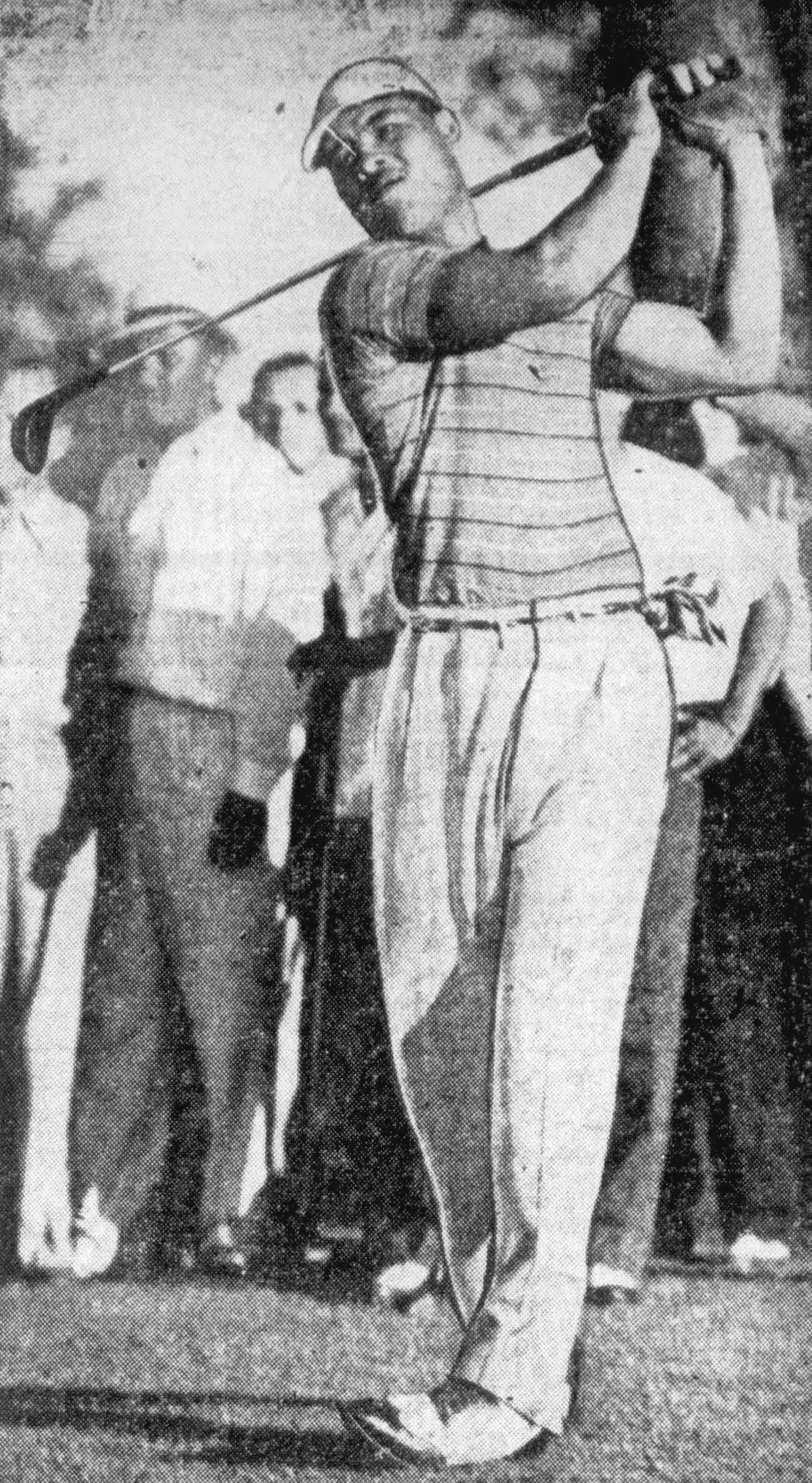
Lee Elder, who would become the first Black golfer to play the Masters in 1975, taught at Langston in the early 1960s and returned in 1978 to manage the course. Billy Eckstine, one of the great American jazz vocalists and a man who took golf almost as seriously as music, played there too.
What was happening on the course was a quiet extension of what was happening at the Whitelaw Hotel and in the nightclubs along U Street. Black Washington had built parallel institutions for survival. Then it had built them well enough to outlast the rules that excluded them.
A new clubhouse, an old fight
Langston was not a side dish after 1941. It remained the home course for both clubs and the gravitational center of Black golf in the city. By the late 1940s it needed a real clubhouse.
On December 18, 1949, the Evening Star ran the announcement:
In a new deal for users of the Langston golf course, National Capital Parks is designing a replacement for its rickety frame field house. The new house will rank with the best on any public links in the city. Supt. Irving C. Root said yesterday the $60,000 structure, more like a private clubhouse, will be ready by summer.
Sixty thousand dollars. A “private” clubhouse on a public course. Ten years after the dump.
Langston gets eighteen holes, at last
The original 1939 plan had called for eighteen. The course only got nine.
In 1955, the back nine finally opened, completing the layout the Royal and Wake Robin clubs had been promised at the start. By then Langston was a destination. Joe Louis had been there. Lee Elder had been there. Billy Eckstine had been there. The course was what the petitioners of 1934 and 1938 had been promised, fifteen and seventeen years late, on land that had been a dump in the 1930s and now hosted the eighteenth hole of a real American golf course.
The PGA repealed its Caucasian-only clause six years later. The course on the Anacostia had outlasted the rule.
On the National Register, in the national story
The course was added to the National Register of Historic Places in 1991. The nomination put the case plainly. Langston, it said, “is significant for its symbolic association with the development and desegregation of public golfing and recreational facilities in the greater Washington, D.C., area,” and as the home course of “the Royal Golf Club and the Wake Robin Golf Club, the nation’s first golf clubs for Black men and women.”
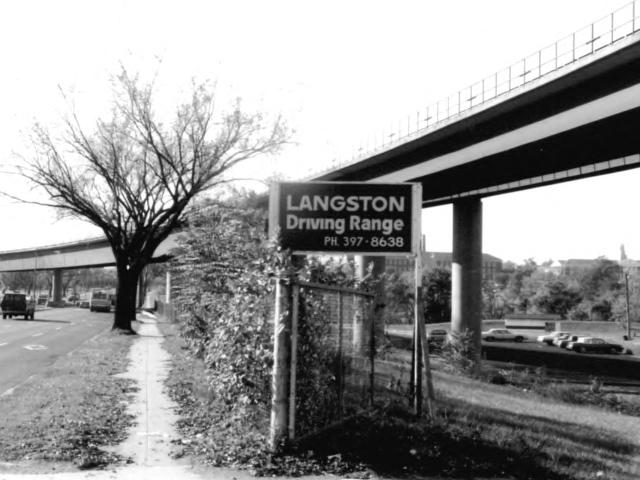
The boundary drawing included with the nomination shows the course as it has existed since 1955. Kingman Lake and its three islands sit on the eastern edge. The clubhouse, marked at point F, is the descendant of the 1949 building. The first nine still occupies the original 1939 footprint.
The Royal Golf Club is still active. So is the Wake Robin Golf Club, which is now the longest-continuously-operating Black women’s golf club in the United States. Both still play out of Langston.
Past the trash heap
The 1939 deal was a separate course on a dump. The 1941 order opened East Potomac and Rock Creek and Anacostia. The 1955 expansion finished the eighteen. The 1961 repeal, eventually, opened the PGA.
The course is still there.
So are the names of the people who got it built.