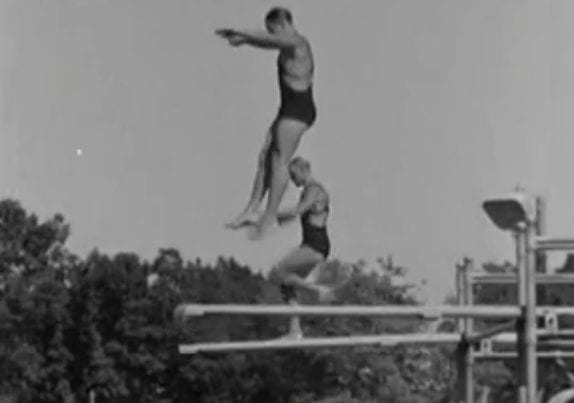
I’d describe it as an experimental travelogue that’s maybe a bit too arty for it’s own good, but nevertheless captures some Ghosts of DC:
tracking shot of northside 900 block F Street NW, including the Dor-Ne Corset Shoppe
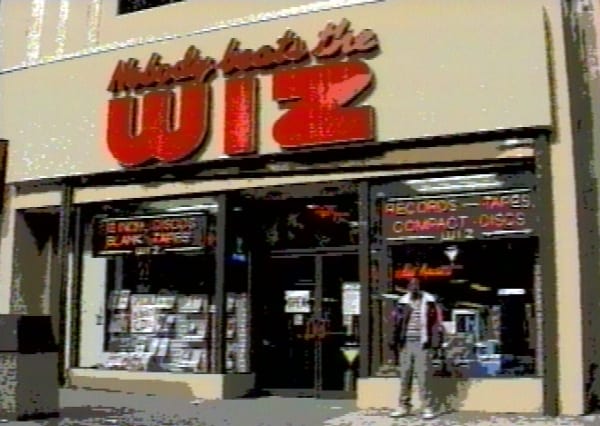
The Wiz Records on F Street
Fort Stevens Liquor Store on upper Georgia Ave.
Melody Records on Dupont Circle
Murrays Steaks
Globe posters
My video originally aired on the local PBS station WETA-TV, but has been sitting in my “basement archives” for 20 years. BTW, I’m the guy who made the cult-documentary HEAVY METAL PARKING LOT.
Feel free to post the Youtube link. I’ve included a few stills to use on your website.
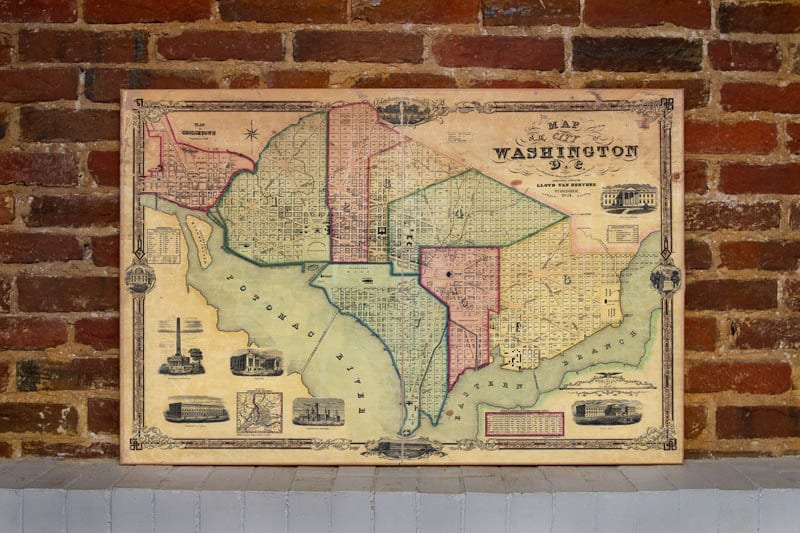
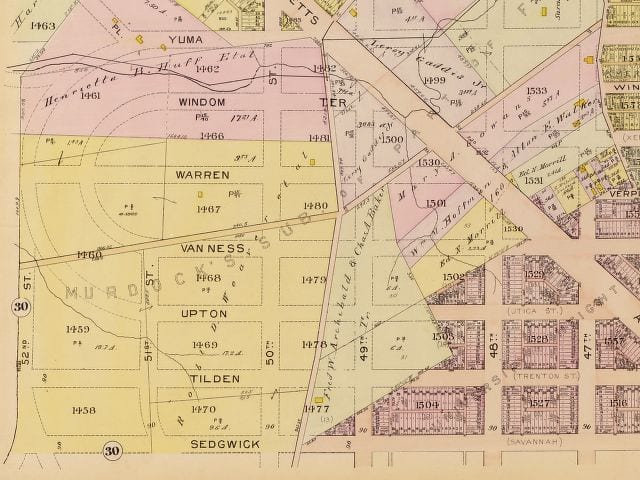
GoDCers love maps and Matt on Etsy has some amazing vintage DC maps for sale! Check out his 1851, 1819, and 1846 maps of DC to hang on your wall, or get one of these as the perfect Christmas present!
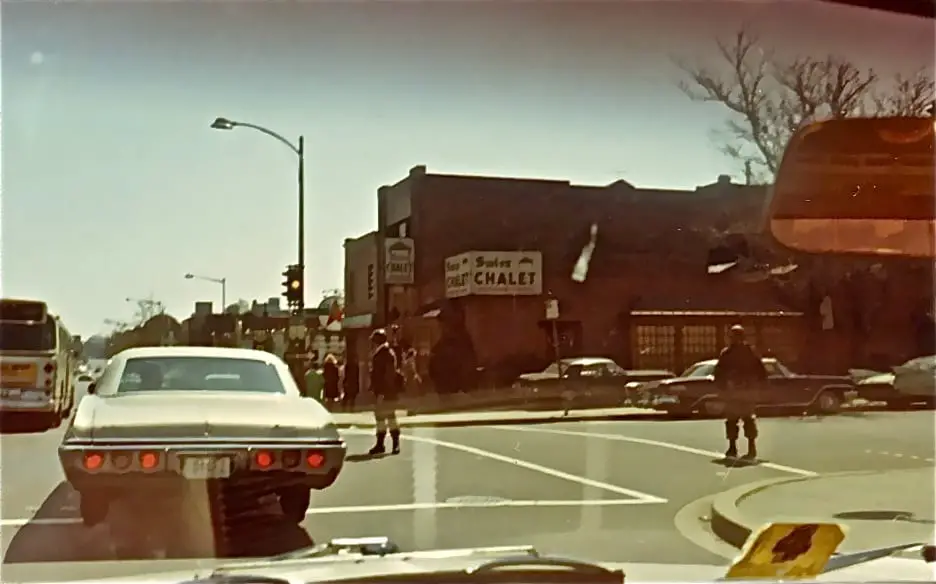
Explore Washington, D.C. through the eyes of GoDCer Tony – a D.C. native. Tony’s father was a pilot with Eastern Airlines and he’s shared some of his photos, including shots of National Airport (not Reagan), the 1962 MLB All-Star Game at D.C. Stadium (i.e., RFK) and more!
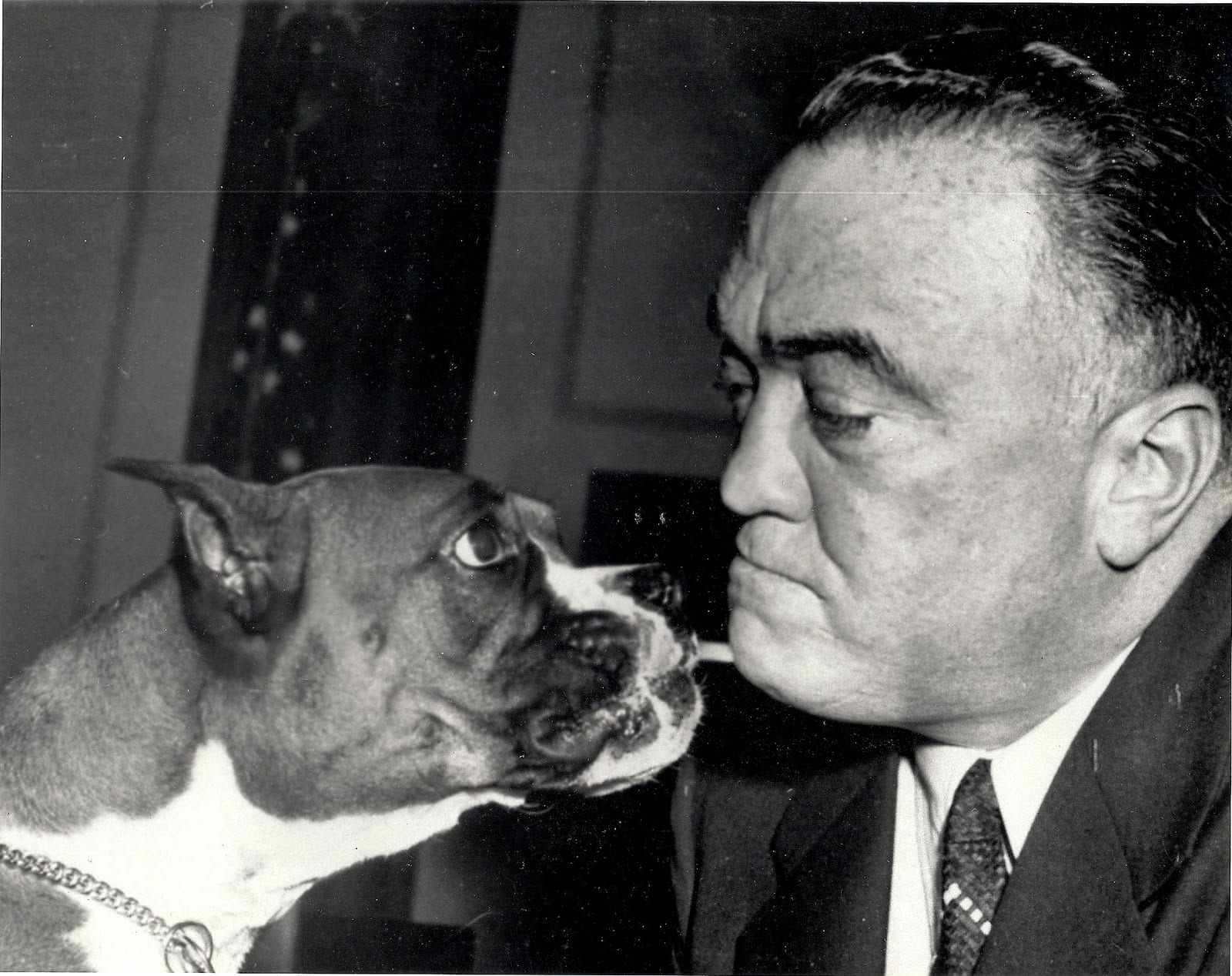
It’s been a while since we posted an email from a GoDCer. So, here’s a good one we received this morning from newly recruited GoDCer Greg. Read on to find out the story behind Julius Garfinkel & Co. and the connection to J. Edgar Hoover!
This is the best contribution thus far by a member of the GoDC community. This is from Tom H. in Bethesda, and when I first saw it, I was blown away at how professional it looked. Thanks Tom!
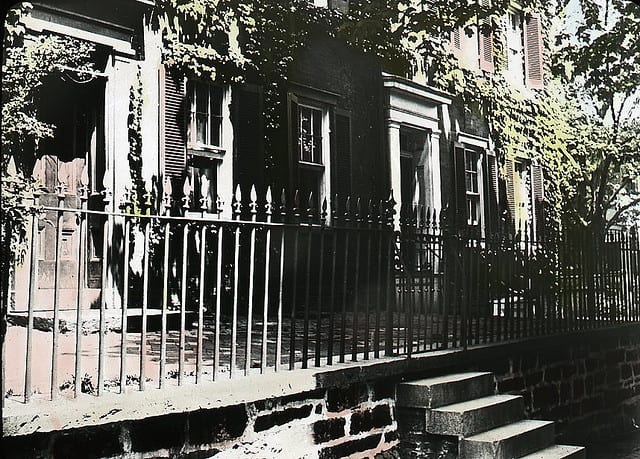
The video is a fascinating history of the gun barrel fence in Georgetown, made from 364 reclaimed Washington Navy Yard muskets.
Georgetown’s gun barrel fence
To complement this wonderful video, we dug up an article published in the Washington Herald on Sunday, June 25th, 1911.
Surmounting a crumbling retaining wall of age-worn stone which stands in front of three of the oldest houses in historic Georgetown is an iron fence which boats a more interesting history than the majority of fencing.
If you will examine the iron uprights standing close together, you will discover that near the top of each one is a projection, which apparently performs no office as a part of the fence. Research into the history of this partition of iron reveals the reason for the projections and many things besides.
Way back in 1814, when Washington was threatened by the invasion of British troops, which were hovering about the ancient hamlet of Bladensburg, Md., foraging and destroying property, the United States government had not the unlimited resources it now possesses.
So when the Capital City of the nation was in imminent peril of being destroyed by the hostile troops the authorities here appealed for help to the public-spirited citizens of the locality. Most of the wealth of the District of Columbia was then centered in Georgetown, as at that time it was one of the most important ports of entry of the Southern Atlantic seaboard. There were great shops and mills there in those days. Merchants of Georgetown had thriving business in the Westt [sic] India trade, importing molasses, coffee, sugar, and rum in large quantities. Among the foremost of these big merchants and landowners was Reuben Daw, whose posterity still figure conspicuously in the assessor’s book of Georgetown realty.
Reuben Daw and a number of others immediately advanced money for the defense of the Capital against the invading forces, asking no security from their government. When Washington was invaded by British troops under Col. Ross, shortly after the battle of Bladensburg, when the Americans, under Maj. Barry, were defeated and the Capital burned, the funds advanced by the Georgetown citizens did much good.
When the war of 1812 was over the government was nearly bankrupt and was in no position to repay debts for which no security was held. But the Secretary of the Navy, the commandant of the navy yard, or some officer in authority who was cognizant of the sacrifices made by the Georgetown citizens realized that something should be done for them. There was little that could be done, but it was finally decided to let those who so desired go to the navy yard and take anything in the way of castings that they could use.
Reuben Daw took advantage of this opportunity and asked for a consignment of antiquated flintlock muskets which were rusting in a neglected pile in an old warehouse. He received permission to remove them and took them to Georgetown.
About that time Mr. Daw built the mansion that still stands in Georgetown on P street, between Twenty-eighth and Twenty-ninth streets. Removing the stocks from the old guns, he had plates forged at one end and made them into the fence which still stands in front of the three houses just beyond Twenty-eighth street.
The small projections mentioned are the corroded remains of the sights at the ends of the gun barrels.
The barrels make an unusually serviceable fence, as the length of time they have stood testifies. They are in as good condition to-day as when they were put up, and it would take a good deal of force to knock the old fence down.
In different parts of Georgetown old iron castings may be seen which came from the navy yard in 1814 or 1815. Window gratings, boot scrapers, stair rails and many other contrivances were fashioned out of the junk taken from the navy yard, and on more than one piece of iron about Georgetown may be seen the coat-of-arms of the United States.
Nearly every on of the castings is directly traceable to the war of 1812, and when one of them is seen it may be taken as mute testimony of the patriotism of the original owner of the property.
Now this a great story. I’m sure the next time you’re walking the brick-lined streets of Georgetown, you’ll be even more observant of these marks of hidden history, connecting us back to the War of 1812.
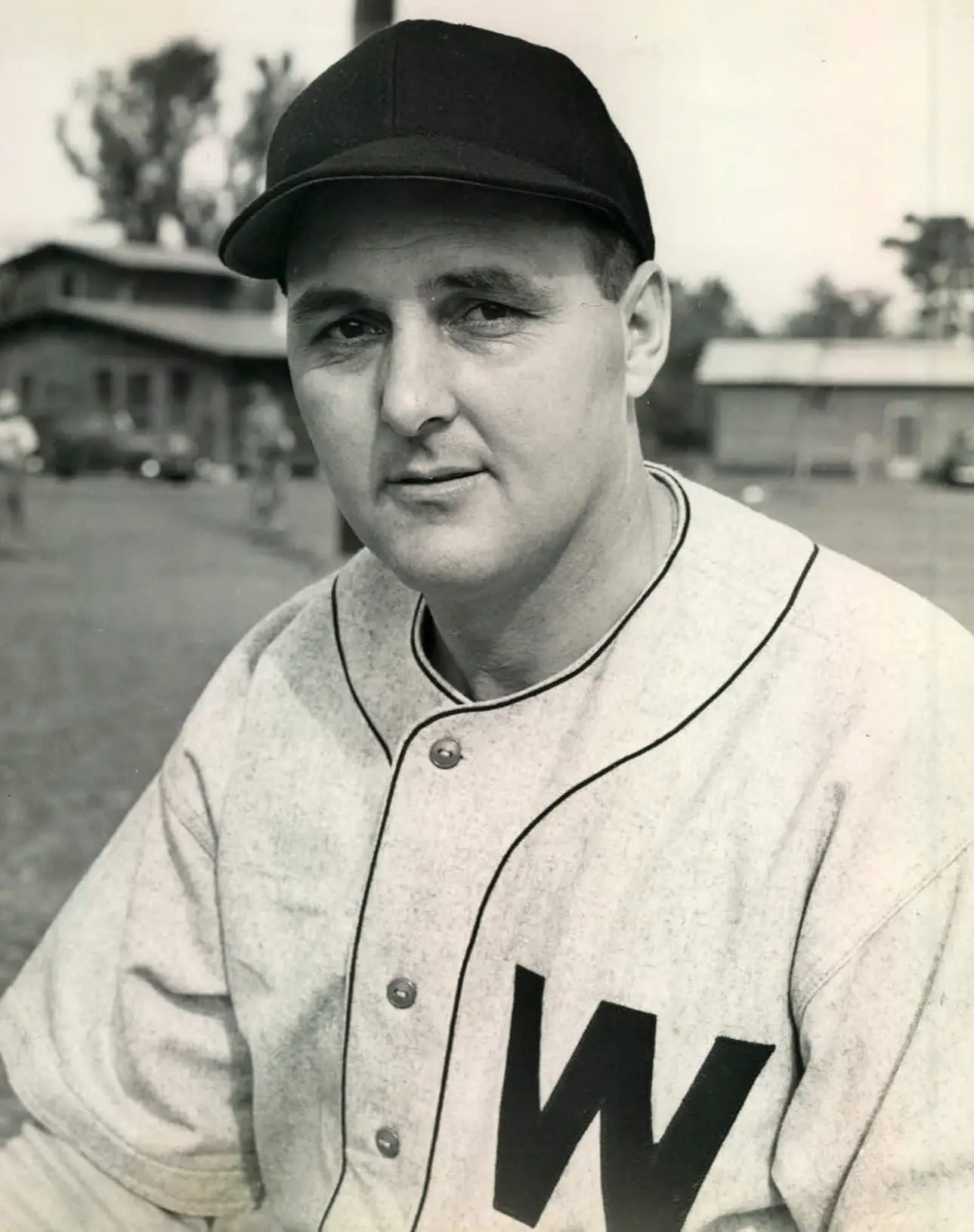
Take a look back at the last time Washington was in the running for a pennant! GoDCer Marty from Chevy Chase, MD shares the story of the 1945 Washington Senators, the last time a Washington baseball team battled for a pennant in the final weeks of the season.
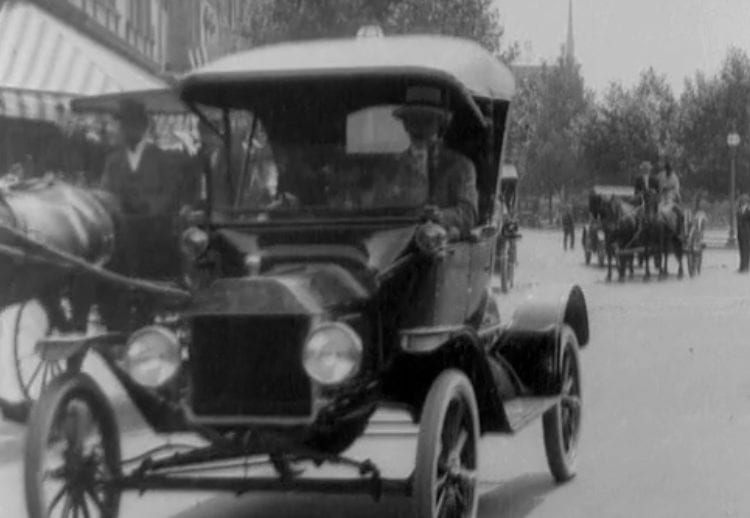
This is one of our best GoDCer contributions yet. Tom from Bethesda sent this over to share with everyone else. This was taken on Pennsylvania Ave. NW between 10th and 11th St. Watch the whole thing and marvel at how chaotic the street scene and traffic seem to be. Safety was certainly different back then.
Here is a description of the film from Tom.
This film clip was shot in July 1909 on Pennsylvania Avenue between 10th and 11thStreets facing the U.S. Capitol. Not even the Library of Congress has additional information, only that it was obtained from the Brook Foundation Collection – an offshoot of a Thomas Edison company. Copy was made from a 35mm negative. Notice the billboards. The one on the left appears to be an ad for C/B Corsets (attachment 1). The right billboard appears to show silhouette of a child and the word ‘Velvet.’ My search for billboard identification turned up nothing.
I don’t know, but would love to find out, whether this is an “actuality” or an Edison clip for a movie. It does not appear to have been a staged scene with actors. Also notice the African American woman holding a parasol and the stylishly dressed African American man crossing the street.
Anyone with information please respond. I am trying to develop an audiovisual exhibit for a museum from archives and home movies pre-1930. The LOC # is (FPB 9286) 1161224-2-1.
Amazing video Tom. Thanks for sharing!
If you guys liked this, check out two other videos we have shared, a baseball tribute and a turn-of-the-century mail carrier.
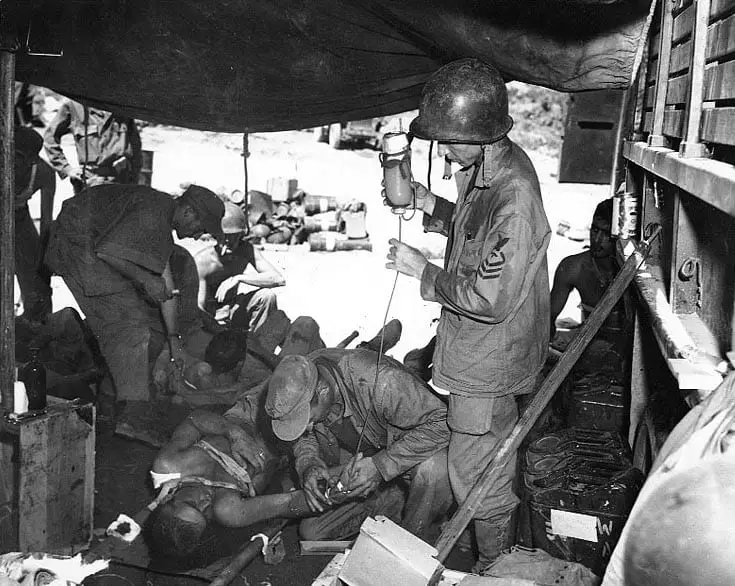
This tragic story of Private Philip Thomas Hughes, a DC native killed in Korea, is a reminder of the regular people who lived in our city generations ago. Read on to learn more about his life and family.
This has to be one of the best finds in a long time … and this appears to be authored by fellow GoDCer Brian at National Journal. The film he uncovered is from the Works Progress Administration, done in 1936. It depicts a day in the life of Washington during the Great Depression.
Read Brian’s full piece here and then follow him on Twitter.
Join us as we explore the history of DC’s Spring Valley, AU Park & Wesley Heights neighborhoods. From WWI munitions to the home of Bucky Harris, discover the stories behind these areas!