
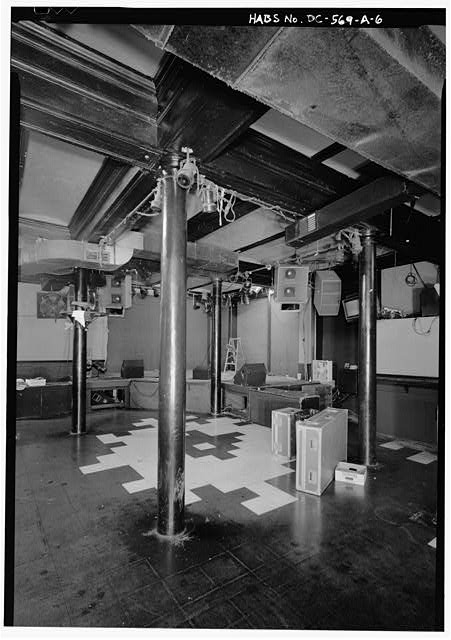
The cast-iron columns the punks leaned against were drawn by a Supervising Architect of the Treasury ninety-two years before Bad Brains played there.
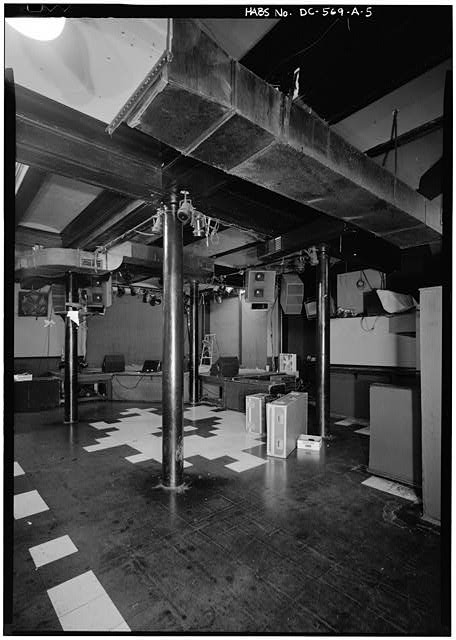
If you stood near the front of the stage at the original 9:30 Club, the massive column that blocked your view of the band was not a punk-rock prop. It was structural cast iron, set into a load-bearing brick floor system in 1888, paid for by Washington capitalists who wanted the city to finally have a real office building.
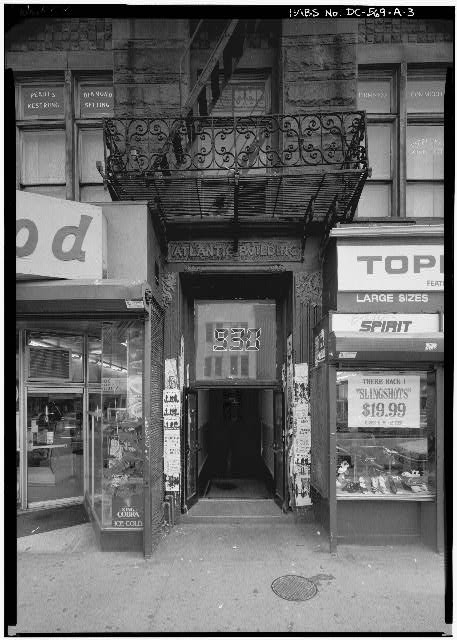
The Atlantic Building at 928-930 F Street NW had five lives before it became the most famous small venue in American punk. It was a speculative skyscraper, a meeting hall, the headquarters of a presidential inaugural committee, the cradle of the National Zoo, and the working home of the United States Forest Service. Then a real estate developer’s wife and a sound engineer turned its ground-floor rear room into the 9:30 Club, and for fifteen years the bands loaded their gear in through the same alley John Wilkes Booth used to escape from Ford’s Theatre.
This is the story of the building. The club gets the longest chapter because the club is what people remember. But the building was already old when it opened.
An 1888 Skyscraper on F Street
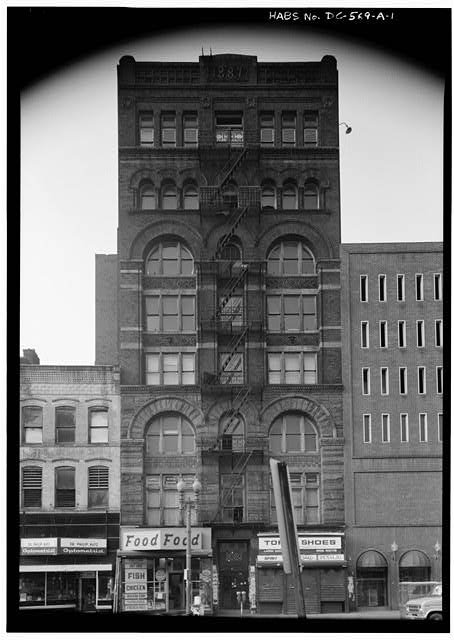
The Atlantic Building Company was a syndicate of twelve Washington capitalists. They incorporated in the fall of 1887 and broke ground at 928-930 F Street NW on a “speculative office building” designed by James G. Hill, who had served as Supervising Architect of the U.S. Treasury from 1877 to 1883. Hill had designed the Bureau of Engraving and Printing and the Government Printing Office. The Atlantic was his last large commercial commission in Washington.
Eight stories. Romanesque Revival. Two passenger elevators. When it opened in October 1888, the Historic American Buildings Survey would later record, it was the largest commercial structure in the city and one of the first in Washington to feature a passenger elevator. It was also one of the last big Washington buildings constructed with load-bearing masonry walls. A few years later, steel-frame construction would take over and make the Atlantic’s brick-and-iron skeleton look like the end of an era.
The Washington Post wrote up the new building on October 18, 1888, and the article reads like a catalog of how a Gilded Age office building tried to impress its tenants:
On the first floor, as one enters the hall, is a directory of the tenants of the offices. Inside the hall a speaking tube connects with each room, thus enabling visitors to ascertain if the occupants they wish to see are in. A row of mail boxes with Yale locks receives the mail of each tenant. Another convenience in this line is the “mail shute.” On the first floor is a large letter-box, with a steel shute running up to the top story. There are openings in the shute on each floor, and one simply steps from his office out into the hall and drops his mail into the shute, from which receptacle it is collected by the postman. Occupants of the offices have the choice of either gas or the electric incandescent light, the latter being furnished at a low figure. Double Whittier elevators run until 6 o’clock.
A pneumatic directory. A steel mail chute. Two elevators with a hard stop at six. The building was sold to its 142 tenants on the proposition that 1888 was the future.
Most of those tenants were lawyers needing offices near the Patent Office and the Pension Building, and real estate agents working the suburban boom. The Atlantic Building Company’s first president was Alexander Thompson Britton, founder of the law firm Britton & Gray. The original list of subscribers, printed in the Post opening writeup, included A. T. Britton, B. H. Warner, Samuel C. Ross, C. C. Duncanson, Crosby S. Noyes, B. H. Warder, John Jay Edson, C. B. Pearson, M. M. Parker, George E. Emmons, Henry Wise Garnett and A. A. Thomas. Crosby S. Noyes was the editor of the Evening Star, which is one reason the building’s later doings tended to make the city papers.
The Eighth-Floor Assembly Room That Founded the National Zoo
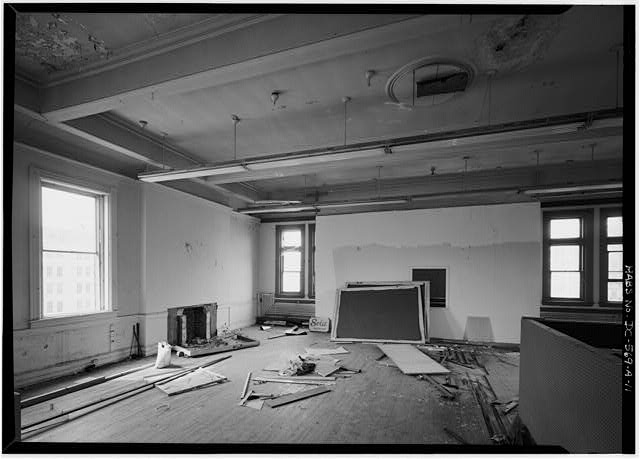
The top floor of the Atlantic Building had two large assembly rooms that the building rented out for civic meetings. According to the HABS data page for the building, one of those eighth-floor meetings was the gathering at which the National Zoo was founded. Congress chartered the National Zoological Park by act signed by President Cleveland on March 2, 1889, a few weeks after the room above F Street had hosted the organizational meeting. (For the prehistory of the zoo itself, see our piece on the bison on the National Mall that William Hornaday corralled before Congress gave him a real park.)
The assembly rooms had a busier civic life than just zoos. On November 20, 1888, the Post reported, “The work of the Inaugural Committee is progressing very favorably, and yesterday the members were installed in their new offices in the Atlantic Building, which will be their headquarters until after the 4th of March.” That was the committee for the inauguration of Benjamin Harrison. From November 1888 until Harrison was sworn in on March 4, 1889, the campaign to put the Republicans back into the White House ran out of an office on the top floor of an eight-story brick speculative on F Street.
Then in 1905, the United States Department of Agriculture’s Forest Service moved in. By the 1910s the Forest Service was filling the building. By 1940 it had every floor. For thirty-five years the Atlantic Building was, in effect, the headquarters of the federal management of America’s national forests. The Forest Service finally vacated the building in 1940 and the place was let to jewelers, clothing merchants, photographers, and lawyers. The Romanesque arches above the F Street sidewalk got dirtier. The downtown around the building started to slip.
The Slow Decline of F Street, and a Restaurant in the Back Room
By the 1970s, the eight-story Atlantic was an architectural orphan. The big new commercial buildings of downtown had moved west and north. F Street, which had been the city’s premier shopping street before the war, was hollowed out by the 1968 riots and the suburbanization that followed. The Atlantic Building’s then-owner, Paul Parsons, rented office space at rock-bottom prices that started, by some accounts, at seventy-five dollars a month.
Parsons decided to put a restaurant in the back. The space he picked was the building’s ground-floor rear room, which the original 1888 plans show as the safe deposit room of the office building. The restaurant did not last. A guitarist named Robert Goldstein and a singer named Roddy Frantz, who were in a new wave band called the Urban Verbs, talked Parsons into converting the failed restaurant into a club they could rehearse in. They called it Atlantis. The first punk show was January 27, 1978, with the Urban Verbs, the Slickee Boys and White Boy. Parsons hated the crowd. A year later, the Atlantis sank.
That should have been the end. Except a real estate developer named Jon Bowers, who liked music, bought the building in 1979 and handed the club space to his wife Dody DiSanto, an artist and dancer who had studied at the Corcoran and at the Ecole Jacques Lecoq in Paris. DiSanto wanted Washington’s version of CBGB. She got it.
May 30, 1980: Tiny Desk Unit Opens for the Lounge Lizards
The first show at the original 9:30 Club was the New York no-wave saxophone band the Lounge Lizards, headlining over the local opener Tiny Desk Unit, whose synthesizer player Bob Boilen would later create and host NPR’s All Songs Considered and co-create the Tiny Desk Concerts series. The show was Friday, May 30, 1980. The Washington Post‘s Richard Harrington dropped a review into the Sunday paper on June 1, 1980, under the headline “Club 9:30 — A New Wave of Night Life,” and you can read the lede now and feel exactly how new the whole thing felt:
First came the artists, then the galleries. Now the rejuvenated area around the 900 block of F Street NW is about to welcome its first nondisco night spot. The 200-seat 9:30 club, which opened Friday, represents not only a time and place (it is located at 930 F St. and its shows start at 9:30 p.m.), but a faith in downtown that has been absent since the riots of 1968.
Two hundred seats was generous. The legal standing capacity in the ground-floor rear room was 199. The space was an awkward L. There were cast-iron columns in the way of every clean sightline. There was no ventilation. There were rats. There was a stench. There was a hair dryer that James Brown later required for his backstage prep, which the club kept for years afterward as a relic (we wrote about that hair dryer and the James Brown shows back when Lisa White still gave 9:30 Club walking tours). The room was 92 years older than the bands playing in it, and the bands did not seem to notice.
For the first six years Dody DiSanto shared the booking with two outfits that pushed the place toward the experimental edge: District Curators, run by Bill Warrell out of the d.c. space loft at Seventh and D, and Interzone, which favored video, performance art, and the kind of avant-garde that did not pay the rent. The 9:30 was where you went to see James White and the Blacks, Defunkt, Bush Tetras, the Fleshtones, the Waitresses, the Bongos, and a parade of local heroes whose names you had to learn off a Xerox flyer stapled to a phone pole: Tommy Keene, Egoslavia, Velvet Monkeys.
By 1981 two concert promoters, Seth Hurwitz and Rich Heinecke, were doing more and more of the bookings under their company, It’s My Party. By 1986 they had bought the club outright from DiSanto and Bowers. IMP still owns the 9:30 today.
Bad Brains, Minor Threat, Black Flag, and the Booth Alley
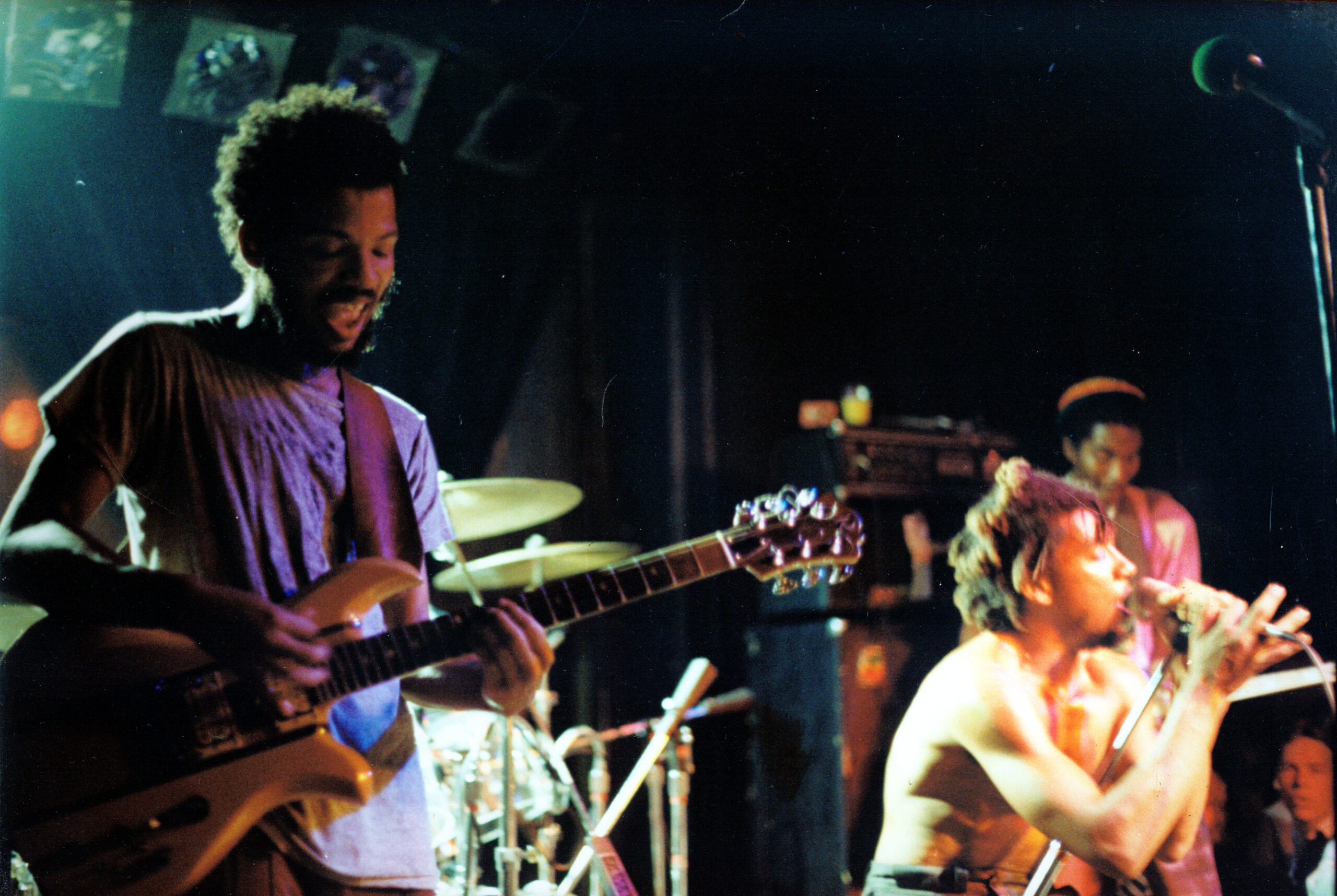
The list of people who played the room reads like the index of a book on American underground music from 1980 to 1995. Bad Brains. Minor Threat, whose singer Ian MacKaye later founded Fugazi. Black Flag with a teenage Henry Rollins biting his microphone. The Replacements. Sonic Youth. Trouble Funk. R.E.M. in March 1983, before the world found them. Nirvana in 1991, opening for nobody, a few months before Nevermind. Dave Grohl played the 9:30 with his pre-Nirvana teenage hardcore band Dain Bramage. William S. Burroughs did a spoken-word night. Bigger national tours, meanwhile, were going to the Bayou under the Whitehurst Freeway in Georgetown.
The 9:30 had the dimensions of a basement, but it was on the ground floor. The dirty trick of the building’s geometry was that the load-in door was around the back, in the alley that runs east-west between F and G Streets. That alley is the same one John Wilkes Booth galloped down on the night of April 14, 1865, fleeing Ford’s Theatre two blocks west. Richard Harrington made the point in his Dec. 31, 1995 farewell piece in the Post, and it became one of the durable scene-talk facts:
Thousands of bands have passed through the 9:30’s back door, many of them impressed that their equipment was loaded in from the same alley John Wilkes Booth escaped through after assassinating Abraham Lincoln at nearby Ford’s Theatre.
The pole near the stage was the thing every regular learned to work around. Harrington called it “a non-efficacious L-shape with a massive column near the front of the stage” and noted that “it was generally better to be a tall insider than a short tourist.” That column was one of the cast-iron columns drawn by Hill’s office in 1887. Punk’s most photographed venue was held up by Treasury Department architecture.
For the last seven years of the club’s run on F Street, the 9:30 was the only tenant in the eight-story building. The other floors stood empty above the noise. Dave Grohl, asked in 2010 to look back on the original 9:30 for the club’s 30th anniversary, told the Post, “As a kid growing up in the D.C. punk rock scene, your first show at the 9:30 club might as well have been Royal Albert Hall or Madison Square Garden.”
December 31, 1995: The 9:30 Is Dead, Long Live the 9:30
Harrington wrote the farewell piece in the Post on the morning of the closing show. The headline was “The 9:30 Club: The Time of Their Lives.” The lede was four words:
The 9:30 is dead. Long live the 9:30.
That night, Sunday, December 31, 1995, the closing-night lineup ran through Trouble Funk, Black Market Baby, Mother May I, Smart Went Crazy, and ended with Tiny Desk Unit, the band that had opened the very first 9:30 show fifteen and a half years earlier. The Post‘s Mark Jenkins covered the night in his column on January 3, 1996: champagne, last calls, “Sunday night at the club 1996 was overshadowed by 1980-1995.” The 9:30 was 15 years old. The doors closed. The columns stayed.
Hurwitz and Heinecke had already bought and renovated the old WUST Radio Music Hall at 815 V Street NW, a few blocks north, with a 1,000-person capacity that the F Street room could never have managed. The new 9:30 opened on Friday, January 5, 1996, with the Smashing Pumpkins. (We’ve written about the V Street opening night and a couple of other memorable concerts at the 9:30 Club, including the night the Smashing Pumpkins inaugurated the new venue.)
What Happened to the Atlantic Building
For a few years after the club moved out, the Atlantic Building sat empty above F Street. The neighborhood that the 9:30 had helped reanimate by bringing arts crowds to a “barren downtown,” in Harrington’s phrase, was now ready to be developed for real. In the mid-2000s the building was largely demolished. The F Street facade was preserved and incorporated into a new commercial building. The Romanesque arches and the granite trim and the terra cotta cartouches are still there if you look up. The eight stories above are gone. The cast-iron columns are gone. The room is gone.
If you want to visit something that approximates the room, Seth Hurwitz opened a new small club at the V Street complex in 2023, deliberately scaled and laid out to feel like the original 9:30. He called it the Atlantis, after the predecessor club that gave the Atlantic Building its first nightlife in 1978. The Mayor of D.C. proclaimed May 30 “9:30 Club Day” at the opening ceremony.
The building came first. The club came last. And the column was older than the band.
Original 9:30 Club FAQ
Where was the original 9:30 Club?
The original 9:30 Club was in the ground-floor rear room of the Atlantic Building at 928-930 F Street NW in downtown Washington, D.C. The name came from the 930 street address and the venue’s standard 9:30 p.m. start time. The Library of Congress’s Historic American Buildings Survey identifies the room as the first-floor rear room, originally the building’s safe deposit room.
What building housed the original 9:30 Club?
The Atlantic Building, an eight-story Romanesque Revival office building completed in October 1888. When it opened, it was the largest commercial structure in Washington and one of the first in the city to have a passenger elevator. It was also one of the last big DC buildings constructed with load-bearing masonry walls instead of a steel frame.
Who designed the Atlantic Building?
James G. Hill (1841-1913), who had served as Supervising Architect of the U.S. Treasury from 1877 to 1883. Hill’s other Washington commissions included the Bureau of Engraving and Printing (now the Sidney R. Yates Federal Building) and the Government Printing Office.
When did the original 9:30 Club close?
The original venue at 930 F Street NW closed after the Sunday, December 31, 1995 show. The 9:30 reopened the following Friday, January 5, 1996, at 815 V Street NW, in the renovated former WUST Radio Music Hall, with a show by the Smashing Pumpkins.
What is at 930 F Street NW today?
The Atlantic Building was largely demolished in the mid-2000s, but the original F Street facade by James G. Hill was preserved and incorporated into a new commercial building on the same site. The Romanesque arches, granite trim, and terra cotta cartouches are still visible above the sidewalk between 9th and 10th Streets NW.