
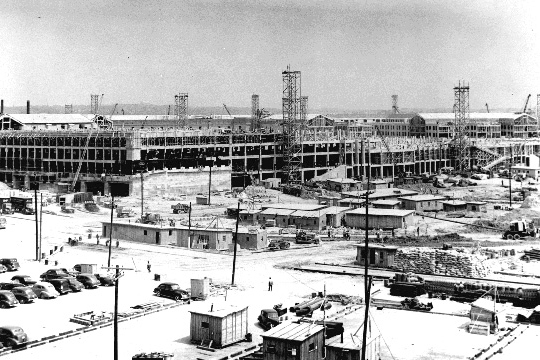
When was the Pentagon built? Ground was broken on September 11, 1941, and the building was dedicated on January 15, 1943. Sixteen months. Six and a half million square feet of office space. The largest office building in the world, thrown up in the time it usually takes to permit a basement.
It started in a War Department staff meeting in July 1941. The army was bursting at the seams, scattered across seventeen buildings in Washington, and the country was lurching toward a war it had not yet entered.
The fix that emerged that summer was an Arlington pentagon with seventeen and a half miles of corridors, a workforce of more than 13,000, and a construction schedule so aggressive that the first 1,500 employees moved in while pile drivers were still pounding.
This is how it got built. The design story, why the building has five sides at all, lives in our piece on why the Pentagon has five sides. This post is about everything that happened after the architects went home.
A War Department with nowhere to put itself
By the summer of 1941, the War Department had grown to 24,000 military and civilian employees, scattered across 17 buildings in Washington. The largest of them, the Munitions Building on the Mall, held 779,000 square feet and still could not absorb the expansion.
Officials told Congress they needed another 734,000 square feet of office space immediately, with a 25 percent staff increase already projected for January 1942. They had also just been evicted from the ornate State, War, and Navy Building next to the White House (now the Eisenhower Executive Office Building) because FDR’s staff needed the room.
Three weeks before the famous July 17 staff meeting, Hitler had invaded the Soviet Union. FDR had already declared a national emergency in May. Mobilization was eating Washington office by office.
On Thursday, July 17, 1941, Brigadier General Brehon B. Somervell, the army’s chief of construction, called his team in. He gave Lieutenant Colonel Hugh J. Casey and chief consulting architect George Edwin Bergstrom what sounded like an impossible assignment: design a fireproof, air-conditioned office building for 40,000 people. Have basic plans on his desk Monday morning.
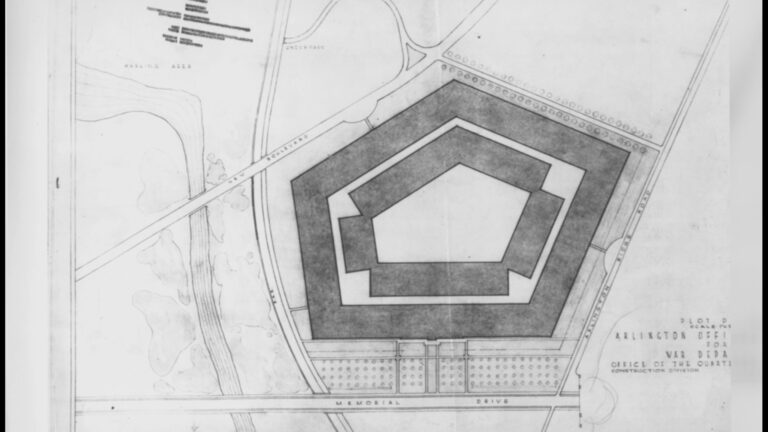
They worked through the weekend and made the deadline. The site at Arlington Experimental Farms was bounded by five roads, which is the slightly silly real reason the Pentagon is a pentagon. The full story of the design is over in our piece on the five-sided shape.
FDR overrules the site
There was a problem. The proposed site, where Arlington National Cemetery now extends, sat directly in the ceremonial sightline from Memorial Bridge to the Lincoln Memorial. Gilmore D. Clarke, chairman of the Commission on Fine Arts, and Frederic A. Delano of the National Capital Park and Planning Commission, were furious. Clarke got in front of the president.
At an August 19 press conference, FDR torched his own War Department’s plan publicly. He compared the Arlington Farms idea to his role putting temporary buildings on the Mall during the First World War, which he called “a crime for which I should be kept out of Heaven.” He was not going to spoil the plan of the capital twice.
On August 26 he summoned the principals to his office. On August 29 he personally toured both sites with Somervell, Clarke, and Budget Director Harold Smith. When Somervell kept arguing for Arlington Farms, Roosevelt overruled him on the spot and moved the project a mile downriver, onto low-lying ground locally called Hell’s Bottom. He also cut the capacity from 40,000 to 20,000.
The capacity cut did not stick. The site cut did. And the building was already a pentagon, because there was no time to start over.
What was at Hell’s Bottom
Hell’s Bottom was not empty. The site was a patchwork of brickyards, old whiskey stills, light industrial sheds, and a portion of Washington-Hoover Airfield, the city’s original commercial airport. We wrote about Hoover Field a few years back. The Pentagon swallowed it.
Adjacent to it, on land slated for the road network that would feed the new building, was Queen City.
Queen City was a working African American community of about 300 families, descended in part from residents of Freedman’s Village, the federal settlement established on the Custis-Lee estate during the Civil War for displaced and freed Black people. A 1940 census counted 903 residents and 218 homes. There was a church, a school, a grocery, a barbershop.
The neighborhood was not in the Pentagon’s footprint. It was in the way of the cloverleaf interchanges and access roads needed to move tens of thousands of war workers into and out of the building each day. On April 17, 1942, the army cleared the last of it. The cloverleaf where Columbia Pike empties into Route 27 today sits exactly where Queen City stood.
The community was not relocated as a community. The families scattered.
The 16-month sprint
Ground was broken on September 11, 1941. Construction began before the design was finished. Architects were sending fresh drawings out as the pile drivers worked. Steve Vogel, the Pentagon’s definitive historian, has noted that the designers were “moving barely one step ahead” of the construction crews.
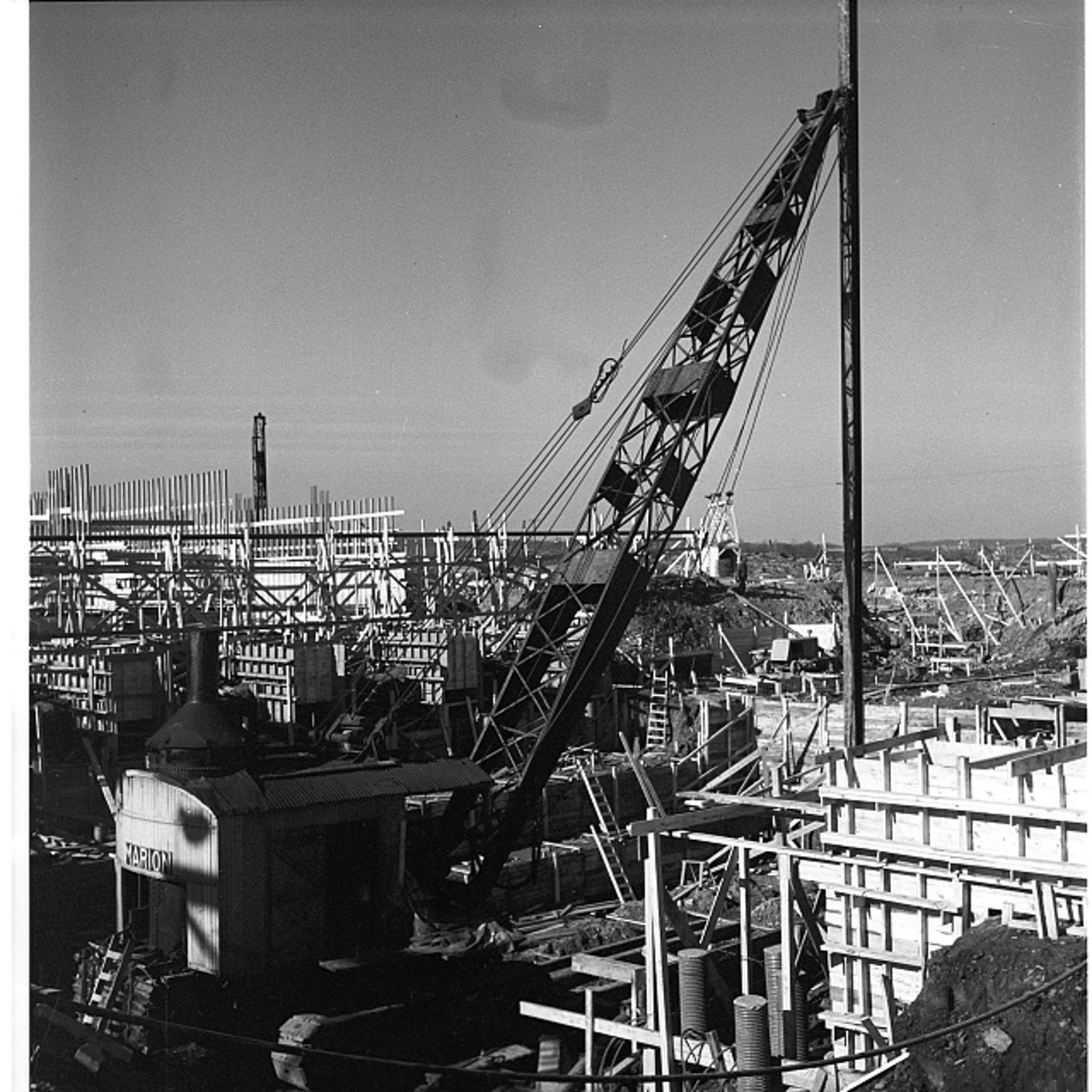
Somervell picked John McShain to build it. McShain was a Philadelphia contractor who had already gone up the East Coast putting up federal landmarks: the Jefferson Memorial, the new National Airport, the Library of Congress Annex. He took the Pentagon job and never lost a day to weather.
Overseeing the construction for the army was Somervell’s hard-charging deputy, Colonel Leslie R. Groves. Groves would leave the Pentagon project late in 1942 to run something larger and more secret. He was the officer in charge of the Manhattan Project.
By March 1942, the construction workforce had grown past 13,000. After Pearl Harbor on December 7, 1941, McShain’s crews went to three round-the-clock shifts, and the budget jumped by more than $14 million. Workers came in from all over the country. The Great Depression was still in living memory and a job this size pulled men from as far as the Carolinas and the Midwest.
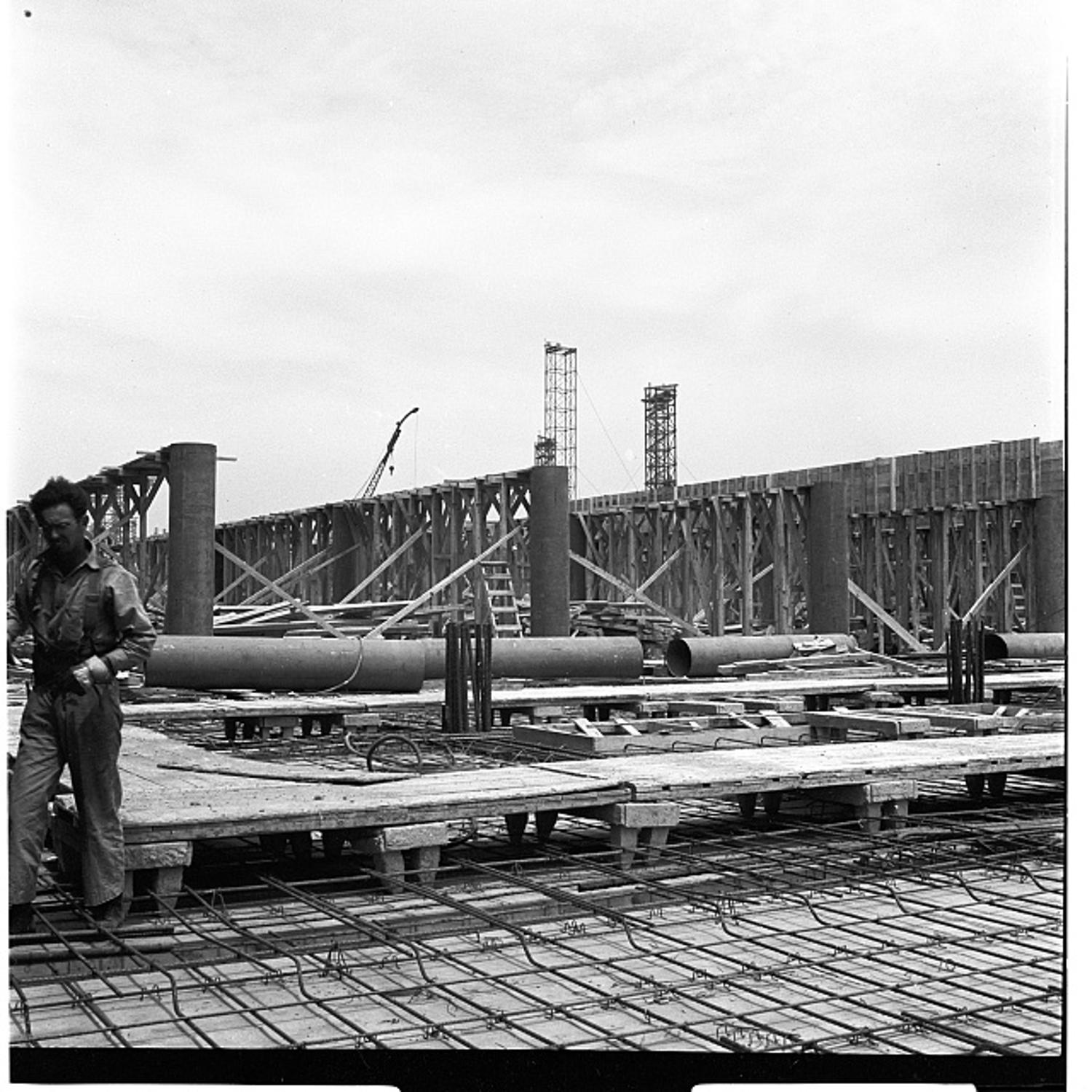
The pace was punishing. April 30, 1942, less than eight months after groundbreaking, the first 1,500 employees moved into the building while it was still half-finished. They had to balance on planks laid across mud and puddles to reach their offices. They called themselves the “plankwalkers.”
Their working conditions for that first summer were heat, dust, hammering noise, and unfinished partitions.
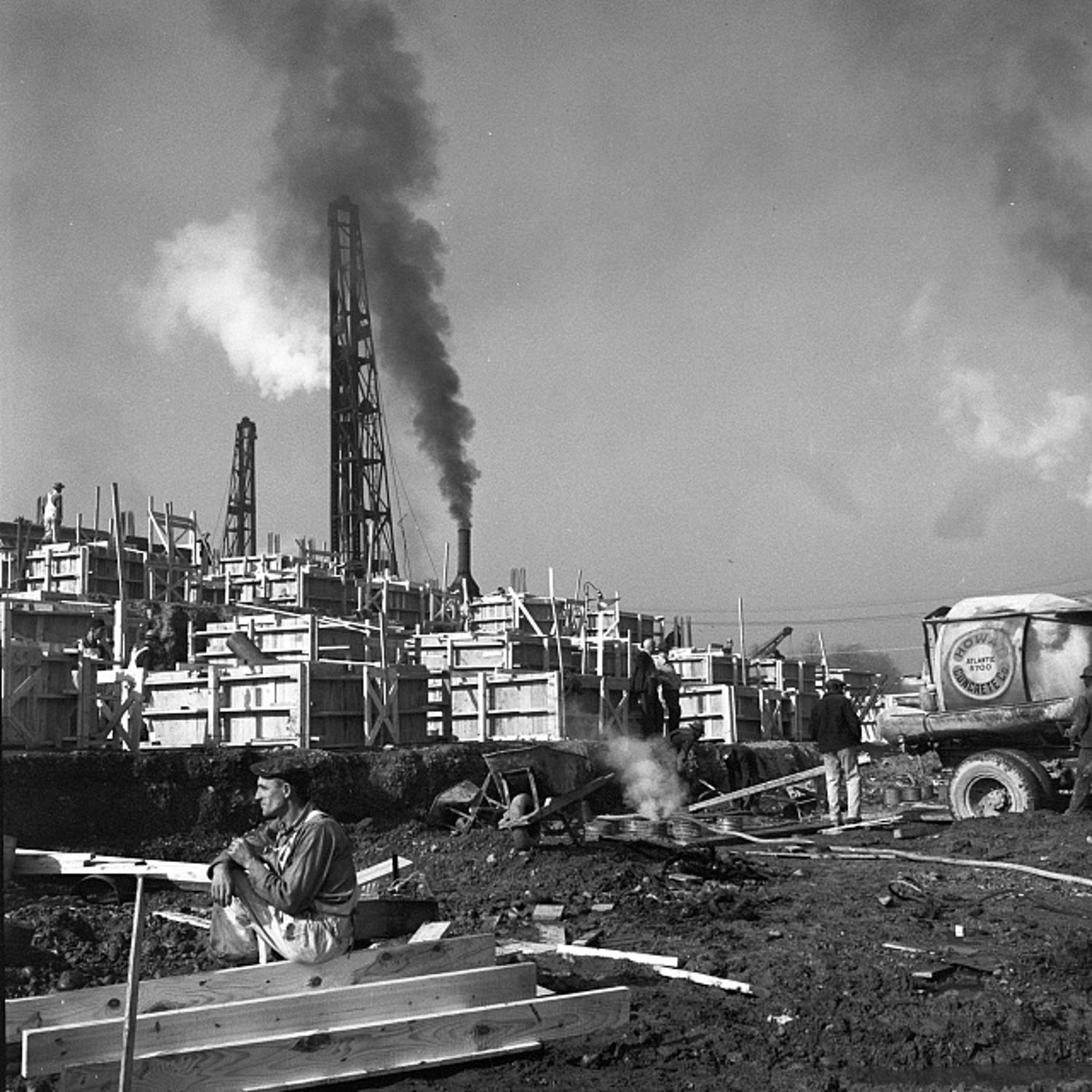
By November 1942, Secretary of War Henry L. Stimson and Army Chief of Staff General George C. Marshall had moved in. The building was dedicated on January 15, 1943. Final punch-list work continued into mid-February.
Watch the Pentagon construction shape emerge
The pentagonal floor plate was vast and the work was happening on all five sides at once. The Army flew the site monthly to document the build. Two of those aerials, taken about seven weeks apart, show the building going from earthwork to a recognizable Pentagon. The hero image at the top of this post is the third, shot July 1, 1942. After the war, photographer Theodor Horydczak shot a clean aerial of the finished Pentagon for the Library of Congress.
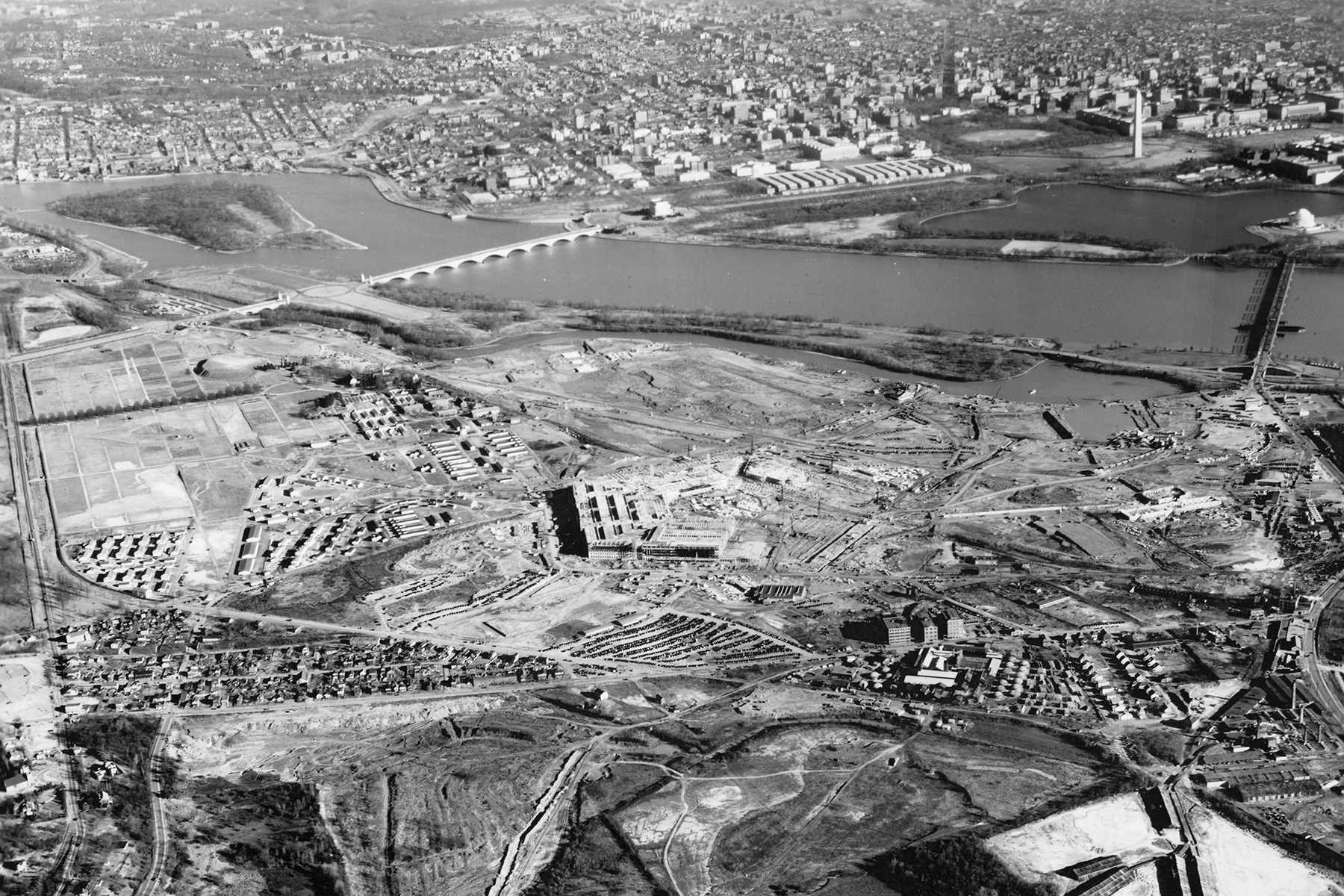
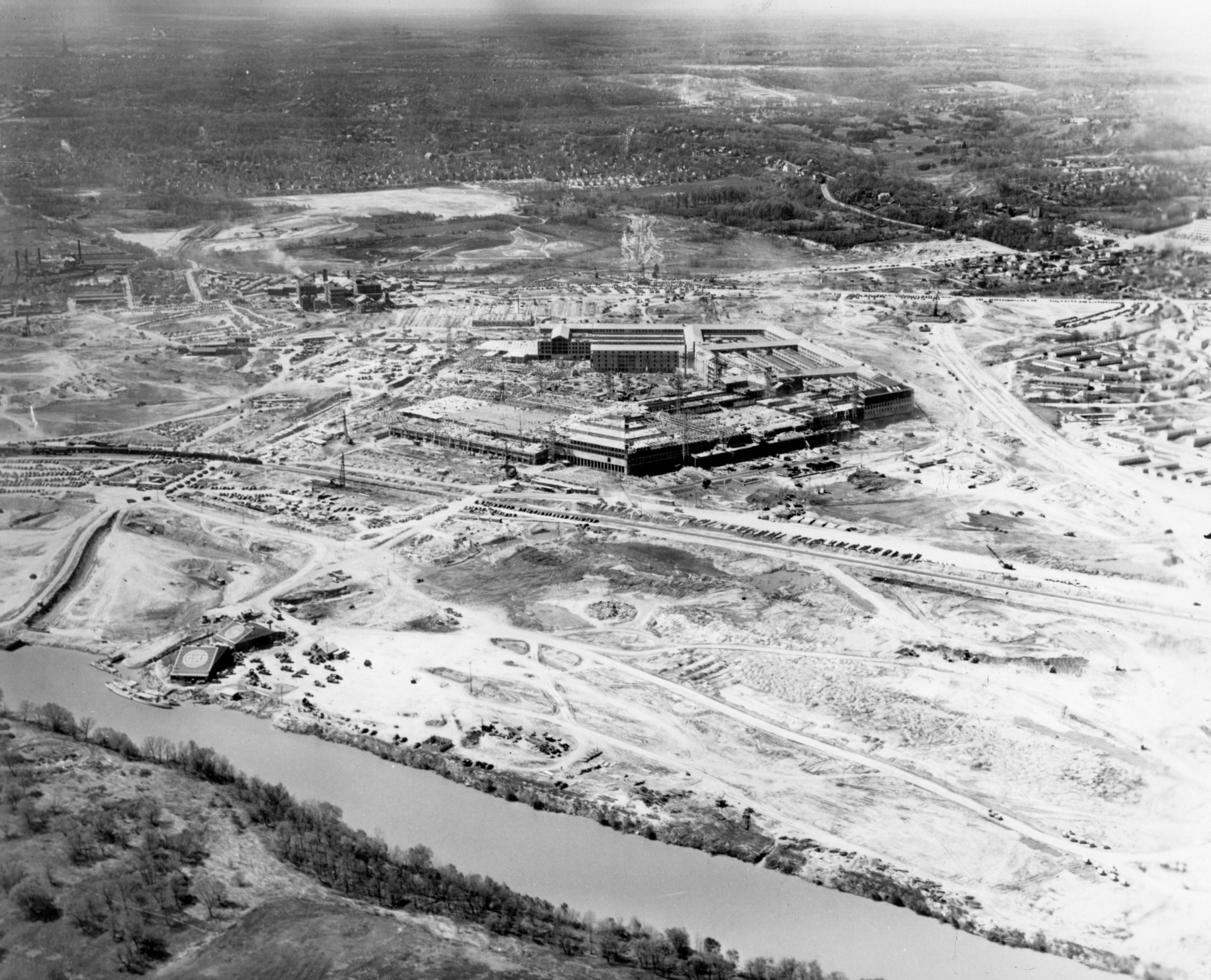
By July 1, 1942 (the hero image above), the building had taken on its recognizable Pentagon shape, with three sides framed up and the fifth still bare ground. Six and a half months remained to dedication.
Bergstrom resigns, mid-project
George Bergstrom did not finish the building he had designed. On April 11, 1942, he resigned as the Pentagon’s chief architect. The reason had nothing to do with the building.
Bergstrom was the sitting president of the American Institute of Architects and was under investigation by the AIA for improper conduct in an unrelated professional matter. The scandal followed him to the Pentagon project and he stepped aside. David J. Witmer, his deputy, took over.
By the time he resigned, the design was essentially locked. The decisions Bergstrom would be remembered for, the concentric ring layout, the radial corridors, the five-sided plan, were already steel and concrete.
“Whites only” and the basement cafeteria
The Pentagon was built under Virginia state law, and Virginia law in 1941 required segregated workplaces. The architects designed accordingly: separate dining facilities and separate lavatories for white and Black workers. The lavatories sat side by side. The cafeterias were stacked vertically. The white cafeteria was on the main concourse. The Black cafeteria was in the basement.
In May 1942, a Black ordnance worker named Jimmy Harold, by training a draftsman and engineer, refused to eat in the basement cafeteria. He sat with other Black workers in the main-floor cafeteria for several days. According to contemporary accounts of the incident, the standoff turned violent when a white security guard beat Harold inside the building.
The story made its way to Judge William Hastie, the Black civilian aide to Secretary of War Stimson, who pushed for a formal investigation. Somervell, by then heading Army Service Forces, issued an order calling for the “discontinuance of any enforced segregation of negro employees in the cafeterias in the Pentagon building.”
When Roosevelt visited the site before the dedication, he ordered the “Whites Only” signs taken down. The governor of Virginia objected. The administration responded that the Pentagon, although it sat on Virginia soil, was federal jurisdiction. The objection went nowhere.
The Pentagon became the only building in the state of Virginia where segregation laws were not enforced. Virginia did not repeal those laws until 1965.
The numbers
A handful of figures help convey the scale of what got built in 16 months. The Pentagon covers 29 acres on the ground and totals roughly 6.5 million square feet of office space across five floors and five concentric rings. Internal corridors run about 17.5 miles. The five-acre courtyard in the middle was muddy when the building opened and is now a favorite lunch spot.
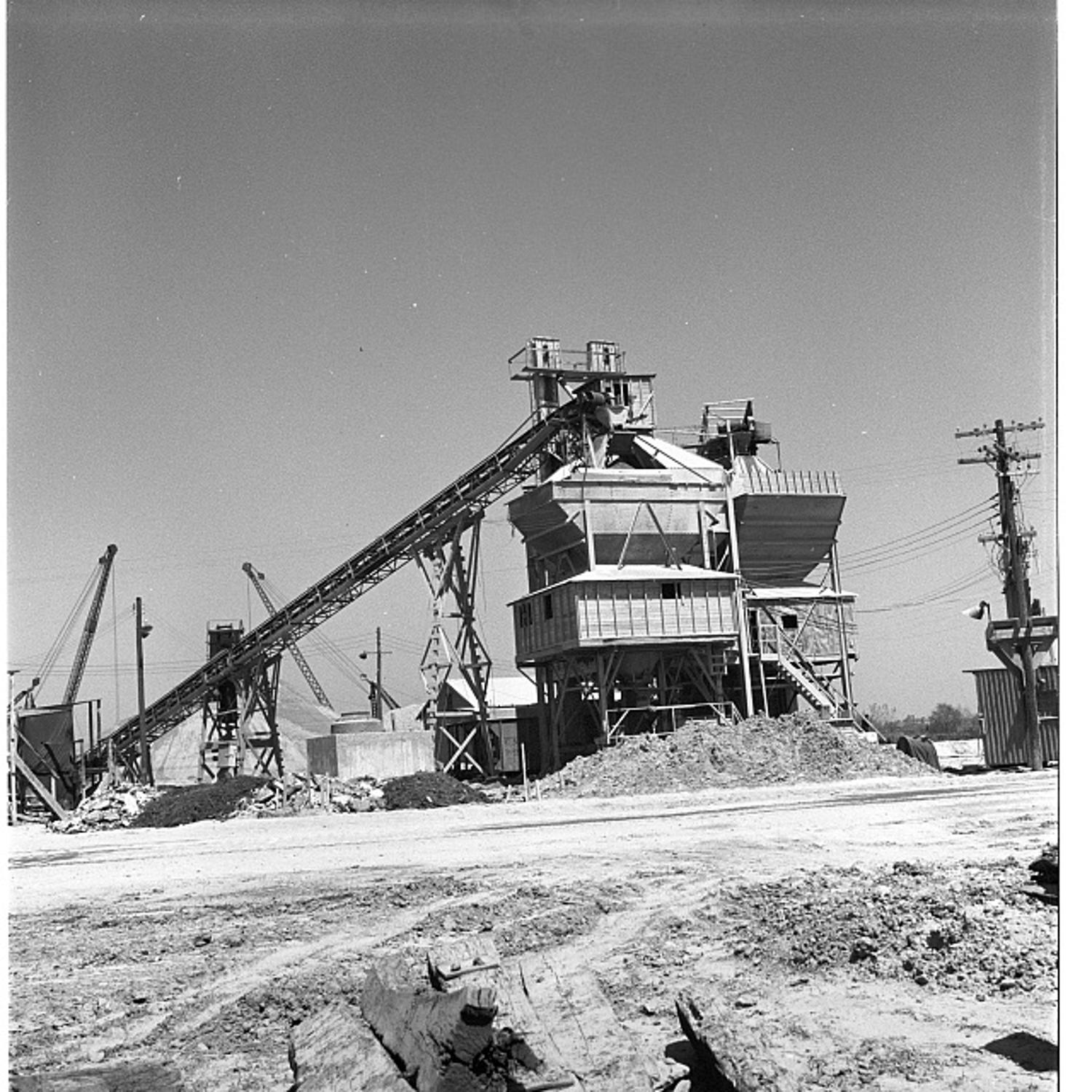
During the Second World War the building’s working population peaked around 35,000. The army dredged roughly 680,000 tons of sand and gravel from the Potomac for concrete aggregate, which was poured at a rate that briefly made the Pentagon site one of the largest concrete jobs in the world. Final cost came in around $83 million, well above the original estimate but, for a building this size in 16 months, considered a bargain.
The most remarkable number is the calendar one. Sixteen months from groundbreaking to dedication. Most modern office towers a fraction of the size take longer than that to get out of design review.
What you can see today
Drive past on I-395 or come around on the GW Parkway and you are looking at a building whose distinctive shape came from a property line on a farm the army never used. The road system that frames it, the cloverleaves and surface streets that carry tens of thousands of workers in and out daily, sit on top of a neighborhood the army cleared to make room.
The cafeteria where Jimmy Harold was beaten is gone, lost in the building’s repeated postwar renovations. The marble for the lobbies came from quarries that have since closed.
The building is still doing what Somervell asked it to do on July 17, 1941. It is the headquarters of the U.S. military. It has been the setting for the Cuban Missile Crisis war room, the 1967 March on the Pentagon, the 1972 Weather Underground bombing of a fourth-floor bathroom, and the September 11, 2001 attack on the west wall. It went up in 16 months because there was a war on. It is still here because the war never quite ended.
We dug this one up with help from AI and checked it against the original records below. Here’s how we use AI.