
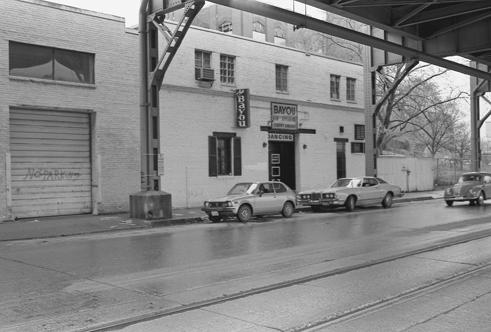
For 45 years, the loudest room in Georgetown sat under the Whitehurst Freeway. The Bayou opened at 3135 K Street NW in September 1953 and closed on New Year’s Eve 1998.
In between, it hosted Dixieland jazz, mob hits, and burlesque strippers. A Telstars house band, Foreigner’s first US club date, U2’s second American show. Four Cure tour stops, four U2 stops, four Red Hot Chili Peppers stops. Multi-night Dave Matthews Band residencies, KIX 46 times, the Ramones 21 times. Eva Cassidy’s final performance, an Eddie Murphy stand-up set, and a young Bruce Springsteen surprise drop-in.
When the wrecking ball arrived in 1999, the longest continually operating rock club in Washington came down for a movie theater.
The building had a life before the Bayou, and the block has a life after it. The full arc is what makes 3135 K Street one of the great vanished addresses in DC nightlife history.
Before the Bayou: A Working Waterfront
Long before anyone played a guitar at 3135 K Street, the block was industrial. The Georgetown waterfront in the late 19th century was a working port. Lumber yards, a cement works, the Washington Flour mill. A meat rendering plant that gave the strip a notorious smell.
The Capital Traction Company powerhouse at 3142 K Street, directly across the street, generated the electricity for the District’s streetcars. Tracks for the B&O Railroad ran along Water Street to feed Ohio coal into the powerhouse’s boilers. The American Ice Company stored frozen goods in massive ice houses near the present movie theater. Brennan Construction Company churned out building materials for bridges and road paving projects.
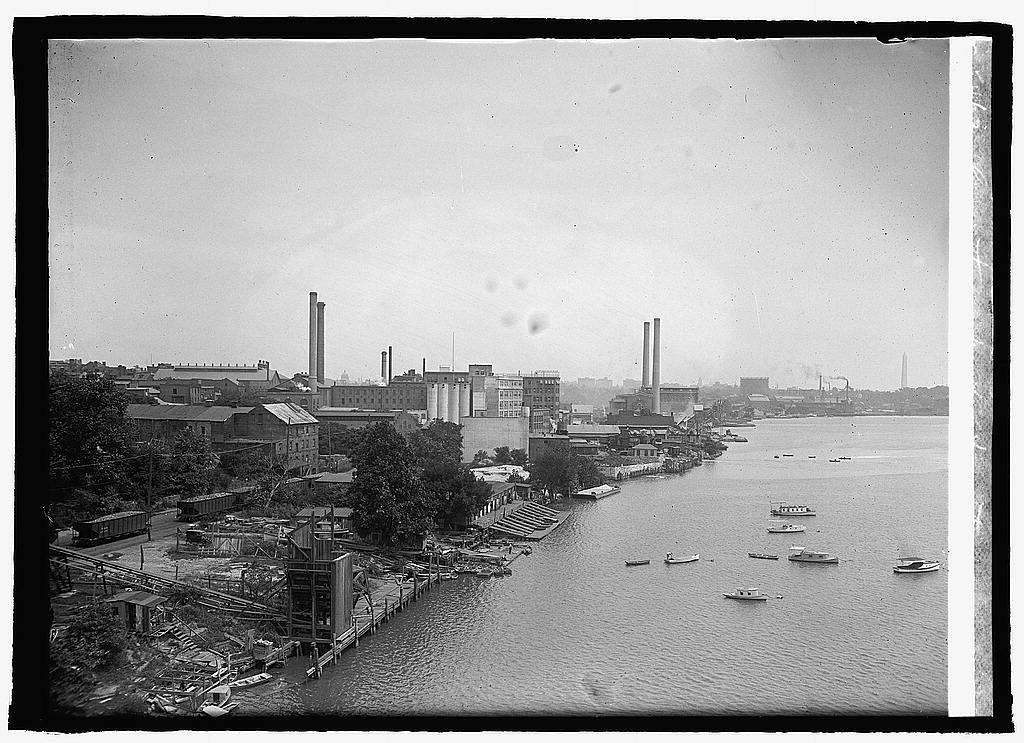
By the early 1930s the bottom fell out. The Capital Traction powerhouse stopped generating in 1933. The Aqueduct Bridge came down the same year. Most of the factories either folded or moved to the suburbs. The 1936 Potomac flood hammered what was left.
By the end of the decade, the strip of K Street and Water Street between the old Key Bridge approach and the foot of Wisconsin Avenue was a depressed industrial zone. A few converted-warehouse clubs started popping up in the empty buildings.
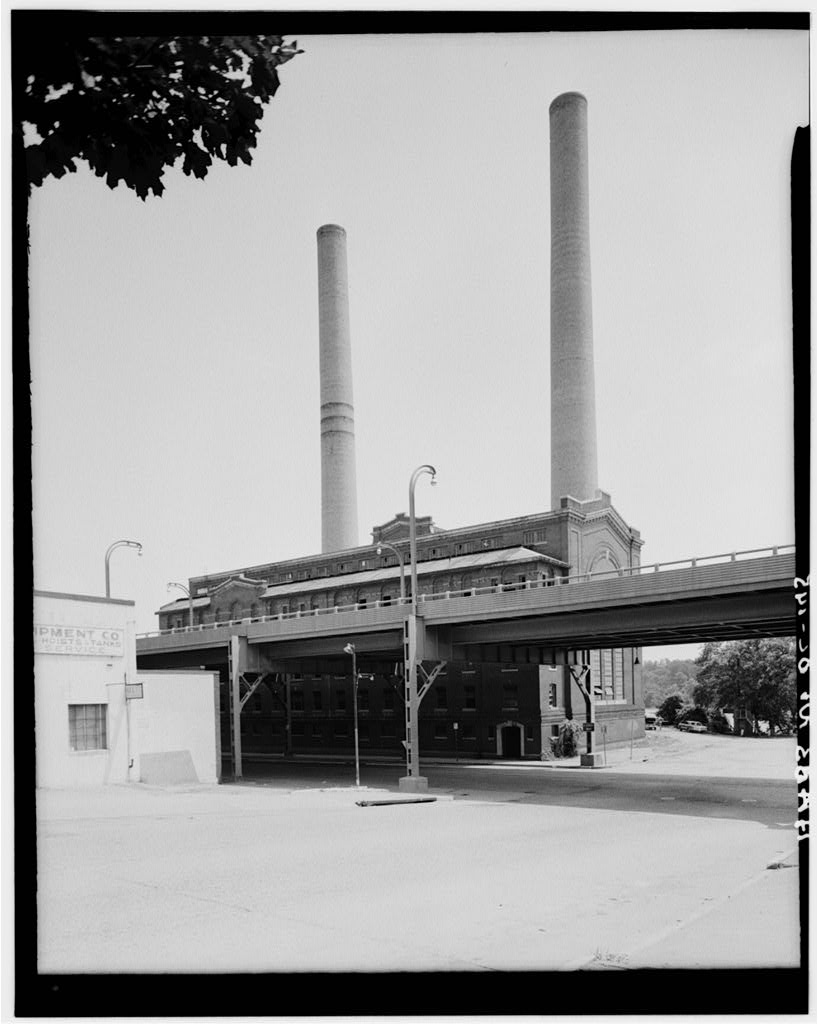
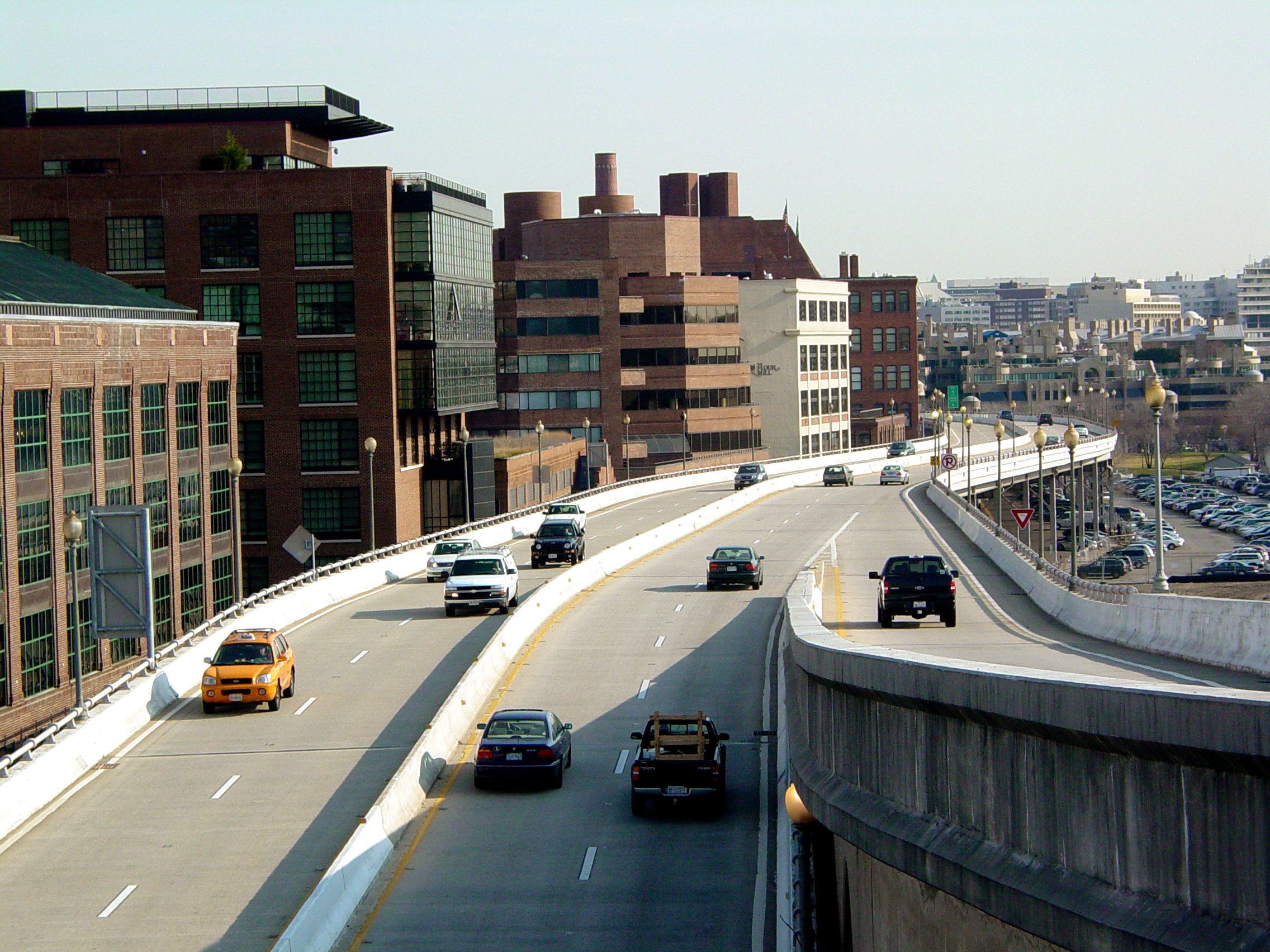
The biggest physical change came in 1949, when the District opened the Whitehurst Freeway, Washington’s first elevated highway. Steel viaduct construction had been delayed by the war. The route required tearing down a row of historic buildings, including the original Francis Scott Key house.
When it opened, the Whitehurst dropped a permanent canopy of noise, exhaust, and shadow over K Street and Water Street. The Georgetown waterfront, already in industrial decline, was now under a freeway. Archie Alexander and Maurice Repass were the engineers who built it.
1939: Captain Don Dickerman’s Pirate’s Den
The building at 3135 K Street had been a barrel factory in the late 1800s, then a warehouse, then a car dealership owned by Percy Klein. In 1939 it became a nightclub. The Washington Post opening ad is pure 1939 promotional copy:
They’re rarin’ to go mates, at Capt. Don Dickerman’s Pirate’s Den, that smart, unusual, breath-taking nite spot that has just opened its decks to the public. The 40 phantom pirates… the Main Deck, the Gun Deck and orchestra on the musical Poop Deck… the grand food, the potent drinks… the clever atmosphere promises ‘fun loving’ Washington the time of its life.
Captain Don Dickerman was a real person and a real character. He believed he was the reincarnation of a pirate. He dressed like one, spoke like one, and had already built Pirate’s Den outposts in Manhattan, Los Angeles, and Miami. Bob Hope and Bing Crosby were investors in the LA version. The DC Pirate’s Den had 40 staff in pirate costume, themed dining decks, and a theatrical bar atmosphere that 1939 Washington had never seen.
The Pirate’s Den lasted only a few years. By the mid-1940s the space had become an after-hours joint called the Hide-Away. In 1951 the Hide-Away became the site of a mob hit. Convicted killer George Harding was shot dead inside the building. DC mob boss Joe Nesline was charged and later acquitted. Percy Klein padlocked the place. It sat empty for two years.
1953: The Bayou Opens
In September 1953, two brothers from Virginia leased 3135 K Street and brought it back to life. Vince Tramonte was a lawyer. Tony Tramonte was a dentist. Their partner, Mike Munley, put up $15,000 in start-up money and the three of them turned the old building into a Dixieland jazz spot. The Tramontes bought Munley out shortly after. Each brother had put in about $5,000 cash. They named it The Bayou.
The 1953 layout would stick for 45 years. A lower floor with a wrap-around stage and a dance floor in front of it. A balcony level with tables and chairs running the perimeter. Two standing-room bars on the main floor. A tap room above the entrance that fed bottled liquor down through long plastic tubing to the bars below. Capacity was around 500.
The Tramontes designed the room to feel intimate, like a family operation. For the first decade they enforced a jacket-and-tie dress code and pulled a politician-and-lawyer Georgetown crowd. The room backed up against the alley that would later become Blues Alley, the long-running jazz club that opened in 1965.
The Dixieland and Burlesque Years
The Bayou’s Dixieland era ran roughly 1953 through 1964. Count Basie and Woody Herman played the room. “Wild Bill” Whelan and “Wild Bill” Davison, the Dixieland cornet legend, were regulars. Joe Rinaldi’s band cut a 1957 live recording of “When the Saints Go Marching In” at the club that ended up in the National Archives.
In 1964, before the rock pivot, a Navy ensign named Mike O’Harro started running Sunday singles nights at the club. Those Bayou Sundays were the seed of what would become the Champions sports bar chain, which O’Harro built into a regional empire. The same year, the Bayou flirted with burlesque, and the dancer Julie Gibson became a mainstay.
The Bayou moved from white-tablecloth Dixieland to lounge burlesque to rock inside a decade, in the same windowless room, under the same freeway.
1965: The Switch to Rock
In September 1965 the Tramontes converted the format. The Telstars, a Northern Virginia rock band, became the Bayou’s house band and held the slot for three years. The dance floor that had hosted swing dancers a year earlier was now filling up with Georgetown University students who could walk down the hill from campus. For a stretch in the late 60s and early 70s, the Bayou was the largest rock club in the District.
The booking through the 1970s drifted between bar bands, regional acts, and the early national tours that wanted a club-sized DC stop. The Nighthawks, the long-running DC blues band fronted by Mark Wenner, treated the Bayou as a home base. Warren Zevon played the room 14 times across his career. Captain Beefheart and His Magic Band did four. The Ramones logged 21 appearances, a number almost no club outside CBGB can match.
Two Bayou bouncer stories from the era stuck. One bouncer was reportedly the inventor of the Plexiglas bong. Another, in the late 70s, was a young Mr. T, who worked the door before the A-Team made him a household name.
1980: Cellar Door Takes Over
The Tramonte family sold the Bayou in 1980 to Cellar Door Productions, the Georgetown-based concert promotion company run by Jack Boyle and Dave Williams. Boyle’s crews had a hand in much of Georgetown’s nightlife, including the beer-and-boogie Crazy Horse up on M Street. Boyle was looking for a bigger, fire-marshal-friendlier room than his existing Cellar Door coffeehouse, which had outgrown its space. The Bayou fit.
Cellar Door already had the connections to major labels and national booking agents. The Bayou’s calendar changed overnight.
Boyle was the impresario. Williams was the operational partner who later ran Cellar Door’s promotions empire, including the Capital Centre arena dates, DAR Constitution Hall shows, and what would become Nissan Pavilion (now Jiffy Lube Live). When Williams died in 1999, the Washington Post obituary credited him as one of the architects of the modern DC concert market. Cellar Door eventually folded into Live Nation, which now handles most major concert promotion in Washington.
The Breaking-Acts Era: U2, Dave Matthews, and Almost Everyone Else
This is the period the Bayou is best remembered for. Cellar Door’s national connections meant that bands on the verge of breaking nationally would stop at the Bayou on East Coast tours, often with a local DC act opening. The room held around 500. If you were there, the stage was 10 feet from your face.
The flagship example is U2. On December 7, 1980, four Irish kids named Bono, Adam Clayton, Larry Mullen Jr. and The Edge played the Bayou as their second-ever show in the United States. They had played the Ritz in New York the night before. The DC date opened for the Slickee Boys, a homegrown DC punk band that already had a local following. Tickets were under five dollars.
The Baltimore Sun’s “Best bets in D.C.” column for that weekend ran U2 next to a National Symphony Orchestra date as if they were equivalent options.

The night after the Bayou show, U2 played Buffalo. The day after that, December 8, 1980, Mark David Chapman shot John Lennon dead outside the Dakota in New York. U2 came back to the Bayou in 1981 with the Slickee Boys opening again.
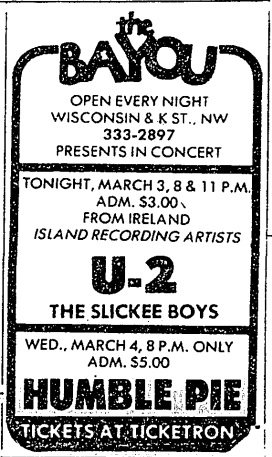
U2 was not alone. Foreigner’s first US club date as a headliner was at the Bayou. The Cure played the room on their first US tour. The Police, Dire Straits, Duran Duran, Squeeze, Billy Joel (who recorded a live performance at the club), Bon Jovi, Joan Jett, Lindsey Buckingham, Hootie and the Blowfish, Kiss, the Kinks, Tom-Tom Club, Yellow Magic Orchestra, Steeleye Span, Todd Rundgren and Utopia, Peter Tosh, Bruce Springsteen (a surprise guest appearance), and a long list of others passed through.
Eddie Murphy played a stand-up set early in his career. Stevie Ray Vaughan made his DC debut at the Bayou before he moved on to larger rooms like the Wax Museum.
The Red Hot Chili Peppers played the Bayou twice in 1988. Those two shows were the band’s final DC performances with founding members Hillel Slovak and Jack Irons; Slovak died of a heroin overdose later that year. Basia made her US debut at the Bayou in 1988.
Mickey Mantle showed up one night, did not enjoy himself, and reportedly left in a hurry. Robert Plant got kicked out. Todd Rundgren publicly trashed the club. The Bayou had a complicated relationship with talent.
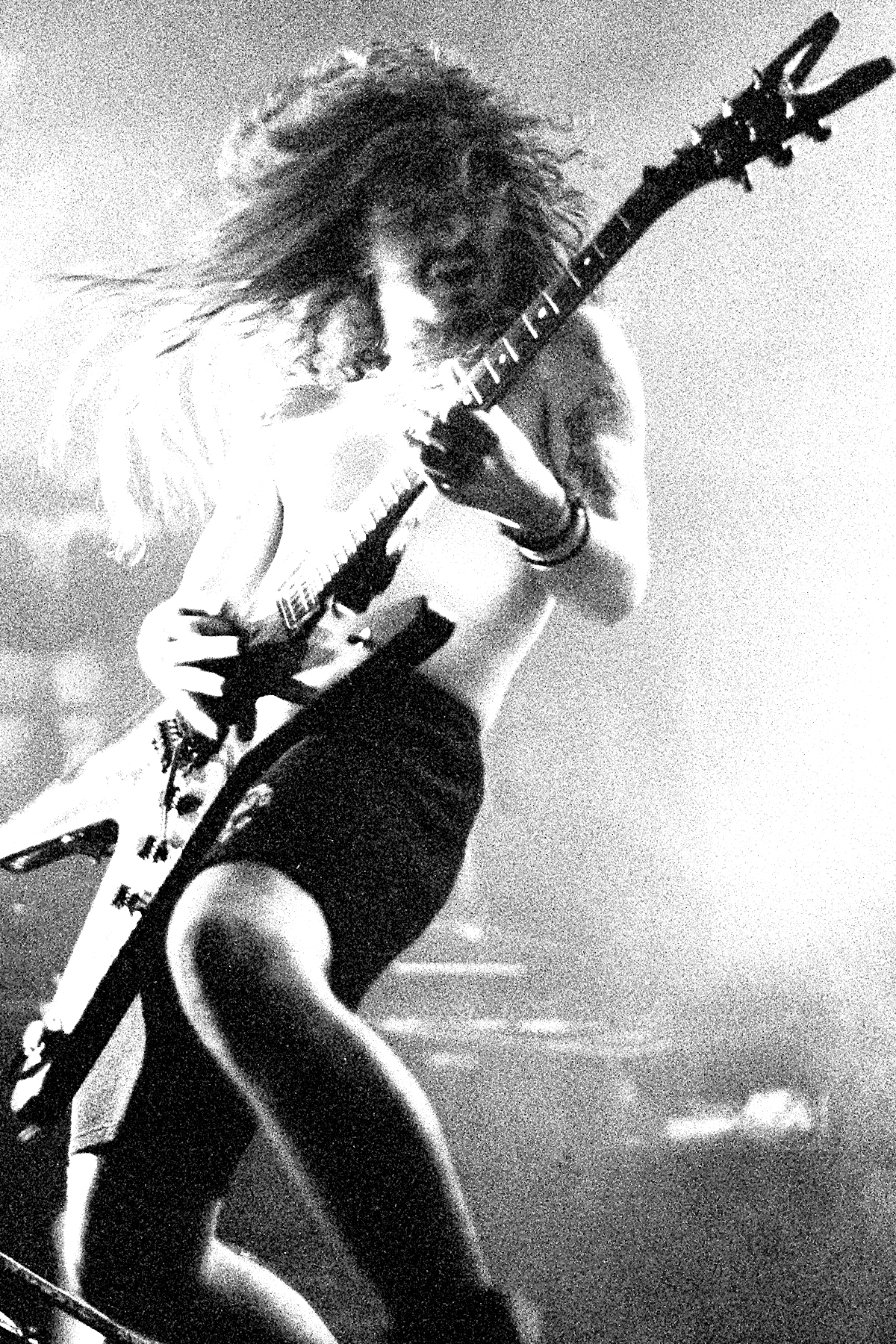
The Bayou was also a residency room for the regional bar-rock circuit. KIX, the Maryland glam-metal band, played the Bayou 46 times, the all-time record for the venue. Agents of Good Roots, the Richmond jam band, did 25 nights. The Radiators logged 19. Warren Zevon, 14. Nils Lofgren, the DC-area guitar hero, was a regular. The Dave Matthews Band played seven Bayou nights through 1993, the year DMB went from college-town band to national act.
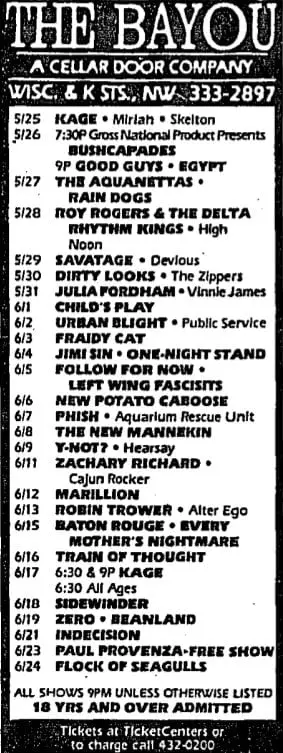
The venue’s June 1990 calendar gives a sense of the booking texture: jam bands, breaking acts, and a Phish stop on Thursday June 7.
The Bayou was not universally beloved. Cellar Door’s emphasis on national bookings pushed the room away from the DC punk and hardcore scenes that flourished a few blocks east. Ian MacKaye of Fugazi and Minor Threat told the documentary makers about using a fake ID to get in. He described the bouncers in unprintable terms.
The 9:30 Club, which opened in 1980 at 930 F Street downtown, became the home of DC alternative and indie booking, the bookend opposite of what the Bayou represented. For the Cellar Door big-tour-stop scene, the Bayou ruled. For the DC underground, the 9:30 Club ruled.
Eva Cassidy at the Bayou, September 1996
One Bayou night carries a different weight than the rest. In September 1996, the DC vocalist Eva Cassidy played a tribute show at the club that turned out to be her final performance. She closed her set with “What a Wonderful World.” She had been diagnosed with melanoma earlier that summer. She died on November 2, 1996, at age 33.
Cassidy was largely unknown outside DC when she died. Posthumous releases of her recordings, especially a 1996 live set captured at Blues Alley around the corner, made her a global star in the 2000s. The Bayou hosted her last stage.
Last Call: New Year’s Eve 1998
The end came from real estate. The Klein family, which had owned 3135 K Street since the Pirate’s Den era, sold the building and the surrounding parcel to a partnership of developers including Anthony Lanier’s Eastbanc and Millennium Partners. The plan for the block was a $100 million project: a 100-room luxury hotel, a 3,000-seat AMC Loews movie theater complex, retail, and upscale apartments.
The Bayou’s lease was bought out. The Klein family was paid a handsome price. Cellar Door’s Jack Boyle took the deal while the club was still profitable.
Closing was announced in September 1998. The last few months were a wake. Long-time regulars came back. The Washington Post and Washington Times ran multiple wrap-up pieces. Richard Harrington’s “Last Call at the Bayou” in the Post on December 30, 1998, was the canonical obituary.
On New Year’s Eve 1998, the band Everything, a one-hit-wonder best known for “Hooch” on the Waterboy soundtrack, played the Bayou’s final show. The setlist included “Who Do You Love” and a cover of Bob Marley’s “Stir It Up.” When the band stopped playing in the early hours of January 1, 1999, the longest continually operating rock club in Washington was done.
Demolition followed in 1999. Initial plans had floated preserving the building’s shell within the new development, but in the end the wrecking crew took the whole thing. The block was scraped flat for the AMC Loews complex.
What’s There Now
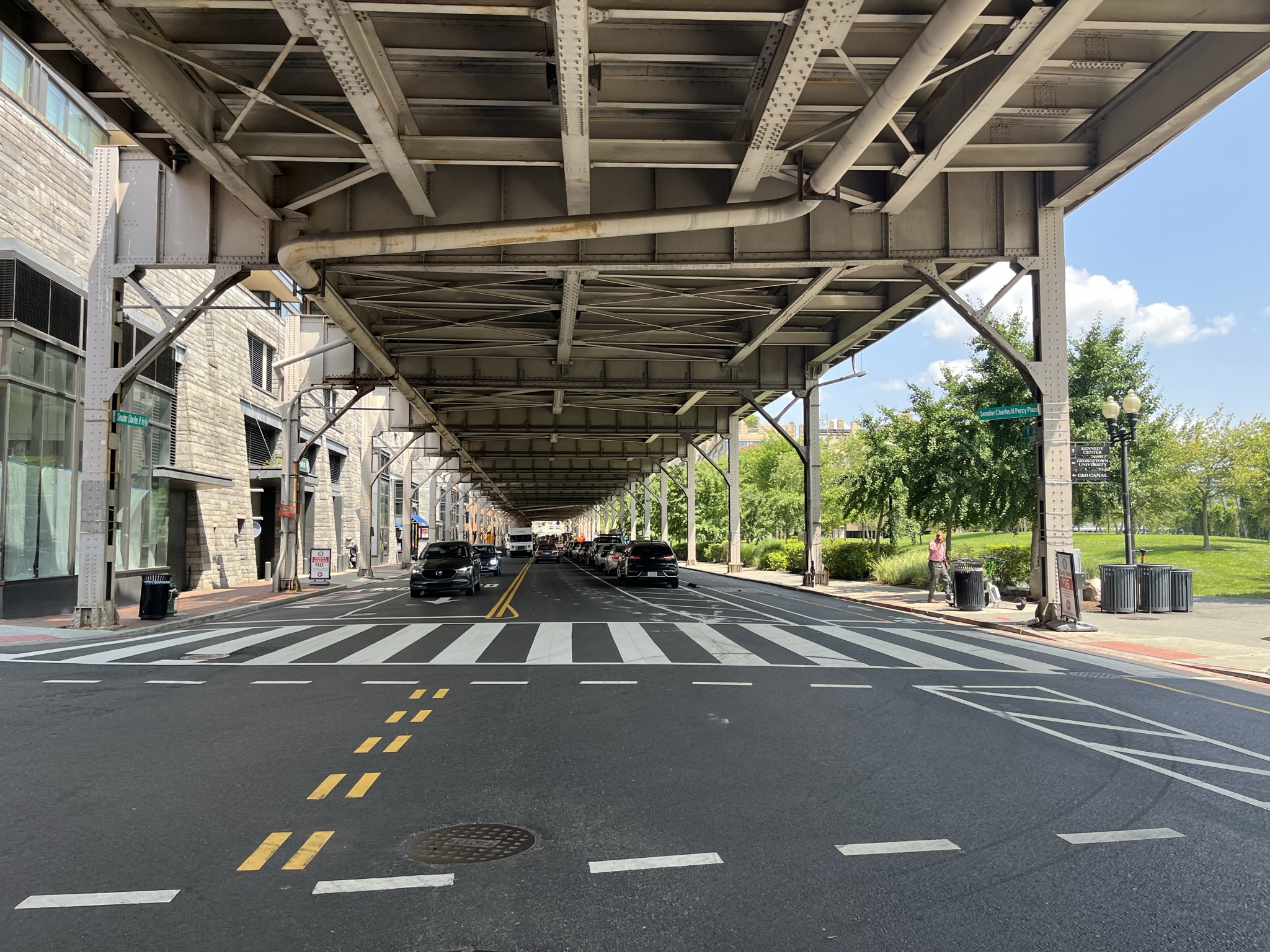
If you walk to 3135 K Street NW today you are standing under the same Whitehurst Freeway, but the room around you is gone. The AMC Loews Georgetown 14 multiplex opened on the block in 2003. The Bayou’s old footprint is roughly under the loading dock and back-of-house service area of that complex.
There is no plaque. There is no historical marker. The Bayou exists now only in setlist databases, in a 2013 Maryland Public Television documentary called The Bayou: D.C.’s Killer Joint, in a closed Facebook reunion group, and in the memories of anyone who got their hand stamped at the door before they were old enough to be there legally.
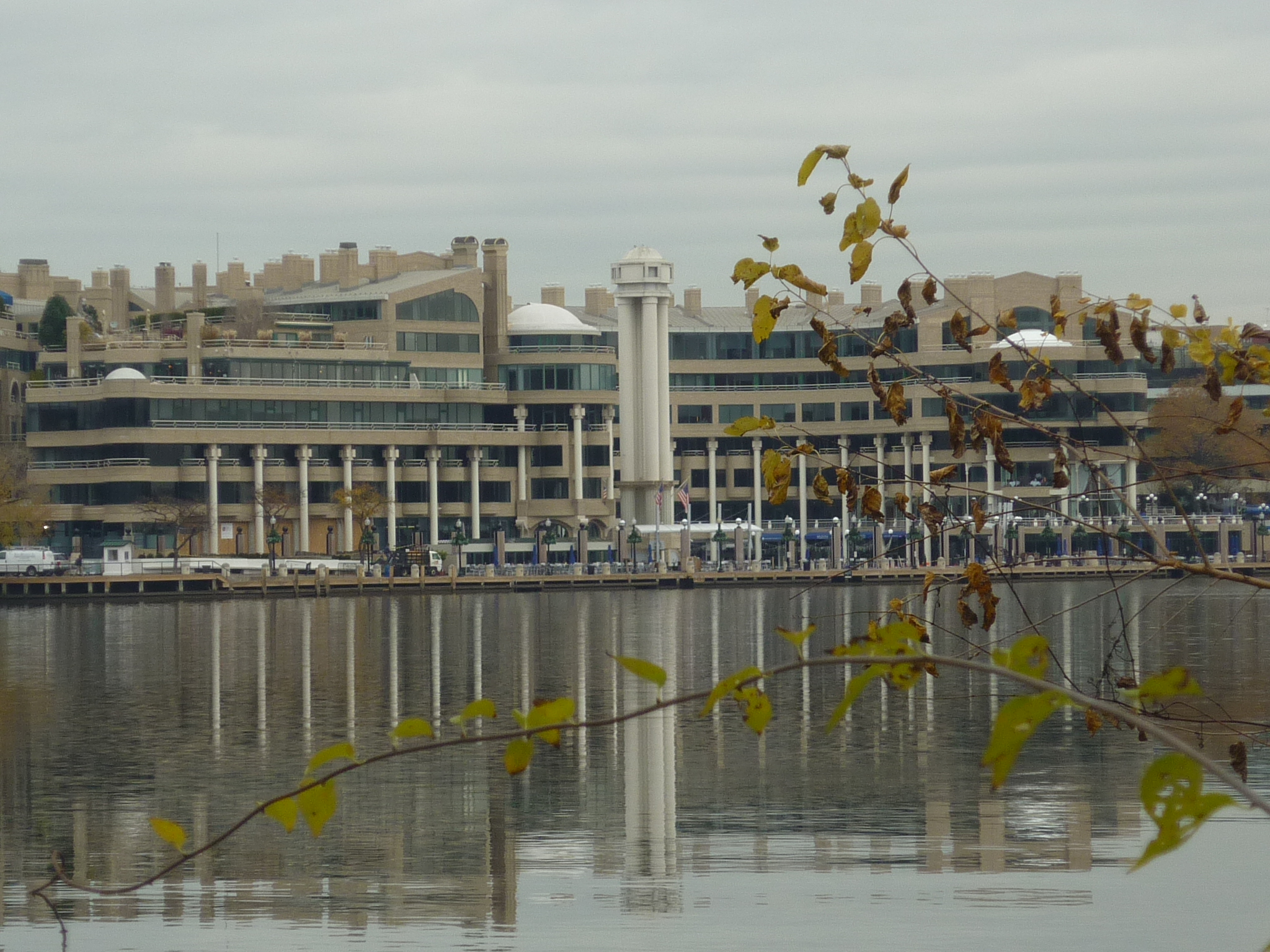
The wider waterfront has transformed even more dramatically. Washington Harbour, Arthur Cotton Moore’s luxury office and residential complex with the floodgates and the riverside fountain, opened just east of the Bayou’s block in 1986. The Swedish Embassy and House of Sweden cultural center, opened in 2006, sit a short walk east at 30th and K.
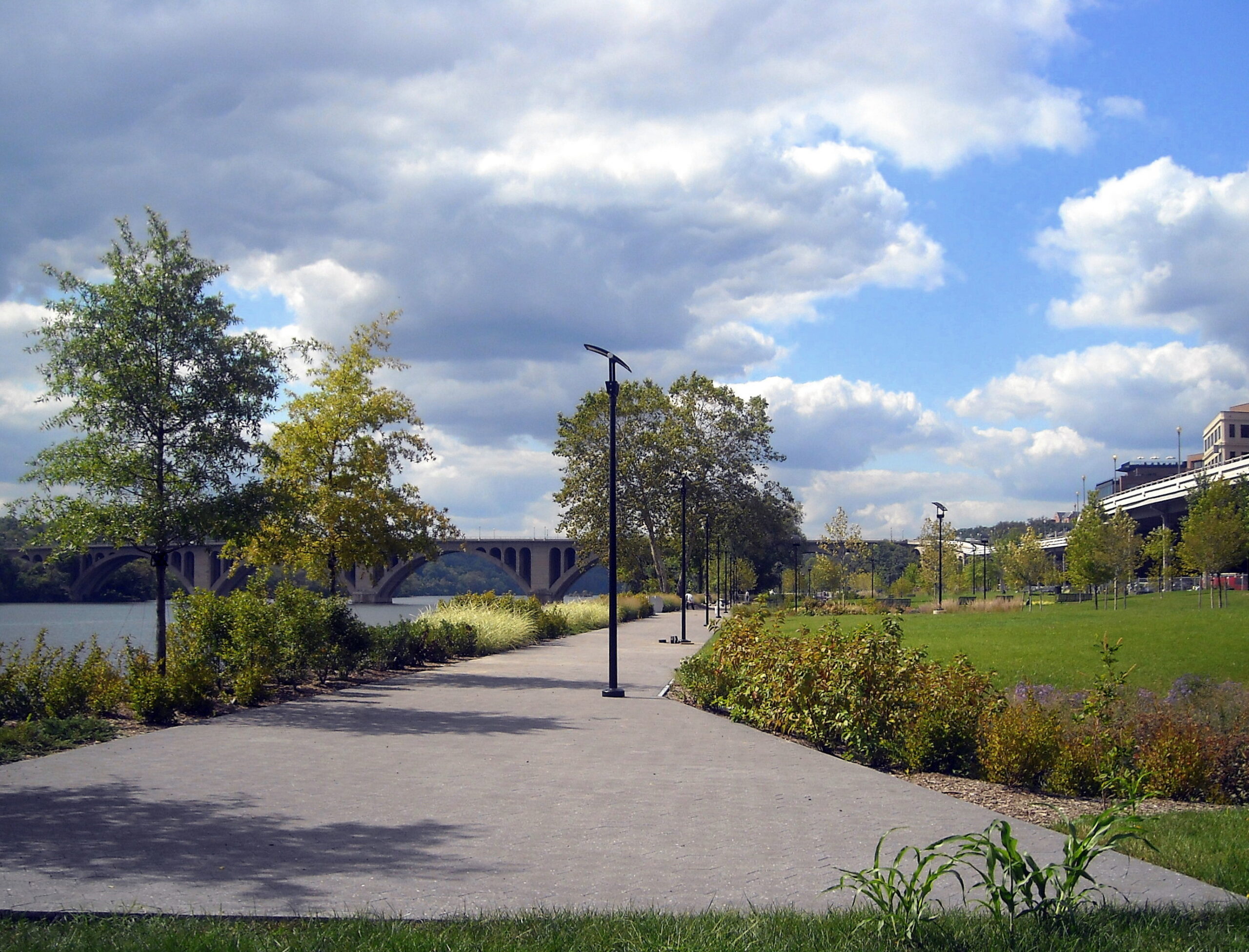
Georgetown Waterfront Park opened in stages between 2008 and 2011, on a riverside strip the District had once used for trash trucks and road salt. The land had been held for a never-built inner-loop freeway.
The strip of K and Water Streets has been four cities in one century: a working waterfront of lumber yards and a powerhouse in 1900, a pirate-themed nightclub in 1939, a Dixieland jazz spot in 1953, the loudest rock room in Washington from 1965 to 1998, and a multiplex from 2003 on.
The freeway above it is the only constant. Even the freeway gets reconsidered every decade or two by Georgetown civic groups who want to see it taken down.
If you saw a show at the Bayou, you saw something specific that cannot be replicated. A 500-capacity room, a stage at chest height, a sound mix from a balcony perch. A band on its way up, on its way down, or pulled through DC by the Cellar Door booking machine on a national tour.
The Bayou is the venue everyone our age claims to have seen a band at before they were big. A surprising number of them are telling the truth.