
The building killed more people on a quiet Friday morning in 1893 than it did the night Abraham Lincoln was shot.
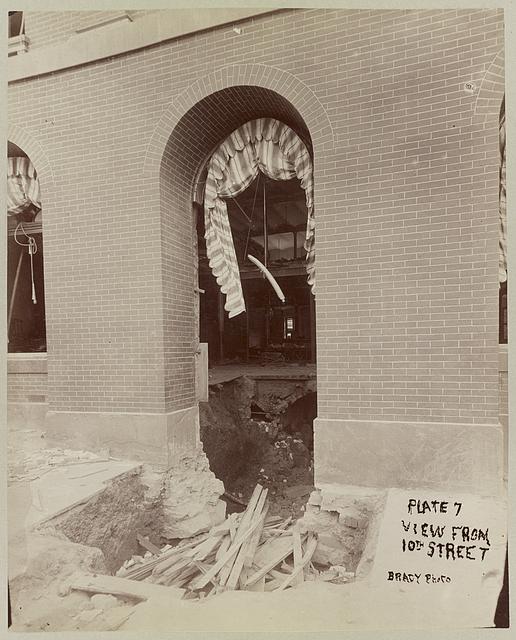
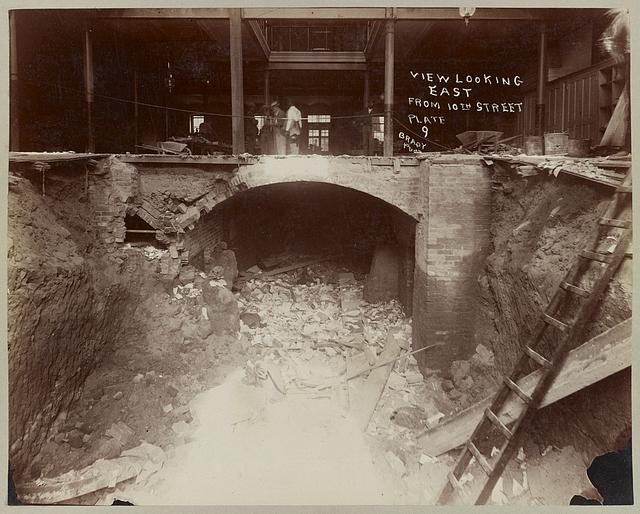
That is not a metaphor. On June 9th, 1893, at roughly 9:30 in the morning, a brick support pier in the basement of the old theatre at 511 10th Street NW gave way. Three floors of clerks, desks, ledgers, and Civil War pension files pancaked into the cellar in a single roar. Twenty-two federal workers were killed. At least sixty-eight more were injured. Lincoln died there in 1865 alone in the upstairs box. The Ford’s Theatre collapse of 1893 killed twenty-two men in a heap of mortar and broken floorboards.
And almost nobody talks about it.
How Ford’s Theatre Stopped Being a Theatre
To understand the disaster you have to know what Ford’s Theatre was on June 9th, 1893: it was not a theatre. It had not been a theatre for nearly twenty-eight years.
According to the National Park Service, after the assassination the federal government seized the building. John T. Ford, the original owner, tried to reopen the playhouse on July 10th, 1865 with a production of The Octoroon. He sold over two hundred tickets. Then he started receiving threatening letters, including at least one promising to burn the building down if it reopened. Secretary of War Edwin Stanton sent a detachment of soldiers to seize the theatre and turn ticketholders away on the night of the planned reopening. The next day Stanton informed Ford that the federal government had confiscated his building. Ford was eventually compensated, but he never got it back.
Contractors gutted the interior almost immediately. Ford himself stripped out the steel columns that had supported the dress circle and the family circle and shipped them up the road to his Holliday Street Theatre in Baltimore. The presidential box where Lincoln had been shot was dismantled and locked away.
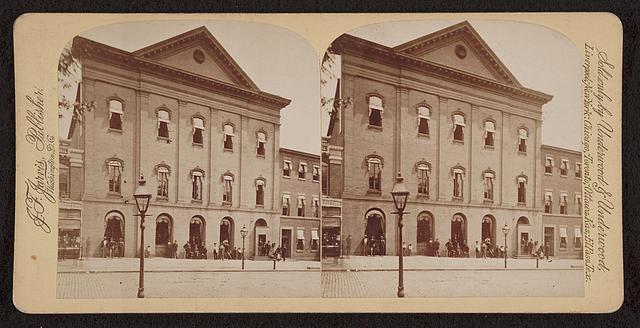
By November 27th, 1865, the renovations were done. The War Department’s Record and Pension Bureau moved into the first two floors. The Library of the Surgeon General’s Office, with several thousand volumes of medical reference books, shared the second floor. The Army Medical Museum took the third floor in 1867 and stayed for twenty years before relocating to a new building on the National Mall, at which point the Record and Pension Bureau swallowed the third floor too. By 1893 the entire building was paper.
And by 1893 there were over five hundred clerks working inside the old theatre. Per the NPS, all of them were male, politically appointed, and represented dozens of states. Civil War Times put the number near five hundred and noted that many of them were Civil War veterans, easy to spot in the rows of desks because some leaned on crutches and others had pinned-up empty sleeves. Their jobs were mostly the unglamorous engine of the postwar federal government: copying muster rolls and pension records by hand, reviewing claims, certifying service. The pension files alone were already among the largest collections of paper the federal government held.
It was, in short, a paper warehouse with people in it. The paper alone was enormous: stacks of muster rolls, bound regimental records, decades of pension claims weighing on Civil-War-era floors that had been knocked together in a hurry in the fall of 1865.
The Building Everyone Knew Was Unsafe
Clerks had been complaining for years. According to the NPS, supervisors released workers floor by floor at the end of the day so the staircase would not be overloaded. Ropes cordoned off parts of the interior because of structural concerns. Plaster fell from the ceiling. There was a noticeable bulge in the east wall everyone could see and nobody fixed. Eight years before the collapse, a congressman had described the building on the record as in “absolutely dangerous condition.” Congress did not appropriate funds to fix it.
One clerk, William Mellach of New Jersey, had been so sure the building was going to come down that he had plotted his own escape route two years before the collapse. According to the New York Tribune on June 10th, 1893, “He always knew the building would fall some day.” A small group of clerks had quietly practiced climbing out the windows on pipes and overhangs, then jumping to an awning below.
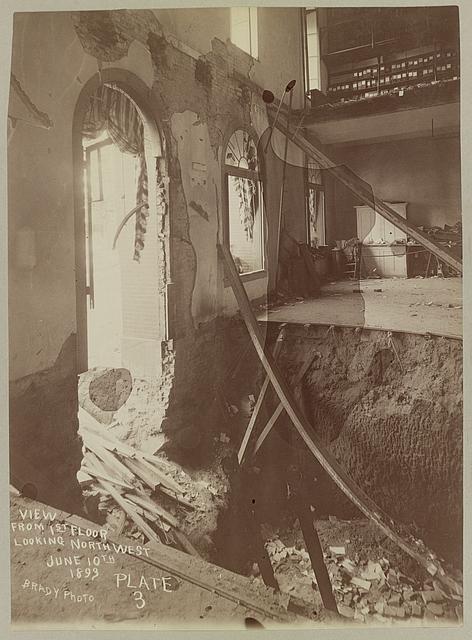
Then in 1893 Colonel Fred C. Ainsworth, the head of the Record and Pension Bureau, got authorization to install an electric light plant. Ainsworth had been brought in seven years earlier specifically to modernize the bureau, and the NPS notes he had also rolled out heavier workloads and longer hours, which had not made him popular with the men who would later get buried by his light plant. To install it, contractor George W. Dant’s crews had to dig twelve feet down between two partition walls in the basement, right next to the brick piers that held up every post and beam in the building above them.
You know how this story ends.
“A Crash Like the End of the World”
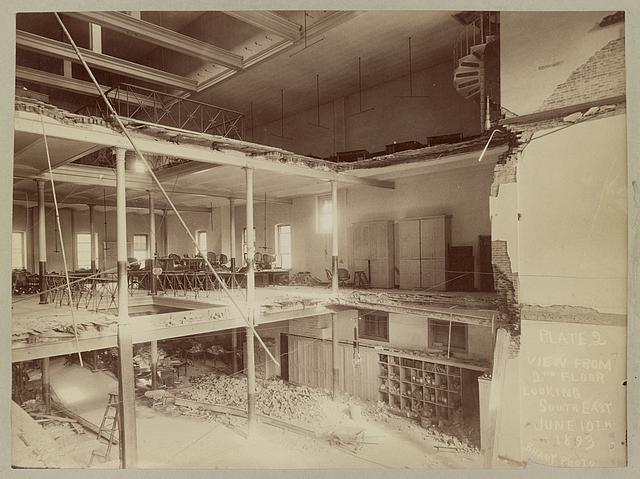
Friday, June 9th, 1893. Around 9:30 a.m., one of the brick piers in the basement gave way. The columns above it dropped one by one in a domino effect that worked upward through the building. As they fell they let go of the beams and floors they had been holding, which dropped the columns above. A forty-foot section of all three stories ripped out of the wall and hit the basement together. Desks, chairs, tables, pension files, floorboards, and the dead and dying landed in one chaotic heap on the lowest level of the building.
One clerk later described it to investigators as a “rumble like an earthquake,” then a “great roar,” then a crash “like the end of the world.” Another thought a bomb had gone off. A third clerk, Robert Walker, was on the first floor when “massive, wooden beams and bricks mixed with mortar crashed through the first-floor ceiling” above him. He recalled, per Civil War Times, “I turned and as I was going over the desk behind me, I was buried…I had no idea how long I was there. I had given up all hope of getting out. The weight was crushing the life out of me and mortar dirt smothering me.”
Record and Pension Bureau supervisor Thomas Adams was on the ground floor when it happened. According to The Evening Star on June 9th, 1893, in a front-page article headlined “Frightful Disaster, Hundreds of Clerks Buried in a Ruined Building,” Adams told a reporter:
I was on the lower floor in the hallway when the crash came… I heard what sounded like an explosion, and the door slammed together and was so tightly closed that I could not open it. Then came the bricks, timbers and mortar. When the noise was finished I could hear the groans of the injured, and those who were not injured were screaming for assistance.
The same Evening Star article described what survivors saw when the dust began to settle:
The two floors had been cut away from the wall as closely as if done with a knife… thirty or forty feet below was a mass of building material, girders, beams and bricks. Inside that mass it was known that there were men.
Men jumped from windows. One slid down the side of the building on a fire hose: a clerk named Ethelbert Baier groped through the dust at the third-floor edge, found that hose, and led about a dozen co-workers down it before the rest of the building could shake itself apart. “There was no premonitory trembling or any kind of warning,” Baier told a reporter afterward. “Just a roar and a crash, and the desk and tables seemed to rise up in the centre of the floor, and then disappear in the blinding dust.”
The most damning piece of the Evening Star’s June 9th, 1893 coverage came from a Black laborer who had been working in the basement excavation. He had walked off the site the day before because he could feel the building moving every time someone took a step on the floor above. His statement to the paper:
I told [my employer] yesterday that the archway would fall, for every time any one walked over the floor it would bend. I tell you I was scared, and got out just as quick as I could. There were twenty men at work with me. ‘Deed I don’t know what became of them.
He had warned them. They sent the clerks in anyway.
Twenty-Two Dead, Sixty-Eight Injured
The final toll, per the National Park Service, was twenty-two clerks killed and at least sixty-eight injured. Some accounts in the days after the collapse, including the New York Tribune on June 10th, 1893, put the toll as high as twenty-three as more bodies were pulled from the rubble. Newspapers across the country printed casualty lists that read like Civil War battlefield reports, which made a grim kind of sense, because many of the dead were Civil War veterans.
A reporter at the scene for the Evening Star wrote:
As [victims] were brought forth they presented a spectacle that no one seeing it will ever forget. In many cases the semblance of humanity was gone. It seemed as though the helpers were carrying out mere bags of matter, smeared all over with blood, filthy with dirt, dirt ground into them, blood on their faces.
Drugstores and shops on 10th Street became makeshift hospitals. Naval doctors were dispatched on orders from the Secretary of the Navy. The small city morgue ran out of space and a nearby stable was pressed into service. President Grover Cleveland, a short carriage ride away at the White House, sent a personal check for one hundred dollars to the relief fund.
Names
The 22 dead were not abstractions. They had families on the Hill, in Anacostia, in boarding houses scattered across the city. Civil War Times and the John Banks Civil War blog assembled biographical sketches from the period press. A few stand out.
Samuel P. Banes was 55 years old, a veteran of the 3rd Pennsylvania Reserves who had fought at Gaines’s Mill, Chantilly, Second Bull Run, South Mountain, Antietam, and Fredericksburg. The Bucks County Gazette wrote that Banes “met a death as sudden as though struck by a cannon ball on the battle-field,” surviving four years of the worst Eastern Theater fighting only to be killed in a federal office building in peacetime.
Benjamin F. Miller was a 117th New York veteran who had taken a severe leg wound from an unexploded shell at Cold Harbor in 1864. He was a bachelor who lived with the Smith family on Q Street. A newspaper reported their grief was “as keen as that of blood relatives.”
George N. Arnold was a 55-year-old Black clerk who had served as a hospital steward for the 4th U.S. Colored Troops during the war. The press described him as “one of the best known and most popular colored men in the city.” He climbed onto a third-floor window sill in the back of the building, in the alley where Booth had once tied up his horse on the night of the assassination. Witnesses urged him not to let go. He let go. He fell almost forty feet to the cobblestones.
Jeremiah Daley was twenty-two and had only recently started at the bureau. He died on a Washington operating table while surgeons tried to dress his wounds. Two days earlier his father had been fired from his job as a watchman at the Department of the Interior. The elder Daley was on his way home to Pennsylvania when he heard the news and rushed to the hospital instead, where he identified his son’s body.
Dr. Burrows Nelson was a dentist who worked at the bureau as a clerk to make ends meet. His wife was pregnant with their sixth child. He was the last body pulled from the rubble. When a reporter for the Washington Post visited the Nelson home, the dentist’s young son met him at the door:
Say, mister, when is papa coming home? He will come home tomorrow, won’t he?
The Man on the Telegraph Pole
The most stunning rescue of the day was performed by a young Black man named Basil Lockwood. According to Ford’s Theatre Society and the New York Tribune of June 10th, 1893, Lockwood was somewhere around nineteen or twenty years old when he saw clerks waving frantically from the third-floor windows in the back alley. He climbed a telegraph pole and somehow rigged a short ladder from the pole to a window sill about eight feet away. The ladder did not reach. According to a widely reprinted account from Oregon’s Athena Press of September 29th, 1893:
Basil Lockwood’s brain was equal even to that emergency. He inserted the powerful muscles of his foot and ankle beneath the last round of the ladder, stretched out his leg and this made the other end of the ladder reach the window sill. Then he told the clerks to come over. He was actually strong and steady enough to hold the ladder in its position till 20 men had crossed on it, all that were in need.
The NPS credits Lockwood with rescuing about twenty men. The surviving clerks of the Record and Pension Division gave him an inscribed gold watch reading “Presented to Basil Lockwood by the clerks in the Record and Pension Division, in recognition of his heroic conduct in the Ford’s Theater disaster of June 9, 1893.” They petitioned Secretary of War Daniel Lamont to give Lockwood a job.
It worked. Three months later he was hired as a War Department messenger at fifty-five dollars a month. According to coverage in the Washington Evening Star, on June 1st, 1894, Lockwood lost his job seven months after starting it, “among the number of employees dismissed yesterday in the interest of the economy,” likely a casualty of the broader Panic of 1893 that was eating jobs across the federal payroll. By 1895 he was working as a waiter in a restaurant at 520 10th Street NW, two doors up from the Petersen House and across the street from the building he had pulled twenty men out of two years earlier.
“Hang Him! Hang Him!”
The investigation moved fast and got ugly. According to the Evening Star on June 13th, 1893, in a story headlined “Hang Him! Hang Him! The Demonstration Against Col. Ainsworth at the Inquest,” the brother of one of the dead clerks pushed through the crowd at the coroner’s hearing, pointed at Colonel Ainsworth, and said in a voice “trembling with passion but which could be heard in every corner of the hall: ‘You are intimidating every witness here, and I hold you personally responsible for my brother’s murder.'” The hall broke into a demonstration of clerks calling Ainsworth a murderer and demanding he be hanged. Ainsworth, according to Civil War Times, sat through it with a revolver in his pocket.
Three days after the collapse, John T. Ford himself, the original owner of the theatre and the man who had managed it the night Lincoln was shot, sent the Evening Star a statement defending the building:
The terms used by many of the press calling the theater a “death trap,” an “eggshell,” &c., are not to be justified… Associated as my name has been with the property, and assuming all responsibility for the part of it that I built, which at this writing remains intact and unimpaired, I beg the publication of this explanation.
The coroner’s jury concluded that contractor George W. Dant had failed to properly shore up the brick piers before excavation, and recommended criminal negligence charges against Dant, Ainsworth, the building superintendent, and the engineer. The district attorney quietly dropped the charges against the superintendent and engineer first. Charges against Ainsworth and Dant were dropped after that. Nobody went to prison for the Ford’s Theatre collapse 1893.
Ainsworth, who was 41 at the time of the collapse, kept right on rising in the War Department. He went on to become Adjutant General of the United States Army. He died at age 81 in 1934.
The federal government paid five thousand dollars to each family of the dead and between fifty and five thousand dollars to the injured, depending on severity. Many of those injured were never able to work again. Per the Evening Star on October 16th, 1893, the Record and Pension Bureau quietly kept the permanently disabled survivors on the bureau’s payroll, paying them as if they were still showing up.
The Building Goes Back to Work
Less than a year later, the bureaucrats moved back in. The Evening Star, on July 31st, 1894, reported the building had been “Pronounced Safe.” Colonel Ainsworth and the surviving clerks returned to their old offices in the rebuilt structure. Several months after that, while at work in the rebuilt building, the clerks on the third floor felt the floor tremble and “this came very near causing a stampede.” They knew what that felt like now.
Beyond the immediate horror, the collapse hit federal labor policy hard. Boundary Stones notes that the American Federation of Labor and the Knights of Labor cited the Ford’s collapse as evidence that the federal contracting system, which gave building work to the lowest bidder, produced dangerous buildings staffed with disposable workers. They called for the government to do its own construction with its own employees. It would take until the Davis-Bacon Act of 1931 for that argument to be partly answered.
The War Department kept using the building as office and storage space until 1928, when it was transferred to the Office of Public Buildings and Public Parks. The National Park Service got control in 1933 and ran it as the Lincoln Museum, hosting exhibits about Lincoln’s life among the same brick walls where dozens of clerks had died.
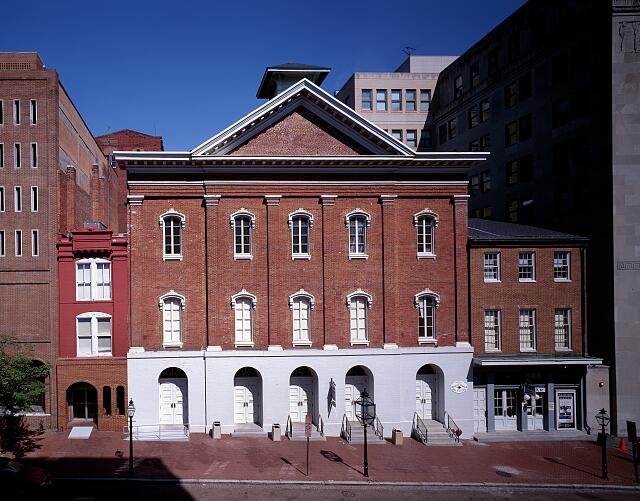
It took until 1968 for Ford’s to become a working theatre again. The interior was restored to its 1865 appearance by Macomber & Peter and Harry Weese & Associates. The 1893 office floors that had killed twenty-two men were intentionally torn out as part of that restoration. If you sit in the Ford’s Theatre house today and look up at the dress circle, you are looking at a recreation of an interior that was gutted in 1865, replaced by office floors that killed twenty-two men in 1893, and then taken back out to make the building look like a theatre once more.
It is a building that has been rebuilt twice into very different versions of itself. The middle version is the one nobody remembers.
The ghosts of the Lincoln assassination are loud. The ghosts of June 9th, 1893 are quieter, and more numerous.
A second crime scene.