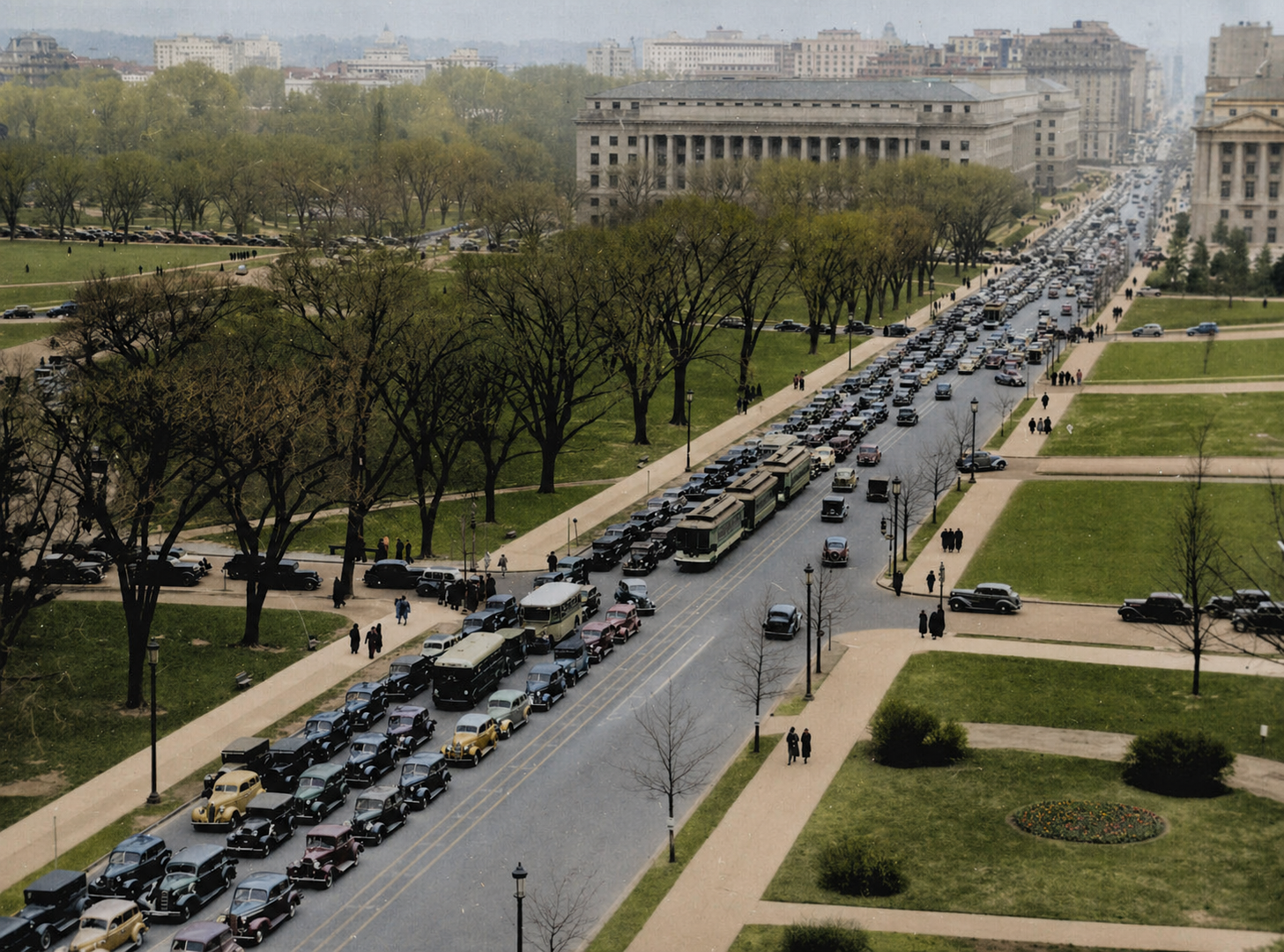
B Street. That was the name.
Not Pennsylvania Avenue, not Constitution Avenue. Just B Street, the second lettered cross-street in L’Enfant’s alphabetical grid, sitting between A Street to the south and C Street to the north. No more distinguished than either of them.
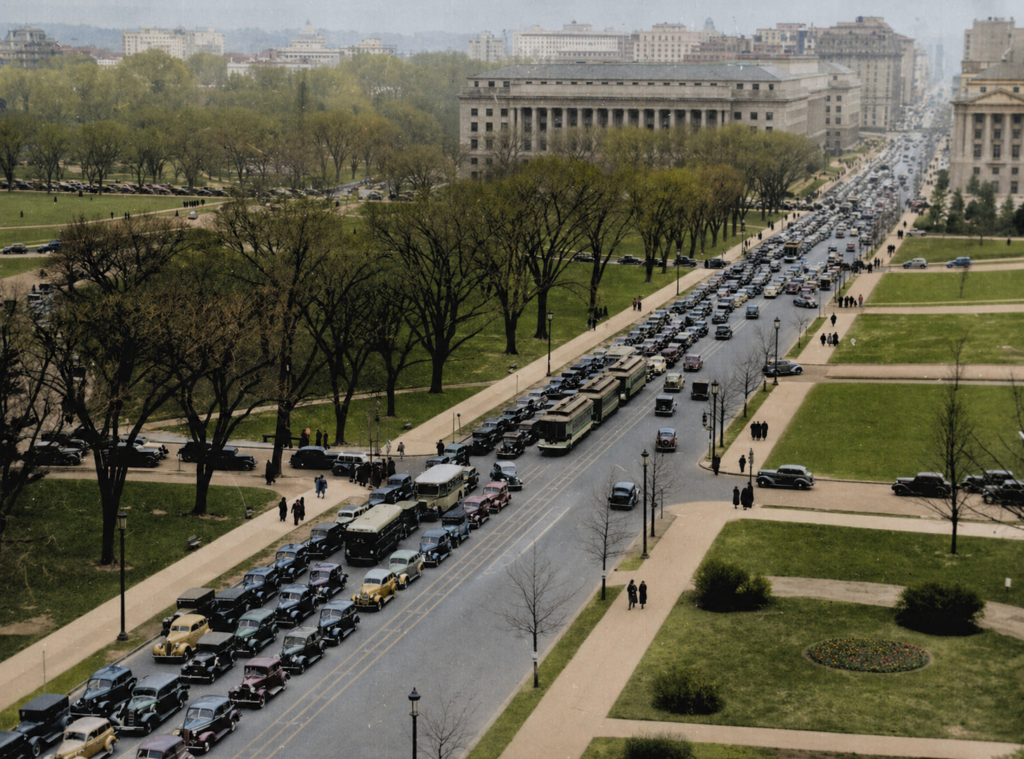
The street followed the low ground between Capitol Hill and the Mall. There was a reason for that: the Tiber Creek had once flowed through here, running roughly along what would become B Street’s north edge. The city buried the creek, turned it into a canal, and eventually paved over the canal. B Street was what you got when you built a road on top of a covered waterway. On a bad rain day you can still feel it. The water finds the old path.
For most of Washington’s history, the most ceremonial stretch of real estate in the American capital had a name that sounded like a highway exit.
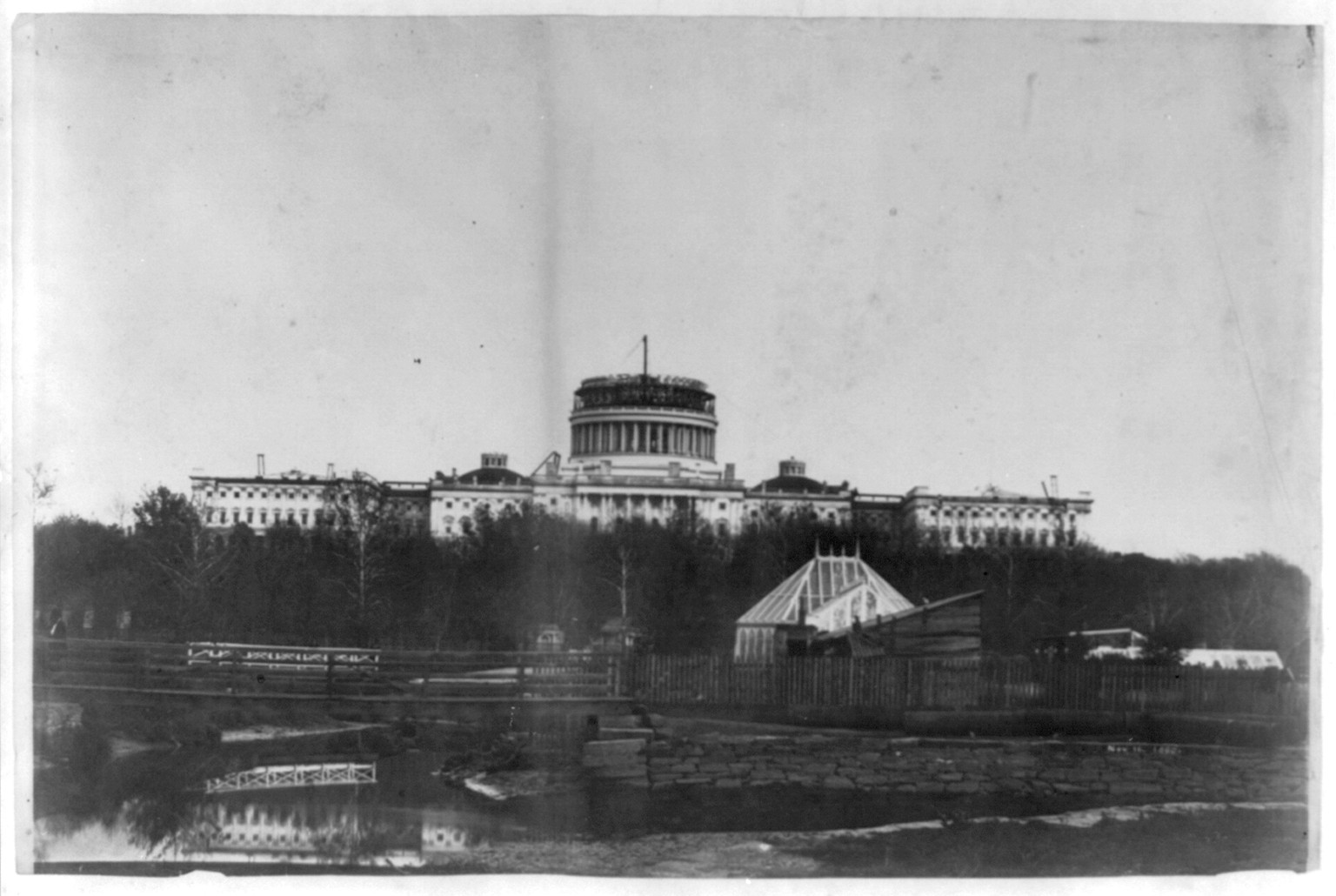
Then Congress started building. And suddenly B Street needed to be something else.
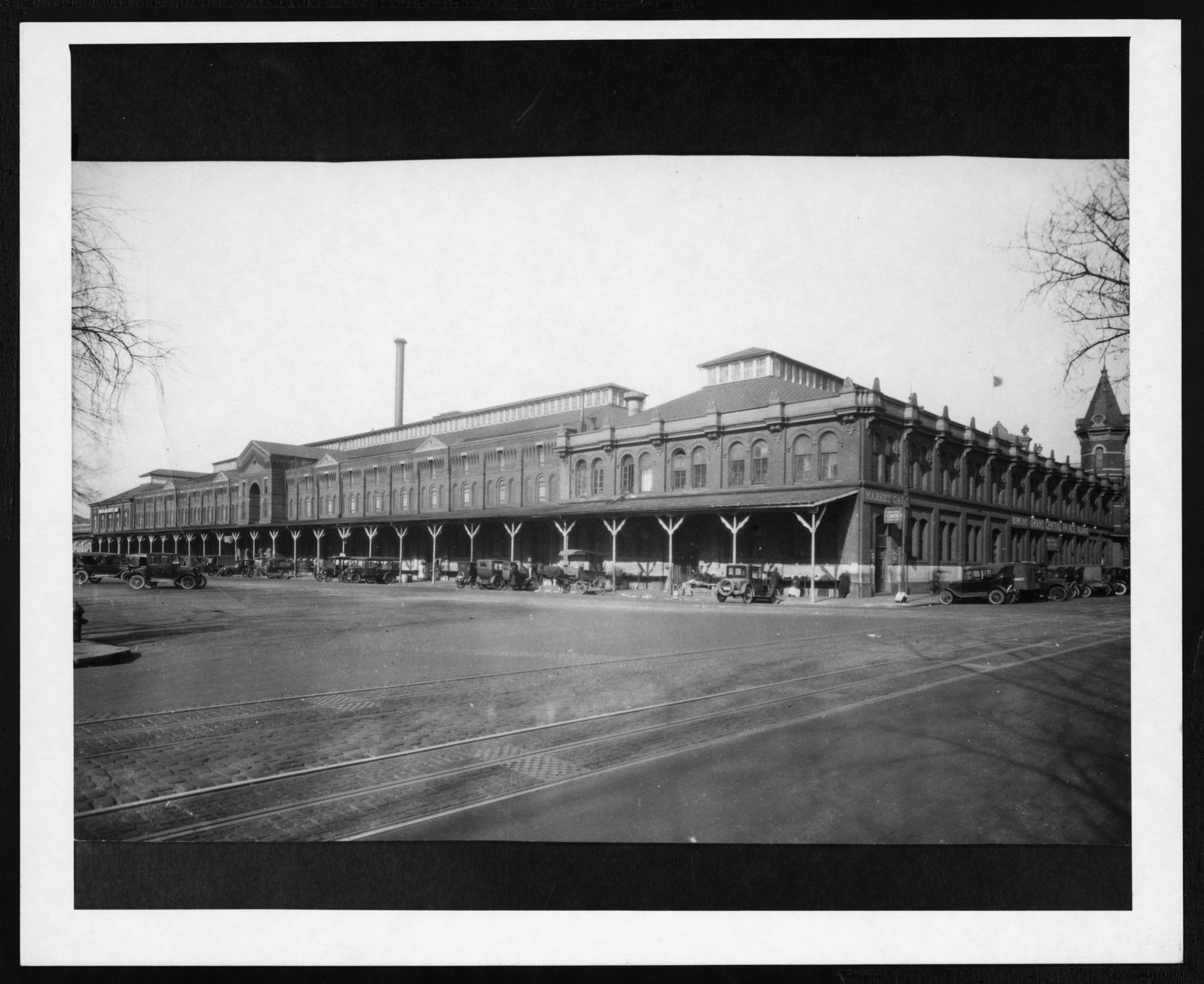
Center Market: The Last Thing They Wanted There
For most of B Street’s existence, its most famous address wasn’t a government building. It was a market.
Center Market occupied the block at roughly 7th and B Street NW, where the National Archives stands today, for well over a century. Commission merchants, produce dealers, farmers rolling in from Maryland and Virginia. By 1930, the tenants had what one reporter described as “a good will established over half a century.”
That was the problem.
On February 20, 1930, the Washington Post ran a piece by Fred J. Rice on page 11. The headline: “Central Market Is Seen Superfluous for Capital.” Rice’s argument was cold and methodical: Washington already had ten community markets spread across the city, with roughly 350 stalls between them. They represented $2,400,000 in private capital. Building a new Center Market would cost the same amount and would destroy every community market in the process, since no private operator could survive with the federal government running a competitor across town.
“A Center Market means traffic congestion and traffic hazards; our community markets will divide that traffic congestion into ten parts, reducing traffic hazards proportionately. A Center Market does not mean cheaper rents and cheaper food and produce, while a Community Market, with all stands rented, does mean cheaper rents and cheaper foods.”
Rice named all ten community markets in the piece. He ran the dollar figures. He made the case.
The article isn’t sympathetic to the Center Market and its tenants. It treats the market the way city planners treated it: as an obstacle. The tenants had been there for fifty years. The city had other plans for that corner.
Those plans had been in the works since 1926.
$33,725,000
On June 6, 1926, the Washington Post reported on an announcement from the Treasury Department: eight federal building projects for the District of Columbia, total cost $33,725,000. The headline put the number up front and didn’t bury it.
The buildings, in order of priority:
Archives building: $6,900,000. Ranked first on the program.
Internal Revenue Bureau: $7,850,000. Ranked second.
Agriculture office: ranked third.
Commerce Department: $10,000,000. Ranked fifth.
The Archives building was first. The Archives would go at 7th and B Street NW.
Where Center Market stood.
The specific building locations were being withheld by the Treasury’s supervising architect, but it wasn’t hard to read. The most ambitious federal construction program in the District’s history was aimed directly at the low ground along B Street. The Federal Triangle was coming. And you don’t build a marble corridor of government buildings on a street named B.
By the time Fred J. Rice was filing his “superfluous” piece in 1930, the Archives was already funded and ranked first. Center Market’s fate had been decided four years earlier, buried in a Treasury Department construction list.
What to Call It
By May 1930, with construction underway and the old market’s days numbered, Congress started arguing about the name.
The District Commissioners appeared before the House District Committee. Their message: yes, rename B Street, but not L’Enfant Avenue, which was what Representative Bacon of New York was proposing. Representative Summers of Washington had introduced a competing bill the same day, calling the street “Memorial Boulevard” to connect it to the Mall, Union Station, and the Arlington Memorial Bridge.
The Commissioners pushed back on both. What they wanted was Washington Avenue or Lincoln Avenue, something tied to national history, not to L’Enfant specifically. Their statement to the committee is worth reading:
“It is fitting that the street should be given a name more dignified and more appropriate than the name it has at present, but we should give it a name relating more to something in our national history. We should name a square or court directly related to the city plan for the French planner, and leave this more important street for America to remember her greatest men by.”
The Washington Post ran that on May 21, 1930. The competing options on the table were L’Enfant, Memorial Boulevard, Washington, and Lincoln. Constitution Avenue wasn’t in the conversation yet.
The next day, a reader wrote to the Post. He signed his letter “FEDERALIST,” a nice touch given that the original Federalist Papers contributors also wrote under pen names. He had a different suggestion. After running through a list of Revolutionary figures (Jefferson, Samuel Adams, Hancock), Constitutional framers (Hamilton, Madison, Jay), nationalists (Marshall, Monroe), and American writers (Emerson, Hawthorne, Longfellow), he made his case:
“There is Franklin, publicist, clear-sighted counselor, revolutionary sage, whose name leads all the rest.”
Franklin. The letter argued for Franklin Avenue, signed off, and that was that.
Neither the Commissioners nor “FEDERALIST” mentioned Constitution Avenue. Henry Allen Cooper did.
One Congressman’s Case
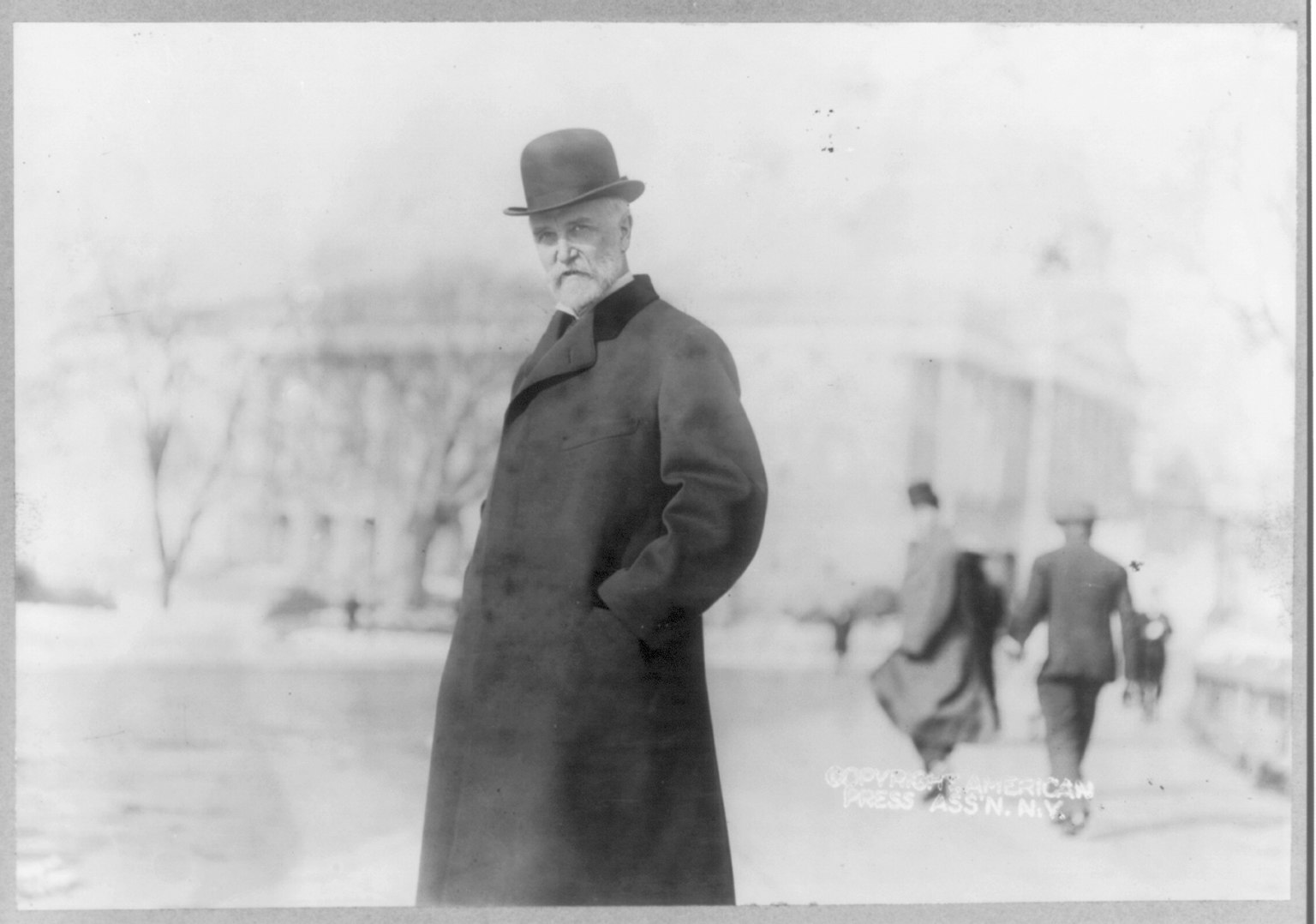
Cooper had been in the House since 1893. By early 1931 he was 80 years old, the oldest member in point of service by a considerable distance. His colleagues called him “the dean of the House.” The Baltimore Sun described him as “tall, upright, white-haired and bearded.” Six feet tall, still taking his seat for late-night sessions.
He was a Wisconsin Republican Progressive, aligned with the La Follette wing for decades. He’d lost his seat in 1918 for voting against entering World War I, one of a handful of members who did, and won it back in 1921. He’d authored the Philippine Organic Act in 1902. He’d backed the Lincoln Memorial’s construction. He was about to start his 19th term.
His resolution was H.J. Res. 404: change the name of B Street NW to Constitution Avenue.
On January 28, 1931, the House District Committee convened at 10:30 in the morning. Chairman Frederick Zihlman presiding. Cooper spoke first.
He read the resolution aloud. It described a street that would run “approximately two miles long, from the Capitol Grounds to Arlington Memorial Bridge,” bordered by “stately public buildings and by the beautiful Mall and Parkway,” a street destined to see “countless processions of American patriots and millions of liberty-loving men, women, and children, wending their way to Arlington and the Tomb of the Unknown Soldier.” A street like that needed a name.
Cooper had put Gladstone directly into the resolution. William Ewart Gladstone, four-time British Prime Minister, had called the American Constitution “the most wonderful work ever struck off at a given time by the brain and the purpose of man.” Cooper was not just proposing a street name. He was making a case.
His argument ran to the founding. He told the committee he believed that next to the establishment of Christianity, the establishment of the United States as an independent republic was the most important event in human history. “And this we owe entirely, absolutely, to the Constitution.”
Then he addressed Jefferson Avenue directly. The newspapers had been pushing it. Cooper didn’t dismiss it:
“No one, I think, has a higher appreciation than is mine for that great man. But it does not seem to me that this thoroughfare from the Capitol to the Potomac River should be called Jefferson Avenue. Already there are in this country innumerable Jefferson Streets and Jefferson Avenues.”
What Jefferson deserved, Cooper argued, was something more specific: a memorial on an open space, with the words of the Declaration inscribed in large letters of bronze overlaid with gold leaf, illuminated every night so they would “never be in darkness.” The avenue was for the document that gave those words the force of law.
Memorial Avenue got the same treatment.
“Mr. Chairman, in my judgment this thoroughfare of 2 miles from the Capitol to the river ought not to be named after any State, or after any individual, however distinguished. Nor does the name ‘Memorial Avenue’ impress me as being at all worthy of it. Memorial Avenue is too vague, not sufficiently specific.”
He closed:
“Every American patriot, passing along Constitution Avenue, will think of the Constitution of the United States of America, the charter which makes his liberty secure, and to which our country owes all its greatness and glory.”
He Was Not Unopposed
Elizabeth S. Kite, a scholar who had written on L’Enfant and Washington and held a research desk at the Library of Congress, told the committee the street should be called National Avenue or Memorial Avenue. The Constitution, she said, “really has nothing to do with the plan of the city.” Cooper asked her a question: did she think it improper to name the street that was about to connect formerly hostile sections of the country “Constitution Avenue,” in honor of the Constitution that had preserved them as a nation?
She paused. “Well, there is something to that. I had not thought of that.”
Elvin H. Tucker, representing the Northeast Washington Citizens’ Association, also preferred Memorial Avenue. Representative Palmer of Missouri kept pushing Cooper through the Q&A: wasn’t Memorial Avenue more descriptive, since the street led to the Memorial Bridge?
Cooper’s answer: “‘Constitution covers all parts.”
The hearing concluded at 11 o’clock. Thirty minutes. The committee approved the resolution. The House passed it. The Senate passed it. The bill went to President Hoover.
Then Cooper went back to his hotel.
The Dean of the House
March 1, 1931.
Cooper had attended what the Baltimore Sun described as “a prolonged and heated House session” the night before. He retired late, complaining of feeling ill. Death came a few hours later, with his wife at his bedside.
The Baltimore Sun reported the cause as acute indigestion. The New York Times said sudden heart attack. Both ran the story the next morning. The Times headline:
DEAN OF HOUSE DIES; MAJORITY WIPED OUT
That second part was not a metaphor. Cooper’s death left Republicans and the combined opposition tied 217 to 217 in the incoming 72nd Congress. One Wisconsin congressman’s death flipped the balance of the House. He had been about to start his 19th term.
The Baltimore Sun’s account:
“The tall, upright, white-haired and bearded ‘dean of the House,’ as he was termed by his colleagues, attended a prolonged and heated House session last night and retired late, complaining of feeling ill. Death came a few hours later, with his wife at his bedside.”
His health had been declining since a fall at his Racine home the previous summer. His wife had recently had a serious operation. He was 80 years old. He had given 36 years to the House, with one break when the voters of Wisconsin’s 1st district decided his anti-war vote was one vote too far.
Cooper had done a lot in those 36 years. He’d sat with McKinley to figure out American policy toward the newly acquired Philippines. He’d been in Milwaukee in 1912 when someone tried to shoot Theodore Roosevelt. He’d stood with La Follette through decades of Progressive fights when standing with La Follette cost you something. And in the final session of the 71st Congress, he’d pushed through the resolution to rename B Street.
He never saw it signed.
President Hoover signed the bill on March 3, 1931, two days after Cooper died, on the last day of the 71st Congress. The resolution Henry Allen Cooper had carried through committee, through the House, through the Senate, and to the president’s desk became law while Cooper was being prepared for burial in Racine, Wisconsin.
B Street No More
The signage changed. The street that had been B Street for 130 years became Constitution Avenue.
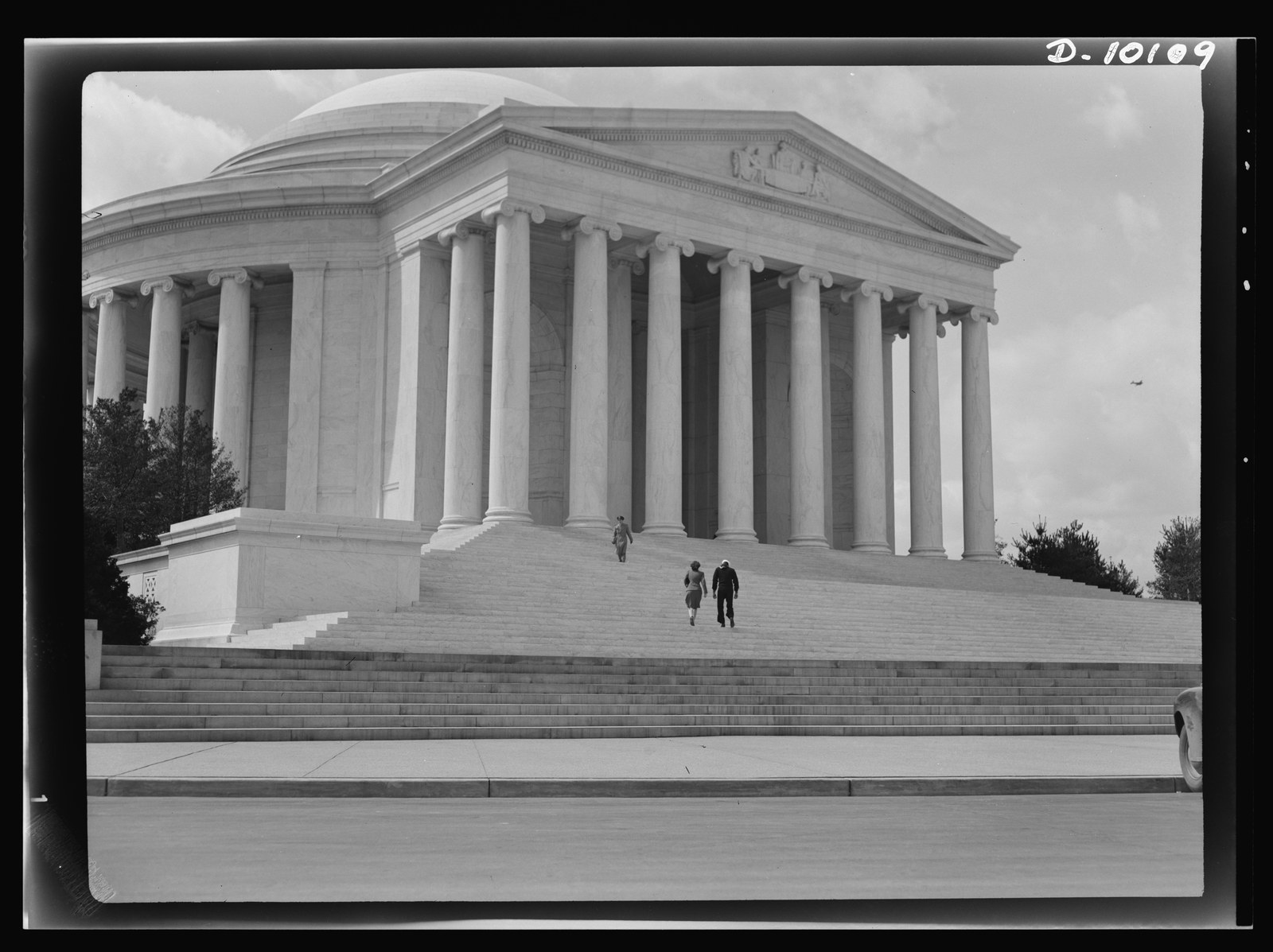
Twelve years later, in 1943, the Jefferson Memorial opened at the south end of the Tidal Basin. Cooper had argued against naming the street after any individual. The street got named for the document instead. Jefferson got a monument of his own, visible to the south from Constitution Avenue’s western stretch. Cooper had actually wanted that: he’d told the committee in 1931 that Jefferson deserved a memorial with the words of the Declaration inscribed on it in bronze and gold leaf, lit up every night so they would never be in darkness.
That’s not a bad outcome for B Street.
The avenue is a parade route now, a marathon course, a protest march corridor. The Federal Triangle buildings line its north side exactly as the 1926 Treasury Department program planned: Archives, IRS, Commerce, Justice. Center Market has been gone for ninety years. The National Archives holds the Constitution. Constitution Avenue runs past its door.
Next time you’re stuck in traffic, you’ll know who fought for the name.
While Thomas Jefferson’s name was not used in renaming B St NW (to Constitution Ave. NW), it was used for naming one of the 4 drives on the National Mall. The 4 streets ran from 3rd St NW/SW to 15th Sts NW/SW. Adams Dr. & Washington Dr. were 2 pretty tree lined roads that beautified our Mall. I believe it was in the mid 1970’s, Adams Dr SW and Washington Dr NW were turned into gravel walkways. It is no where as pretty now as it was then! Gravel and dead grass most of the time. But now and tonight that whole area will be very entertaining and exciting with all the July 4th festivities going on!
And the most important thing….Congrats and Happy 6th month anniversary!
What I take from the first quote is not that the Commissioners did not support renaming B St., but that they did not want to support any particular name.
I find it most interesting that Rep. Cooper apparently thought that Jefferson was the author of the Constitution, and that no one seemed to call him on this. Yet today they bemoan that our history and civics education is slipping…
Everything I read says that Thomas Jefferson did not write the constitution; he was not a member of the Constitutional Convention.
I was born in D,C. in 1947, and lived there for 58 years. I always wondered why we did not have a B Street. Thank you for solving this mystery for me.
Were the people who opposed the change known as B Keepers? 🙂
Thanks for a great article. I have to ask why do we have an “I Street” but not a “J Street?”