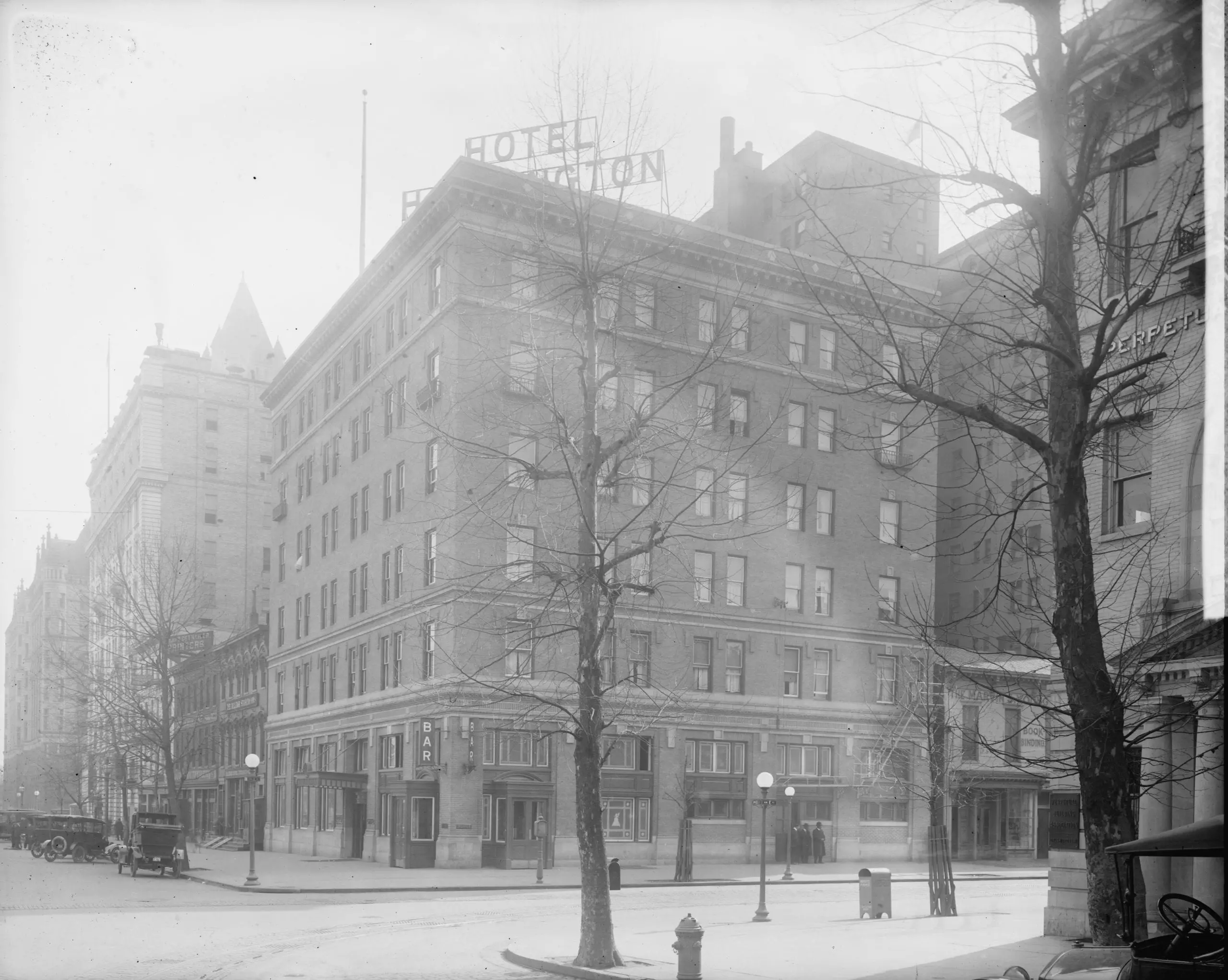
For 109 years, the Hotel Harrington stood at the corner of 11th and E Streets NW as something Washington doesn’t really do: a cheap place to sleep within walking distance of the National Mall. No marble lobby with a concierge. No doorman. Just a room, a bed, and a price that a family driving in from Ohio could actually afford.
It closed on December 12, 2023. And now, after a failed sale and two years sitting empty, KHP Capital Partners has emerged as the new buyer of 436 11th Street NW. Whatever comes next for this building, the Harrington’s 109-year run as DC’s longest continuously operating hotel is over.
This is that story.
“Washington’s Tourist Hotel”
Harrington Mills started his career behind a cigar stand at the Old Shoreham hotel in New York City. By the time he reached Washington, he’d managed the Grafton, a residential hotel patronized by diplomats, and had earned a reputation as one of the country’s sharpest hotel operators.
He saw something in 1914 that the Willard and the Raleigh didn’t: a market for the regular traveler. Mills and his business partner Charles W. McCutchen opened the Hotel Harrington on March 1, 1914, at 11th and E Streets NW. Their pitch, as the Washington Post described it, was built around “popular one-room-and-bath-demand,” an unusual concept at the time. Grand hotels served the wealthy. The Harrington served everyone else.
The architectural firm Rich & FitzSimons designed the original six-story building with a dining room and a two-story lobby with a mezzanine, all finished in marble. Mahogany-trimmed hallways led to 80 rooms, all with running water and most with private baths. They even set aside special “sample rooms” for traveling salesmen to show their wares to buyers from nearby stores.
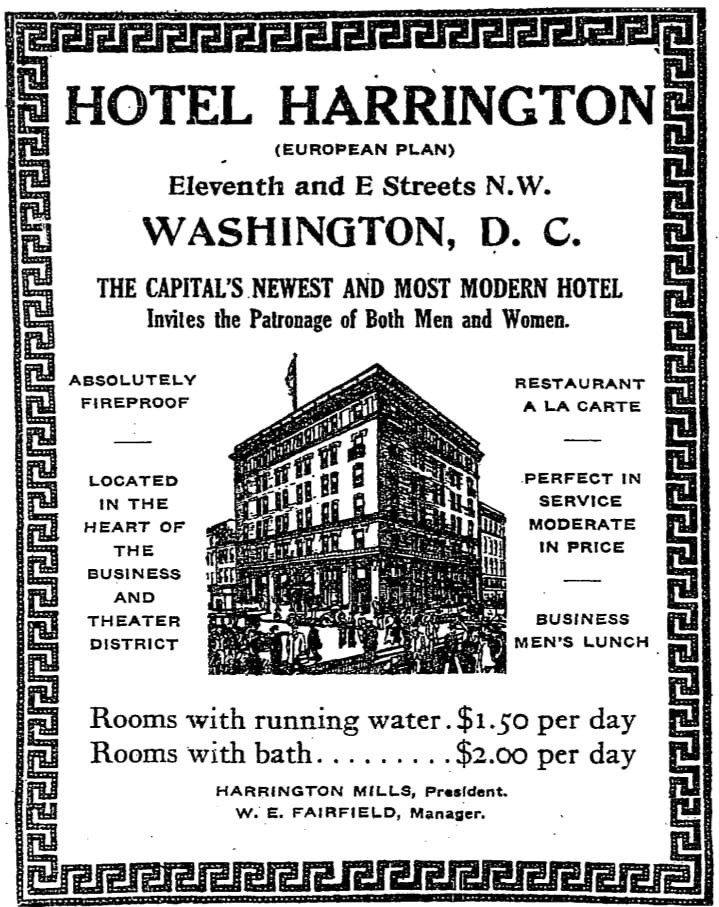
The Opening Year, in Three Ads
The Harrington wasted no time letting Washington know it had arrived. About a month after the doors opened, this notice ran in the Washington Post on April 2, 1914.
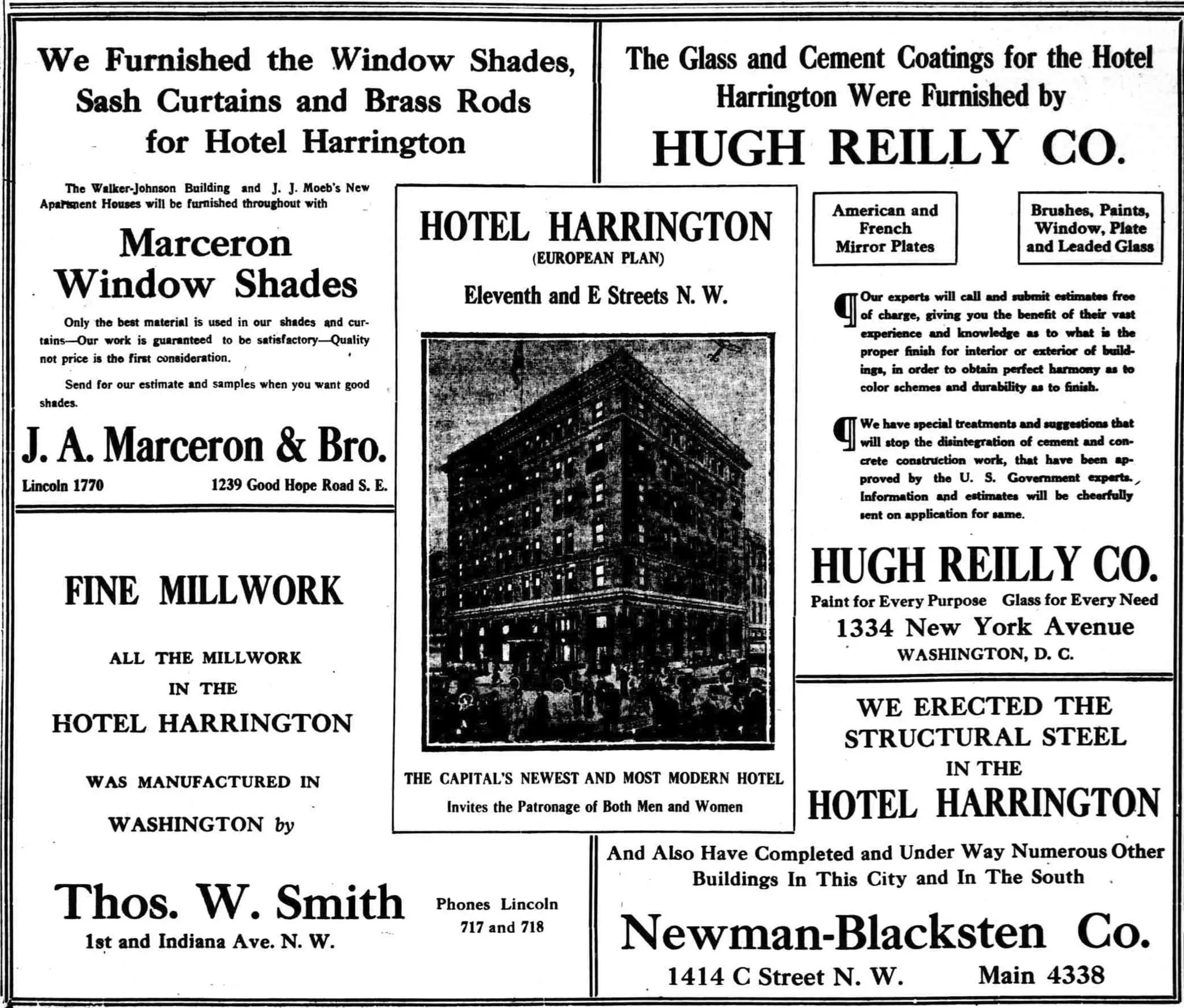
That same day, the hotel ran a second ad in the Washington Times under its “European Plan” banner, thanking the long list of local firms that built and furnished the place. It reads like a who’s-who of 1914 Washington contractors.
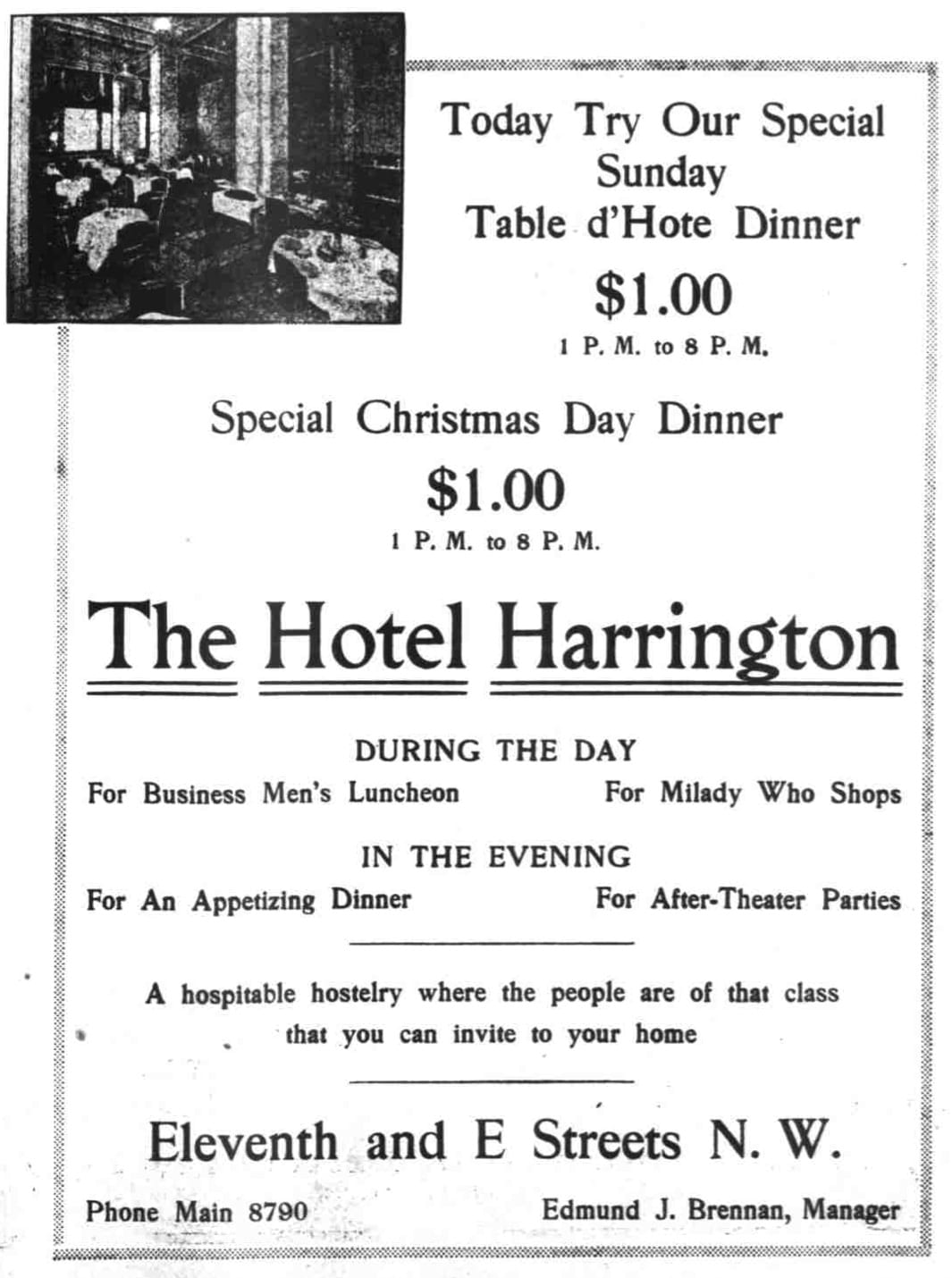
And here’s our favorite. By that December, the Harrington was advertising a full Christmas Day dinner for a single dollar. The ad ran in the Washington Herald on December 20, 1914.
Growing Up on E Street
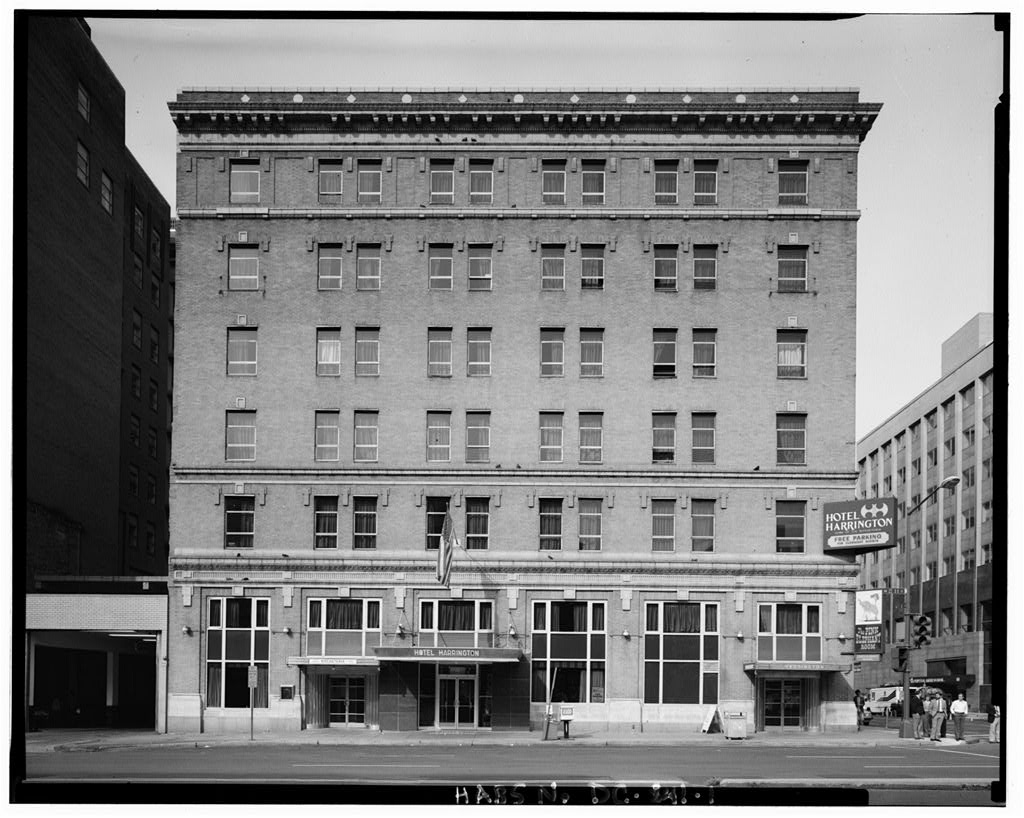
The Harrington grew fast. By 1918, Mills and McCutchen doubled the size of the lobby and built a 12-story annex along E Street that included a two-story ballroom and 100 additional hotel rooms. That expansion put the Harrington among the city’s largest hotels.
A final 12-story wing with 125 more rooms completed the E Street block in 1925. The building that started with 80 rooms now had over 300.
In 1932, the hotel got an Art Deco facelift: a stainless steel canopy with illuminated lettering above the entrance. Six years later, in 1938, the Harrington became the first hotel in Washington to air-condition its guest rooms. That same stretch of 11th Street NW in the 1920s was a busy commercial block with fruit vendors, the YMHA, and the kind of everyday downtown bustle that the Harrington’s guests walked right into.
DC’s First Television Station
Here’s one most people don’t know. Washington’s first television station operated out of the upper floors of the Hotel Harrington.
DuMont Laboratories chose the Harrington because it was one of the tallest commercial buildings in the city at the time. Their experimental station, W3XWT, began broadcasting on May 19, 1945. The FCC granted a commercial license in late 1946, and the station became WTTG, Channel 5, the first commercial television station in the nation’s capital. The call letters honored DuMont engineer Thomas T. Goldsmith Jr.
In the late 1950s, WTTG broadcast a teen dance show called The Milt Grant Show from a ballroom at the nearby Raleigh Hotel, running from 1956 to 1961. Think American Bandstand, but for Washington kids.
Pink Elephants and Harry’s Pub
When Prohibition ended in 1933, the Harrington opened the Pink Elephant Cocktail Lounge. It became a hit, especially popular with Air Force officers during the 1960s. In the early 1950s, the lounge was redesigned with spacious red circular booths.
During World War II, the hotel ditched its white-tablecloth dining room and replaced it with a self-service “Kitcheteria” to feed the wave of government workers flooding downtown. Practical as always.
The Pink Elephant eventually closed, and in 1993, Harry’s Pub opened in its place, taking its name from the Harrington. Harry’s became a divey, unpretentious bar in a neighborhood that was quickly losing divey, unpretentious things. The Washington Post would later call the Harrington an “unbuttoned oasis in an otherwise buttoned-up downtown.”
That description captured the Harrington perfectly. While the nearby Raleigh Hotel had long since vanished, and the Willard underwent its famous $73 million renovation, and the National, Brown’s, and Southern hotels down on Pennsylvania Avenue had been gone for decades, the Harrington just kept being the Harrington. Same family. Same budget rooms. Same vibe.
The Proud Boys Problem
For decades, the Harrington’s location near Federal Triangle and the National Mall made it a natural stop for anyone coming to Washington for a march, a rally, or a protest. It was affordable and central. That had always been a feature, not a bug.
Then 2020 happened.
When the Proud Boys came to Washington in December 2020 to protest the presidential election results, several hundred of them booked rooms at the Harrington. Harry’s Bar became their gathering point. The Washington Post reported that the group had made the hotel its “unofficial headquarters” in the capital. Clashes between Proud Boys members and counter-protesters erupted near the hotel, resulting in four stabbings with serious injuries.
Harry’s Bar received a $2,000 fine for repeated COVID safety violations involving maskless crowds.
With another rally planned for January 6, 2021, the hotel made a decision: it shut its doors entirely from January 4 through January 6. Proud Boys chairman Enrique Tarrio told reporters that a corner of Harry’s had served as a “staging area” for demonstrations, though he said the group’s connection to the hotel was “overblown.”
Managing Director Ann Terry said of the political controversy: “It’s not something we can control, really.”
The Lights Go Out
The Harrington survived two world wars, the Great Depression, the 1968 riots, and the slow hollowing-out of downtown in the 1970s and 1980s. It survived the construction of the Metro Center station practically on its doorstep. It survived the luxury hotel boom that turned every other block downtown into a Marriott or a Hilton.
It didn’t survive 2023.
Dr. Charles W. McCutchen, the grandson of co-founder Charles W. McCutchen, had been the last strong link to the founding family. A physicist at the National Institutes of Health for more than 35 years, he became president of the Harrington Hotel Company in the 1980s. He died in September 2020. Three years later, on December 12, 2023, after serving more than 10 million guests, the Hotel Harrington closed its doors. Harry’s Bar and Ollie’s Trolley, the hamburger joint that had operated on the ground floor, went dark with it.
What Comes Next
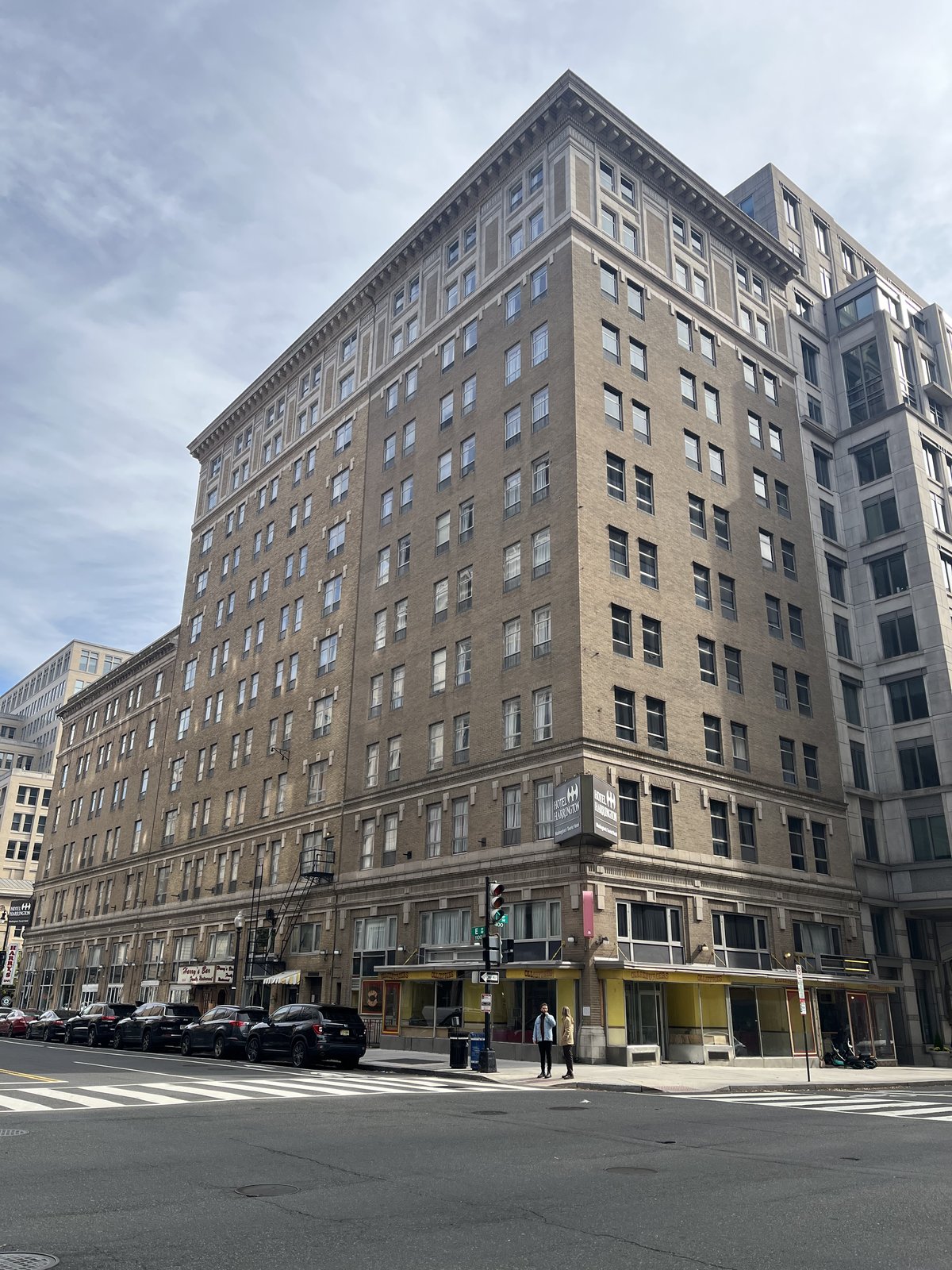
The Georgetown Company went under contract to buy the property in early 2025, with plans to “reposition the entire property” into a “marquee asset.” They explored options including housing, higher education, a refreshed hotel, and a social club. The 12-story, 141,000-square-foot building was changing hands for the first time in more than a century.
That deal never closed.
Now KHP Capital Partners, a hospitality-focused investment firm, has emerged as the buyer. As of April 2026, the details of the sale, the purchase price, and the plans for the property remain under wraps.
The building sits at one of the closest privately owned locations to the National Mall. Whatever KHP does with it, it won’t be what Harrington Mills built in 1914: a no-frills hotel where a family from Ohio could book a room and walk to the Washington Monument.
That version of Washington is gone. The Harrington was one of the last places that remembered it.