
The Willard Hotel closed without warning on July 15, 1968. No farewell gala. No final toast in the Crystal Room. The staff showed up one morning, and the doors were locked.
One of the most storied hotels in the country, two blocks from the White House, and they just locked the door.
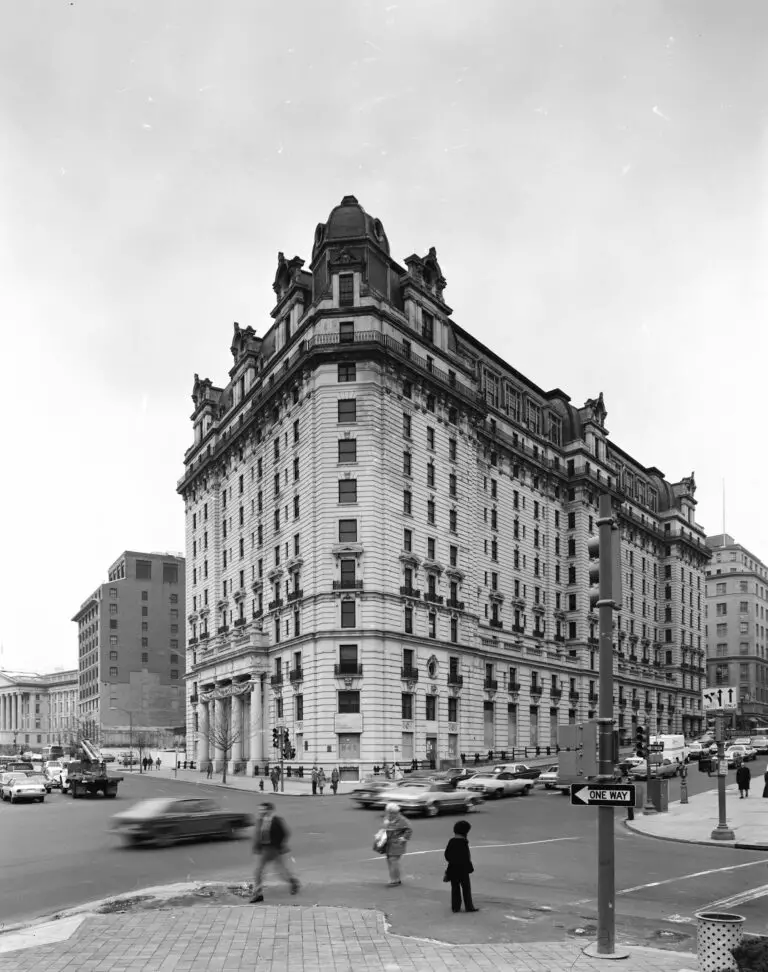
For the next eighteen years, the Willard sat empty at 1401 Pennsylvania Avenue NW. Windows boarded. Plaster cracking. Pigeons nesting in hallways where politicians once held court. This is the story of how it nearly came down, and how a $73 million renovation brought it back.
Presidents, a Peace Conference, and 475 Mattresses
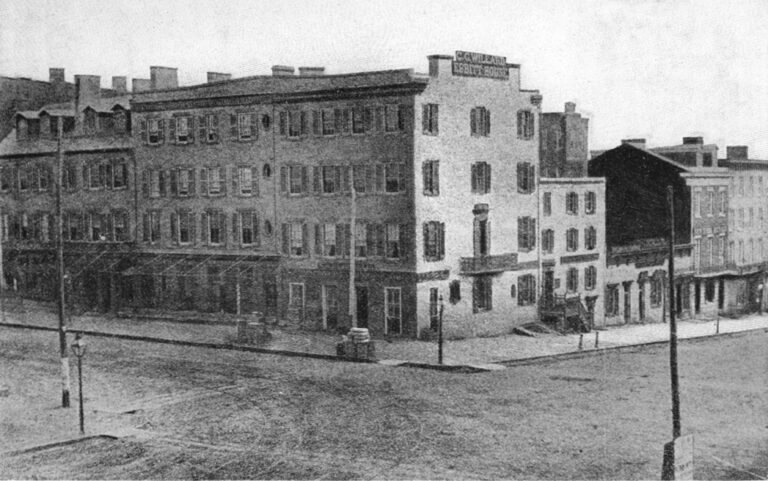
A hotel has stood on this corner since 1816, when John Tayloe built six two-story row houses on land that once belonged to David Burnes’s farm. By 1818, the corner building was operating as a hotel. But the Willard name didn’t arrive until 1847, when Henry Willard, a former chief steward on the Hudson River steamer Niagara, leased the property with his brother Edwin.
Henry combined the six buildings into a single structure and renamed it Willard’s Hotel. The Willard family had already cut its teeth in DC hospitality by leasing the older National Hotel down on 6th and Pennsylvania a few years earlier. It worked. By the 1850s, the Willard was the place to stay in Washington. Nine sitting or future presidents slept there: Taylor, Fillmore, Pierce, Buchanan, Lincoln, Grant, Taft, Wilson, Coolidge, and Harding. Charles Dickens stayed. So did Mark Twain, Walt Whitman, and Buffalo Bill.
The most dramatic chapter came in February 1861. With assassination threats swirling, detective Allan Pinkerton smuggled President-elect Abraham Lincoln into the Willard on February 23rd. Lincoln lived there for nine days, holding meetings in the lobby and conducting business from his room until his inauguration on March 4th.
The Willards prepared for the crush by laying 475 additional mattresses in the corridors and public rooms. Four hundred and seventy-five. In the hallways.
And while Lincoln was upstairs, a peace conference was happening downstairs. Delegates from 21 states gathered at the Willard in a last-ditch effort to prevent civil war. They failed.
Washington’s First Skyscraper
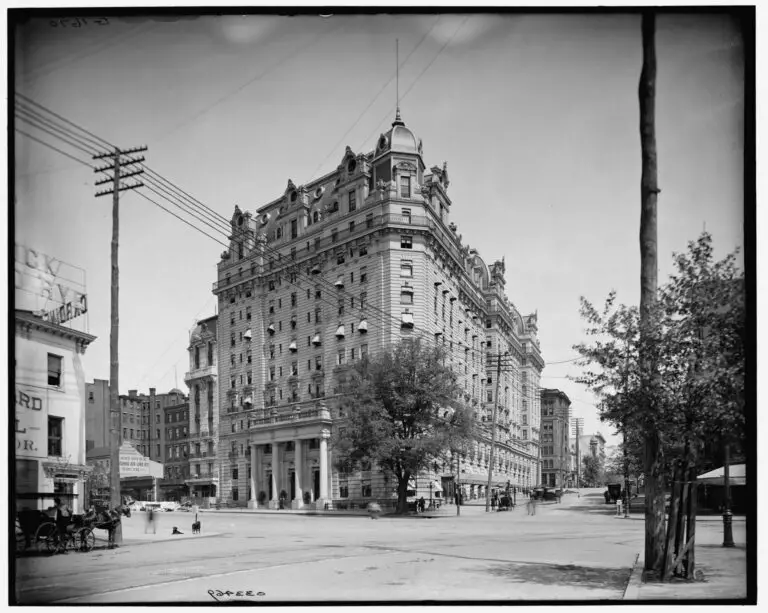
The original row-house hotel was demolished in 1901 to make way for something grander. Architect Henry Janeway Hardenbergh, the same man who designed the Plaza Hotel in New York and the nearby Raleigh Hotel on Pennsylvania Avenue, drew up a 12-story Beaux-Arts building clad in Indiana limestone and terracotta tile. When it opened, people called it “Washington’s first skyscraper.”
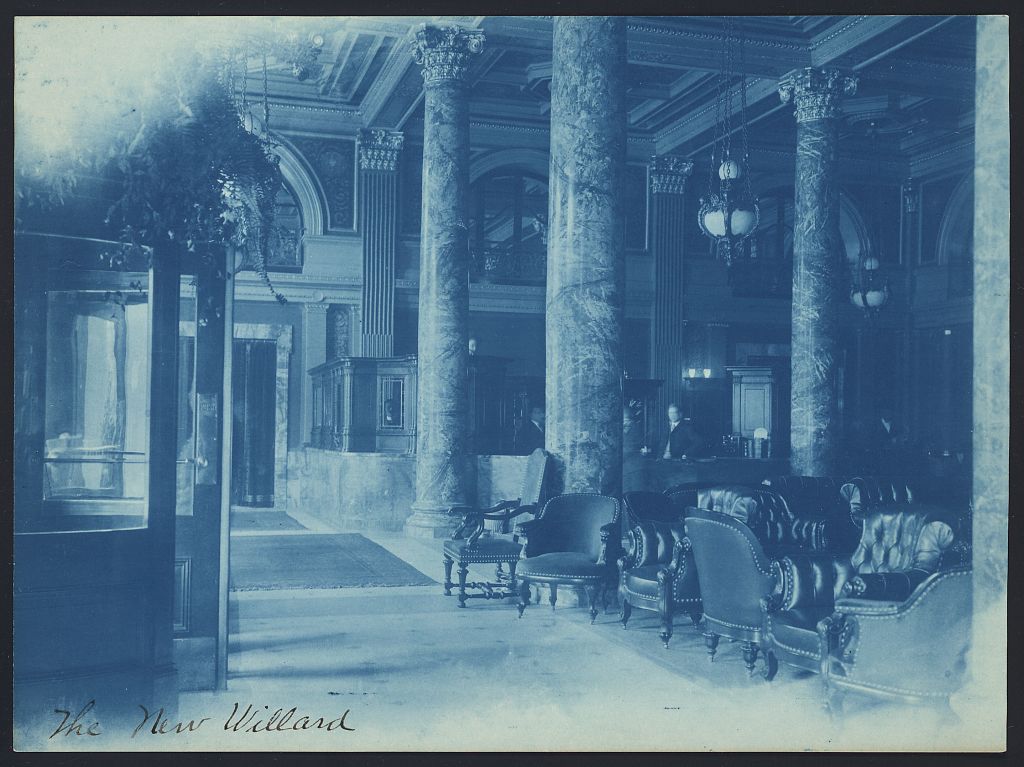
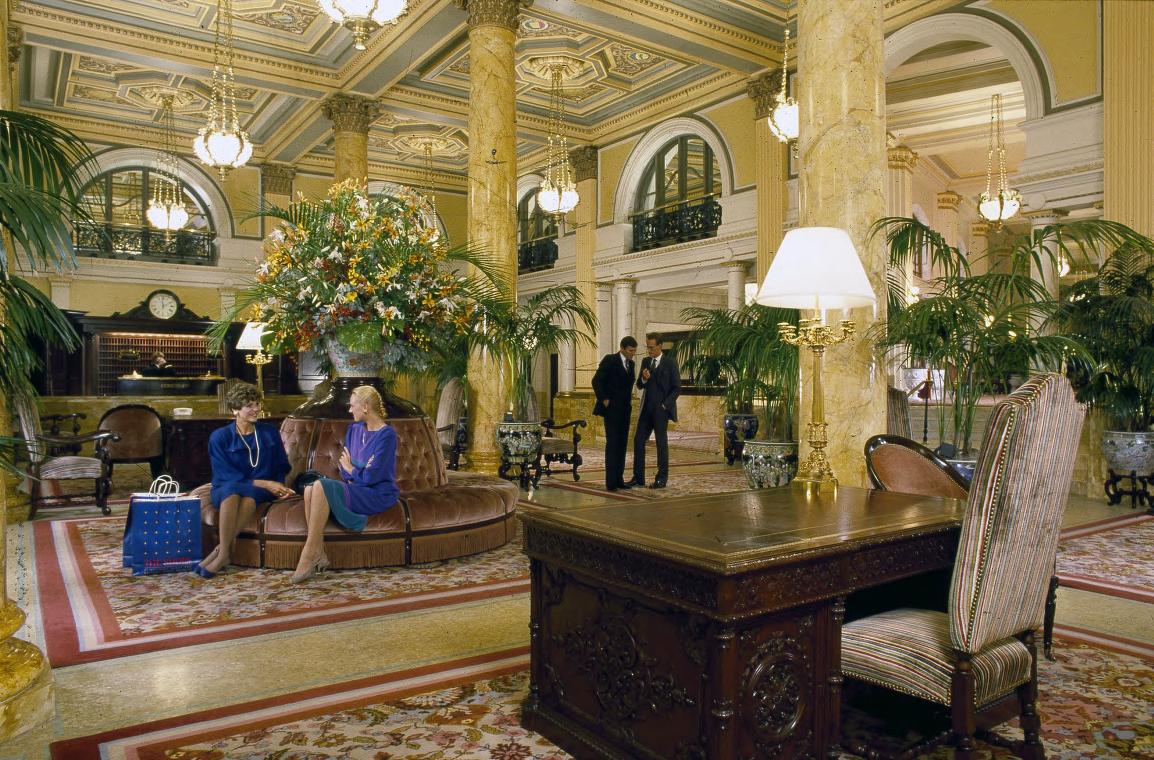
The interior matched the ambition. A coffered ceiling in the lobby displayed 48 original state seals. The Crystal Room featured mottled green marble columns, crystal chandeliers, and gold leaf crown molding. And then there was Peacock Alley, the wide promenade connecting the lobby to the hotel’s public spaces, where Washington’s elite came to see and be seen. We’ve written more about Peacock Alley and what it looked like in its prime.
The Willard family held on until 1946, when they finally sold. A 100-room addition had gone up in 1925. A major fire in 1922 caused $250,000 in damages. But the hotel kept going. For a while.
And Then the Government Pulled the Plug
By the mid-1960s, the Willard was struggling. Revenue had been declining for years, and the April 1968 riots hit downtown Washington hard. But the real death blow came from the federal government itself.
President Kennedy’s Advisory Council on Pennsylvania Avenue had proposed a “National Square” at the western end of the avenue, a grand civic plaza that would have eliminated every building on the Willard’s block. Why invest in a crumbling hotel when the government might bulldoze it?
On July 15, 1968, the doors closed. No announcement, no ceremony. The furnishings and equipment were auctioned off in 1969.
And then the Willard just sat there.
Eighteen Years of Nothing
What followed was nearly two decades of uncertainty, false starts, and near-demolition.
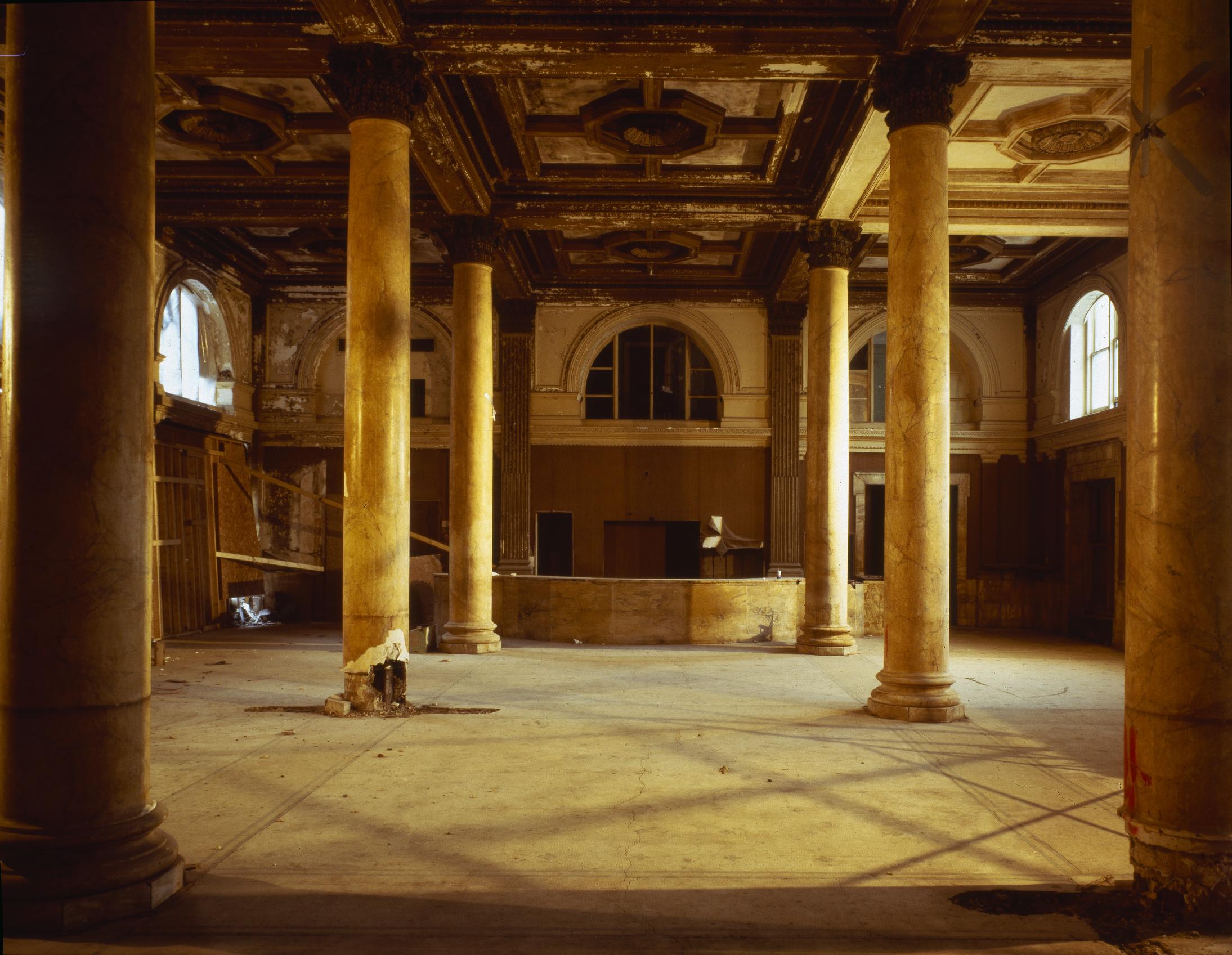
In 1974, the National Trust for Historic Preservation commissioned a study by the Oliver T. Carr Company, which examined seven redevelopment options and concluded that returning the building to hotel use was the most economically viable path. That same year, on February 15th, the Willard was listed on the National Register of Historic Places.
The following year, the National American Indian Council announced it had purchased the building to use as national headquarters and a cultural center. That plan fell through.
The Pennsylvania Avenue Development Corporation eventually acquired the property on January 12, 1978, and held a competition to rehabilitate it. On December 19, 1978, the Fairmont/Golding team was selected as developer. But the project stalled. It wasn’t until the summer of 1981 that Stuart Golding contacted the Oliver T. Carr Company and invited them to join the partnership. By October 1981, the Golding and Carr team proposed a plan: 350 hotel rooms and roughly 225,000 square feet of new office space.
Thirteen years after the doors closed, and they were still just talking about it.
If you want to see what the Willard looked like from the outside during its years of abandonment, we published a photo of the boarded-up building from 1976 that captures the eerie quiet of those years.
Scraping Through 16 Layers of Paint
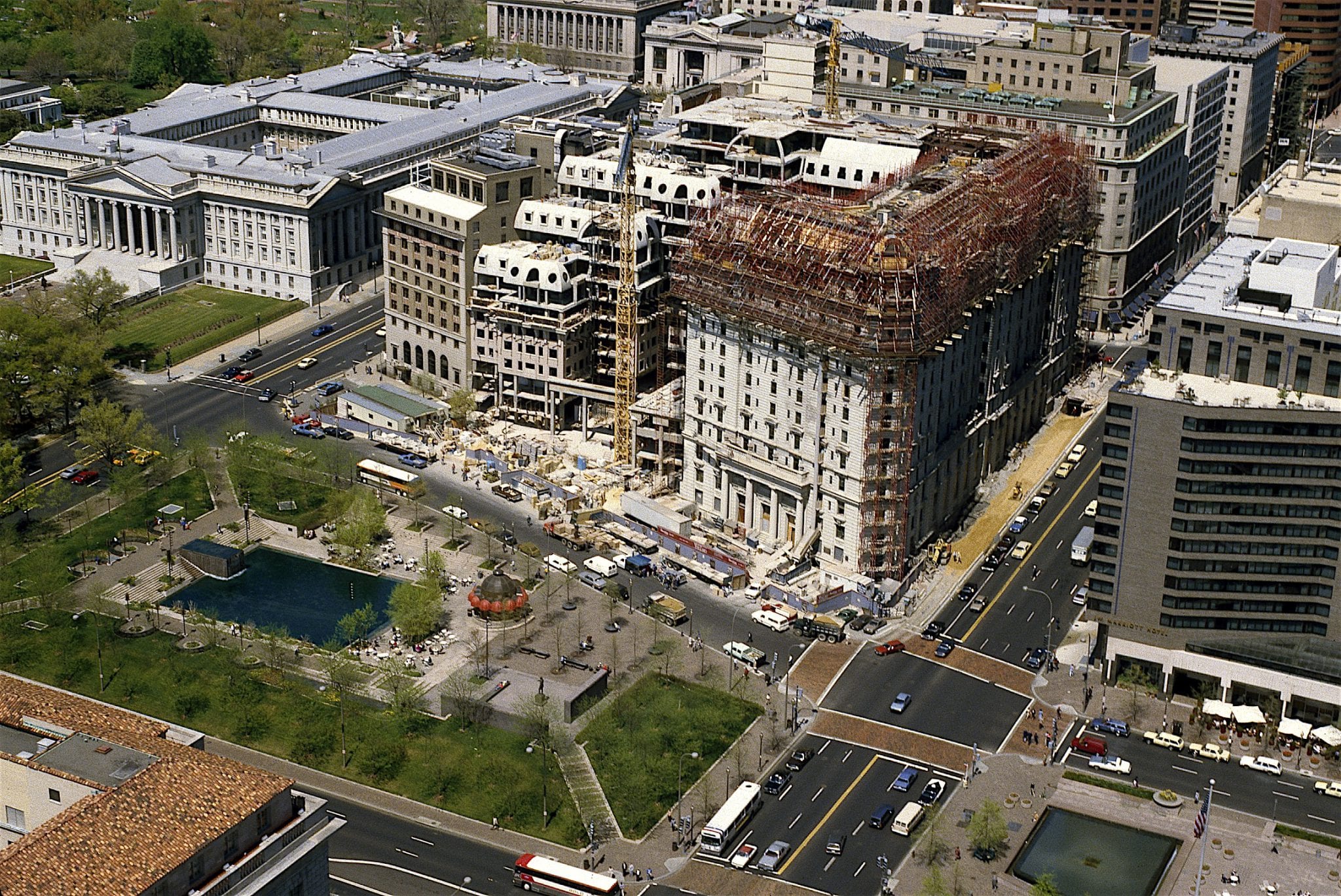
Groundbreaking finally came on February 1, 1984. The New York firm Hardy Holzman Pfeiffer Associates was hired to lead the restoration and expansion. When that firm pulled out, Czech-born Washington architect Vlastimil Koubek took over and executed their concept through to completion.
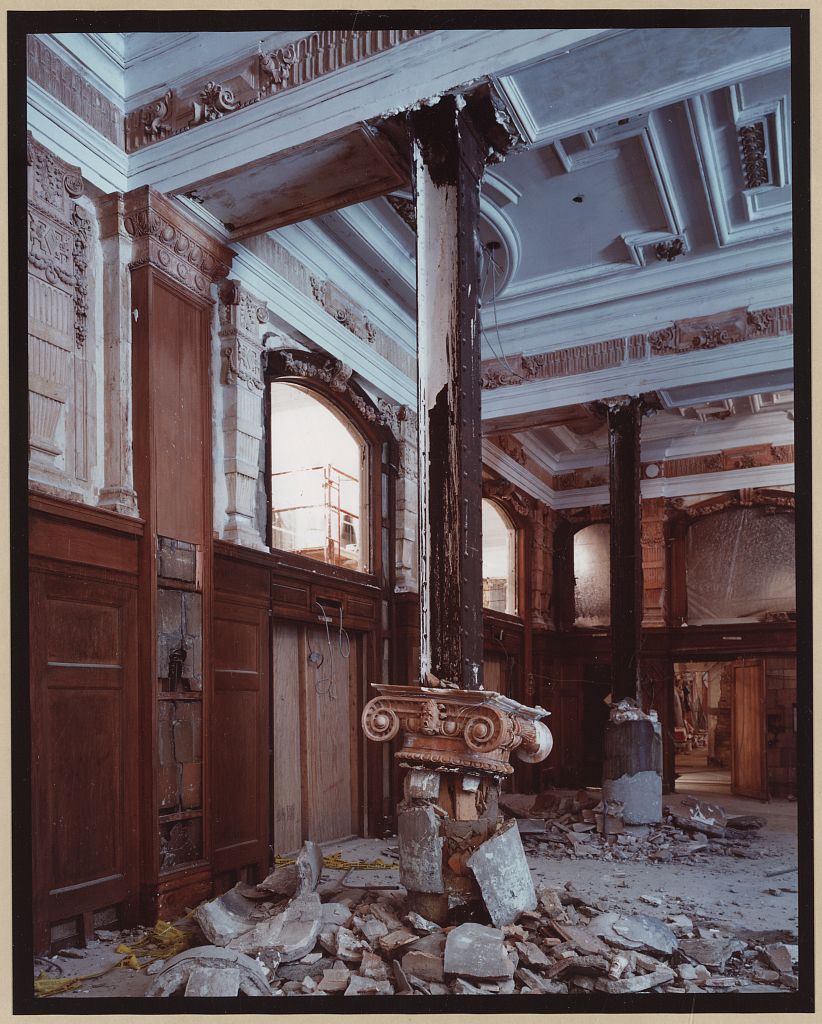
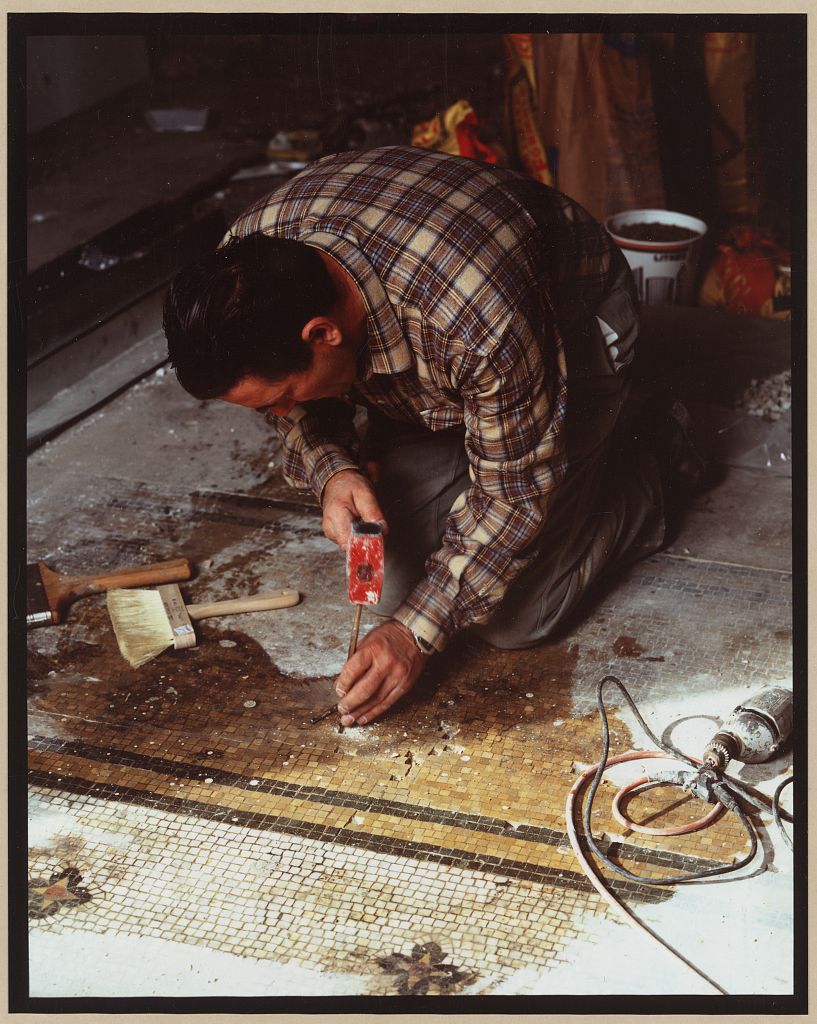
The hotel restoration alone cost $73 million, with the total project running to roughly $110 million once the new office wing and retail space were included. The National Park Service planned the work to make it as historically accurate as possible. Workers scraped through sixteen layers of paint on the woodwork to find the Willard’s original 1901 colors.
Sixteen layers. Roughly one for every year the building sat empty.
The lobby’s coffered ceiling, the Crystal Room’s chandeliers, the marble, the moldings: all of it was painstakingly brought back.
Koubek also designed the new additions: giant ocular windows in the office complex, a marble entryway with canopy and columns, and a restructured diagonal courtyard connecting the original hotel to the office wing. Washington Post architecture critic Benjamin Forgey singled out these elements. In 1988, the Washington Chapter of the American Institute of Architects gave Koubek its Award for Excellence for the work.
If you’re curious what the Willard looked like before the decline, take a look at these photos from around 1904, captured by photographer Frances Benjamin Johnston shortly after the new building opened.
The Bronze Doors Open
The Washington Post covered the reopening on August 21, 1986:
The once-decayed Willard Hotel was reincarnated when its bronze doors opened for the first time in 18 years after a monumental $110 million salvage project to restore its lofty status as the “residence of presidents.”
Bronze doors. Eighteen years. $110 million. That sentence does a lot of work.
U.S. Supreme Court justices and senators attended the celebration. The InterContinental Hotels Group had come aboard as part owner and operator. At 11 a.m. on August 20, 1986, the Willard Inter-Continental welcomed its first guests into the restored grand lobby.
The building that Kennedy’s planners had wanted to level, that had sat boarded up through Watergate and the Bicentennial and the entire Carter administration, was back. Three hundred and fifty rooms. Peacock Alley restored. The Crystal Room glittering again.
We’ve also got a look at what guests were eating in the Willard’s heyday with this room service menu from the 1950s or 1960s. And for more on how Pennsylvania Avenue itself was being reimagined during this same era, check out the 1974 blueprint for the avenue’s revitalization.
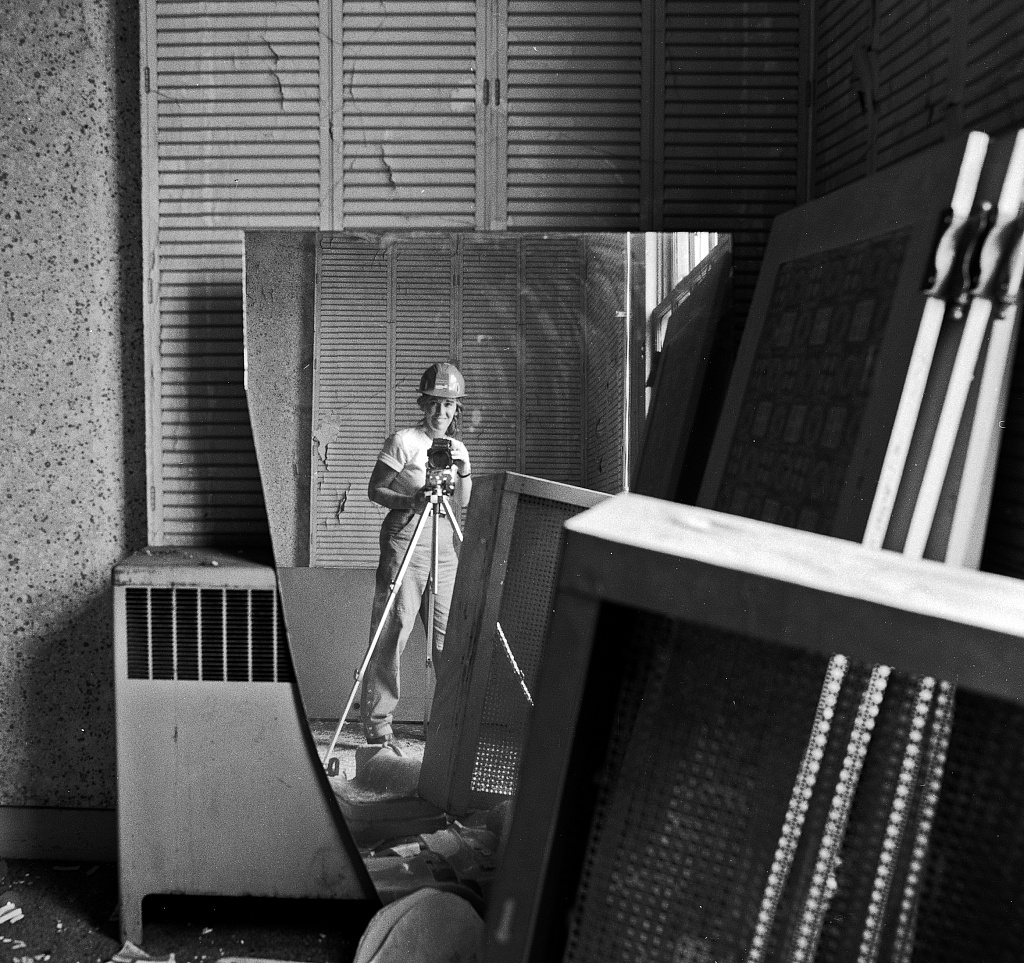
The Willard is still there at 14th and Pennsylvania, still polishing the chandeliers. Eighteen years of silence, and it outlasted every plan to tear it down.
Some of our stories are researched and written with help from AI, and checked by a person before they run. Here’s how we use AI.