
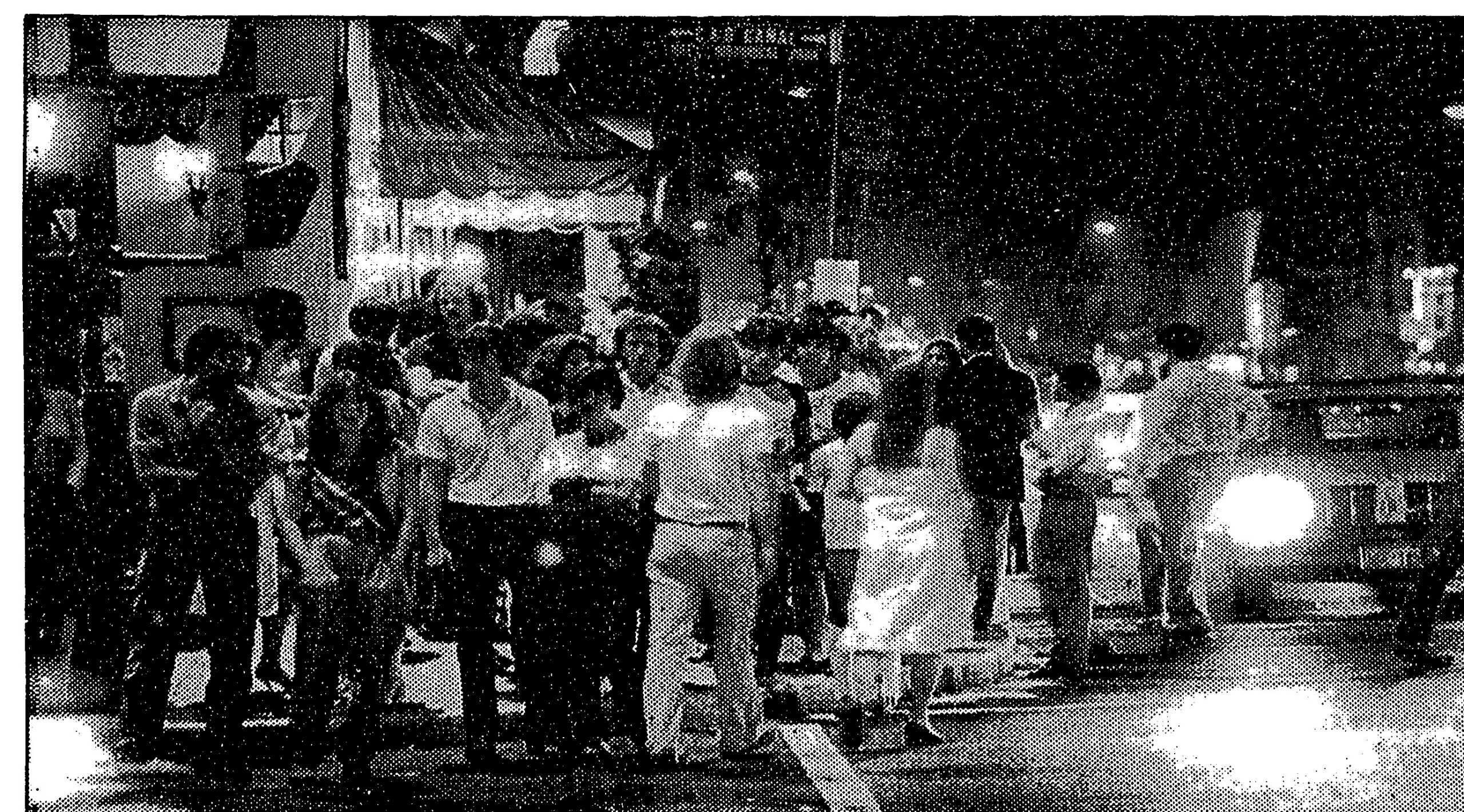
Every summer and holiday, the marquee outside Bowie High School posted the same message: Be a Friend.
It was the cornerstone of an aggressive campaign against drunk driving, a killer that had claimed 15 Bowie youngsters during a reckless two-year period and that turned the town vigilant in 1981. The phrase was designed to trigger a series of admonitions. Don’t drive drunk. Don’t let friends drive drunk.
Darren D. Yuhas, 19, knew the campaign well. He had graduated from Bowie High. He drove past that marquee whenever he headed down Annapolis Road. And he had made a pact with his friends that he would never drink and drive. Kreitzer had told his mother the same thing: when he went out with Yuhas and Vaill, one of them would not drink.
That promise shattered Sunday morning, September 21st, 1986.
All three died returning from a night of partying in Georgetown when Yuhas drove his car into an abandoned flatbed truck on the paved shoulder of the Capital Beltway. The car was traveling at about 70 miles an hour at impact. A cooler of beer was found in the car. Open bottles of beer were found near the bodies.
Laboratory tests showed that Yuhas had consumed the equivalent of 10 to 12 beers by the time he was rounding the Beltway near the Mormon Temple. Kreitzer, 20, and Vaill, 19, had drunk the equivalent of at least a six-pack each.
By Monday morning, phone calls were flooding DC Council offices. By Tuesday night, the Council had voted 10 to 3 on emergency legislation. After more than two years of stalling, Washington, DC was finally going to raise its drinking age to 21.
Beer and Wine at 18: DC’s Split System
Before we get to September 23rd, 1986, it helps to understand what DC’s drinking laws actually were.
For years, the District operated on a split system that most people outside the area had no idea existed. If you were between 18 and 20, you could walk into any bar in Georgetown and order a beer or a glass of wine. Spirits — whiskey, gin, vodka — required you to be 21. It was an unusual distinction, baked into DC’s alcohol laws going back decades, and it had never quite become enough of a crisis to force a change.
What this meant in practice: 18-to-20-year-olds could absolutely get plenty drunk in Washington. They just had to do it on Budweiser instead of Jim Beam.
A National Menace
The pressure to change that system built slowly, then all at once.
In December 1983, seven months before Reagan would sign anything into law, his own Presidential Commission on Drunk Driving called for a federal mandate. Reporting that half of all 50,000 highway deaths each year “involve the irresponsible use of alcohol,” the commission called for a national minimum drinking age of 21 — and it had a specific mechanism in mind. States not in compliance would lose their federal highway construction aid, a program that topped $12 billion in the last fiscal year.
The commission didn’t mince words about the border-crossing problem. “The lack of uniformity among state laws is especially critical regarding the minimum legal drinking age,” it said, “because an incentive to drink and drive is established due to young persons commuting to border states where the drinking age is lower.”
That was, almost precisely, the DC situation.
Reagan called drunk driving “a national menace, a national tragedy and a national disgrace.” Nineteen states, including Maryland, already had 21 as their legal drinking age. Virginia’s minimum was 19. DC’s was 18 for beer and wine.
On July 17th, 1984, Reagan signed the National Minimum Drinking Age Act into law. Senator Frank Lautenberg of New Jersey had introduced it. The math was simple: any state that allowed persons under 21 to purchase alcohol would lose 10 percent of its annual federal highway apportionment. States fell into line quickly. Maryland had beaten the federal pressure entirely, raising its age to 21 back in 1982. Virginia followed in 1985.
DC held out.
The highway funds threat had real but limited bite on the District. The National Highway Traffic Safety Administration estimated DC faced a loss of $2,486,000 in federal highway funds in fiscal year 1987, and $4,972,000 in fiscal year 1988, if it didn’t change the law. Those were genuine numbers — but a fraction of what larger states stood to lose from a $12 billion program. An aide to Council member John Wilson put the resistance more plainly: “A lot of people see it as a home rule issue.”
That sentiment, combined with lobbying from DC’s restaurant and bar industry — which estimated it stood to lose $6 million annually in sales tax revenue if the age were raised — kept the District’s beer-and-wine threshold in place while state after state caved.
By September 1986, all but seven states had already adopted 21 as their minimum. DC was one of the last conspicuous holdouts in the country.
The Georgetown Magnet
The Washington Post captured the scene on a Friday night in May 1985.
The line for Winston’s stretched down M Street, nearly merging with the crowd in front of the Crazy Horse down the block. Shelly Fabian and her friends from South River High School in Annapolis were waiting patiently to get inside. They had raised the art of District bar-hopping to a science: once a month, 10 of them piled into a van and drove 40 miles to drink legally.
“You can go out and get drunk in Annapolis if you want to — buy beer and go to somebody’s house and get wasted,” Fabian, 18, told the Post. But the District, she said, “is the place to meet people. It’s the only place you can dance.”
Dave Zech, 19, heading into Bojangles’ with three friends from Vienna, Virginia, had a simpler take. The District, he said, “is one of the last refuges.”
Because Maryland had raised its drinking age to 21 in 1982 and Virginia had done the same in 1985, that’s exactly what Georgetown had become. More than 100 businesses in the area served liquor. Bars clustered along the 3200 block of M Street — Winston’s, Crazy Horse, Desperados, Beneath It All — and spilled up and down Wisconsin Avenue. The Washington Post reported in 1982 that during peak hours on weekends, the D.C. Department of Transportation estimated about 10,000 cars and 6,000 pedestrians moved through the intersection of Wisconsin and M Street alone. The action didn’t stop until 2 a.m., when serving liquor was forbidden and the streets slowly emptied as people tried to remember where they parked.
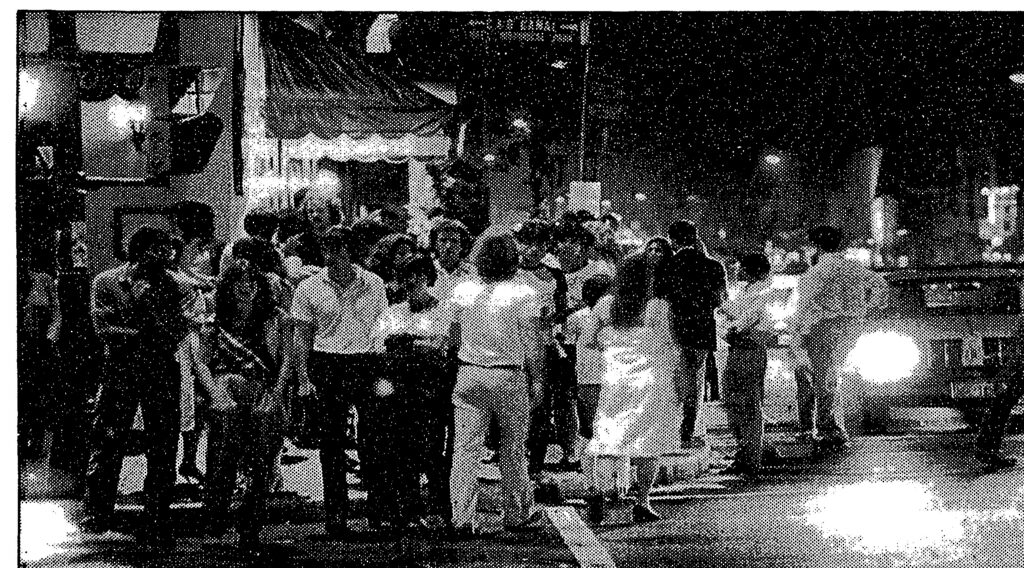
Elsewhere in the city, Washington’s most notorious bar strip was being shut down — developers buying out and clearing the clubs that had defined the city’s seedier nightlife for years. Georgetown had no such problem.
The bar owners were watching their bottom lines closely. Jeffrey Edwards, who owned the 21st Amendment near George Washington University, told the Post that 18-to-20-year-olds accounted for about 40 percent of his customers. Raising the drinking age, he said, “would probably put us out of business.”
Members of Congress and officials in Maryland and Virginia had been complaining about it for years. The District had become, as the Washington Post put it, “a magnet for young persons throughout the area who come to the city to drink and then drive home drunk.”
Nationally, Mothers Against Drunk Driving was at full political intensity. Candace Lightner had founded MADD in 1980, after her 13-year-old daughter Cari was killed by a drunk driver in Fair Oaks, California. By 1985, MADD had grown to 320 chapters across the country, and raising the national drinking age was their central mission. They were winning everywhere except DC.
As of May 1985, Mayor Marion Barry had not yet taken a position on the drinking age. Legislation to raise it was pending before the City Council, but had “elicited no groundswell of support and is not expected to pass this year,” the Post reported. Only two council members had co-sponsored the bill.
The Council held firm into 1986. Members who backed the bill were convinced they didn’t have the nine votes needed to adopt emergency legislation. Without the votes, no bill.
That was the situation heading into the weekend of September 20th, 1986.
The Crash
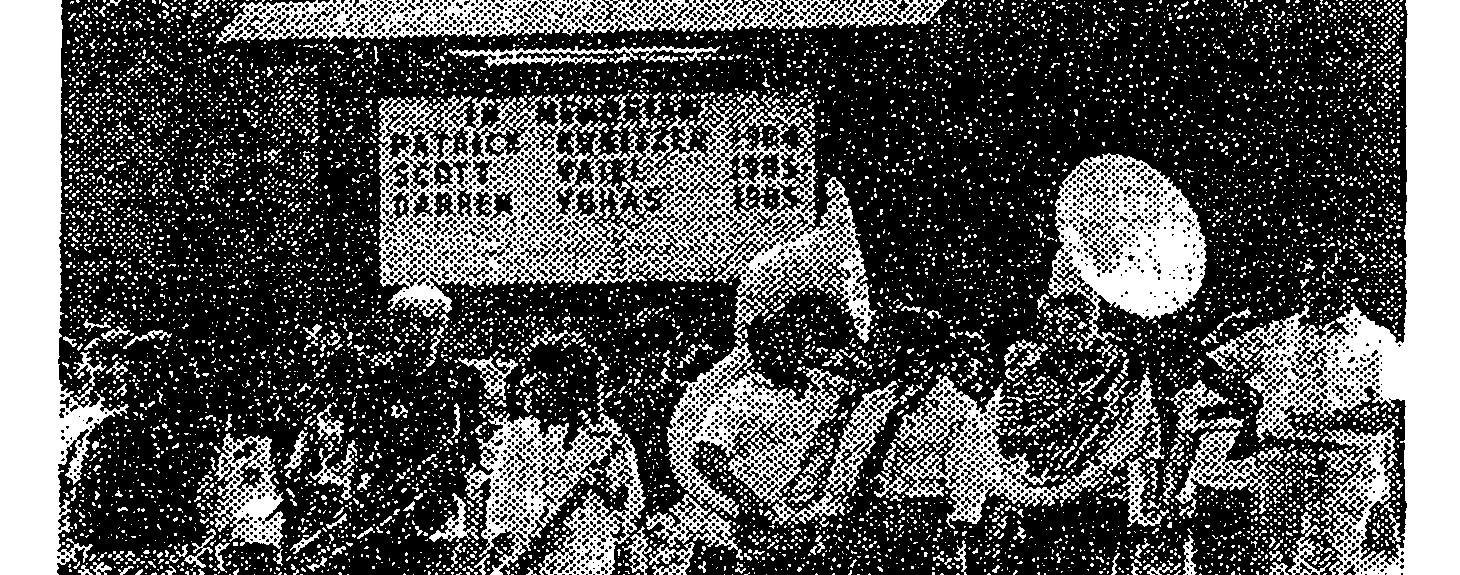
The night of Saturday, September 20th, Patrick Kreitzer, Darren Yuhas, and Scott Vaill headed to Georgetown. A neighborhood friend told the Washington Post they hadn’t been planning anything elaborate: “They needed a break. They just wanted to hang around and party that night. They made the decision just to go down to Georgetown.”
Exactly where in Georgetown they went remains unclear. When the Maryland medical examiner checked the bodies, he found no ink stamps on the young men’s hands — the marks that bars typically use to identify patrons. Even their closest friends had no idea which bar or bars they’d been in.
Shortly before 2 a.m. Sunday, Yuhas’ white 1978 Toyota Celica crashed into an abandoned flatbed truck in the breakdown lane of the Beltway near the Mormon Temple. Witnesses told police the Toyota was speeding in an apparent race with another car and using the breakdown lane to pass a bus. The Toyota smashed into the truck at more than 70 miles an hour. The other car did not stop.
The Washington Post reported on the crash on September 23rd, 1986 — the day of the Council vote:
D.C. Council members, in a flurry of activity after the weekend deaths of three young persons in an alcohol-related automobile accident, gathered enough support yesterday for raising the District’s minimum drinking age to 21 to force a vote on the issue at tonight’s meeting.
The proposal, long opposed by D.C. officials despite local and national pressure, had not been scheduled for a vote because council members who backed the bill were convinced they lacked the nine votes necessary to adopt emergency legislation.
But the Sunday morning deaths of three young persons in a suburban Maryland accident after a reported night of partying in Georgetown helped to change the minds of at least three council members.
Three members who’d been on the fence. That’s all it took.
Maryland’s chief medical examiner, Dr. John M. Smialek, said Yuhas had a blood alcohol content of 0.25 percent — nearly double Maryland’s intoxication threshold of 0.13. His two passengers registered 0.12 and 0.11 respectively, amounts that would have labeled them legally impaired if either had been driving. “None of them really should have been driving,” Smialek said. Police also found that Yuhas had been carrying a falsified identification card.
Kreitzer’s mother, Delores, when told of the findings, cut the discussion short. “The kids are dead,” she said. “I don’t care what the blood alcohol levels were.”
Back in Bowie, the high school principal, John Hagan, walked up to a microphone shortly after 8 a.m. Monday morning. According to the Washington Post, his voice shook.
“I regret to announce the untimely and tragic deaths of three of our students,” he said. “These three young men were fine young men, well-liked and admired and, indeed, very much respected. I would hope that this tragic waste of young lives would serve as an example to all of you.”
The three had been Bowie High graduates, living within blocks of each other, roughly two miles from school. They would have driven past that “Be a Friend” marquee on their way down Annapolis Road toward the Beltway and Georgetown.
Marion Barry’s Reversal
As of May 1985, Barry had not yet taken a position on raising the drinking age, even as Congress was openly pressing him to act. More than a year later, by the time of the September 23rd vote, the Washington Post described his support as “recent” — meaning he had come around late, under pressure, after the crash.
The Washington Post account of September 24th, 1986:
The D.C. Council, bowing to longtime pressure from Congress and the recent support of Mayor Marion Barry, voted last night to raise the District’s drinking age to 21 for all types of alcohol but to continue to allow persons who are 18 by the end of this month to buy beer and wine.
The city will become one of the last jurisdictions in the country to increase its drinking age to 21. Under the threatened loss of federal highway funds, all but seven states now have adopted a 21-year-old minimum, according to federal officials.
Members of Congress and officials in Maryland and Virginia, which already have raised their drinking age, have argued that the District had become a magnet for young persons throughout the area who come to the city to drink and then drive home drunk.
…
The council voted 10 to 3 to consider the drinking age legislation on an emergency basis and then approved the bill itself, to become effective Sept. 30 with provisions to “grandfather in” persons already 18.
In a late-night session attended by a standing-room only crowd, the council also adopted a pay raise for council members and gave tentative approval to a measure to turn the embattled Antioch School of Law into a public law school to be merged in three years with the University of the District of Columbia.
The 10-to-3 vote. The standing-room-only crowd. The grandfather clause.
That grandfather provision is worth a moment. If you were already 18 by September 30th, you could still buy beer and wine. You’d gotten there before the cutoff. As of October 1st, the age for everything was 21, no exceptions.
The new law took effect at midnight on September 30th, 1986.
The surrounding jurisdictions noticed. C. Vernon Gray, Chairman of the Howard County Council in Maryland, wrote a letter to the Baltimore Sun in October thanking DC for finally acting. The Howard County Council had formally written to the DC City Council urging passage of the legislation, and Gray wanted to go on record with his appreciation — expressing the belief that many lives would be saved as a result.
Oh, and the Pay Raise
The same night the Council raised the drinking age, in the same standing-room-only session, they also voted to give themselves a pay raise.
You really cannot make that up. The night DC finally closed the loophole that had been sending teenagers across the Beltway for a decade, the Council bumped their own salaries. It was a very DC move.
Not only can you not purchase alcohol in the District while under 21 — in DC and a handful of other states, you’re prohibited from consuming it even at home under parental supervision. If you’ve ever spent time in France, you’ll understand why that particular provision raises some eyebrows.
Georgetown’s bars survived. The crowds thinned out considerably. The 18-year-olds from Annapolis and Bowie stopped making the drive.
Mourners filed into the Beall Funeral Home in Bowie for Patrick Kreitzer’s funeral. The Bowie High marquee kept its message: Be a Friend.
I remember this very well The car accident mentioned was awful; some suburban kids (I think Virginia, but I am not positive) died on their way home after drinking in the city and after that the council changed its mind quickly. The city had not raised the drinking age yet because the federal threat to withhold highway funds was not such a threat since the District has relatively little federal highway mileage in it. The bar and restaurant industry made the point that the city would lose more tax revenue from 18, 19, & 20 year-olds not drinking than it would lose in highway money. Of course after accident that seemed like a particularly gruesome logic, and the change was made. It made an impression on me since I had recently been a suburban youth drinking in the city, though I was over 21 by the time this law was passed.
This is bulls*hit. I am 20. And I am still consuming alcohol no mater what. USA drinking laws can suck my D**k
I ve been drinking since I was 18 and no one can stop Me.
Bullsh**tt USA drinking LAW . GO F**k YOURSELVES US GOVERNMENT.
Lautenberg was always a POS