
For most of two decades, the only prince in the United States Congress lived in a brick house on Massachusetts Avenue NW, walked to work at the Capitol, and represented an island kingdom that had been annexed against its will.
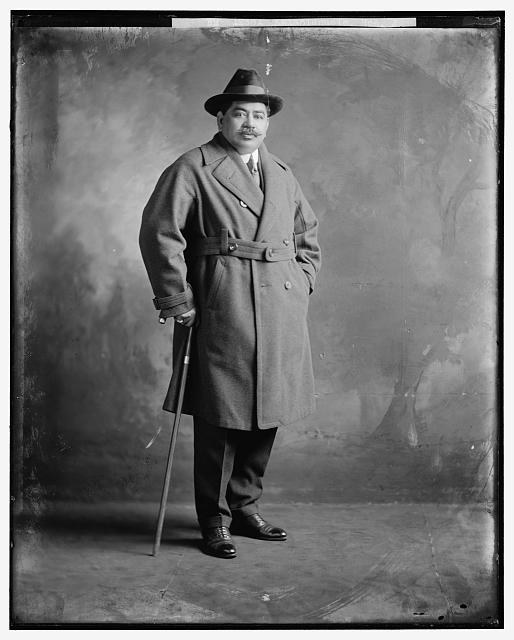
His name was Jonah Kūhiō Kalanianaʻole. In Hawaiʻi he was a prince of the house of Kalākaua, second in line to a throne that no longer existed. In Washington he was the Delegate from the Territory of Hawaiʻi, a member of Congress who could speak on the floor but not vote. He held the seat from March 4, 1903 until his death on January 7, 1922.
From Kauaʻi to a jail cell to Congress
Kūhiō was born March 26, 1871, at Kūkuiʻula on Kauaʻi. His father was High Chief David Kahalepouli Piʻikoi. His mother, Princess Victoria Kinoiki Kekaulike, was the youngest daughter of Kaumualiʻi, the last independent king of Kauaʻi.
After his parents died young, he and his two brothers were raised in the household of Queen Kapiʻolani. In 1884, King Kalākaua issued a proclamation naming the boys princes of the realm, in line to inherit if Crown Princess Kaʻiulani produced no heir.
He was educated at ʻIolani and Punahou, then sent to St. Matthew’s Hall in San Mateo, California, then to the Royal Agricultural College at Cirencester in England. He came home in the early 1890s to a kingdom being pulled apart.
In January 1895, two years after American businessmen and Marines had overthrown Queen Liliʻuokalani, a small band of royalists led by Robert Wilcox rose up to try to restore her. Kūhiō was in the plot. It failed within days. He was arrested, tried for misprision of treason, and sentenced to a year in Oʻahu Prison.
A young Maui aliʻi named Elizabeth Kahanu Kaʻauwai visited him in his cell and brought him food. They had grown up together in Kapiʻolani’s household. On October 8, 1896, weeks after his release, they were married at St. Andrew’s Cathedral in Honolulu.
For the next several years the couple traveled. Europe, England, a stretch in southern Africa. When they came home in 1901, the Hawaiian Kingdom had been annexed by the United States. The islands were a territory. There was no throne to inherit, but there was a seat in Congress.
The only prince in Congress
Kūhiō ran in 1902 as a Republican, having jumped ship from the native Home Rule Party. It was pragmatic. Home Rule had a moral case and no leverage on the mainland. The Republicans held the White House and the Senate. In November he won the delegate seat, and on March 4, 1903 he was sworn in with the 58th Congress.
He spent his first night in Washington at the old Ebbitt House, a hotel then standing at 14th and F NW. It was demolished a generation later. The current Old Ebbitt Grill on 15th Street is the name, not the building.
By December 1903 the Kalanianaʻoles had rented a house on K Street NW, formerly occupied by the family of the late E.C. Cutler. The Washington Times ran a Sunday feature on the couple’s household on December 13, 1903. The reporter was clearly primed for exotica and disappointed to find none.
The Hawaiian Delegate and his wife the Princess Kalanianaole have leased the home of the late E.C. Cutler in K Street and live there in comparative retirement. They have no retinue of servants; neither does the interior of the house resemble a semi-Oriental palace as has often been stated. The furnishings of the home remain much the same as when occupied by the Cutler family.
Washington Times, December 13, 1903
The following year they moved to 1445 Massachusetts Avenue NW. The house had belonged to Spencer Fullerton Baird, the ornithologist who served as Assistant Secretary of the Smithsonian for nearly three decades and then Secretary until his death in 1887. His daughter was writing a biography of him, and the house was sitting empty on a stretch of Mass Ave lined with the mansions of cabinet officers and ambassadors.
The place was known around town as Bird’s Nest, which the Baird pun and the ornithology together probably wrote for themselves.
After 1906, Washington directories show the Kalanianaʻoles moving between the Dewey Hotel at 14th and L NW and the old Shoreham Hotel at 15th and H, on the north edge of Lafayette Square. The old Shoreham was not the 1930 Calvert Street building that Watergate-era Washington would come to know; it was a Gilded Age hotel that has since been demolished. None of the Kalanianaʻoles’ Washington houses is still standing.
The Washington press treated him as a curiosity for years. A 1906 Washington Times feature called “The Lonesome Congressmen” ran through the Congress’s category-of-one members. The only whaler. The only clergyman. And, seated with the others, the only prince.
He leaned into it. In his first year he invited thirty or forty House members on a junket to Hawaiʻi at the close of the special session. It was reported straight, as if it were an unusual privilege. It was also a lobbying trip.
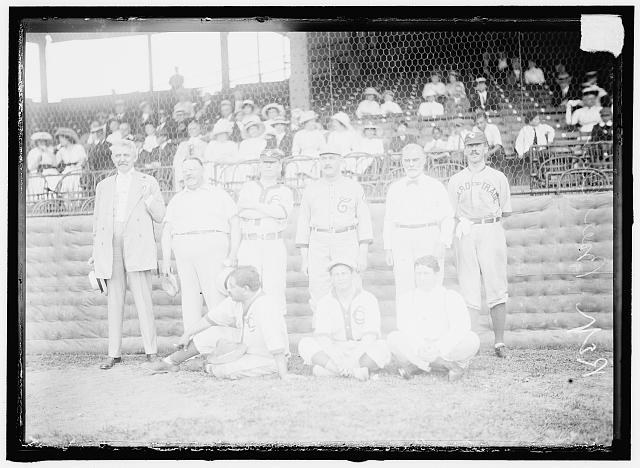
He played on the Republican side of the Congressional baseball team. Harris & Ewing photographed the lineup on the Capitol lawn with Kūhiō seated in the front row in his baseball flannels, and it is one of the most unlikely photographs the House Historian’s office has of him. A Hawaiian prince in a Republican uniform, waiting on the pitcher.
Not every part of Washington was friendly. When the couple traveled through Kansas City in the fall of 1903, a theater manager tried to have them removed from their box because he thought Kūhiō might be, in the Honolulu paper’s phrase, “mistaken for a negro.” The manager tried to apologize. Kūhiō refused.
The delegate’s job, structurally, was thankless. He could speak, sit on committees, introduce bills, but he could not vote on the floor. He could not vote on his own bills. To move anything he had to persuade voting members that Hawaiʻi mattered to them. He was very good at it.
The princess and the White House
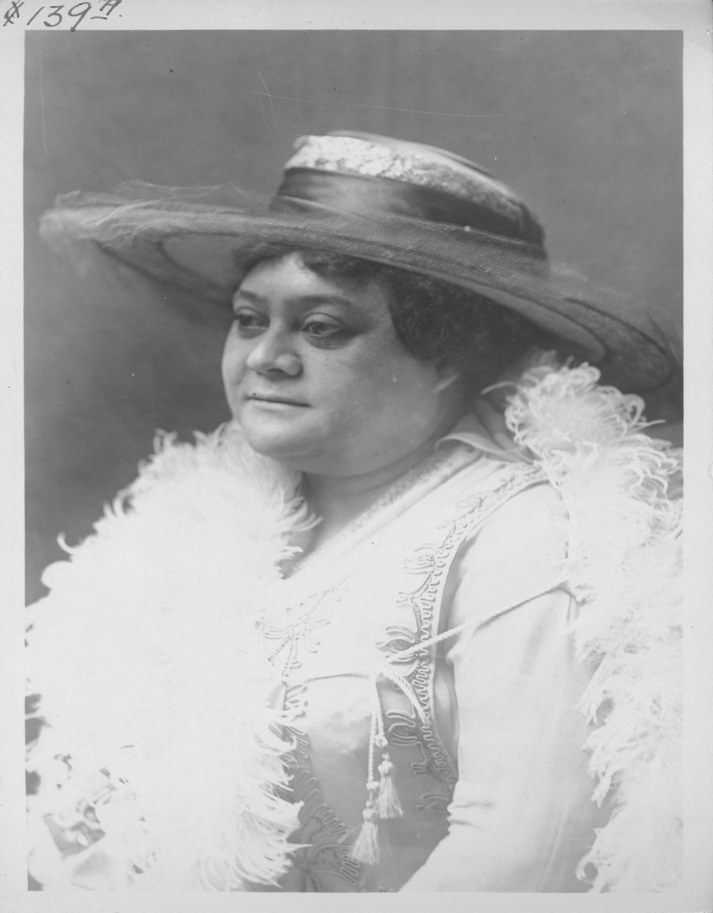
Elizabeth ran the household, and by every account the household was the point. She and Kūhiō entertained across four administrations, from Theodore Roosevelt to Warren Harding. Charmian London, writing after a visit with her husband Jack, called Elizabeth “a gorgeous creature,” “queenly,” with “heavy fine dark hair that showed bronze lights in its wavy mass.”
She turned up in the society columns as a matter of course. On January 26, 1910, she was at the White House State Dinner for the Supreme Court.
In November 1908, she and Kūhiō hosted the deposed Queen Liliʻuokalani during a Washington visit. The Washington Post ran her arrival under the headline “Queen Lil in the City”; the Washington Times ran it as “Queen Lil Returns to Press Her Claim.” Liliʻuokalani was there, again, to press her case for the return of the Hawaiian Crown Lands. She had made the same trip in 1897 to try to stop annexation, a visit covered here before.
How much of Elizabeth’s Washington life is documented in the paper trail depends on where you look. The society pages have her at receptions and White House dinners for two decades. Modern secondary literature about her is thin. Most of what survives about her interior life is in Hawaiian-language newspapers and family memory. Sara’s book is a corrective to that gap.
What is clear from the record is that she was central, not decorative. When Kūhiō died she was appointed to fill his seat on the Hawaiian Homes Commission, and she stayed on it for the rest of her life.
Statehood, a national park, and a regiment nobody sent
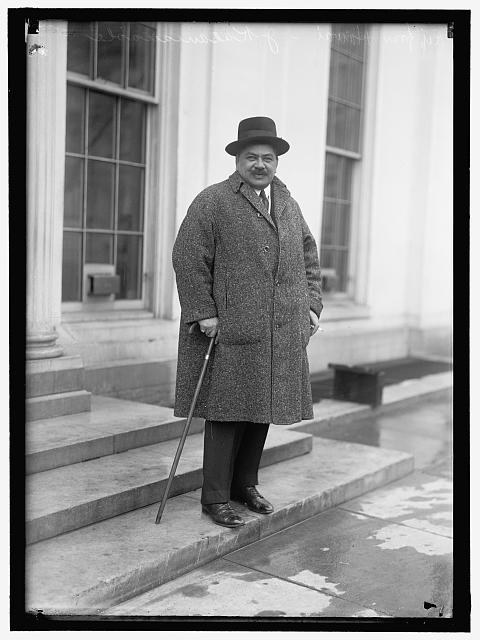
The nineteen-year tenure produced a long shelf of legislation. He restored the Royal Order of Kamehameha in 1903, on principle, since the Kingdom was gone but the order could carry the memory of it. He championed the bill that created Hawaiʻi National Park in 1916, covering Kīlauea, Mauna Loa, and Haleakalā.
In 1918 he founded the Hawaiian Civic Club, which still exists as the parent of a national federation. In 1919 he introduced the first Hawaiʻi statehood bill in the House. It went nowhere. He introduced others. Statehood would not arrive until 1959, thirty-seven years after his death.
When the United States entered World War I in April 1917, Kūhiō pressed a specific idea: raise a regiment of Hawaiian militiamen and send them to France. In press coverage that summer he was reported as saying that three thousand Hawaiian militia were pleading to be sent. The War Department did not send them.
The Hawaiian Homes Commission Act, 1921
The bill Kūhiō is remembered for was the last one he saw through. Its short title is the Hawaiian Homes Commission Act. It was signed by President Harding on July 9, 1921, as an amendment to the Organic Act that governed the Territory.
What it did was set aside about 200,000 acres of former Hawaiian Crown and government lands as a homestead trust for Native Hawaiians. A Hawaiian Homes Commission would administer 99-year leases at nominal rent. The lands would come back into Hawaiian hands, one homestead family at a time.
Kūhiō made the case in plain demographic terms. The Native Hawaiian population had collapsed since Cook, from disease and dispossession. He believed a landless people would not survive as a people, and he said so. The Washington Post covered the 1921 debate under the headline “Effort to Save Hawaiian Race.”
The fight in committee was over eligibility. Kūhiō’s original bill set the threshold at one-thirty-second Hawaiian ancestry. That was a wide door. Sugar and ranching interests, whose leases on the crown lands were what the bill would pare back, pushed for a much narrower door.
The compromise Kūhiō accepted was fifty percent. To this day the Department of Hawaiian Home Lands administers the trust on that threshold. Whether the blood quantum was a shrewd concession that saved the bill, or a poison pill that permanently narrowed its reach, is an argument that goes on inside Hawaiʻi still.
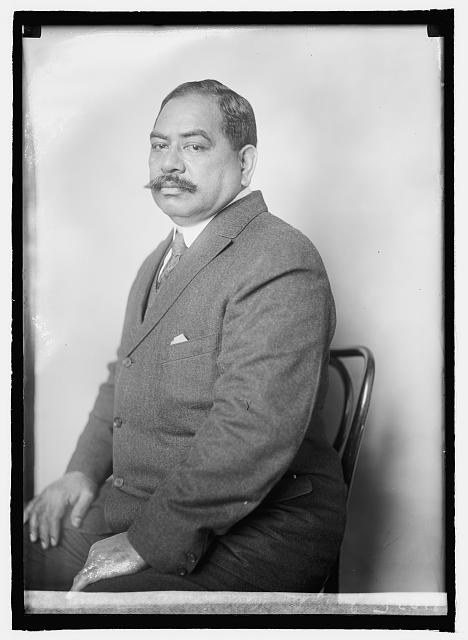
Death at Waikīkī, memorial in the House
He did not live long enough to see the trust land distributed. On January 7, 1922, at Pualeilani, his home at Waikīkī, he died of heart failure and exhaustion. He was fifty years old.
The Territory gave him the last state funeral for a Hawaiian aliʻi. His body lay in state at Pualeilani and then at ʻIolani Palace for nine days. The procession to the Royal Mausoleum at Mauna ʻAla in Nuʻuanu ran five miles.
Washington marked it in its own register. A year later, on Sunday, January 7, 1923, the House of Representatives convened at noon for a memorial session in his honor. The addresses were printed by the Government Printing Office and entered in the Congressional Record. It is the volume you can still pull down if you want to read what the House said the day it stopped to remember its only prince.
Elizabeth was widowed at forty-three. She was appointed to Kūhiō’s seat on the Hawaiian Homes Commission and used her own money to convert the original tomb building at Mauna ʻAla into a memorial chapel for him, dedicated on his birthday, March 26, 1923.
She remarried later that year, to J. Frank Woods, a widower connected to the Parker Ranch family through his first marriage. She lived between Honolulu and Pacific Heights in San Francisco. She died at Queen’s Hospital in Honolulu on February 19, 1932, of a cerebral hemorrhage. She was fifty-three.
What’s on Massachusetts Avenue now
The 1400 block of Massachusetts Avenue NW today is an unremarkable stretch of office buildings and hotel service entrances between Thomas Circle and Franklin Square. 1445 is gone. So is the block’s Baird house, and its neighbors, and the DC that lined this end of Mass Ave with private mansions when the Kalanianaʻoles moved in.
The Ebbitt House is gone. The Dewey Hotel is gone. The old Shoreham at 15th and H, where they took rooms in Kūhiō’s last years, is gone. Every Washington address the Kalanianaʻoles occupied has been erased.
What survives is the law he pushed through in the year he died, which still governs about 200,000 acres of Hawaiian land and the more than 10,000 homestead families who live on it. Hawaiʻi still marks March 26 as Prince Kūhiō Day, a state holiday. When statehood finally arrived in 1959, the delegate seat he had held for nineteen years was replaced by a voting House seat and two US Senators. That was the argument he had been making the whole time.
Thanks again to Sara for pointing us at this one. Her book Kuleana is where to go if you want the Hawaiian side of a Washington story.