
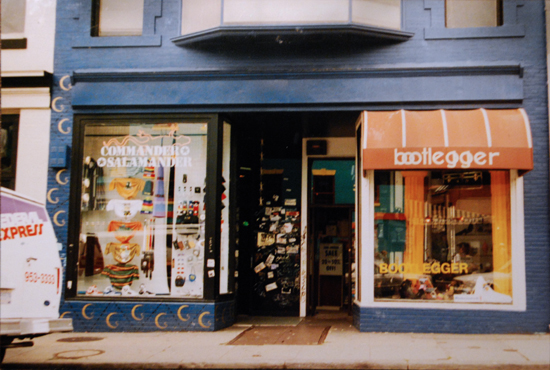
For more than thirty years, the loudest storefront in Georgetown sold hot pink go-go boots, dog collars, and dollar band buttons to teenagers who came to scare their parents.
That was Commander Salamander, at 1420 Wisconsin Avenue NW. It opened in 1977 and became the place where a generation of Washingtonians bought their first piece of punk.
But the building had already cycled through a stack of other lives before the day-glo arrived, from a Gilded Age storefront to a famous antique gallery. This is the story of all of them.
A Store Built to Sell
The address was born commercial. In 1909, the firm A.B. Mullett & Co. drew up plans for a store building at 1420 Wisconsin Avenue for its owner, George Freeman.
The Library of Congress still holds the twelve original drawings, down to the show window and the wiring. The space was designed to put goods behind glass and pull shoppers in off the sidewalk.
The Mullett name carried weight in Washington. The firm descended from Alfred B. Mullett, the Treasury architect behind the State, War and Navy Building, now the Eisenhower Executive Office Building. By 1909 his sons ran the practice.
From there the storefront changed hands for decades. By the late 1940s it held a photo-finishing business, Hicks Photo Finishers, developing Georgetown’s snapshots a few steps off the avenue.
The Antique Years
Then, in the spring of 1954, the antiques moved in. The Washington Post marked the opening of the new Krupsaw Antique Shop at 1420 Wisconsin Avenue.
The Krupsaw name was Washington antique royalty. Nathan Krupsaw had founded the family’s Old Antique House on Pennsylvania Avenue back in 1884, said to be the oldest store on the avenue between the Capitol and the White House.
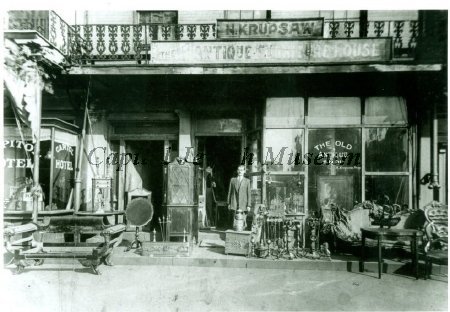
His son Simon turned buying trips into news. In 1960, Simon Krupsaw’s purchase of an antique hoard in a small Sussex village made the front page of the Post, and he came home to uncrate some 15,000 pieces.
The Georgetown shop at 1420 was a branch of that empire, selling old silver, furniture, and imports under a hand-painted sign.
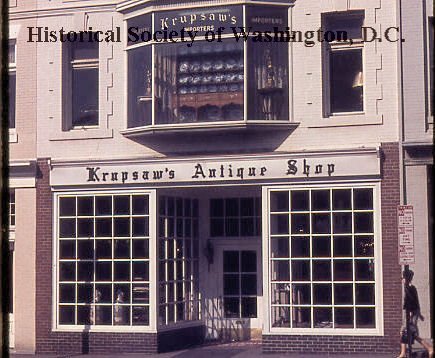
Picture musty oak and tarnished brass behind that glass. Then picture what came next. The whiplash is hard to overstate.
Enter Commander Salamander
Commander Salamander was not Wendy Ezrailson’s first store. She and her husband Izzy already ran Up Against the Wall on M Street, and Wendy had left a teaching job to become its buyer.
In 1977 they opened Commander Salamander in the old antique space. New wave and punk were rising, and the Georgetown music scene was hitting a cultural peak around them.
The store sold pre-torn t-shirts, neon hair dye, fishnet, and studs on everything. Real clothes were expensive, but a band button ran about a dollar, and the right button made the whole outfit.
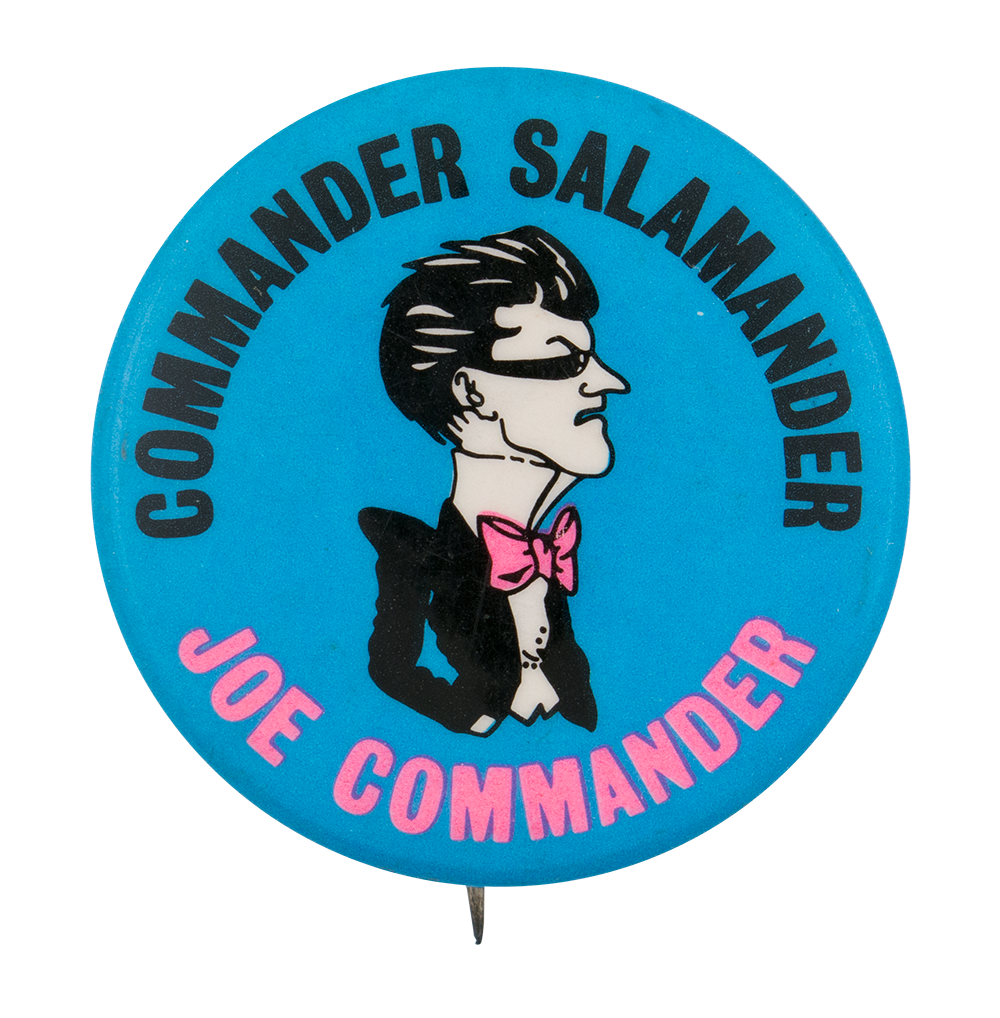
The name may be a local in-joke. The Busy Beaver Button Museum points to a 1960s WTTG children’s show whose host, Captain Tugg, played a character called Commander Salamander.
The shop drew famous browsers too. By Ezrailson’s account, Andy Warhol became a regular and even did an in-store signing, and Cher shopped there as well.
Kids cut class and drove into Georgetown just to walk the aisles. Here is real footage of the inside in the 1980s.
Too Cool for the Store
Not everyone bowed to it. To the city’s hardcore punks, Commander Salamander could read as store-bought rebellion.
Danny Ingram, who drummed for the DC bands Youth Brigade and The Untouchables, told WTOP the real Georgetown punks steered clear of the look. Then he admitted he would sneak in for hair dye.
The everyday memories are the best ones. One customer recalled stiffening her Mohawk with cheap drugstore gelatin, then splurging on a real product before a 9:30 Club show.
It held all night. The next morning she found one spike had snapped clean off and was lying on her pillowcase.
The Last Day
Commander Salamander closed in January 2010, after about thirty-three years. Up Against the Wall went dark around the same time, and the hot pink finally faded.
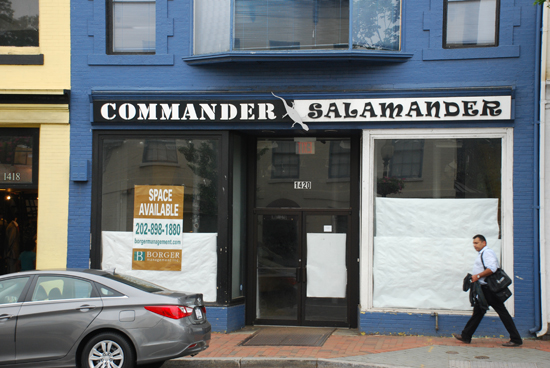
For anyone who bought their first studded belt there, the empty window was its own small ghost story.
What Holds the Corner Now
Today, 1420 Wisconsin Avenue is an M&T Bank branch. Quiet glass, no go-go boots.
But the ghost came back once. In 2018, the crew for Wonder Woman 1984 repainted a storefront a block up Wisconsin Avenue to pose as Commander Salamander for a scene set in that very year.
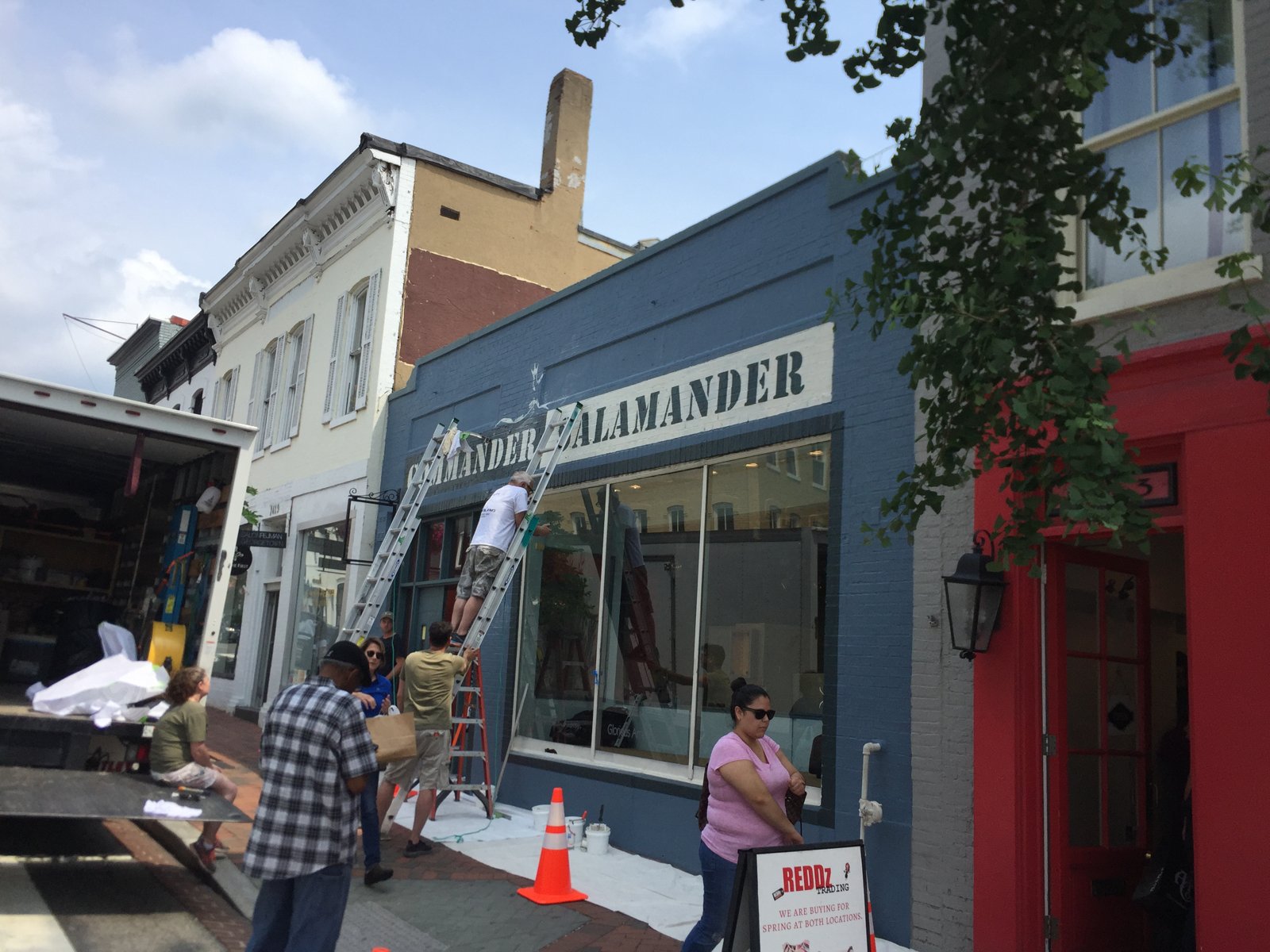
One building, four tenants, four Washingtons: a Gilded Age shop, a neighborhood photo lab, a famous antique gallery, and a punk temple.
Most people walking past the bank today have no idea any of it happened. That is usually how it goes in Georgetown. Down the hill on the same avenue, another storefront hides a similar layered past: the block that became Georgetown’s Apple Store.
We dug this one up with help from AI and checked it against the original records below. Here’s how we use AI.