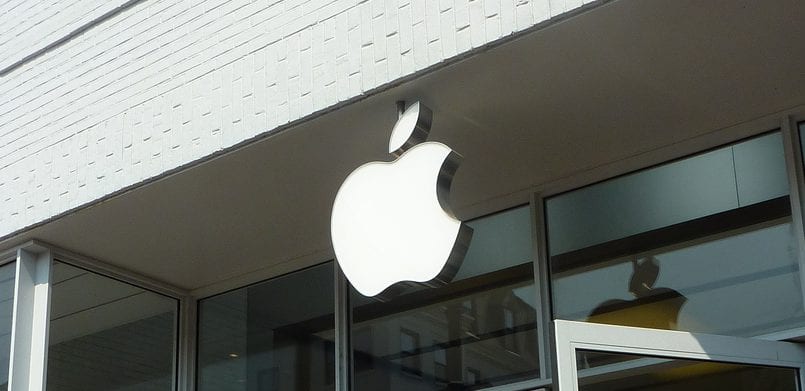
If you own an iPhone, an iPad, or a Mac, chances are you’ve set foot in an Apple Store. And if you live in Georgetown, it was probably the glassy one at 1229 Wisconsin Ave. NW.
Here’s the fun part about that address. Long before Apple, the same patch of Wisconsin Avenue held a record store, a diner that smelled like leather, an ’80s clothing empire, a parking lot, and a wholesaler the police accused of fencing stolen goods.
So let’s do an “If Walls Could Talk” post on 1229 Wisconsin, in reverse, working back from the Genius Bar all the way to 1918. For another Wisconsin Avenue storefront with just as many past lives, there is Commander Salamander up the block at 1420.
The Apple Store (2010)
Apple paid $13 million for the property in 2007. Getting a store approved, though, took four tries in front of the Old Georgetown Board, the federal panel that signs off on every change to Georgetown’s historic streetscape.
The design was finally approved in March 2009, and the store opened the following year. As UrbanTurf reported, it opened its doors at 5 p.m. on Friday, June 18, 2010, and the line to get in stretched down Wisconsin Avenue and around the corner onto M Street.
To build it, Apple tore down the building that was already there. That earlier building wasn’t old. It went up in the early 1980s in a faux-historical style, a brick pastiche with a big Palladian window stuck in the middle.
For about a quarter century, that’s the building the rest of this story happened inside.
HMV Record Stores (1995)
Remember buying CDs at a record store? Cassettes? Maybe even LPs?
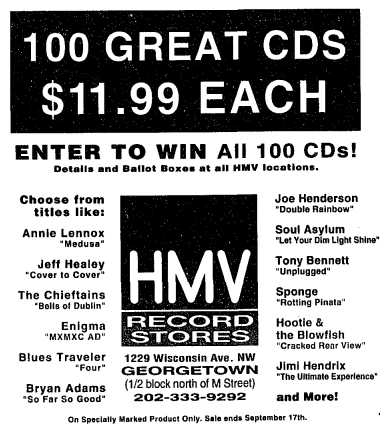
By the mid-1990s, 1229 Wisconsin housed an HMV. Here’s the chain’s ad from the Washington Post on September 15, 1995. HMV stands for His Master’s Voice, after the old painting of a dog listening to a gramophone. I did not know that.
Boogie’s Diner (1990–1994)
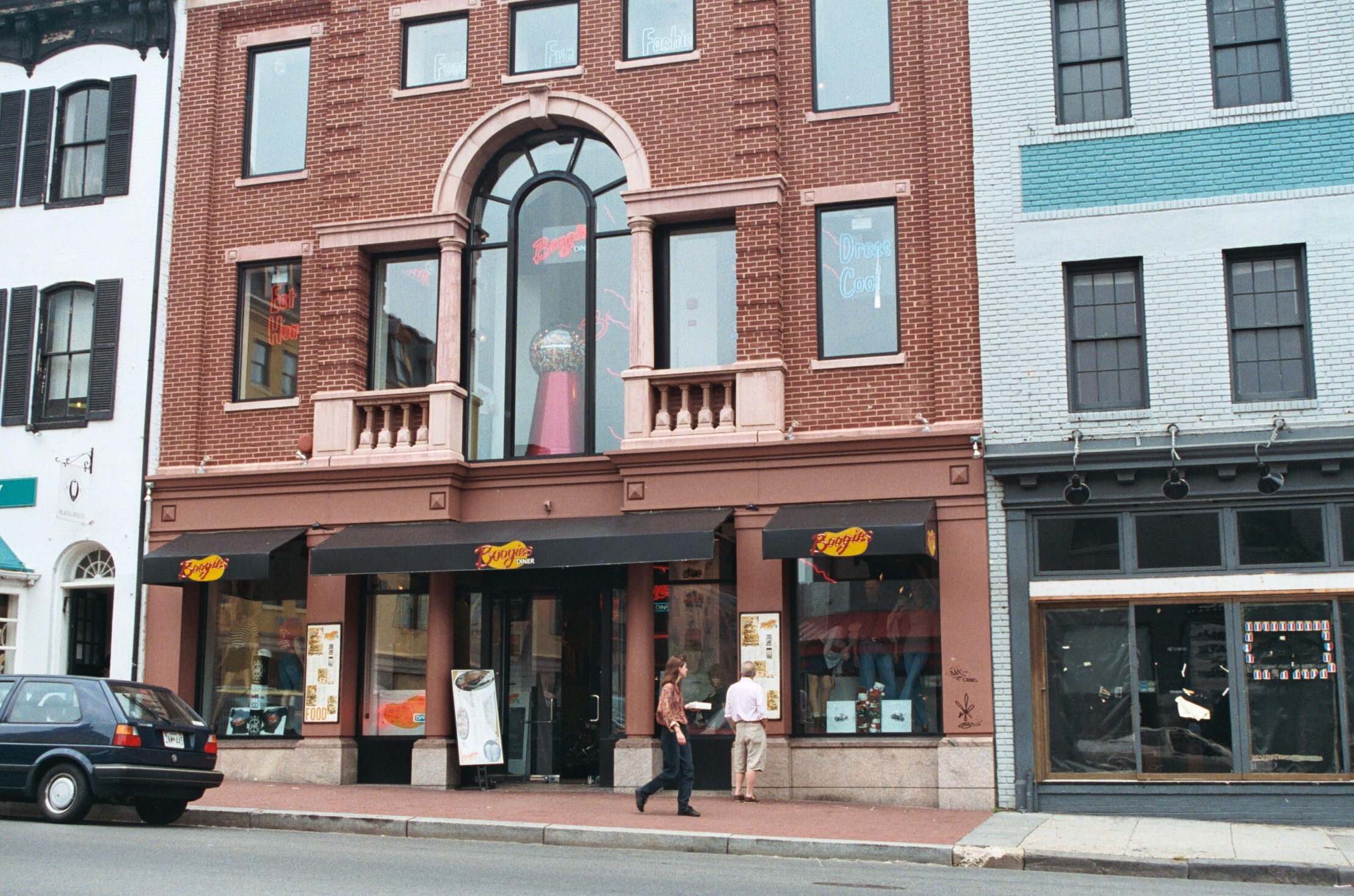
Before the record store, this was Boogie’s Diner, a 1950s-themed diner stacked on top of a clothing store.
It was the work of Leonard “Boogie” Weinglass, the Baltimore clothing mogul behind Merry-Go-Round and the real-life inspiration for the character Boogie in Barry Levinson’s 1982 film Diner.
The concept did not work. As one customer remembered it, the clothes smelled like grease and the restaurant smelled like leather. The Georgetown location lasted only a few years before closing in the mid-1990s.
The Washington Post wrote a good piece about seeking out the best burgers in Washington on October 24, 1991. Here’s the write-up on Boogie’s.
While there’s nothing odd about eating a hamburger in a diner, there’s a lot that is unusual about Boogie’s Diner (1229 Wisconsin Ave. NW, 298-6060). This is a bright and cheery place with a corny sense of humor that supposedly is a throwback to the 1950s.
Boogie’s, whose slogan is “Eat Heavy, Dress Cool,” is most un-dinerlike in its location: one flight up from a clothing store that offers expensive takeoffs of 1950s items, French-label jeans, glittery bustiers and the like. Boogie’s also shamelessly hawks its name-brand souvenirs, such as sweatshirts and coffee mugs, from every corner.
The decor is a jumbled, post-modern mix with some nice nostalgic touches, including rich milkshakes made in old-fashioned stainless steel containers ($3.25). The fact is, Boogie’s is a good deal flashier than diners used to be, not to mention more expensive.
By the way, the clothing store on the ground floor was called the French Connection. A later version, French Connection UK, hung on at the address right up until Apple bought the property.
ESPRIT (1987)
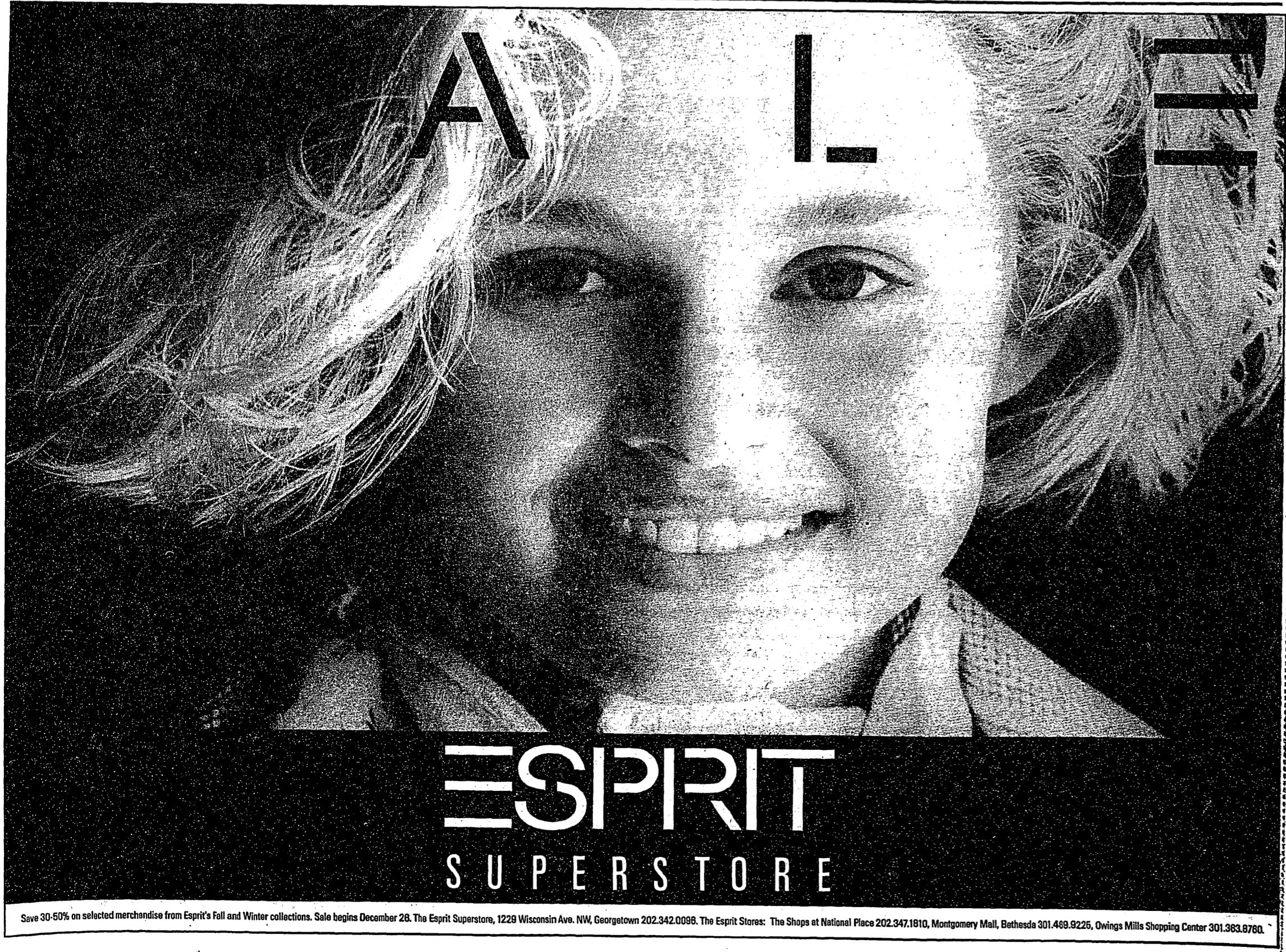
What ever happened to ESPRIT? In the 1980s the brand was everywhere. Back in 1987, it ran a big store in what is now the Apple space.
Here’s the ESPRIT ad from the Washington Post on December 26, 1987. Not long after, Merry-Go-Round reportedly bought the building from Esprit for about $5 million and turned it into Boogie’s.
Doggett’s Parking and a Free Lot (1950s–1970s)
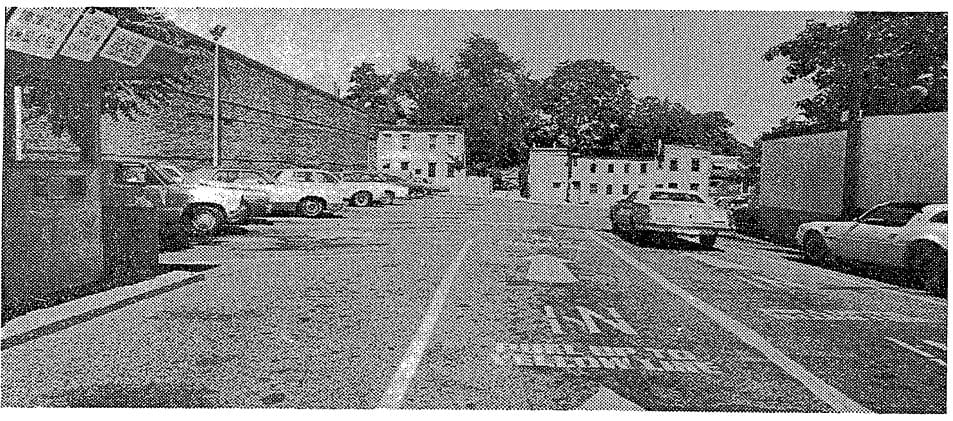
It’s hard to picture now, but before the building existed, this was a parking lot. Doggett’s Parking ran it, and like most Georgetown lots of the era, its ads bragged about free parking.

Before Doggett, the lot was owned by David J. Wilkerson, who lived at 2323 Pennsylvania Ave. NW and offered free parking here back in the 1950s.
A 1940 Marriage License
Go back further and 1229 Wisconsin was an address where people lived. On June 19, 1940, the Washington Post reported that a marriage license had been granted to Forest W. Hevener, 18, of 479 F St. SW, and Virginia Lee Tucker, 17, of 1229 Wisconsin Ave. NW. The Rev. Francis Yarnell was to perform the service.
Hevener went on to serve in World War II with the Army Air Forces. He was wounded in France, then shipped to the Pacific and fought at Tarawa and Saipan.

A Link in a National Chain of Stolen Goods (1918)
And here’s the oldest story we dug up. On August 20, 1918, the Washington Post described 1229 Wisconsin as the Washington end of a national fencing operation.
What is said by the police to be the Washington link in the national chain of disposers of stolen property was broken yesterday when detectives arrested Barnet Levy upon a warrant issued by Gov. McCall of Massachusetts. Levy was indicted by a grand jury in Boston on June 18, when a true bill was found against him and eleven others.
According to Joseph L. Farrari, a police officer of Massachusetts, who arrived here yesterday to take Levy back to Boston to face charges, a number of manufacturing lofts were broken into last May, and more than $50,000 worth of wearing apparel and dry goods stolen.
Detectives working on the case discovered that these goods were systematically disposed of through a chain of jobbers scattered throughout the country. The main offenders, however, were stationed in New York city, Connecticut and the District of Columbia.
A large shipment of goods was traced to New York city, where they were reshipped by express to Washington. Detectives F. M. Cornwell and J. C. Berman were placed upon the case early in June, and the goods were traced to the establishment of Levy at 1229 Wisconsin avenue, the detectives allege.
Levy does a general jobbing business, selling at wholesale to small retailers in the District and in the neighboring towns. Several days after being placed upon the case, detectives entered Levy’s store and took therefrom goods valued at $6,000 which they alleged were stolen in Boston and shipped them back to their rightful owners.
The warrant for Levy’s arrest was issued on August 12. Both Levy and his sister have been residents of the District for more than 25 years. Levy, through his attorney, Joseph B. Stein, denies the charges of conspiracy. He asserts that he could not have committed the crime as charged, as he had not been in Massachusetts for the last ten years.
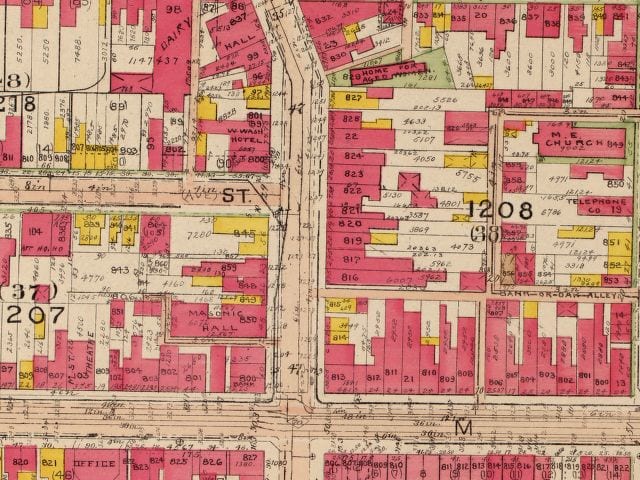
On that 1919 Baist map, 1229 Wisconsin appears to be lot 819.
Next time you’re grabbing a charging cable at the Genius Bar, picture the rest of it: a diner pouring greasy milkshakes over a clothing store, a record-store wall of CDs, a free parking lot, and, a century ago, detectives hauling $6,000 of stolen dry goods back to Boston.
We dug this one up with help from AI and checked it against the original records below. Here’s how we use AI.