
In the spring of 1963, the District of Columbia’s three appointed commissioners delivered a 150-page document to the Bureau of the Budget with a single message buried under all the technocratic prose: build every freeway.
The Three Sisters Bridge. The Inner Loop. The East Leg. The Northeast Freeway. The Potomac River Freeway. The North-Central Freeway. All of it. As fast as the funds came in.
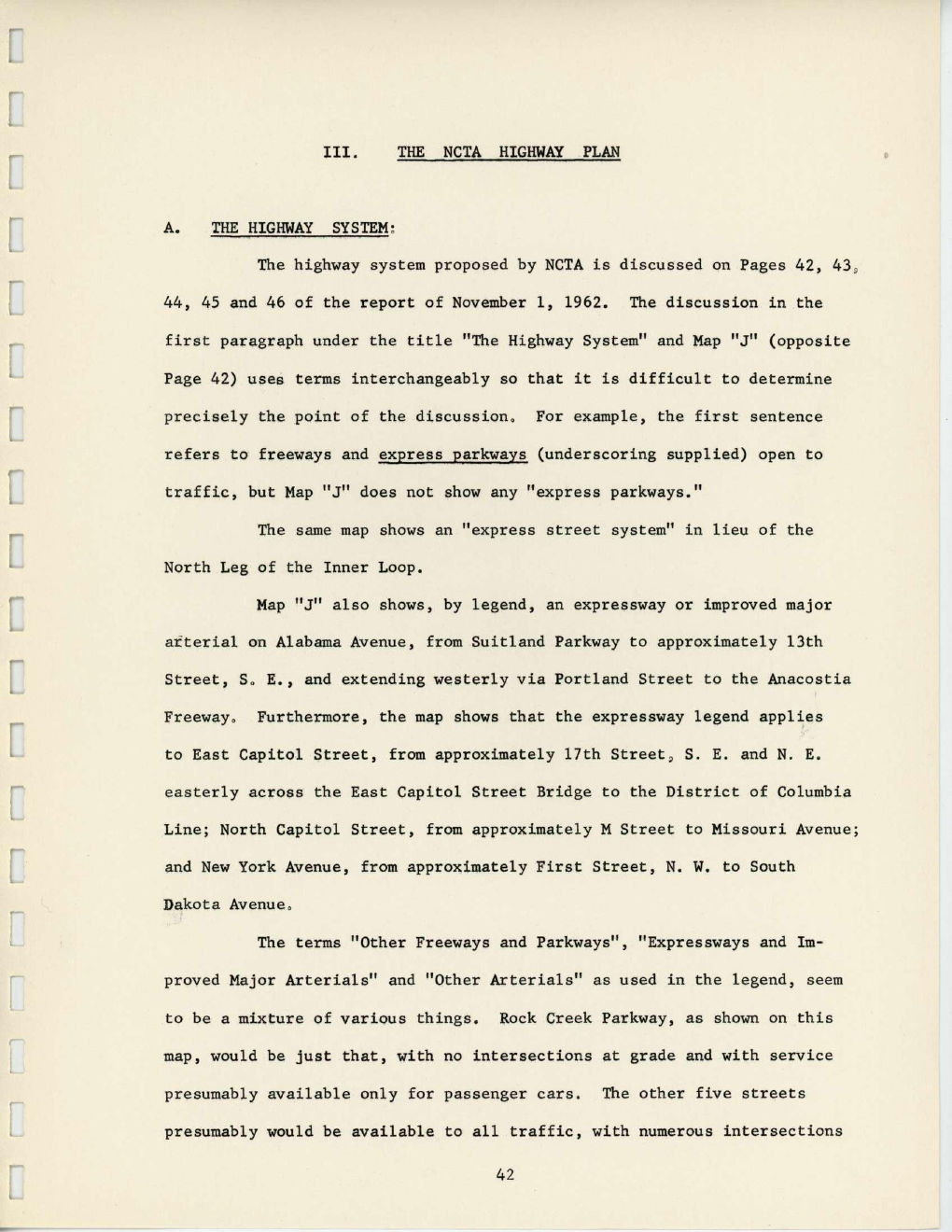
We dug up the original. The cover sheet is dated April 8th, 1963. It is signed institutionally by the Board of Commissioners of the District of Columbia, the three-member appointed body that ran the city before Home Rule. The board’s president at the time was Walter Tobriner, a Princeton-and-Harvard-trained lawyer who had been put on the board by John F. Kennedy in 1961.
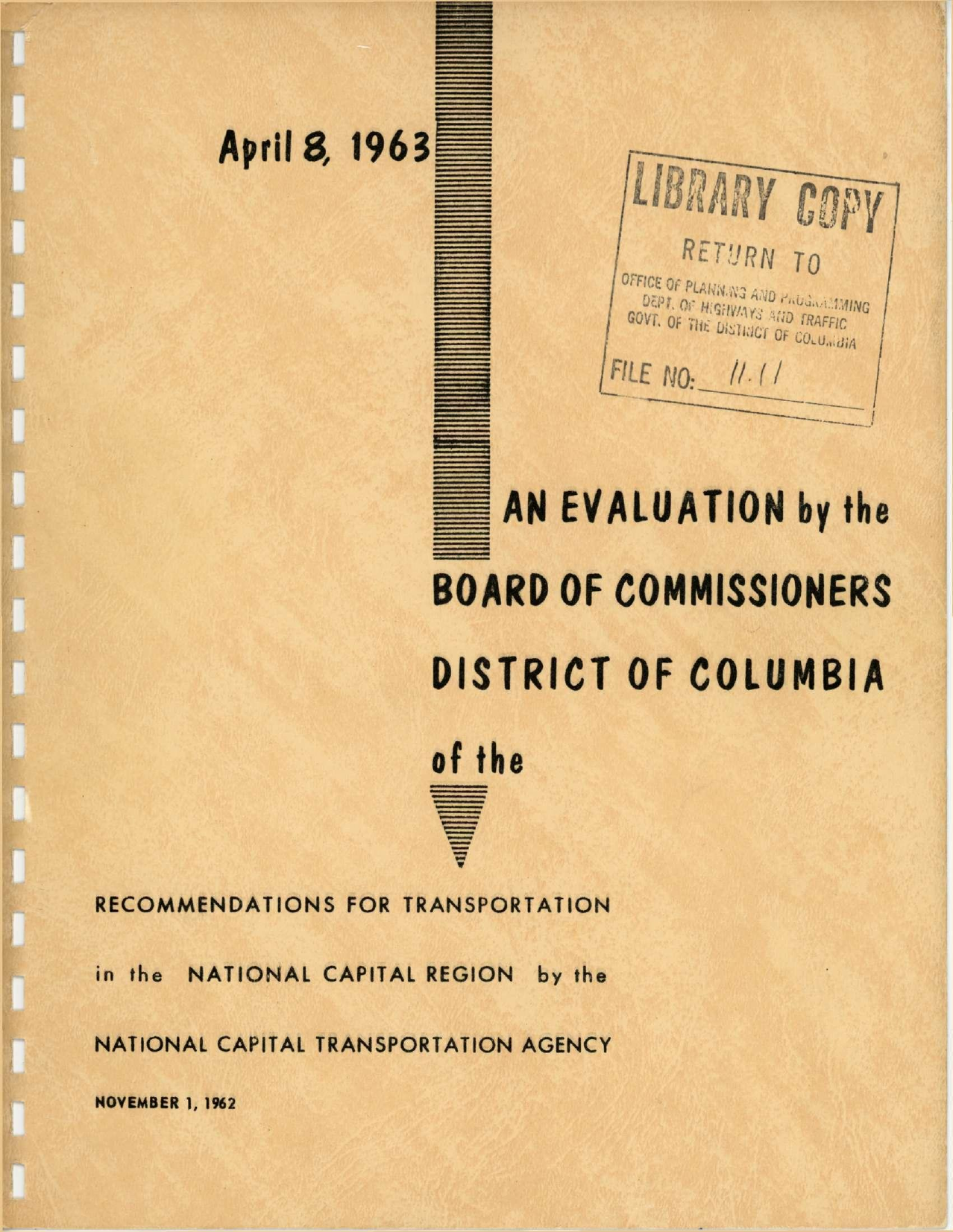
The full title is a mouthful: “An Evaluation by the Board of Commissioners District of Columbia of the Recommendations for Transportation in the National Capital Region by the National Capital Transportation Agency, November 1st, 1962.”
Underneath the bureaucratic acronyms is one of the founding documents of what Washingtonians would later call the Freeway Revolt. The commissioners didn’t know they were lighting the fuse. They thought they were defending common sense.
The setup
To understand what the commissioners were arguing about, rewind a few years.
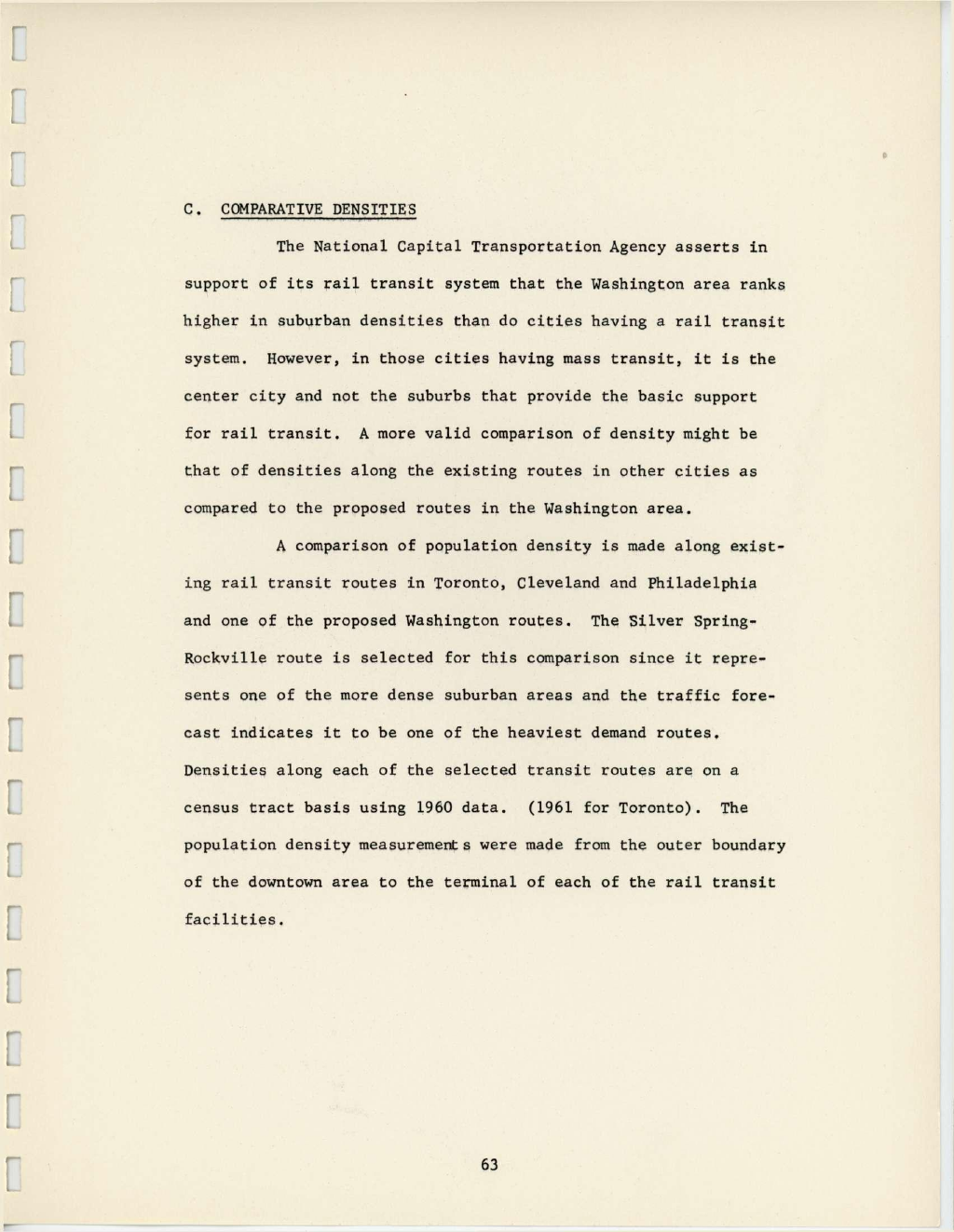
In 1959, the National Capital Planning Commission and the Regional Planning Council finished a multi-year engineering study called the Mass Transportation Survey. The MTS proposed a sweeping freeway program for the metro area plus a subway. The freeway component included an Inner Loop ringing downtown, radial freeways punching in from every direction, and a new Potomac River bridge in the cluster of Three Sisters islets just upriver from Key Bridge.
Congress responded in 1960 with the National Capital Transportation Act, Public Law 86-669, signed July 14th, 1960. The act created the National Capital Transportation Agency, a federal entity tasked with refining the MTS plan and getting both freeways and transit actually built.
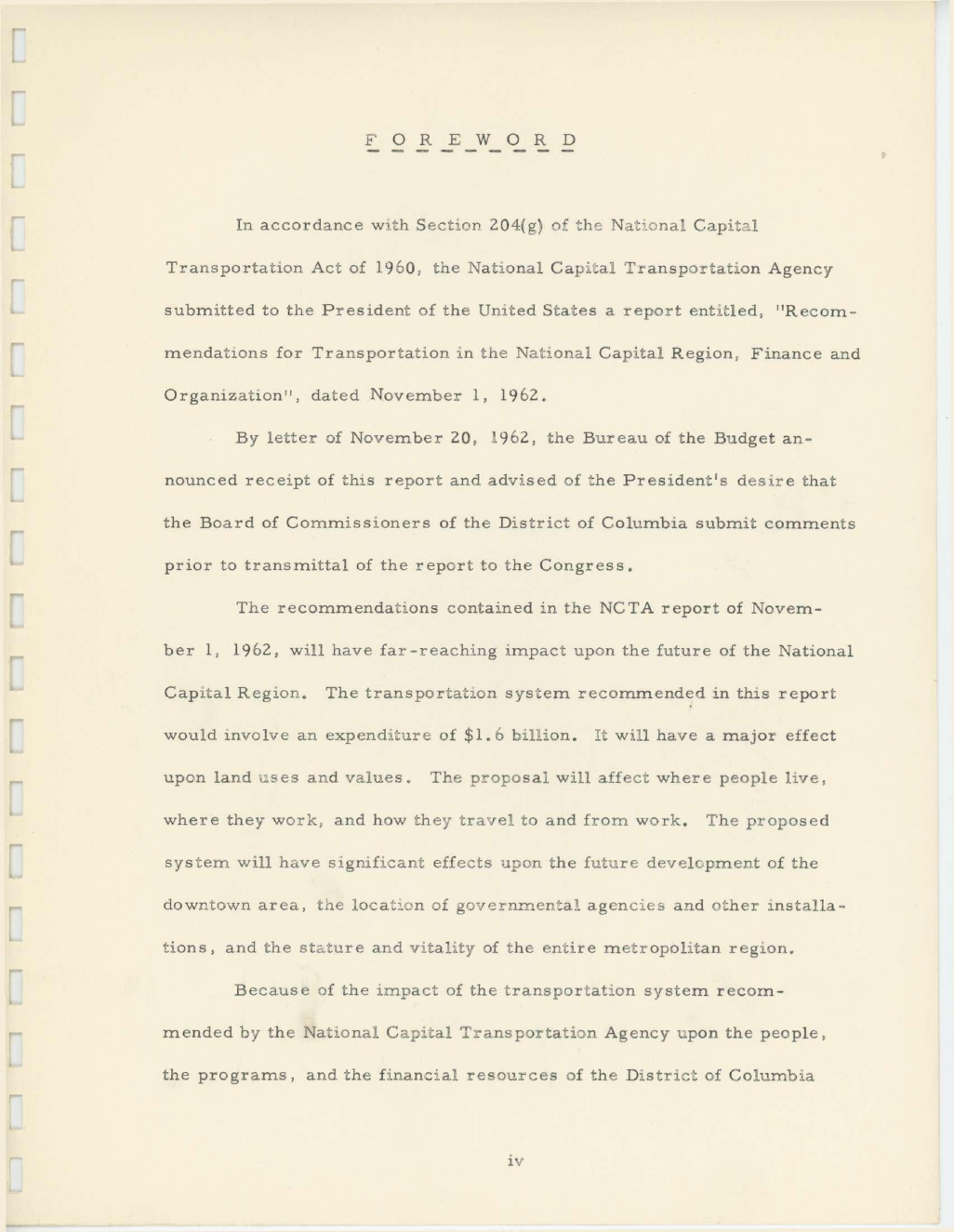
Two years later, on November 1st, 1962, the NCTA submitted its report to President Kennedy. It scaled back the freeway program. It bumped up the transit program. And under federal law, the Bureau of the Budget asked the Board of Commissioners to weigh in before the report went to Congress.
The commissioners’ answer was this April 1963 document. And the document is, in plain English, an argument that the NCTA had gone too soft on highways.
“An inadequate highway system”
The board’s summary doesn’t waste time. The very first heading reads:
THE NATIONAL CAPITAL TRANSPORTATION AGENCY PROPOSES AN INADEQUATE HIGHWAY SYSTEM.
Under that heading, the commissioners argue that NCTA was trying to do the same job as the 1959 plan with one-third less money on highways. The board calls that math implausible. They warn that “the design and continuity features of the NCTA highway proposals preclude maximum participation in the Federal Interstate Highway Program and jeopardize the District of Columbia’s capability to finance those routes on which there is mutual agreement.”
Translation: if Washington doesn’t insist on the bigger highway program, federal money will dry up and even the freeways everyone agrees on, like the Potomac River Freeway, will fail.
Then the board names names:
The NCTA report has not justified elimination of such vital highway projects as the Three Sisters Bridge, the North Leg of the Inner Loop built to Interstate standards, and an East Leg west of the Anacostia River.
That’s the heart of the document. The commissioners wanted to put a freeway bridge on the Three Sisters Islands. They wanted a full Interstate-grade North Leg slicing across the top of downtown. And they wanted the East Leg pushed west, deeper into the city, rather than along the Anacostia.
What they wanted to build
Tucked at the back of the document, on what the typewriter pagination labels page 89, the commissioners spell out their position with the careful flatness of a bureaucratic memo:
The Board of Commissioners of the District of Columbia recommends that the highway program, as proposed by the Highway Departments of Maryland, Virginia, and the District of Columbia, approved by the U.S. Bureau of Public Roads, proceed forthwith, and that the construction be advanced as rapidly as funds become available.
Then the punch list:
This includes the following projects in the District of Columbia: The Three Sisters Bridge; the Potomac River Freeway; the Inner Loop and East Leg; segments of the Intermediate Loop; the Northeast Freeway (I-95); and, continuation of study on the North-Central Freeway (I-70-S).
Read that list with a 2026 city map in your head. Almost none of it exists.
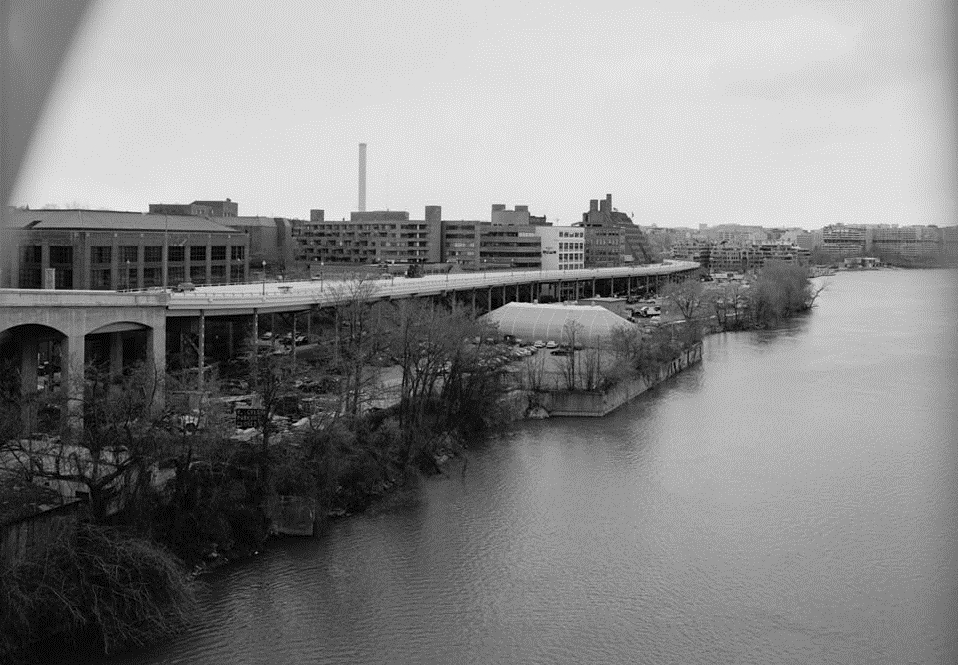
The Three Sisters Bridge would have planted concrete piers in the Potomac off Foxhall Road. The Inner Loop and East Leg would have run a freeway across the northern edge of downtown and down the eastern edge of Capitol Hill, with interchanges chewing through Mount Vernon Square, Shaw, and Brookland.
The Northeast Freeway and the North-Central Freeway would have driven I-95 through Brookland and Takoma along the B&O Railroad corridor. The Intermediate Loop was a second ring road outside the Inner Loop, eating into neighborhoods like Crestwood and Petworth.
If the commissioners had gotten what they wanted, you would not be able to walk from Union Station to Logan Circle without crossing an Interstate.
The numbers the board defends
The commissioners knew the freeway plan was going to flatten houses. They just thought the displacement was manageable.
Buried in the middle of the report is Table V, “Estimate of Person Displacement: Alternative Highway Plans.” The NCTA’s proposal, with the scaled-back freeway grid, would displace 4,330 people.
The DC Highway Department plan the commissioners were defending would displace 12,360.
The board prefers the 12,360 number. Here is the actual rationale on what their typewriter pagination labels page 87:
While tax loss is a most serious matter, the Board of Commissioners of the District of Columbia must recognize that in order to modernize and improve the city, it sometimes is necessary to expect a temporary tax loss in order to realize subsequent and long-time tax gains, or to prevent other tax losses resulting from congestion and decay.
The phrase “temporary tax loss” is doing a tremendous amount of work in that sentence. The 12,360 people in the larger column of Table V were not numbers. They were families, almost entirely in Black and working-class white neighborhoods, who would lose their homes so suburban commuters could speed downtown.
The commissioners knew this, sort of. The report notes that the displacement would average about 1,236 persons per year over a decade. They argue, with a straight face, that “the displacement problem can be met over a period of time and requires the establishment of realistic priorities and sound project phasing.”
The transit fig leaf
The commissioners weren’t anti-transit. They were pro-everything. The board’s recommendation includes a transit section that “unequivocally supports the proposition that the District of Columbia needs improved mass transit.”
They want commuter rail on the Pennsylvania, B&O, and Richmond Fredericksburg and Potomac tracks. They want a downtown subway loop connecting to Union Station. They want to study a northwest subway corridor.
They are, however, careful to put the highways first. Phase 1 of the transit recommendation begins with commuter rail. The downtown subway is Phase 2. The northwest subway is “the logical next step” after the downtown loop.
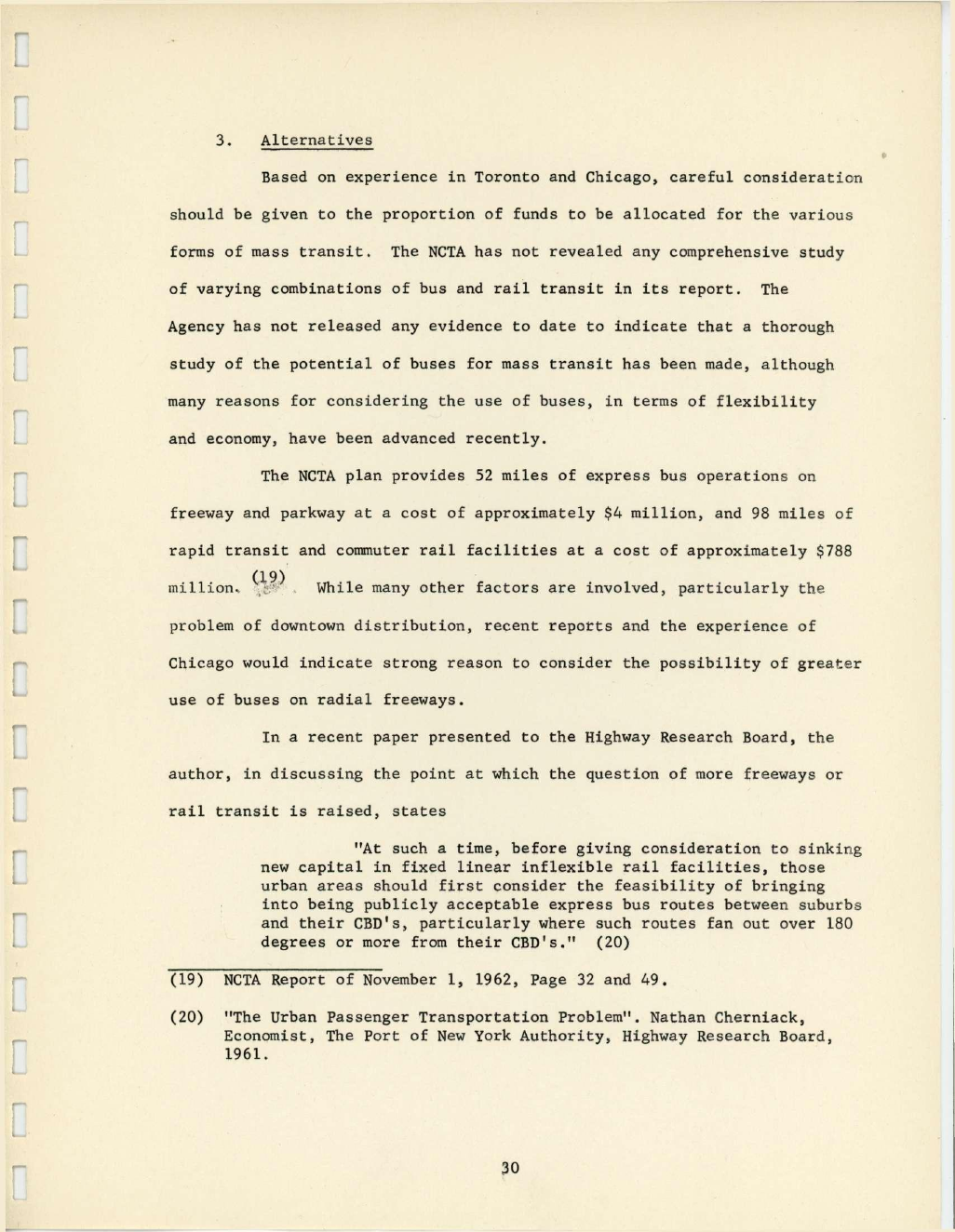
The board calls the NCTA’s $793 million rail proposal forty percent more expensive than the 1959 plan’s $476 million subway and questions whether NCTA’s ridership forecasts can be trusted.
Read alongside the unequivocal “proceed forthwith” on highways, the transit endorsement reads like a hedge. The board is saying yes to rail in principle and immediately to concrete.
What happened next
The commissioners delivered their evaluation on April 8th, 1963. Six weeks later, on May 27th, 1963, President Kennedy transmitted the NCTA transit program to Congress and asked the legislature to act on it.
But Kennedy also did something the commissioners hadn’t asked for. He recommended deferring appropriations for the Three Sisters Bridge, the North Leg of the Inner Loop, and further commitments to the Potomac River Freeway pending what he called a “careful re-examination of the highway program of the District of Columbia in the light of the Transit Development Program, and the social, economic and esthetic impact of highways of the Nation’s Capital.”
The commissioners’ first move, once Kennedy’s deferral was on the record, was to publicly capitulate. Walter Tobriner appeared before a House District Appropriations subcommittee in June 1963 and conceded the obvious. According to a Washington Post account of the just-released hearing transcript, Tobriner told the congressmen he and his colleagues had not changed their views that the projects should go ahead. But, he added in a sentence that does a lot of work, “As you know we are a branch of the executive. The President has told us to defer erection of the Three Sisters Bridge. Therefore, we are under an obligation to obey the President.”
The subcommittee pressing Tobriner that summer was already chaired by Rep. William H. Natcher of Kentucky. Three years before Natcher’s famous 1966 hold on Metro funding, he was the congressman keeping the freeway question hot. The closed-hearing transcript, made public in July 1963, showed Natcher dwelling at length on the White House request that the bridge, the North Leg of the Inner Loop, and an extension of the Potomac River Freeway be deferred pending the new study’s outcome.
That study was not cheap. District officials had authority to spend up to $500,000 on what was supposed to be a nine-month survey that would settle the freeway question once and for all. The Federal Highway Administrator, Rex M. Whitton, urged “prompt action,” warning that the Bureau of Public Roads could not keep approving individual freeway projects in Virginia, Maryland, and the District without knowing the larger system.
And then Kennedy began to back away from his own deferral. On November 12th, 1963, he sent a letter to the District Commissioners endorsing a revised Georgetown-Rosslyn bridge alignment and tunnels for the North Leg of the Inner Loop, telling the commissioners the policy committee’s recommendations were “acceptable to me, and will be included in my budget recommendations to the Congress in January.” The same day, a House District subcommittee resolution drafted by Rep. Joel T. Broyhill of Virginia, using language that mirrored the commissioners’ April brief, called on the city to “proceed forthwith to implement the construction” of bridge and freeway.
Ten days later Kennedy was shot in Dallas, and a story that might have been a tidy presidential reversal turned into a freeze. The deferral stayed on paper. The endorsement stayed in a letter. The “careful reexamination” outlived the president who ordered it.
By 1966, Natcher had moved on from quiet subcommittee pressure to outright leverage. As House Appropriations subcommittee chairman he held the Metro funding hostage to force the city to build the Three Sisters Bridge after all.
By 1968, an interracial coalition called the Emergency Committee on the Transportation Crisis, led by Sammie Abbott, Reginald Booker, and a young Marion Barry, was running street protests under the slogan “white men’s roads through black men’s homes.” By August 1969, ECTC protesters were storming the DC City Council chamber. By October 1969, Georgetown students were occupying the Three Sisters Islands.
You can read about the war over D.C. interstate highways that followed, and we’ve shared the 1967 map of highways that never got built and the 1971 maps of I-95 cutting through DC.
Boundary Stones recounts the full saga of the Three Sisters Bridge protests, including the moment in June 1972 when Hurricane Agnes washed out the bridge piers and Washingtonians began to wonder whether the legend of the cursed islands had teeth after all.
The bridge was officially scrubbed from federal plans in 1977.
What got built and what didn’t
Of the commissioners’ April 1963 wish list, the score is brutal.
The Three Sisters Bridge never opened. The piers built in 1969 are gone. The bridge that was never built is now a footnote, an Interstate route number (I-266) that points to nothing.
The North Leg of the Inner Loop was never built. There is no freeway across the top of downtown. K Street is still K Street.
The East Leg was never built west of the Anacostia. There is no Interstate running down the spine of Capitol Hill.
The Intermediate Loop was never built.
The North-Central Freeway was never built. The I-70S designation through Brookland died.
The Northeast Freeway, the I-95 alignment through the city, was never built. I-95 traffic still terminates at the Capital Beltway and detours around DC.
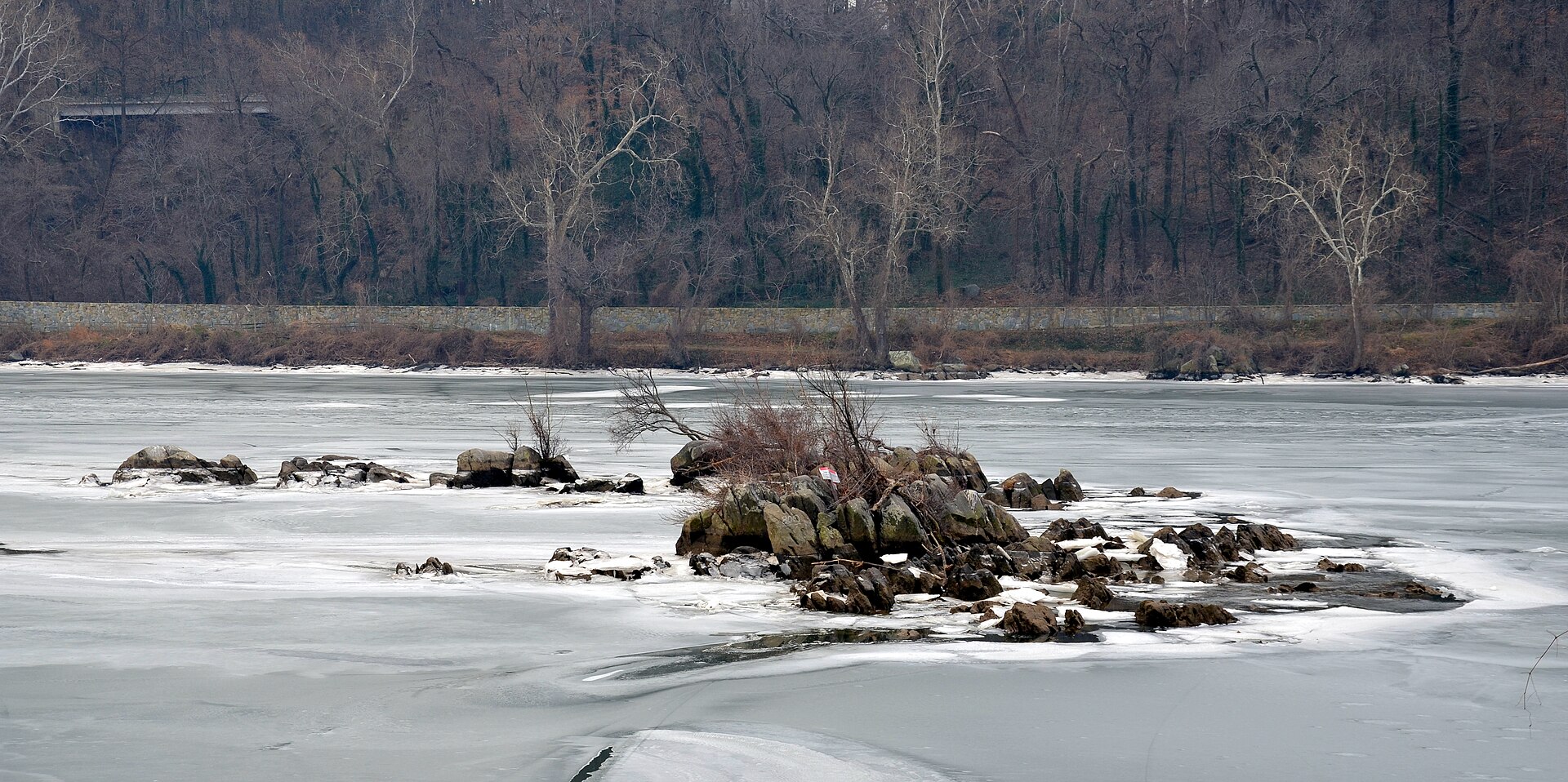
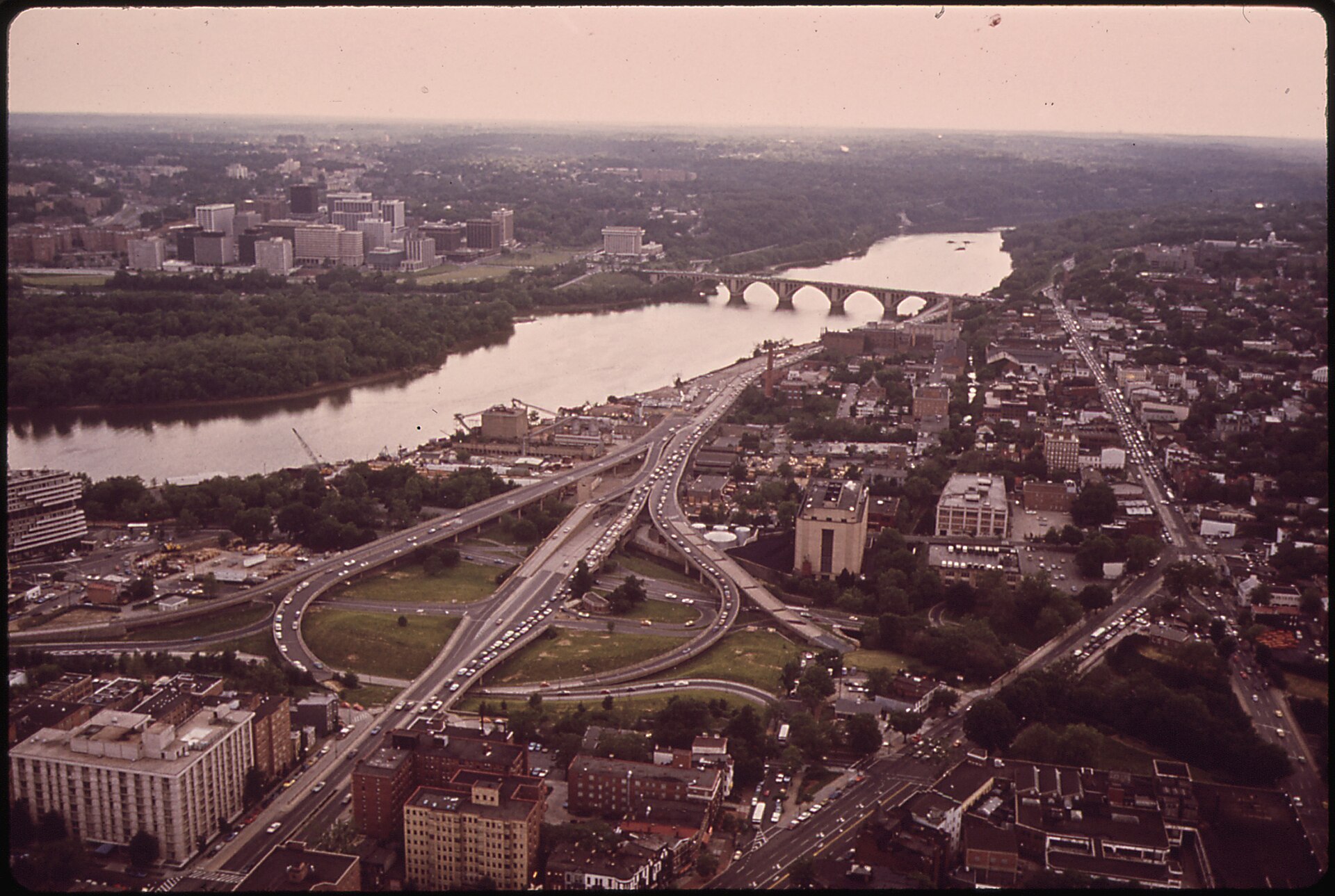
What did get built: the Southwest Freeway and Southeast Freeway, the Center Leg of the Inner Loop (now buried under I-395 and the partial deck of Capitol Crossing), and the small stub of the Potomac River Freeway between the Roosevelt Bridge and the K Street viaduct.
And the transit program the commissioners had treated as the second priority? The 1966 vision for Metro was already taking shape on paper by the time the freeway revolt peaked.
Construction broke ground in December 1969. The first segment of the Red Line opened on March 27th, 1976. There was, briefly, talk of a Kennedy Center stop that was deemed too expensive.
Walter Tobriner, the same man who presided over the Board of Commissioners that wrote the April 1963 freeway brief, served as president of the board until November 7th, 1967, then left to become President Johnson’s ambassador to Jamaica. The man who had asked the federal government to pave the city watched the subway rise instead.
The takeaway
The 1963 report is a useful artifact because it shows how seriously the city’s official voice took the freeways. This wasn’t a plan dreamed up by outside boosters and rejected by locals.
The local government wrote 150 pages of careful prose explaining why every freeway should go through. They cited the Federal-Aid Highway Act, the Bureau of Public Roads, the Chicago Area Transportation Study, the Toronto subway. They had tables and figures and footnotes.
And they were wrong about almost everything.
The displacement they called manageable became the spark that organized a generation of activists. The freeways they called vital were obsolete by the time they were proposed. The “balanced transportation system” they recommended turned out to mean Metro plus a few miles of stubbed-off highway, not a 200-mile freeway grid plus a subway as an afterthought.
If you ever wonder why Washington has no Interstate route running through downtown, no spaghetti junction at Mount Vernon Square, no freeway bridge between Georgetown and Rosslyn, this is the report that tried to give us all of it. It failed. The piers are gone. The neighborhoods are still here.
A century from now, somebody will be writing the same kind of post about a project we think is inevitable today.
We dug this one up with help from AI and checked it against the original records below. Here’s how we use AI.