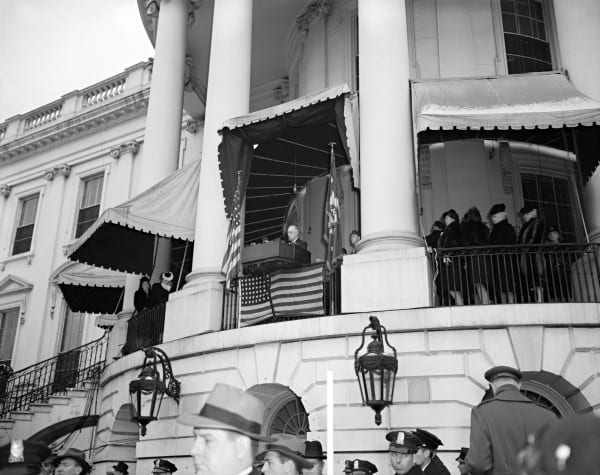

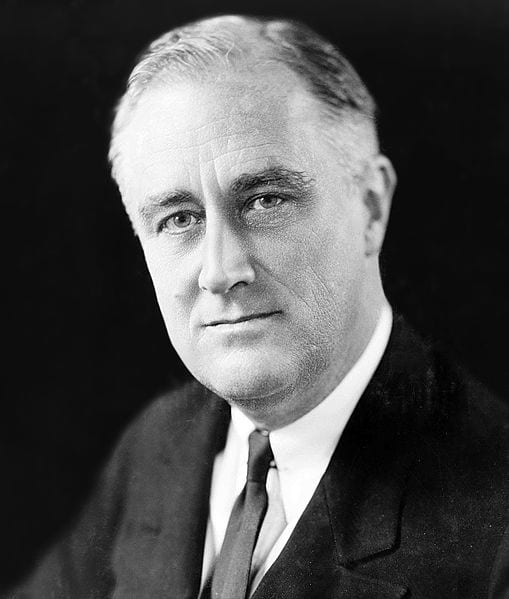
This is one of the greatest State of the Union speeches of all time … the one given, twelve presidents ago, by Franklin D. Roosevelt on January 6th, 1941. If you want the full text of the speech, go here.
This speech is known as the “Four Freedoms Speech.” It was his first State of the Union after winning an unprecedented third term and it is considered one of his most memorable and influential speeches.
Europe is embroiled in World War II and the President makes the case that America is under the greatest threat it has ever been under, and it is incumbent upon the nation to supply needed arms to our allies in Europe. The Lend-Lease Act was signed into law just two months later.
The closing statements of the speech are the most memorable, as he outlines the “four essential human freedoms,” which are critical for a secure and prosperous world.
The first is freedom of speech and expression — everywhere in the world.
The second is freedom of every person to worship God in his own way — everywhere in the world.
The third is freedom from want, which, translated into world terms, means economic understandings which will secure to every nation a healthy peacetime life for its inhabitants — everywhere in the world.
The fourth is freedom from fear, which, translated into world terms, means a world-wide reduction of armaments to such a point and in such a thorough fashion that no nation will be in a position to commit an act of physical aggression against any neighbor — anywhere in the world.
The first two freedoms are codified the Constitution, while the latter two go beyond the scope of America’s founding document but became the basis of the modern liberal vision both domestically and internationally.
Follow us on Facebook or Twitter if you’d like to get more updates.
Related articles
- President Franklin Roosevelt’s Fourth Inauguration (1945)
- ‘Franklin and Eleanor: An Extraordinary Marriage’: A Well-Known Topic Well Worth a Revisit (Review) (popmatters.com)
- FDR’s Second Bill of Rights: An Unrealized Dream (wallstreetpit.com)
- Relative Clause in the Constitution: FREEDOM OF SPEECH (goodolewoody.wordpress.com)
- If the freedom of speech is taken away then dumb and silent we may be led, like sheep to the slaughter. George Washington (thealmightyfword.wordpress.com)