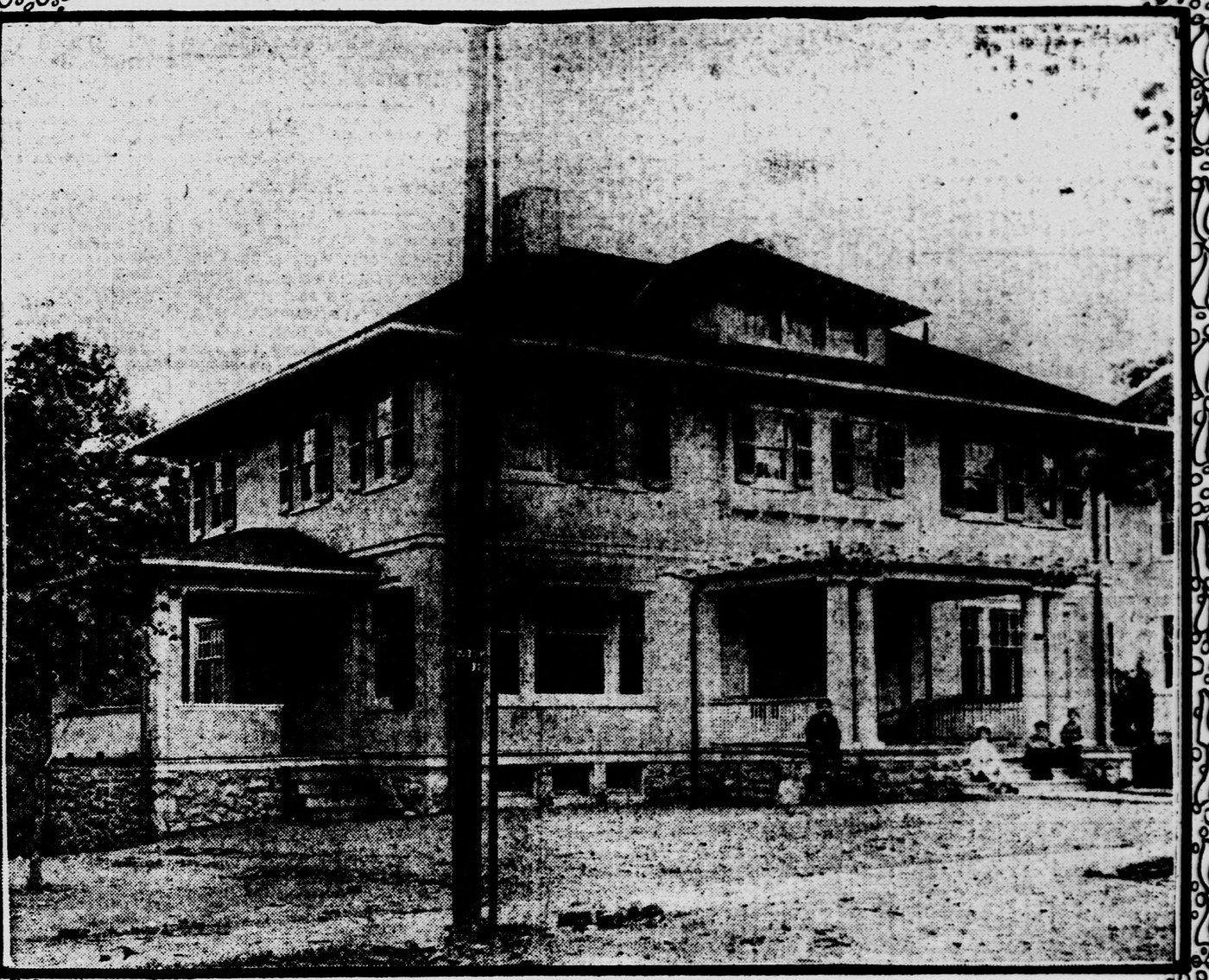
It was about 8 o’clock on Saturday night, March 30, 1912, and Cleveland Park was finishing dinner.
The men, according to the Evening Star, were “attired correctly in evening clothes with hand-tied neckwear.” Then the woods behind 3314 Newark Street started to glow.
The Robin Hood Club was on fire.
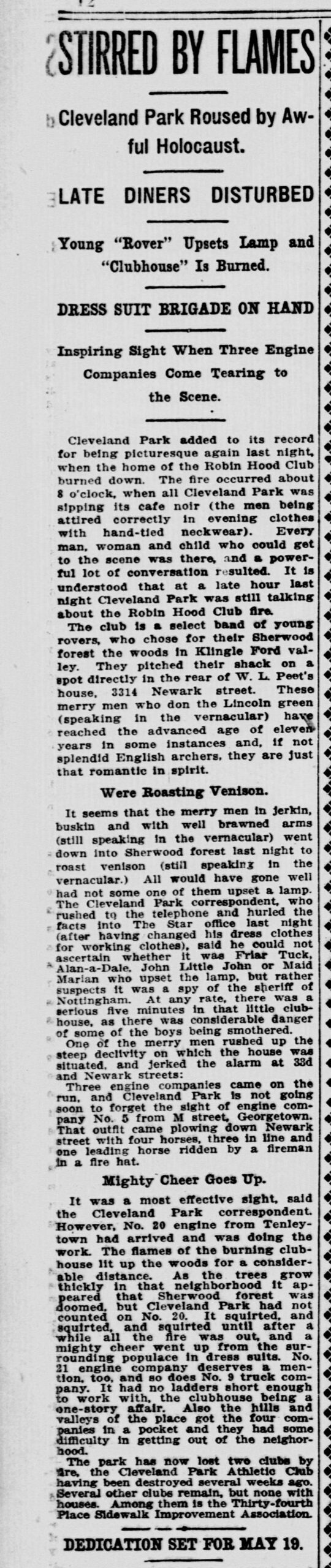
Sherwood Forest, Cleveland Park
The Robin Hood Club was a band of neighborhood boys. Some of them were eleven years old.
They had picked the wooded Klingle Ford valley as their Sherwood Forest. Their clubhouse was a one-story shack on the slope directly behind W. L. Peet’s house at 3314 Newark Street.
That night the merry men went down to the shack to roast what the Star called venison. Somebody knocked over a lamp.
The paper played the whole thing as a mock epic. Its Cleveland Park correspondent couldn’t say whether Friar Tuck, Little John or Maid Marian upset the lamp. He suspected a spy of the Sheriff of Nottingham.
It wasn’t all a joke, though. For about five minutes some of the boys were in real danger of being smothered by the smoke.
Three Engine Companies and a Pocket
One boy ran up the hill and pulled the fire alarm at 33rd and Newark streets.
Three engine companies answered. Engine No. 5 came from M Street in Georgetown, plowing down Newark Street behind four horses, one of them ridden by a fireman in his fire hat. The neighborhood loved it.
Engine No. 20 from Tenleytown was already there doing the work. It kept pouring water on the shack until the fire was out, and the crowd in dress suits cheered.
Engine No. 21 came too, along with Truck No. 9. The truck had no ladder short enough for a one-story shack.
Then the hills and hollows of Cleveland Park boxed in all four companies. They had a hard time getting back out.
The Second Club Fire That Winter
The Star noted that Cleveland Park had now lost two clubs to fire.
On January 13, 1912, the little stone lodge at the Connecticut Avenue entrance to Cleveland Park burned at 4 a.m. The Cleveland Park Athletic Club had used it as a clubhouse since the fall.
An overheated stove was the likely cause. The nearest engine house was more than a mile away, and the building was wrecked by the time help arrived.
The neighborhood’s surviving clubs, the paper said, had no clubhouses left to lose. One of them was the Thirty-fourth Place Sidewalk Improvement Association.
The House at 3314 Newark Street
The house the boys camped behind was only four years old.
William L. Peet bought three lots on the south side of Newark Street in early 1908, when Cleveland Park was still a young suburb, and put them in the name of his wife, Hattie M. Peet. Architect Frederick B. Pyle drew the plans, and John Simpson’s Sons built it.
The Star reported the house finished in August 1908. It was stucco, with a roomy front porch and a second porch on the side, designed more for the country than the city.
Pyle also designed the house next door, at 3312, for Hattie’s mother, Caroline D. Willis. The two households lived side by side for years.
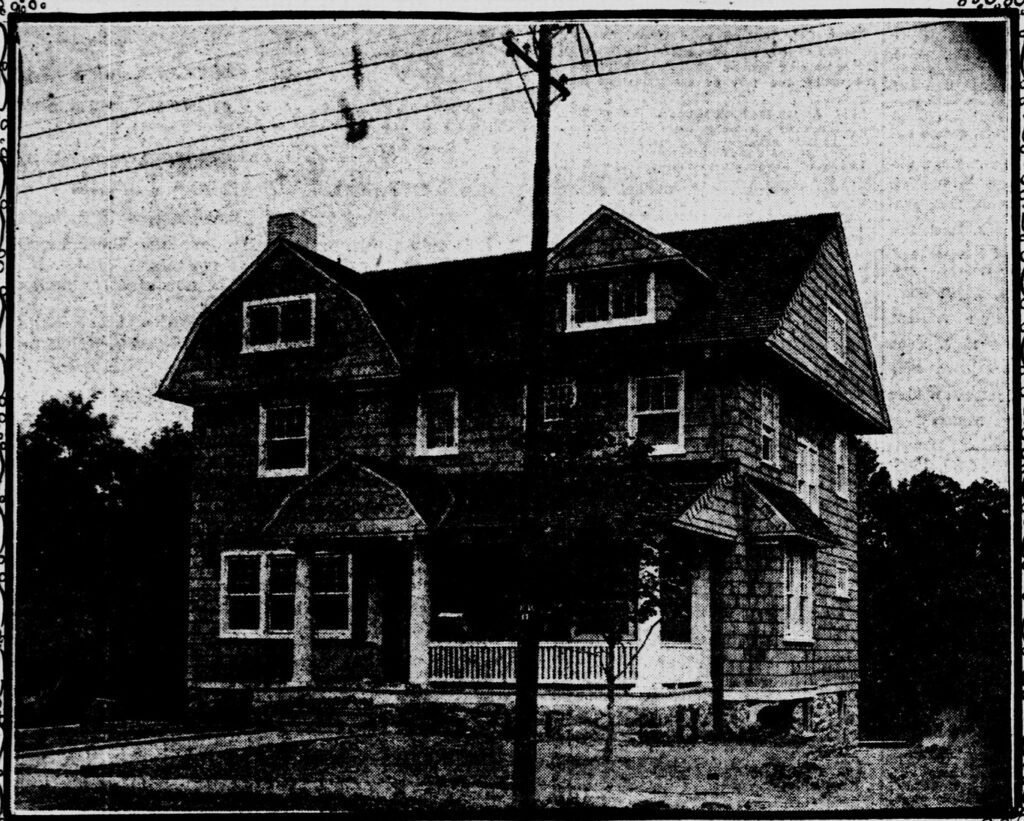
The 1910 census found a full house at 3314. It listed William, Hattie, her two children from her first marriage, three young Peets and a live-in cook. William gave his occupation as “own income.”
Two of those Peets were boys: Robert, 9, and Richard, 6. Robert would have been about 11 at the time of the fire, the age the Star gave for some of the merry men. The paper never named them.

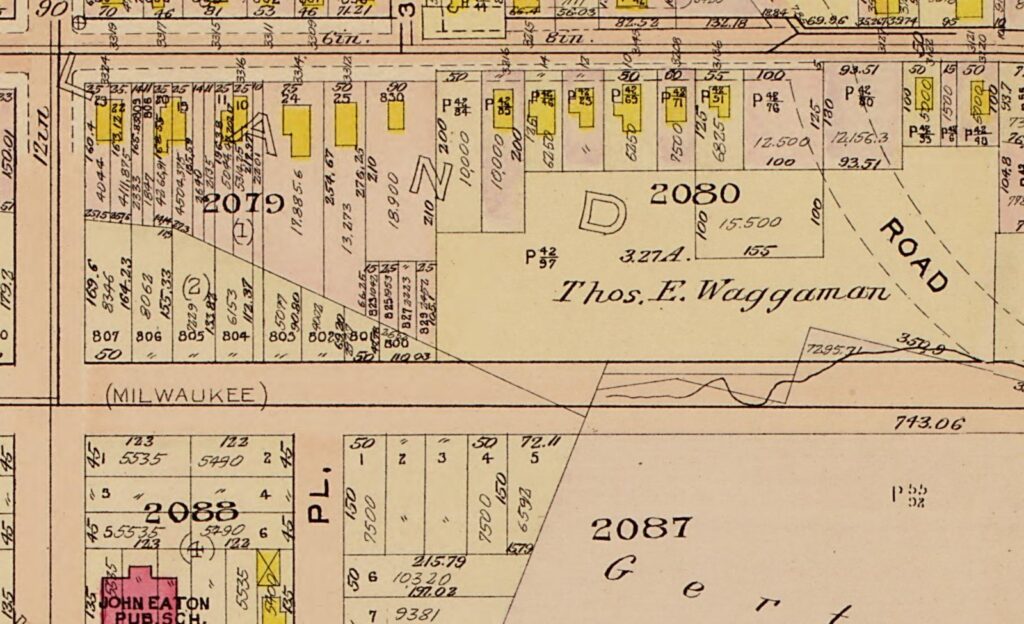
The 1909 Baist atlas shows how much room the boys had. Hattie Peet’s lot ran nearly 20,000 square feet down the hill, with open land and woods below.
The Boy From 3314 Who Went to War
The paperwork for that lot holds a surprise.
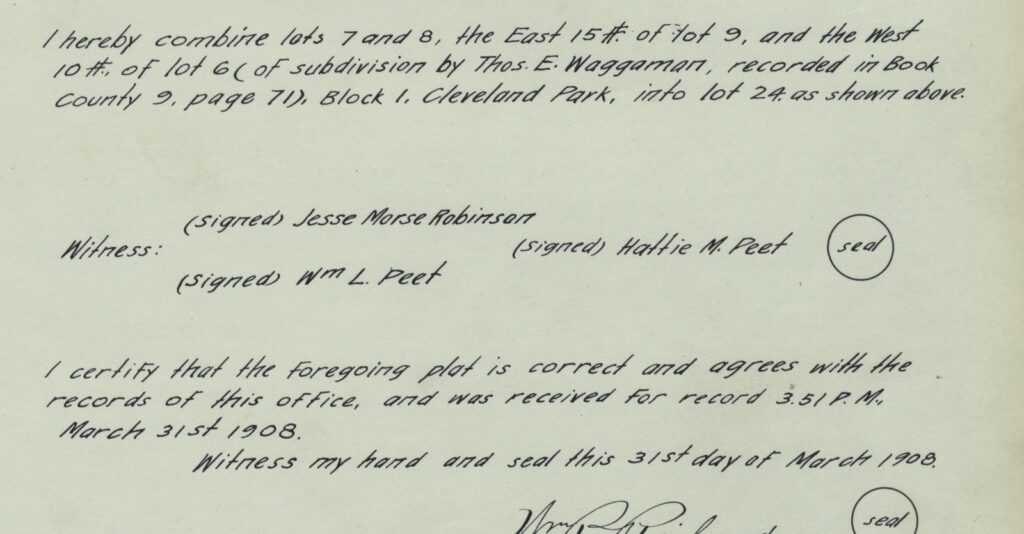
On March 31, 1908, Hattie Peet filed a plat with the District surveyor combining four lots from Thomas E. Waggaman’s original Cleveland Park subdivision into one, Lot 24. That’s four years to the day before the Star ran its fire story.
Two people witnessed her signature. One was her husband. The other was her teenage son from her first marriage, Jesse Morse Robinson.
Jesse grew up in the house on Newark Street. He was about 17 at the time of the fire, too old for the Robin Hood Club.
He attended the National Cathedral School for Boys and went on to Cornell. He trained at Plattsburg in 1916 and became a second lieutenant in the Coast Artillery.
He died of disease in France on June 1, 1918. He was 24.
His mother wasn’t home when the news came. She had moved out three weeks earlier so the house could be repaired.
A Poet on Newark Street
By January 1920 Carlos and Edith Mirick owned 3314. The Peets had moved next door into the Willis house at 3312, and by 1924 they were living in California.
The 1930 census lists Carlos as a government engineer and Edith as an editor. He later worked as an electrical engineer for the Navy.
Edith Mirick was a Washington poet. In 1929 she co-founded Star Dust, a poetry journal published in the city, and she won poetry prizes through the 1930s. The papers listed her at 3314 Newark Street.
In December 1940 Catholic University staged her play Storm, a sympathetic portrait of Mary Todd Lincoln. The Star called it “just about the best original dramatic production in local amateur theatrical history.”
By the late 1940s Frieda Wyandt Everett lived in the house. She hosted the women journalists of Theta Sigma Phi there.
What’s There Now
The Everetts sold 3314 Newark Street in June 1961. Revenue stamps on the deed point to a price of about $41,500.
The same family has owned it ever since. That’s 65 years.
The house is still there, stucco and all. The hipped roof and the dormer match the 1908 photo.
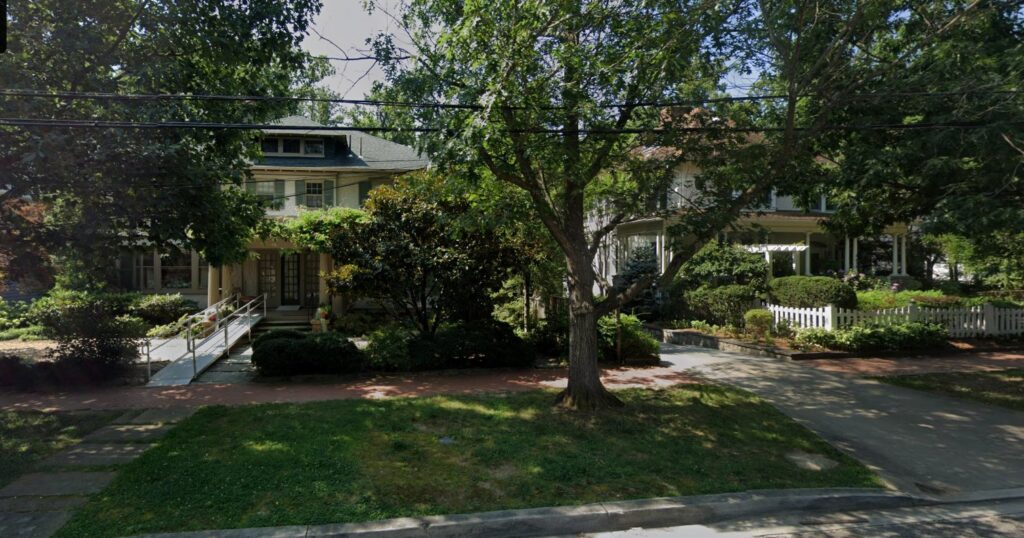
The woods behind it are gone. By 1919 the Baist atlas already showed a row of houses on the slope below Newark Street.
Sherwood Forest didn’t last.
Cleveland Park has had other strange nights. Check out the time a wolf escaped from the National Zoo, the 1925 wreck on the Klingle Ford Bridge, or how Cleveland Park got its name.