
On a Saturday night in the late 1920s, the dance pavilion at 50th and Hayes Streets NE was the loudest building in Far Northeast Washington. The Charleston, the Lindy Hop, the Black Bottom. Couples spilled off the floor into the warm summer dark, past the Caterpillar ride and the Ferris wheel, past the sign that read “ICE CREAM, COLD DRINKS,” and out toward the streetcar that ran back across the Benning Road bridge into the city.
This was Suburban Gardens. It was the first and only major amusement park ever built inside the District of Columbia. And it existed because Black Washingtonians were not welcome at the others.
The park Glen Echo wouldn’t let them into
In 1921, if you were a Black family in Washington and you wanted a roller coaster, you had a problem. Glen Echo Park, the big trolley-line park out the Cabin John line, was for whites. Chesapeake Beach, on the bay, was for whites. Marshall Hall, the riverside park downstream of Mount Vernon, was for whites.
The exclusion was not always posted on a sign. It did not need to be. The policies were enforced at the gate by guards and by social custom, and they held for decades.
The Washington that produced Suburban Gardens was a city where federal employment had been resegregated under Woodrow Wilson, where Rosedale Pool and the Tidal Basin Beach kept white and Black bathers apart, and where the city’s amusement geography mapped racial exclusion onto every leisure dollar.
The story of Suburban Gardens is partly a story about a roller coaster. It is mostly a story about the small set of Black Washingtonians who decided to build their own.
Sherman Dudley, Howard Woodson, and the Universal Development and Loan Company
The park was a project of the Universal Development and Loan Company, a Black-owned real estate concern incorporated in DC. The three names that come up most often in connection with it are the engineer Howard D. Woodson, the writer John H. Paynter, and the vaudeville magnate Sherman H. Dudley.
Woodson was the architect of the thing, in every sense. Born in Pittsburgh, trained as a civil engineer at the University of Pittsburgh, he came to Washington in 1907 and joined the Office of the Supervising Architect at the Treasury Department, one of the first Black professionals ever to hold that kind of post. By the time Suburban Gardens was on the drawing board, he was the supervising architect for the Universal Development and Loan Company and had built his own house at 4918 Fitch Place NE, a few blocks from the park’s site.
He would later be the man who badgered the city for years to put a high school east of the Anacostia. The high school the city eventually built in 1972 is named for him.
Paynter was a writer and a federal employee. He wrote Fugitives of the Pearl, the 1930 history of the failed 1848 escape attempt aboard the schooner Pearl in the Washington harbor. He kept a hand in Deanwood land deals.
Dudley is the name that catches in the throat. Sherman Houston Dudley, born in Dallas in 1872, was, by 1921, one of the most important figures in Black American theater. He had started as a singer in a medicine show on a Dallas street corner and had risen through the Smart Set Company to star billing on the road.
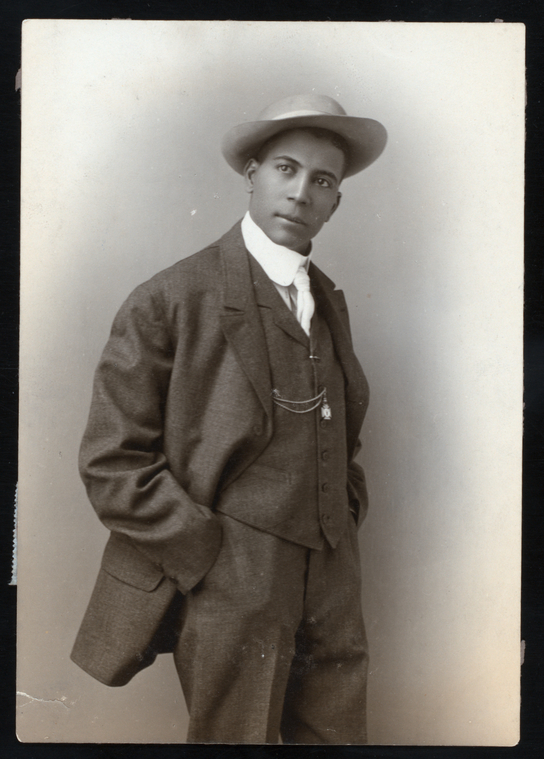
In 1911 he set up S. H. Dudley Theatrical Enterprises in Washington and began buying and leasing theaters. By the mid-1910s his circuit spanned more than twenty Black-owned or Black-operated venues, stretching as far south as Atlanta. The Dudley Circuit was the working spine that the Theater Owners Booking Association (T.O.B.A.) would later be built on, and Dudley served as one of T.O.B.A.’s Black regional managers, covering the Washington area.
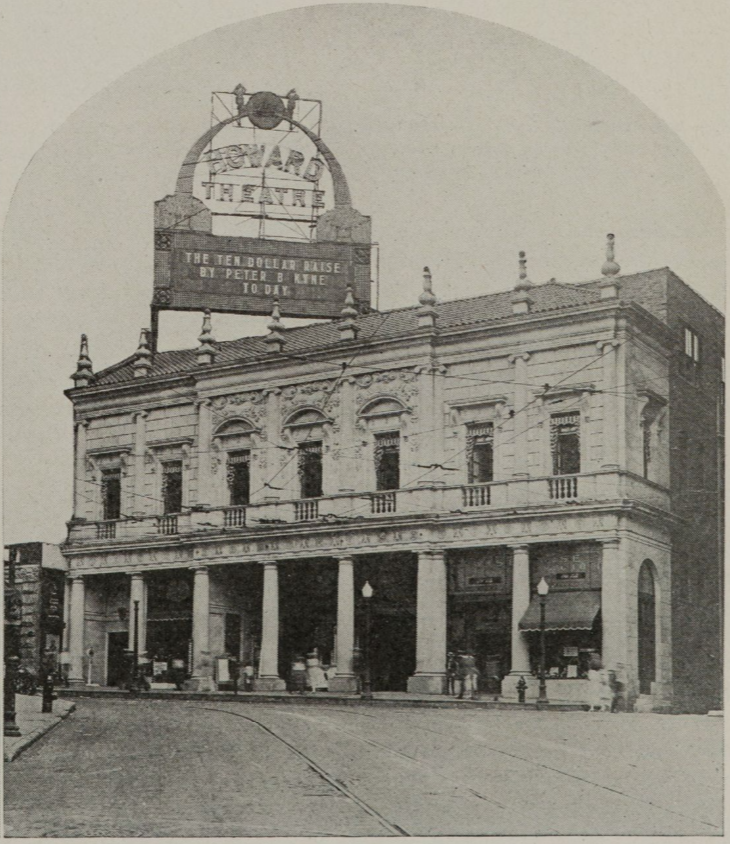
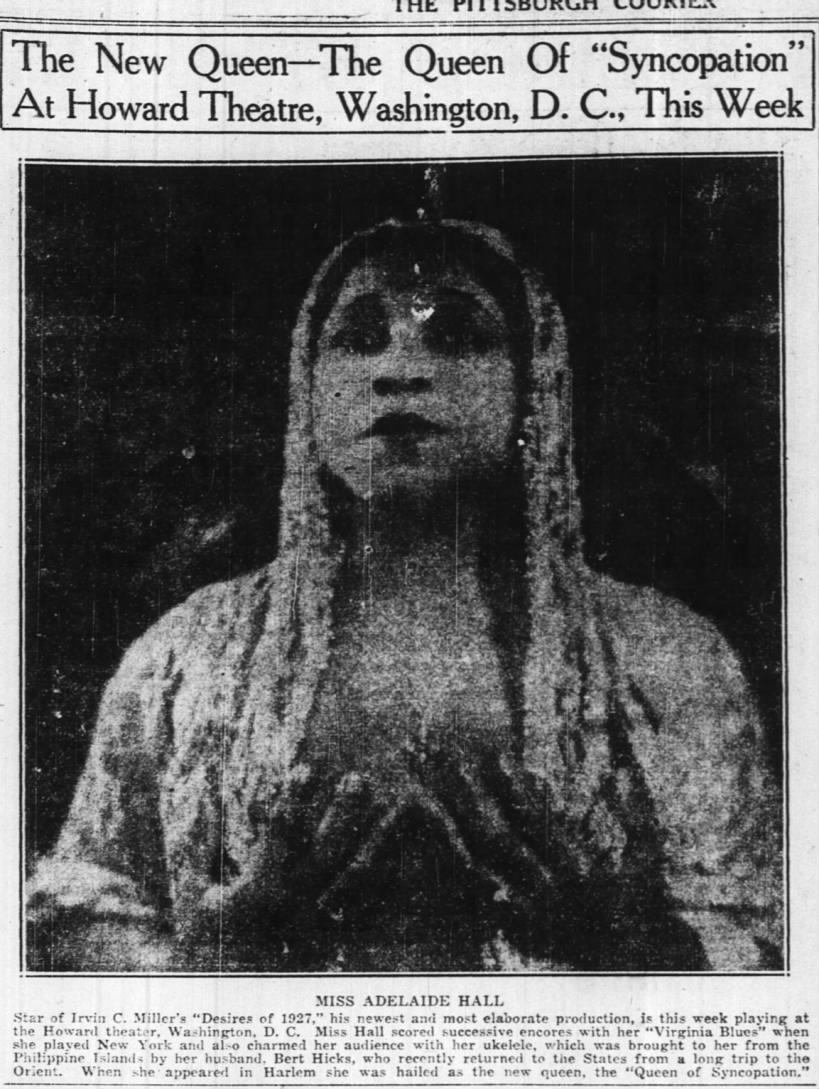
In 1922 he took over the lease of the Howard Theatre on T Street and ran it for four years before a white movie-theater chain owner named Abe Lichtman pushed him out in 1926. Keep that name in mind. Lichtman will come back.
The exact division of labor among Woodson, Paynter, Dudley, and the rest of the Universal Development and Loan Company partners is murky in the surviving record. What is clear is that the park was a Black-built, Black-financed, Black-staffed venture. The historian Patsy Fletcher, in her Historically African American Leisure Destinations Around Washington, DC, calls it the rarest kind of Jim Crow workaround: not a separate-and-unequal Black entrance bolted to a white amusement park, but a separate-and-equal park of its own, owned by the people it served.
Opening day, June 1921
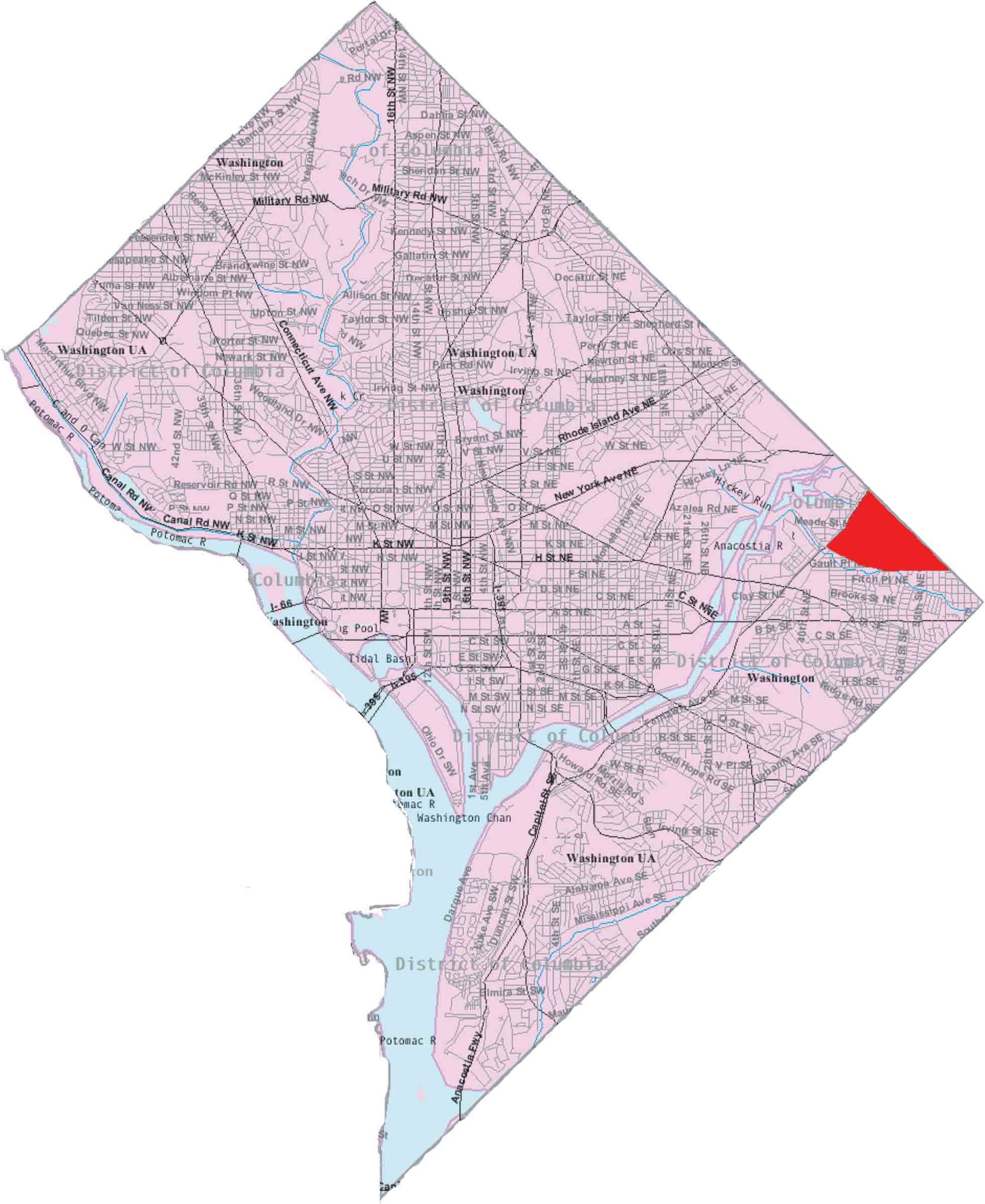
Suburban Gardens opened on June 25, 1921, on a parcel of between seven and nine acres at 50th and Hayes Streets NE, near the National Training School for Women and Girls. The site sat at the very edge of the District, hard against the Prince George’s County line, on what was then the city’s undeveloped outskirts. Lewis Giles, a Black architect working in DC, helped Woodson lay out the grounds.
The opening was slow. The first season offered a dance pavilion, a single café, and a merry-go-round. That was it. But by the end of the first year the park had begun to fill in, and by the mid-1920s it was the most popular outdoor destination for Black Washingtonians for miles.
People came by streetcar from the city, riding the line that crossed the Benning Road bridge from a terminal at 15th and H Streets NE and ran east along its own tracks into Deanwood. People came by commuter train, by car, and on foot. Out-of-town visitors put it on their itinerary the way white visitors put Glen Echo on theirs.
What the park had
By its peak, the park had more than twenty concessionaires operating on the grounds. The headline ride was a wooden roller coaster built by the Miller and Baker company, one of the better coaster engineering firms of the era. There was a scenic railway, a Ferris wheel, and a children’s playground.
As new amusement-ride patents hit the market in the 1920s, Suburban Gardens added them. The Caterpillar, the Whip, the Dodgem bumper cars, the Tumble Bug. A chair swing and an airplane swing. A swimming pool. A shooting gallery. The merry-go-round had its own musician, Russell Wooding, a DC native who later worked Broadway shows and toured with Duke Ellington.
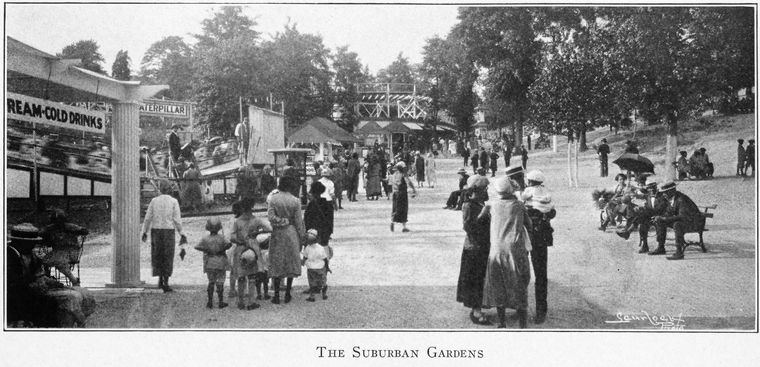
The dance pavilion was the soul of the place. It opened in the first year and never stopped pulling crowds. The Jazz Age arrived in Washington through that pavilion.
The popular telling, repeated in the Boundary Stones piece and in oral histories collected by Patsy Fletcher, is that both Cab Calloway and Duke Ellington played the pavilion at various points in the 1920s, alongside many less-famous but still working bands. Ellington was Washington-born and was running his own outfit out of DC clubs as late as 1923. Calloway came up through Baltimore and was on the East Coast circuit for the whole of the decade.
The bills are hard to pin down to specific dates this far out, and I have not found a contemporary newspaper ad that nails down a specific Ellington night at Suburban Gardens. But the pavilion was on the road map for any Black band working the mid-Atlantic, and the dancers there were doing the Charleston, the Lindy Hop, and the Black Bottom while the rest of Deanwood was still half-rural and full of laying hens.
The park ran free band concerts, costume pageants for the kids, stilt-walking clowns, and contests. In 1926 it brought in an aerial act billed as Marvelous Melville. The city, for its part, declined to install adequate streetlights near the park entrance, which made the walk to the streetcar after dark a real hazard. The refusal stood for years.
It is worth saying what the park looked like in person, because the surviving 1927 photograph by the Scurlock Studio captures it cold. There is the “ICE CREAM, COLD DRINKS” sign on the left. There is the CATERPILLAR ride. There are men in straw hats and women in summer dresses pushing baby carriages along a dirt path under tall hardwoods. There is a small child holding her mother’s hand. It looks like every amusement park photograph of the period from anywhere in America, with the single distinction that everyone in the frame is Black.
Abe Lichtman, the Depression, and the slow close
In 1929, the white movie-theater operator Abe Lichtman, the same man who had taken over the Howard Theatre from Dudley three years earlier, bought Suburban Gardens. Lichtman ran a chain of theaters across DC that catered to Black audiences while keeping the ownership and profits in white hands, and his purchase of the park fit the pattern. The first thing he did was announce plans to put up a movie theater nearby, over the protests of Deanwood residents who did not want him in the neighborhood.
The 1930s ground the place down. The Depression hit Black Washington harder than white Washington, the Jazz Age cooled, and Suburban Gardens had been built for an economy that no longer existed.
Sources disagree on exactly when the park went dark. The DC Preservation League’s site dates the park’s effective operating life as 1921 to 1932, the last few years under Lichtman. Wikipedia and the marker that the Cultural Tourism DC people put on the site in 2009 say the park closed “by 1940.” Patsy Fletcher’s account splits the difference: the park’s heyday was the 1920s, the rides limped along through the early thirties under Lichtman, and by the end of the decade it was effectively done. The land sat available.
There is a small piece of biographical symmetry here that is hard to ignore. Sherman Dudley died on March 1, 1940, on a farm in Maryland where he had retired to breed thoroughbred racehorses, having sold his theater holdings around 1930 “due to economic forces beyond his control.” The park he had helped build died in the same year he did.
From gardens to garden apartments
In 1941, the Federal Housing Administration funded a 203-unit garden apartment development on the old Suburban Gardens site. The architect was Harvey Warwick, who had designed dozens of garden-style complexes across the DC metropolitan area. Warwick laid out thirteen two-story buildings around landscaped courtyards, and named the development Suburban Gardens Apartments.
It opened during the wartime housing crunch, and it filled fast with middle-class Black families, many of them war workers who had just arrived in the city. Among the residents, eventually, were Mildred and Carlisle Pratt, whose daughter Sharon Pratt would later be elected mayor of the District of Columbia in 1990.
The neighborhood marker at 50th and Hayes, erected by Cultural Tourism DC in 2009, is titled “From Gardens to Garden Apartments.” Today the original Suburban Gardens Apartments still stand, joined in the surrounding blocks by newer affordable-housing developments like the Residences at Hayes and by the Metropolitan Police Department’s Sixth District station, which sits on part of the old park footprint.
You can walk the site now and find no trace of the roller coaster. Nothing visible above the asphalt suggests that thousands of people once gathered here on a summer night to hear a band. The only marker is the marker.
The longer arc, though, is impossible to walk past without thinking about. Suburban Gardens closed in or around 1940. Glen Echo Park, twelve miles away on the other side of the river, stayed whites-only for another twenty years. In the summer of 1960, the Howard University Nonviolent Action Group organized a sit-in on the Dentzel carousel at Glen Echo. Five students were arrested. The picket line stayed up from June into September, and by the 1961 season Glen Echo had finally desegregated. The one big Washington stage built to admit everyone from the start was the Carter Barron Amphitheater, which opened in Rock Creek Park in 1950. By then the only amusement park inside Washington had been gone for two decades.
The story of DC’s segregated leisure infrastructure is a story about who got to relax and where. The Tidal Basin had its own segregated beach until the federal government closed it rather than integrate it. The municipal golf courses were segregated until Langston opened for Black players in 1939. The pools were segregated. The parks were segregated. The roller coasters were segregated. So a handful of Black Washingtonians built their own roller coaster, and it ran for almost twenty years on a strip of land in Deanwood at the city’s far edge, until the country and the music and the economics around it all gave out at the same time.
The dance pavilion is gone. The Scurlock photograph is in the New York Public Library. The land is housing.