If you have lived in D.C. for a while, you remember the rooftop. Cheap beer, a passable burger, and the best free view in the city, with the Washington Monument on one side and the White House on the other.
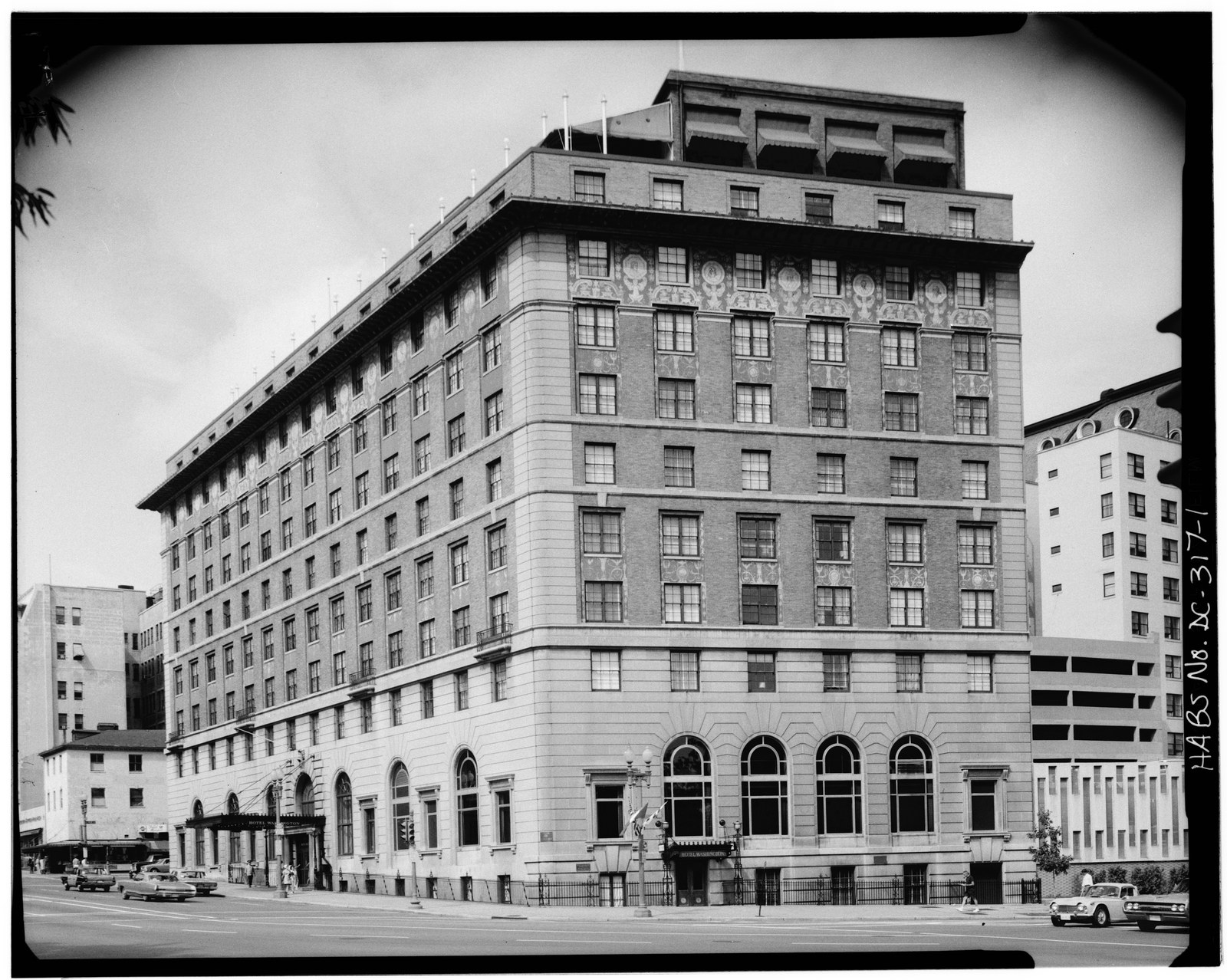
For years those lunches happened at the Hotel Washington, an old and slightly faded grand hotel near the White House. Then in 2009 it became the W, a velvet-rope sort of place. I figured the old name was gone for good.
It came back. In 2021 the W brand was peeled off and the building quietly returned to the name it opened with in 1918. So here is the fuller story of one of Washington’s great old hotels, the one that has outlasted almost everyone who ever signed its register.
From a parade stand to a grand hotel
The corner of 15th Street and Pennsylvania Avenue has watched Washington march by for a long time. The victorious Union Army paraded past it in the Grand Review of May 1865. In 1913 the empty lot on the site held a viewing stand for Woodrow Wilson’s inaugural parade.
Before the hotel, the corner held the Corcoran Building, an office block whose tenants were told to clear out so something grander could rise. The plan made the papers well before the first brick.
Here is The Washington Post on November 26th, 1916, laying out what was coming.
The resignation of Robert S. Downs as manager of the Shoreham Hotel has been followed by the announcement of his employment by the new hotel company that is to build on the site of the Corcoran building a 500-room hostelry to be known as the Hotel Washington, work which, it is declared will commence January 1, the tenants of the present building having been notified to vacate before that time.
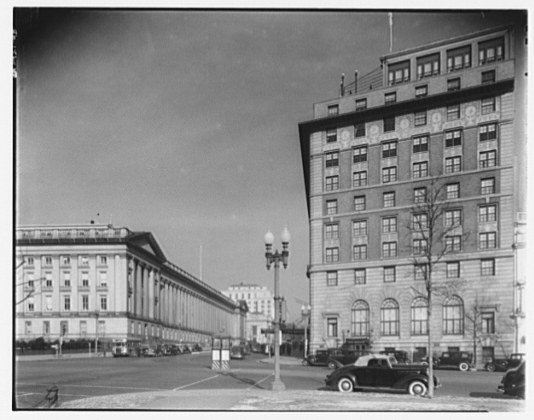
Plans for the new hotel building call for a roof garden, a convention hall seating 2,000 people and a banquet hall seating 1,000. A handsome grill and cafe will be located in the basement, with entrance off Pennsylvania avenue, so avoiding the congestion usually experienced in hotels where such conveniences are located at the tops of the buildings. The building will be of 10 stories, with basement and subbasement, and there will be two main entrances, one on F and the other on Fifteenth street.
It is planned to make this one of the most perfectly equipped popular priced hotels in the country. The office, dining room, lounge, &c., will be on the F street entrance. A palm room is provided for an there will be six elevators to the chamber floors and roof garden. The rates will range from $1.50 to $4 per day. A number of pleasant suites are included in the arrangements.
A roof garden was in the design from day one. So was a price ordinary people could pay, from $1.50 to $4 a night.
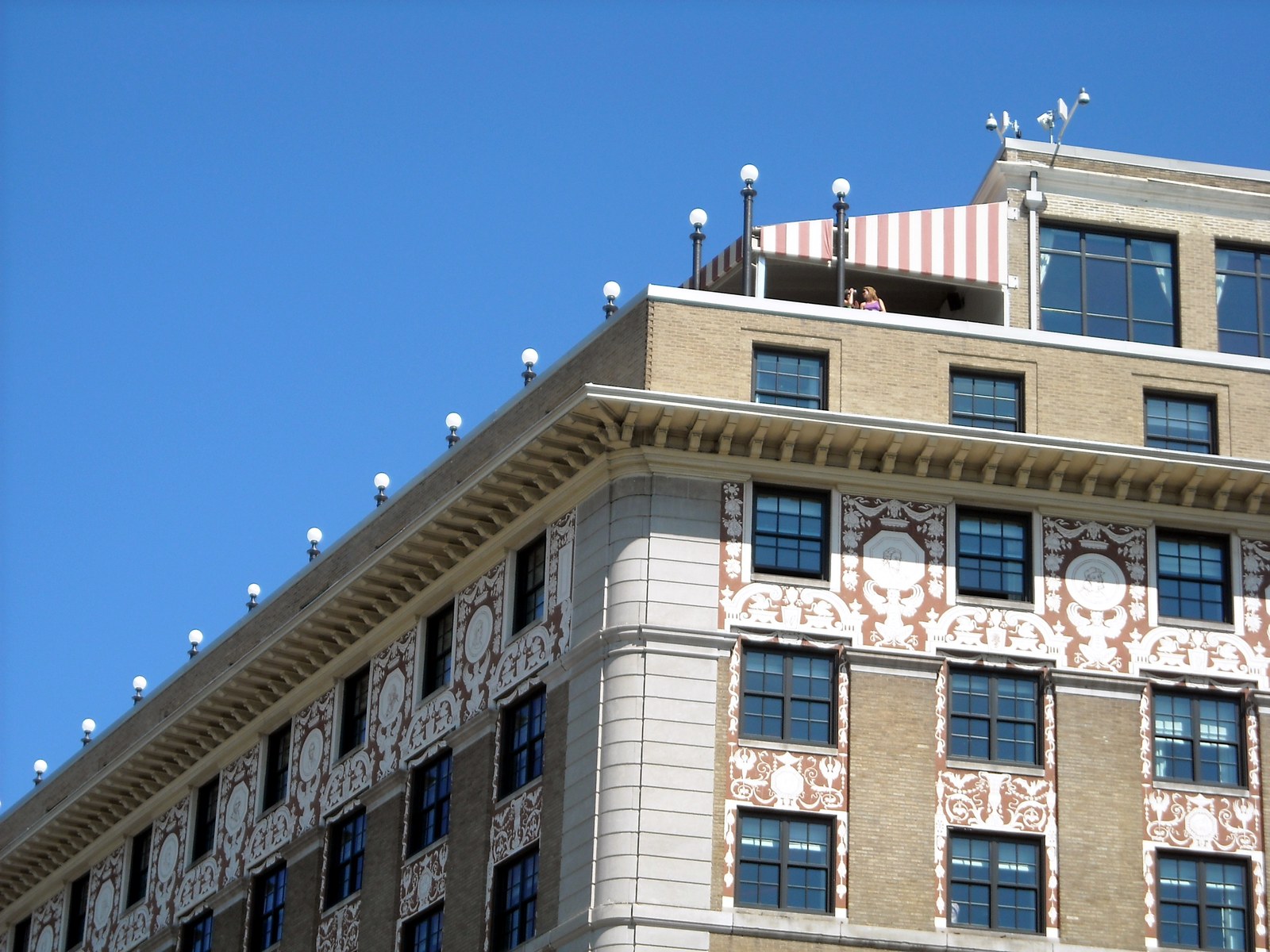
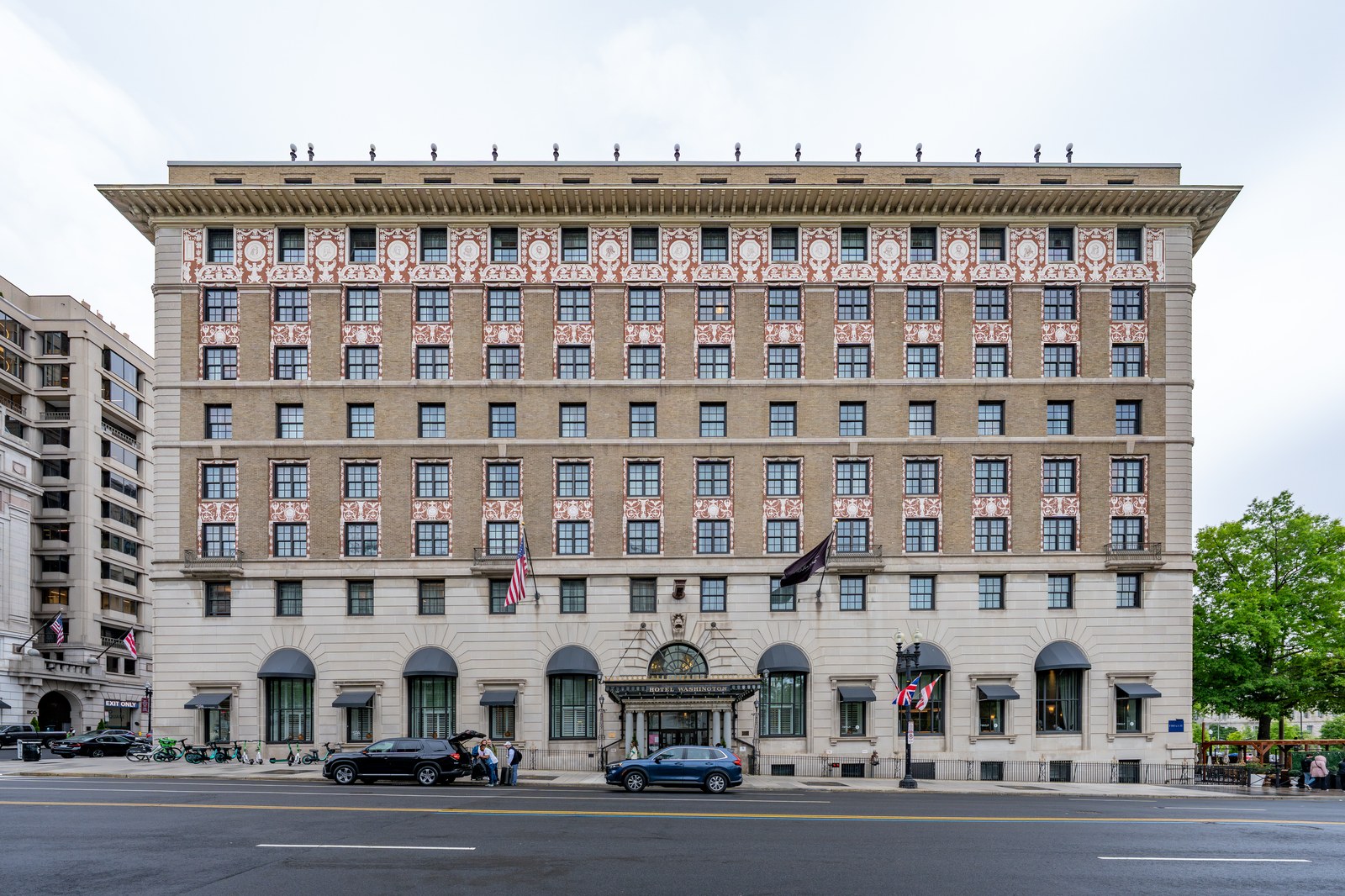
The firm behind it was Carrère and Hastings, the New York architects of the New York Public Library. Thomas Hastings drew the hotel in the Italian Renaissance Revival style, and it remains the only commercial building the firm ever built in Washington. Look up and you can still see the cream-colored sgraffito scrollwork running across the reddish-brown facade.
Opening night, April 1918
Construction started in 1917, and the doors opened before the place was even finished. The first guests checked in on the night of April 4th, 1918, with the formal opening still days away.
The Washington Post ran this the next morning, on April 5th.
The Washington, the National Capital’s newest big hotel, opened its doors last night. Although the formal opening will not be held for several days, the large number of visitors in the city seeking accommodation caused Robert S. Downs, president of the hotel company, to throw open 200 rooms and the main dining room.
The first guest to register was C. H. White, of Boise, Idaho. He wrote his name on the register at 6:30 o’clock and before midnight all rooms had been taken.
The Washington is of the most modern construction and is fireproof. Some of its features are a basement convention hall, seating 2,000 persons. A Spanish garden, a lounge, four private committee rooms, four private dining rooms, grill and coffee rooms.
A private ice plant in the subbasement will supply artificial ice for the ice-skating rink which is to be a summer feature of the roof garden.
The first man to sign the register was C. H. White of Boise, Idaho, at half past six. Before midnight every room was taken.
My favorite detail is the ice. A private plant in the subbasement would freeze “artificial ice” for a skating rink on the roof, billed as a summer feature. An ice rink, on a Washington roof, in July. That is ambition.
The roof was always the point
The hotel was never really about the rooms. It was about the roof.
From the start the roof garden was the draw, with the monuments laid out below. Over the years it pulled in a steady Washington crowd of senators, Hill staffers, and reporters, nursing drinks on cheap chairs because nobody could beat the view.
It pulled in performers too. In the late 1920s the entire cast of the Ziegfeld Follies stayed at the hotel and rehearsed up on the roof.
Shriners, senators, and a royal welcome
Downstairs, the lobby saw its share of chaos.
On December 5th, 1933, the day Prohibition ended, a group of Shriners celebrated by riding horses straight into the lobby. A southern senator, refused room service at 2 a.m. one night in the mid 1930s, went up to his room and came back down with a gun, looking for the night manager. No shots were fired, and the record is silent on whether he ever got his sandwich.
In 1949 the 29th Division tried to drive a jeep into the hotel for a reunion. The place attracted that kind of energy.
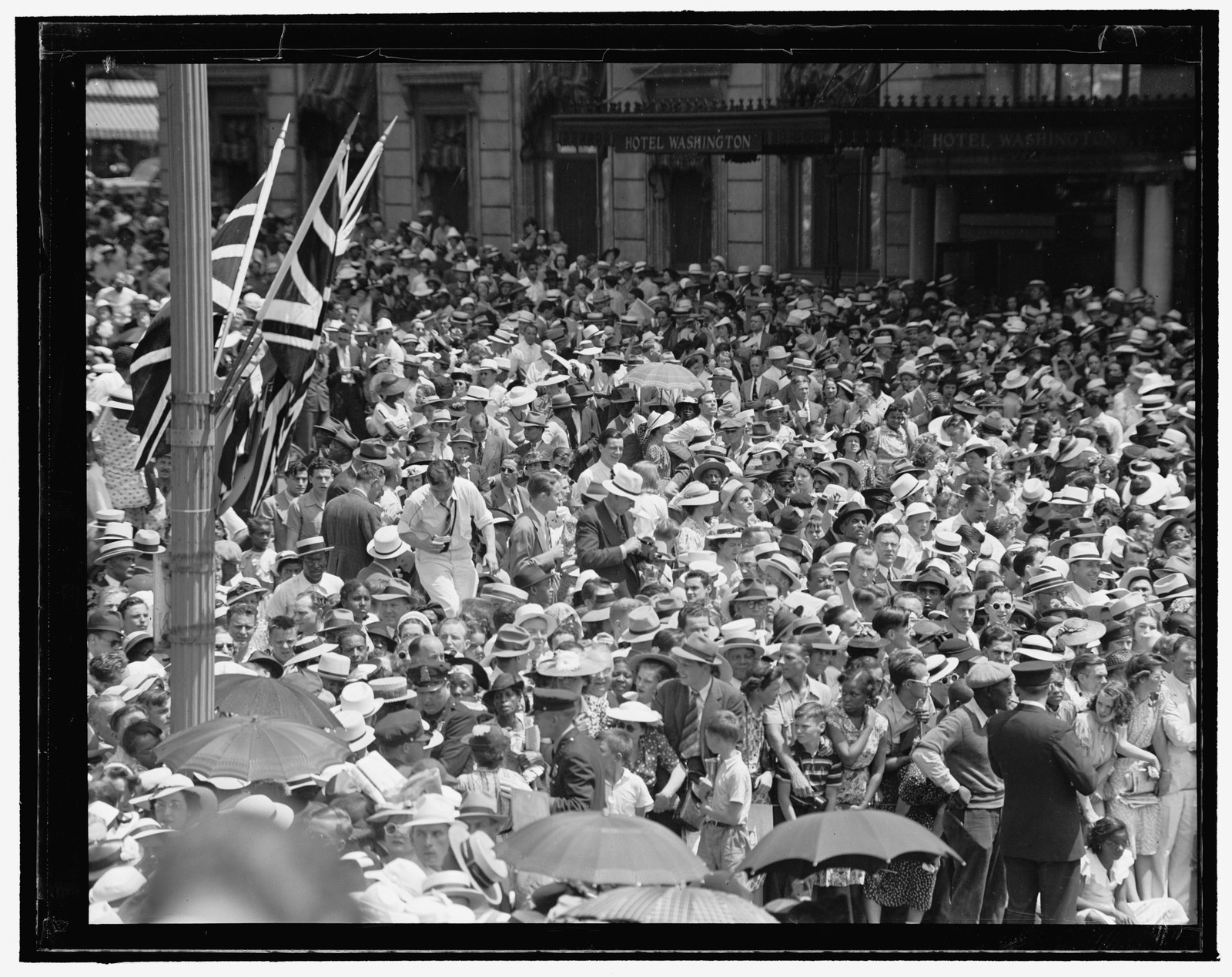
It also sat right on the city’s grandest parade route. When King George VI and Queen Elizabeth came to Washington in June 1939, the first reigning British monarch ever to visit the United States, the crowds spilled across 15th Street outside the hotel’s doors.
The official set came too. President Coolidge hosted a reception for the Architects of America at the hotel on May 1st, 1926. In 1940 the Texas businessman William Lewis Moody Jr. bought the place, and his family held onto it for the better part of fifty years.
The coin dealer who checked in and vanished
Not every story at the Hotel Washington has an ending.
On the night of May 2nd, 1960, a 31-year-old coin dealer’s agent from Atlanta named Daniel J. McBride checked in carrying $13,000 in cash. He called his wife that night. Then he disappeared.
The Washington Post laid out the mystery on May 10th, 1960.
Daniel J. McBride, a coin dealers’ agent who checked in at the Hotel Washington the night of May 2 with $13,000 in cash, has been missing ever since.
The United States Attorney’s office and the police suspect foul play. There was more than $6000 in money orders waiting for him at the hotel, and they were left untouched.
Assistant United States Attorney Frank Stickle said the 31-year-old Atlanta, Ga., man, a husband and father, has not been seen nor heard from since he called his wife in Atlanta the night he arrived here.
He was here on business to purchase $2400 worth of newly-minted pennies for a coin dealer, Raymond Kotansky, of Streater, Ill.
The hotel took possession of his suitcase and the money orders awaiting him after three days. There was no evidence of violence in his room.
…
McBride and Kotansky were in the habit of talking to each other each day by phone, police said, and McBride called his wife and family in Atlanta each day. Mrs. McBride has not heard from him since he called the night he checked into the hotel. She has hired a private detective agency to investigate, and told a reporter last night that she shares the police fear that McBride had met with foul play.
The case never broke. McBride’s name vanishes from the papers after that, the suitcase and the money orders left behind, no sign of violence in the room. More than sixty years later, nobody knows what happened to him.
Elvis, a vice president, and the movies
For a hotel near the White House, the guest list ran exactly as long as you would guess.
Vice President John Nance Garner lived there, and so did Supreme Court Justice Frank Murphy. John Wayne and Gene Autry passed through. Harrison Ford once bought drinks for everyone on the roof.
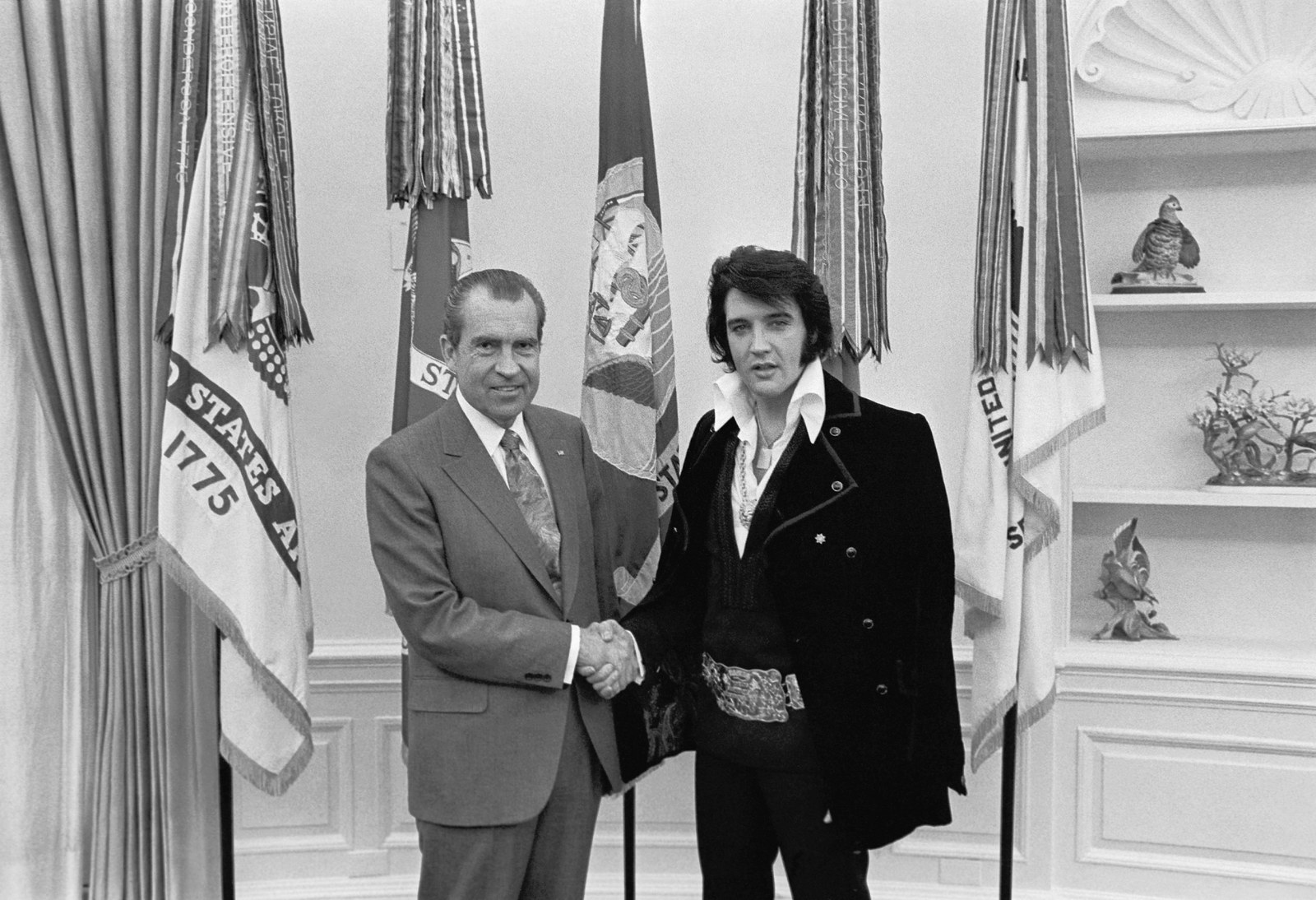
In December 1970, Elvis Presley checked in, taking rooms 505, 506, and 507. He was in town for one of the strangest photo ops in American history, his meeting with President Nixon at the White House on December 21st.
Hollywood kept coming back to the building itself. The hotel appears in Silkwood, Contact, and The Firm, and its roof terrace turns up in The Godfather Part II, No Way Out, and Wonder Woman 1984.
From the W and back to the Hotel Washington
By the 2000s the grand old hotel was changing hands fast. The Moody family company sold it in early 2006 for $120 million. The buyers flipped it months later for $150 million, and the new owners closed it in November 2007 for a gut renovation.
It reopened on October 8th, 2009 as the W Washington D.C., 317 rooms of low light and DJ sets. That is the version I walked into expecting my old cheap burger, and found a scene instead.
The W era did not last. In 2021 the hotel sold again, the W franchise was dropped, and the building took back the name it was born with. The Hotel Washington is the Hotel Washington once more.
The roof is still up there. The view has not really changed in more than a hundred years, the Washington Monument on one side, the White House on the other. Some things in this city are worth keeping exactly as they are.
I am a Certified Master Guide offering private, customized tours of DC in an 8-passenger, Toyota Sienna van. See website http://www.questtours-dc.com and let me know if I can be of help.