A little after ten o’clock on the night of January 29, 1891, William Windom sat down to a round of applause in the banquet hall at Delmonico’s in New York. He was the sitting Secretary of the Treasury of the United States, and he had just answered a toast.
The subject handed to him that night was “Our Country’s Prosperity, Dependent upon its Instruments of Commerce.” Windom warmed to it. He closed on a flourish about the danger of bad money.
As a poison in the blood permeates the arteries, veins, nerves, brain and heart, and speedily brings paralysis or death, so does a debased or fluctuating currency permeate all the arteries of trade, paralyze all kinds of business, and bring disaster to all classes of people.
He took his seat. The master of ceremonies rose to introduce the next speaker. A moment later Windom slid out of his chair and onto the floor.
The man who had just likened bad money to a poison that brings “paralysis or death” was carried from the room with his own heart failing. He never came back. He was 63.
Windom died in New York, but he lived in Washington. The house he left behind, the Windom House at Scott Circle, is the reason we are telling this story at all.
The Windom House at Scott Circle
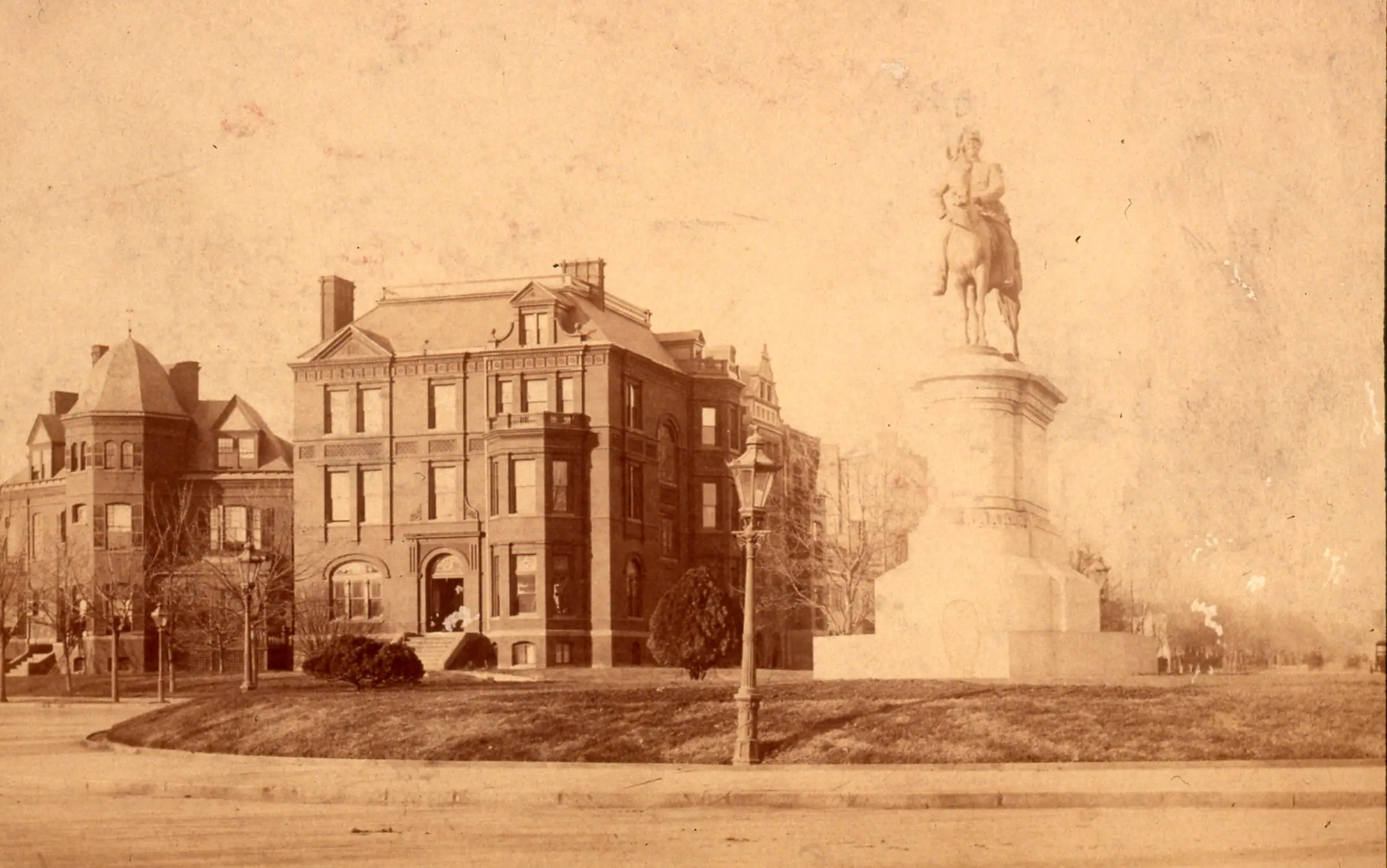
An 1888 photograph survives, looking northwest across Scott Circle. The turreted Queen Anne pile on the corner of 16th Street and Massachusetts Avenue NW is the Windom House. The mansion just past it to the west is the Hutchins House. In the foreground is the bronze figure of General Winfield Scott on his horse, the statue that gave the circle its name.
The photo comes from the William H. Seaman collection, now held by the Historical Society of Washington, D.C. It is the best look we have at a corner of the city that no longer exists.
The house went up in 1881 for William Windom, who was just then becoming one of the most important men in the country.
He was born in Belmont County, Ohio, in 1827, to a Quaker family, and went west to Minnesota in 1855. Winona sent him to Congress in 1859. By 1870 he was a United States Senator, and he stayed one, on and off, for more than a decade.
In the Senate he made his name on railroads. He chaired a committee on transportation that produced the 1874 “Windom Report,” an early argument for federal regulation of the railroads that historians later treated as a forerunner of the Interstate Commerce Commission.
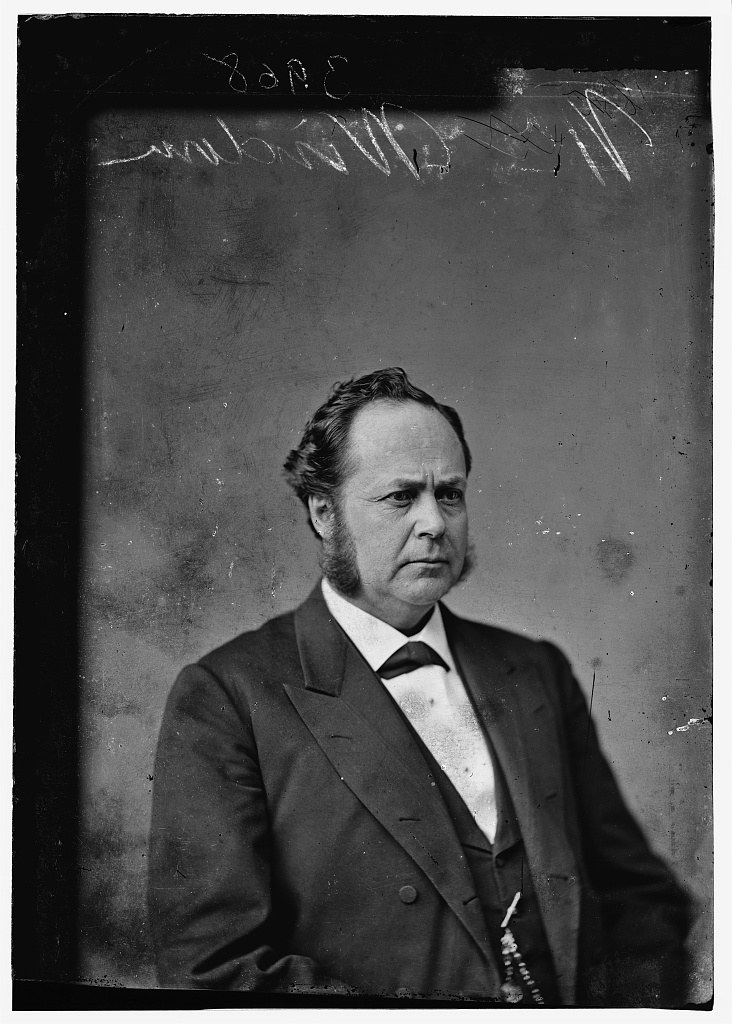
In 1880 he even ran for president. At the Republican convention he picked up ten votes before the party deadlocked and turned to a dark horse named James A. Garfield.
Garfield remembered him. In March 1881 the new president made Windom his Secretary of the Treasury. Eight years and one assassination later, Benjamin Harrison gave him the same job again. He was serving his second turn at Treasury the night he died.
The Man Next Door Founded the Washington Post
Look back at that 1888 photo. The mansion immediately west of Windom’s belonged to Stilson Hutchins.
Hutchins is the man who founded the Washington Post. He printed the first edition on December 6, 1877, and within a year it was selling more than 6,000 copies a day.
So for a stretch in the 1880s, two of the more powerful men in Gilded Age Washington, the nation’s Treasury Secretary and the capital’s leading newspaper publisher, lived wall to wall on the same corner, both of them looking out at the same general on his horse.
Hutchins liked that statue enough to add to the collection. In 1900 he paid for the Daniel Webster Memorial that still stands on the eastern side of the circle.
Scott Circle was new money in those years. The land had once been a low tract known as Jamaica, with a Rock Creek tributary called Slash Run draining through it. The city buried the run in a sewer, dropped Henry Kirke Brown’s statue of Winfield Scott in the middle in the 1870s, and the mansions followed.
Another Scott Circle story: the General Scott, a 1940 apartment house on the northeast corner.
Death at Delmonico’s
Windom’s last night was supposed to be a victory lap. He was the guest of honor at the annual banquet of the New York Board of Trade and Transportation, the kind of room where a Treasury Secretary is treated like a king.
Dinner started at six. The speeches did not begin until nine, after the plates were cleared. When Windom’s turn came he gave a confident talk on money and trade and finished with that line about poison in the blood. The room applauded, and he sat.
The master of ceremonies was already introducing the next speaker when Windom slid from his chair.
Doctors in the audience carried him through a side door into Delmonico’s dish room and laid him on a table. His pulse was faint and fading. Someone called for an electric battery, and they tried to shock his heart back into rhythm.
It did not work. Windom was pronounced dead at eleven minutes past ten. A modern account of that night, tracing his Ohio roots, walks through the scene minute by minute.
The hardest part fell to the president. Benjamin Harrison got the telegram in Washington, walked into a reception, crossed the room to Mrs. Windom, and told her himself. Then he saw her to the train for New York.
Her husband’s body was brought back to Washington. He was buried at Rock Creek Cemetery, a few miles from the corner where his house stood.
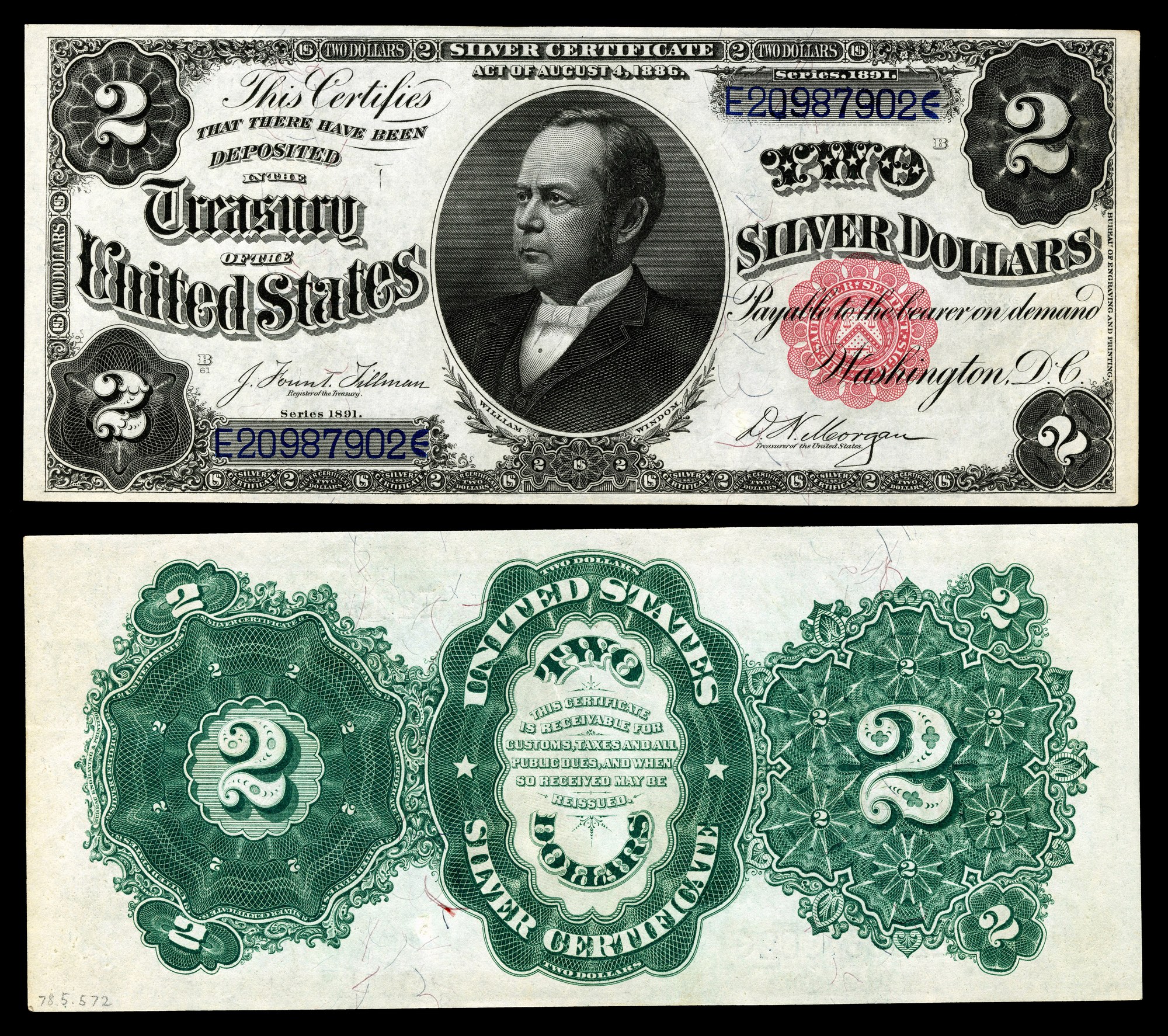
Then the country put his face on its money. Later that same year the Treasury issued the Series of 1891 two-dollar silver certificate with Windom’s portrait front and center. Collectors still call it, simply, a “Windom.”

There is one more odd afterlife. Windom’s great-grandson and namesake became the actor William Windom, the one who played the doomed Commodore Decker on Star Trek and the country doctor on Murder, She Wrote. The name carried a lot further than the house did.
From Mansion to Embassy Row
The Windom House outlived its owner by more than seventy years, but it slowly stopped being a home.
By the early twentieth century the rich families were leaving Scott Circle for Dupont and Kalorama, and the embassies and institutions were moving in. The Windom House became the Peruvian Embassy. A night view of Scott Circle in 1943 catches the neighborhood deep into that change.
This was happening all over the avenue. A few blocks east, another 1881 mansion ran almost the same race: sold to Germany in 1893, turned into the German Embassy, and pulled down in 1959. Further out, the grand house Iran built became the embassy Iran abandoned in 1980. Massachusetts Avenue is paved with these stories.
The Windom House met the wrecking crews in 1964. In its place, Australia built a chancery that opened in 1969, designed by the Australian firm Bates Smart. The western arm of Massachusetts Avenue running out from Scott Circle had by then earned its nickname, Embassy Row, and Australia’s building sat right at the start of it.
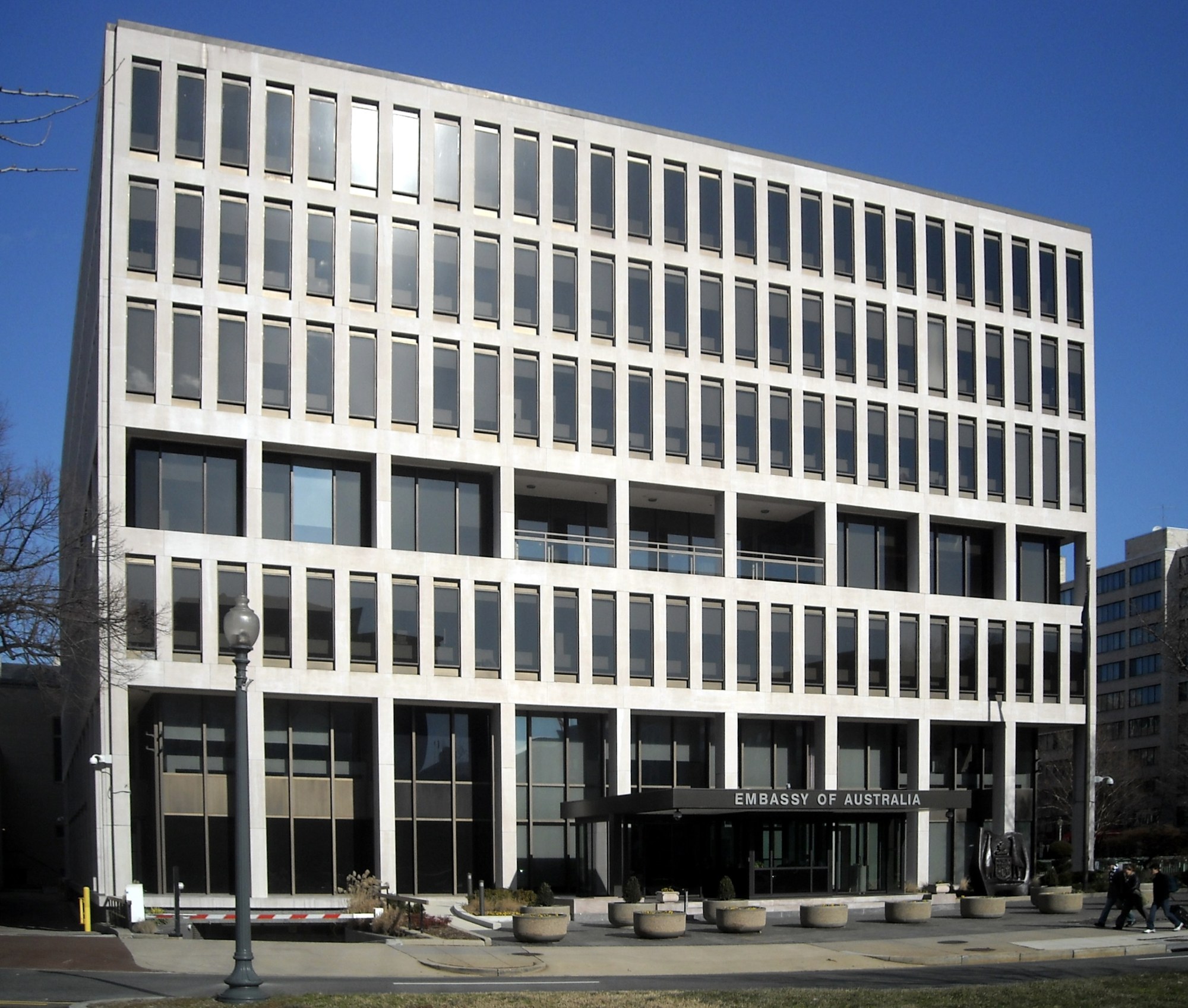

That 1969 building did not last either. It was torn down around 2020, and a much larger Australian Embassy opened on the same lot in 2023.
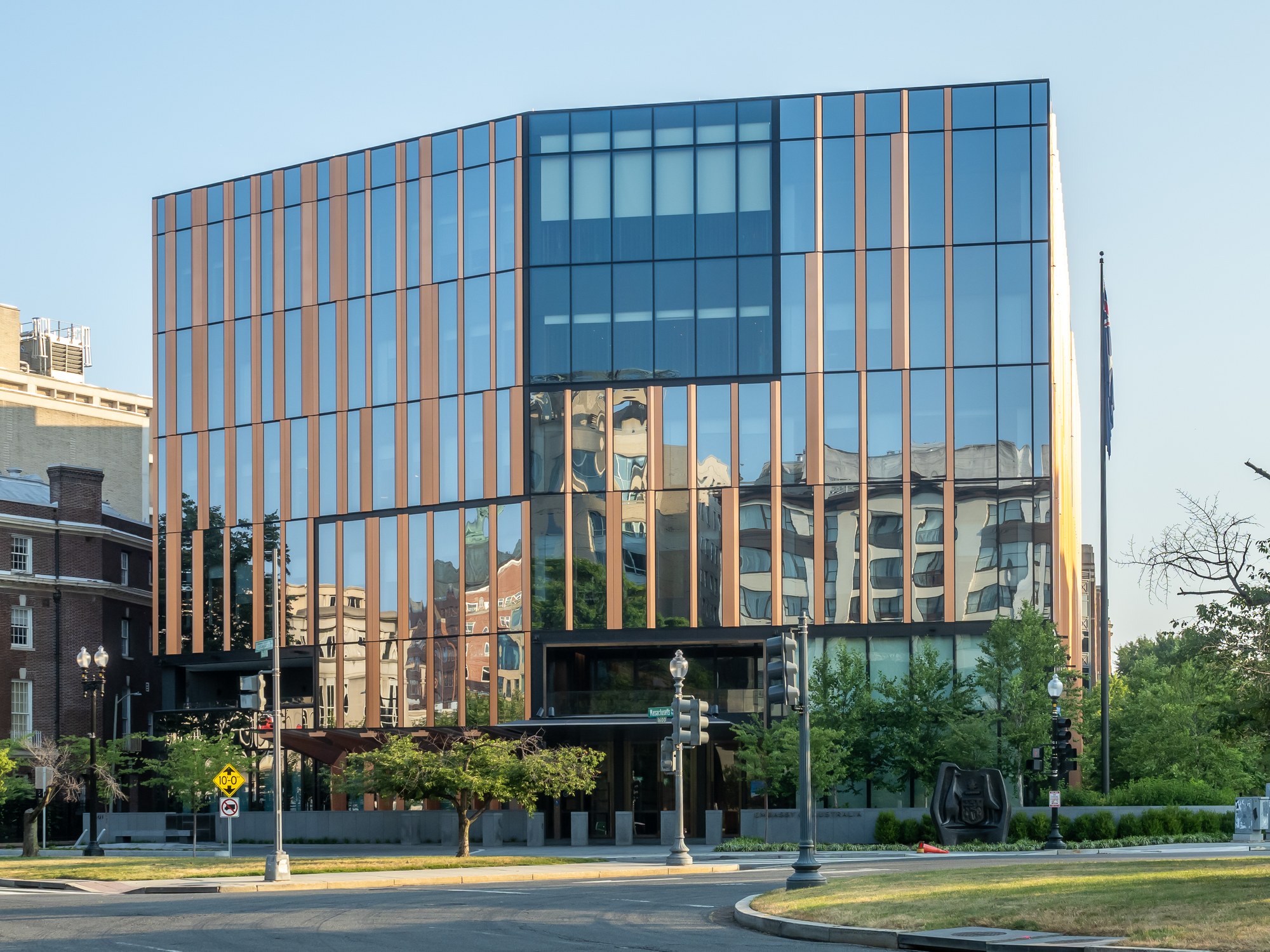
Stand at 1601 Massachusetts Avenue today and there is nothing of the Windom House left. The Queen Anne turrets, the Hutchins mansion next door, the iron fences, all of it is gone.
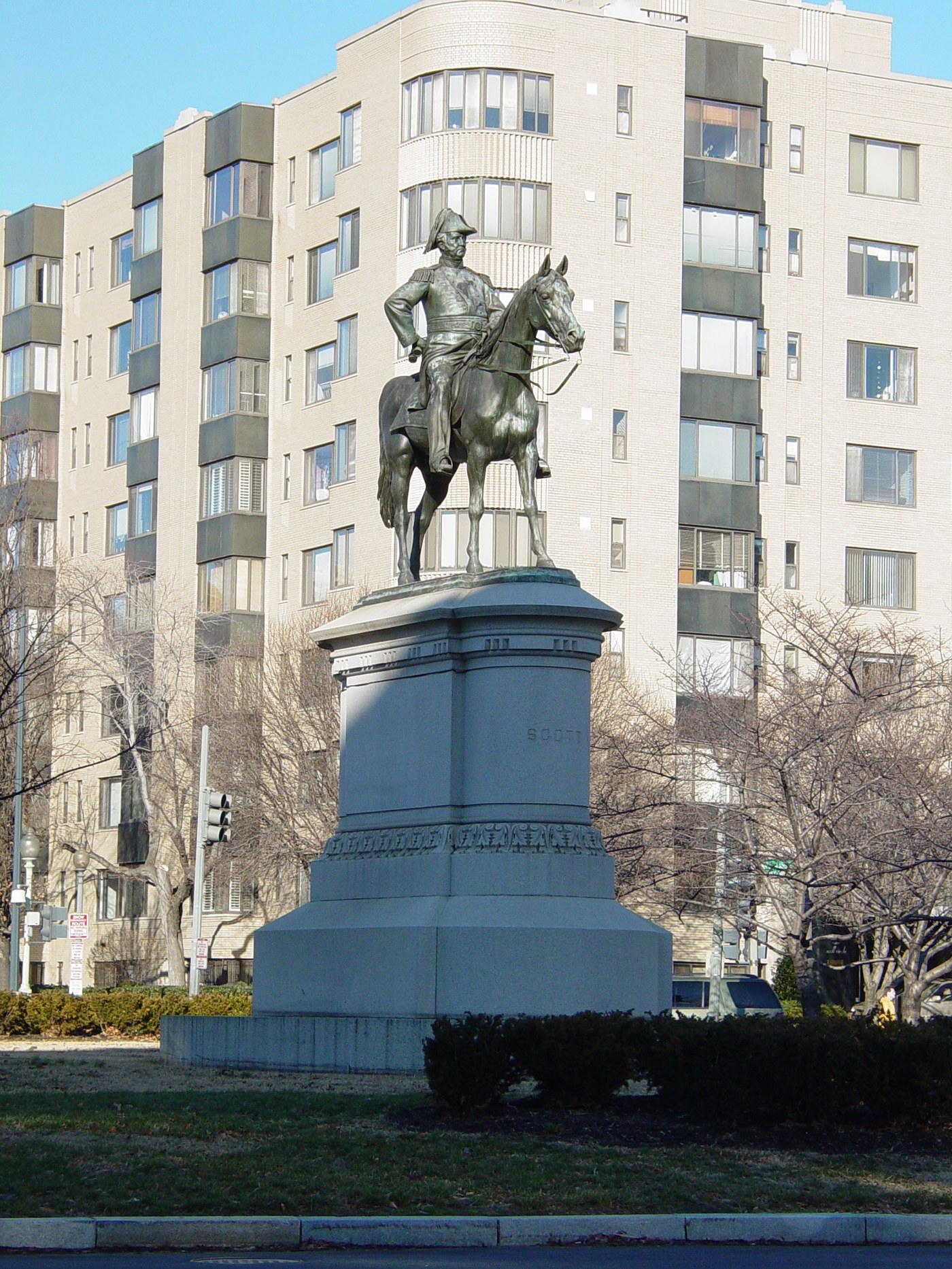
One thing in that 1888 photograph is still exactly where it was. General Scott is still on his horse in the middle of the circle, facing south down 16th Street toward the White House, watching the buildings around him come and go.
.jpg)
Windom warned a banquet hall that a bad currency could bring disaster to a whole country, and dropped dead before the clapping stopped. His house stood another seventy years and then it, too, was cleared away for the next thing. In Washington, even the mansions are temporary. The general on the horse just keeps watching.