
In late May 1957, Marilyn Monroe slept on a sofa bed in a den at 3625 Appleton Street NW, on a quiet residential block in Forest Hills. She rode a bicycle around the neighborhood in sunglasses and pedal pushers. She read books in the backyard by the pool. The man with the horn who whistled at her, she said, only whistled because he saw a girl on a bike.
For most of the week, no one knew it was her.
She was in town to support her husband, the playwright Arthur Miller, who was on trial in Federal Court for contempt of Congress. The biggest movie star in the world was hiding in a two-story white brick colonial on a side street most Washingtonians had never heard of, owned by Miller’s lawyer.
For all the dazzle that surrounded her, this was a working trip during a serious moment. Joseph McCarthy had died at Bethesda Naval Hospital on May 2, 1957, three weeks before the Millers arrived. The Senate had censured him in 1954, and his side of the anti-Communist project was visibly collapsing. HUAC was still going. The blacklist was still going. Miller’s trial was the prestige set piece for what was left of the campaign. The whole city in the spring of 1957 felt like the tail end of one era and not quite the start of the next.
If you want a sense of the Washington Monroe slipped into that week, the 1950s film footage that’s survived is a good place to start. Streetcars still ran. Hats were still hats. Reporters smoked at their desks. A movie star in a wig and sunglasses could ride the train down from New York to Union Station and disappear into a Northwest side street without anyone clocking her, because nobody yet had a camera in their pocket.
A movie star at the front door
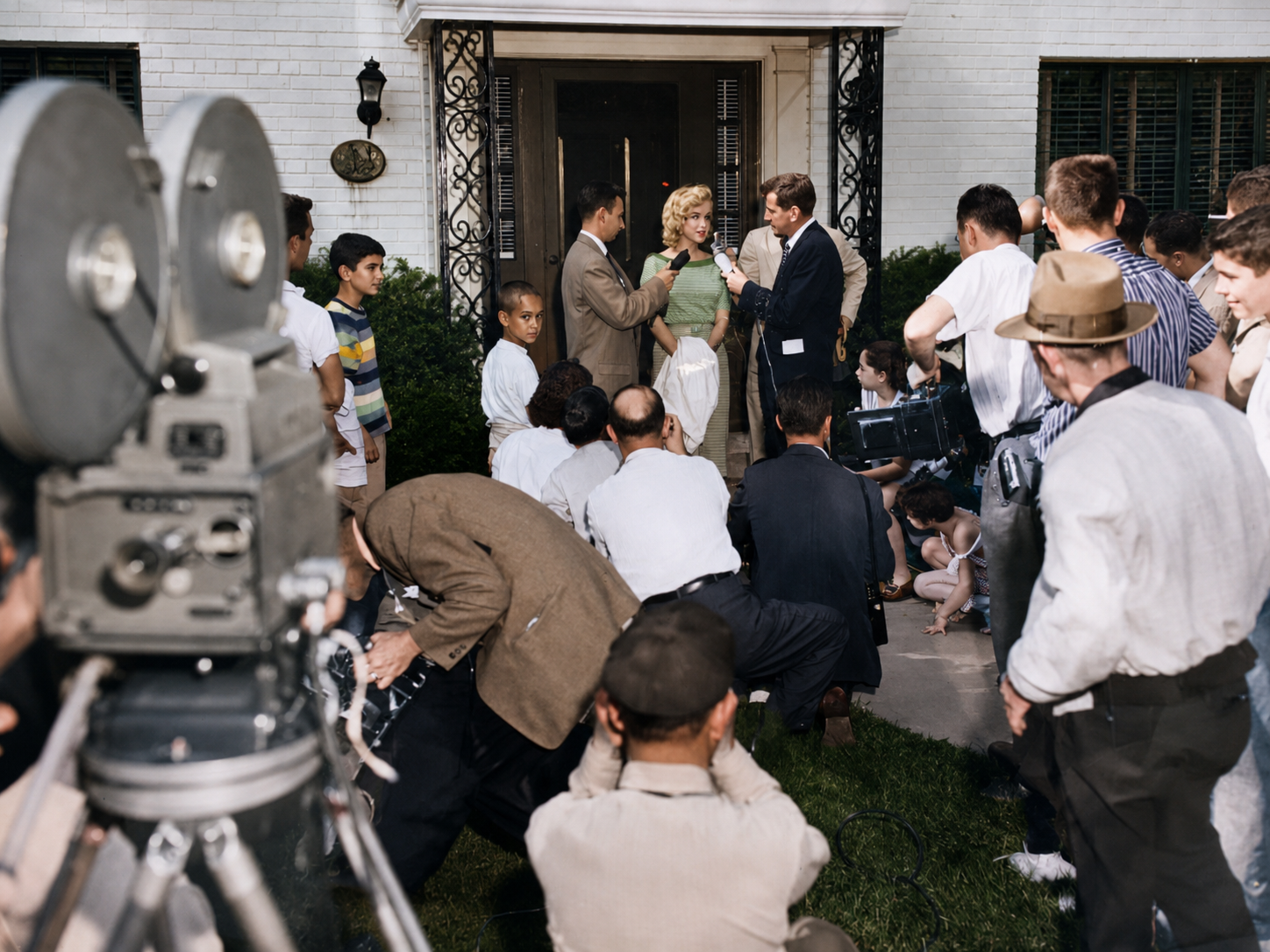
On Friday, May 24, 1957, the front lawn at 3625 Appleton Street filled with reporters and photographers. A neighborhood tip and a small item that morning in the Evening Star had blown her cover. Less than two hours before she was due at Union Station to catch a 6 p.m. train back to New York, Monroe walked out to face the press in a tight-fitting brown-and-white knit dress.
She was charming. She was vague. She declined to confirm she was pregnant.
“I love your city. I think it’s the most beautiful I’ve ever seen. I’ve never been here before.”
That was her review of Washington. She added that they had driven down to Monticello the day before, that yes she liked it, and that next to Lincoln, “it’s Thomas Jefferson for me.” When someone asked about Lee, she laughed and answered, “I don’t care to comment on that.”
A Star photographer caught her on the front walk, surrounded by neighborhood kids, smiling and waving. The next day’s Evening Star ran the photo across the top of page A-2 under the headline “A Visitor Says Good-By.” The caption read: “Marilyn Monroe, who stayed at [3625] Appleton street N.W. for seven days, says good-by to neighborhood youngsters who gathered in front of the house.”
Why she was there
Arthur Miller had testified before the House Un-American Activities Committee on June 21, 1956. He was willing to talk about his own past attendance at Communist meetings in New York in the 1940s. He refused to name anyone else.
That refusal earned him two counts of contempt of Congress. The official pretext was a HUAC probe into “Communist misuse of American passports.” Miller had a passport application pending, and the committee wanted names. He told them his conscience would not let him give names. The chairman seemed to accept that. Then they cited him anyway.
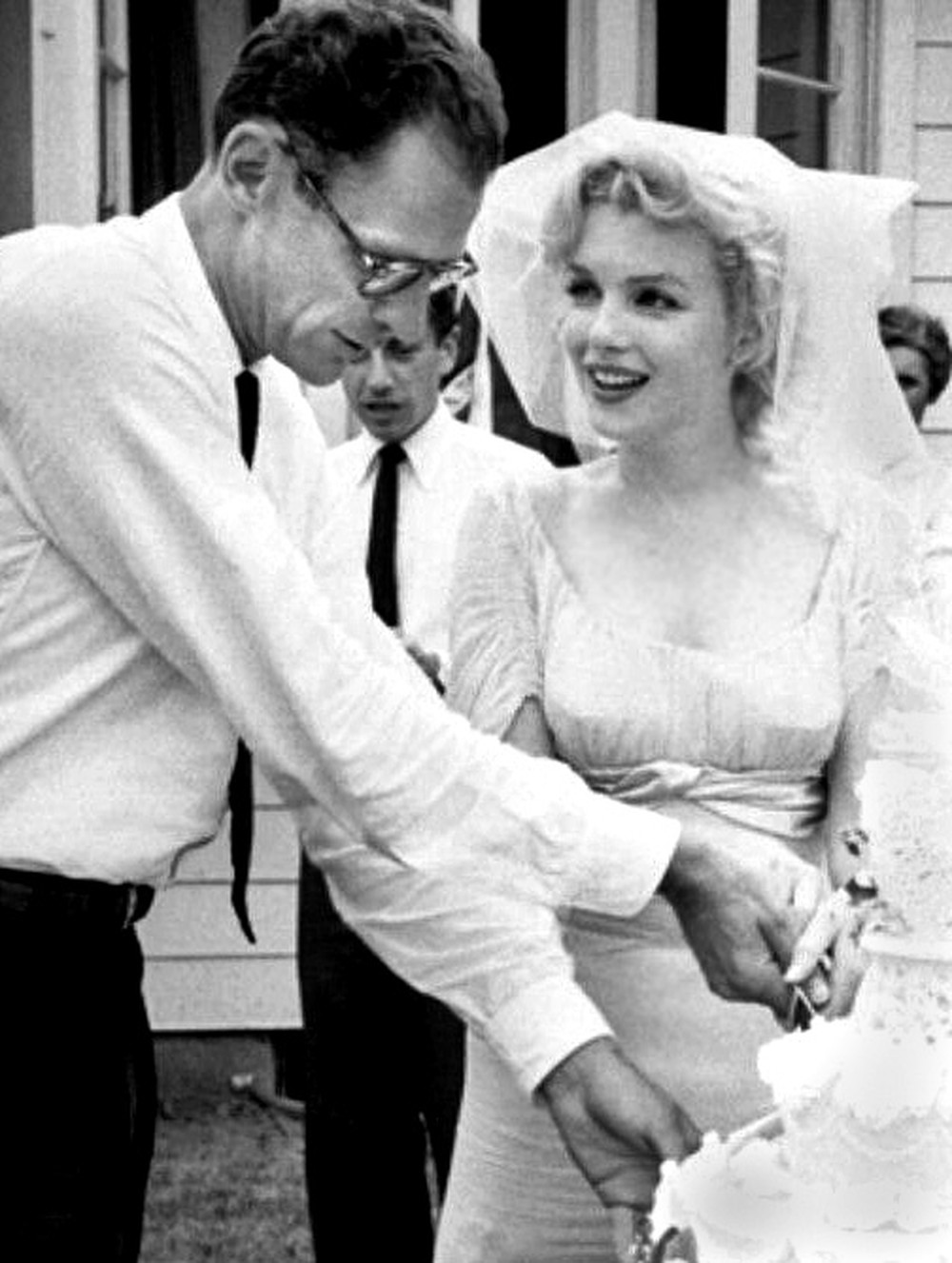
Miller and Monroe had married on June 29, 1956, eight days after his HUAC testimony. By the time his trial opened in Washington the following May, he was the most famous defendant in the country, married to the most famous woman in the country, prosecuted for refusing to inform.
The lawyer in Forest Hills
Miller’s lawyer was Joseph L. Rauh Jr., one of the most prominent civil liberties attorneys in the country. Rauh had clerked for Supreme Court Justices Benjamin Cardozo and Felix Frankfurter, served in the Roosevelt administration, and in 1947 co-founded Americans for Democratic Action with Eleanor Roosevelt, Walter Reuther, and Hubert Humphrey. He spent the McCarthy years defending the people McCarthy wanted to destroy.
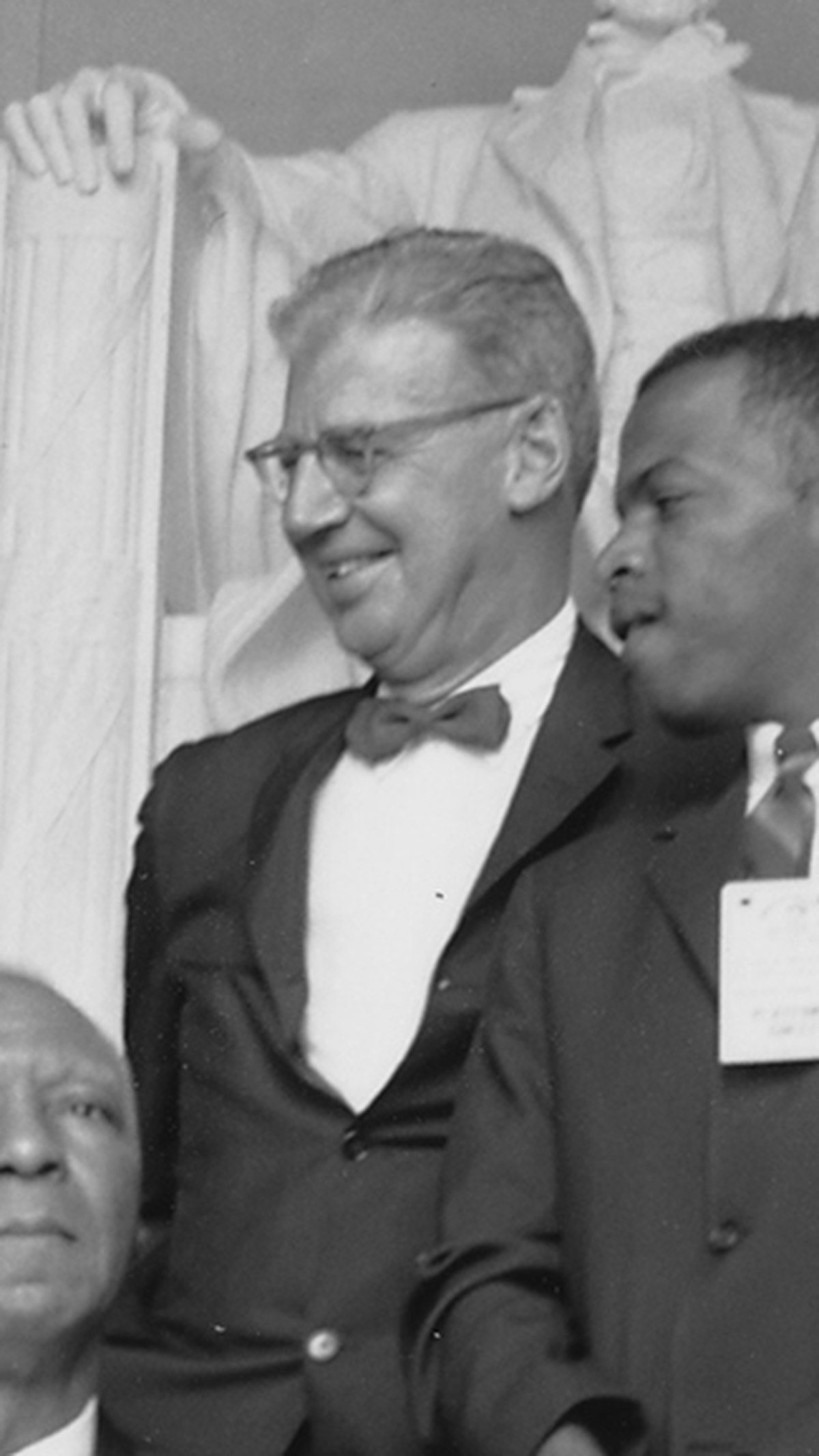
He lived at 3625 Appleton Street with his wife, the former Olie Westheimer, and their two sons. The older one was at the University of Michigan. The younger one, Carl, was sixteen and a junior at Woodrow Wilson High School, a few blocks north of the house.
Monroe could not stay in a hotel. Reporters would mob the lobby and fans would mob the reporters, and Miller would never get a quiet night before court. Miller asked Rauh for ideas. Rauh offered the sofa bed in his den.
Once more, for emphasis: Marilyn Monroe slept on a sofa bed. In a den.
That is how Ann Kessler put it in her 2019 history of Forest Hills celebrity sightings, and the line earns its emphasis. The biggest movie star in the world bedded down in a Forest Hills family room while her husband fought a federal indictment.
The girl on the bike
Carl Rauh drove to Union Station to pick Monroe up. He was told to look for “a woman wearing a dark wig, a head scarf, and sunglasses.” He found her, drove her home, and went back to school the next morning without telling his classmates.
She settled in. Mrs. Rauh kept up the household. Mrs. Miller, as the Star called her, read the lawyer’s books. She read newspaper coverage of the trial. She read court records too. “So you see I knew a good bit about what’s going on,” she told the Star.
She borrowed a bicycle and rode it around Forest Hills. The whistle from a passing driver, she told the Star, was not because anyone recognized her. “Well, one man did blow his horn and whistle, but that was only because he saw a girl riding a bike.” She sat by the Rauhs’ backyard pool and put her feet in the water. The next-door neighbor, Mrs. Victor N. Jaffe, had no idea who was over there. Her six-year-old daughter Vicki did.
“I saw her sitting by the pool, swishing her feet in the water. I thought she was real pretty.”
That is six-year-old Vicki Jaffe’s appearance in the historical record. Of all the people in Forest Hills that week, the one who clocked Marilyn Monroe was a kindergartner.
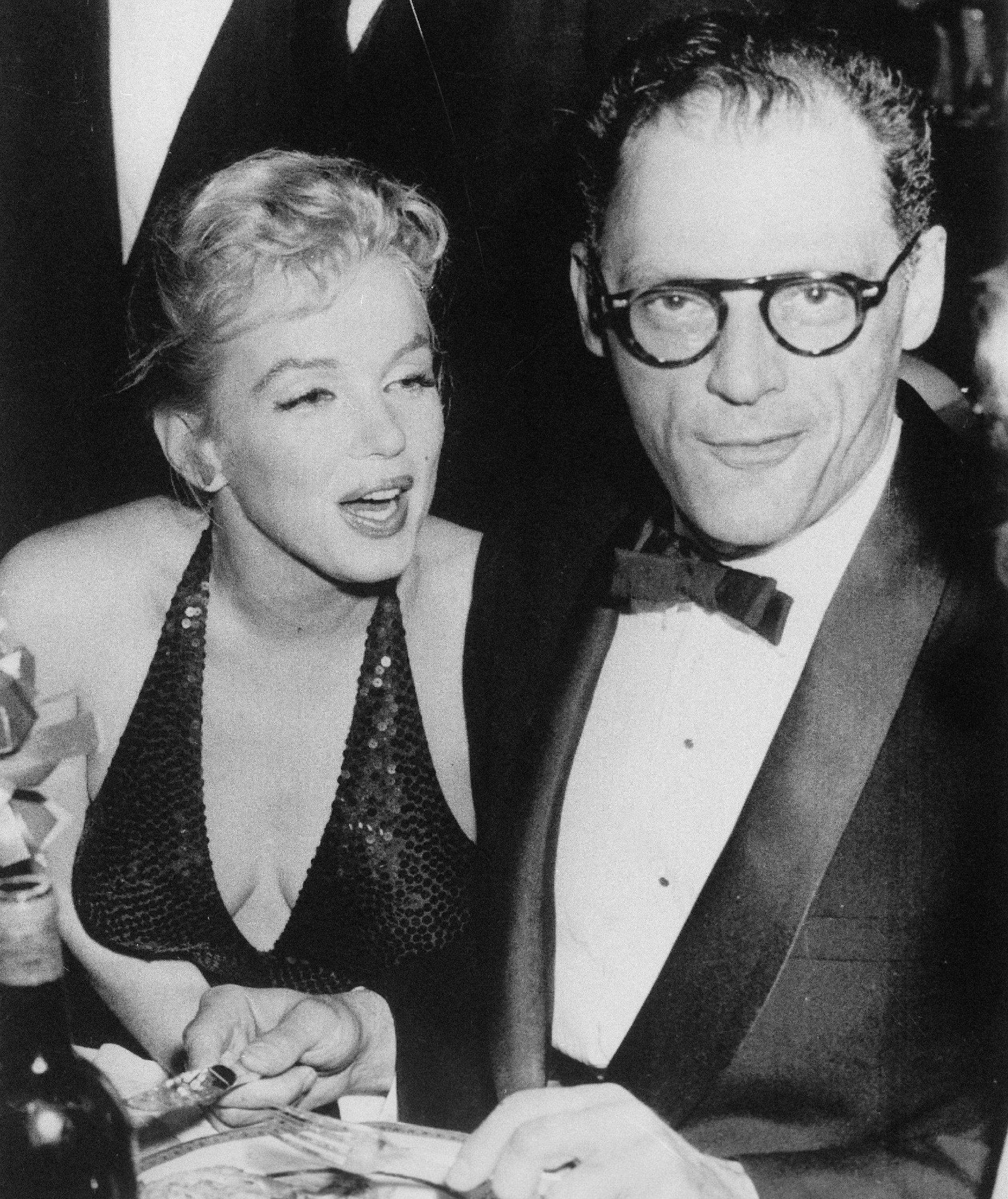
The Millers actually left the house for a weekend recess in the trial and then came back. The neighbors who had spotted her early on assumed she was gone. She was not. She was in the back yard, in pedal pushers, reading.
The trial downtown
While Monroe was in the den, Miller was in court. Federal Judge Charles F. McLaughlin heard the case. The prosecution argued that the names Miller refused to give were pertinent to the passport inquiry because they could verify or disprove his testimony about his own Communist meetings. Rauh argued that the questions had no real connection to passports, and that the chairman of HUAC had in fact agreed to defer the name-naming question before pressing it anyway. Assistant United States Attorney William Hitz prosecuted.
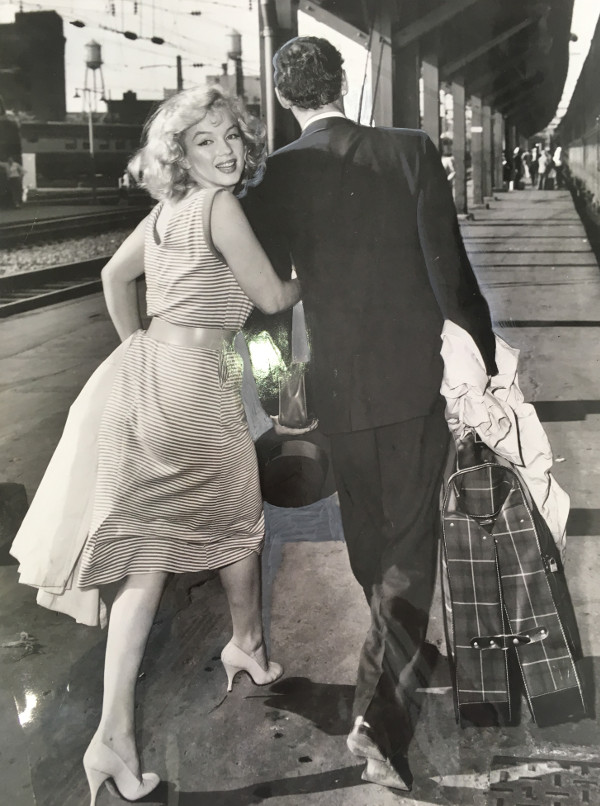
Oral arguments wrapped up on Thursday, May 23. Judge McLaughlin gave both sides until the following Wednesday to file additional briefs and went away to think about it. That same evening the Millers walked through Union Station and boarded a night train home to New York.
A week later, on May 31, 1957, McLaughlin convicted Miller on both counts.
What stayed in Forest Hills
Monroe was pregnant during the visit. When the Star reporter asked her directly, she smiled and said, “I couldn’t comment on that at this time.” Weeks later, back in New York, she lost the pregnancy.
The marriage outlasted the trial. It did not outlast the appeal. Miller’s contempt conviction was reversed by the U.S. Court of Appeals for the D.C. Circuit on August 7, 1958. The court found that HUAC’s chairman had misled Miller during the hearing about whether he would have to identify others. By then the Miller-Monroe marriage was already coming apart. They separated in 1960 and divorced in January 1961. Monroe was found dead at her home in Brentwood, California on August 5, 1962, an apparent barbiturate overdose.
Rauh kept practicing. He represented the Mississippi Freedom Democratic Party at the 1964 Democratic Convention, fought for the Civil Rights Act, and stayed at it for the next three decades. He died on September 3, 1992 at age 81. President Clinton awarded him the Presidential Medal of Freedom the following year. The Rauh family home at 3625 Appleton Street is still standing, a two-story white brick colonial on a quiet residential block in Forest Hills.
What Forest Hills got out of it
For one week in May 1957, the most famous woman in the world was a bored houseguest in a Northwest DC den. She put her feet in someone’s pool. She bicycled past the Jaffes’ house. She read Joe Rauh’s law books. She held a single news conference on a residential lawn, said one nice thing about Washington, dodged the pregnancy question, and got back on a train.
A Star staff photographer took one picture. A six-year-old next door saw her in person. In a house most people walk past without a second look, Marilyn Monroe slept on a sofa bed for seven nights.
You walk past stranger ghosts than that in this city all the time. Most of them don’t leave behind a photograph.
For another wild celebrity drop into Northwest DC in the same era, see the time a 21-year-old Elvis Presley turned up at WMAL-TV on Connecticut Avenue and gave Jimmy Dean the shortest interview in television history.
Frequently asked questions
Where exactly did Marilyn Monroe stay in Washington in 1957?
She stayed in the den of Joseph L. Rauh Jr.’s home at 3625 Appleton Street NW, in the Forest Hills neighborhood of Northwest DC. The house is a two-story white brick colonial on a quiet residential block. Rauh was Arthur Miller’s defense attorney in the HUAC contempt of Congress trial.
Why was Arthur Miller on trial in Washington in 1957?
Miller had testified before the House Un-American Activities Committee on June 21, 1956. He admitted his own past attendance at Communist meetings in New York in 1947 but refused to name others who attended. HUAC cited him for contempt of Congress on two counts, and the case went to trial in U.S. District Court for the District of Columbia in May 1957.
Did Marilyn Monroe attend Arthur Miller’s trial?
No. She did not attend any of the court sessions. She told the Evening Star she had read newspaper coverage and court records at the Rauh home, and that she was convinced her husband would win “in the end.” Showing up in court would have triggered the kind of fan and press mob that would have made the trial unworkable.
What happened to Arthur Miller’s HUAC contempt conviction?
Federal Judge Charles F. McLaughlin convicted Miller on both counts on May 31, 1957. The U.S. Court of Appeals for the District of Columbia Circuit reversed the conviction on August 7, 1958, on the grounds that the HUAC chairman had misled Miller about whether he would be required to name others.
Is the Rauh house at 3625 Appleton Street still there?
Yes. The two-story white brick colonial at 3625 Appleton Street NW in Forest Hills is still standing. The neighborhood is residential, quiet, and largely unchanged from the 1950s. There is no historic marker.